GPT-6.2 limits hit 40% faster, Postgres without Docker, and a 24 KB Qwen OS
1 day ago
OpenAI fixed a GPT-6.2 billing mistake, so Astra and Sol plans now reach their limits sooner. Also from Thursday's Hacker News front page: Moat's $5 membership for open models at wholesale prices, a 24 KB assembly OS that boots Qwen3-0.6B, and minipg, which runs Postgres from a folder without Docker. OpenAI cuts GPT-6.2 usage: Astra hits limits 40% faster, Sol 25% faster https://twitter.com/thsottiaux/status/2125784147889393806 Discussion: https://news.ycombinator.com/item?id=50651117 simonw on stretching a plan with sub-agents: https://news.ycombinator.com/item?id=50651665 Moat: OpenRouter replacement, by Command Code https://commandcode.ai/moat Discussion: https://news.ycombinator.com/item?id=50652184 jedjonesuk on where requests are served: https://news.ycombinator.com/item?id=50653633 Bare Metal Qwen https://github.com/alesha-pro/llm.asm/tree/main/02-baremetal-os Discussion: https://news.ycombinator.com/item?id=50648365 madduci on the speed for a 0.6B model: https://news.ycombinator.com/item?id=50657095 Minipg: PostgreSQL as a Single Executable, by Jeff Lindsay https://progrium.github.io/minipg/ Discussion: https://news.ycombinator.com/item?id=50650892 progrium on PGlite's single connection: https://news.ycombinator.com/item?id=50657843
Links
- OpenAI cuts GPT-6.2 usage (post by Tibo, @thsottiaux)twitter.com
- Threadnews.ycombinator.com
- Moat by Command Codecommandcode.ai
- Threadnews.ycombinator.com
- Bare Metal Qwen (llm.asm, phase 2)github.com
- Threadnews.ycombinator.com
- minipgprogrium.github.io
- Threadnews.ycombinator.com
- Front page, 2026-11-26news.ycombinator.com
Ask about this presentation
Chapters
Show transcriptHide transcript
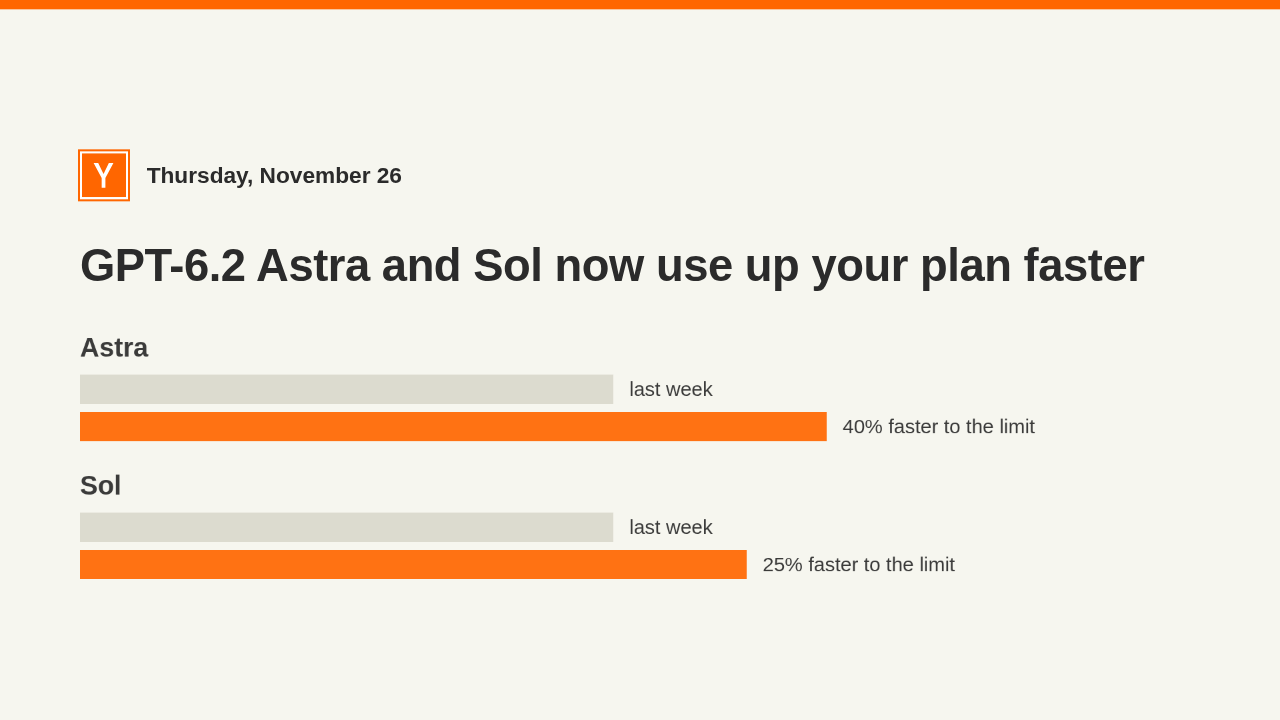
On Thursday's Hacker News front page, OpenAI fixed a billing mistake from the GPT-6.2 launch, and your plan now runs out sooner. Most users were getting Astra and Sol usage at a discount by mistake. The same work now hits your limits 40 percent faster on Astra and 25 percent faster on Sol than it did last week. Both still go further than the previous Astra and Sol. Other models are unchanged, you won't be charged the difference on past usage, and everyone on Go, Plus, Pro and Business gets one banked reset.
Slide text
 Thursday, November 26
GPT-6.2 Astra and Sol now use up your plan faster
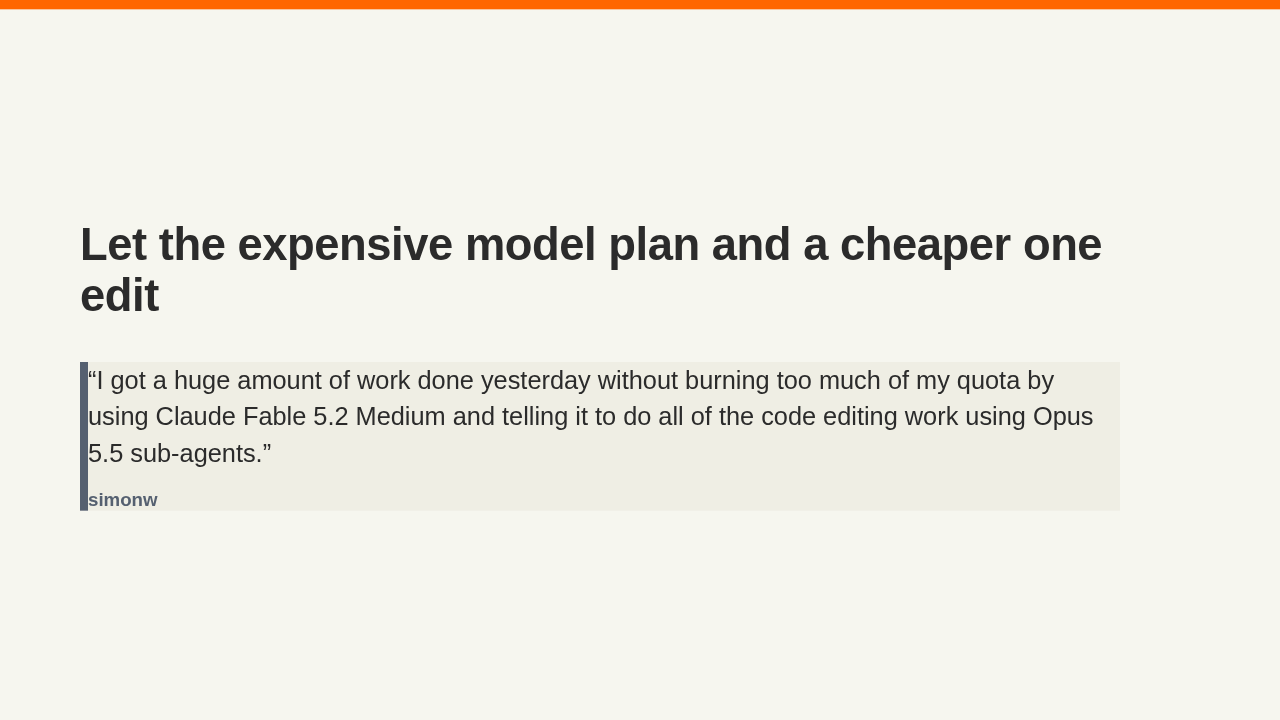
Astralast week40% faster to the limitSollast week25% faster to the limitIf you want the plan to last, the thread has a way to stretch it. simonw kept Claude Fable 5.2 as the lead and had it hand every code edit to Opus 5.5 sub-agents, and got a lot done without burning much quota. They expect the same split to work with Astra and Sol. Several people said last week's allowance felt unusually generous, and a couple saw normal quotas the whole time, which fits a discount that reached most accounts and missed some.
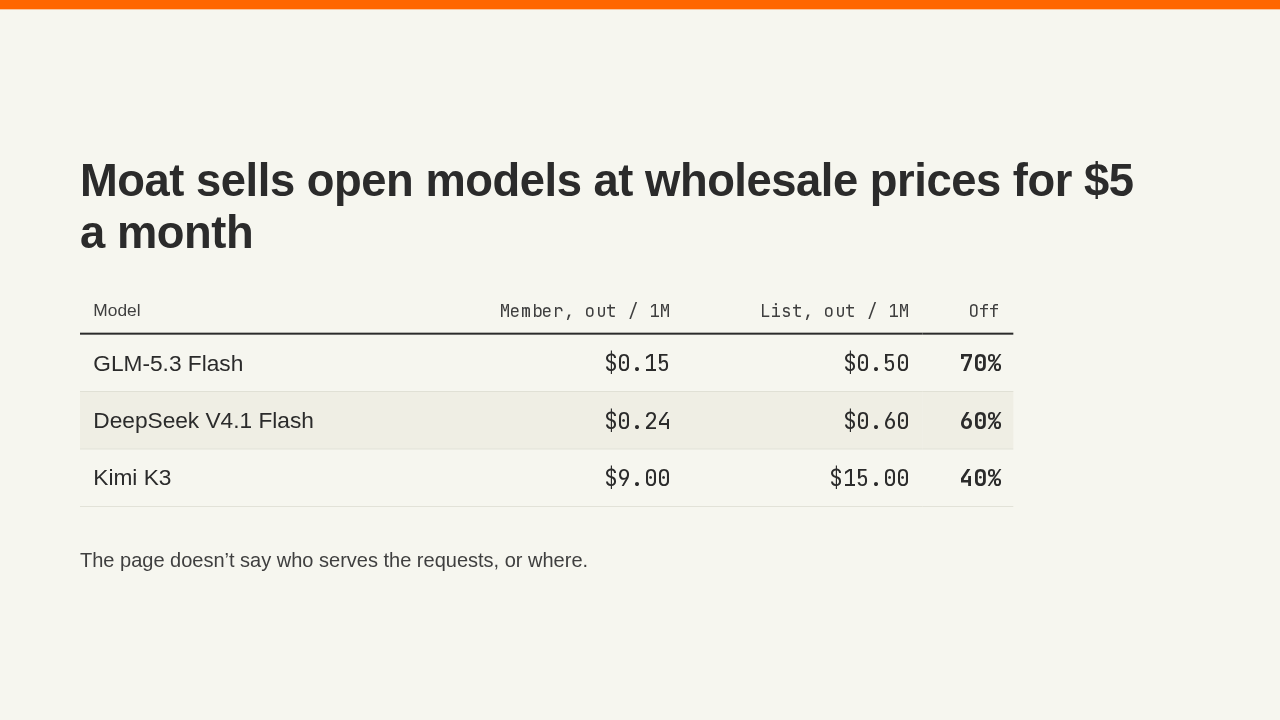
Command Code's Moat is a membership for cheaper open models. You pay 5 dollars a month on a yearly plan, then pay per token at member prices, with no five-hour or weekly limits. Discounts run from 40 to 70 percent, so on a typical mix it pays for itself once you'd spend about 9 dollars a month at list price. The page doesn't say who hosts the models or where. jedjonesuk called that a non-starter for any team that takes data governance seriously.
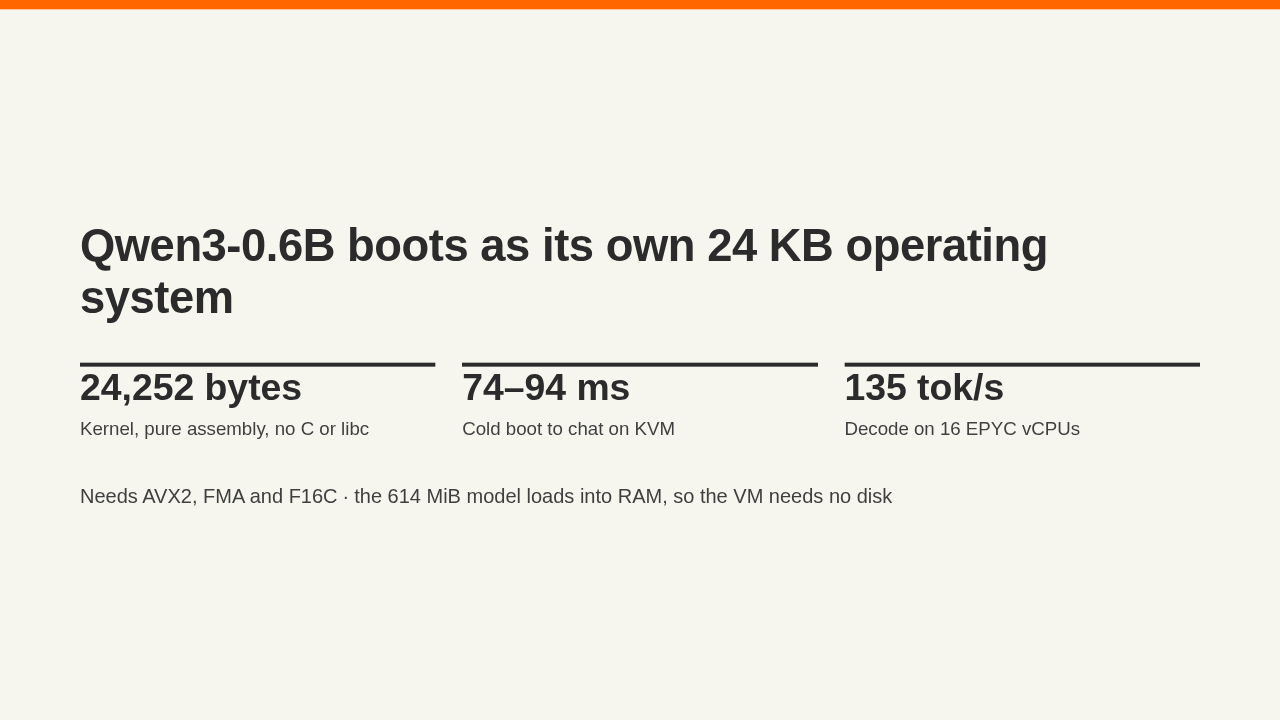
Bare Metal Qwen boots a small language model with no operating system under it. The whole kernel is about 24 kilobytes of assembly. It reaches a chat prompt in under a tenth of a second and decodes about 135 tokens a second on 16 virtual CPUs, nearly a third faster than llama.cpp on the same processor. It needs a CPU with AVX2, and the model sits in RAM, so it even runs on a diskless VM. madduci asked whether that's fast at all for a model this small.
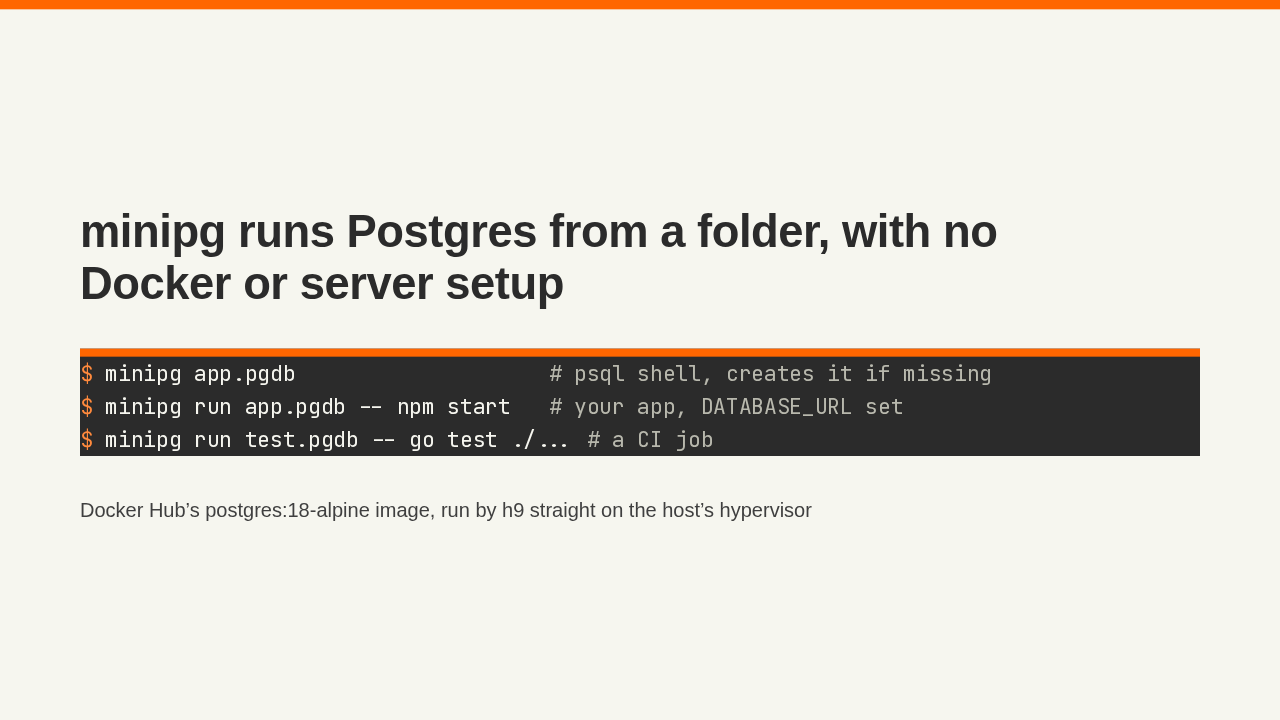
minipg gives you Postgres the way SQLite gives you a file. A folder ending in pgdb holds the data, the config, the password and the Postgres version. Point minipg at it and you get a psql shell, or wrap your app or your test run and it sets the database URL. A server starts when a command needs one and stops when it's idle. Underneath, it runs the official Postgres Alpine image through h9, which answers Linux system calls on the host's hypervisor, with no kernel or VM image to boot.
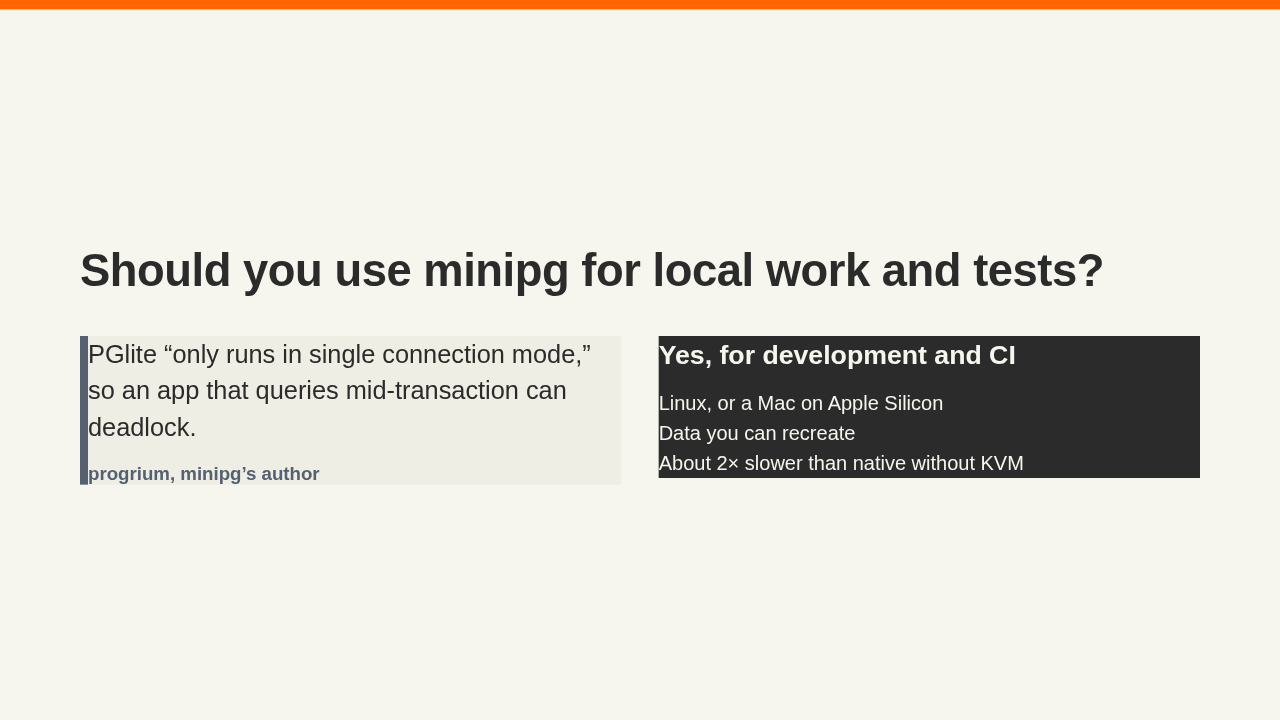
The thread asked why not use PGlite, which runs Postgres as a library. progrium, who wrote minipg, answered that PGlite only handles one connection, so an app that runs a second query inside a transaction can deadlock. I would say yes for development and CI. It needs Linux or an Apple Silicon Mac, and data you can recreate, because the project calls itself early. The limit is speed: without KVM, Postgres runs about half as fast as native for a single client, and slower under load.
Up next
 2:57
WebRTC skimmers hit Samsonite, DeepSeek calls land on ByteDance, drives double
@hacker-news
1 hour ago
 2:59
1Password’s breach spared the vaults, and matrix multiplication stops at 9/4
@hacker-news
2 days ago
 2:35
Ladybird's alpha is out for Mac and Linux, and macOS now boots inside Linux
@hacker-news
2 days ago
 2:34
Ladybird's alpha runs your site on a new engine, and Quad9 quits France
@hacker-news
2 days ago
 3:06
OpenRouter drops three providers over leaked prompts, and Pillow can run Ghostscript
@hacker-news
2 days ago
 3:06
The Riemann Hypothesis, proved with Claude in Lean, and a GPGME double free
@hacker-news
6 days ago
 3:41
PostgreSQL 19 shrinks bloated tables without locking, and AI designs a CPU
@hacker-news
1 week ago
 3:27
Ruby2ßhell runs code on stock Rails before login, and a JVM fix waited two months
@hacker-news
1 week ago
 3:49
Nginx bugs let anyone run code on your server, ONNX Runtime goes dark, and Quad9 leaves France
@hacker-news
1 week ago
 4:15
Optimizely served malware on Zoom and GitLab, and Windows 11 logs your coding agents
@hacker-news
1 week ago
 4:10
uBlock Origin fixes a one-click XSS, ParadeDB joins, and free CMU courses
@hacker-news
1 week ago
 4:01
All AI code should be open source, and a chlorine alarm lost in a Microsoft 365 outage
@hacker-news
1 week ago