Mistral Large 4 previews before its open weights, Polars 2.0 streams by default, and Gleam drops Erlang source
1 month ago
Mistral Large 4 opens as a public preview with open weights promised by the end of October, and it tops a security test that closed models refuse. Also from Tuesday's Hacker News front page: Polars 2.0 makes the streaming engine the default, Gleam 1.19 compiles to Erlang abstract forms, and David Bushell moves from Deno back to Node. Introducing Mistral Large 4, by Mistral https://mistral.ai/news/mistral-large-4/\ Discussion: https://news.ycombinator.com/item?id=49977979 jakozaur on where it sits against GLM-5.3: https://news.ycombinator.com/item?id=49978258 chriddyp's Plotly data analysis test: https://news.ycombinator.com/item?id=49983933 smartbit's Artificial Analysis table: https://news.ycombinator.com/item?id=49979208 AntonJidkov on offensive use: https://news.ycombinator.com/item?id=49981763 Release of Polars 2.0, by Ritchie Vink https://pola.rs/posts/release-polars-2/ Discussion: https://news.ycombinator.com/item?id=49977177 Gleam doesn't compile to Erlang source anymore (Gleam v1.19.0), by Louis Pilfold https://gleam.run/news/gleam-doesnt-compile-to-erlang-source-anymore/ Discussion: https://news.ycombinator.com/item?id=49975619 lpil on debugger support: https://news.ycombinator.com/item?id=49978293 Friendship ended with Deno, now Node is my best friend, by David Bushell https://dbushell.com/2026/10/03/deno-to-node/ Discussion: https://news.ycombinator.com/item?id=49971719 AgentME on what Deno still bundles: https://news.ycombinator.com/item?id=49974203
Links
Ask about this presentation
Chapters

Show transcriptHide transcript
On Tuesday's HN front page, Mistral opened a public preview of Mistral Large 4, its biggest model yet. It has one trillion parameters, 49 billion of them active at a time, and it reads images as well as text. The preview API is open now, at about a dollar forty per million input tokens and just over four dollars per million output. The weights follow by the end of October. Mistral trained it from scratch on 3,800 Nvidia Grace Blackwell GPUs in its own European datacenters.
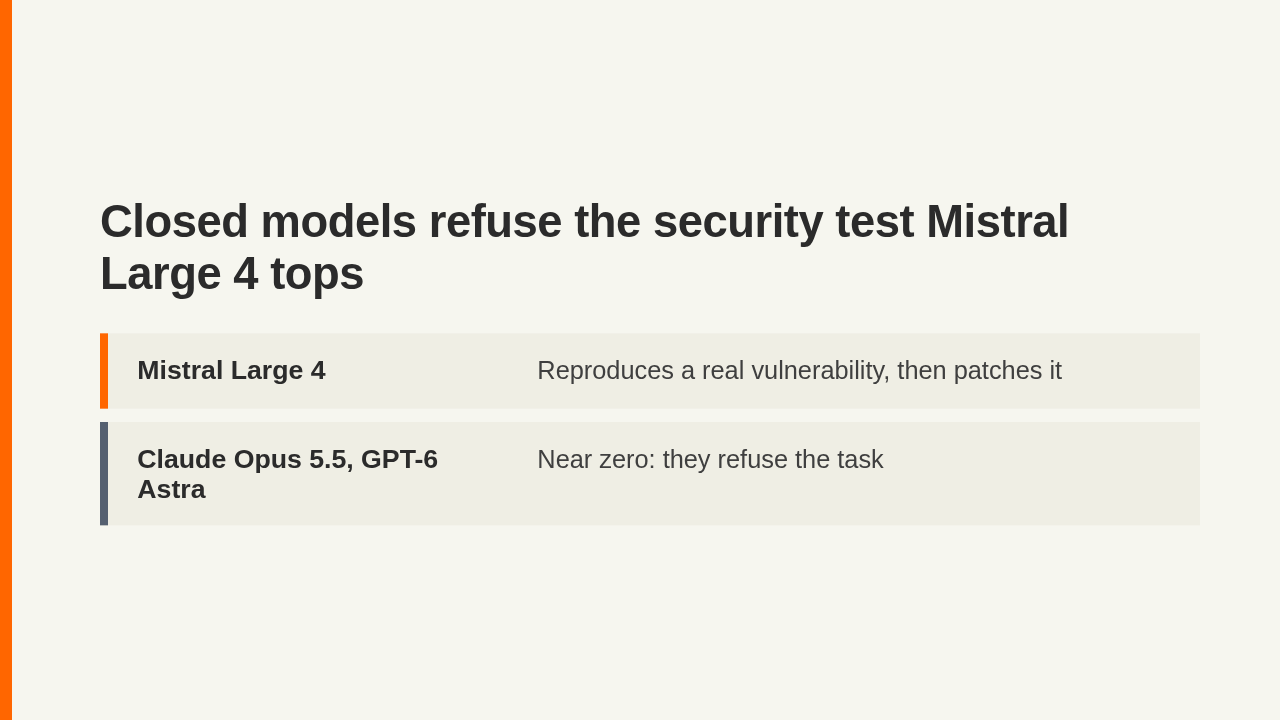
Mistral leans hardest on security work. One test in the Artificial Analysis Cyber Index asks a model to reproduce a real vulnerability in open-source software, then patch it, and Mistral Large 4 posts the best result of any model. Claude Opus 5.5 and GPT-6 Astra score near zero on it, because they refuse the task. Mistral argues that defenders often have to prove a flaw is real before they fix it, and open weights let them do that under their own policies. In the thread, AntonJidkov asked whether that also helps attackers. Mistral reports that on known malicious cyber prompts, it refuses more often than the other open models it tested.
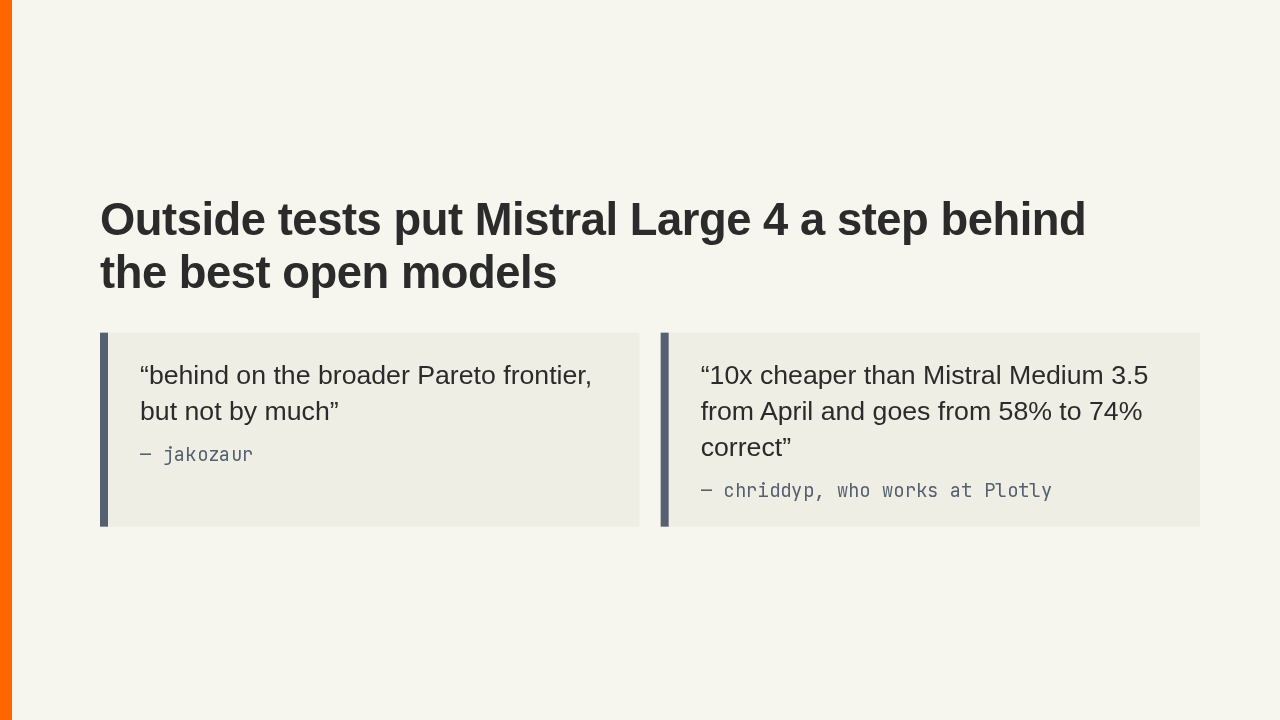
Commenters ran their own checks. On the Artificial Analysis index, an independent combined score, Mistral Large 4 lands well above the median model, and smartbit posted the open-weight table, where it sits behind GLM-5.3 and Xiaomi's MiMo. jakozaur called it behind the frontier, but not by much. chriddyp, who works at Plotly, ran it through Plotly's data analysis benchmark. It answered far more questions correctly than Mistral Medium 3.5 from April, at a tenth of the price. For companies in the EU, several commenters said, the draw is a model trained and served in Europe.
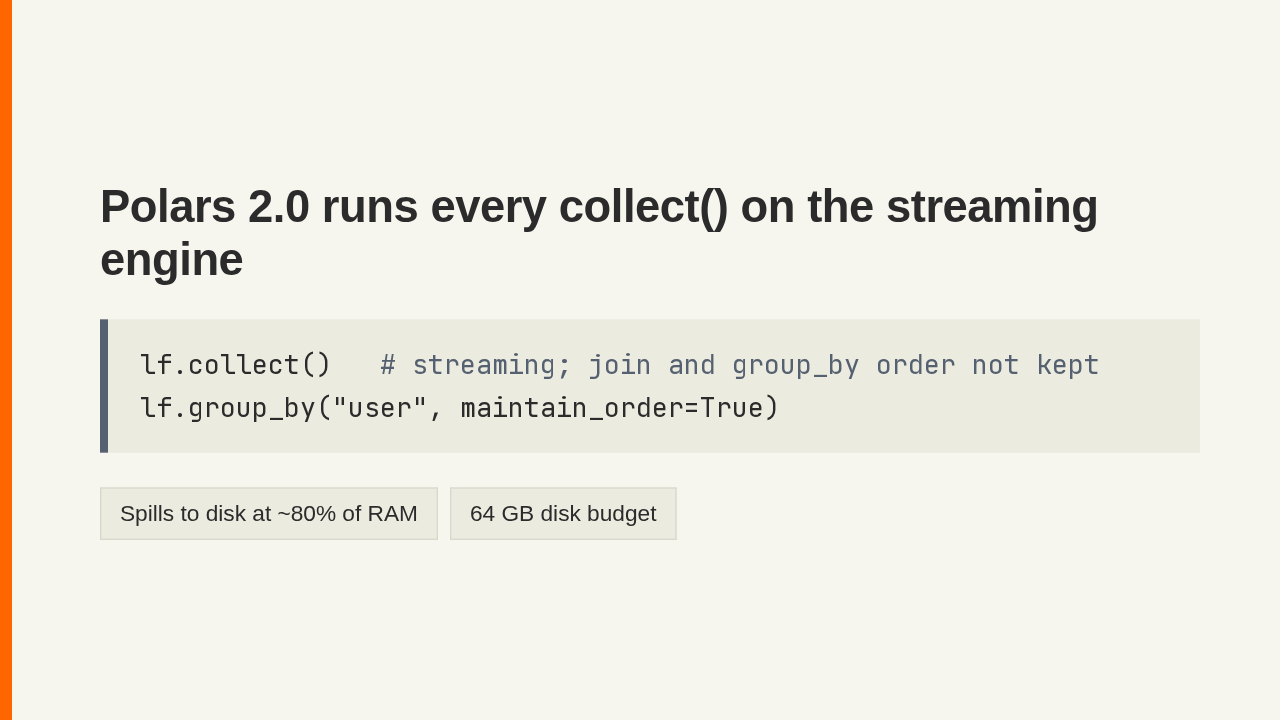
Polars 2.0 is out, and its breaking change sits in collect. Calling collect on a lazy frame now runs the streaming engine by default, which Polars says cuts memory use on most queries. The cost is row order. Joins, group bys and unpivots no longer promise it, so code that depends on order has to set maintain_order to true. Spilling to disk is on by default too. Sorts and window functions start writing to disk at about 80 percent of RAM, with a 64 gigabyte budget, and joins and group bys get the same treatment in a later release.
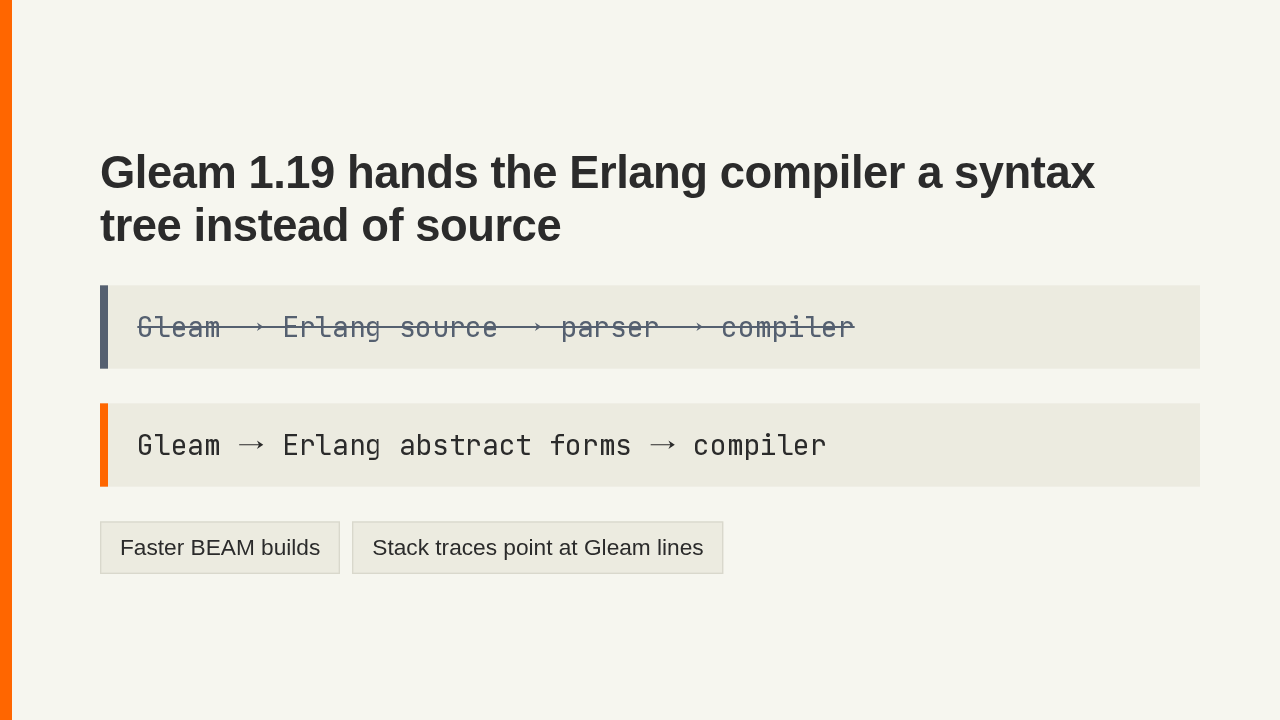
Gleam 1.19 no longer writes Erlang source code. Giacomo Cavalieri rewrote the Erlang code generator to emit Erlang abstract forms, the syntax tree the Erlang compiler normally builds by parsing, so Gleam skips the front half of that compiler. Elixir compiles the same way. Builds on the BEAM got much faster, and crash reports and stack traces now carry line numbers from the Gleam source, where before they could point only at the nearest function. In the thread, Louis Pilfold, who wrote the post, said hooking up an Erlang debugger would take only two flags passed to the compiler.
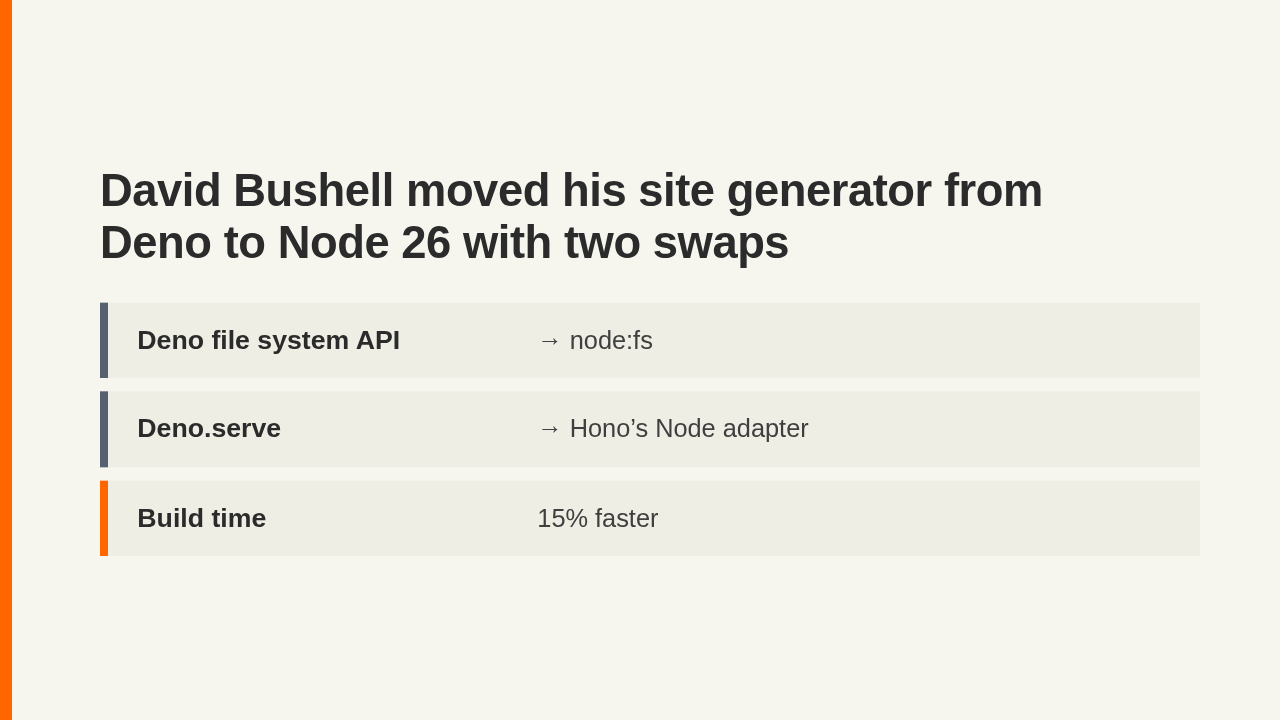
David Bushell used Deno for years, and has gone back to Node. Porting his static site generator to Node 26 took two changes: Deno's file system API became Node's built-in one, and Deno.serve became Hono's Node adapter. His builds ran 15 percent faster. One wall remains. Node runs TypeScript directly, but refuses to strip types from files inside node modules, so a TypeScript package still needs a build step. In the thread, AgentME said Deno still earns its place by shipping a test runner, linter and type checker that a Node project has to assemble itself.
Up next
 2:57
WebRTC skimmers hit Samsonite, DeepSeek calls land on ByteDance, drives double
@hacker-news
1 hour ago
 2:36
GPT-6.2 limits hit 40% faster, Postgres without Docker, and a 24 KB Qwen OS
@hacker-news
1 day ago
 2:59
1Password’s breach spared the vaults, and matrix multiplication stops at 9/4
@hacker-news
2 days ago
 2:35
Ladybird's alpha is out for Mac and Linux, and macOS now boots inside Linux
@hacker-news
2 days ago
 2:34
Ladybird's alpha runs your site on a new engine, and Quad9 quits France
@hacker-news
2 days ago
 3:06
OpenRouter drops three providers over leaked prompts, and Pillow can run Ghostscript
@hacker-news
2 days ago
 3:06
The Riemann Hypothesis, proved with Claude in Lean, and a GPGME double free
@hacker-news
6 days ago
 3:41
PostgreSQL 19 shrinks bloated tables without locking, and AI designs a CPU
@hacker-news
1 week ago
 3:27
Ruby2ßhell runs code on stock Rails before login, and a JVM fix waited two months
@hacker-news
1 week ago
 3:49
Nginx bugs let anyone run code on your server, ONNX Runtime goes dark, and Quad9 leaves France
@hacker-news
1 week ago
 4:15
Optimizely served malware on Zoom and GitLab, and Windows 11 logs your coding agents
@hacker-news
1 week ago
 4:10
uBlock Origin fixes a one-click XSS, ParadeDB joins, and free CMU courses
@hacker-news
1 week ago