MiniMax M3.1 Flash, Timestral, Wine on OpenBSD

MiniMax M3.1 Flash cuts agent costs by 70%, Timestral forecasts on a CPU, and Wine reaches OpenBSD
On Monday's Hacker News front page, MiniMax released M3.1 Flash, a model for coding and computer-use agents that does the same agent work for about 70 percent less than the MiniMax model before it. Mistral released Timestral, forecasting models small enough to run on a CPU. Wine now runs 64-bit Windows games on OpenBSD. And Let's Encrypt is adding two more places it checks your domain from.
What M3.1 Flash costs
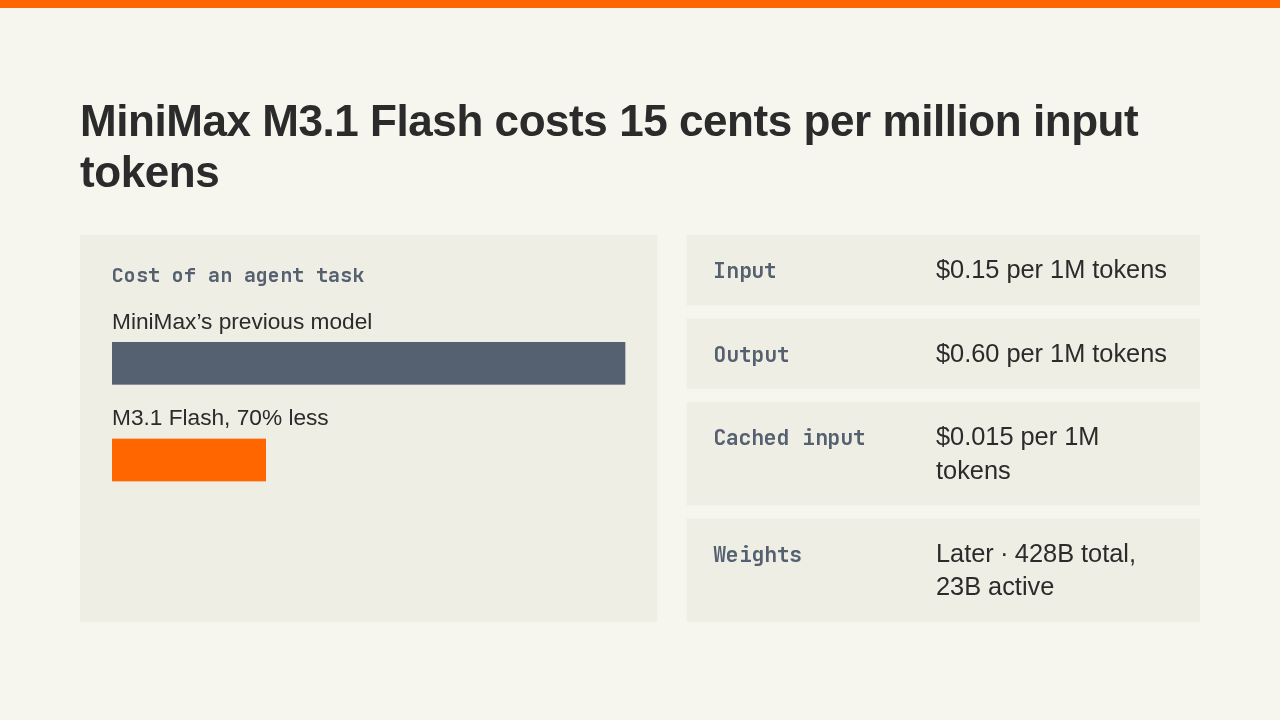
MiniMax M3.1 Flash costs 15 cents per million input tokens
You can use M3.1 Flash now through the MiniMax API, the M Plan subscription and the MiniMax Code desktop app. Output costs 60 cents per million tokens, and it streams at about 170 tokens a second. On DeepSWE, where a model builds features, fixes bugs and tests its own work, it sits alongside the leading models. The weights come later. It is a mixture of experts with about 430 billion parameters, 23 billion of them active per token.
Space Bunny was M3.1 Flash
Space Bunny, the anonymous model people already tried, was an early M3.1 Flash
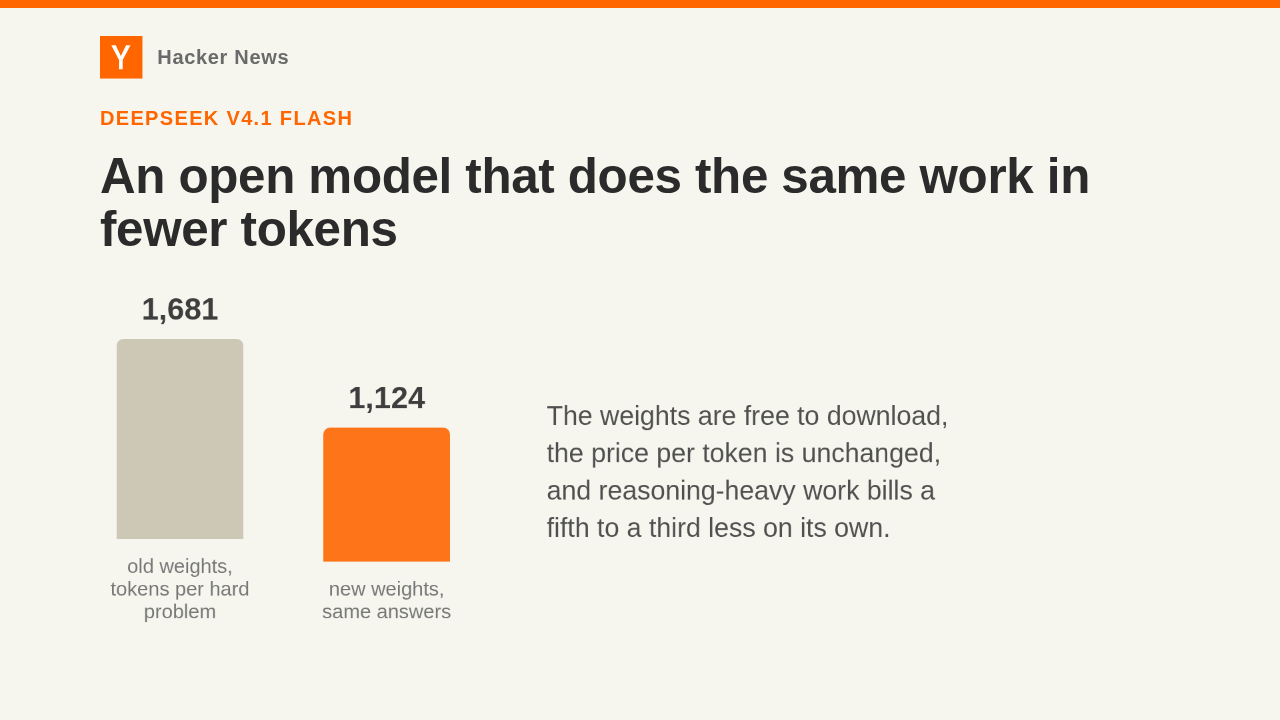
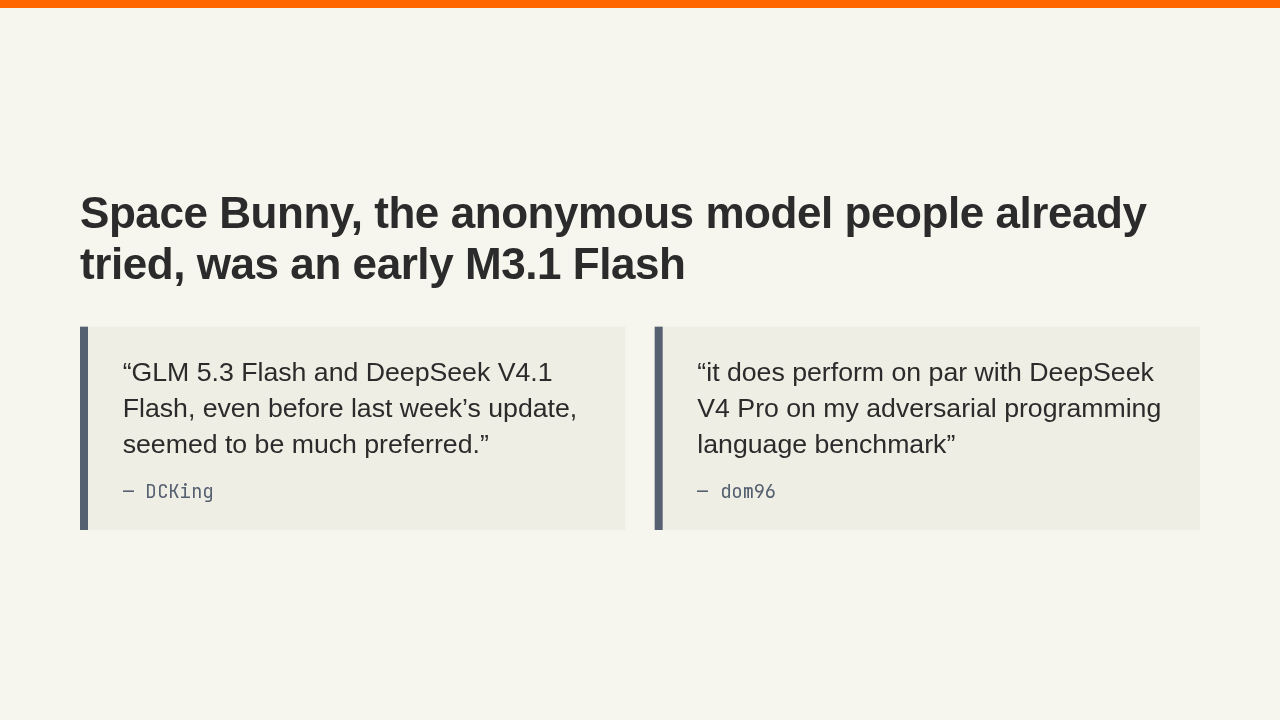
“GLM 5.3 Flash and DeepSeek V4.1 Flash, even before last week’s update, seemed to be much preferred.”
“it does perform on par with DeepSeek V4 Pro on my adversarial programming language benchmark”
Before the launch, an early version ran anonymously as Space Bunny and handled more than 200 trillion tokens. In the thread, DCKing says Space Bunny was served free in OpenCode Go and failed to impress, and that people preferred DeepSeek V4.1 Flash and GLM 5.3 Flash. Rebelgecko is sticking with DeepSeek. dom96 found the release on a par with DeepSeek V4 Pro on a hard programming-language benchmark of their own. Space Bunny was an earlier checkpoint, so the release may do better than its reputation.
Timestral
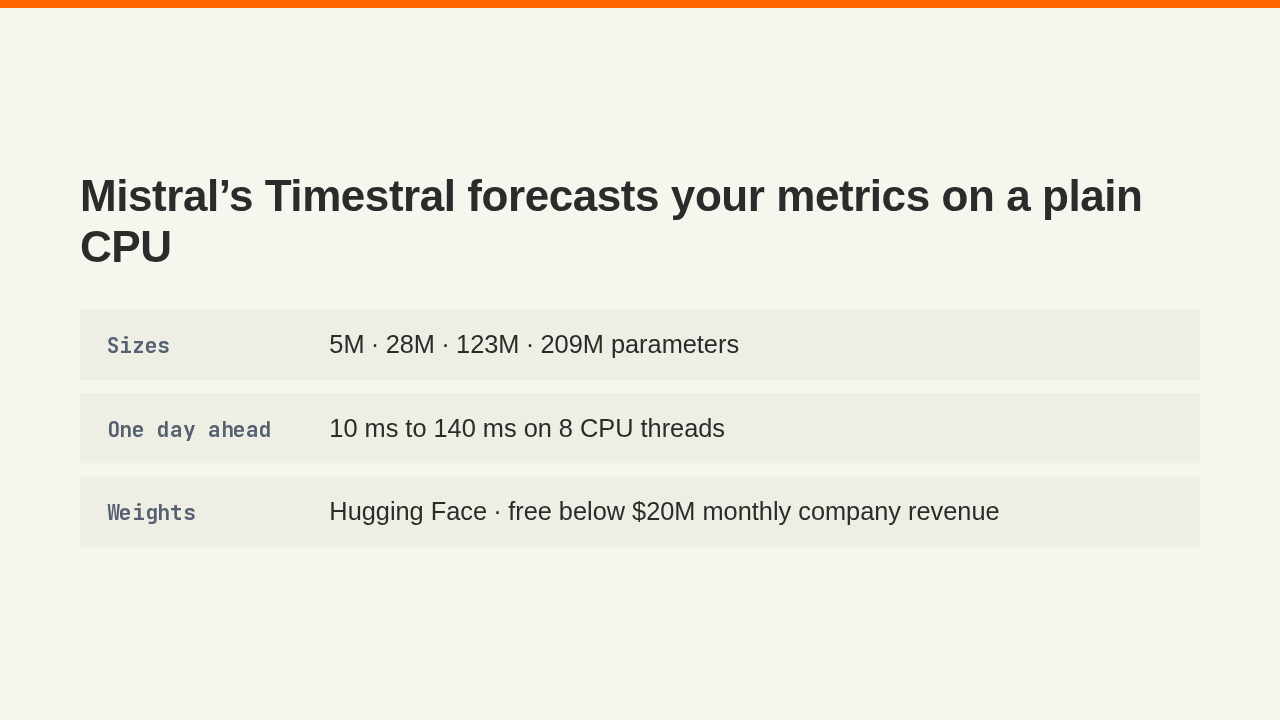
Mistral’s Timestral forecasts your metrics on a plain CPU
Timestral is Mistral's first family of time-series models. Hand it sensor readings, latency metrics or sales history, and it forecasts without training on your data, as a range instead of a single line. It also takes inputs you already know about the future, like a production schedule or a holiday calendar. Even the largest model forecasts a day ahead in about a seventh of a second on a server CPU, and it ranks first among pre-trained forecasters on the three main public leaderboards. The weights are on Hugging Face, but a company earning more than 20 million dollars a month needs a commercial license.
One model or many
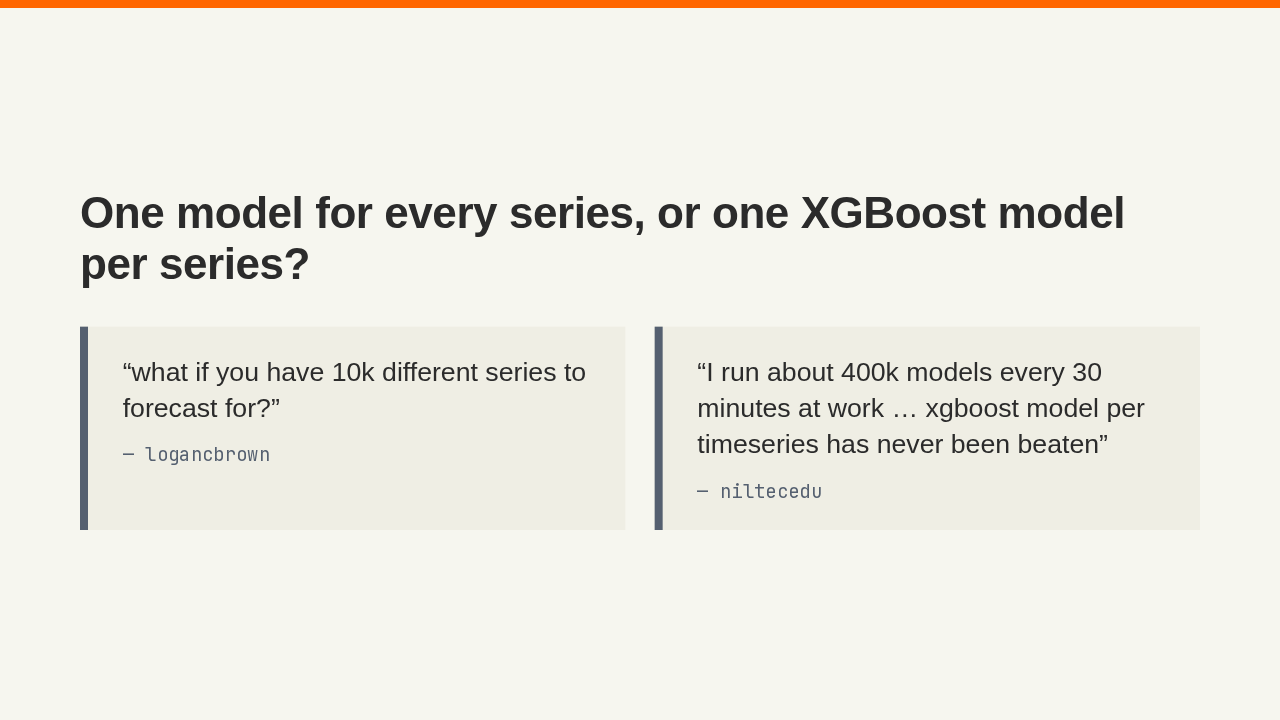
One model for every series, or one XGBoost model per series?
“what if you have 10k different series to forecast for?”
“I run about 400k models every 30 minutes at work … xgboost model per timeseries has never been beaten”
Whether one big model beats many small ones split the thread. logancbrown argues for scale: with 10,000 series to forecast, a single pre-trained model saves you from fitting 10,000 models that each have little history to learn from. niltecedu runs about 400,000 models every half hour at work, one XGBoost model per series, and says that setup has beaten every other approach they have tried, and still predicts faster.
Wine on OpenBSD
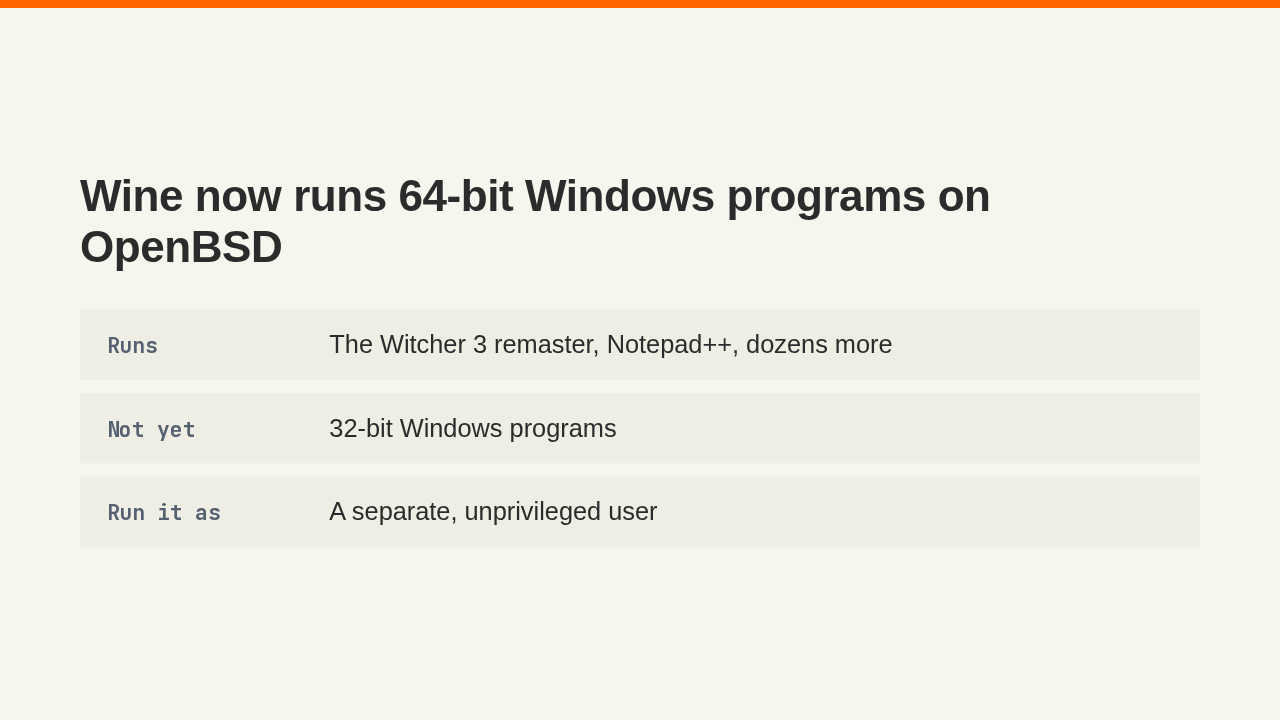
Wine now runs 64-bit Windows programs on OpenBSD
Thomas Frohwein proposed a Wine port for OpenBSD, and several dozen 64-bit Windows programs already work on it, down to last month's Witcher 3 remaster. The hard part was the GS register, which Windows programs use to find their thread's data. OpenBSD won't let Wine set it the way Windows does, so the port catches each instruction that touches GS and rewrites it. 32-bit Windows software doesn't run yet, the built-in tests are switched off, and Frohwein suggests running it as a separate, unprivileged user for now.
Let's Encrypt adds vantage points
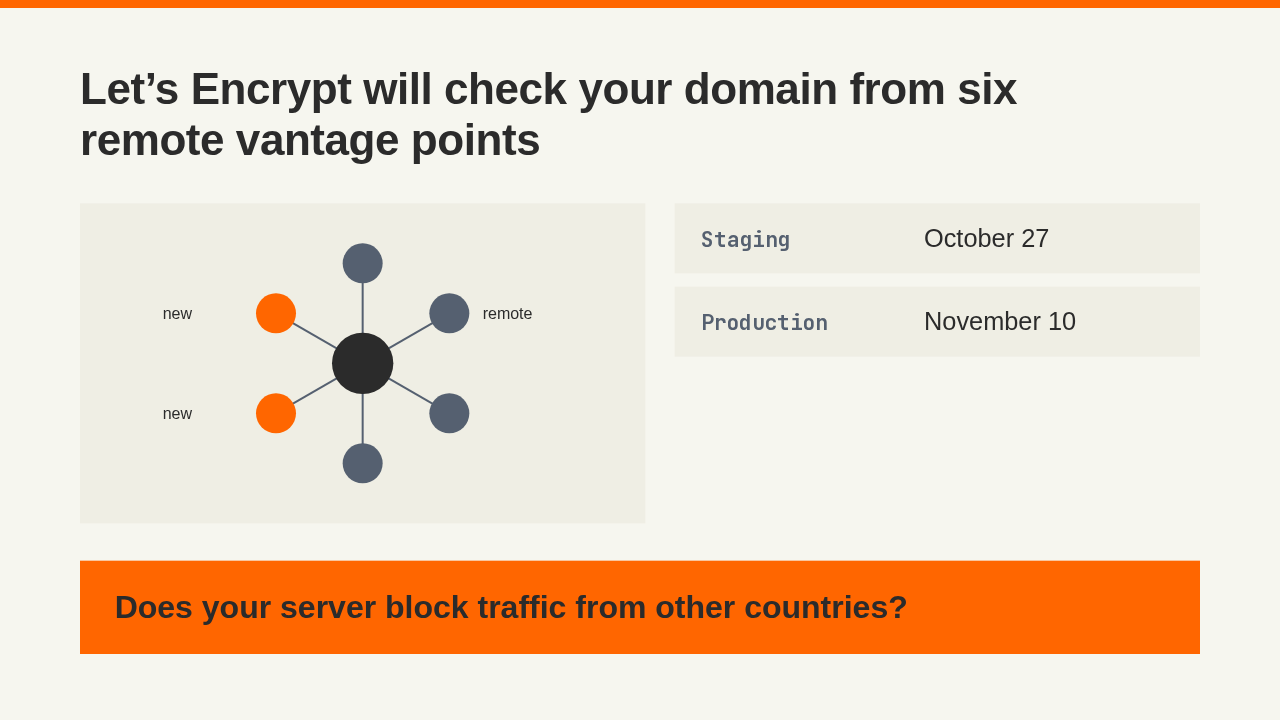
Let’s Encrypt will check your domain from six remote vantage points
Does your server block traffic from other countries?
From November 10, every Let's Encrypt domain check sends seven requests: one from the primary data center and six from remote ones, up from four. The primary and a quorum of the remote ones must all see the right challenge response, which makes a BGP hijack of one route to your server harder to turn into a certificate. In the thread, throw0101a pointed to August, when an attacker hijacked a block of Hetzner addresses for about a day and a half and still got a certificate for virtualizor.com, because the stolen route won across most of the internet. So, does your server block traffic from other countries?