Google ads now allow fingerprinting

Google ads now allow fingerprinting, QGIS bans AI code, and Gran Turismo 4 in WebAssembly
On Monday's Hacker News front page, a demo shows how a website recognises your browser after you clear its cookies, reload, or switch on a VPN. The page names each visitor after their hardware, and the name sticks. Google's ad products have allowed device fingerprinting since February 2025, reversing the stance Google took against it in 2019.
What a fingerprint is made of
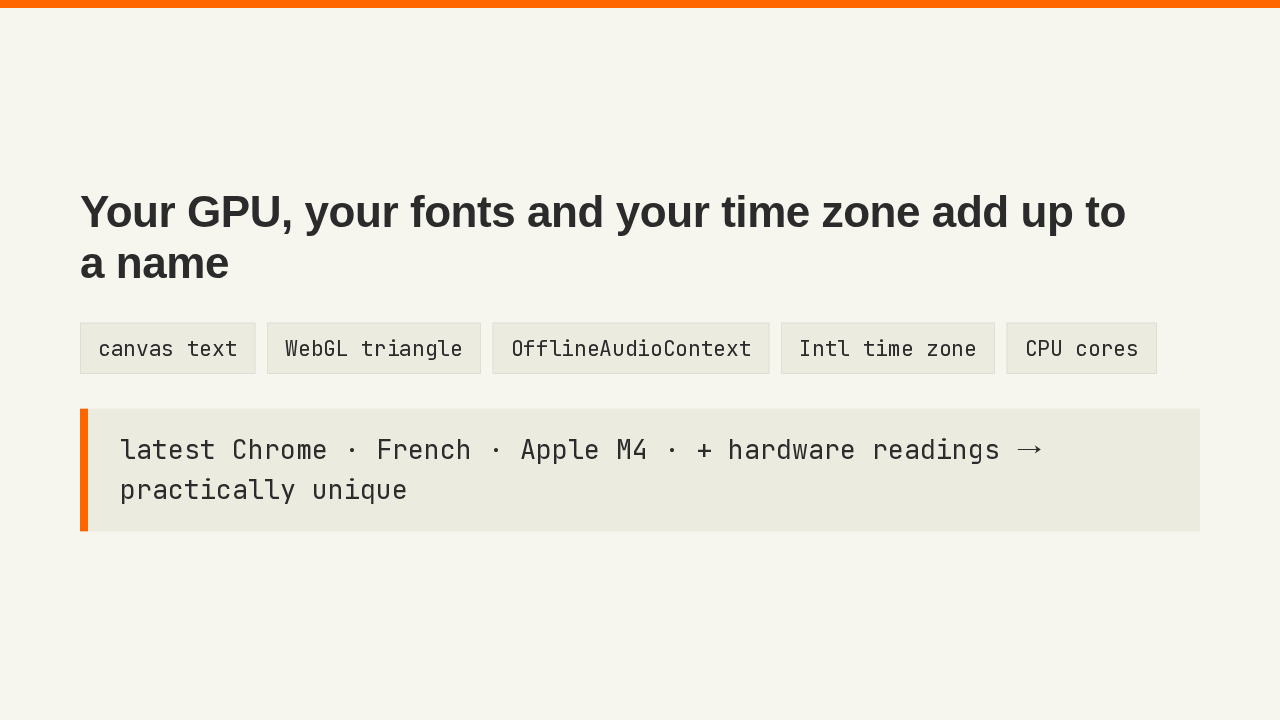
Your GPU, your fonts and your time zone add up to a name
Each of these readings runs without a permission prompt. The page draws text and a triangle off screen and reads the pixels back, renders a tone it never plays, and asks for your time zone and your number of CPU cores. Millions of browsers run the latest Chrome, and millions of Macs have an M4. The latest Chrome, set to French, on an M4, is a much smaller crowd, and the hardware readings shrink it to practically one person. A VPN changes your address, but your time zone stays put.
Brave, Tor and Mullvad Browser
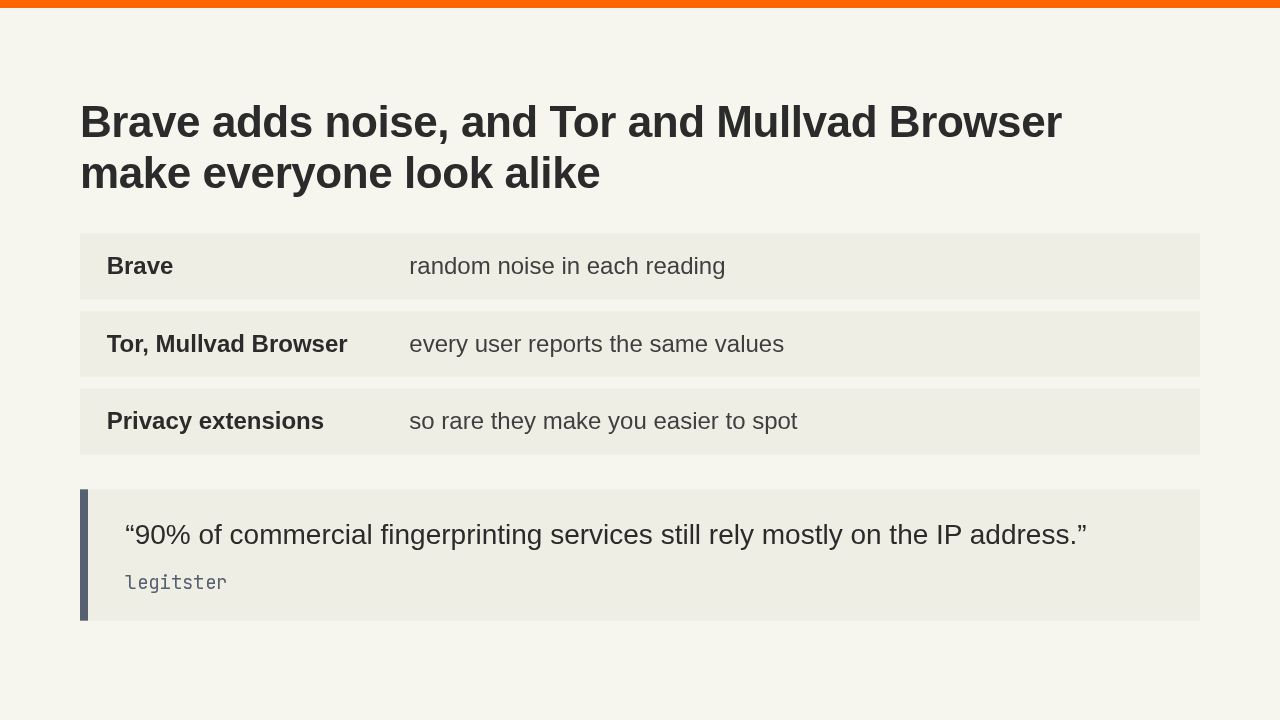
Brave adds noise, and Tor and Mullvad Browser make everyone look alike
“90% of commercial fingerprinting services still rely mostly on the IP address.”
Chrome and Edge keep one site out of another's data, and stop there. Brave feeds a little random noise into each reading, so your fingerprint keeps changing. Tor and Mullvad Browser make every user report the same values. A privacy extension works against you, because so few people run one that it makes you rarer. In the thread, legitster argues commercial trackers still lean mostly on your IP address, because readings like fonts and software versions drift within days.
QGIS bans AI-assisted code
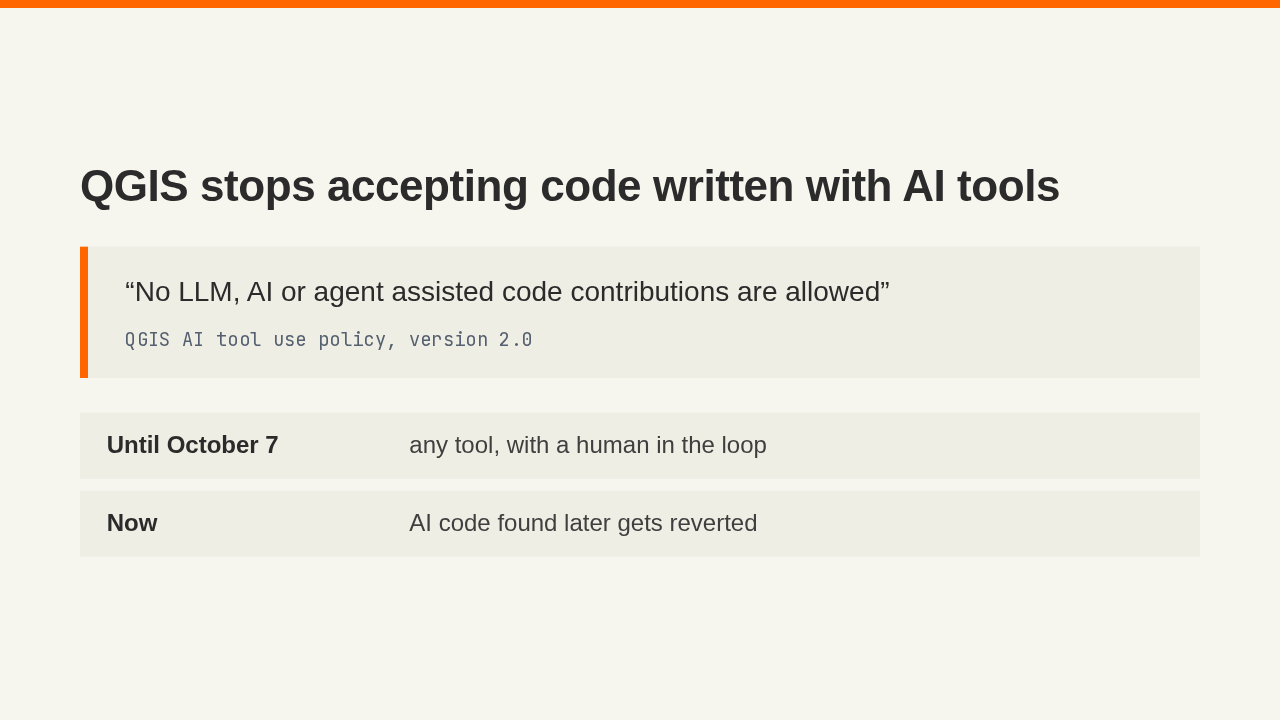
QGIS stops accepting code written with AI tools
“No LLM, AI or agent assisted code contributions are allowed”
QGIS, the open-source desktop map and GIS app, now refuses any code written with an LLM, an AI tool or an agent in its main repository. The old rule allowed any tool, as long as a human reviewed the work. That rule didn't hold up, and the project lost at least one valued contributor. Nyall Dawson describes the new one as shutting the door first, then deciding how far to open it. In the thread, robertclaus describes the same flood at Plotly: unproofread issues and plausible but weak pull requests.
PS2 Web Recomp
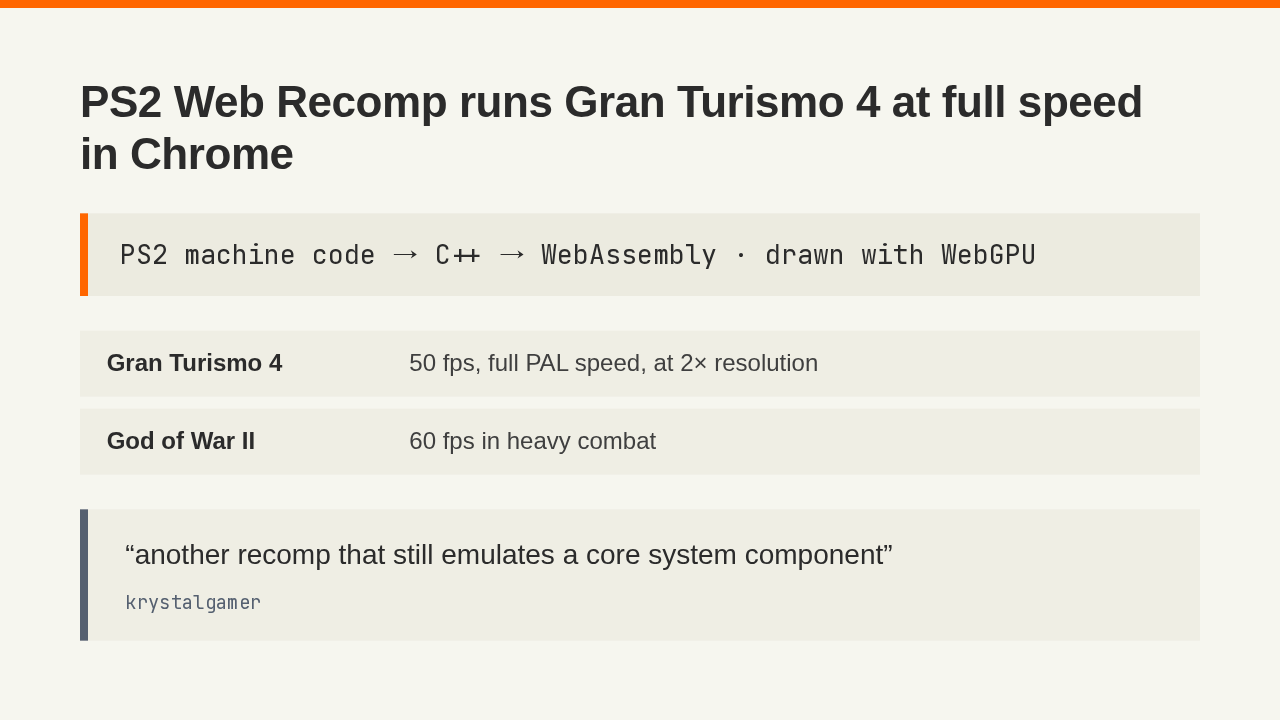
PS2 Web Recomp runs Gran Turismo 4 at full speed in Chrome
“another recomp that still emulates a core system component”
PS2 Web Recomp translates a PlayStation 2 game's machine code into C++ ahead of time, compiles it to WebAssembly, and draws with WebGPU. Gran Turismo 4 runs at full speed in Chrome on a laptop's integrated graphics, at twice the console's resolution. You bring a disc you own, and one script turns it into a web page. In the thread, krystalgamer points out that part of the console is still emulated. That's right: the I/O processor runs the game's own sound and disc modules on an interpreter.
Pensieve
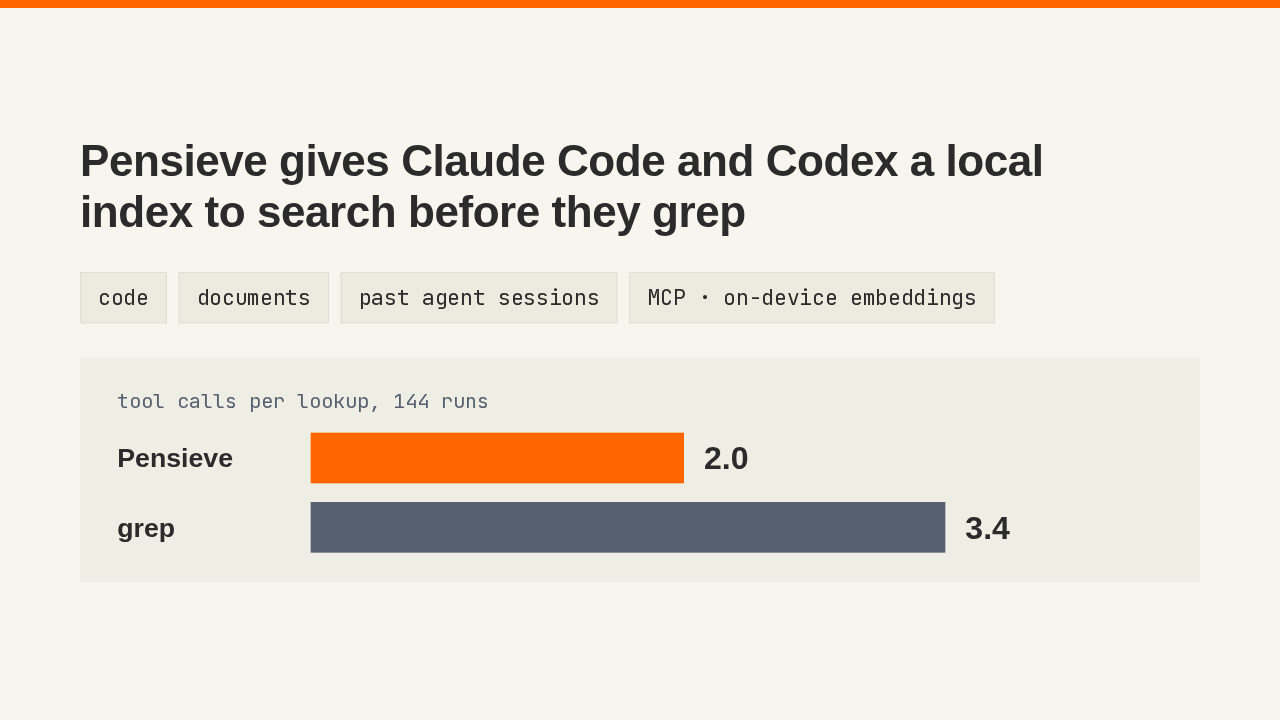
Pensieve gives Claude Code and Codex a local index to search before they grep
Pensieve is a free, open-source Mac app that indexes your code, your documents and your past agent sessions on your own machine. Claude Code, Codex and Cursor query it over MCP, by meaning or by the exact words, and get back a few passages with file and line. Agents find what they need in about two tool calls instead of three or four, and often in one. In the thread, tinthedev argues a well-organised codebase is the better fix, and others point out the install asks your agent to pipe a script into the shell.