Anthropic replaced git with Scion

Anthropic replaced git with Scion, Gemini 4 Argon, and an 11-year-old hole in Rust’s borrow checker
On Tuesday's Hacker News front page, Anthropic has moved its monorepo off git and onto a version control system it built for itself, called Scion. In May, Anthropic merged about 2,500 code changes a day. By September it was merging more than 30,000 a day, most of them written by Claude, and source control had become the bottleneck. Seven engineers built Scion and migrated in five months.
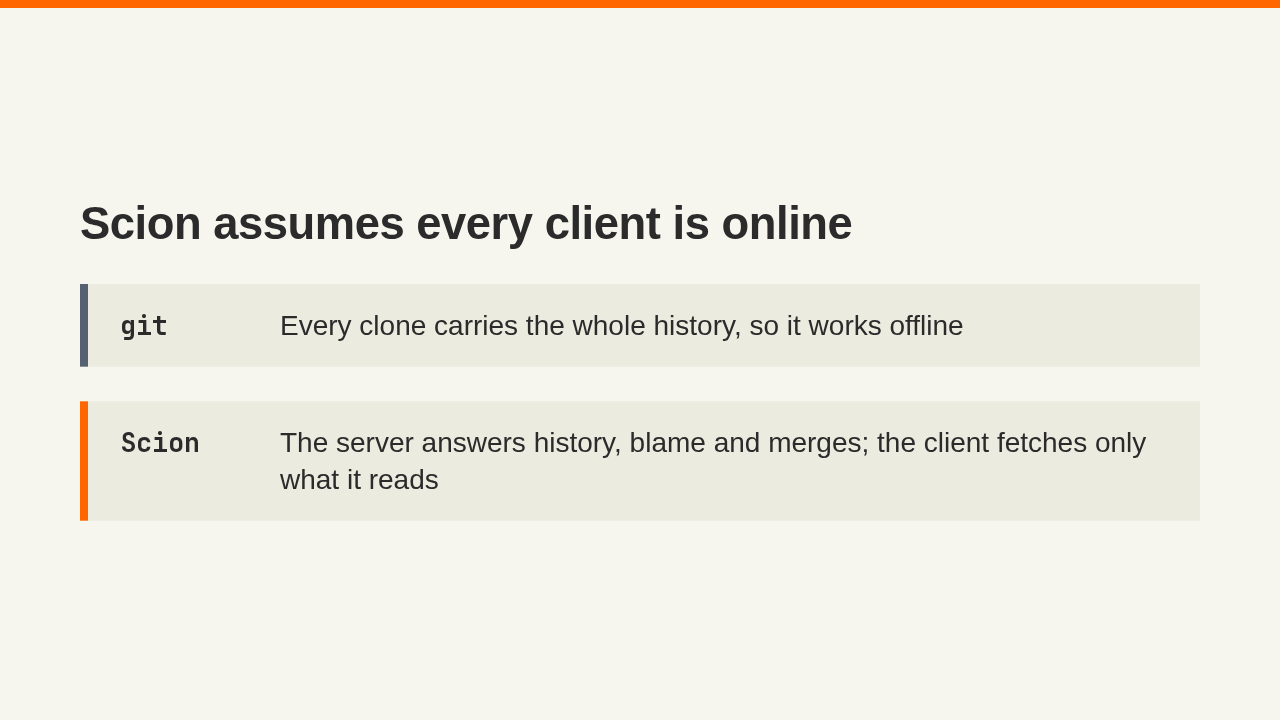
Scion assumes every client is online
Almost every client of Anthropic's monorepo is an agent or a CI job, online by definition, and the history of the main branch alone is almost 100 gigabytes. In Scion, the server computes history and blame, creates commits and performs merges, and the client fetches only the files it actually reads. Checkouts that took minutes now take seconds, and CI got back a quarter of its CPU.
Engineers tell Claude no
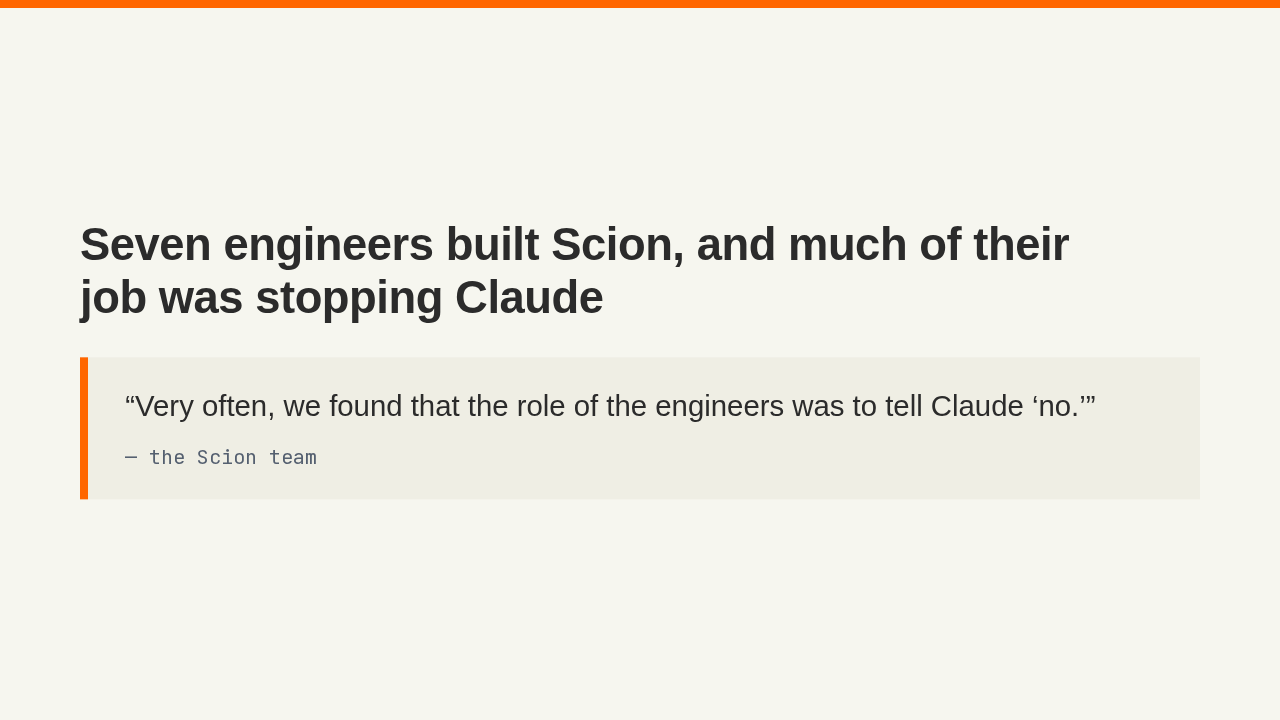
Seven engineers built Scion, and much of their job was stopping Claude
“Very often, we found that the role of the engineers was to tell Claude ‘no.’”
Every engineer on the Scion team now rates Claude as a better coder than themselves. The engineers supplied the design, and the constraints the system must never break. Claude kept reaching for shortcuts that broke them, like reading the whole commit log to find when a change merged, instead of asking the code review tool. The engineers still review every change to Scion, but they check its intent rather than reading every line.
Scion stays inside Anthropic
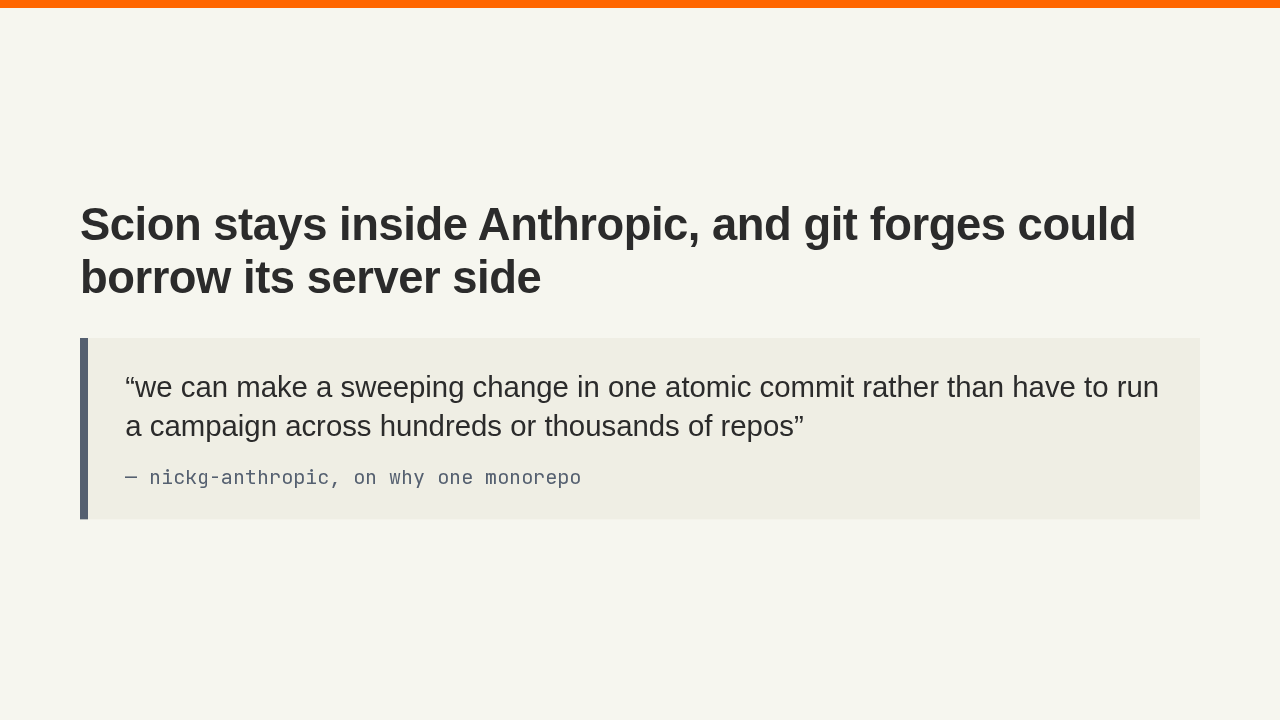
Scion stays inside Anthropic, and git forges could borrow its server side
“we can make a sweeping change in one atomic commit rather than have to run a campaign across hundreds or thousands of repos”
You can't install Scion. Adopting it would mean replacing code review, code search and CI as well, and it only pays off for enormous monorepos. Anthropic proposes instead that GitHub, GitLab and git itself borrow the server side, with forges answering history and blame over an API, so a CI job needs no clone. Asked in the thread why not split the monorepo, nickg-anthropic answered that one repository lets a sweeping change land as a single atomic commit.
Gemini 4 Argon
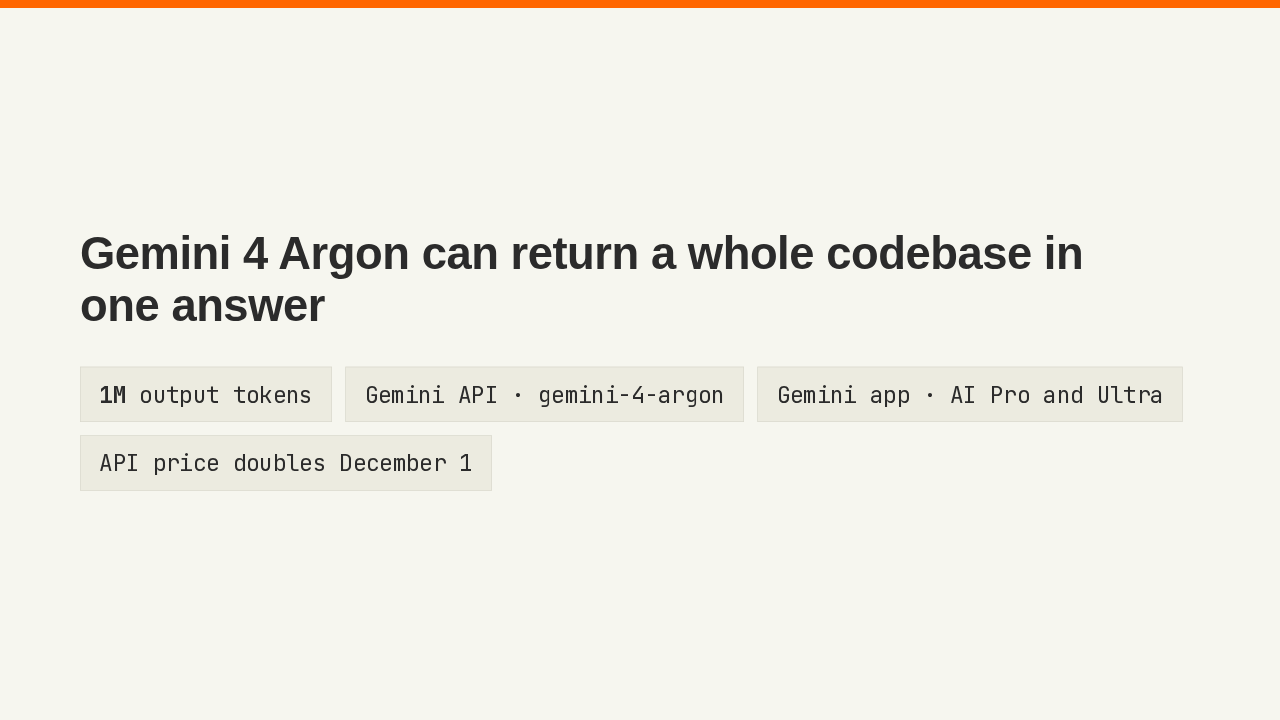
Gemini 4 Argon can return a whole codebase in one answer
Gemini 4 Argon, Google's new flagship model, can write up to a million tokens in one answer. That's room for a whole multi-file application in one pass, without stitching truncated replies together. In the API it costs two dollars per million input tokens and ten per million output until the end of November, then both prices double. In the thread, vidarh clicked Try in Gemini and landed on Gemini 3.6, with no way to pick Argon without upgrading.
Where Argon leads
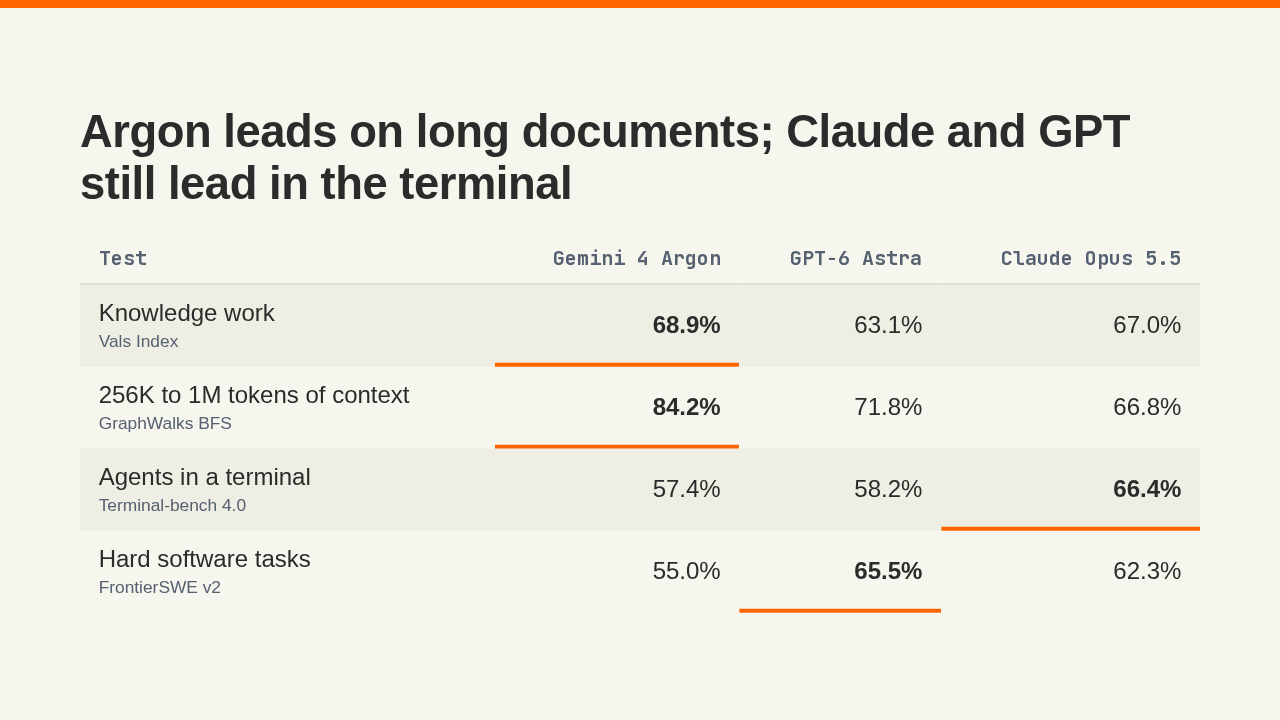
Argon leads on long documents; Claude and GPT still lead in the terminal
| Test | Gemini 4 Argon | GPT-6 Astra | Claude Opus 5.5 |
|---|---|---|---|
| Knowledge workVals Index | 68.9% | 63.1% | 67.0% |
| 256K to 1M tokens of contextGraphWalks BFS | 84.2% | 71.8% | 66.8% |
| Agents in a terminalTerminal-bench 4.0 | 57.4% | 58.2% | 66.4% |
| Hard software tasksFrontierSWE v2 | 55.0% | 65.5% | 62.3% |
Argon is at its best with very long inputs. Asked to follow a chain of links through an input between a quarter of a million and a million tokens long, Argon misses about one in six, where GPT-6 Astra and Claude Opus 5.5 miss between a quarter and a third. For coding, Claude Opus 5.5 is still ahead at running agents in a terminal, and GPT-6 Astra leads on the hardest software engineering tasks.
An 11-year-old hole in Rust's borrow checker
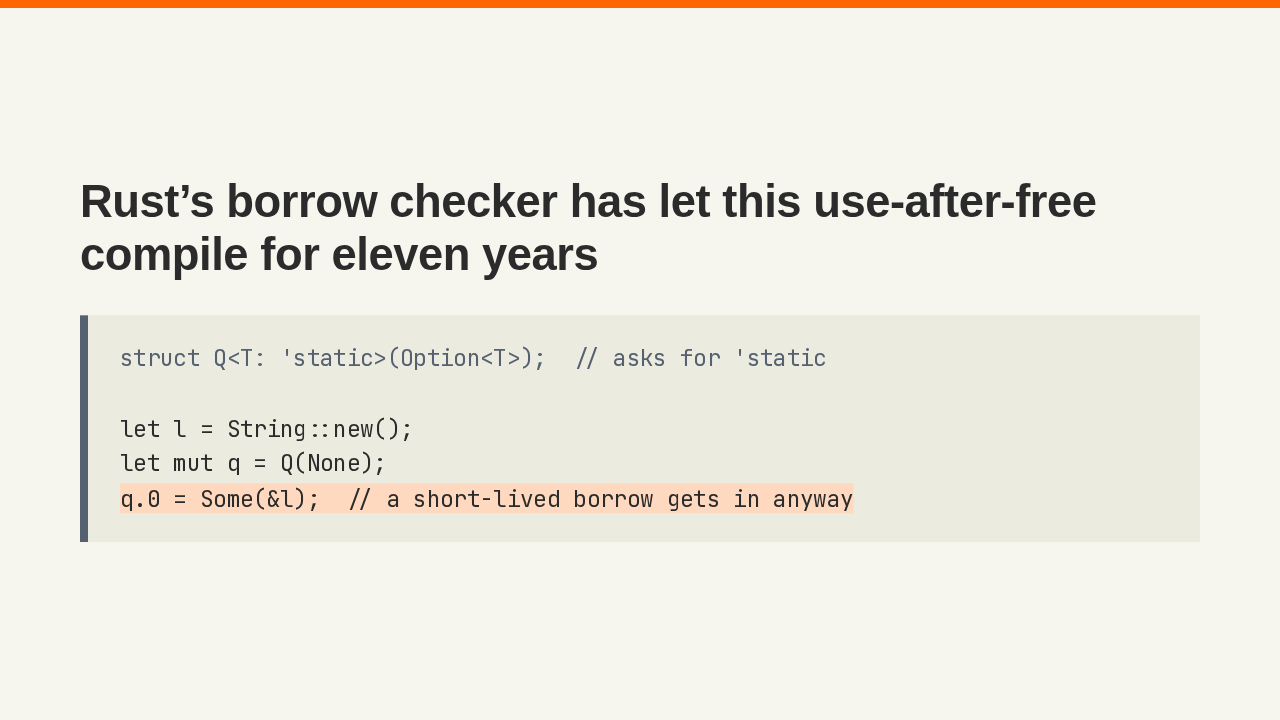
Rust’s borrow checker has let this use-after-free compile for eleven years
struct Q<T: 'static>(Option<T>);  // asks for 'static

let l = String::new();
let mut q = Q(None);
q.0 = Some(&l);  // a short-lived borrow gets in anyway
Rust's borrow checker has been accepting a use-after-free for about eleven years. A struct says its contents must live for the whole program. Build it empty, assign a short-lived reference to its field, and the compiler skips that check, so the struct's Drop code can hold on to freed memory. One version compiles on Rust releases back to 2015. Exploiting it takes a deliberately malicious Drop implementation, so Rust's types team rates it high priority rather than critical. In the thread, theemathas pointed out that most soundness holes need contorted code, and this one fits in a handful of lines.
Janas
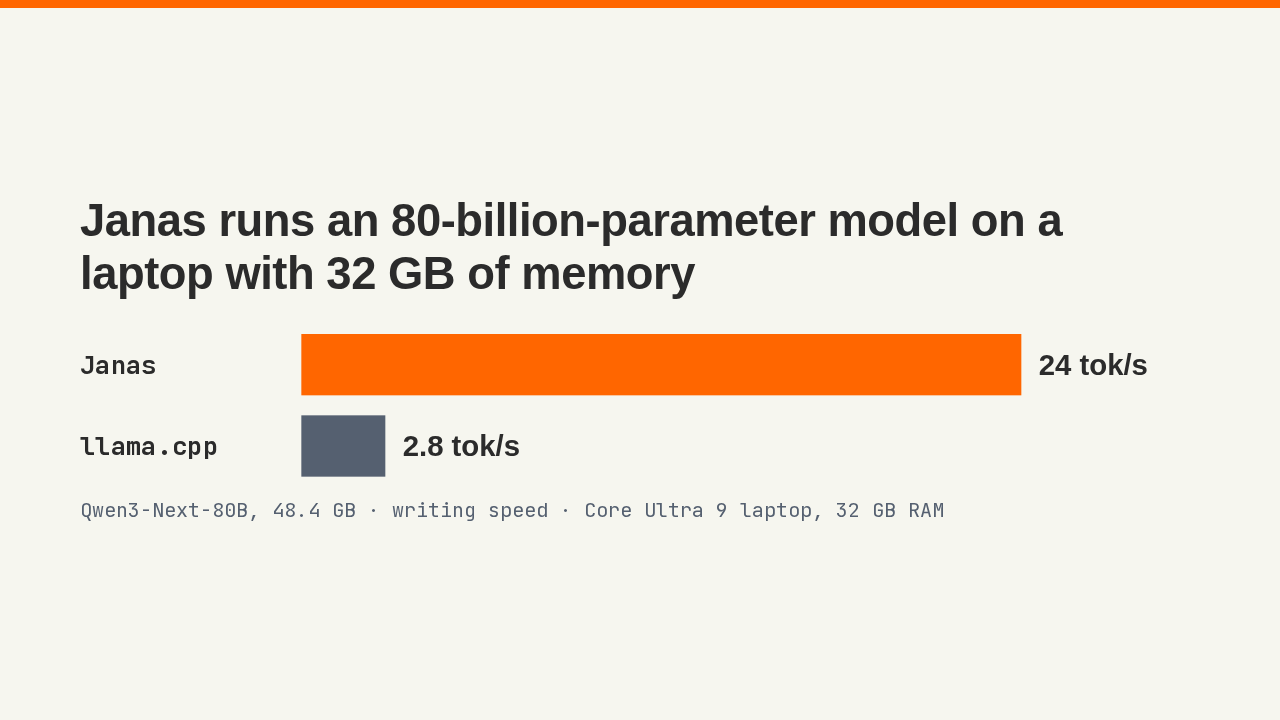
Janas runs an 80-billion-parameter model on a laptop with 32 GB of memory
Janas runs mixture-of-experts models that are bigger than your memory. The weights stay on the SSD, each token streams in only the experts it needs, and the experts that keep coming back stay in RAM. On a laptop with 32 gigabytes, Qwen3-Next-80B, a 48 gigabyte model, writes about 24 tokens a second, where llama.cpp manages under three. It's written in C and has only been tested on that one laptop, where it can push the desktop into swap. In the thread, Espressosaurus argued that picking which experts to keep cached is the hard part, and still unsolved.