DeepSeek Search and Fetch
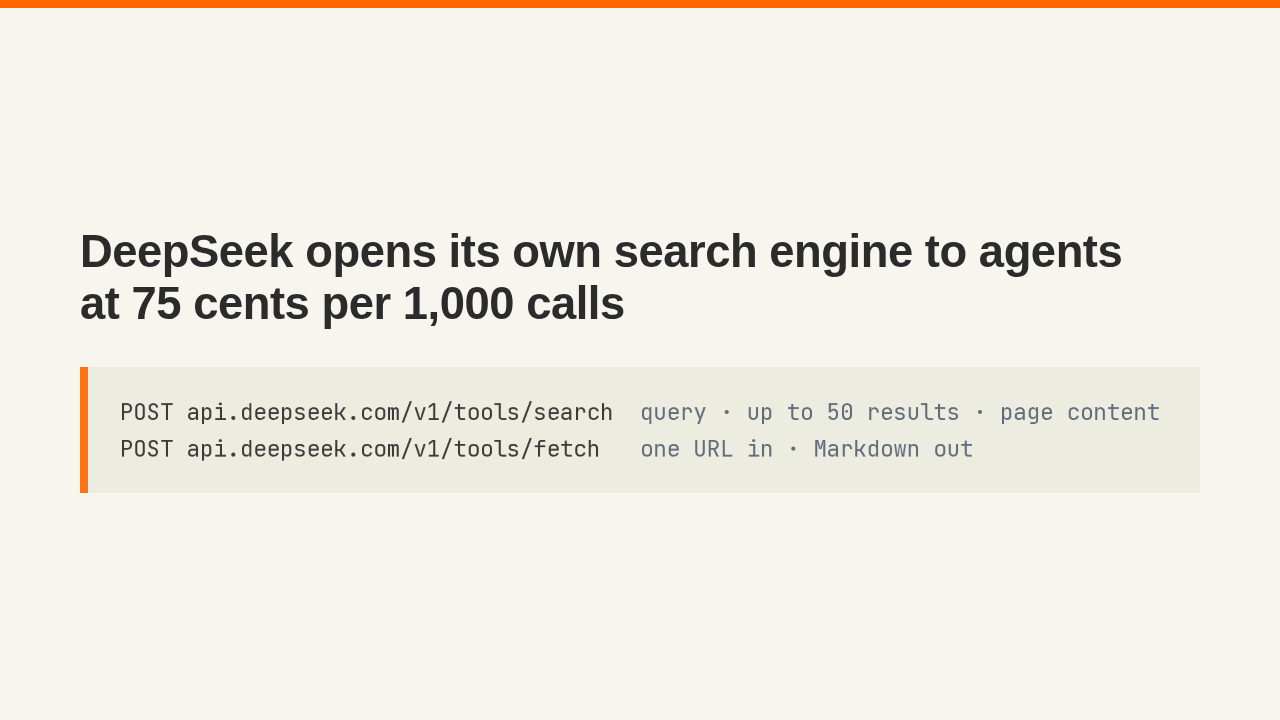
DeepSeek opens its own search engine to agents at 75 cents per 1,000 calls
POST api.deepseek.com/v1/tools/search  query · up to 50 results · page content
POST api.deepseek.com/v1/tools/fetch   one URL in · Markdown out
On Sunday's Hacker News front page, DeepSeek opened its own search engine to agents, on the same API key you already use for its models. Search takes a query, with operators like site and after, and returns up to 50 ranked results, with the page text if you ask for it. Fetch takes one URL and returns the page as Markdown. Both cost 75 cents per 1,000 successful requests, and an empty result or a timeout is free.
Free until November 1
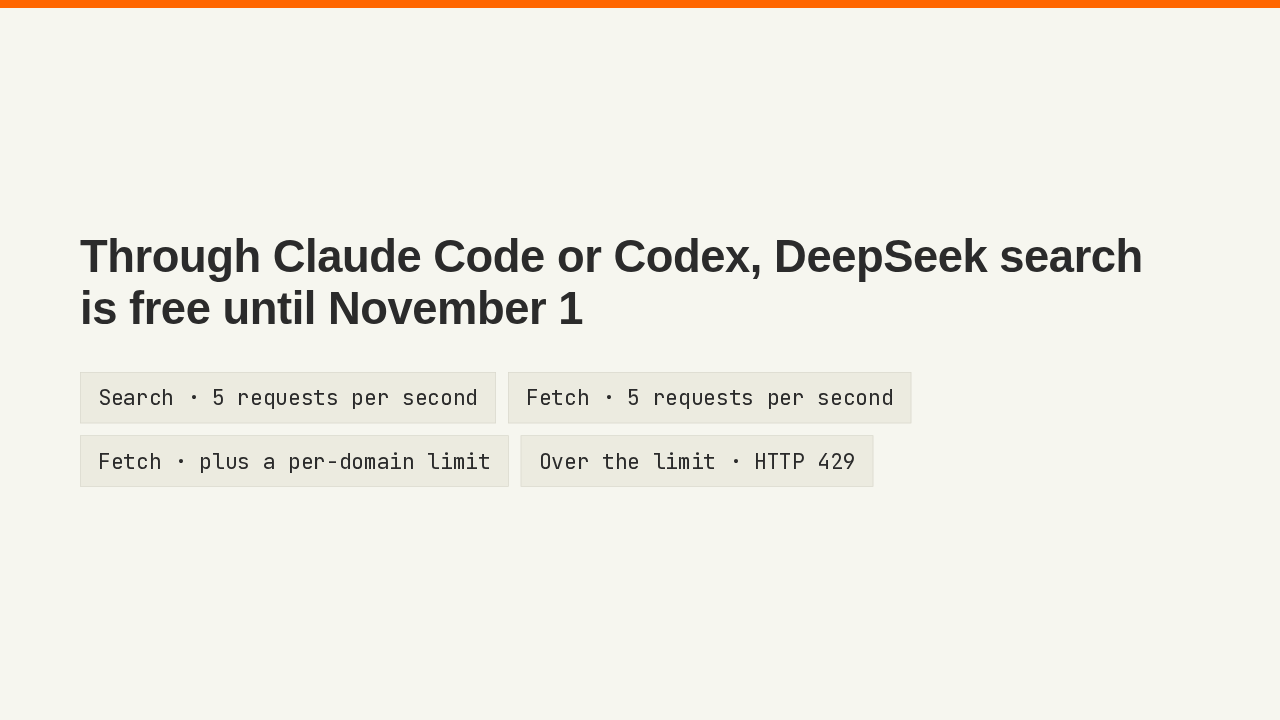
Through Claude Code or Codex, DeepSeek search is free until November 1
If you run Claude Code, Codex or DeepSeek Harness against the DeepSeek API, you are already calling these endpoints. The model's server-side search and fetch go through them, free for now. Billing starts on November 1, at midnight Beijing time. Each account gets five requests per second for search and five for fetch, across every key, and fetch adds a limit per domain. Past that, requests fail with a 429, so an agent that opens many pages at once needs to wait and retry.
Cheap, and the quality question
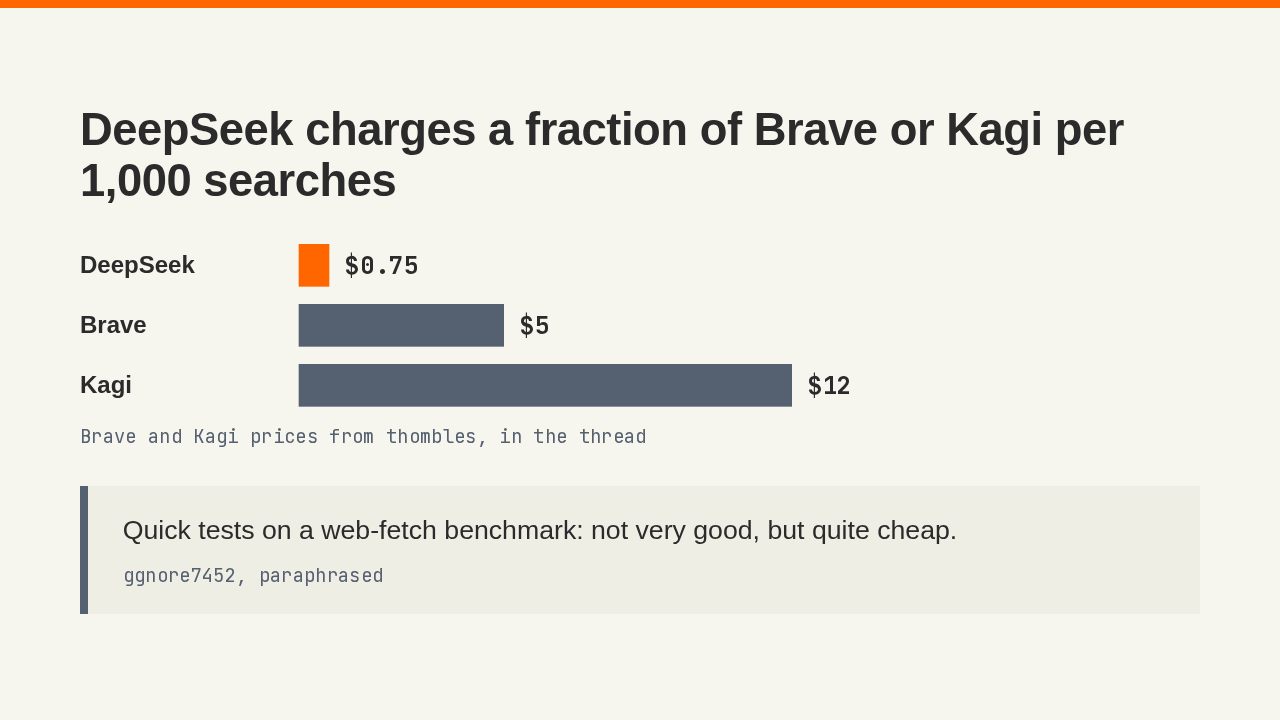
DeepSeek charges a fraction of Brave or Kagi per 1,000 searches
Quick tests on a web-fetch benchmark: not very good, but quite cheap.
The price is what drew the thread. thombles put Brave's search API at five dollars per thousand and Kagi's at twelve, so DeepSeek costs about a seventh of the cheaper one. Quality is the open question. ggnore7452 ran a few quick tests on a personal web-fetch benchmark and found DeepSeek's search and fetch not very good, if cheap, and pointed to Jina as a free option, with Parallel, Firecrawl, Tavily and Exa as the paid ones worth trying.
Lean's five kernels
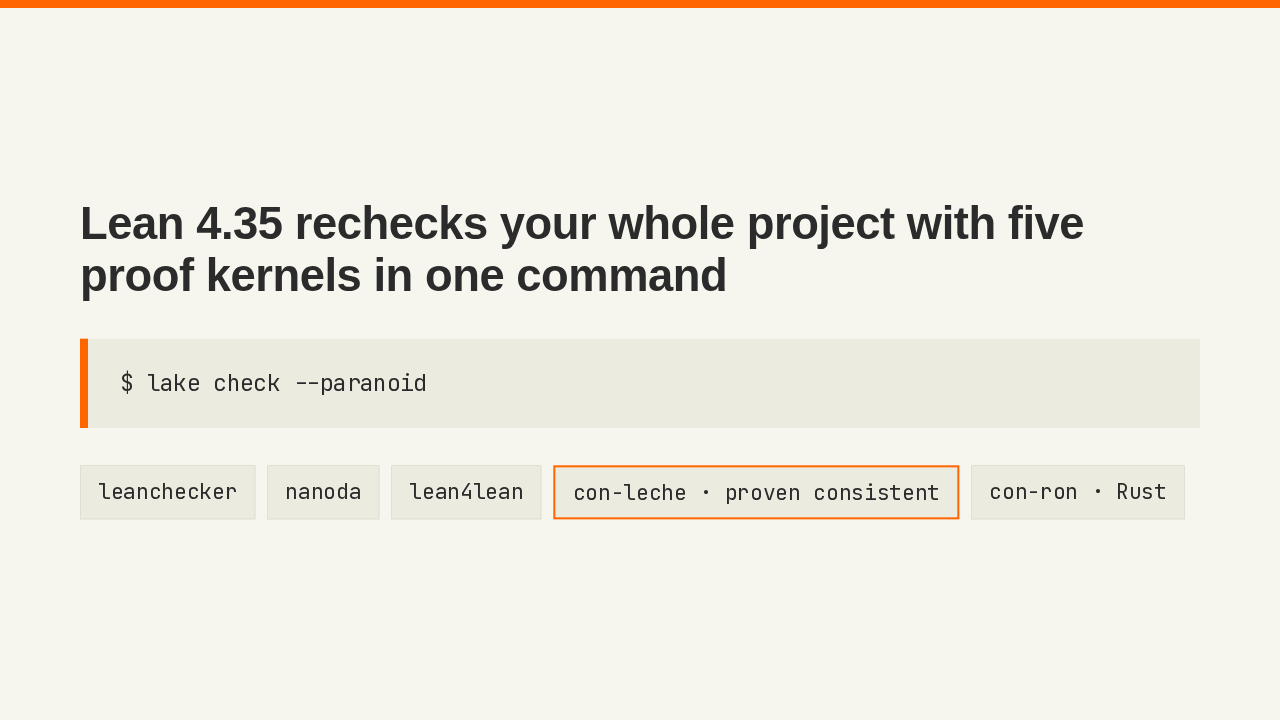
Lean 4.35 rechecks your whole project with five proof kernels in one command
$ lake check --paranoid
AI agents have been finding holes in Lean's proof checker, and Lean 4.35 answers with lake check. It exports your project and rechecks it in a sandbox with the official kernel. Add paranoid and four more kernels check it too. con-leche is written in Lean and proven consistent, by Claude, under Joachim Breitner's supervision. Checking with its Rust translation, con-ron, as well guards against bugs in Lean's own compiler. If two kernels disagree about one of your proofs, the Lean team wants to hear about it.
Pele
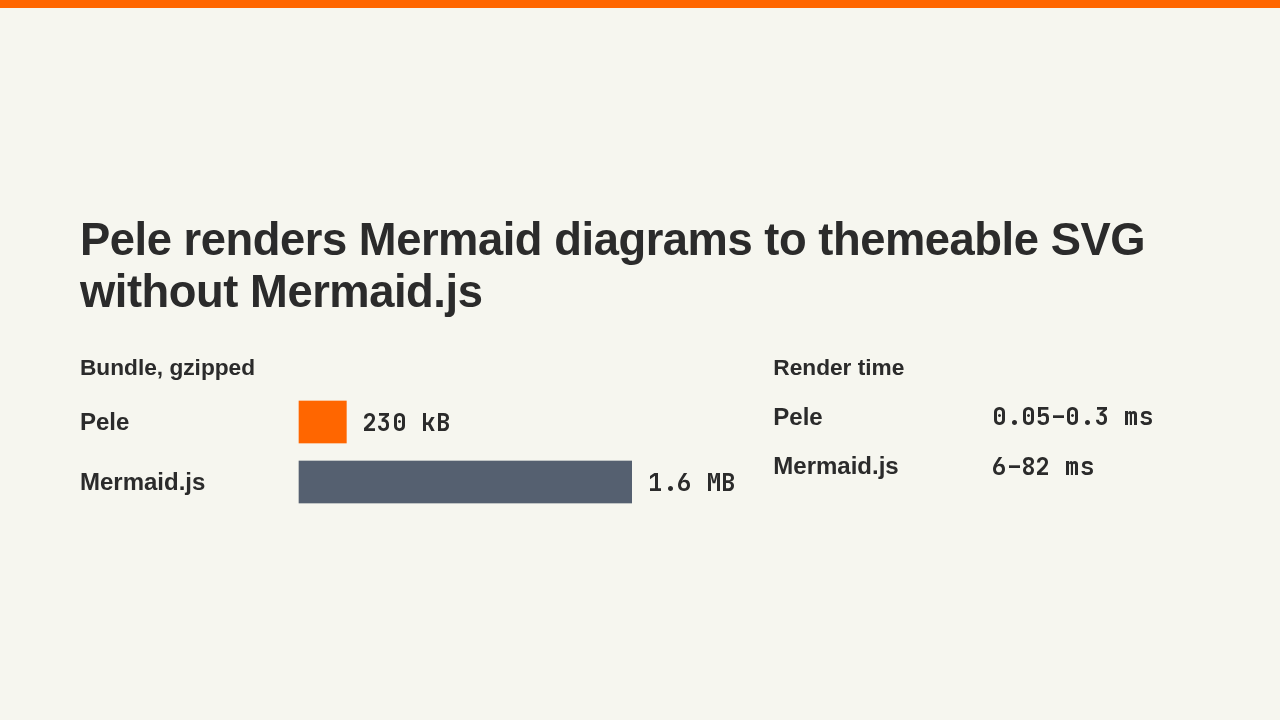
Pele renders Mermaid diagrams to themeable SVG without Mermaid.js
Pele takes Mermaid syntax and hands back an SVG, themed with CSS variables, so switching to dark mode changes the colors without a re-render. kepano built it for Obsidian, under the MIT license. It has zero dependencies, is about six times smaller than Mermaid.js, and draws a diagram in well under a millisecond. In the thread, kepano says Pele follows Mermaid's syntax and lays diagrams out its own way. bilibali swapped it into a static-site build that used to need a whole Chromium instance to render them.
Sphinx
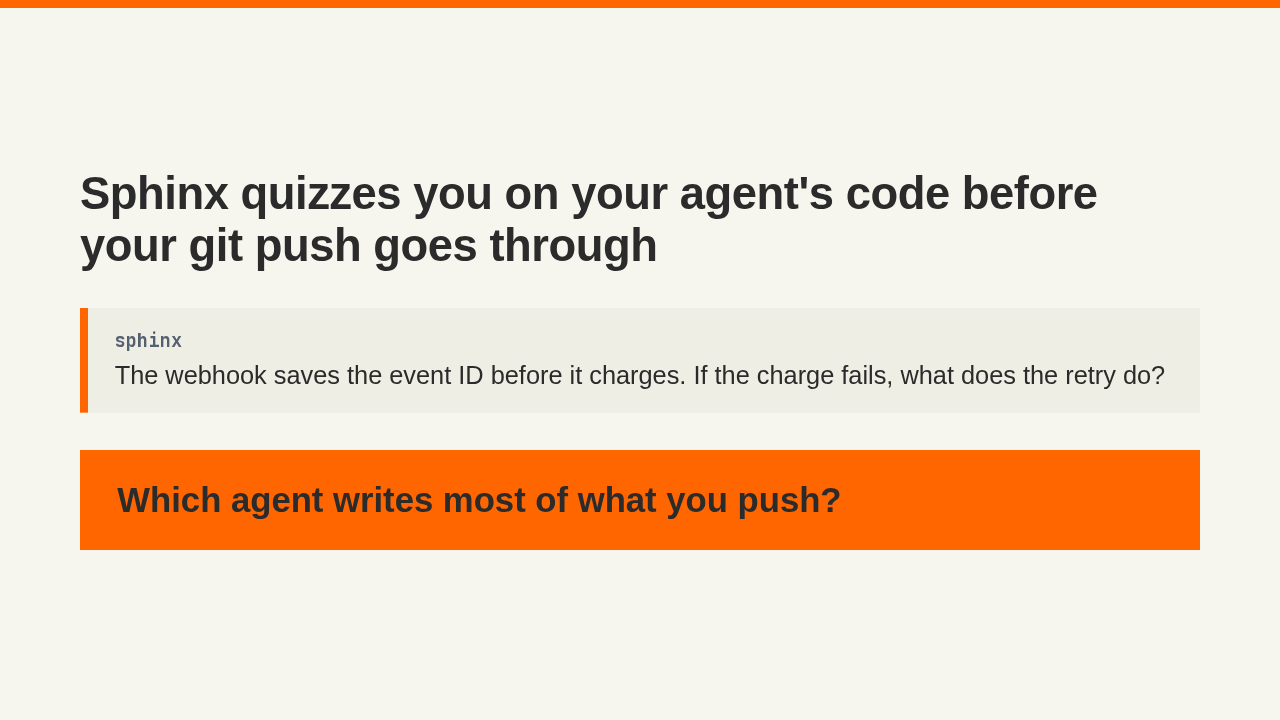
Sphinx quizzes you on your agent's code before your git push goes through
Which agent writes most of what you push?
Sphinx is a Git hook for code your agent wrote. On a protected branch the push pauses, and a reviewer model that never saw your chat reads the diff and asks what it does when something fails. Answer wrong and it explains why, then tries a new scenario. Answer right and the push goes through. It works with Claude Code, Codex, Cursor, OpenCode and Pi, and sphinx yolo skips the check and logs the skip. lecarore pointed out you could paste the question straight back into the agent. Which agent writes most of what you push?