Claude traced NIST’s P-256 seed
Claude traced NIST’s P-256 seed to lrand48 and a 1997 clock
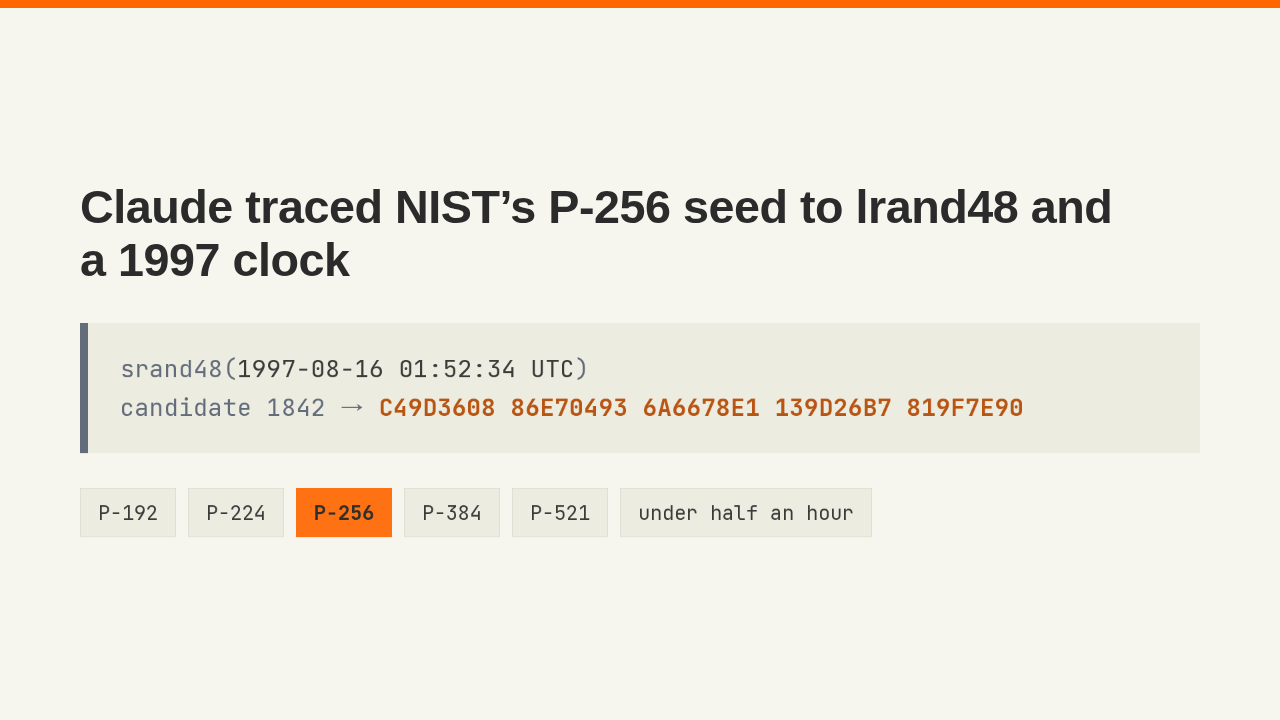
srand48(1997-08-16 01:52:34 UTC)
candidate 1842 → C49D3608 86E70493 6A6678E1 139D26B7 819F7E90
On Friday's Hacker News front page, a cryptography mystery from the nineties got its answer. The NIST curves behind ECDSA, the most widely used elliptic curve signature standard, were built from seeds the NSA handed over with no explanation. Those seeds are plain output from the C library's lrand48 random number generator, seeded with a Unix timestamp. For P-256, the clock read August 16, 1997, and the published seed is candidate 1842 from that run. An internal Claude research model worked out all five prime curves in under half an hour, and a short Python script now prints every seed.
How the top bits gave it away
Your P-256 keys stay as they are, and the backdoor theory gets weaker
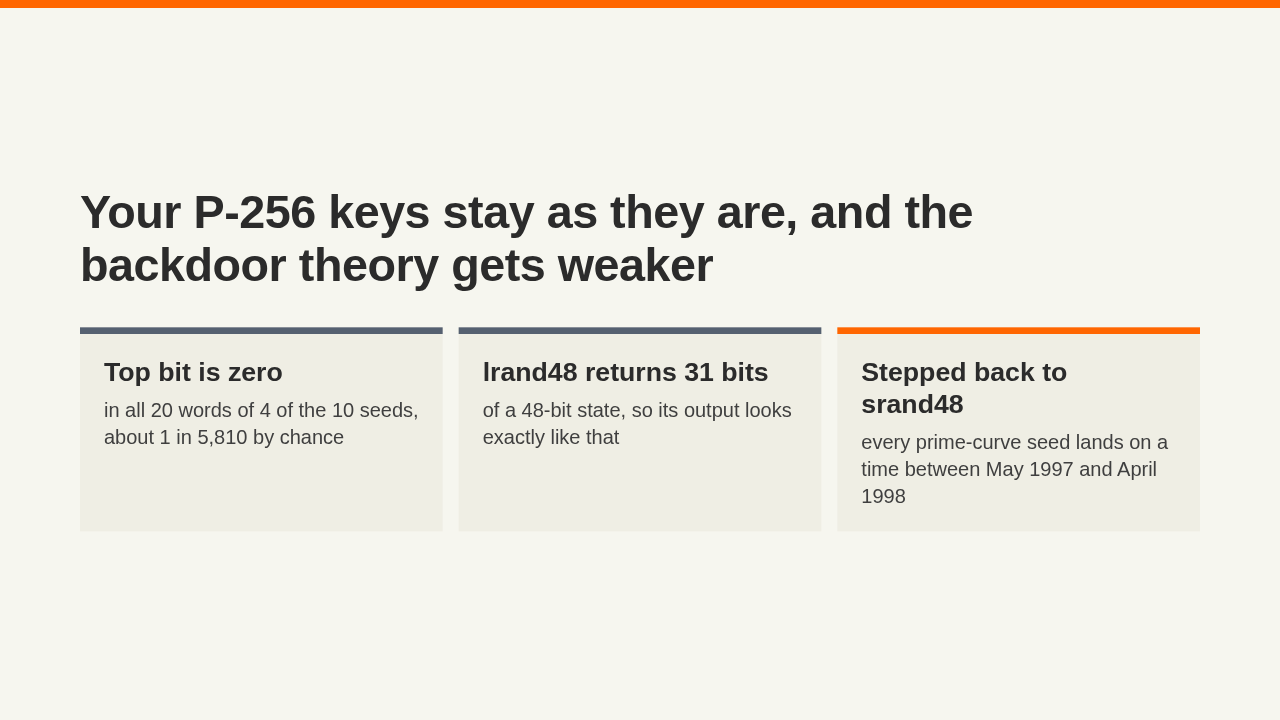
There's nothing to patch or rotate. For years the worry was that the NSA chose those seeds to plant a weakness, and a clock-seeded generator that anyone can replay leaves far less room for that. Claude spotted it in the top bits. Written as 32-bit words, four of the seeds have a zero top bit in every word, about a one in six thousand chance. That is the signature of lrand48, which hands back only 31 bits of its state. Claude recovered each generator state, ran it backwards to the value srand48 would have set, and every prime-curve seed landed on a timestamp between May 1997 and April 1998.
What the seeds leave open
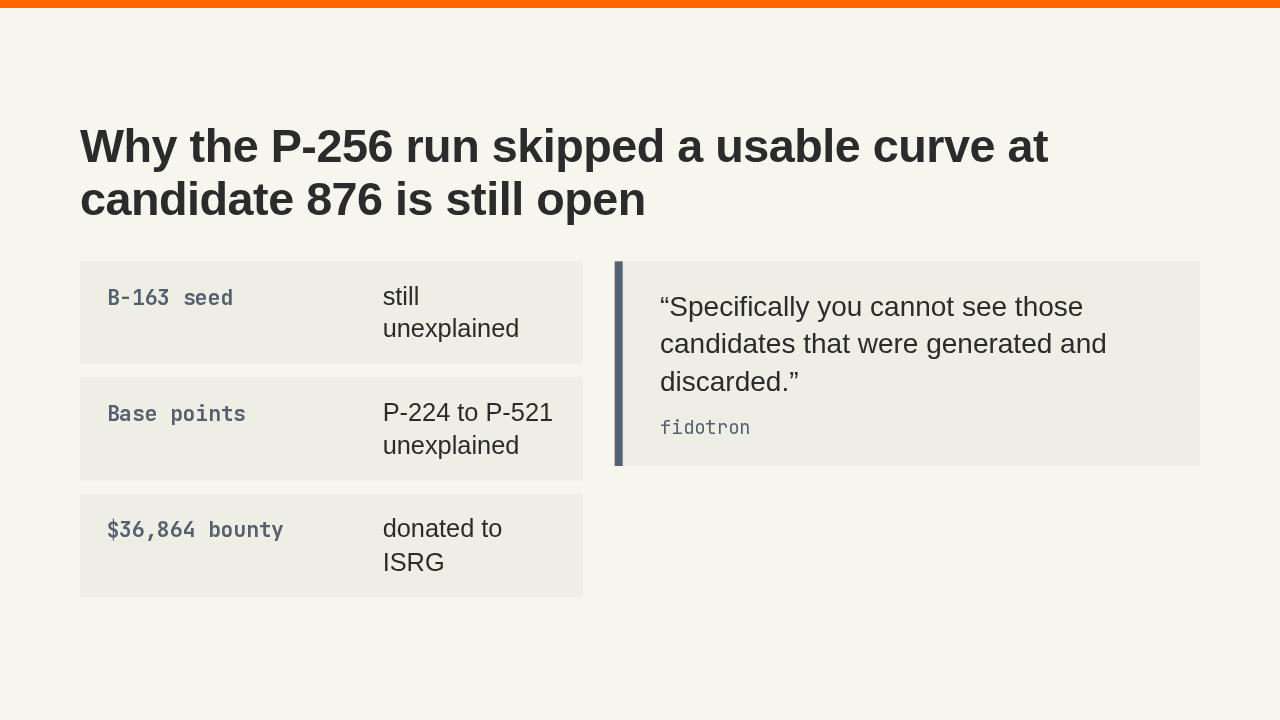
Why the P-256 run skipped a usable curve at candidate 876 is still open
“Specifically you cannot see those candidates that were generated and discarded.”
Some of it is still open. The P-256 run passed over candidate 876, which also gives a prime-order curve of the right size, and the reason for skipping it is unknown. The B-163 seed fits nothing tried so far, and the base points of the larger prime curves are still unexplained. The bounty, almost 37 thousand dollars, goes to the Internet Security Research Group. In the thread, fidotron points out that this settles how the seeds were made and leaves open how they were picked, because candidates that were generated and thrown away are invisible.
Muse Spark Open on four Mac Studios
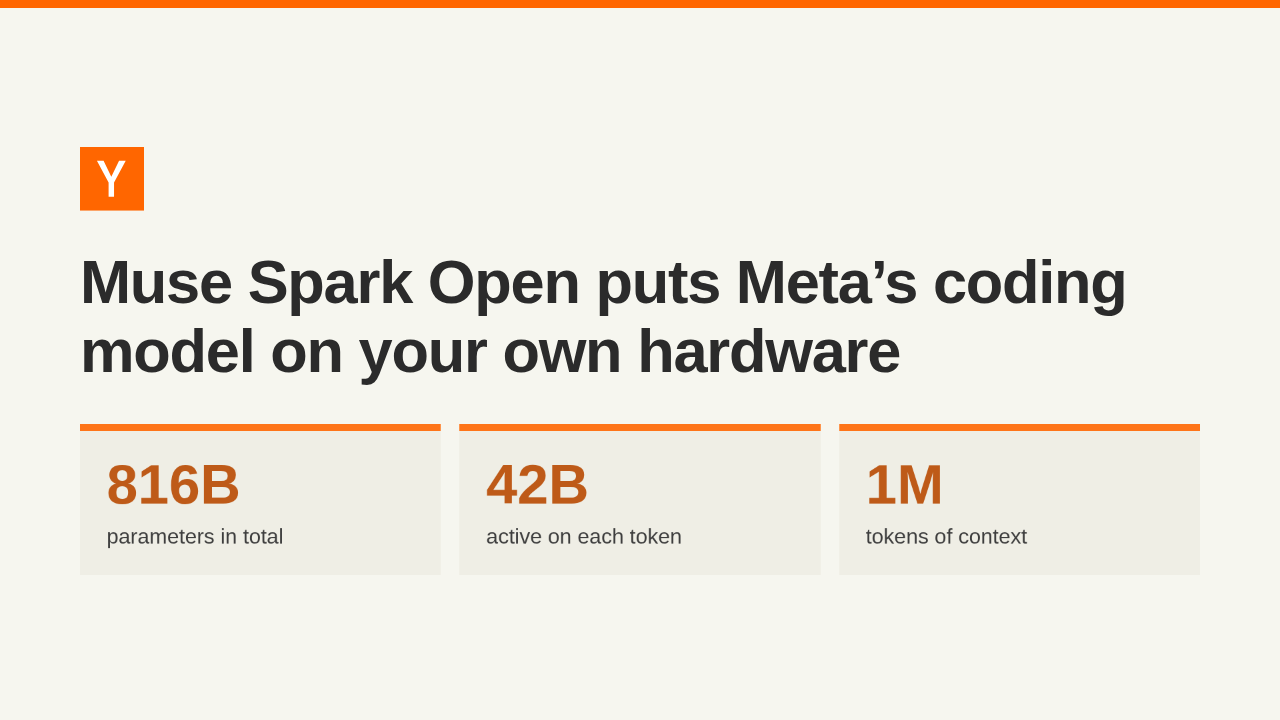
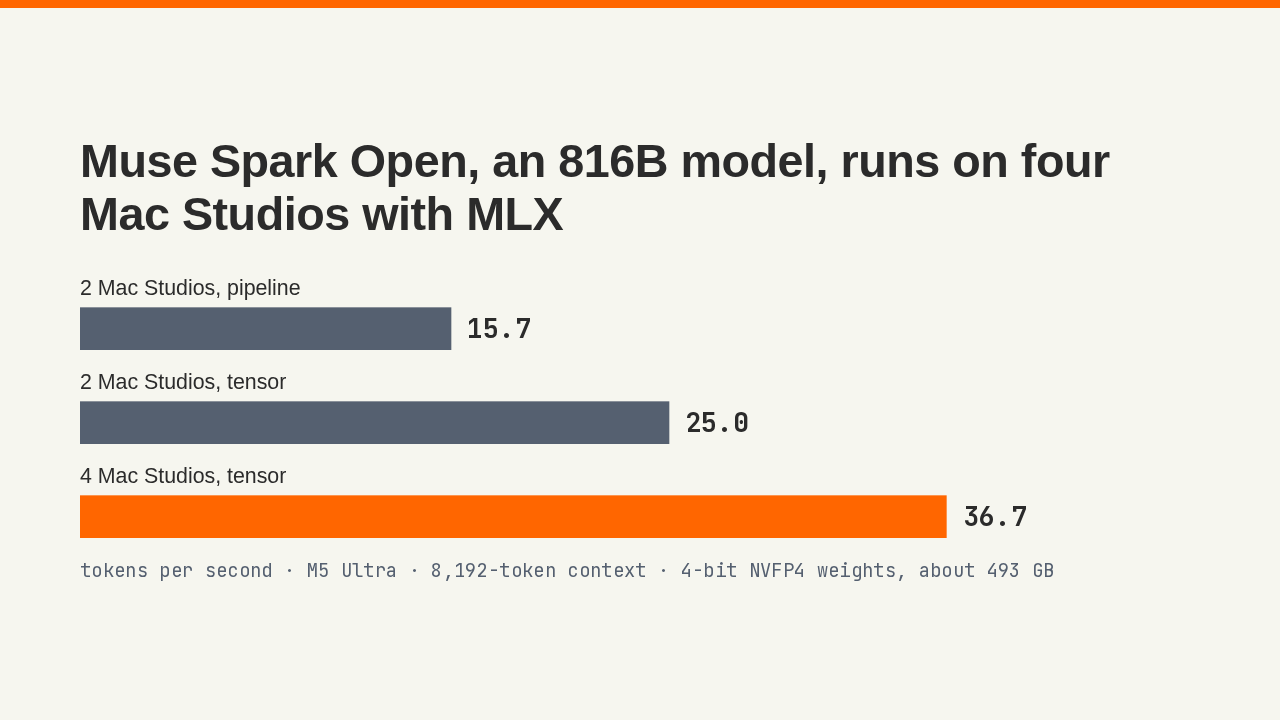
Muse Spark Open, an 816B model, runs on four Mac Studios with MLX
Apple's machine learning team showed Meta's Muse Spark Open, a model of about 816 billion parameters, running at a desk, as long as the desk holds four Mac Studios with M5 Ultra chips. Even at 4-bit, the weights take about 490 gigabytes, so one machine can't hold it. Split across all four, Muse Spark Open writes about 37 tokens a second, faster than you can read. MLX also runs an OpenAI-compatible server, so a coding agent like OpenCode can point straight at it. In the thread, peri-cl calls the comparison lopsided, with Muse at 4-bit and Qwen shown only at full precision.
UTC stops adding leap seconds
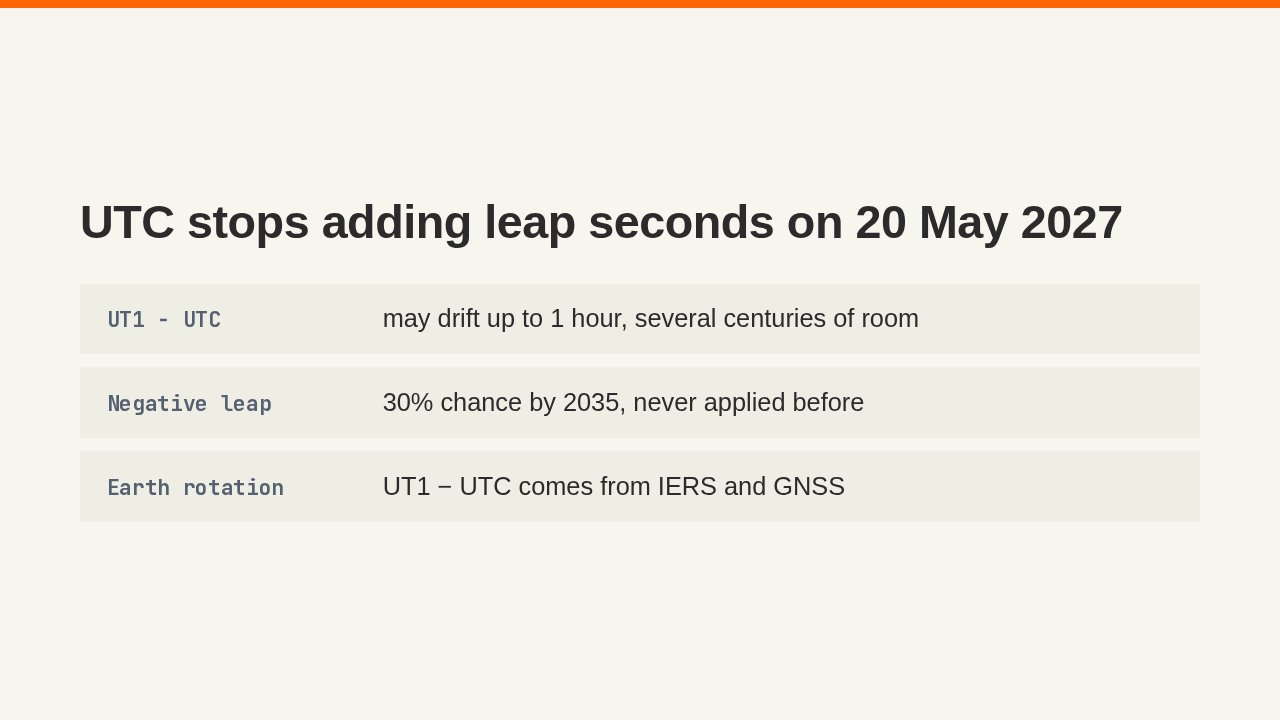
UTC stops adding leap seconds on 20 May 2027
The General Conference on Weights and Measures has made UTC continuous from May 20, 2027. Leap seconds stop, and so does the need to smear one across a day on your servers. The gap between UTC and the Earth's rotation may now grow to a full hour, which is room for several centuries. The push came from the risk of the first negative leap second ever applied, about a thirty percent chance by 2035. In the thread, neutrinobro notes the catch for anyone who needs Earth-rotation time: that difference becomes a value you track from the IERS feed instead of from time zone data.
Sill: Mac windows on iPhone and iPad
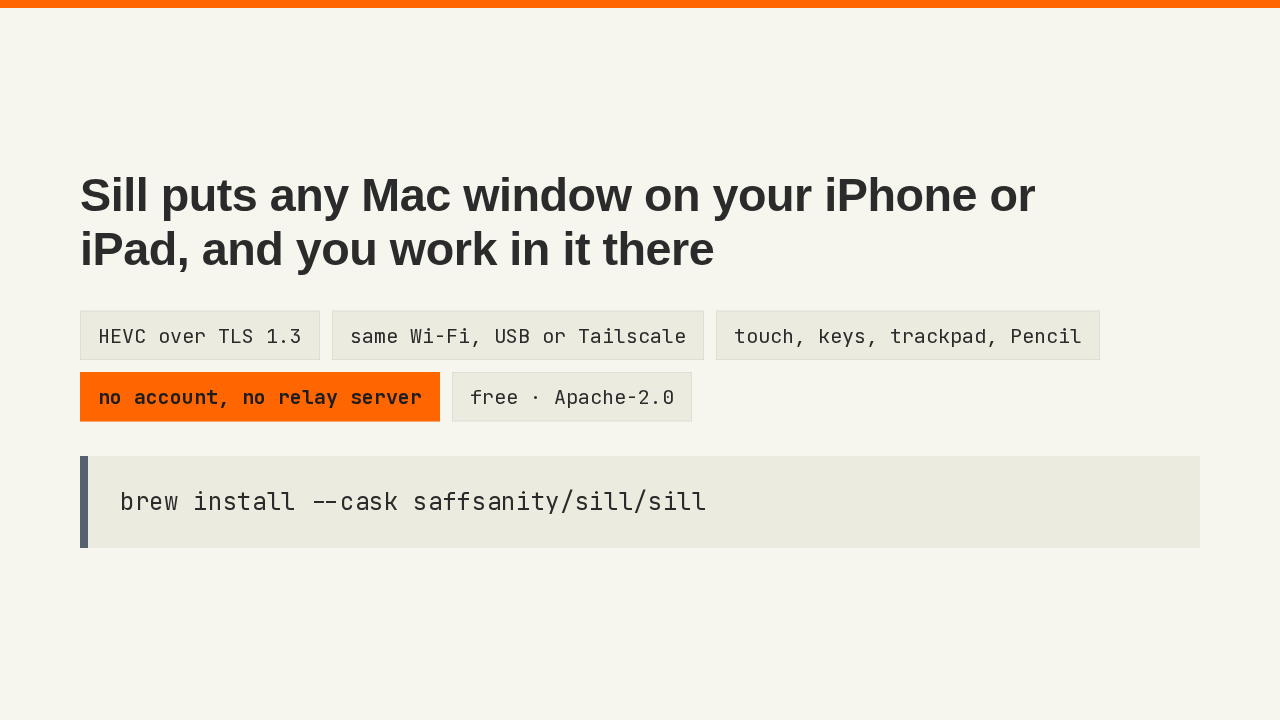
Sill puts any Mac window on your iPhone or iPad, and you work in it there
brew install --cask saffsanity/sill/sill
Sill streams one window from your Mac, or the whole desktop, to an iPhone or iPad, and sends your taps, keys, trackpad and Apple Pencil back to the Mac. The Mac side encodes the picture as HEVC on its hardware encoder and sends it over TLS straight to the device, on the same network, over a USB cable, or through your own VPN such as Tailscale. There's no account and no server in between. Both apps are free, and Homebrew installs the Mac side. In the thread, fbcpck says Sill replaced a Sunshine and Moonlight setup that broke half the time.