JPEG XL ships in Chrome

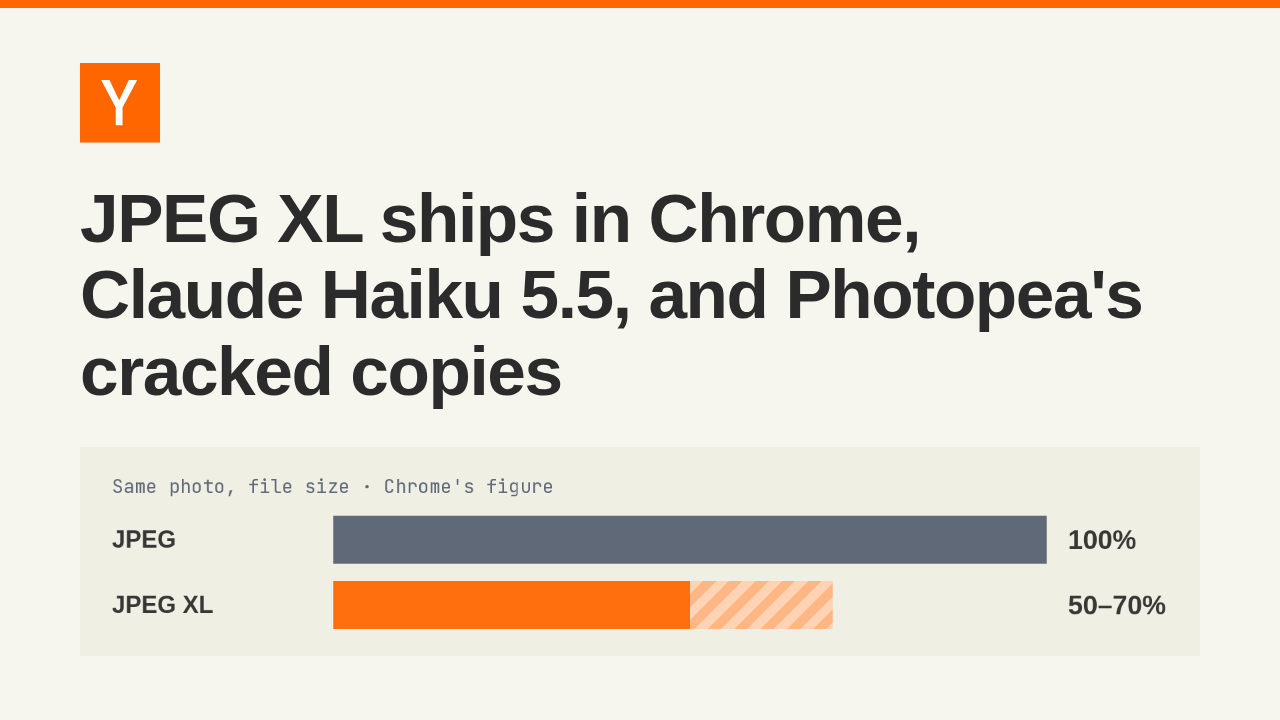
JPEG XL ships in Chrome, Claude Haiku 5.5, and Photopea's cracked copies
On Wednesday's Hacker News front page, Chrome shipped JPEG XL. Starting with Chrome 155, the browser decodes JPEG XL images. Google's post says the format compresses 30 to 50 percent better than JPEG. It also brings lossless compression, built-in HDR, and lossless conversion of the JPEG files you already have. Google suggests trying both AVIF and JPEG XL, and expects JPEG XL to help most with high-fidelity photographs.
A decoder in Rust
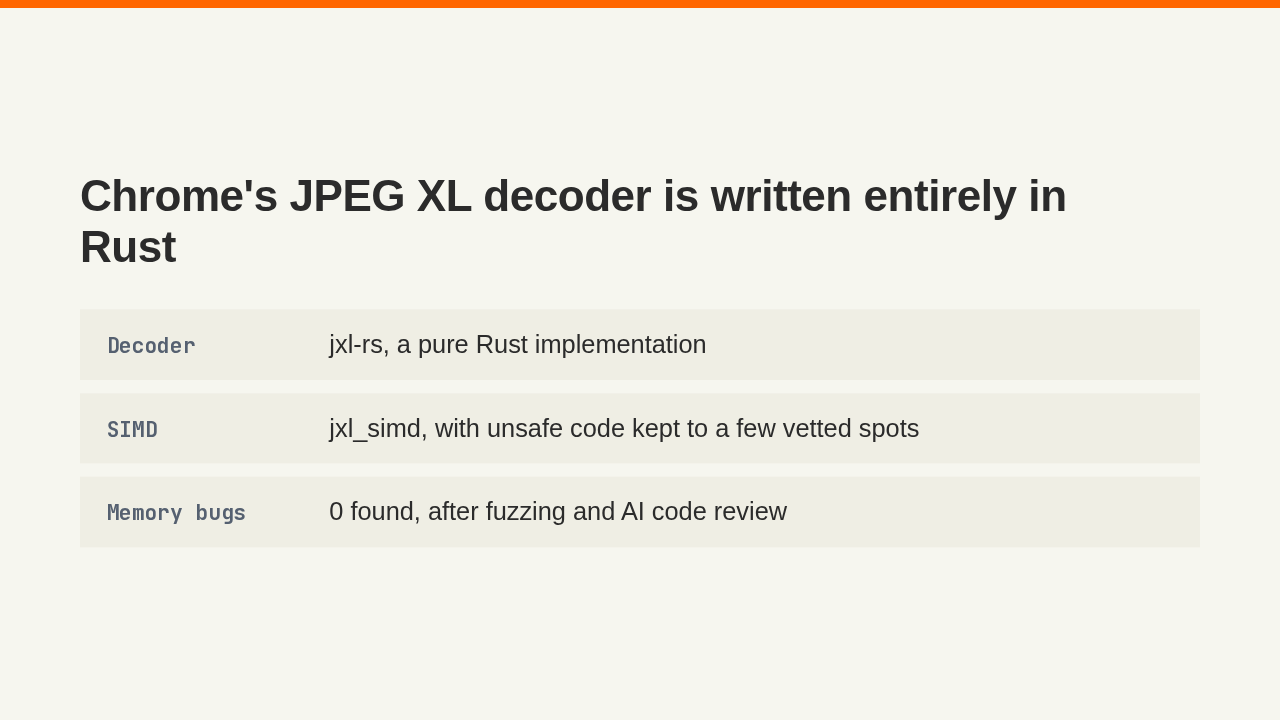
Chrome's JPEG XL decoder is written entirely in Rust
Image decoders are some of the most attacked code in a browser, because they parse untrusted files straight off the network. So Chrome uses a new decoder written entirely in Rust. To keep it fast, the team built a SIMD layer modeled on the C++ library Highway, and kept unsafe code to a few vetted places. They fuzzed it and had AI review the code, and they report zero memory safety bugs across its whole history.
Chrome changed its mind
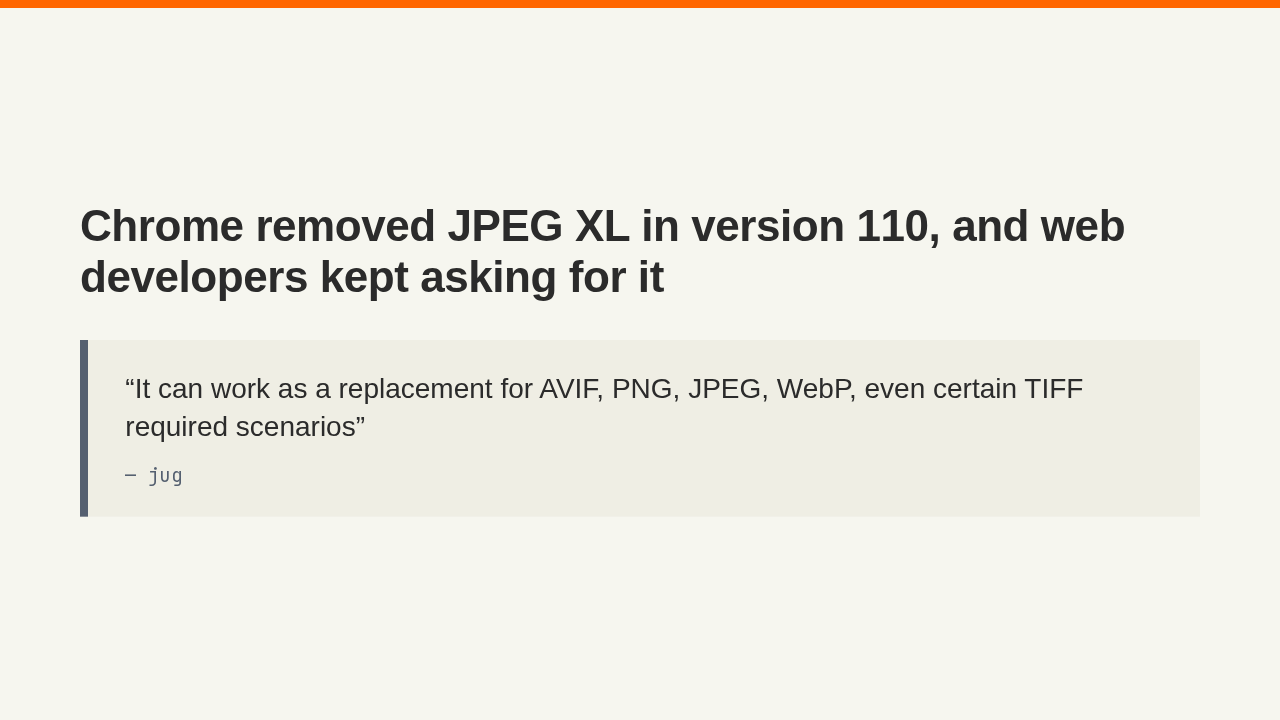
Chrome removed JPEG XL in version 110, and web developers kept asking for it
“It can work as a replacement for AVIF, PNG, JPEG, WebP, even certain TIFF required scenarios”
The thread remembered the detour. The commenter swiftcoder linked the old discussions from when Chrome deprecated JPEG XL in version 110 and took it out of Chromium. Google's post credits the change of course to steady requests from web developers, most visibly through the Interop project. The commenter jug expects Firefox stable to follow, taking the format from Safari alone to most browsers, and calls it a stand-in for AVIF, PNG, JPEG and WebP alike.
Claude Haiku 5.5
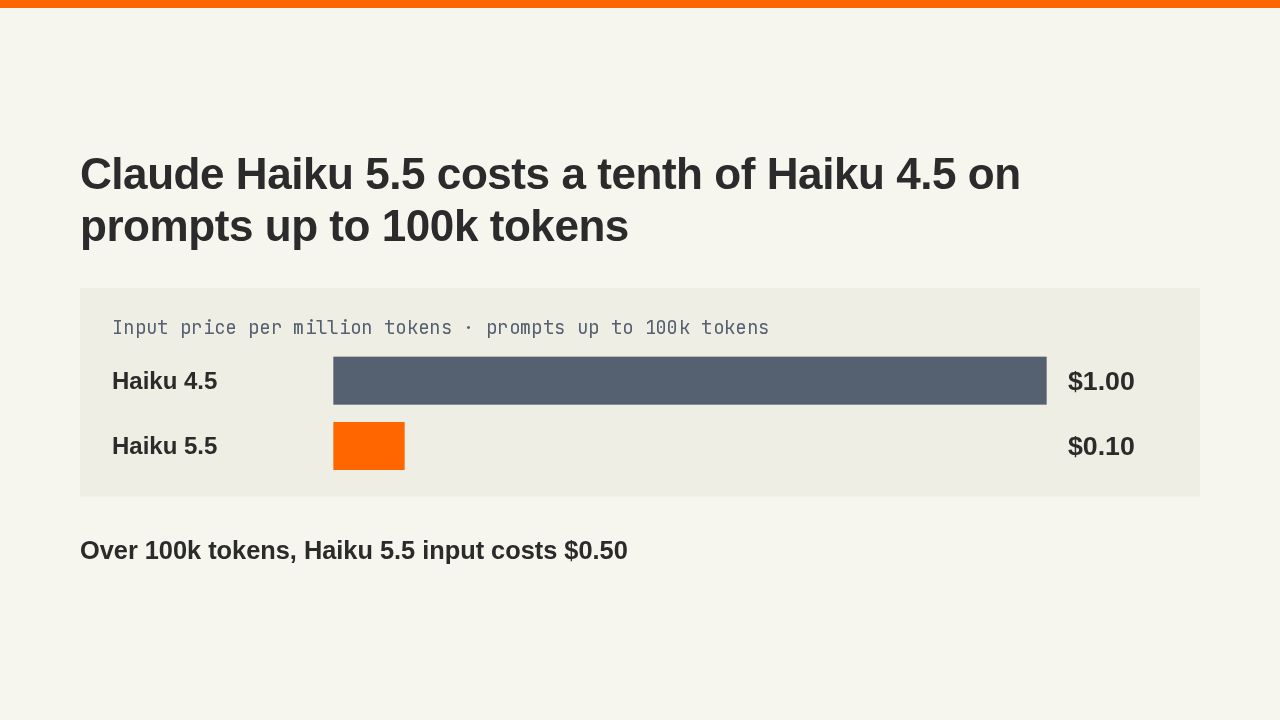
Claude Haiku 5.5 costs a tenth of Haiku 4.5 on prompts up to 100k tokens
Anthropic released Claude Haiku 5.5, its fastest model so far. On prompts up to 100,000 tokens, input costs ten cents per million tokens, a tenth of Haiku 4.5's price. Above that line it costs 50 cents. In the thread, minimaxir called 100,000 tokens an absurdly low cutoff for anyone running agents. Anthropic says 90 percent of Haiku 4.5 requests fell under it, and pitches the new model at summaries, classification and subagent work, while pointing complex agentic coding at Sonnet and Opus.
Photopea's cracked copies
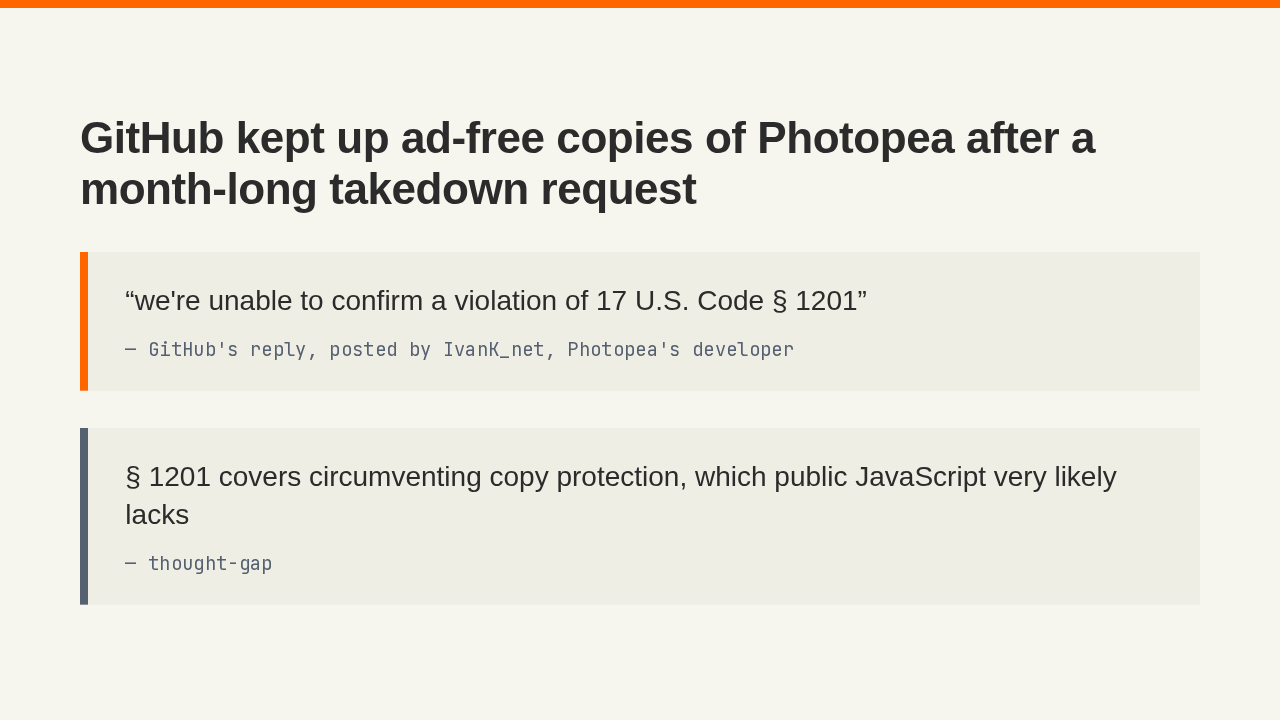
GitHub kept up ad-free copies of Photopea after a month-long takedown request
“we're unable to confirm a violation of 17 U.S. Code § 1201”
§ 1201 covers circumventing copy protection, which public JavaScript very likely lacks
The developer of the browser photo editor Photopea, posting as IvanK_net, says people ask AI models to strip the ads out of the site's JavaScript and publish the result on GitHub, in dozens of repositories. A month after the takedown notice, GitHub replied that it could not confirm a violation of section 1201 of the US Code. The commenter thought-gap pointed out that section 1201 is about breaking copy protection, which public JavaScript very likely lacks. DannyBee, an IP lawyer, gave two options: pay a firm that specializes in takedowns, or write the copies off.
What is Codemode
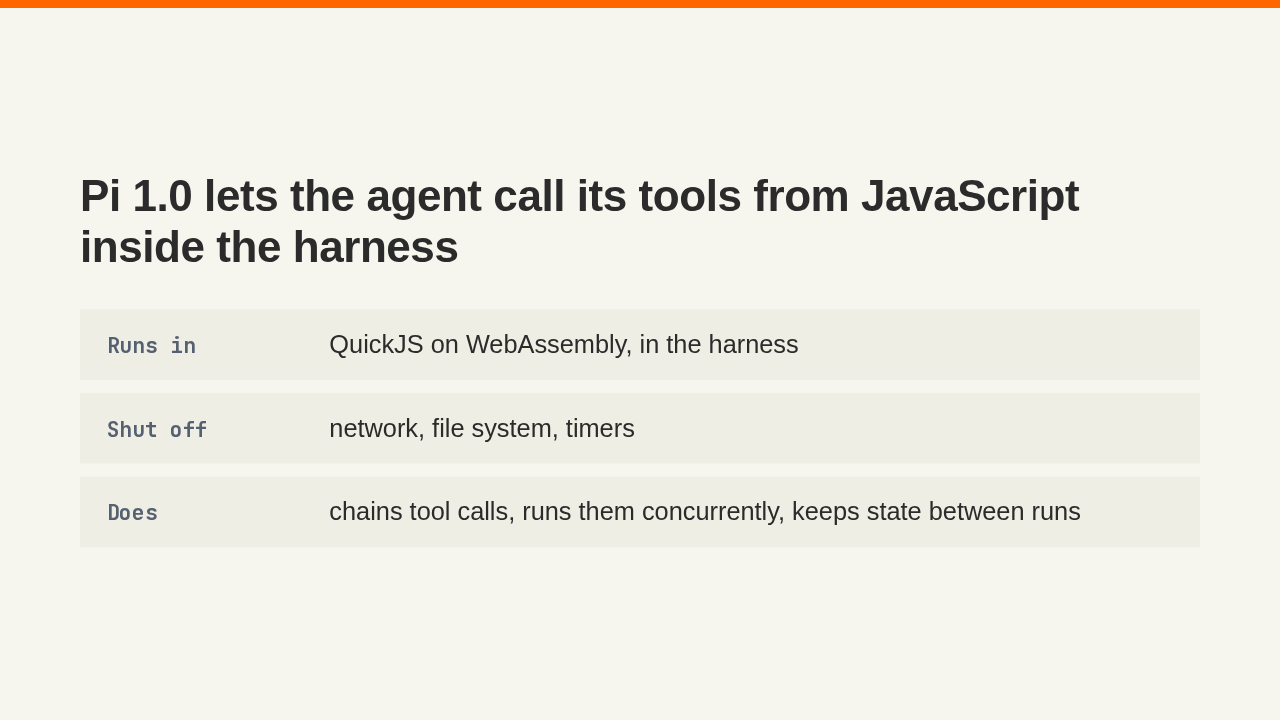
Pi 1.0 lets the agent call its tools from JavaScript inside the harness
Armin Ronacher has long argued that agents need scripts and bash more than custom tools. Now he explains why Pi 1.0 adds MCP support through Codemode. The agent writes a short JavaScript program that calls tools, and it runs in the harness, in QuickJS on WebAssembly, cut off from the network, files and timers. Large outputs stay out of the model's context, calls run side by side, and state carries over to the next run. In the thread, planb said the post took too long to define the term.
Strands Decider 2B
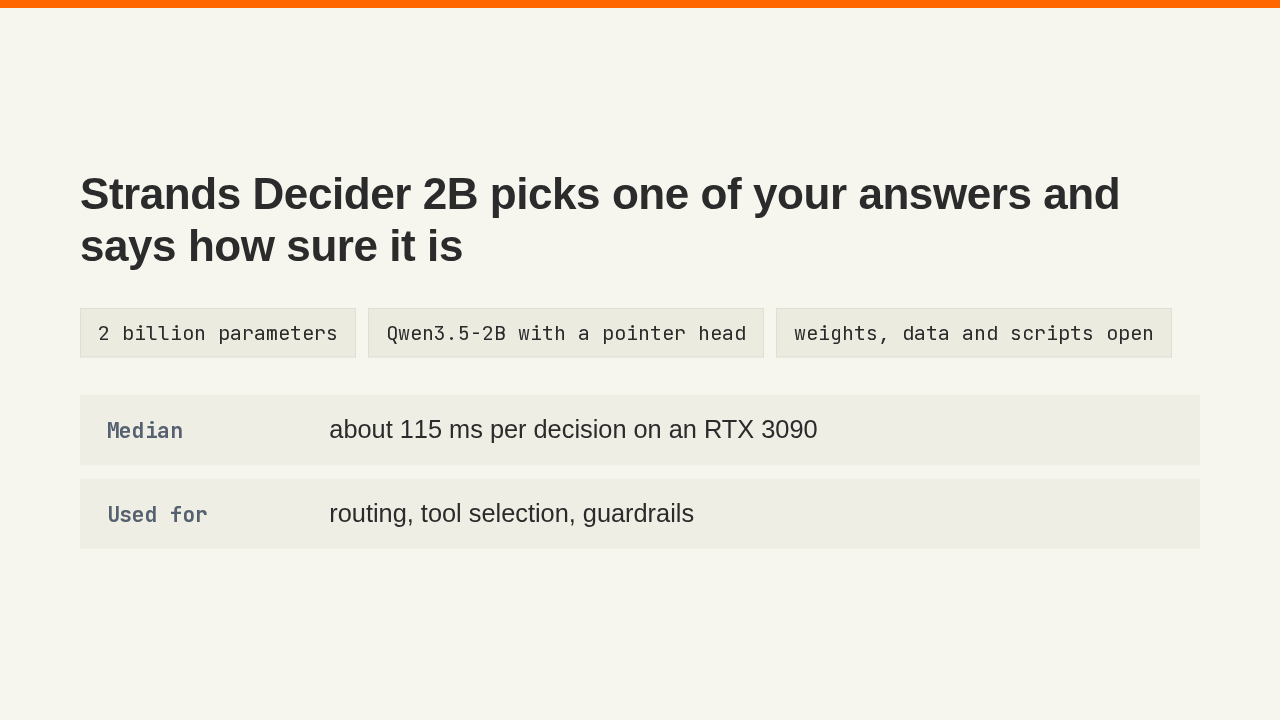
Strands Decider 2B picks one of your answers and says how sure it is
Strands Decider 2B, from the Strands Agents team, is a small model that can't write text. It takes a question and a fixed set of answers, and returns one of them with a confidence score. The team took Qwen3.5 2B and swapped its language head for a small pointer head. A decision takes about 115 milliseconds on an RTX 3090, and the weights, training data and scripts are all open. The authors see it in routing, tool selection and guardrails, and in the thread, miguelspizza runs it in a Chrome extension to filter email.