DeepSeek V4.1 Flash
 Hacker News
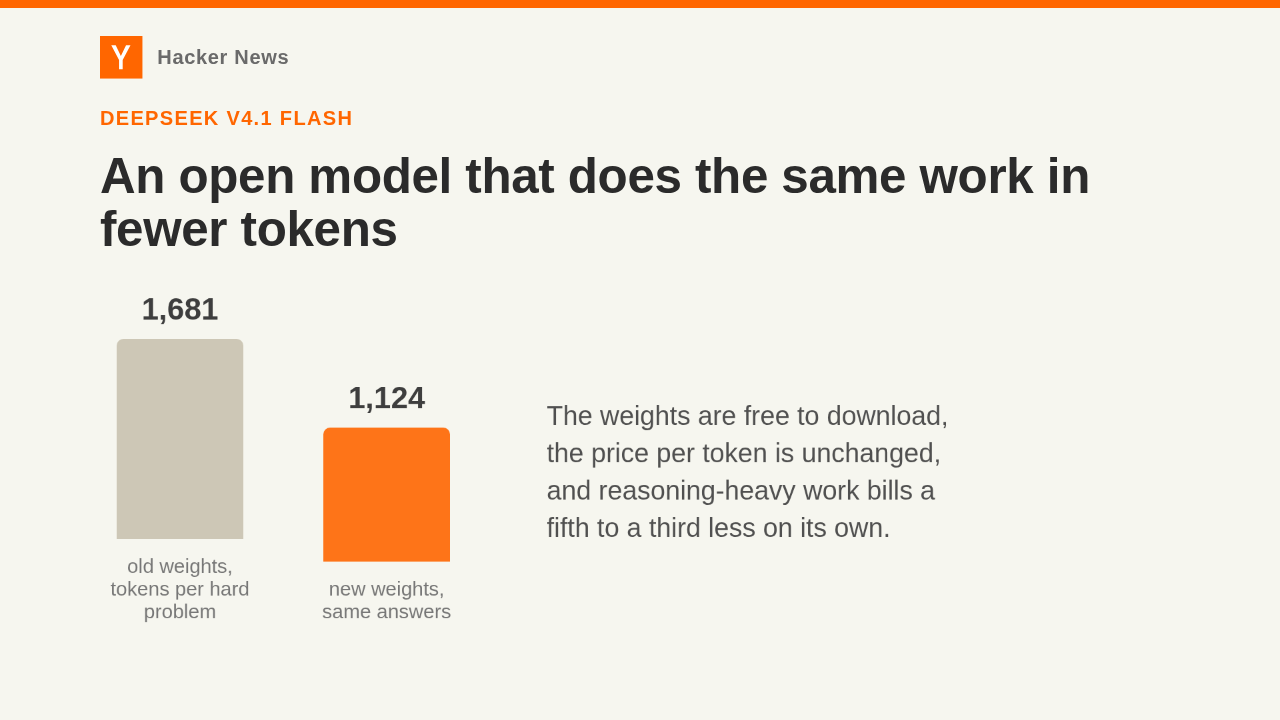
An open model that does the same work in fewer tokens
On Saturday's Hacker News front page, DeepSeek shipped a refresh of its open V4.1 Flash model, and the headline is a strange one: it reasons less. On the hardest math problems the median answer went from about 1,700 output tokens down to about 1,100, for the same correct answers. The weights are free to download, the price per token did not move, so your reasoning-heavy bills drop by a fifth to a third with no change on your side. The dial that sets how hard it thinks is finally honest too, so you can turn it down and still get full marks.
The cheap engineer
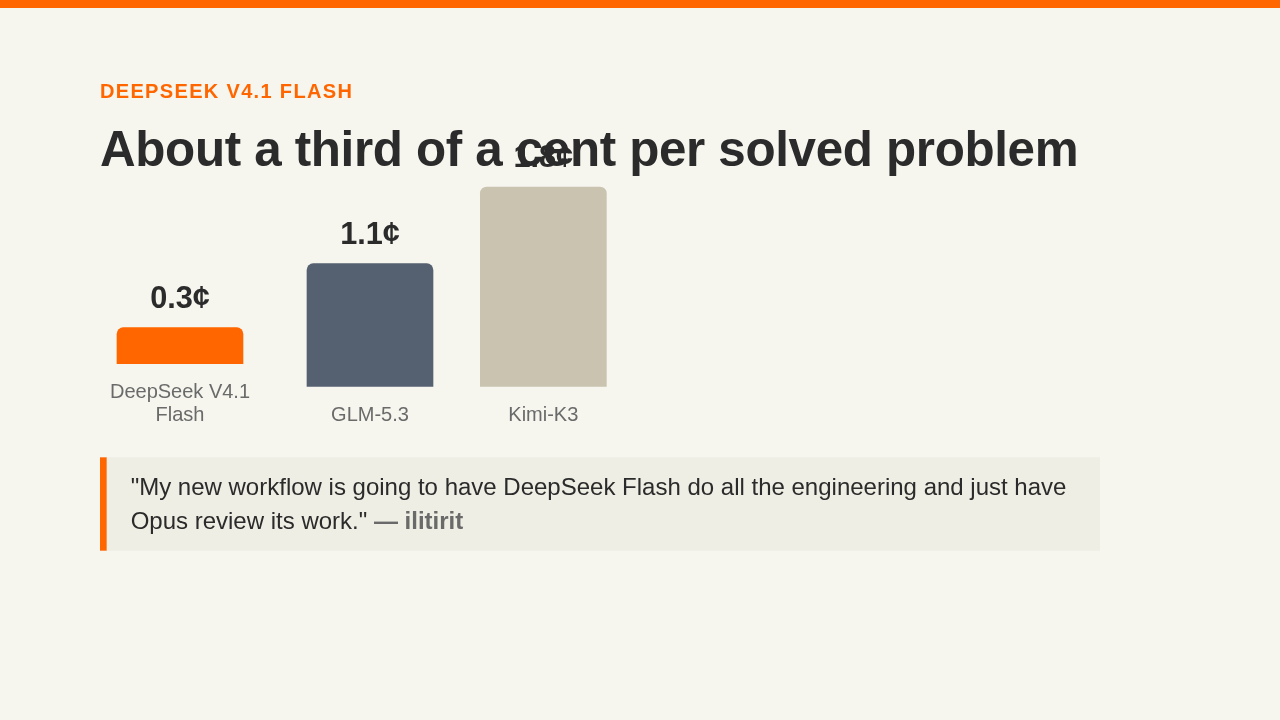
About a third of a cent per solved problem
That cheapness has a shape. A correct answer to a hard problem costs about a third of a cent here, several times less than the other open models it runs against. So in the thread, builders are treating it as the fast, tireless engineer and keeping a pricier model as the reviewer. ilitirit plans to let DeepSeek Flash write all the code and have Opus check it. The pitch is speed and price covering the gap in raw intelligence.
llmspeed
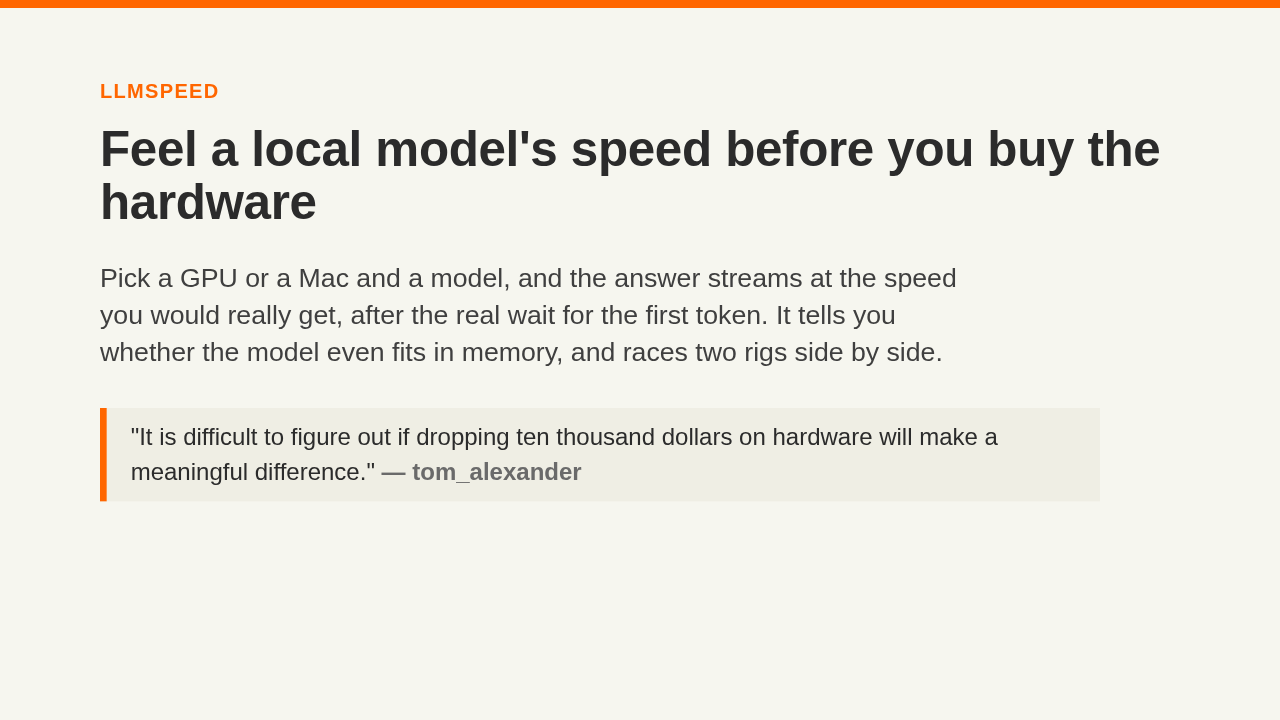
Feel a local model's speed before you buy the hardware
If DeepSeek has you thinking about running a model on your own machine, the next story is for you. llmspeed lets you pick a graphics card or a Mac and a model, then streams the answer at the speed you would actually get, including the wait before the first word. It tells you whether the model fits in memory at all, and it can race two machines side by side. As tom_alexander put it, it is hard to know whether spending ten thousand dollars on hardware will make a real difference, and downloading every model just to find out is a lot. The numbers are estimates, so treat them as a guide, not a promise.
A web app in Lean 4
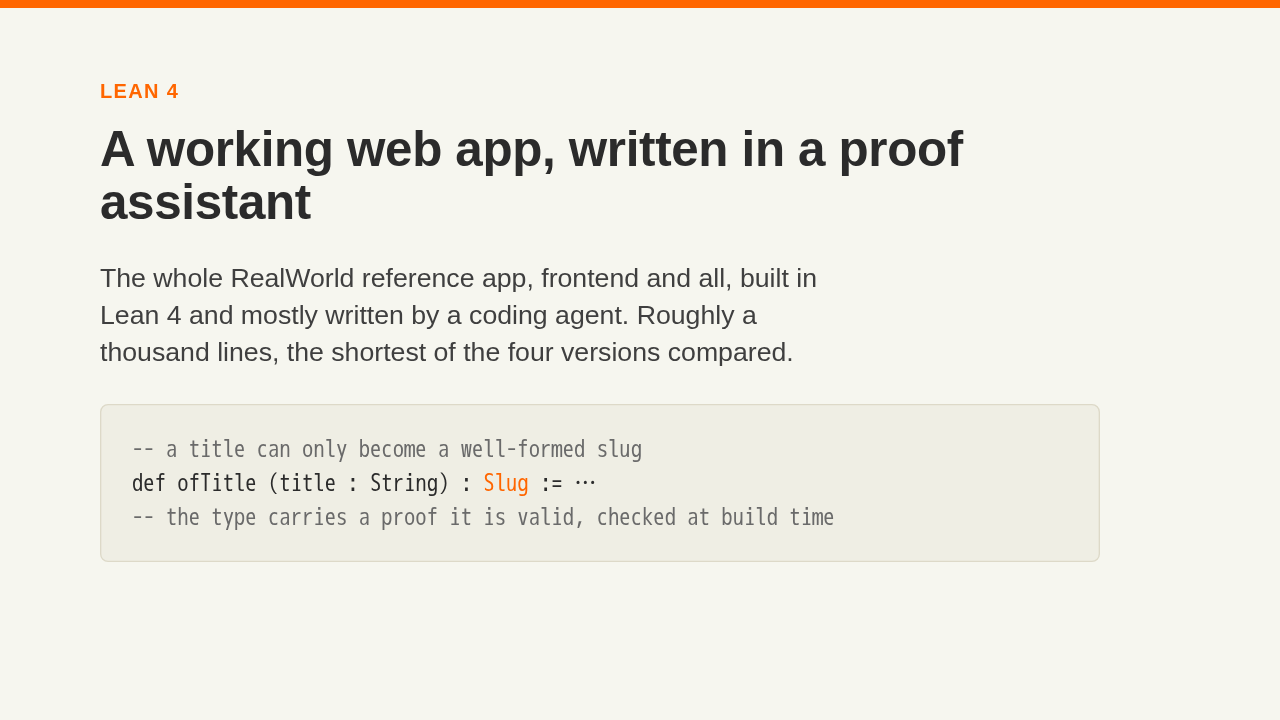
A working web app, written in a proof assistant
-- a title can only become a well-formed slug
def ofTitle (title : String) : Slug := …
-- the type carries a proof it is valid, checked at build time
A different take on letting agents write the code. Someone built the whole RealWorld reference app, a Medium clone with an official test suite, entirely in Lean 4, a language better known as a proof assistant. It is about a thousand lines, the shortest of the four versions compared against it, and Claude Code wrote most of it. The payoff is that the types and the little proofs hold no matter who or what wrote them: a title can only ever turn into a valid web address, and the compiler checks it. The honest catch is that a proof only helps where you wrote one, so you still have to read the rest yourself.
Lingua Franca
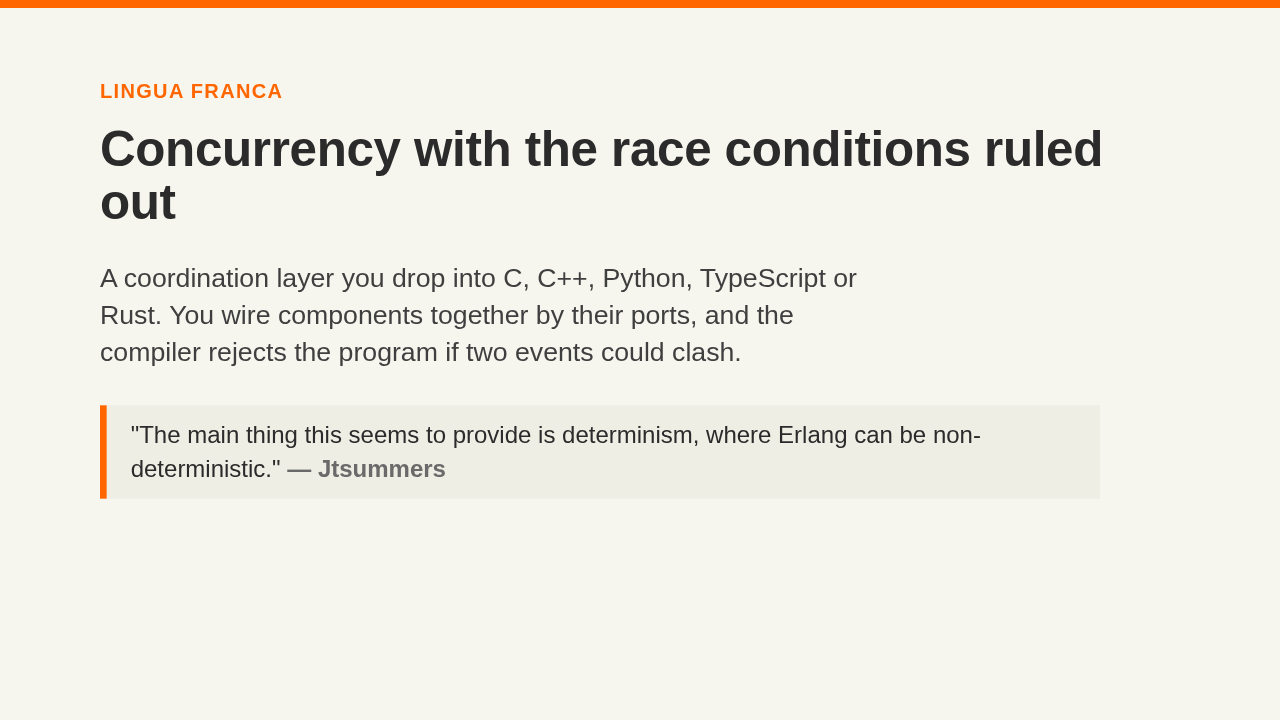
Concurrency with the race conditions ruled out
The last one is for anyone who has fought a thread bug. Lingua Franca is a coordination layer you drop into the language you already use, C, Python, Rust and a couple of others. You describe components and wire their inputs and outputs together, and the compiler refuses to build the program if two events could ever clash, so a whole class of race conditions is gone by construction. In the thread, Jtsummers landed on what sets it apart from the actor models people reach for: it gives you determinism where something like Erlang leaves it open. The pushback was that the landing page undersells all of this.
Over to you
Which model writes your code, and who reviews it?
A theme ran through the front page that day: the model that writes the code and the thing that checks it are becoming two different jobs. So here is the one question worth answering from your own setup. Which model writes your code, and what, or who, reviews it?