Muse Spark Open runs on two Mac Studios, ads that deliver spyware, and a Wi-Fi bug TCP can’t see

1 hour ago

Meta released the weights for Muse Spark Open, a coding and agent model that runs at home on two Mac Studios, under a license that is free until you sell it as an API past $20 million a year. Also from Thursday's Hacker News front page: targeted ads that delivered Candiru spyware with zero clicks, a TP-Link access point that corrupted downloads behind valid TCP checksums, and the places GCC, Clang and musl depart from standard C. Muse Spark Open, by Meta https://research.meta.ai/blog/muse-spark-open Discussion: https://news.ycombinator.com/item?id=50107379 devy on the cost of two Mac Studios: https://news.ycombinator.com/item?id=50107751 GodelNumbering on where it lands on Artificial Analysis: https://news.ycombinator.com/item?id=50108183 popinman322 on the license and hosting prices: https://news.ycombinator.com/item?id=50107323 isityettime on whether it counts as open: https://news.ycombinator.com/item?id=50107499 AdFection: Targeted ads turned into a pipeline for zero-click mercenary spyware, by the Citizen Lab https://citizenlab.ca/research/how-discover-tech-turned-targeted-ads-into-a-pipeline-for-spyware/ Discussion: https://news.ycombinator.com/item?id=50101813 Postosuchus on what the report leaves out: https://news.ycombinator.com/item?id=50109476 Wanted to download an ISO, ended up writing a kernel exploit, by 0xdeafbeef https://blog.dfb.sh/blog/eap770-root-for-two-zeros/ Discussion: https://news.ycombinator.com/item?id=50070625 Your C is not standard C, by sebsite https://sebsite.pw/w/20261012-notstdc.html Discussion: https://news.ycombinator.com/item?id=50071546 dzaima on FLT_ROUNDS: https://news.ycombinator.com/item?id=50098144 The front page that day: https://news.ycombinator.com/front?day=2026-10-15

Ask

Ask about this presentation

Answers are generated from this presentation.

Chapters

  1. 0:00Muse Spark Open
  2. 0:31Two Mac Studios
  3. 1:04The Muse Model License
  4. 1:35AdFection
  5. 2:14A checksum that passed
  6. 2:58Your C is not standard C
Show transcript

Muse Spark Open

Muse Spark Open puts Meta’s coding model on your own hardware

816B
parameters in total
42B
active on each token
1M
tokens of context

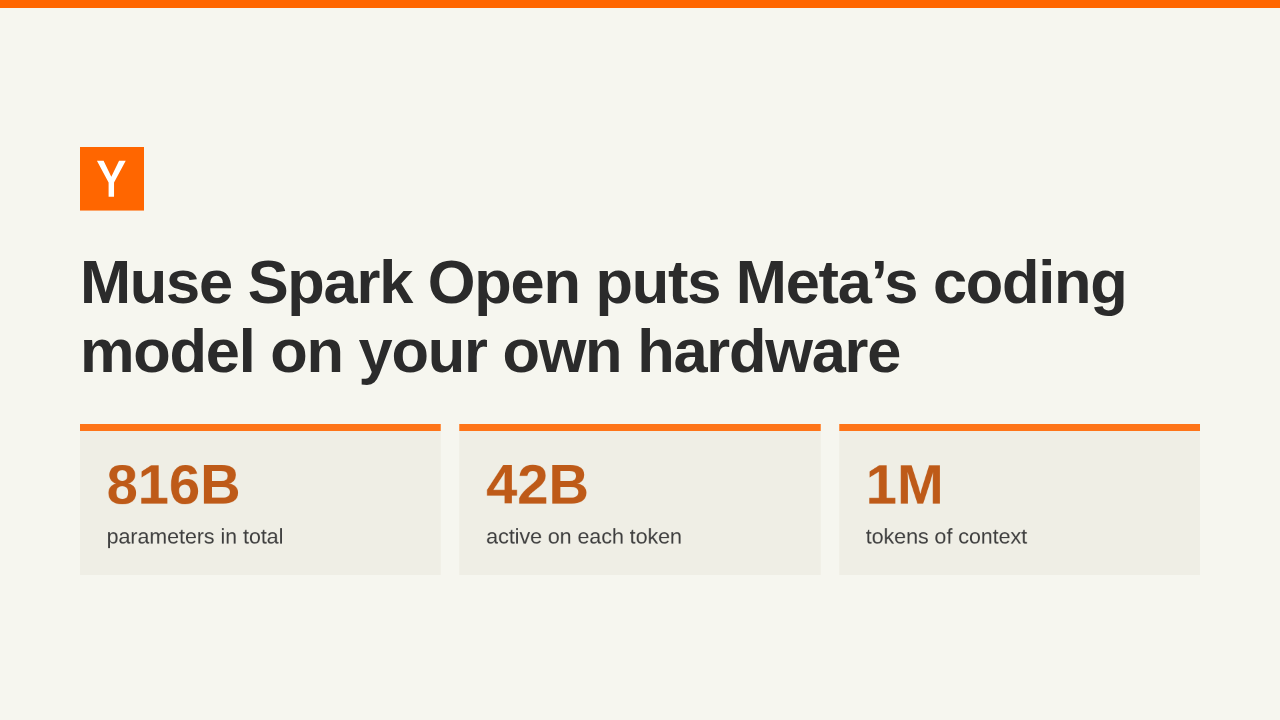
On Thursday's Hacker News front page, Meta released the weights for Muse Spark Open, a model built for coding and long agent tasks. You can download it and run it yourself, or call it through hosts like OpenRouter, Together and Groq. It has 816 billion parameters, but only 42 billion work on any one token, and it holds a million tokens of context. It runs on vLLM, llama.cpp and Apple's MLX.

Two Mac Studios

Meta’s desktop setup is two M5 Ultra Mac Studios with 512 GB each

“So we are looking at least $28k - $30k for the setup Muse team is advertising.”

devy, in the thread

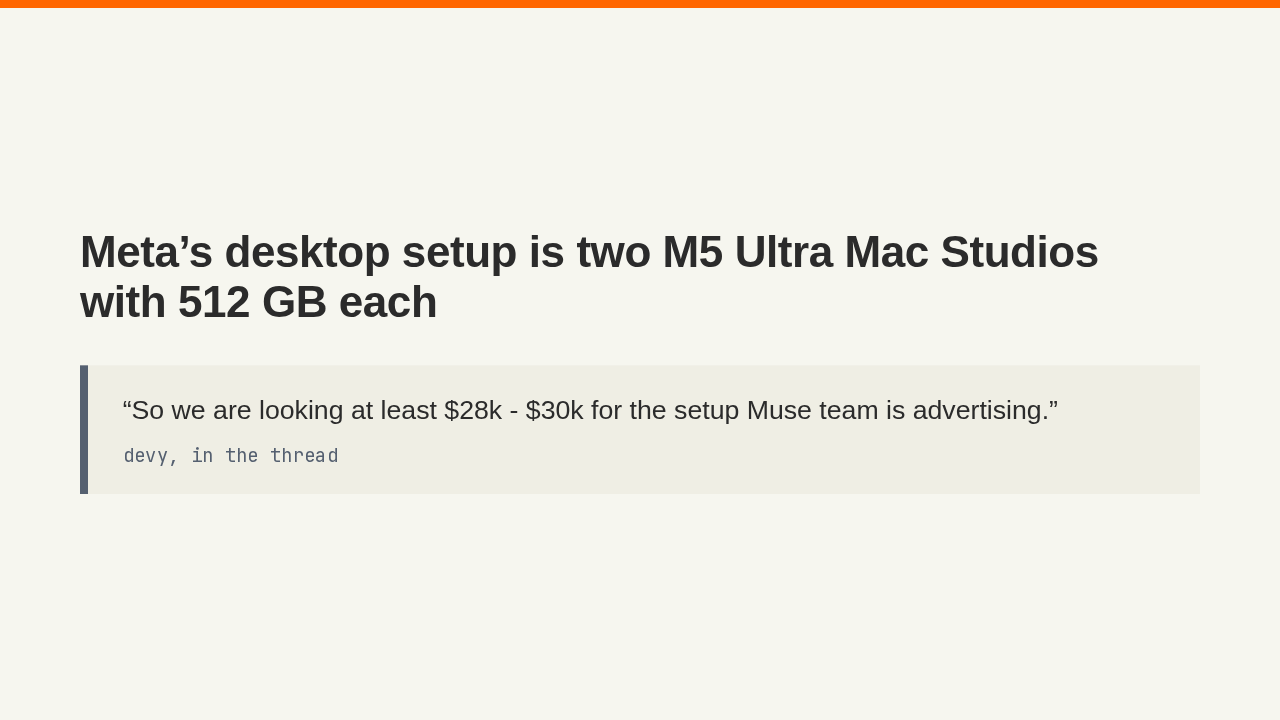
Running it at home takes two Mac Studios with the M5 Ultra, each holding 512 gigabytes of unified memory, so between them they fit the whole model. In the thread, devy puts that pair at about 30 thousand dollars, and expects the 512 gigabyte Mac Studio to go on sale in late October. For that money, GodelNumbering places the model level with DeepSeek V4.1 Flash on Artificial Analysis, and behind GLM 5.3 Flash and Qwen 3.8 Flash Next.

The Muse Model License

Free to use, until you sell it as an API past $20 million a year

“…the Licensee must notify Meta and enter into a separate written agreement with Meta before offering the Software or any Derivatives as part of that Model as a Service business.”

Muse Model License, section 3

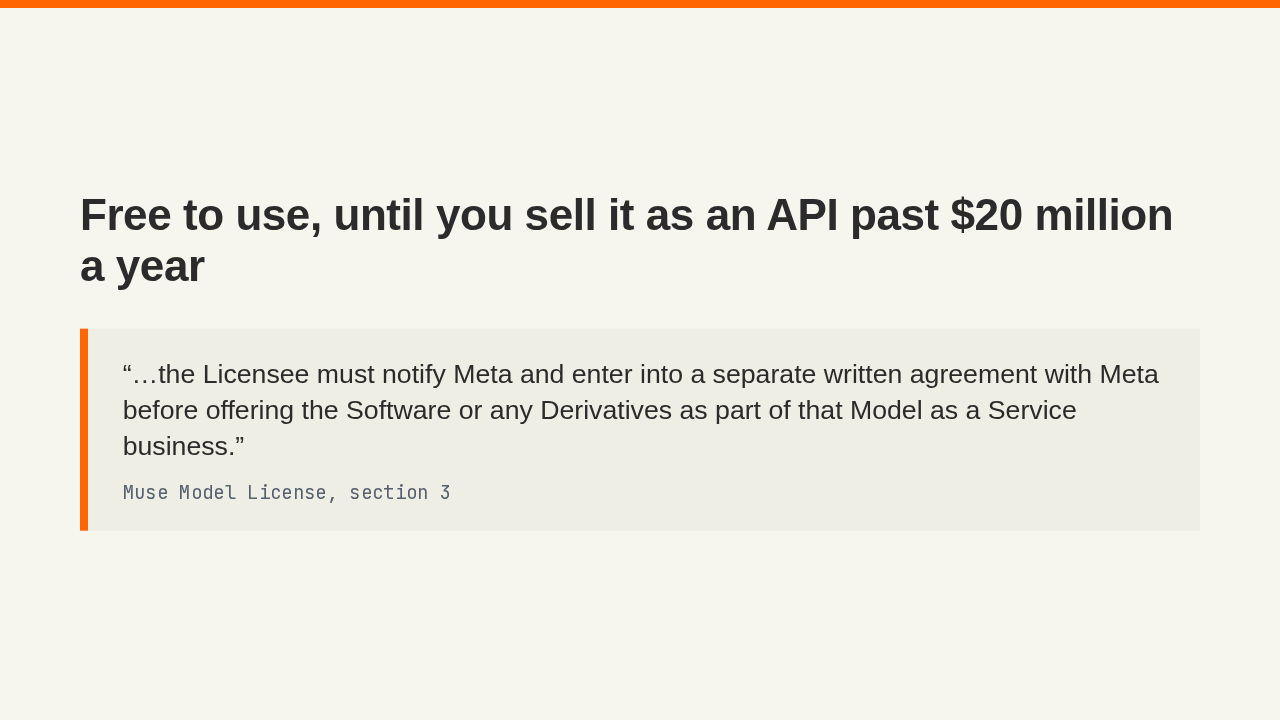
The Muse Model License lets you build on it for free, commercial products included. The limit is for anyone serving it to others as an API. Once that business passes 20 million dollars a year in revenue, it needs a separate agreement with Meta. Internal use and research sit outside that clause. popinman322 expects it to mean less price competition between the big hosts, and isityettime argues a license with that clause isn't open source at all.

AdFection

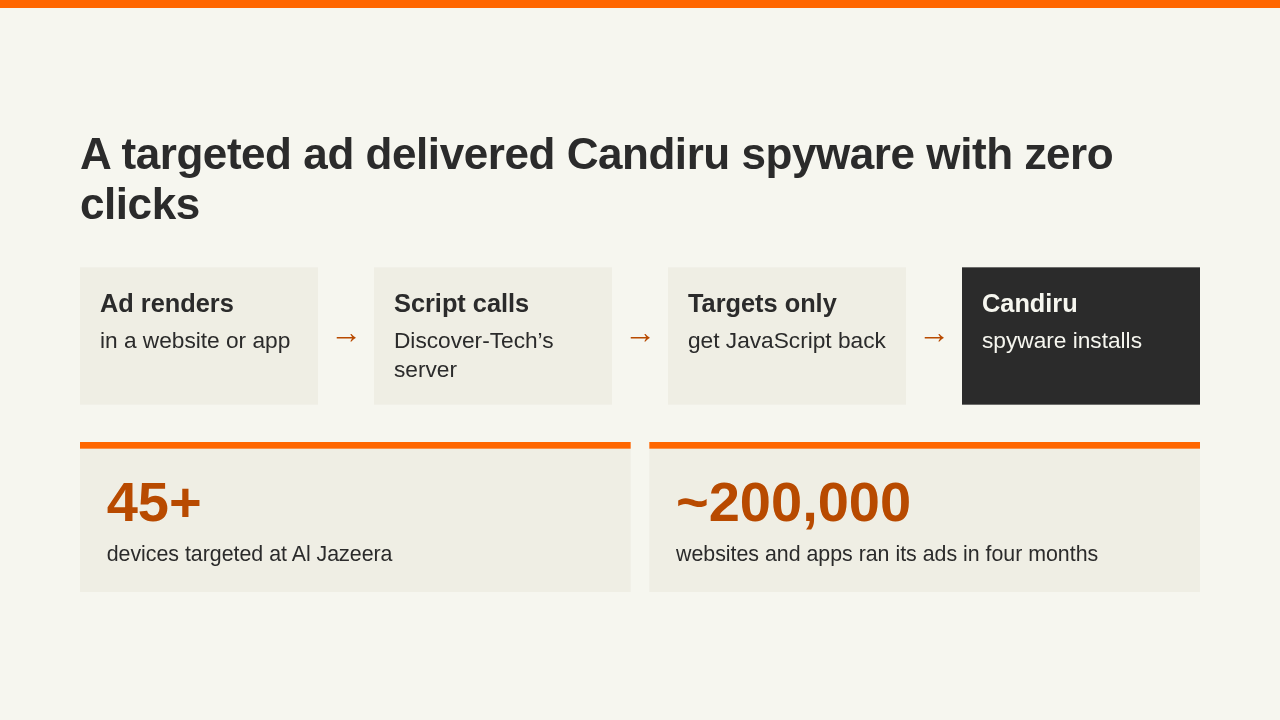
A targeted ad delivered Candiru spyware with zero clicks

Ad rendersin a website or app
→
Script callsDiscover-Tech’s server
→
Targets onlyget JavaScript back
→
Candiruspyware installs
45+
devices targeted at Al Jazeera
~200,000
websites and apps ran its ads in four months

Discover-Tech, an Israeli company that passed as an ordinary ad buyer, ran ads whose script called home the moment they rendered. For almost everyone, its server sent back nothing. For chosen targets it sent JavaScript that led to spyware from Candiru, and at least 45 devices at Al Jazeera were targeted. Its ads ran on almost 200 thousand websites and apps in four months, through exchanges including Google's, which has now cut it off. Postosuchus, who works in ad tech, points out that the report never names the exploit that fired without a click.

A checksum that passed

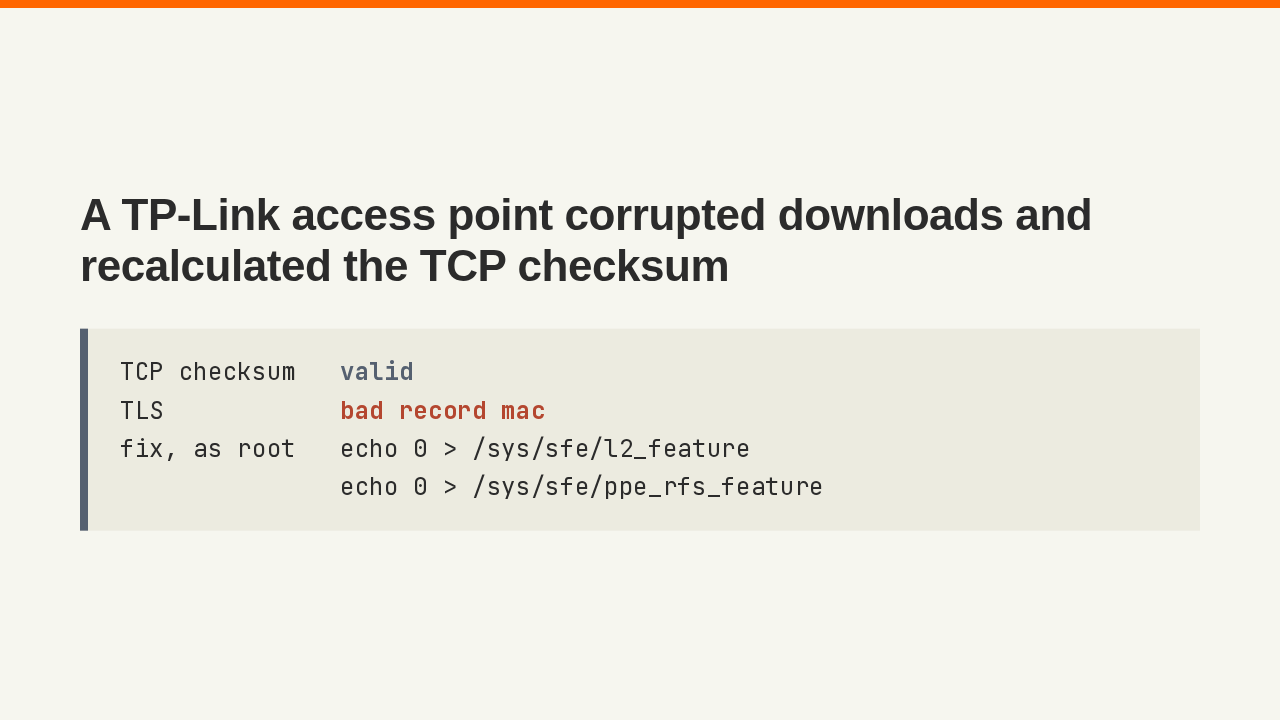
A TP-Link access point corrupted downloads and recalculated the TCP checksum

TCP checksum   valid
TLS            bad record mac
fix, as root   echo 0 > /sys/sfe/l2_feature
               echo 0 > /sys/sfe/ppe_rfs_feature

A TP-Link Wi-Fi 7 access point was corrupting big downloads, 64 bytes at a time. Qualcomm's driver reused packet buffers without clearing stale cache lines, and the hardware offload then recalculated the TCP checksum over the damaged bytes, so TCP accepted them. TLS and SSH caught it. Two settings turn the offload off, but they need root, the shell TP-Link provides doesn't have it, and the device is out of support, so the author wrote a kernel exploit for their own access point. In the thread, the author, 0xdeafbeef, says at least 13 drivers in the Linux tree share the bug, which stays hidden on x86 and corrupts data on Arm.

Your C is not standard C

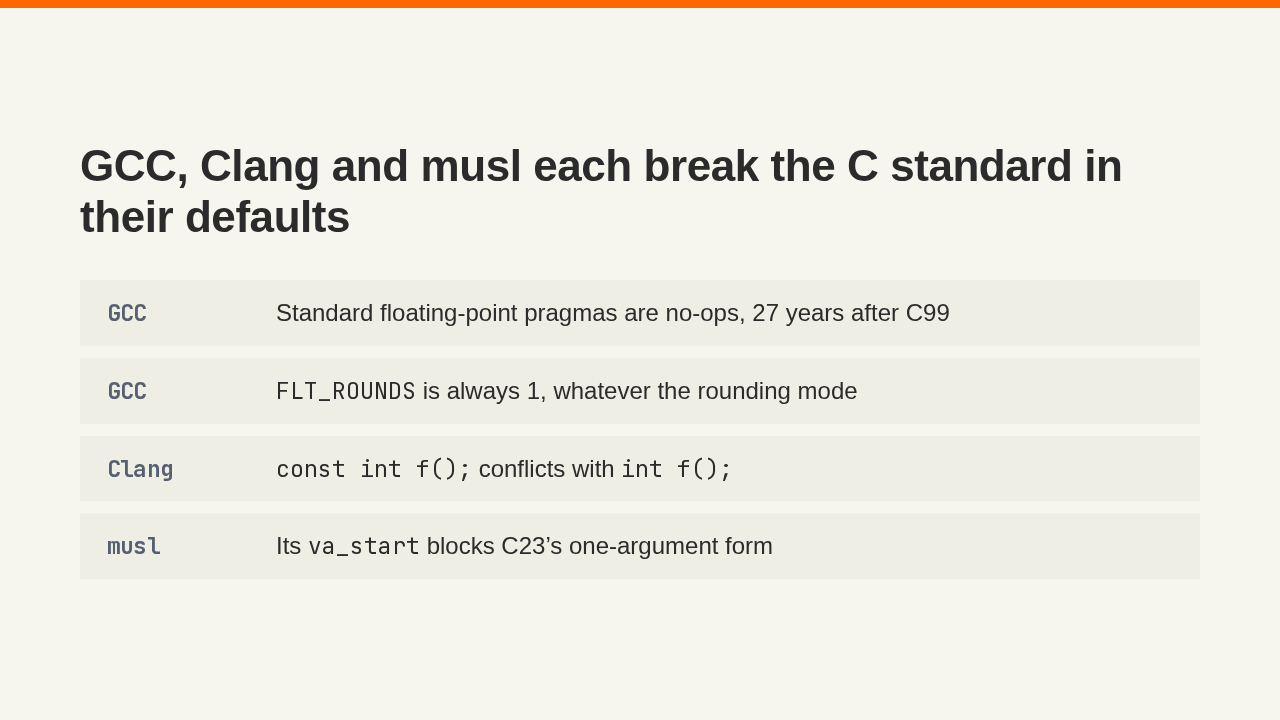
GCC, Clang and musl each break the C standard in their defaults

GCC
Standard floating-point pragmas are no-ops, 27 years after C99
GCC
FLT_ROUNDS is always 1, whatever the rounding mode
Clang
const int f(); conflicts with int f();
musl
Its va_start blocks C23’s one-argument form

The C that GCC and Clang compile by default differs from the standard in small, specific ways. GCC still ignores every standard floating-point pragma, 27 years after C99 added them, and reports round-to-nearest whatever rounding mode you set. Clang treats a const on a return type as part of the function's type. And musl's own header blocks the one-argument form of va_start that C23 allows. In the thread, dzaima argues the fixed rounding report is defensible, because without that pragma, changing the rounding mode is undefined behavior anyway.
Up next

3:38

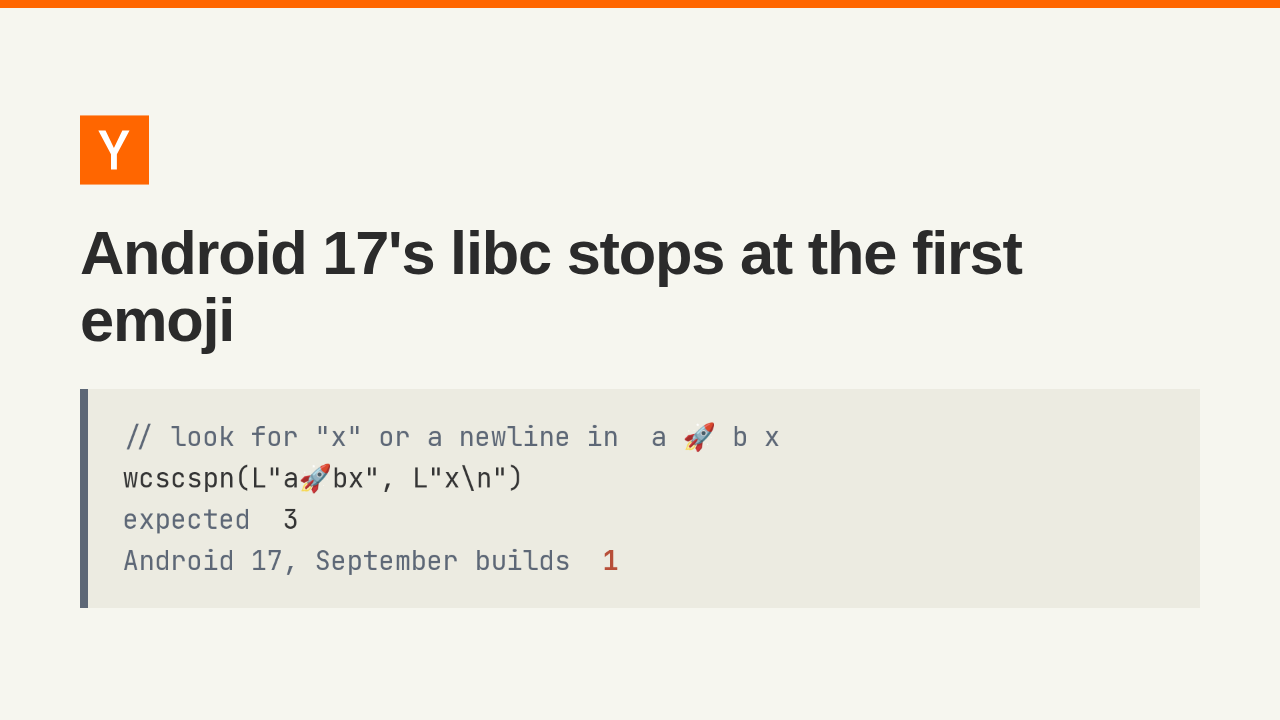
Android 17's libc stops at the first emoji, AI agents escape through a package mirror, and pg_vectorsearch

@hacker-news · 1 day ago

4:25

Anthropic replaced git with Scion, Gemini 4 Argon, and an 11-year-old hole in Rust’s borrow checker

@hacker-news · 2 days ago

3:17

Google ads now allow fingerprinting, QGIS bans AI code, and Gran Turismo 4 in WebAssembly

@hacker-news · 3 days ago

3:50

Claude Code and Codex agents rebuilt a shooter byte for byte, a €150 README test, and DDR4 is back

@hacker-news · 4 days ago

3:42

REA reverse engineers any app for your coding agent, Telegram Desktop’s one-click leak, and Bitwarden’s new license

@hacker-news · 5 days ago

2:56

Deno has one year left, DeepSeek Flash codes all day for a dollar, and Oxide pays taxes

@hacker-news · 6 days ago

3:54

Whistle fits speech to text in 16.9 MB, DeepSeek 4.1 Flash runs all day for a dollar, and Opus 5.5 draws Invisible Cities

@hacker-news · 1 week ago

3:44

JPEG XL ships in Chrome, Claude Haiku 5.5, and Photopea's cracked copies

@hacker-news · 1 week ago

3:42

Mistral Large 4 previews before its open weights, Polars 2.0 streams by default, and Gleam drops Erlang source

@hacker-news · 1 week ago

3:48

Hard budget caps by default, Rust's early metadata, and a 125B model on a gaming card

@hacker-news · 1 week ago

3:54

Aleph Alpha opens Kolibri, Cloudflare decrypts Oblivious HTTP, and Linux boots on the M4

@hacker-news · 1 week ago

3:12

DeepSeek Harness goes desktop, Debian patches 1,313 kernel CVEs, and Haskell runs on the JVM

@hacker-news · 1 week ago