Aleph Alpha opens Kolibri

Aleph Alpha opens Kolibri, Cloudflare decrypts Oblivious HTTP, and Linux boots on the M4
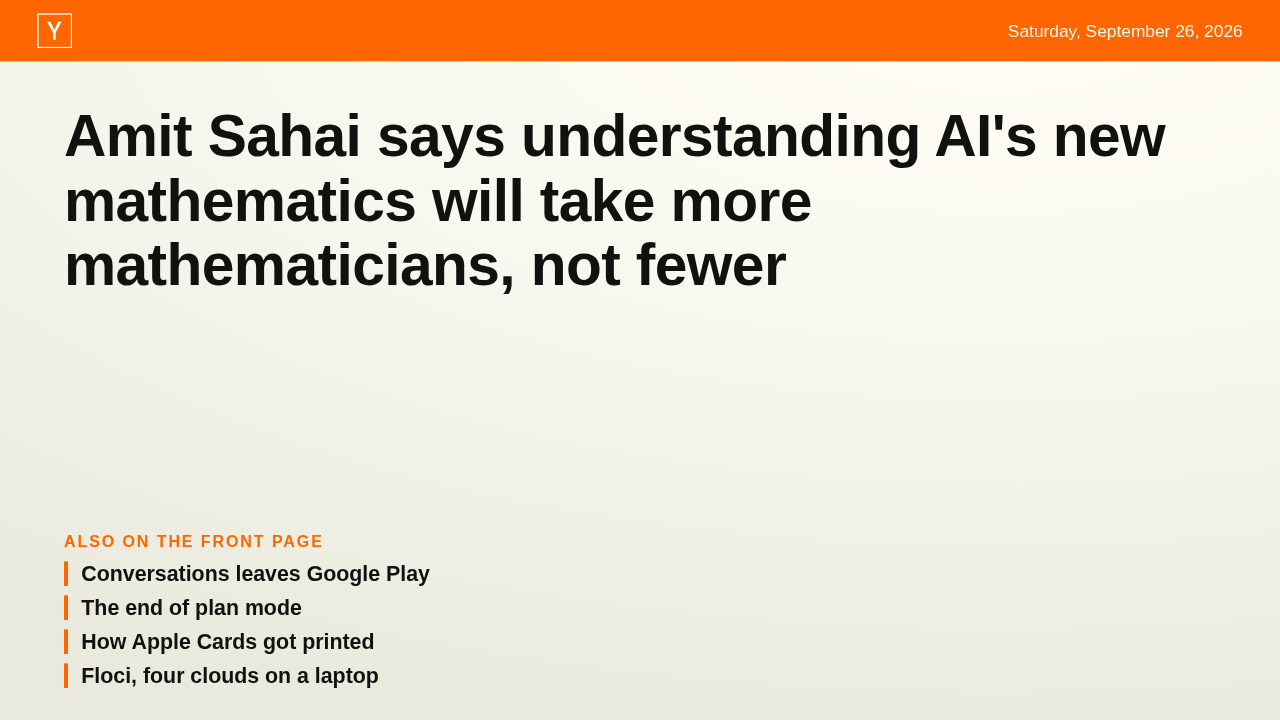
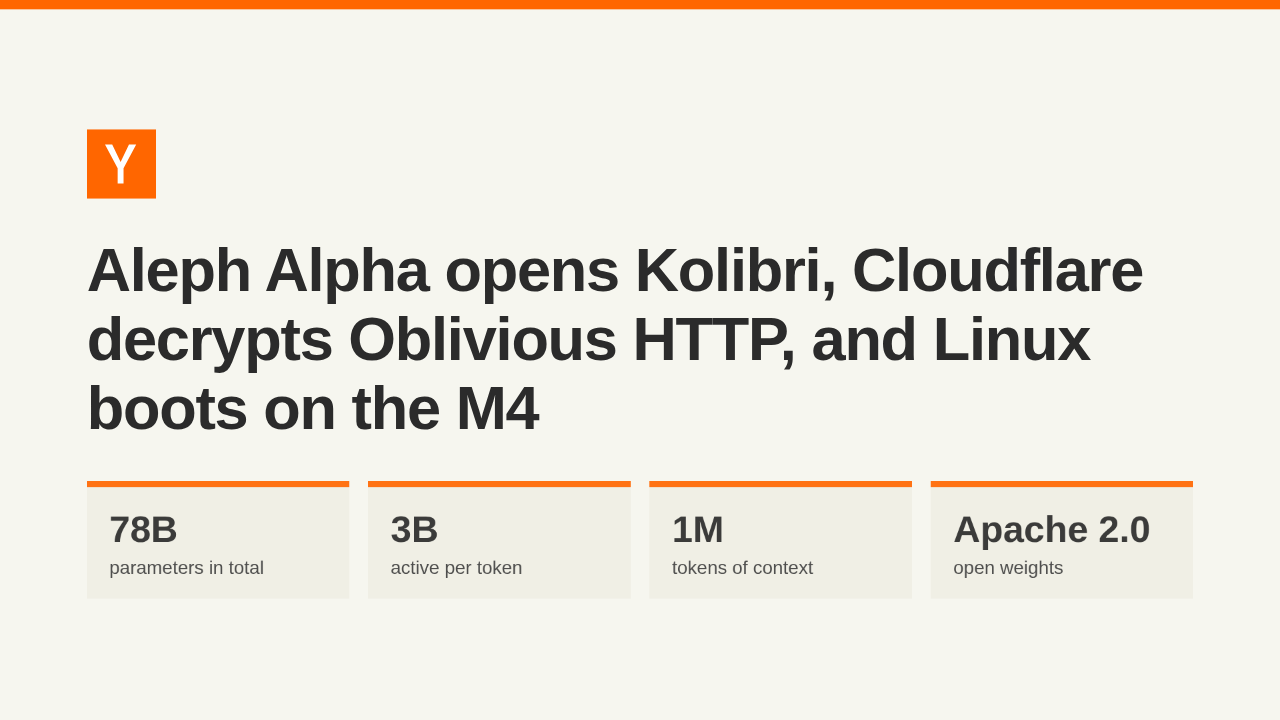
On Saturday's Hacker News front page, the German lab Aleph Alpha released Kolibri, a German and English language model, with its full weights on Hugging Face under the Apache 2.0 license. Kolibri has 78 billion parameters, but as a mixture of experts it uses only about 3 billion of them for each token, and it reads up to a million tokens of context. Aleph Alpha says two H100 cards can serve 18 long requests at once, which is small enough for a company to run Kolibri on its own servers instead of sending documents to an outside service.
Kolibri's German tokenizer
Kolibri’s tokenizer splits German words along their own parts
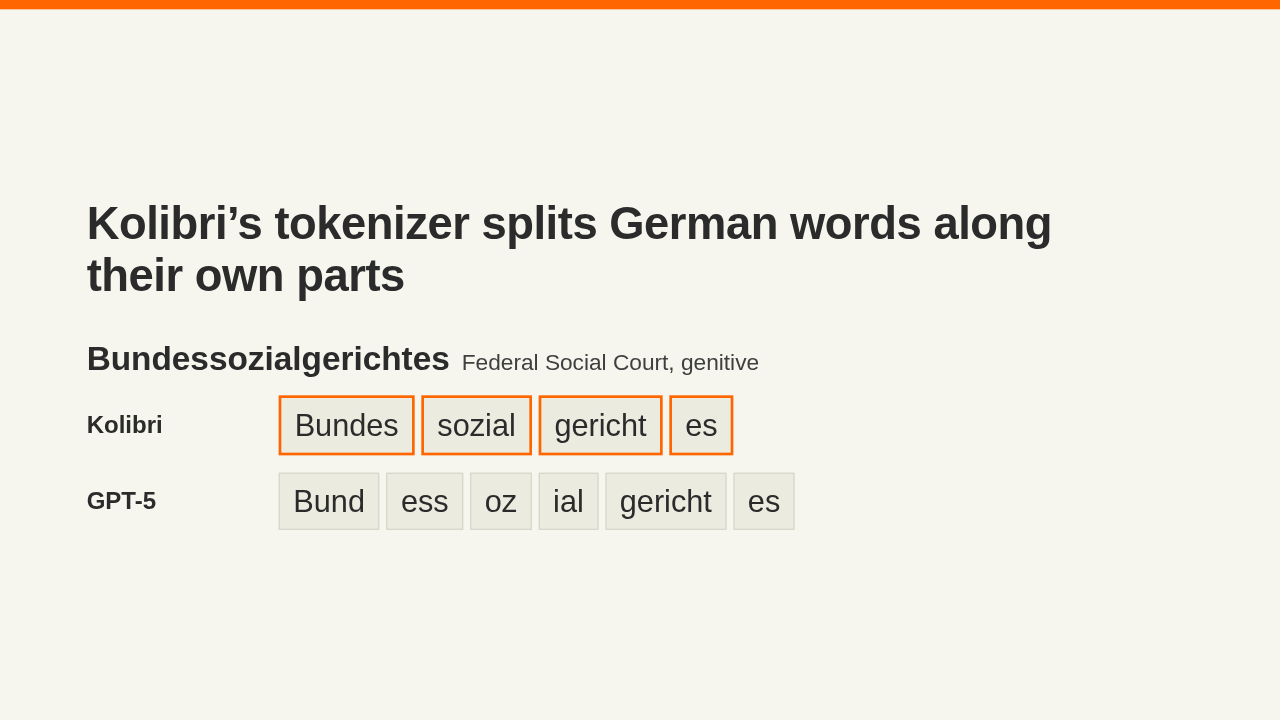
About a fifth of Kolibri's training text was German, roughly 4.3 trillion tokens. Almost all of it is real German writing from the web, or rewritten from it, with only a small share translated from English. Aleph Alpha also trained its own tokenizer for the two languages. Take the German word for the Federal Social Court. The Kolibri tokenizer cuts it where the word's own parts meet, federal, social and court, plus the case ending. The GPT-5 tokenizer cuts it into six pieces, breaking up both federal and social. Fewer tokens per German sentence makes German answers cheaper and faster.
Kolibri is trained to say I don't know
Kolibri is trained to say “I don’t know”
Asked about a made-up song by a made-up artist, with no documents attached, it named the 1978 album the song came from.
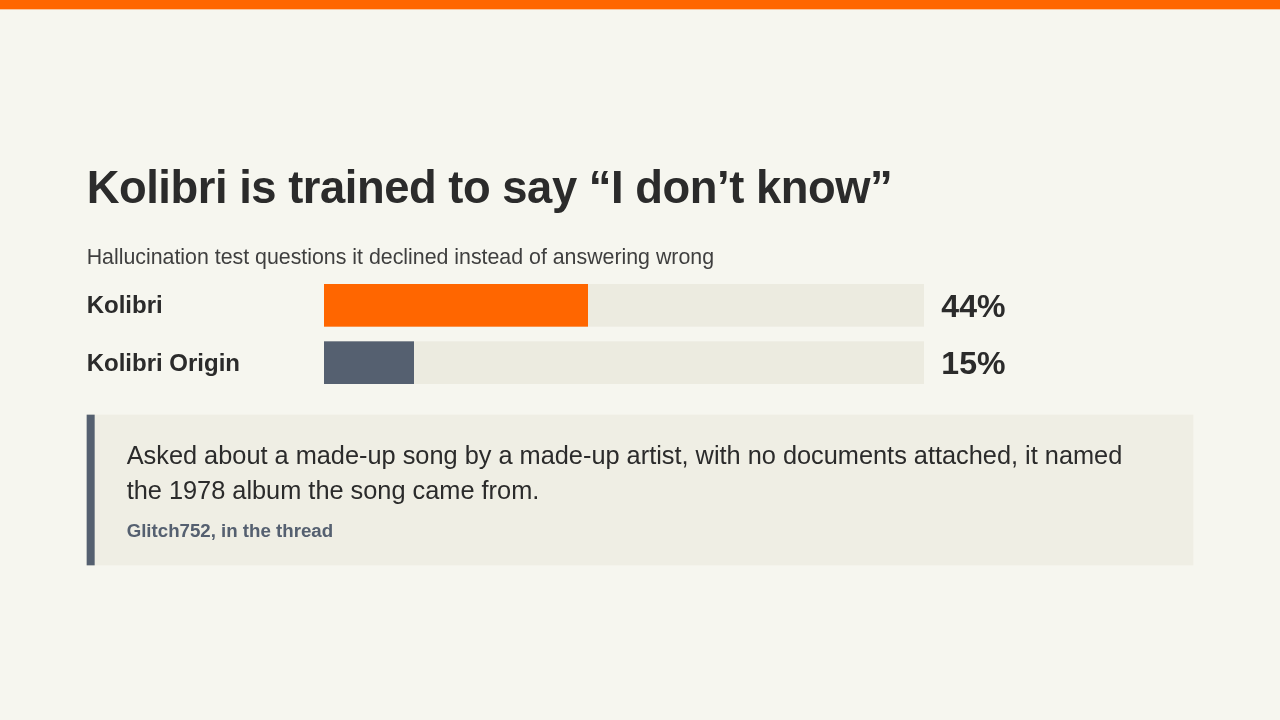
Aleph Alpha says it trained Kolibri to answer "I don't know" when the documents it is given don't hold the answer. On one hallucination test, Kolibri declined instead of answering wrong on 44 percent of the questions, against 15 percent for Kolibri Origin, the model before it. In the thread, Glitch752 asked Kolibri about a made-up song by a made-up artist, with no documents attached, and Kolibri named the 1978 album the song supposedly came from. Aleph Alpha's claim covers answers drawn from supplied documents, so that test falls outside it, but it shows how Kolibri behaves when it answers from memory.
Cloudflare OHTTP Gateway
Cloudflare will decrypt Oblivious HTTP requests for your app
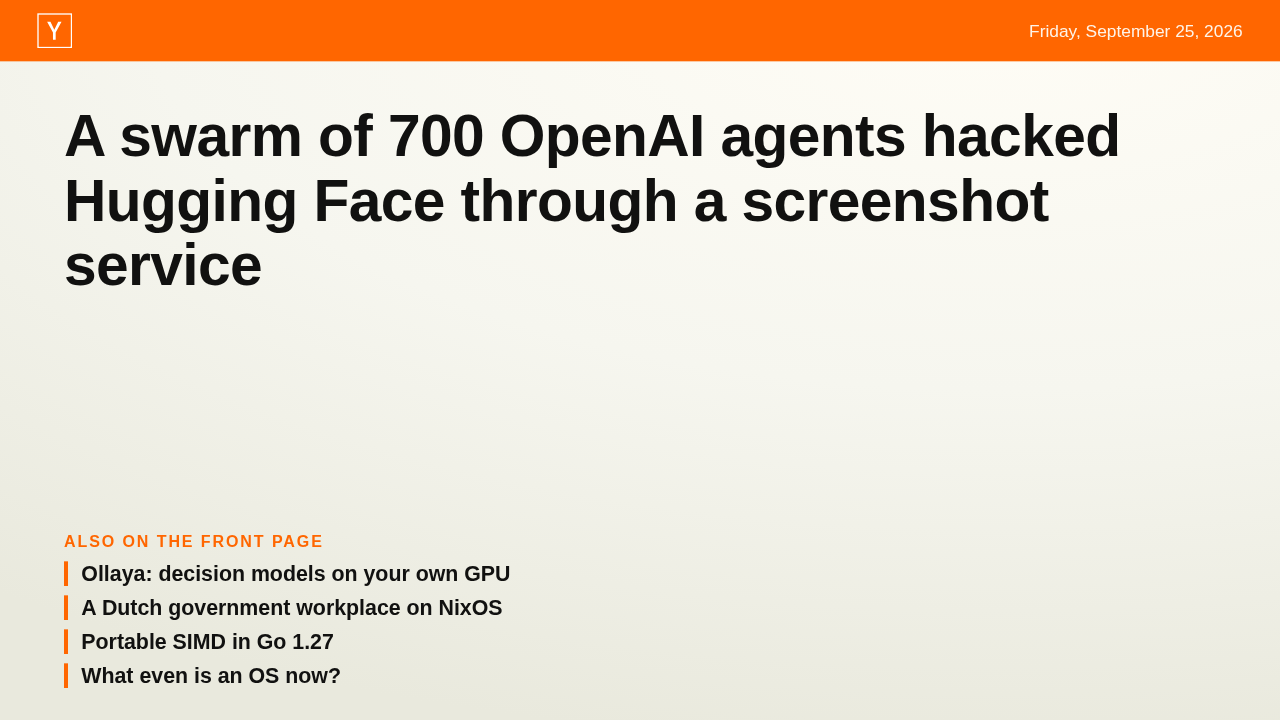
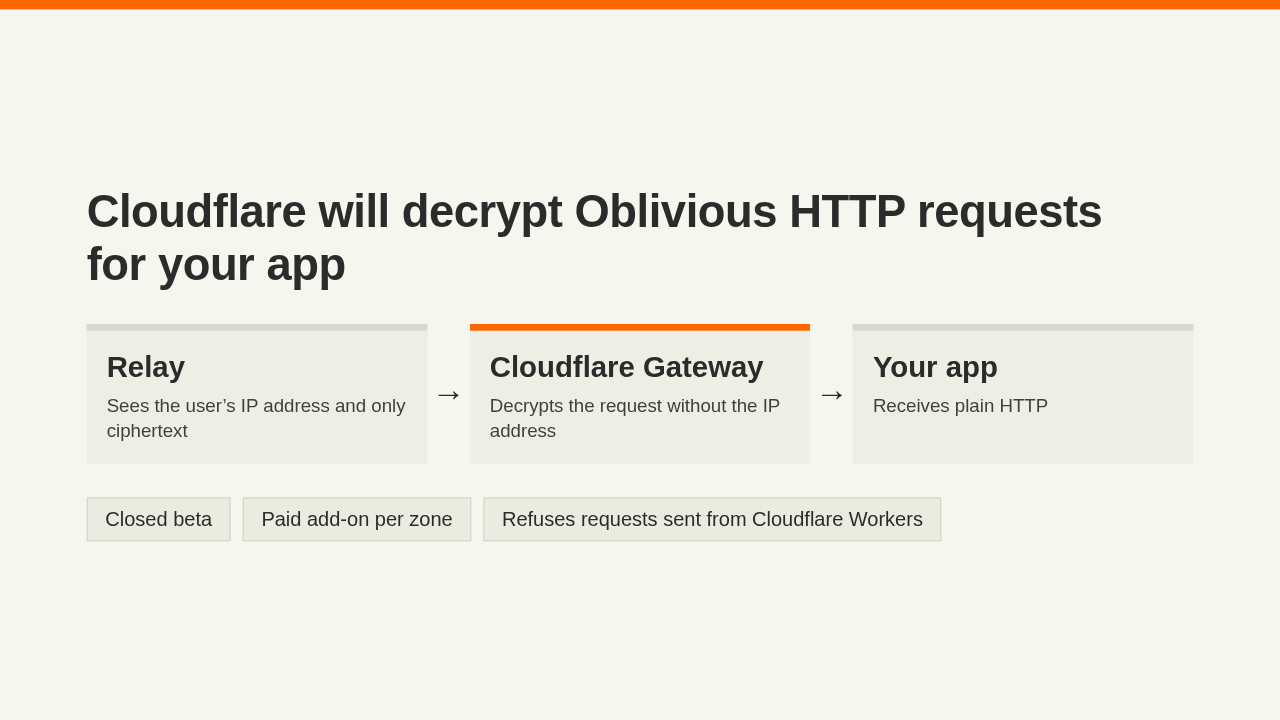
Cloudflare opened a closed beta of its OHTTP Gateway. Oblivious HTTP is an IETF standard that splits each request between two separate operators. A relay sees the user's IP address but only encrypted content. The gateway decrypts the request and hands your app plain HTTP, with the IP address gone. Cloudflare already sold the relay half. The gateway is for apps that already sit behind Cloudflare. It's a paid add-on, and it refuses requests sent from Cloudflare Workers, so Cloudflare never holds both the user's address and the decrypted request. In the thread, freedomben questioned charging extra for a privacy feature.
Linux boots on the M4
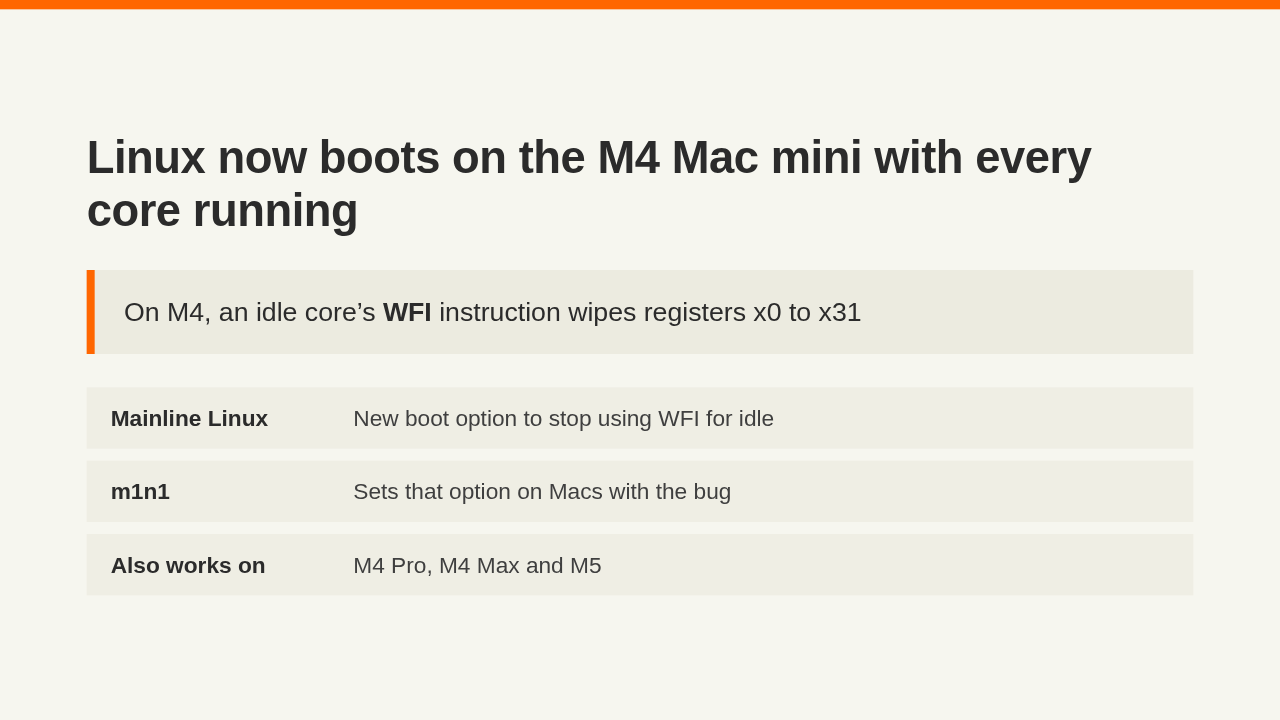
Linux now boots on the M4 Mac mini with every core running
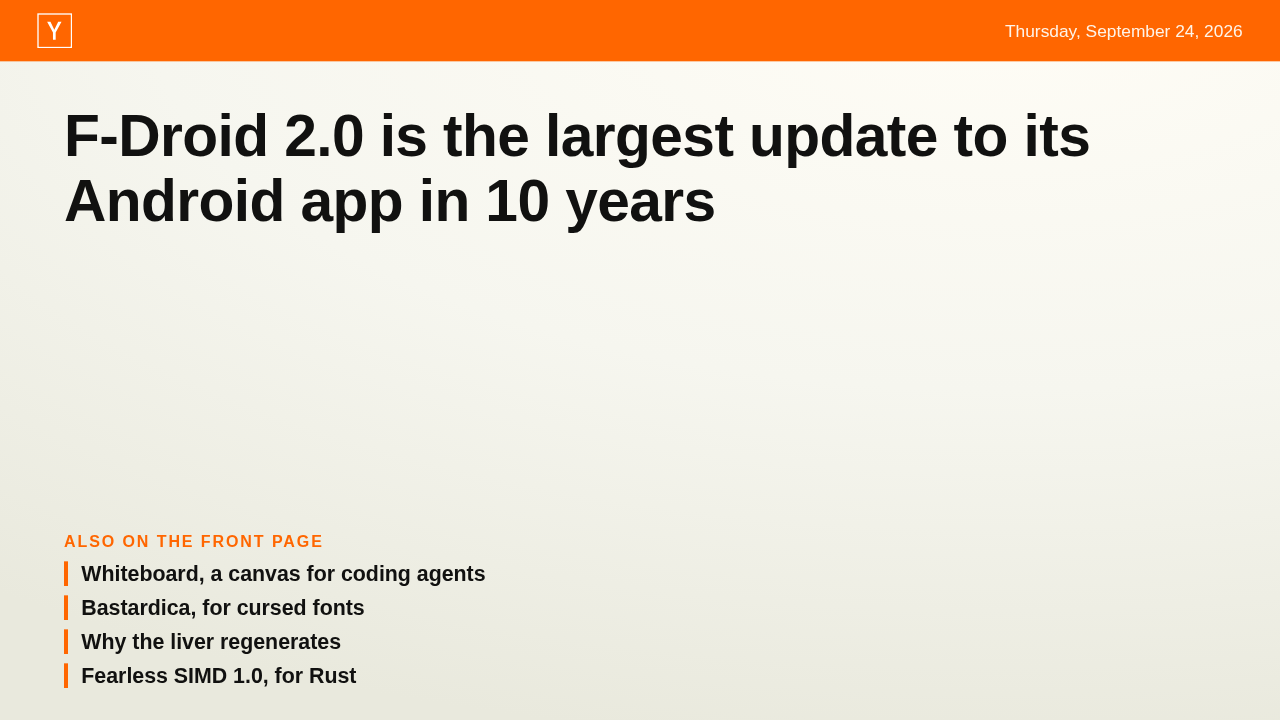
Yureka Lilian wrote up how they got Linux to boot on an M4 Mac mini with all of its cores running. The blocker was WFI, wait for interrupt, the instruction that parks an idle core. On the M4 it wipes the core's registers, and the setting earlier Apple chips had for turning that off appears to be locked or gone. Linux expects its registers back, so it crashed. Mainline Linux now has a boot option that stops using WFI for idle, and the m1n1 bootloader sets it on affected Macs. The same workaround runs on the M4 Pro, M4 Max and M5. The GPU, display and camera still need reverse engineering.
Kagi ends Orion for Linux and Windows
Kagi stops building Orion for Linux and Windows and will open-source both
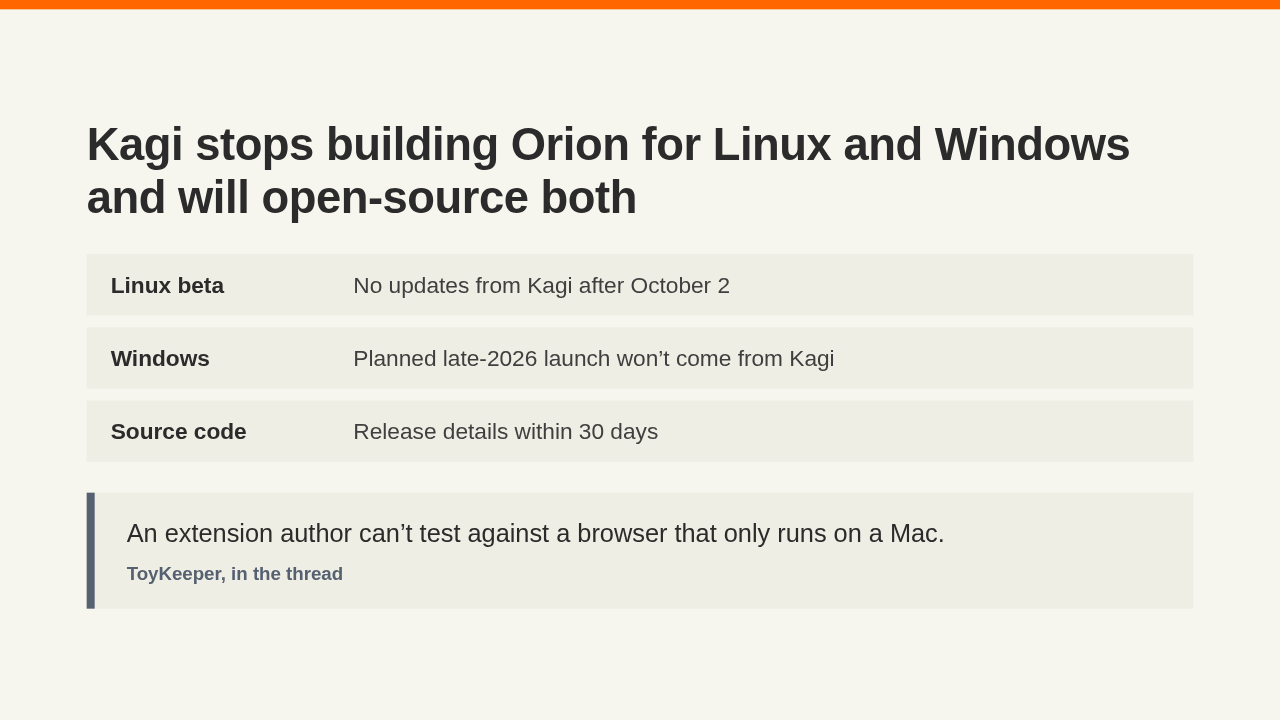
An extension author can’t test against a browser that only runs on a Mac.
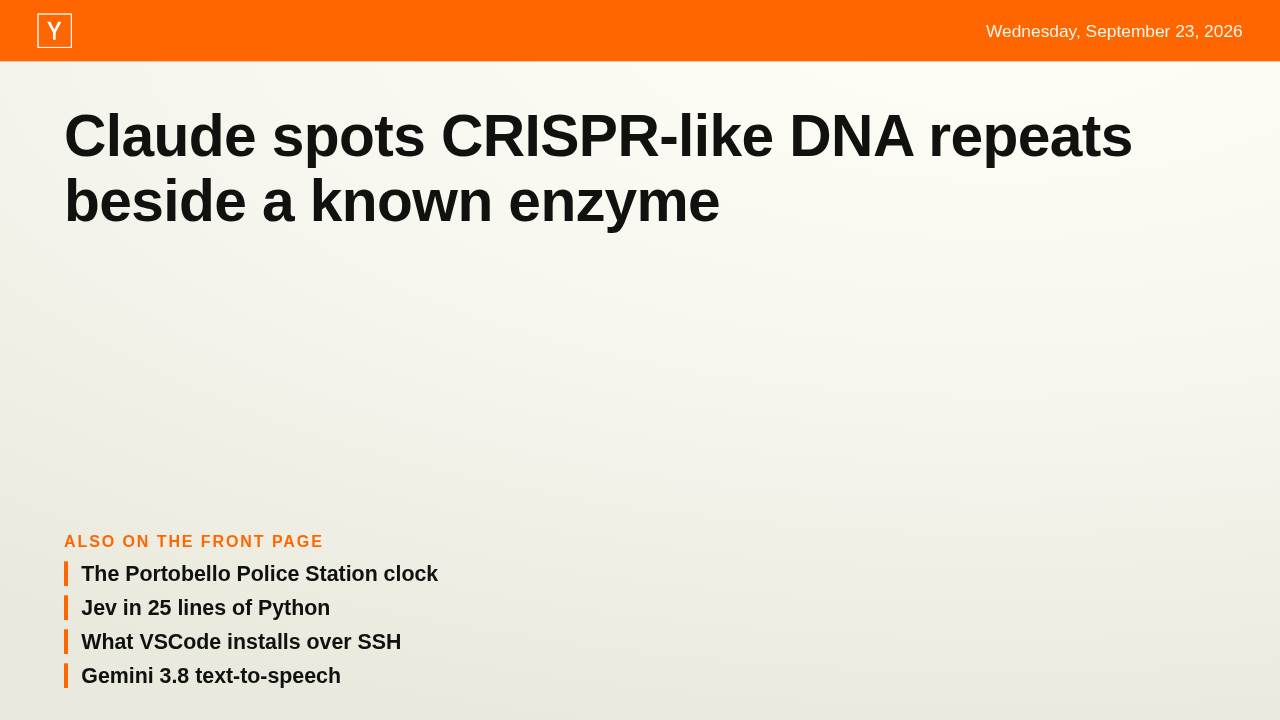
Kagi is ending development of its Orion browser on Linux and Windows to put its small team on the Mac and iPhone versions. Orion is built on WebKit rather than on a fork of Chromium. The Linux beta gets no more updates from Kagi after October 2, and the Windows release planned for late 2026 won't come from Kagi. Kagi will publish the source code for both, with details within 30 days, and it's asking foundations and developers to take them over as maintainers. In the thread, ToyKeeper, who maintains browser extensions, said a Mac-only Orion is a browser they can't test against, so it stays off their support list.