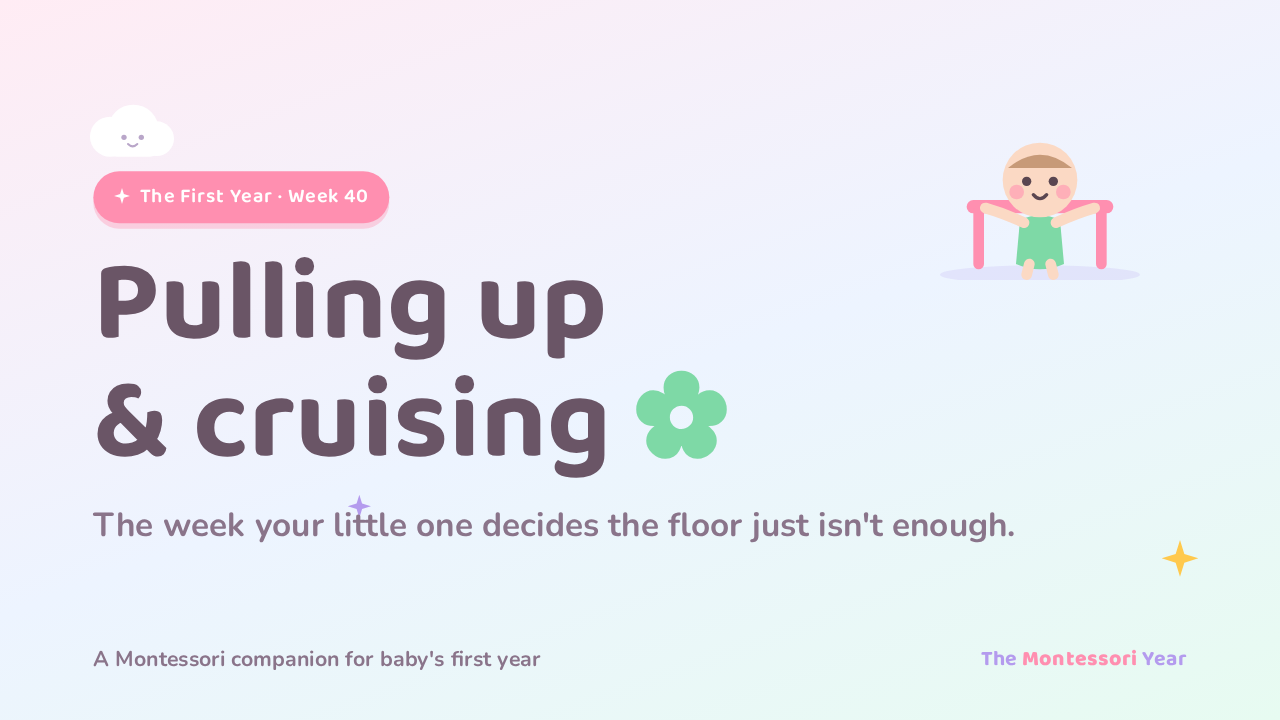
Pulling up& cruising ✿
The week your little one decides the floor just isn't enough.
You set your baby down beside the couch and turn away for one second. When you look back, they're up on both feet, gripping the cushion, grinning like they just discovered gravity. Pulling up is here, and cruising is next. This week is about meeting that drive the Montessori way, with one bar, one mirror, and a home that says yes.
You don't teach standing.
You prepare for it. ♥
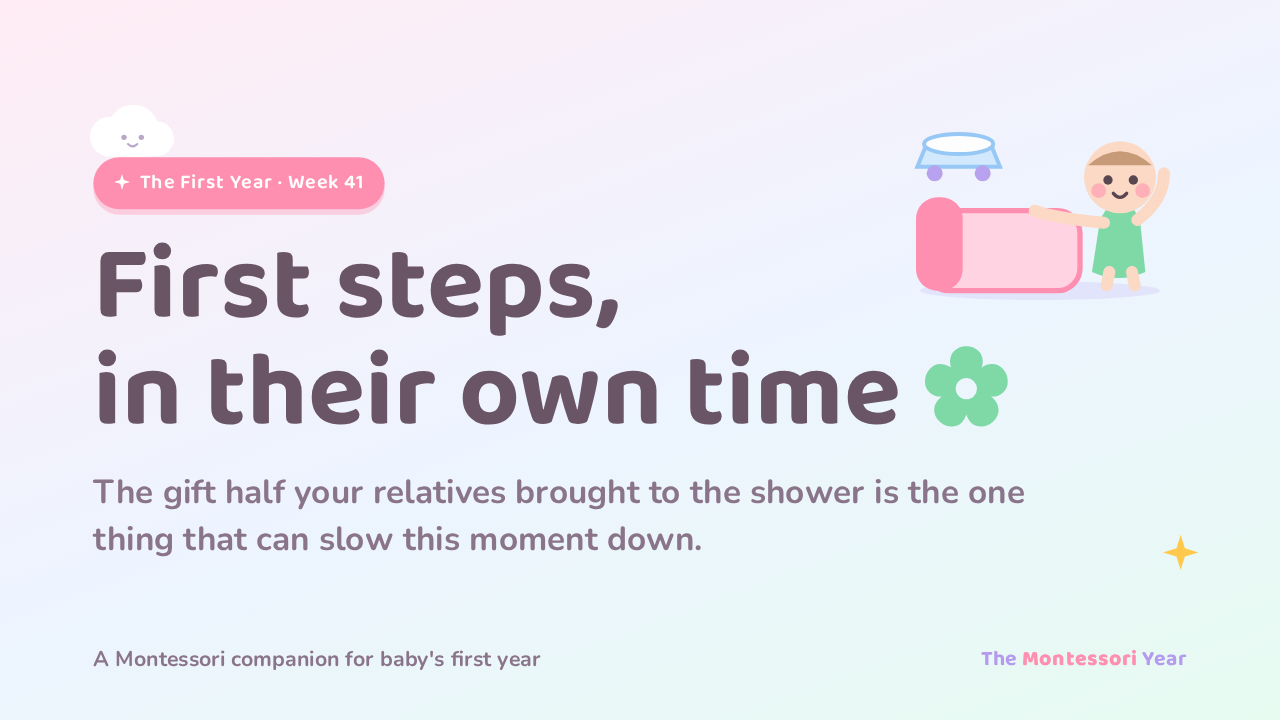
Here is the one idea to hold onto: you don't teach standing. You prepare for it. Pulling up, standing, cruising along the furniture; none of it needs lessons from us, and none of it can be rushed into being. What your baby needs is something safe and steady to pull up on, and the freedom to do the pulling themselves. Your job this week is to set the stage, then get out of the way.
A sensitive periodfor movement
Why be so hands-off? Because the drive is already there. Montessori called this a sensitive period for movement, a long window in early childhood when a child is naturally pulled toward moving and refining what their body can do. And within that window, each child has an internal timetable that tells them exactly when to start pulling up, and how long to practice each day. The urge to stand comes installed.
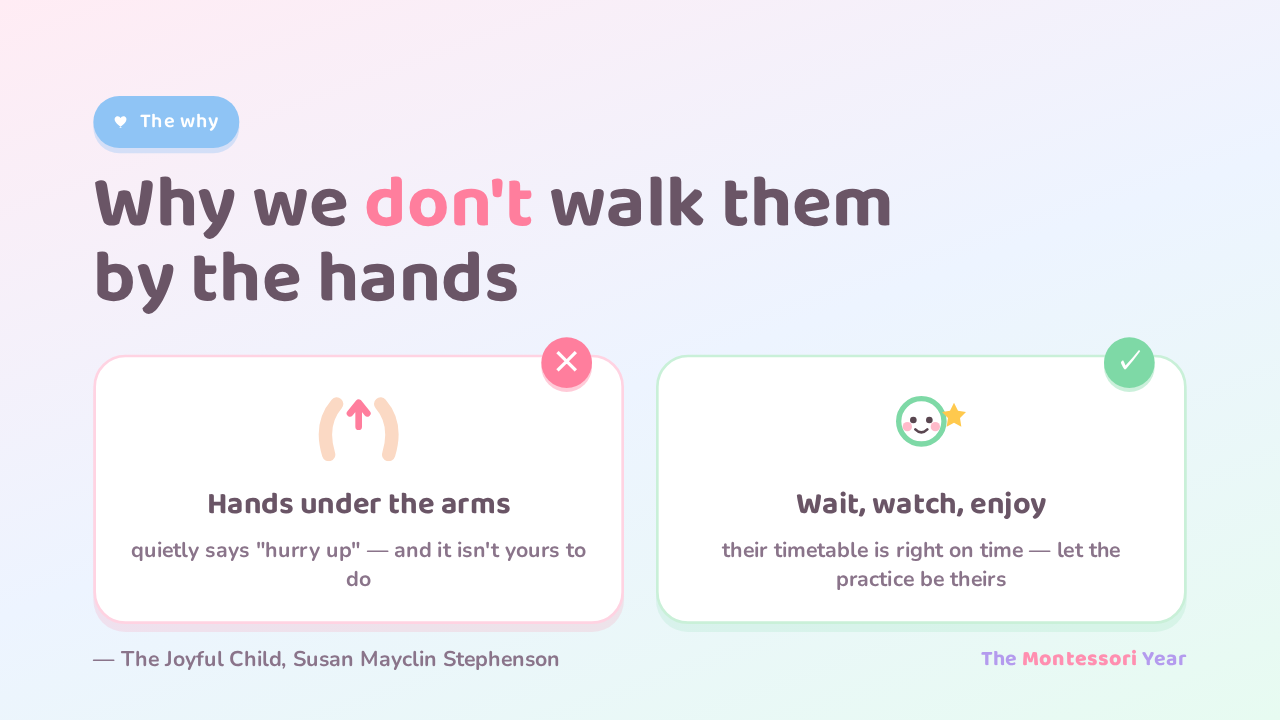
Why we don't walk themby the hands
Hands under the arms
quietly says "hurry up" — and it isn't yours to do
Wait, watch, enjoy
their timetable is right on time — let the practice be theirs
That is why the well-meaning lift under the arms can quietly backfire. In The Joyful Child, Susan Stephenson puts it plainly: when we hold a child's hands and walk them around before their time, we send a subtle message that we are not satisfied with their timetable. It can leave a baby frustrated with their own attempts. So we wait, we watch, and we let the practice belong to them.
Slide 5
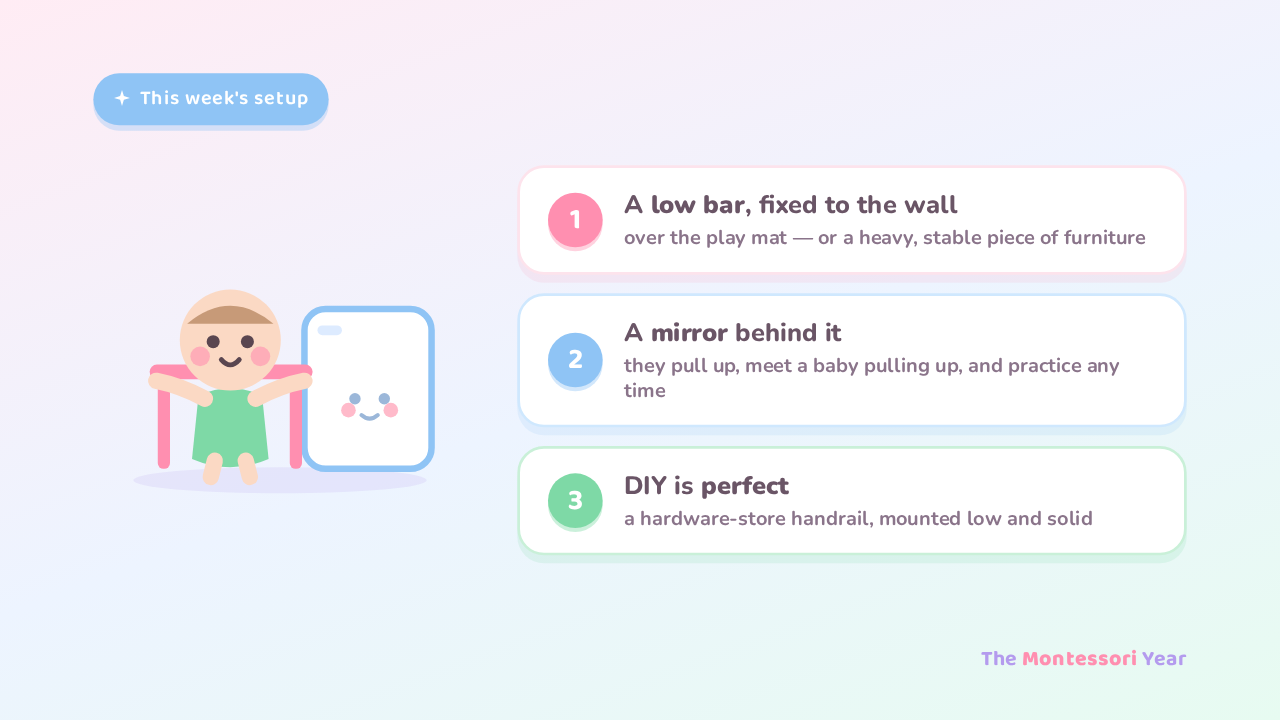
A low bar, fixed to the wallover the play mat — or a heavy, stable piece of furniture
A mirror behind itthey pull up, meet a baby pulling up, and practice any time
DIY is perfecta hardware-store handrail, mounted low and solid
Now the setup, and it's simple. Fix a low bar to the wall, right over the play mat, with a mirror behind it. Stephenson calls a low bar, or a heavy stable piece of furniture, the most important thing we can provide at this stage. And you don't need to buy anything special. A wooden handrail from the hardware store, mounted low and solid, does the job beautifully. Your baby pulls up, meets a baby pulling up, and practices whenever they like, for as long as they like.
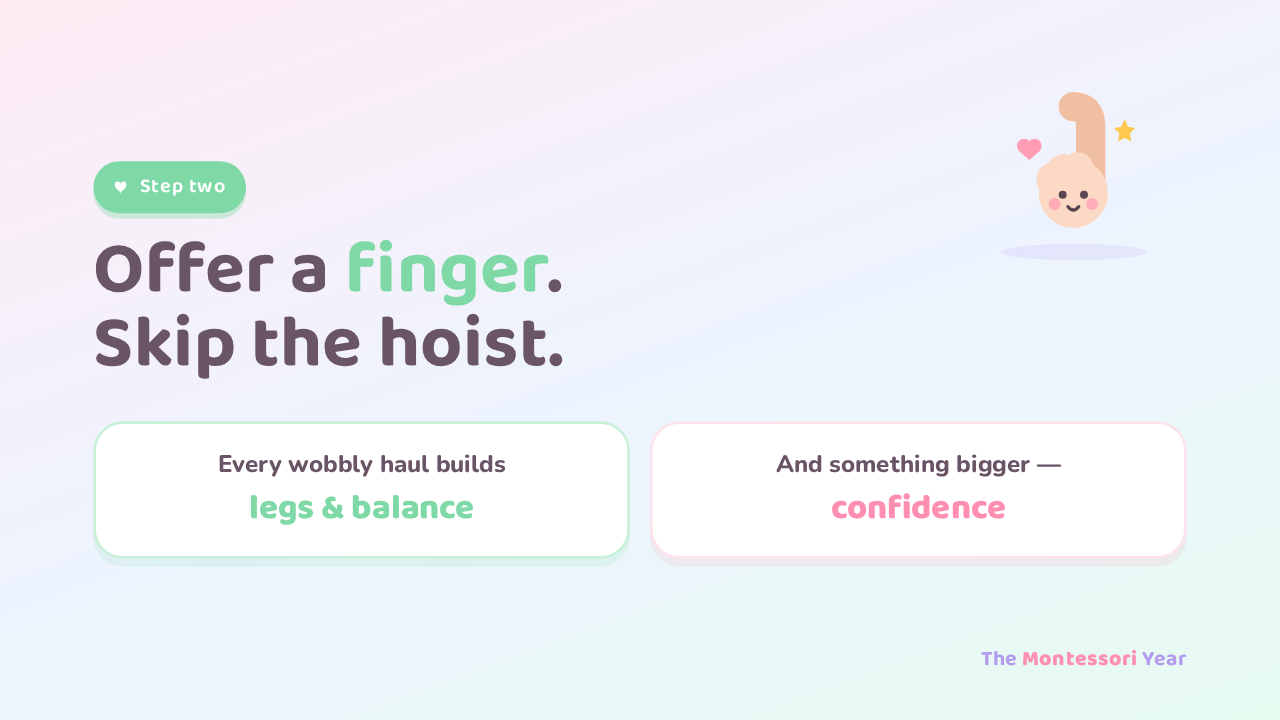
Offer a finger.Skip the hoist.
The second step costs nothing: let them do the pulling. If your baby reaches for you, offer a finger to hold. But resist hoisting them onto their feet, however sweetly they ask. Every wobbly haul upward is building legs, balance, and something bigger: the confidence that when they want something, their own effort can get them there. Accepting exactly where they are today, without hurrying them toward the next stage, is the whole approach in one move.
Slide 7
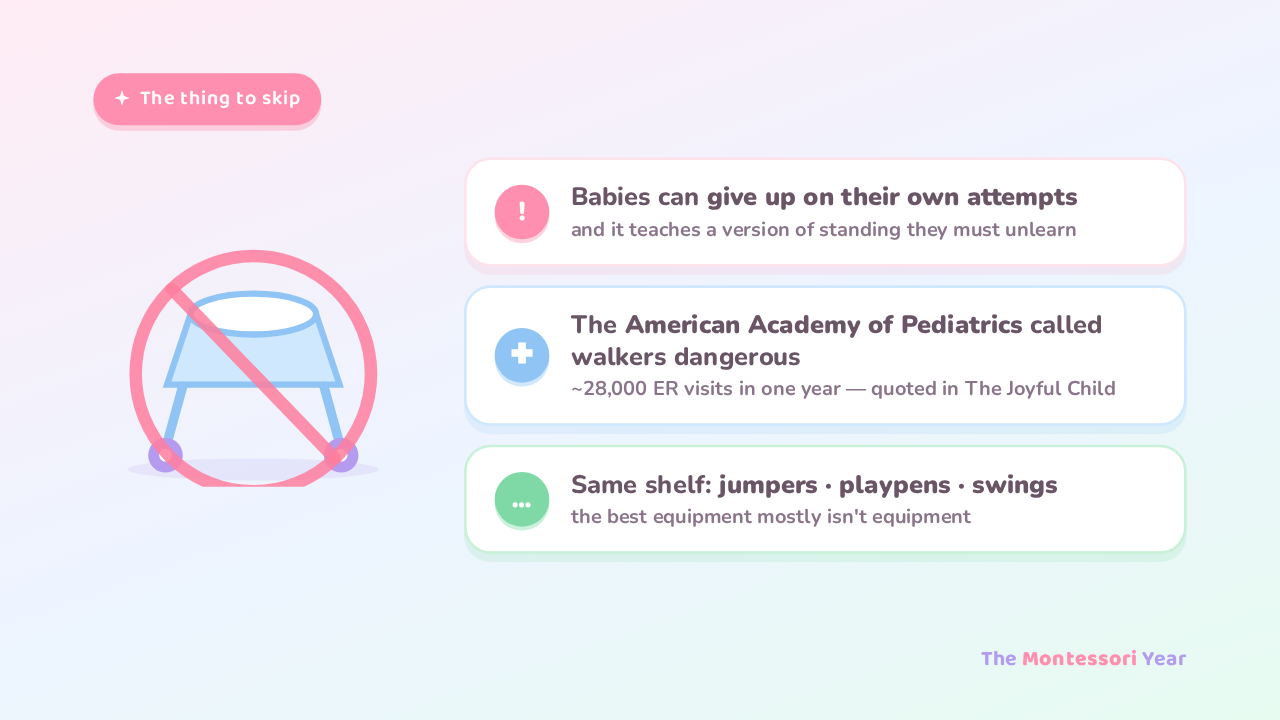
Babies can give up on their own attemptsand it teaches a version of standing they must unlearn
The American Academy of Pediatrics called walkers dangerous~28,000 ER visits in one year — quoted in The Joyful Child
Same shelf: jumpers · playpens · swingsthe best equipment mostly isn't equipment
And the one thing to skip: the baby walker. Walkers make a child mobile so quickly that some babies simply give up on their own attempts outside of it. They also teach the body a version of standing that has to be unlearned later. This isn't only a Montessori position. Stephenson reprints a clipping in the book: the American Academy of Pediatrics concluded walkers are dangerous and shouldn't be sold at all, after nearly twenty-eight thousand babies landed in emergency rooms with walker injuries in a single year. Jumpers, playpens, and swings sit on her leave-it-out list for the same reason. The best equipment mostly isn't equipment.
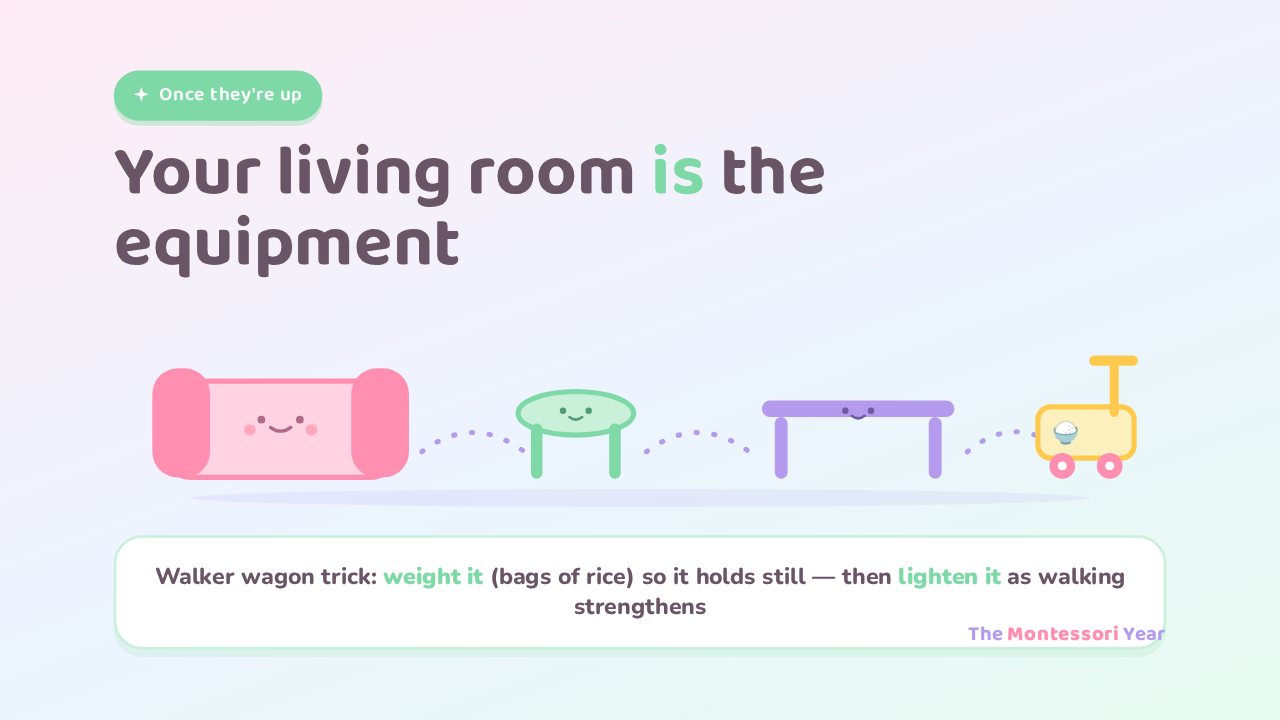
Your living room is the equipment
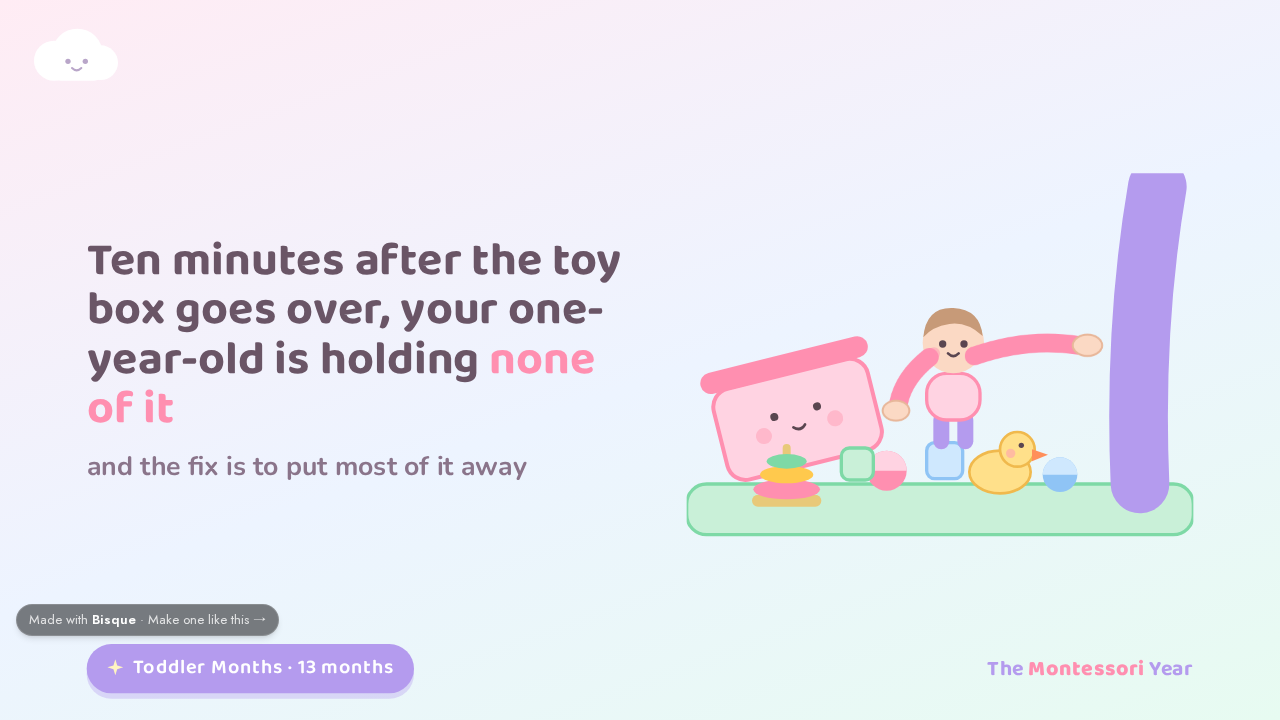
Once your baby is up, cruising begins: little sideways steps while holding on. You already own the practice course. A sofa, a sturdy stool, a heavy low table; anything that will not tip becomes cruising furniture. If you want one upgrade, the book's pick is a walker wagon, a small wagon with a fixed vertical handle to pull up on and push. Weight it down at first, with bags of rice or a wrapped free weight, so it holds still while they pull. As their walking strengthens, lighten the load, until one day the wagon is empty and rolling.
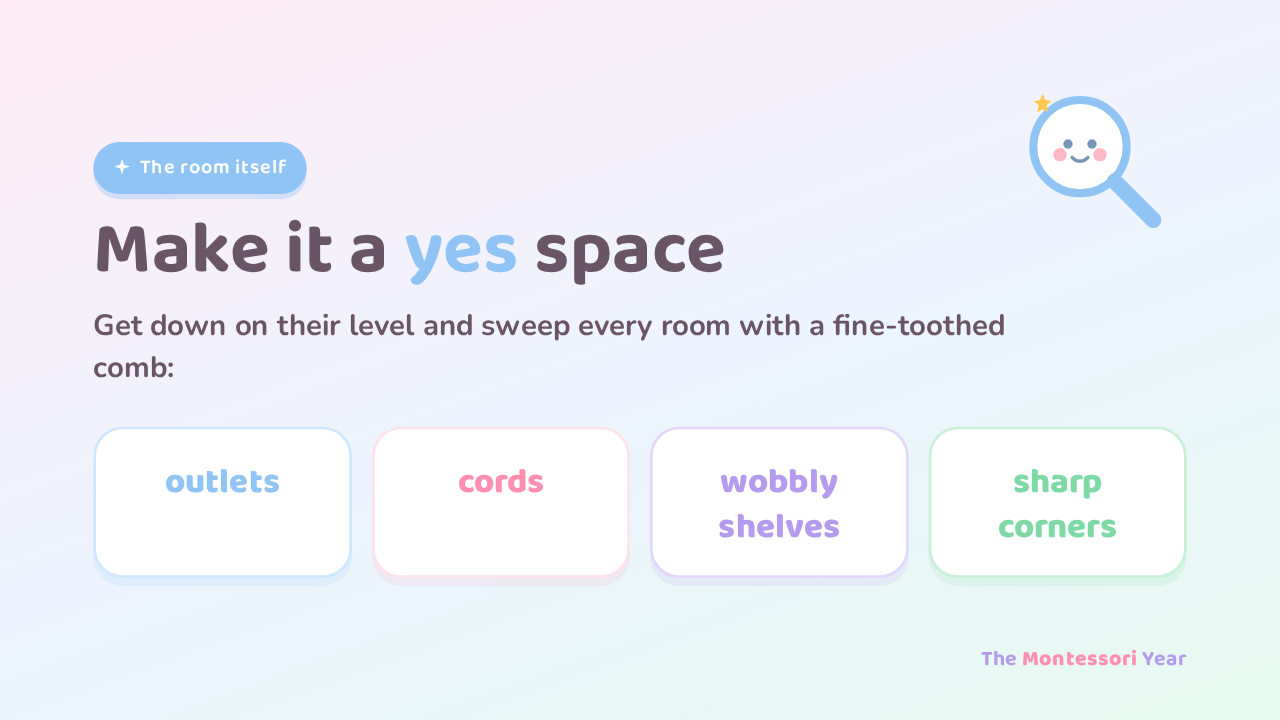
Make it a yes space
Get down on their level and sweep every room with a fine-toothed comb:
One more piece: the room itself. Nobody ever knows the moment a baby will start moving, so treat the whole space as the first piece of equipment. Get down on your baby's level and go over every room they'll explore with a fine-toothed comb. Outlets, cords, wobbly shelves, sharp corners. A safe room is what lets you say yes to exploring, instead of hovering over every attempt with a no.
Watch your baby,not the calendar
"Walking early or late does not signify more or less intelligence."
— The Joyful Child, Susan Mayclin Stephenson
Now the part I most want you to hear. Every baby writes their own schedule. Some pull up on the early side, some take their time, and the book is refreshingly blunt about what that means: walking early or late says nothing about intelligence. This is not a competition, for your baby or for you. So watch your child, not the calendar. And as always, this is guidance for the home, not medical advice; questions about your child's development belong with your pediatrician.
Prepare the room —then step back ♥
Standing will arrive on its own schedule — and it will be entirely theirs.
So this week: one low bar, one mirror, a cruising course you already own, and your hands mostly to yourself. Prepare the room, then let your baby do the work. Standing will arrive on its own schedule, and when it does, it will be entirely theirs. That's drawn from The Joyful Child, by Susan Mayclin Stephenson. I'm really glad you're here. I'll see you next week.