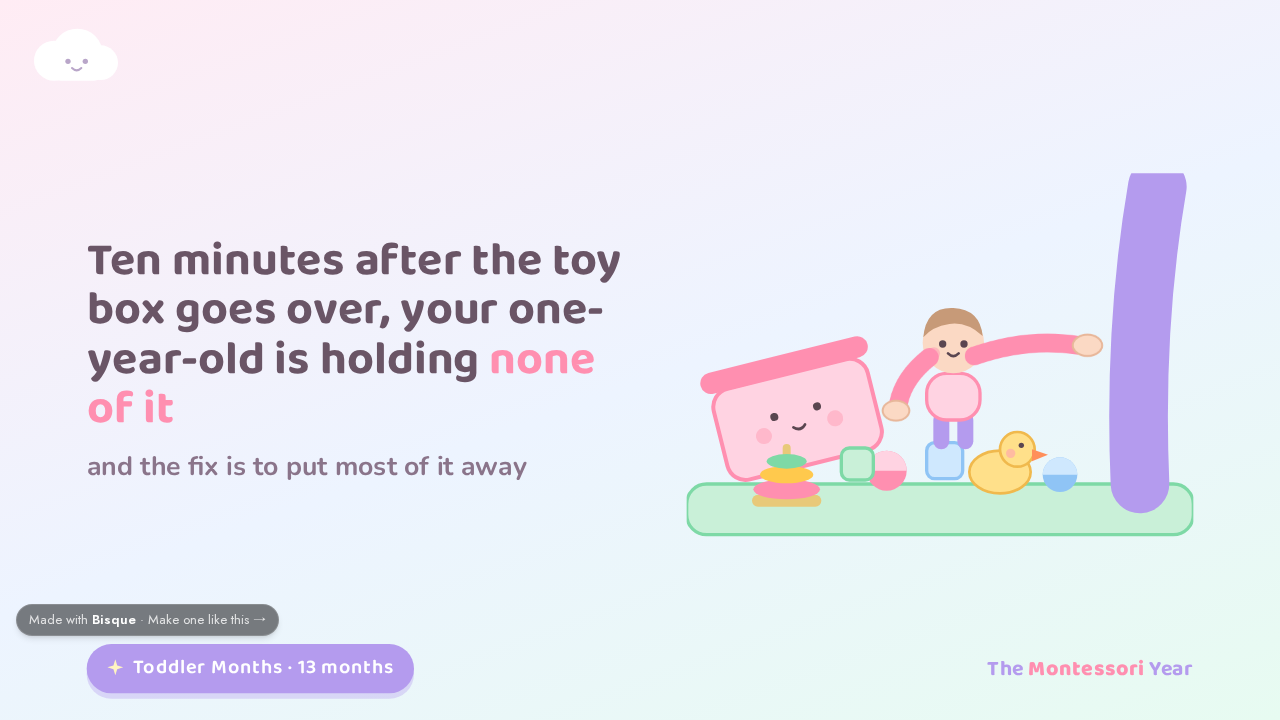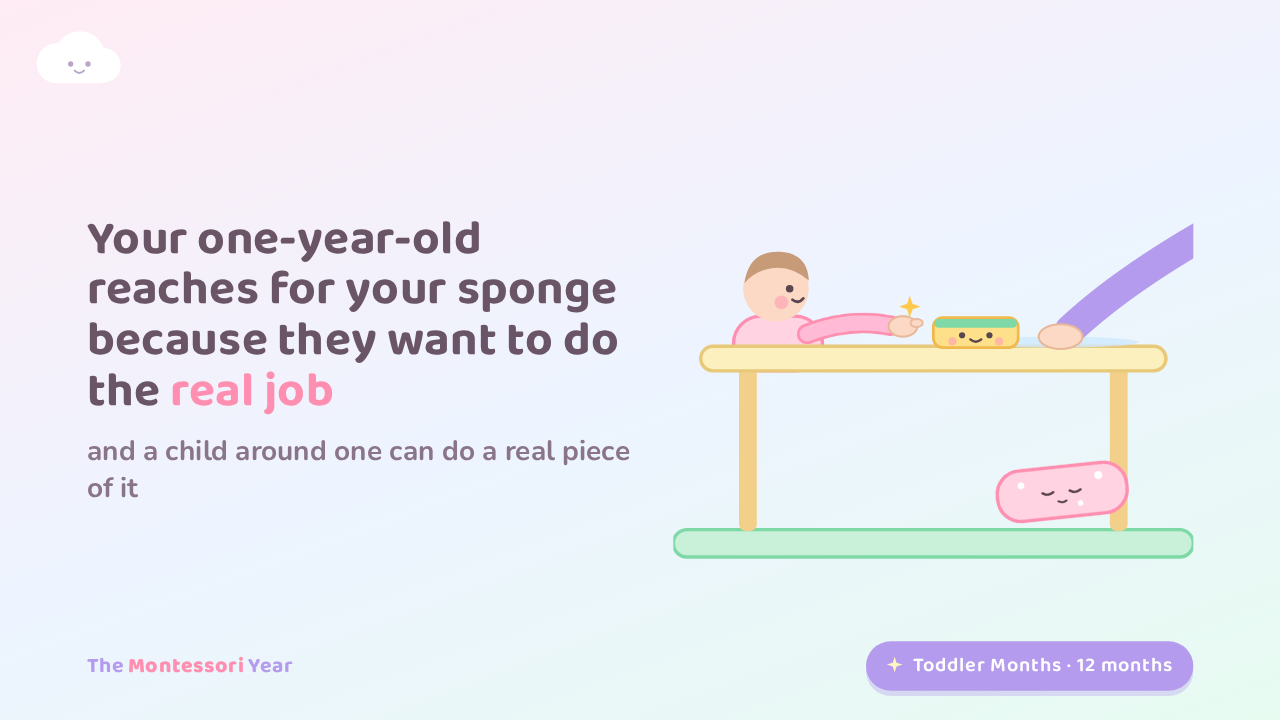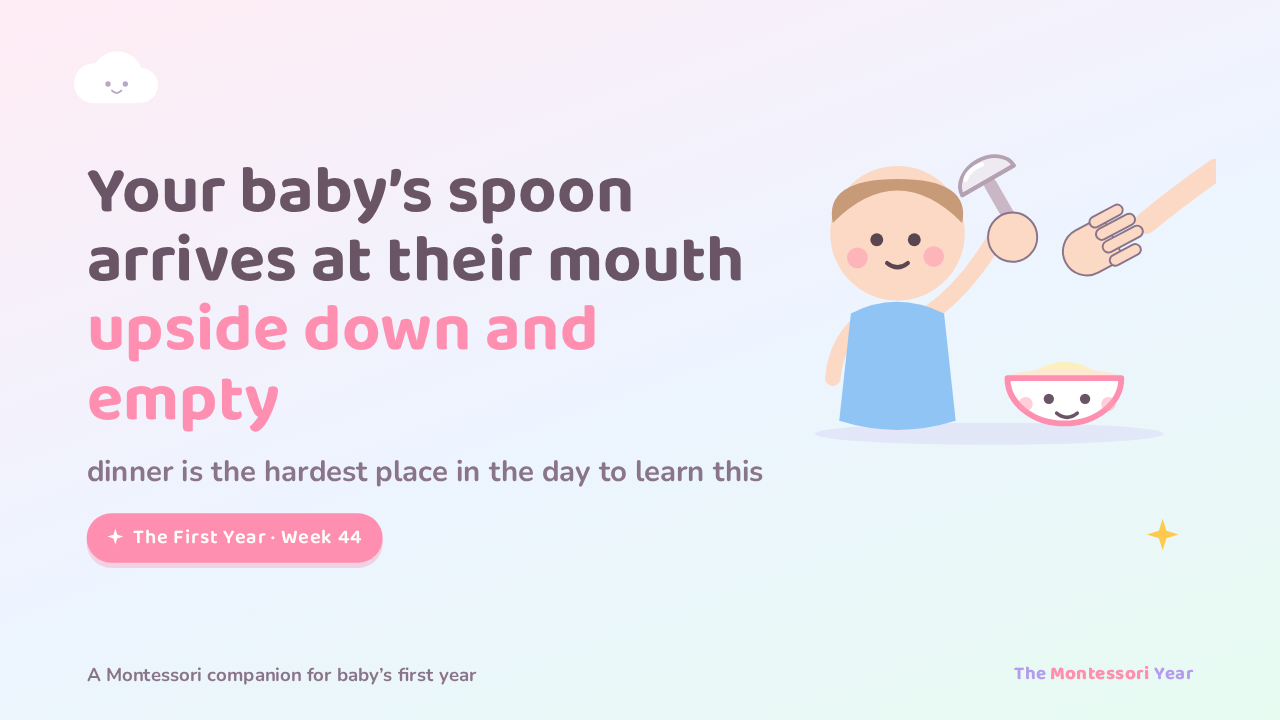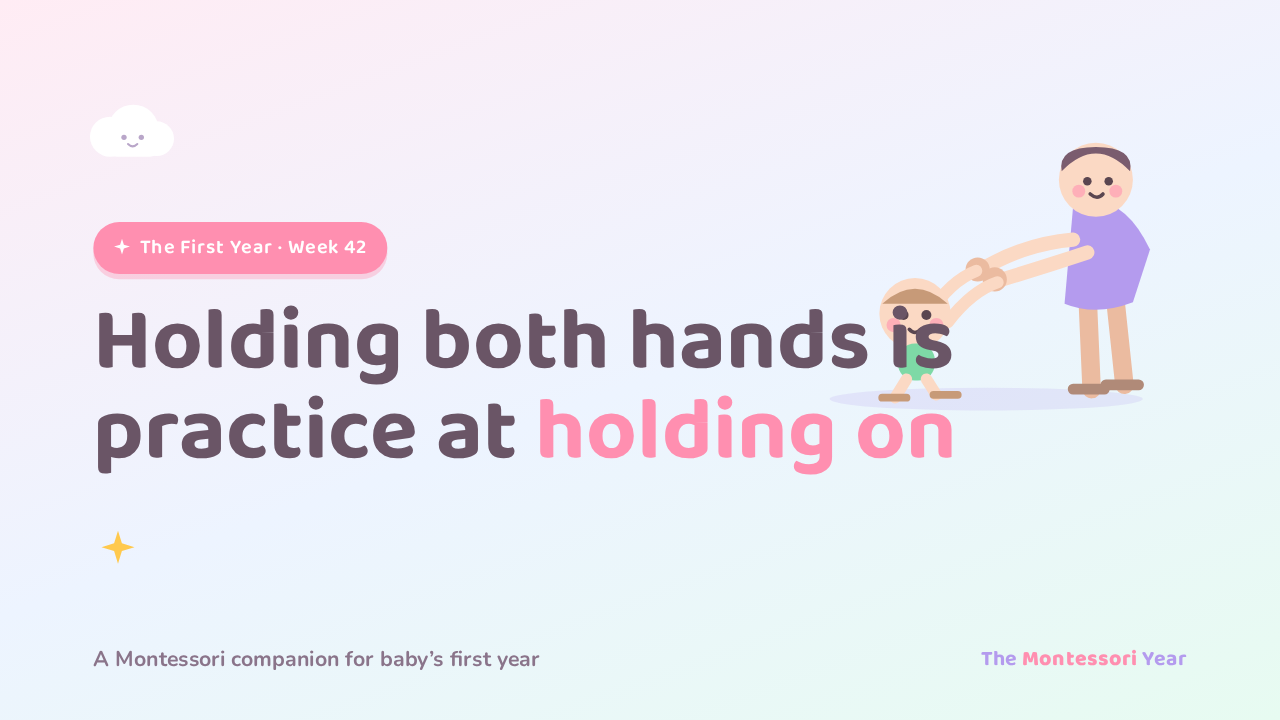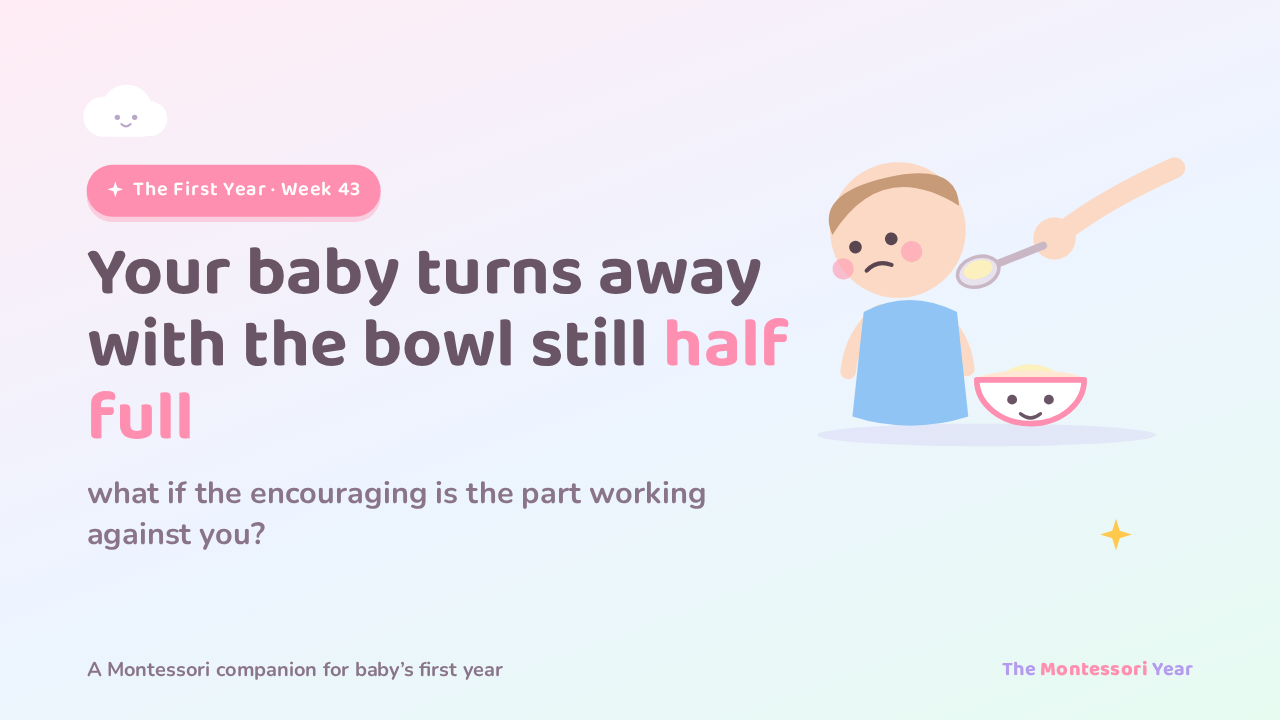
Your baby turns away with the bowl still half full
what if the encouraging is the part working against you?
It’s dinner. The spoon is hovering. You’re doing the little encouraging voice. And your baby turns their head away with most of the bowl still full. So you go in for one more bite, because every parent at that table does the same thing. Here’s the question worth sitting with tonight. What if the encouraging is the part working against you?
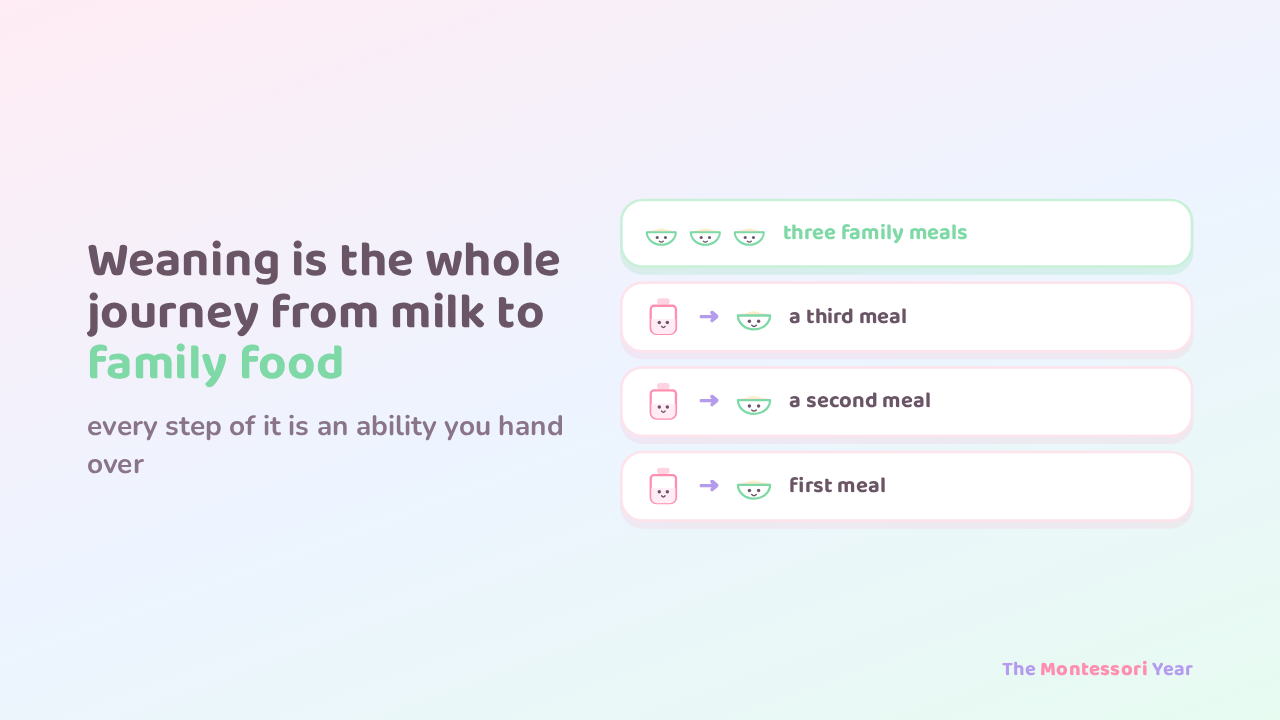
Weaning is the whole journey from milk to family food
every step of it is an ability you hand over
When you hear the word weaning, you probably picture the day nursing stops. Here’s what the word actually names. Weaning is the whole journey from milk to eating what the family eats. And every step of that journey is something you add. You hand your child an ability, and that new ability takes one feeding’s place. By around ten to twelve months there are three family meals in the day, and the milk stays for as long as the two of you want it to.
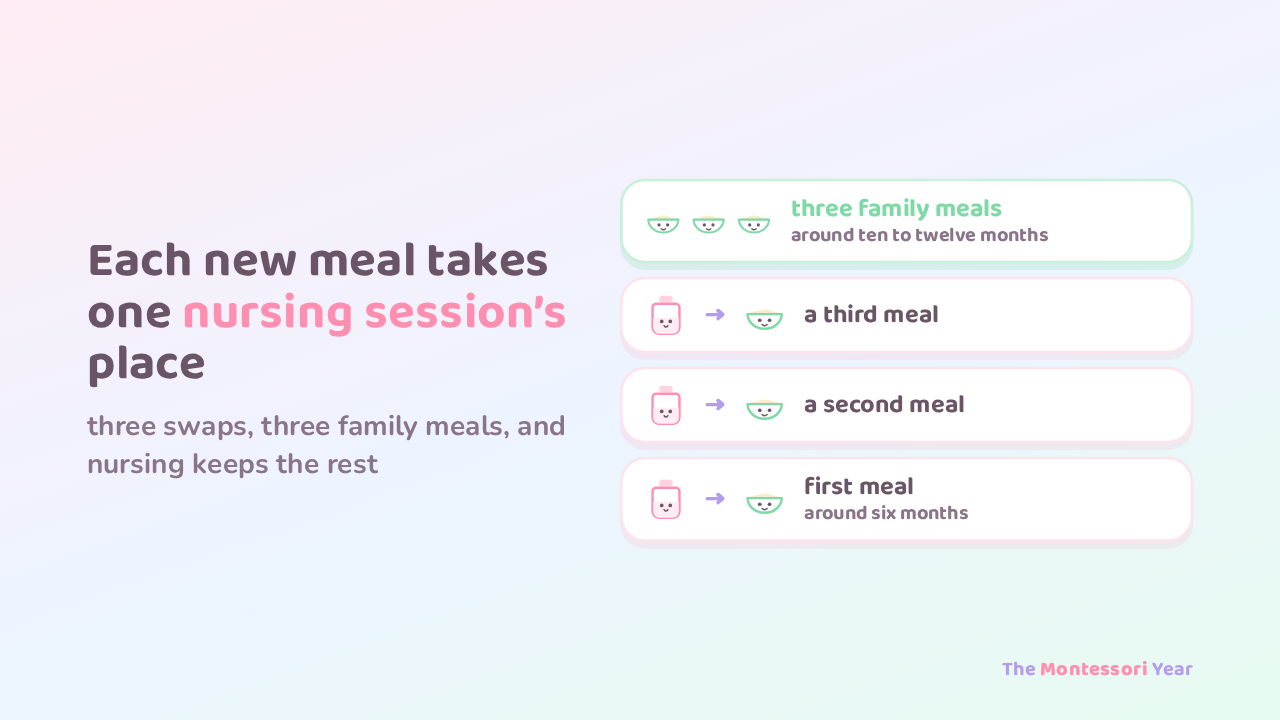
Each new meal takes one nursing session’s place
three swaps, three family meals, and nursing keeps the rest
So here’s the machinery, one rung at a time. That first real meal, around six months, takes the place of one nursing session. A month or so later, a second meal takes the place of a second. A month after that, a third. Each rung is a new ability arriving: sitting steadily, then a spoon they can hold, a glass they can drink from, a fork, and eventually a table they come to on their own. Three swaps, three family meals. Nursing keeps everything those meals never took, and at this age that is still a big part of your baby’s day. That’s why the finish arrives on its own, without a decision you have to make. The meals fill up, and the milk carries on around them.
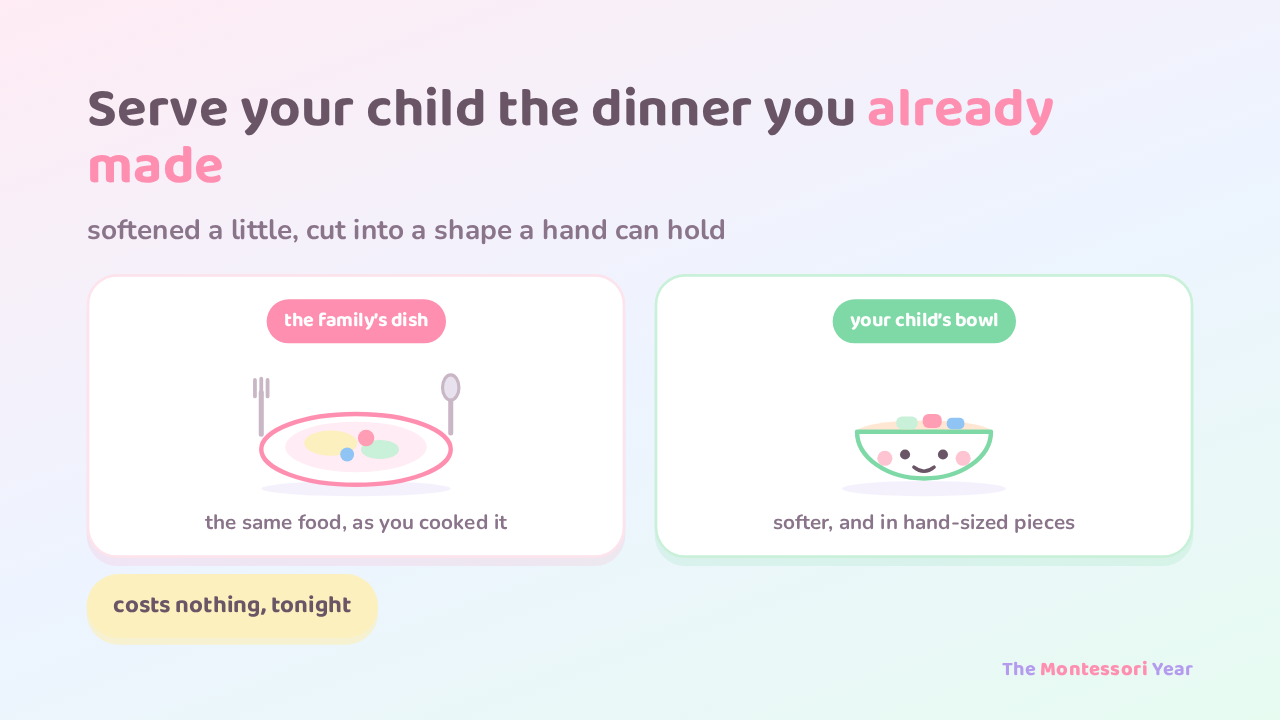
Serve your child the dinner you already made
softened a little, cut into a shape a hand can hold
the same food, as you cooked it
softer, and in hand-sized pieces
So here’s the first thing to try tonight, and it saves you a whole second dinner. Your baby eats what you are eating, softened a little, and cut into a shape a hand can hold and a mouth can manage. Once your child can sit up and bring their own hands to their mouth, a piece of your dinner works. That’s the whole pattern. Your child eats the family’s food, adapted to them.
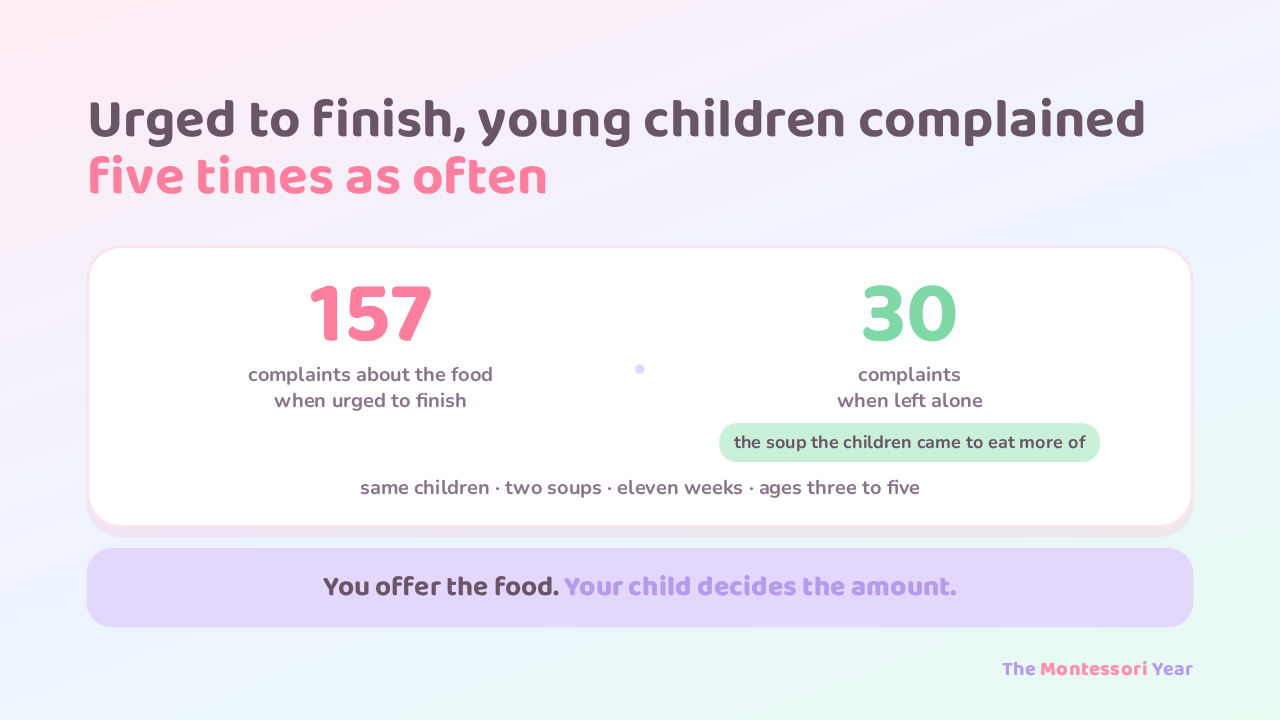
Urged to finish, young children complained five times as often
when urged to finish
when left alone
same children · two soups · eleven weeks · ages three to five
Now the same engine, running the other way. If weaning moves forward on your child’s own appetite, then the thing that stalls it is overriding that appetite. Researchers tested that with young children, ages three to five. Over eleven weeks the researchers served those children two soups, and one of the two always came with a request to finish it. Across those weeks, the soup the children ate freely is the one they came to eat more of. And the children complained about the pressed soup far more: a hundred and fifty-seven complaints about the food, against thirty for the soup they ate freely. Urging one more bite is the most natural move at a table, and it works against the very thing it’s trying to do. So here’s the line to keep. You offer the food. Your child decides the amount.
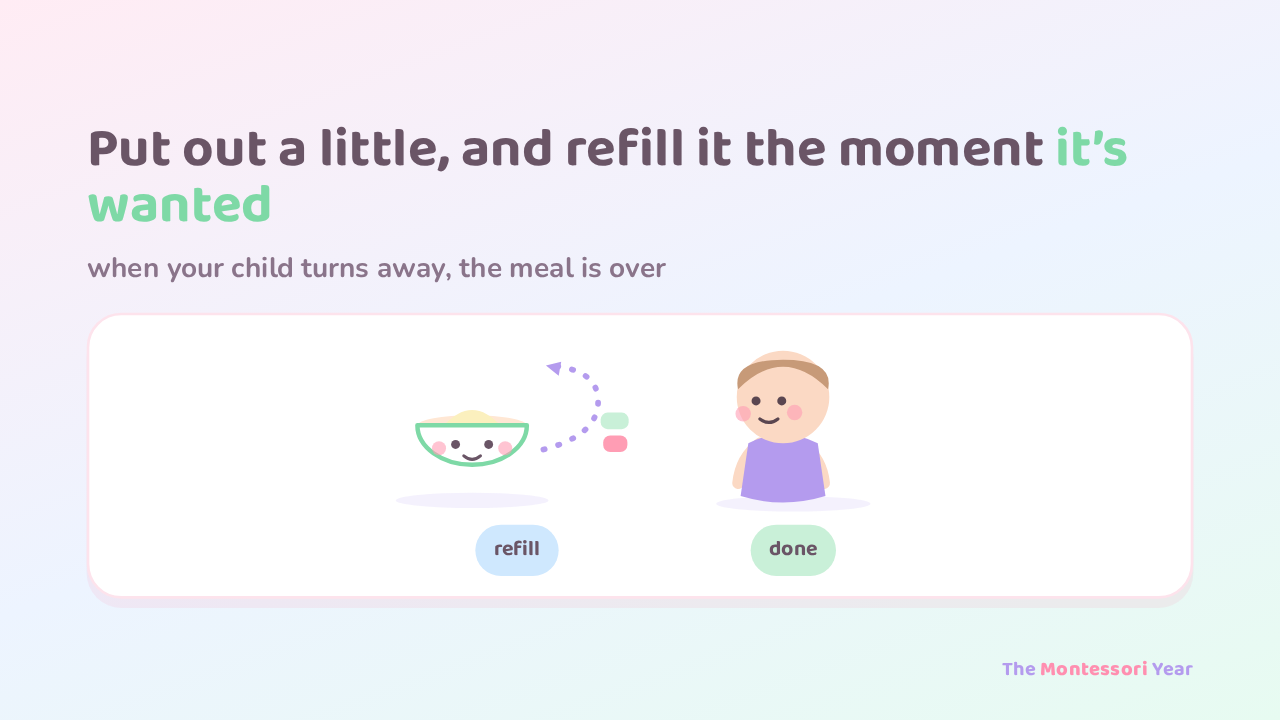
Put out a little, and refill it the moment it’s wanted
when your child turns away, the meal is over
So what does that look like tonight? Put a smaller amount in the bowl than you think they will want, and refill it the moment they want more. A little bowl your child can finish feels like something they can do. A heaped one just sits there. And when your child turns away, the meal is over. Turning away is an answer, and you can take it.
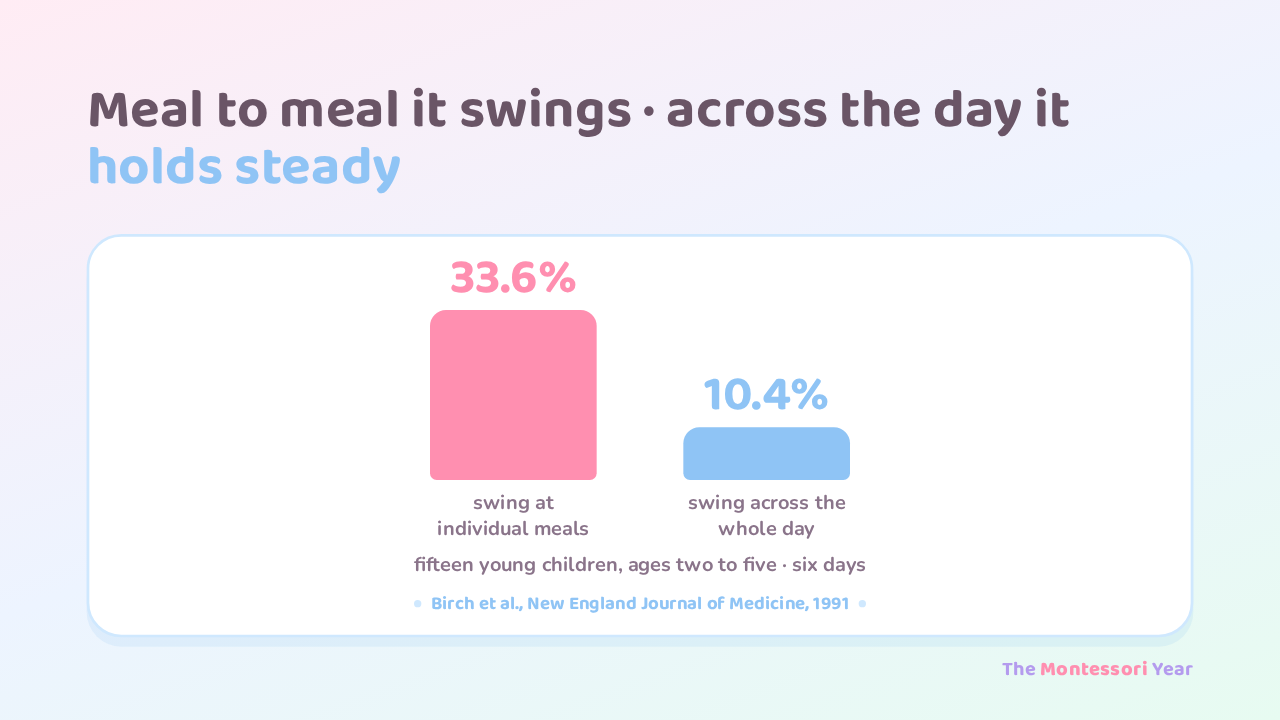
Meal to meal it swings · across the day it holds steady
fifteen young children, ages two to five · six days
Here’s the number that lets you relax. In one study, researchers followed fifteen young children, ages two to five, for six days and weighed everything those children ate. Meal to meal, how much a child ate swung by about a third. One day it’s a huge lunch and almost nothing at dinner. Add up the whole day, though, and the day’s total moved by about a tenth. A big meal was simply followed by a small one. So the regulation you’re worrying about is already happening, on a longer clock than the meal in front of you. That barely touched lunch is the system working.
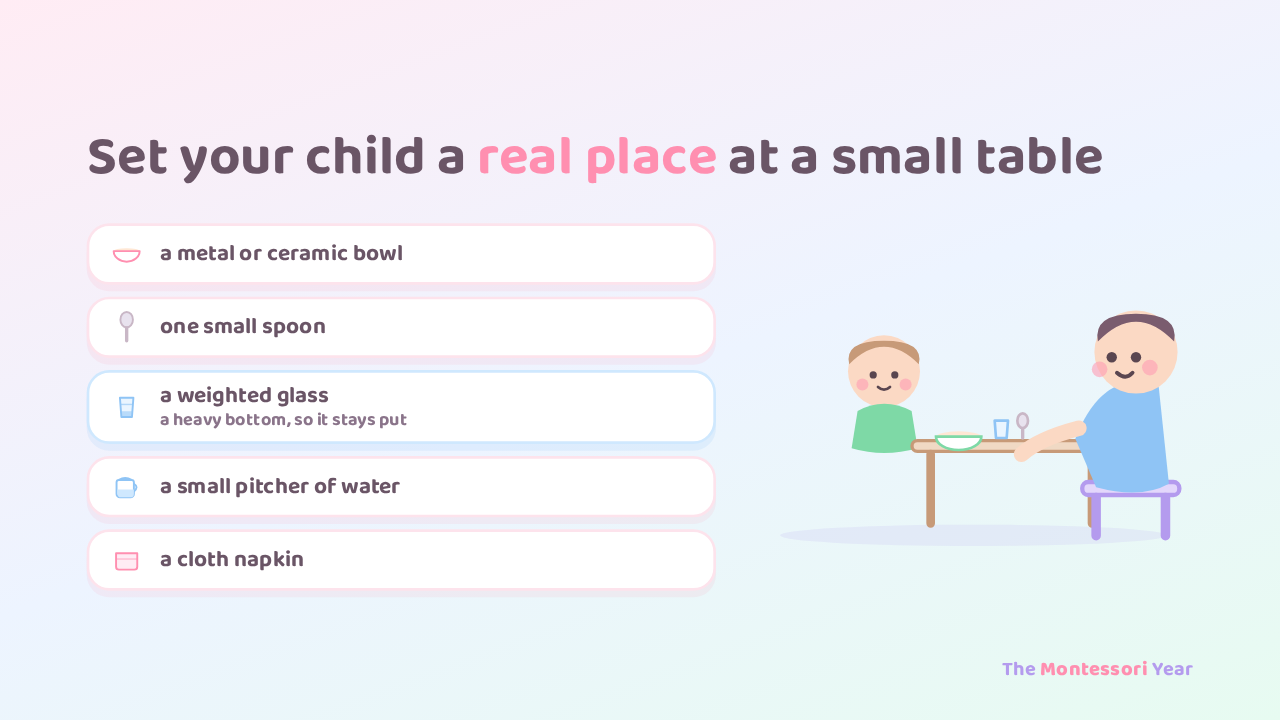
Set your child a real place at a small table
Here’s the setup that makes all of that possible. Set out a metal or ceramic bowl with a bit of weight to it, one small spoon, a little pitcher of water, a cloth napkin, and a weighted glass. A weighted glass just means a small glass with a heavy bottom, so it stays put when your child sets it down. Offer water during the meal and after it, and keep it in reach. Then sit down on a low stool at one side of the table, turned to face your child. Close enough that they feel safe, far enough that the new skill is visibly theirs.
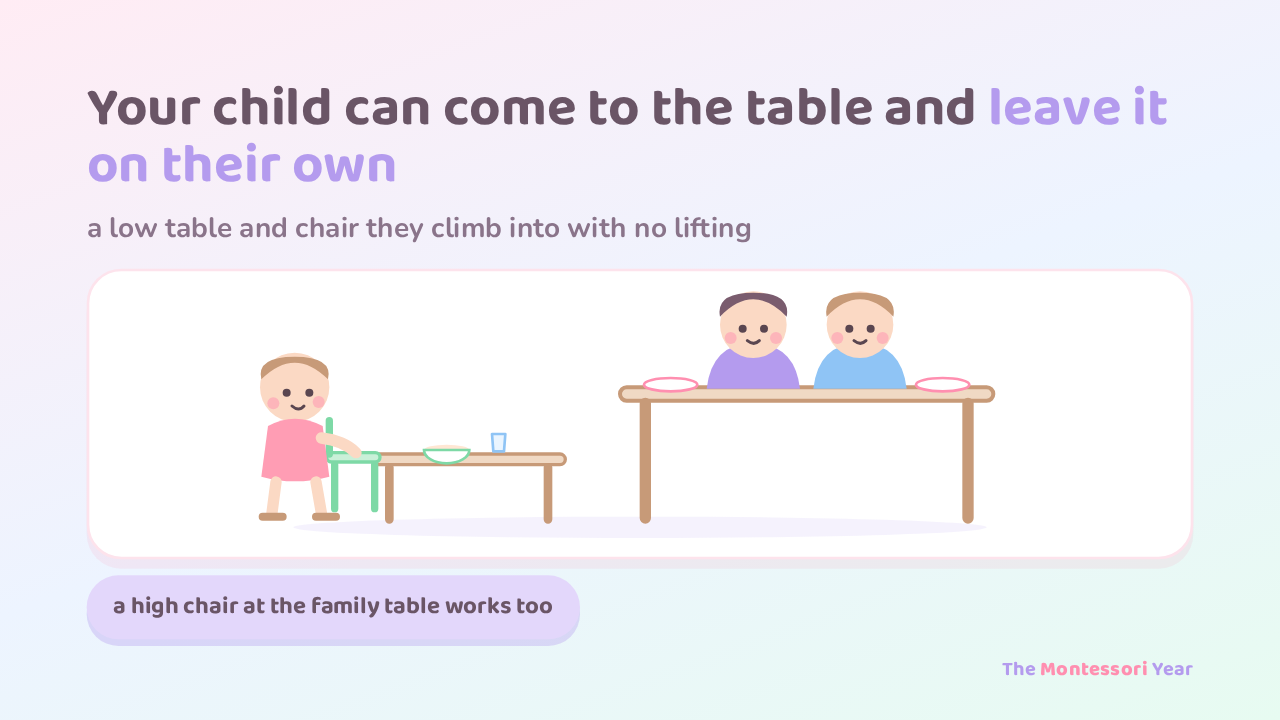
Your child can come to the table and leave it on their own
a low table and chair they climb into with no lifting
a high chair at the family table works tooThe last ability on the ladder is the room itself. A low table and chair your child climbs into and out of turns eating into something they arrive at, and leave when they’re finished. By this age it goes both ways: sometimes their own table, sometimes pulled up to yours with a plate and something to nibble while the adults talk. That’s the eating dinner with you the whole ladder was climbing toward. And a high chair at the family table answers the same question just as well. The seat is a choice.
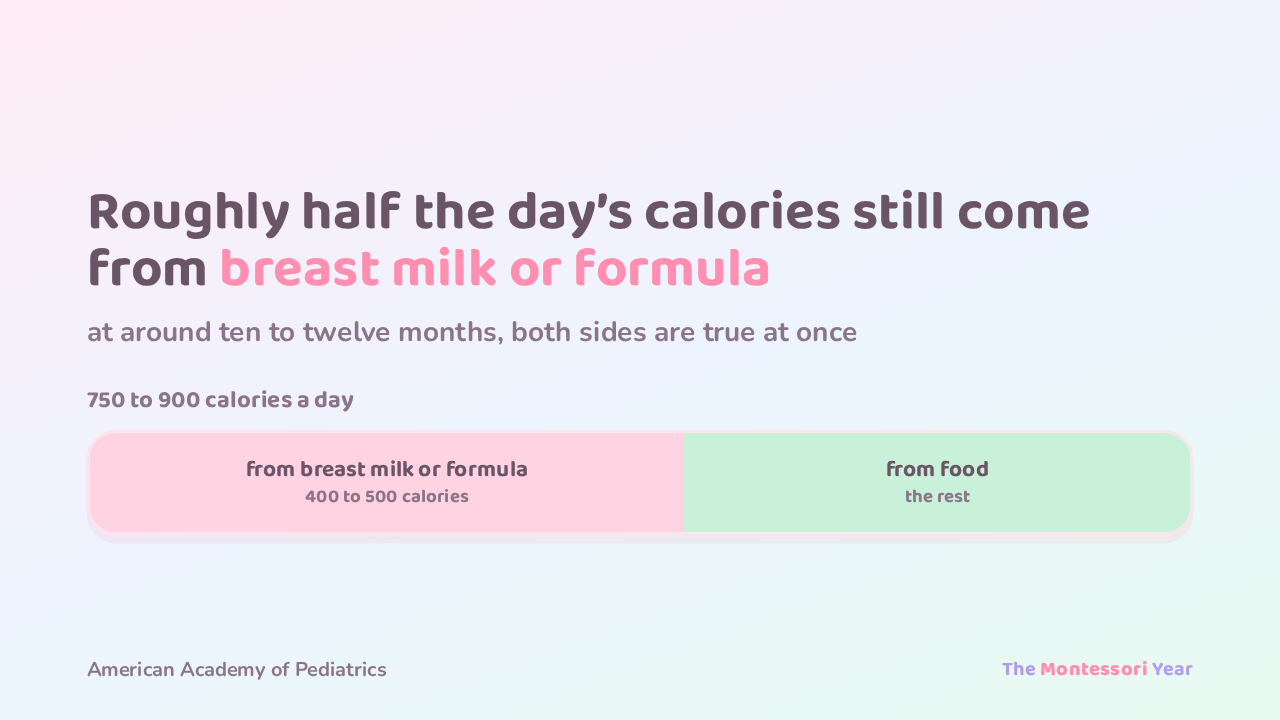
Roughly half the day’s calories still come from breast milk or formula
at around ten to twelve months, both sides are true at once
750 to 900 calories a day
At this same age, roughly half of the calories in your baby’s day still come from breast milk or formula. So the food side arriving at three family meals and the milk side carrying on are both true, on the same day. Nursing ends when the two of you are ready for it to, whether that is soon or a long way off. The calendar has no say in it. And some babies reach three meals earlier, some later. The window is wide, and your child is inside it.
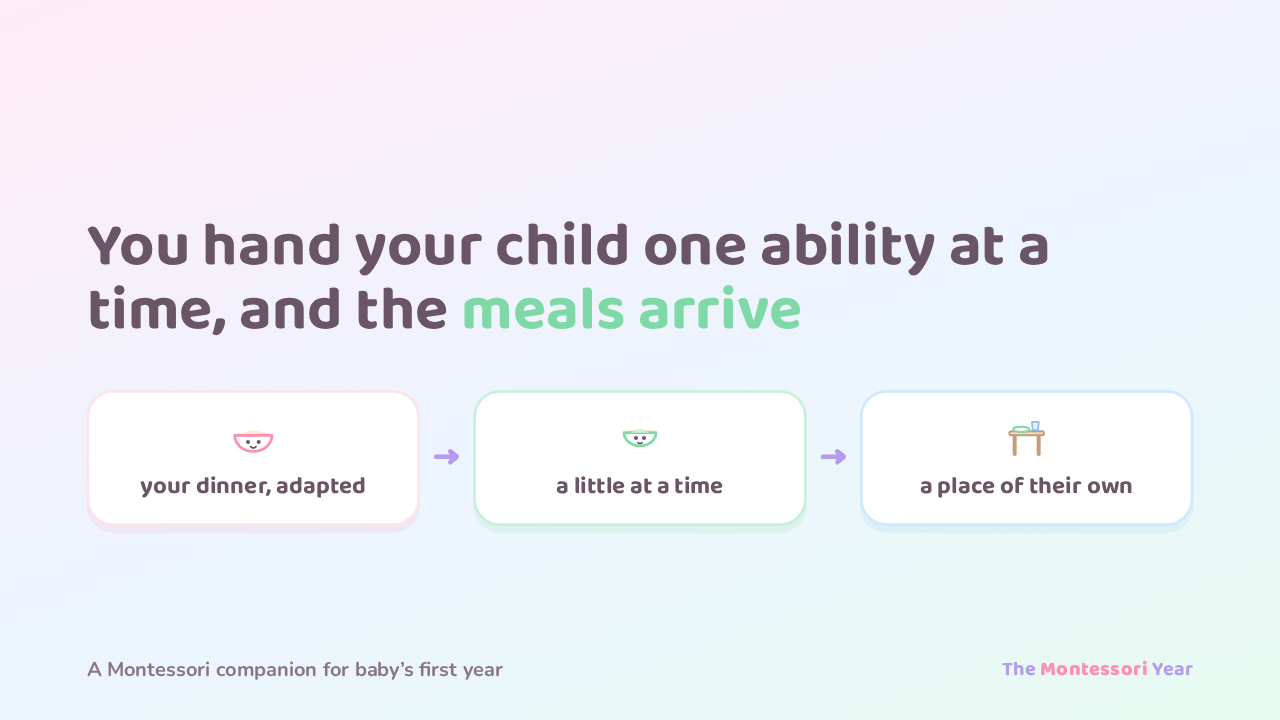
You hand your child one ability at a time, and the meals arrive
So, back at that table tonight, with the spoon in your hand and the bowl still half full. Put a little out. Sit down beside your child. And let the amount be theirs. You’re handing them one ability at a time, and the meals arrive on their own. I’ll see you next week.