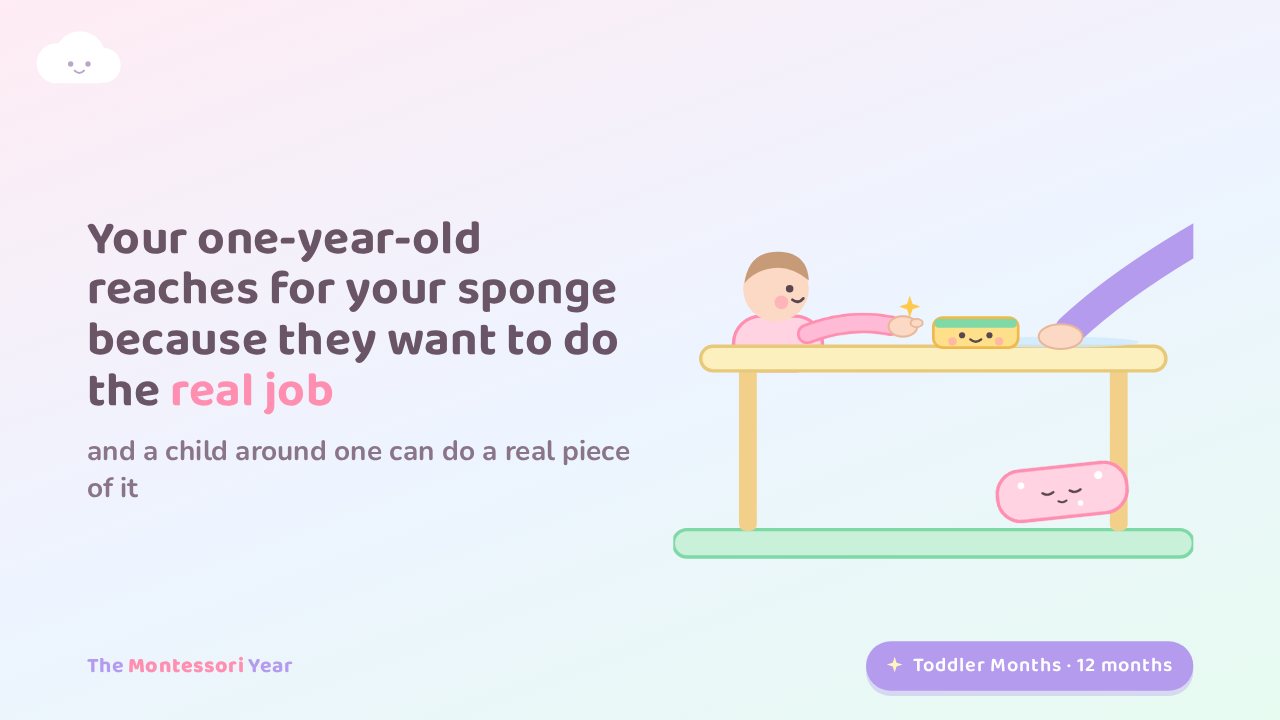
Your one-year-old reaches for your sponge because they want to do the real job
and a child around one can do a real piece of it
After lunch you wipe the table, and your one-year-old reaches for your sponge. You hand them the toy sponge from the play kitchen. The toy sponge lands on the floor, and the small hand comes back for your sponge. Your child is asking to help with the actual work. A child around one can already finish a small part of it.
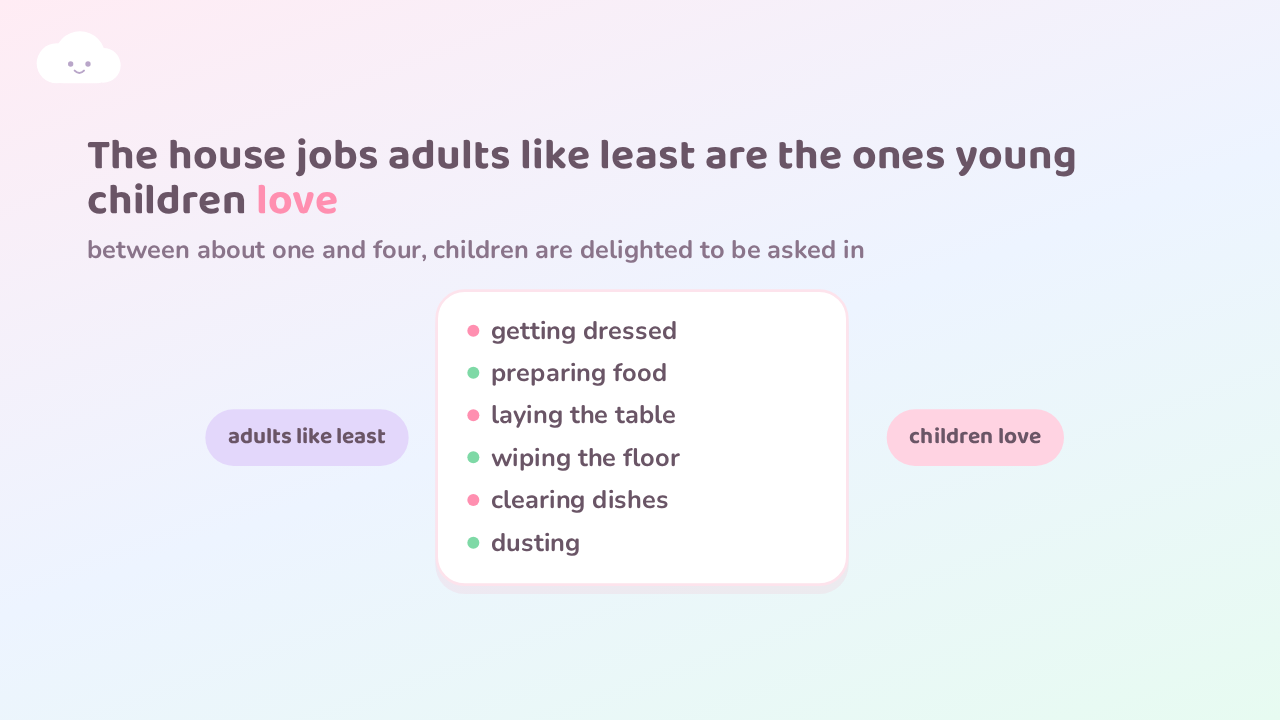
The house jobs adults like least are the ones young children love
between about one and four, children are delighted to be asked in
Getting dressed, preparing food, laying the table, wiping the floor, clearing the dishes, dusting. Those are the chores grown-ups like least. Between about one and four years old, children love them, and they are delighted when you ask them to join in. Your child has spent a year watching you do this work. Around now your child is getting up on their feet and using their hands, and that is what joining in takes.
Your child picks the real duster because it leaves the shelf clean
a result they can see, a job they can repeat, and a family that needs them
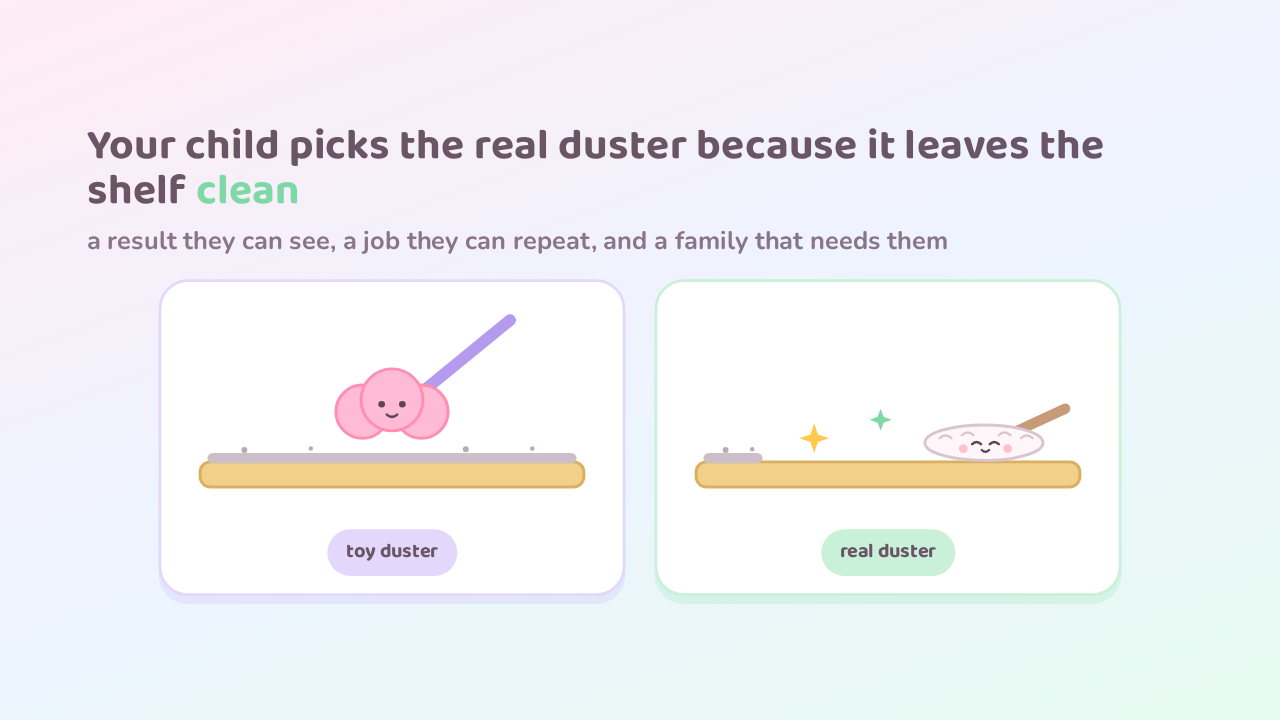
Put a toy duster and a small real duster in front of your child. The toy duster leaves the dust where it was. The real duster leaves a clean stripe your child can see. Given the choice, a child picks the real one. The real job gives your child two things. The first is concentration, a deep, calm focus on a job your child controls and can repeat as often as they like. The second is being needed. Think of a dinner guest. A guest you serve and wait on stays a guest. A guest you welcome into the kitchen to cook with you becomes a friend. Your child is asking to come into the kitchen.
Your child can take one end of a job you are already doing
one sock to the basket · a small cloth for the next spill
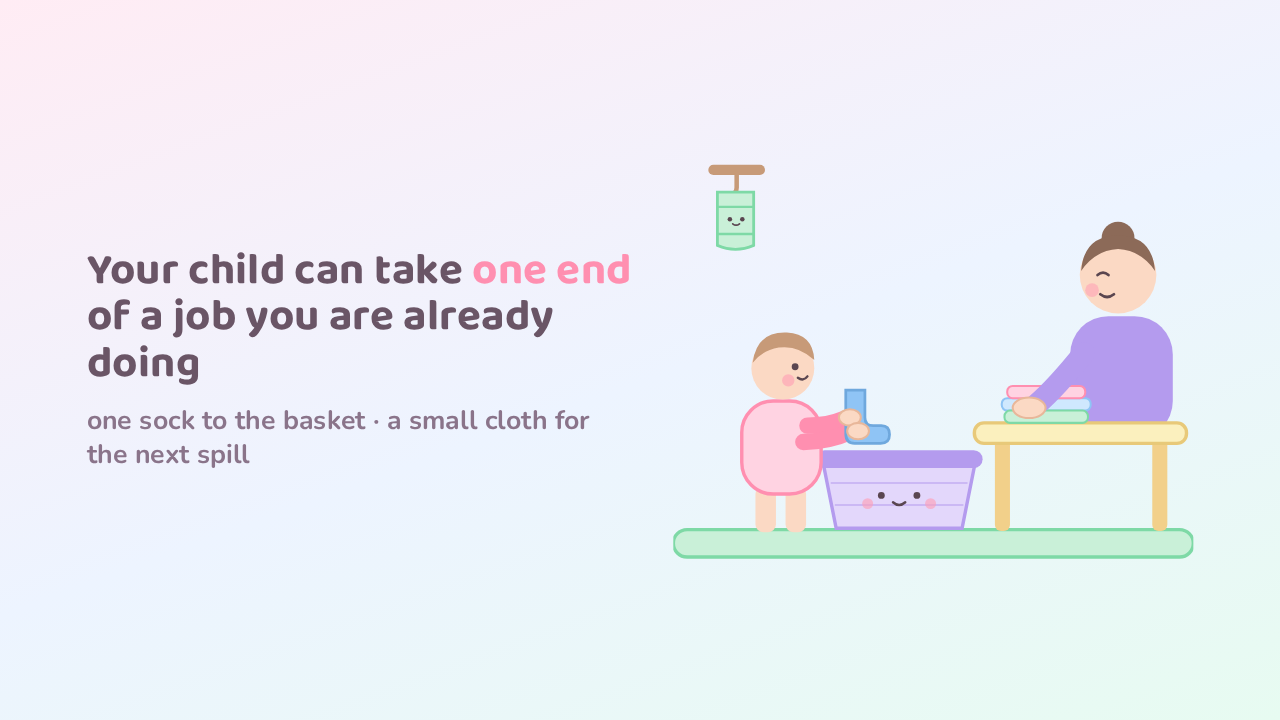
Tonight, pick a job you already do and pass your child a piece of it. You fold the clean laundry, and your child carries one sock to the basket. You wipe the table, and your child gets a small cloth of their own, hung at their height, for the next spill. Every job goes slower with a one-year-old helping. A few minutes a day of this kind of work does a lot for your child.
Every job in the house breaks into steps, and your one-year-old can finish one
a step with a clear end your child reaches alone
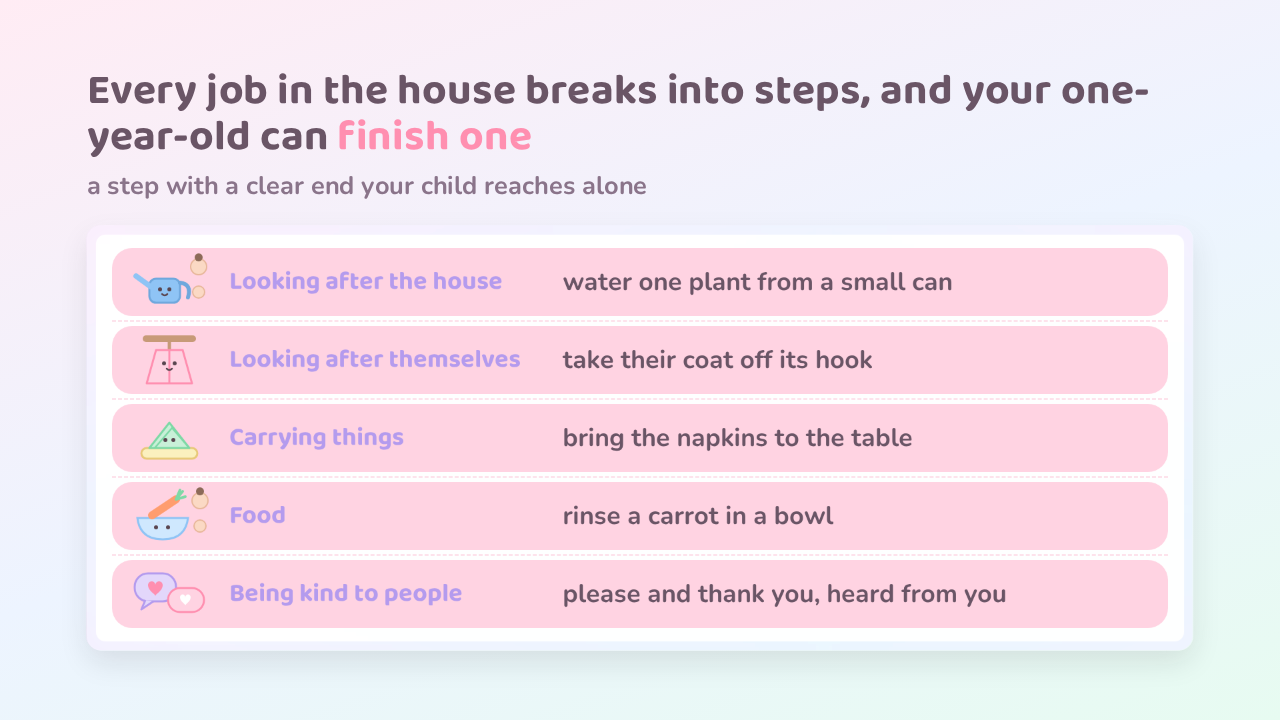
Every job in your house breaks into small steps. Your one-year-old can own one of those steps, as long as the step has a clear end your child can reach alone. Call that a finishable step, and walk through your house looking for them. Looking after the house: your child waters one plant from a small can. Looking after themselves: your child takes their coat off its hook. Taking the coat off comes before hanging it up. Carrying things: your child brings the napkins to the table. Food: your child rinses a carrot in a bowl. Being kind to people: please and thank you. Your child picks up those words by hearing you say them every day, to each other and to your child. Size each step to the child in front of you, at whatever age they reach for it.
Keep your child’s small real tools right beside yours
low enough to reach, with a place for each one to go back
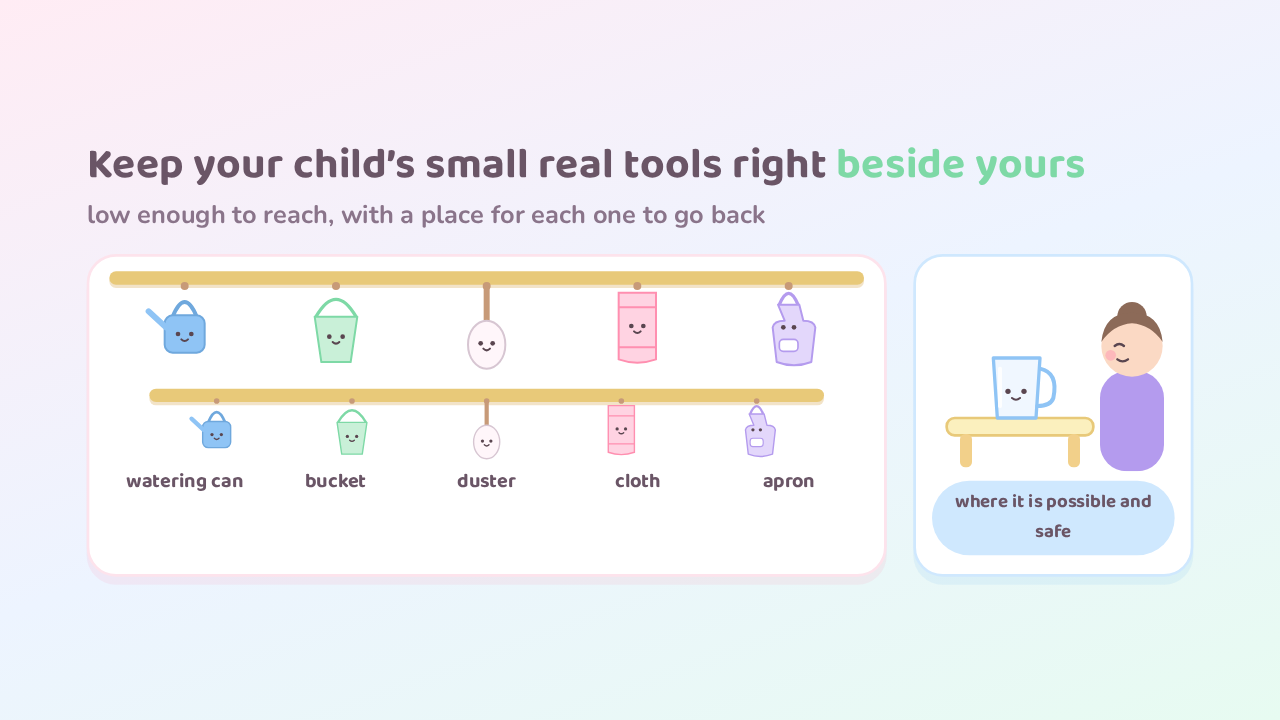
Hang a few small, real tools next to your own, low enough for your child to reach. A small watering can, a small bucket, a duster, a cloth, and an apron on a low hook your child can take down alone. Putting the apron on can mark the start of a job, and taking it off can mark the end. Where it is possible and safe, give your child real materials, like a small glass jug or a pottery bowl. Children take more care with things that can break. Then show your child where each tool goes back. Putting a tool away is part of the job.
Match the way your child carries to the thing being carried
the same two moves every time
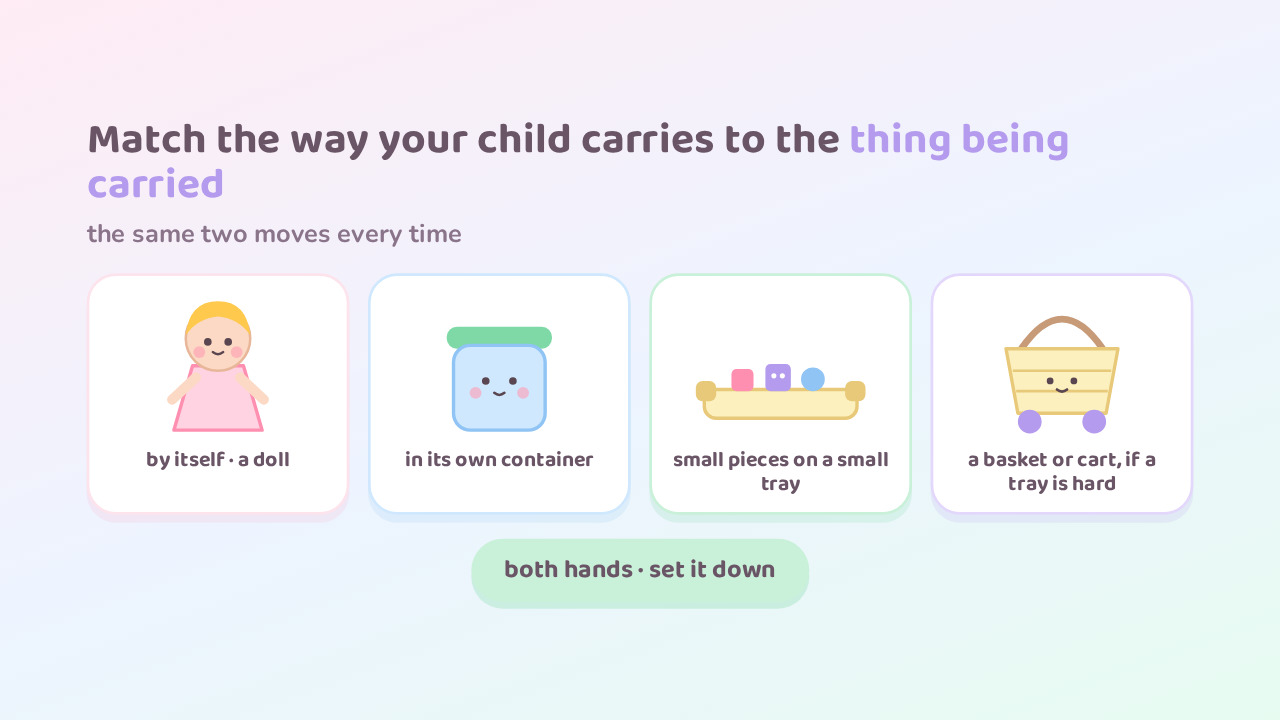
Carrying looks like the easy part, and it still takes teaching. Your child learns to carry a tray without spilling by watching you do it slowly, then practising. So match the carry to the thing. A doll carries by itself. Most things travel best in their own container. Lots of small pieces go on a small tray. For a child who finds a tray hard, a small basket or a cart can be easier. Whatever your child carries, the same two moves come every time. Your child holds it with both hands, then sets it down with care.
Your child learns a job by doing it again and again after watching you
show it slowly, with just a few words
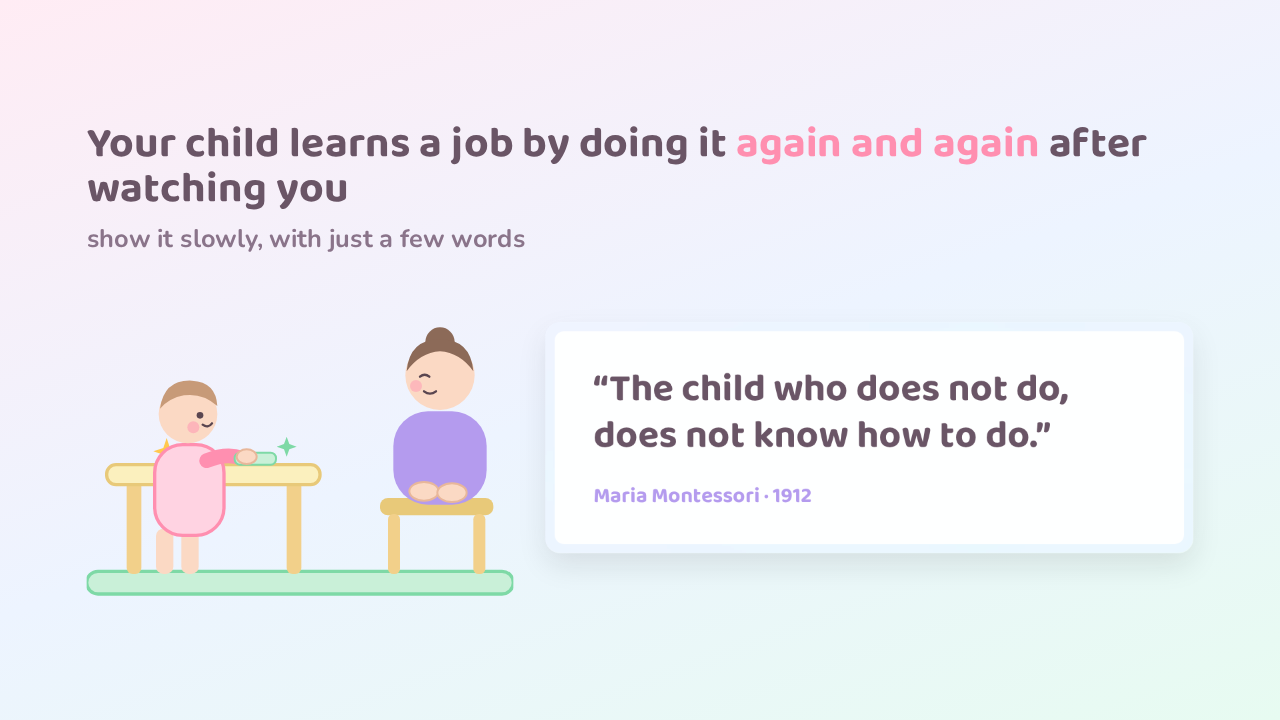
“The child who does not do, does not know how to do.”
Move slowly, and use just a few words, so your child watches what your hands do more than what you say. Then give your child the cloth. Your child may wipe a table that is already clean, or carry the same sock back and forth again and again. That repeating is the practice, so let it run until your child stops. Maria Montessori put it this way, back in nineteen twelve. The child who does not do, does not know how to do.
Your child shows you which job they are ready for
watch what they reach for, at any age
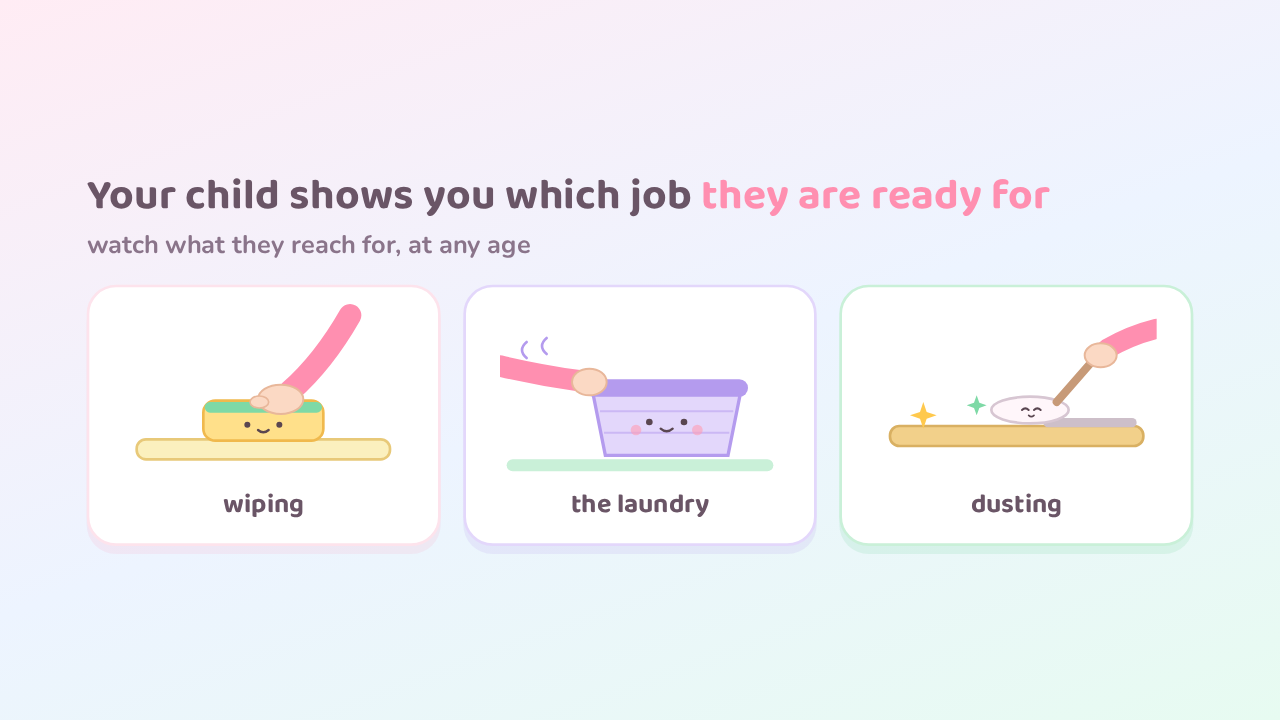
Your child can start any of these jobs whenever you feel they are ready. Your child tells you with their actions as well as their words. When your child reaches for your sponge, start with wiping. When your child tugs at the laundry basket, start with the laundry. And if your child picks up a small duster and runs it along a shelf, start with dusting. Some children want in on everything, and some want the same job for weeks. Both are fine.
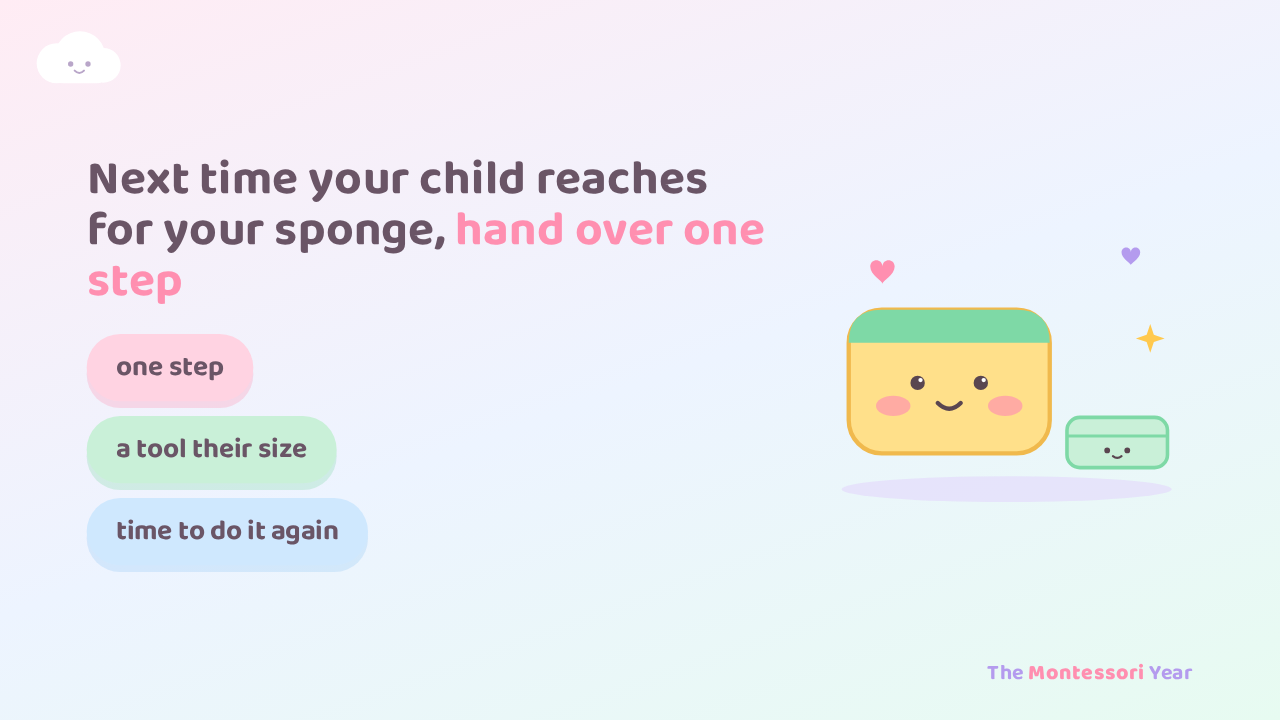
Next time your child reaches for your sponge, hand over one step
Back at the lunch table, the small hand reaches for your sponge again. Leave the toy sponge on the shelf. Give your child one step, a cloth their own size, and the time to wipe that table again.