Ten minutes after the toy box goes over, your one-year-old is holding none of it
and the fix is to put most of it away
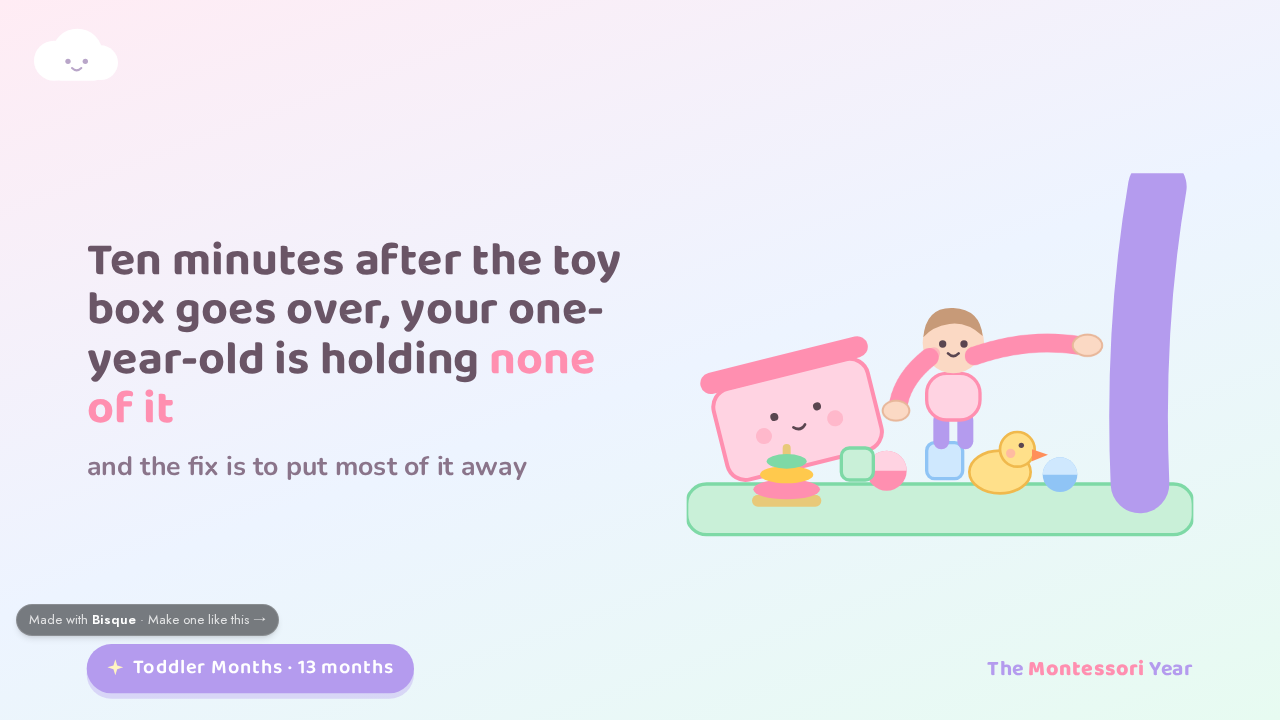
Ten minutes after breakfast the toy box is over on its side, and every toy in it is out on the rug. Your one-year-old is standing in the middle of all of it, holding nothing, fussing at your leg. You would think your child has run out of things to play with. Tonight, try putting most of it away.
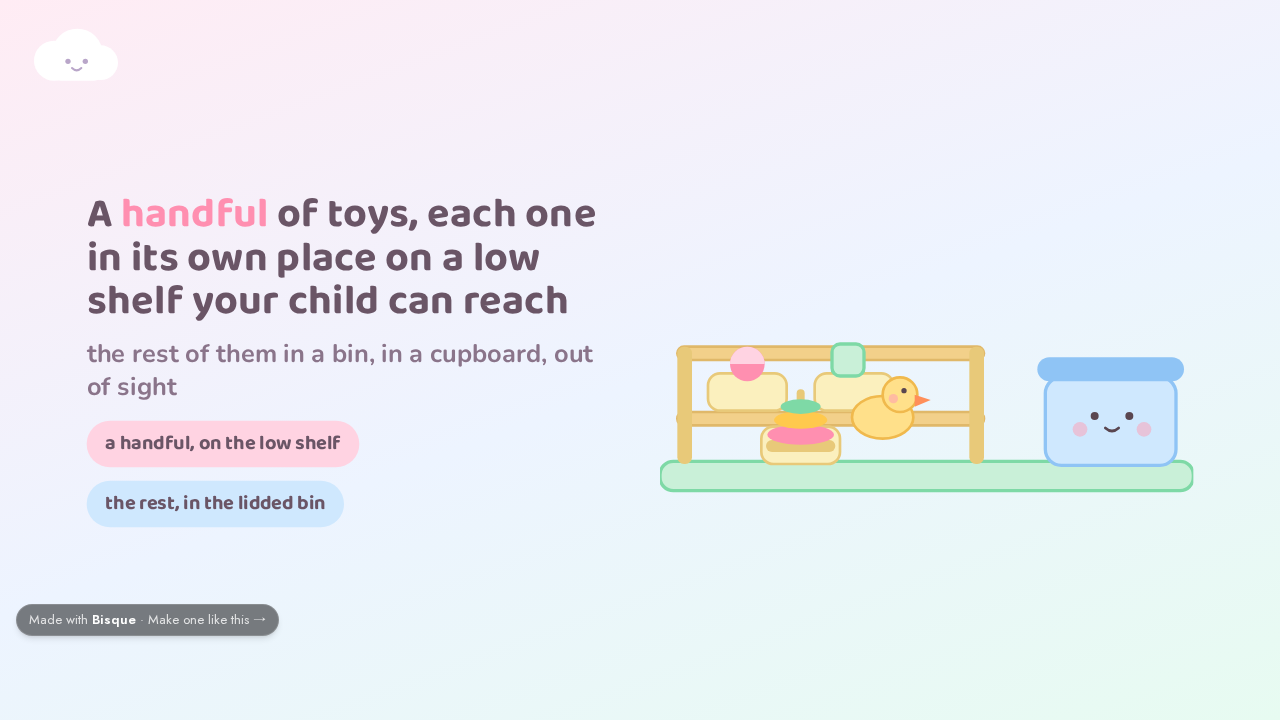
A handful of toys, each one in its own place on a low shelf your child can reach
the rest of them in a bin, in a cupboard, out of sight
Most of what is on the rug right now goes into a lidded bin in a cupboard, out of sight. What stays out is a handful of toys on one low shelf, low enough that your child reaches them without you. Setting that up takes one evening and costs you nothing. Then a child around one can find a toy on that shelf, carry it to the rug, finish with it, and put the toy back where it came from.
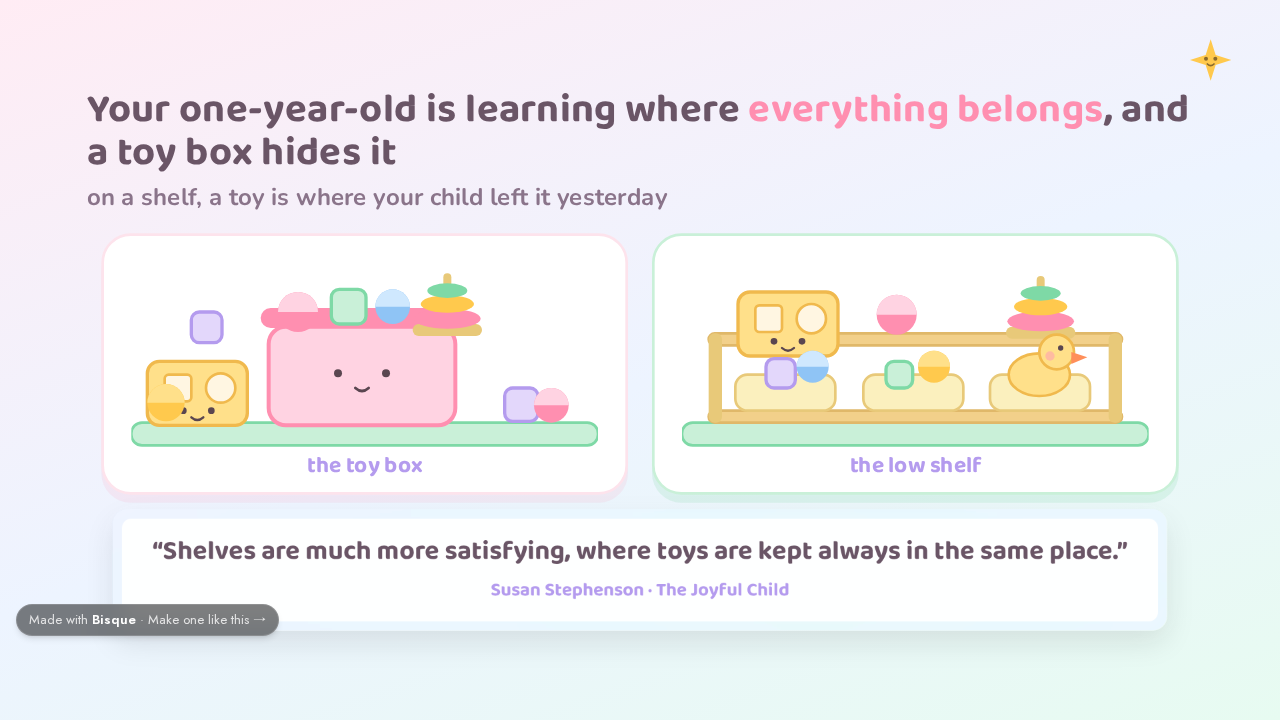
Your one-year-old is learning where everything belongs, and a toy box hides it
on a shelf, a toy is where your child left it yesterday
“Shelves are much more satisfying, where toys are kept always in the same place.”
Your one-year-old spends this year learning where everything belongs. That pull has a name, a sense of order, and at this age it runs far stronger in your child than it runs in you. The same toy, in the same place, every day is how the world starts to make sense to a one-year-old. Then there is the toy box. Ten toys go into the toy box and one heap comes out. The shape sorter is somewhere near the bottom with its shapes scattered through everything else, so your child cannot finish the shape sorter. In The Joyful Child, Susan Stephenson puts it plainly. Shelves are much more satisfying, where toys are kept always in the same place.
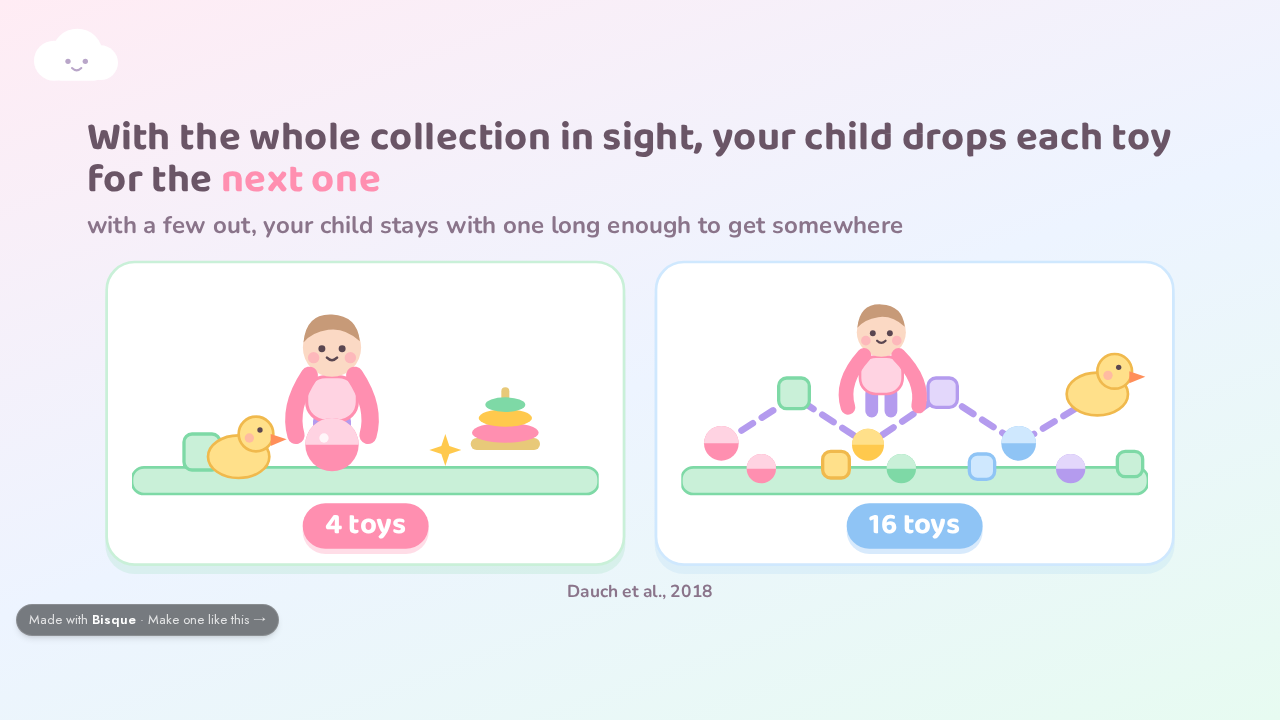
With the whole collection in sight, your child drops each toy for the next one
with a few out, your child stays with one long enough to get somewhere
With the whole collection out on the rug, your child picks up a rattle, spots a ball, drops the rattle, and leaves both toys behind. With a handful of toys out, your child stays with one toy long enough to get somewhere with it. A small study from twenty eighteen found the same thing. Thirty six toddlers each played once with four toys and once with sixteen toys. With four toys in the room, the toddlers switched toys less often, stayed longer with each toy, and found more ways to play with it. That was one short play session, and what it measured was attention and variety of play.
The best toys at this age tell your child when they are finished
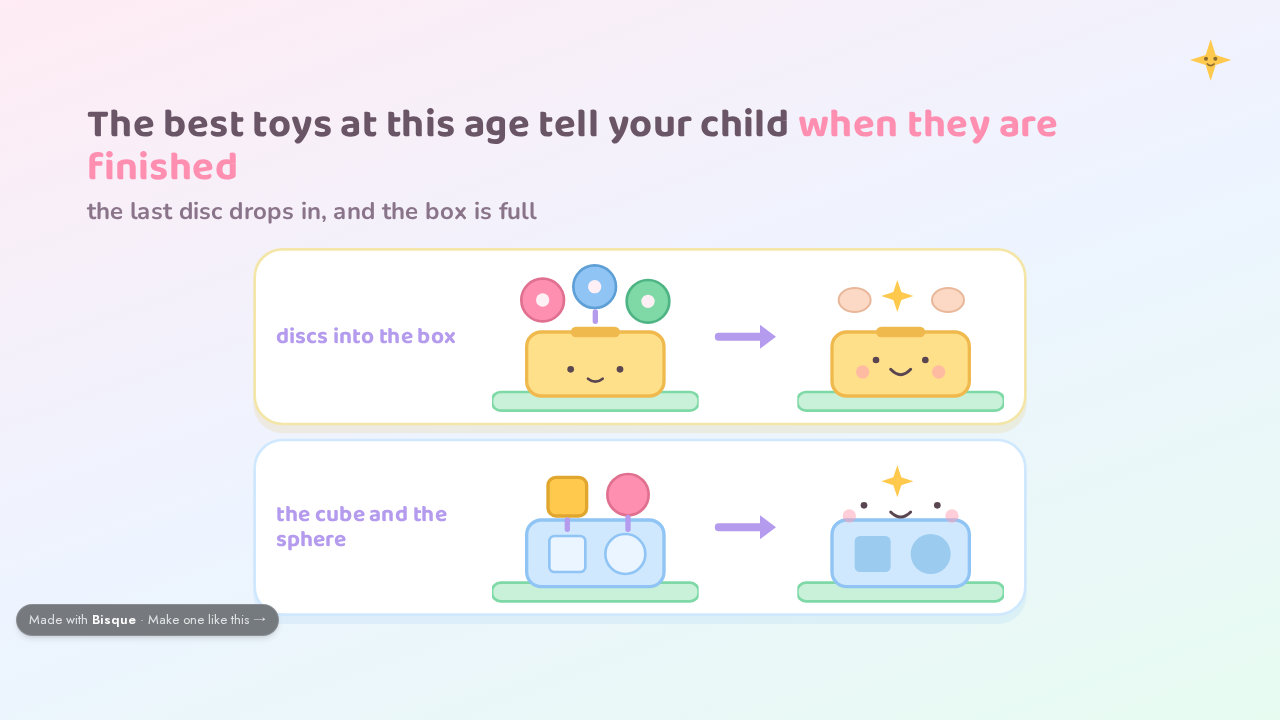
the last disc drops in, and the box is full
Look for toys your child can finish. The last disc drops into the box and the box is full. The cube goes through the square hole, the sphere goes through the round one, and your child's hands are empty. Call that a toy with an end. The finish is built into the toy itself, and finishing is what makes a child want to start the whole thing again, and again. A toy that lights up or sings when your child presses a button hands over a big reward for very little, and it does the thinking for your child.
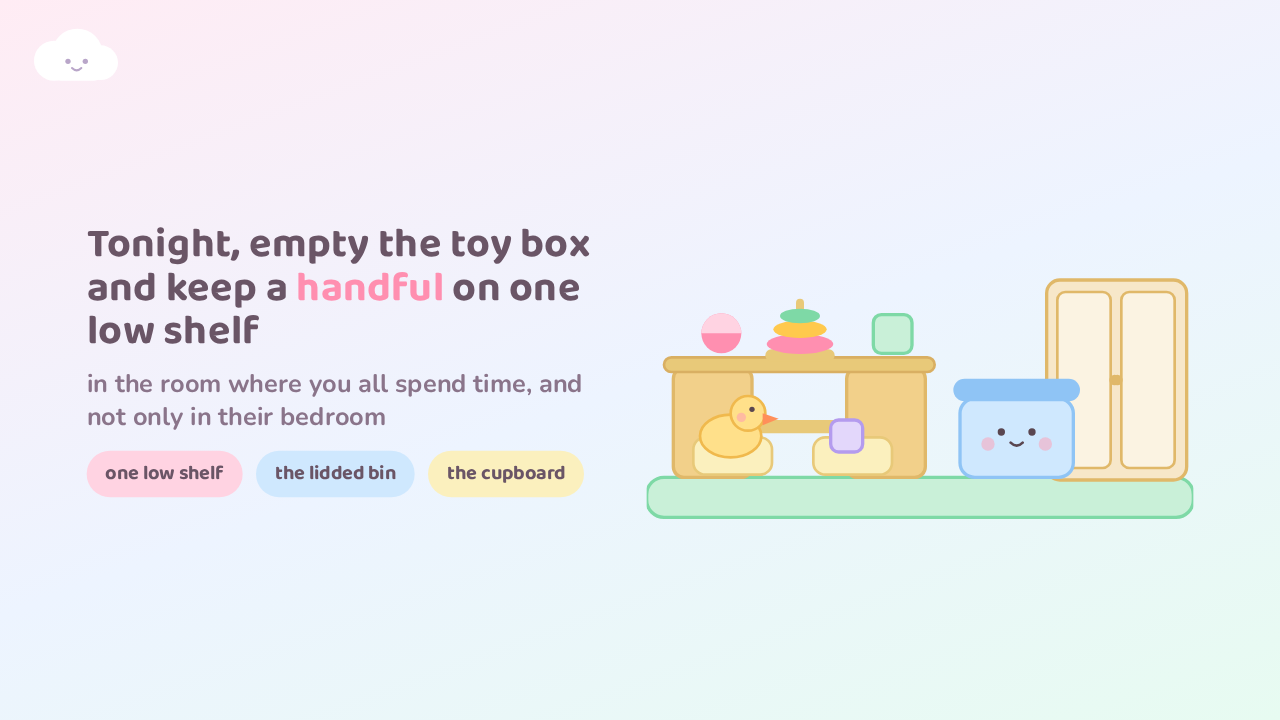
Tonight, empty the toy box and keep a handful on one low shelf
in the room where you all spend time, and not only in their bedroom
Tonight, take everything out of the toy box and put it on the floor. Keep a handful of toys, and keep fewer than that for a younger child. Those go on one low shelf, in the room where you all spend time together, and not only in your child's bedroom. Everything that stays off the shelf goes into the lidded bin, or on to another family who can use what your child has grown out of. The right number is however many toys fit on the shelf neatly, without crowding. A full playroom came from people who love your child, and the toys you box up tonight are still yours.
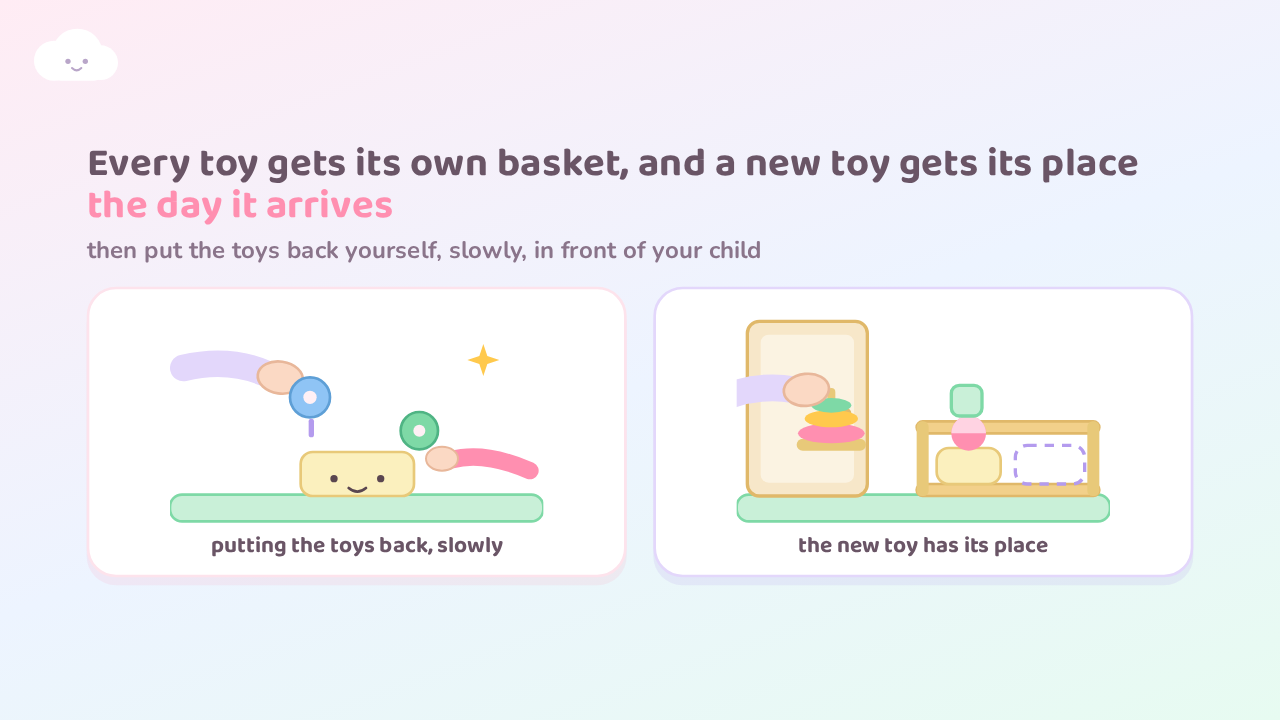
Every toy gets its own basket, and a new toy gets its place the day it arrives
then put the toys back yourself, slowly, in front of your child
Give each toy its own basket or tray, so all of a toy's pieces live together and your child can carry the whole thing to the rug in one trip. When a new toy comes into the house, on a birthday or home from grandma, decide that same day where the new toy lives. Then put the toys back yourself. Go slowly, smile, and let your child watch your hands do it. Your child will copy you, and at this age putting the toys away can be the best part of the game.
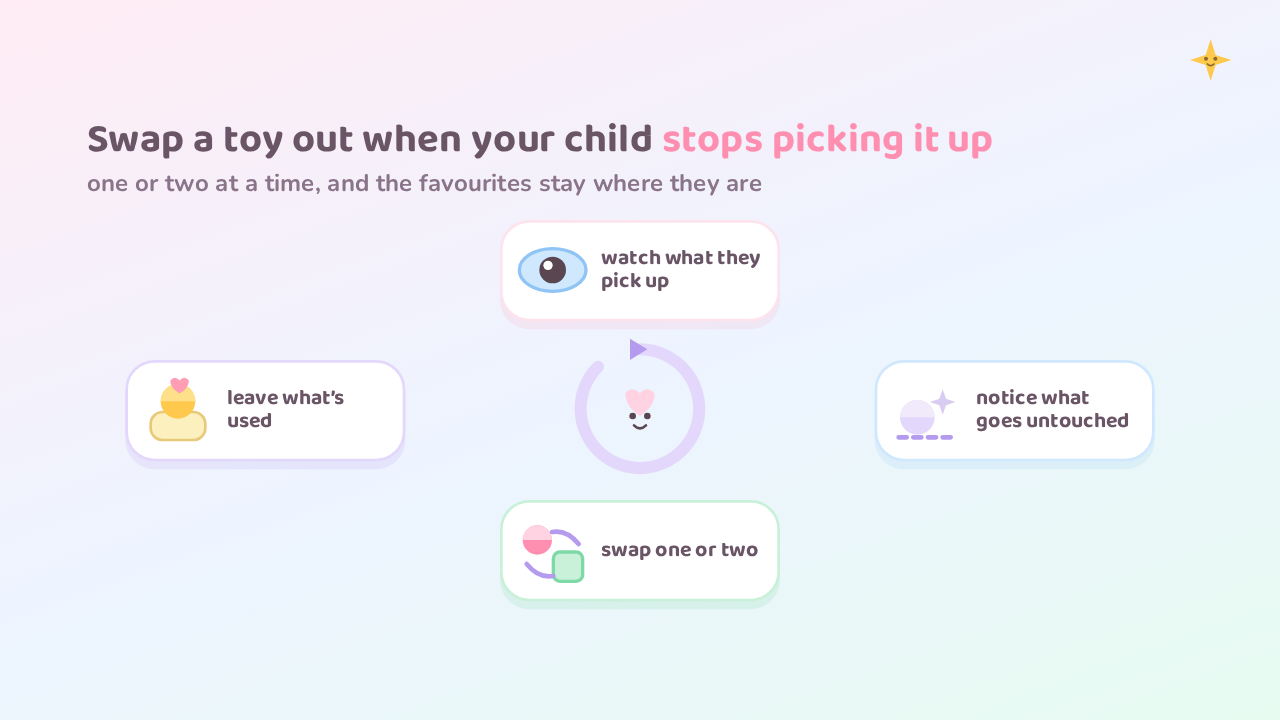
Swap a toy out when your child stops picking it up
one or two at a time, and the favourites stay where they are
Then watch what your child reaches for. Some toys get picked up every day. Some toys get dropped and forgotten. Take one or two of the forgotten toys off the shelf, and bring something up out of the bin to stand in their place. The favourites stay exactly where they are, for as long as your child keeps using them. There is no set day for this and no big reveal. Two toys change, and the rest of the shelf stays where your child left it.
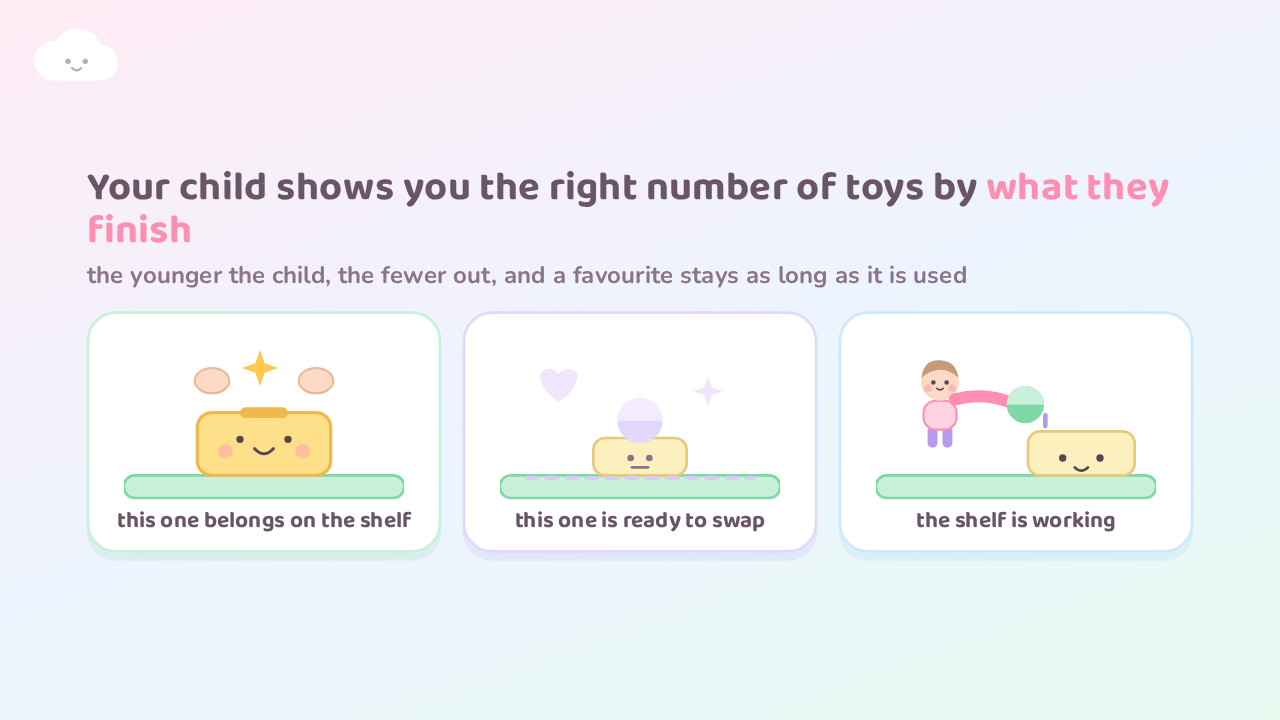
Your child shows you the right number of toys by what they finish
the younger the child, the fewer out, and a favourite stays as long as it is used
There is no number to hit here and no schedule to keep. The younger your child is, the fewer toys go out, and a favourite can stay on that shelf for weeks, for as long as your child keeps using it. Three things tell you where you are. A toy your child uses right to the end belongs on the shelf. A toy that sits untouched for days is ready to swap. And a toy your child carries back to its own basket tells you the shelf is working. If the whole shelf still ends up on the floor every afternoon, take one more thing off it.
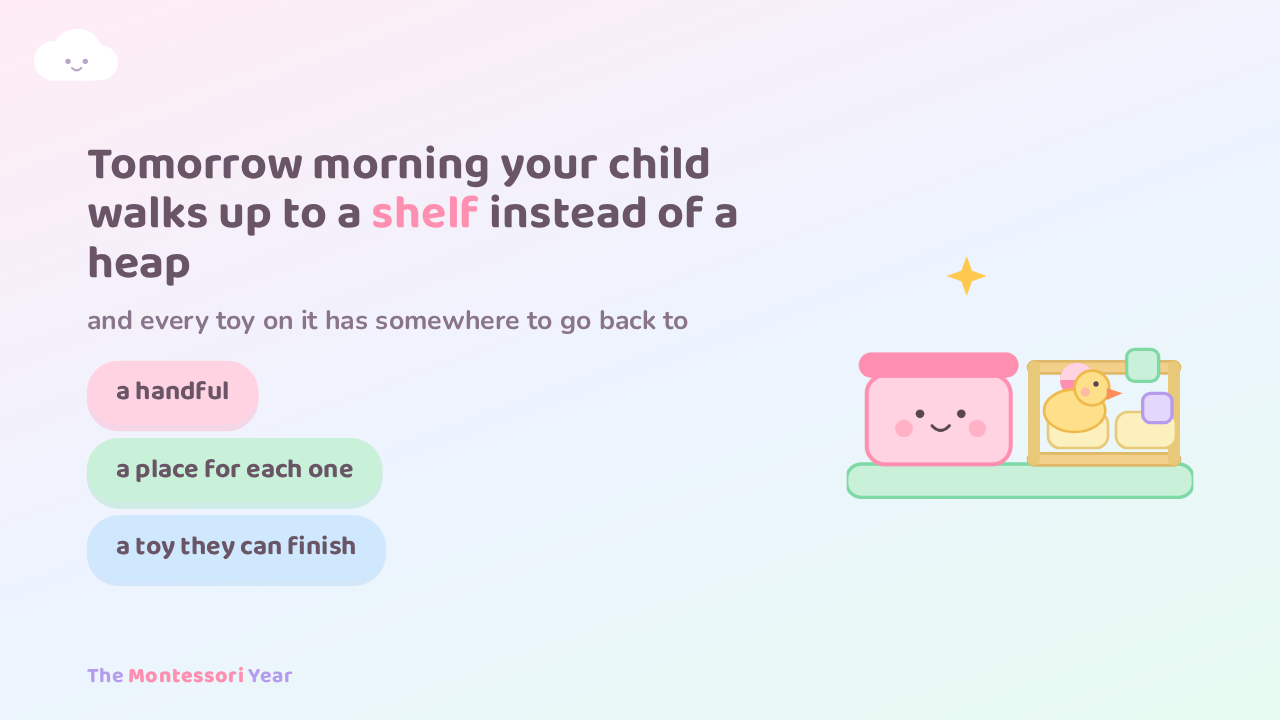
Tomorrow morning your child walks up to a shelf instead of a heap
and every toy on it has somewhere to go back to
Tomorrow morning the rug is clear and the toy box is upright with its lid on. Your child gets a handful of toys, a place for each one of them, and a toy they can finish.