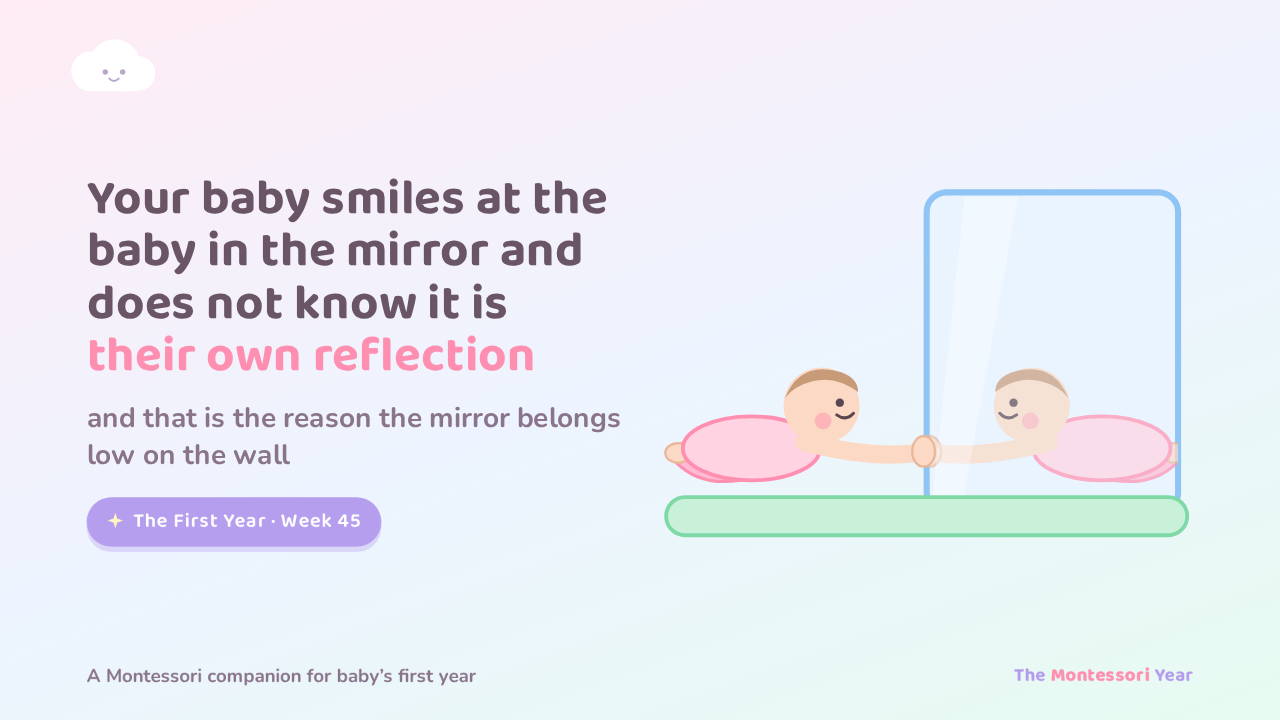
Your baby smiles at the baby in the mirror and does not know it is their own reflection
and that is the reason the mirror belongs low on the wall
The First Year · Week 45Your ten-month-old is on their tummy in front of the low mirror, one hand flat on the glass, beaming at the baby in it. That baby is them, and they do not know that yet. They pat the glass, and the baby in it pats back at exactly the same moment. There is nothing there to fix. That answering pat is the whole reason a mirror is worth its place on the wall.
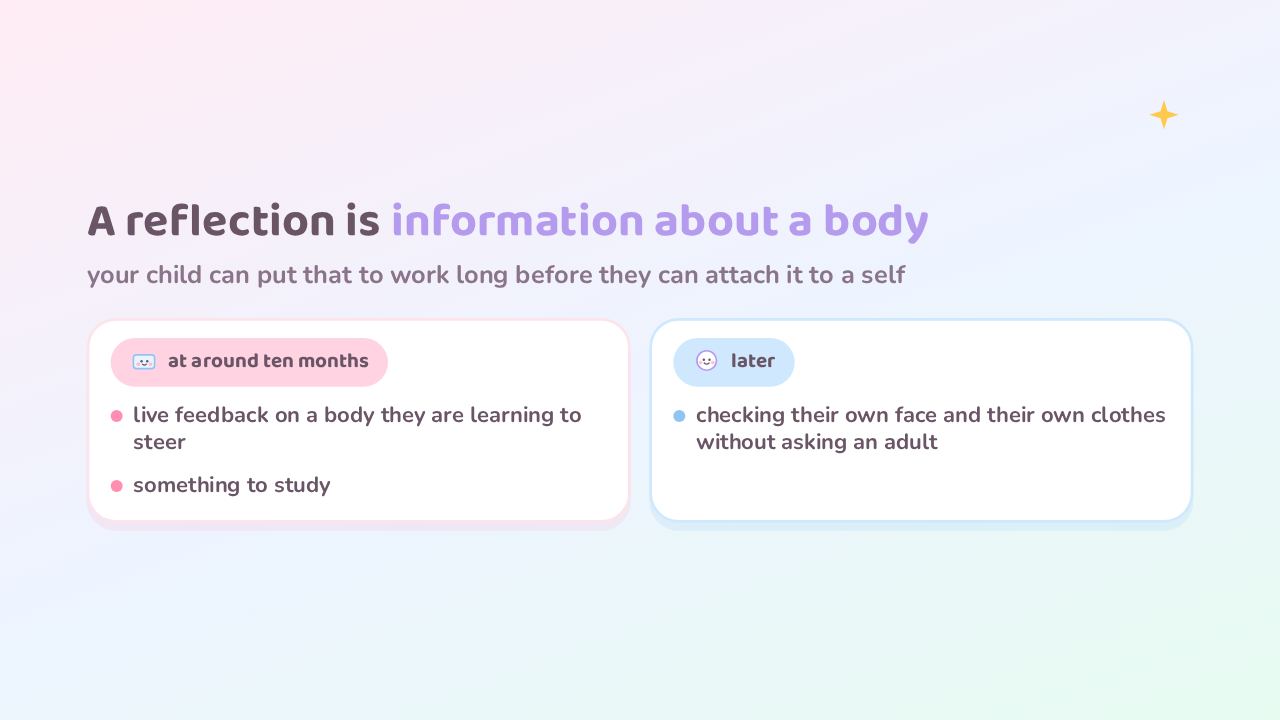
A reflection is information about a body
your child can put that to work long before they can attach it to a self
A reflection gives back information about a body, and that body is your child’s own, moving in real time. Your child can put that information to work long before they can attach it to a self. So the low mirror does two different jobs, and the second one arrives much later. At around ten months it gives live feedback on a body they are learning to steer, and it gives them something to study. Later, the same mirror becomes the place they check their own face and their own clothes without asking an adult. And the sense of themselves that you assume the mirror is building, you build somewhere else in the room.
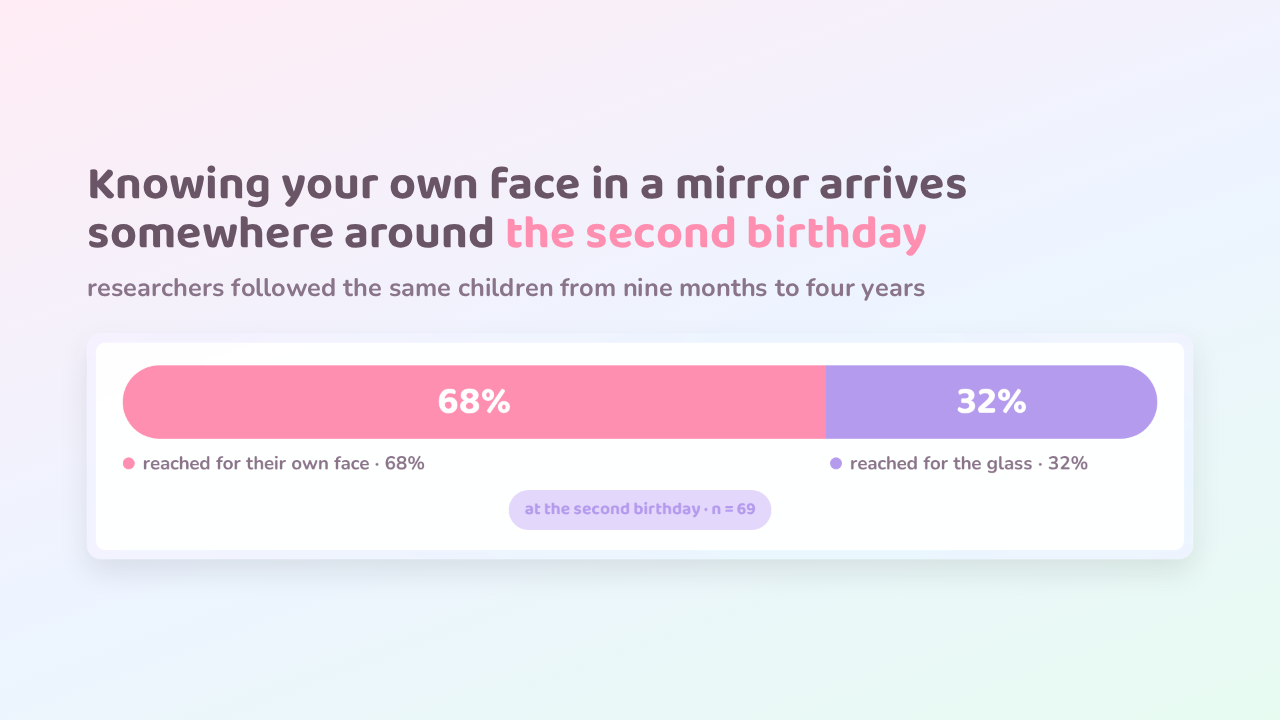
Knowing your own face in a mirror arrives somewhere around the second birthday
researchers followed the same children from nine months to four years
Researchers followed the same group of children from nine months to four years. At the second birthday they gave them the mark test. They put a small mark on a child’s face, sat the child in front of a mirror, and watched where the hand went. Reaching for your own face means you noticed your own face had changed. Sixty-eight percent of those sixty-nine children reached for their own face. Thirty-two percent of them reached for the glass instead. That birthday is more than a year past the week we are in, and the window around it is wide.
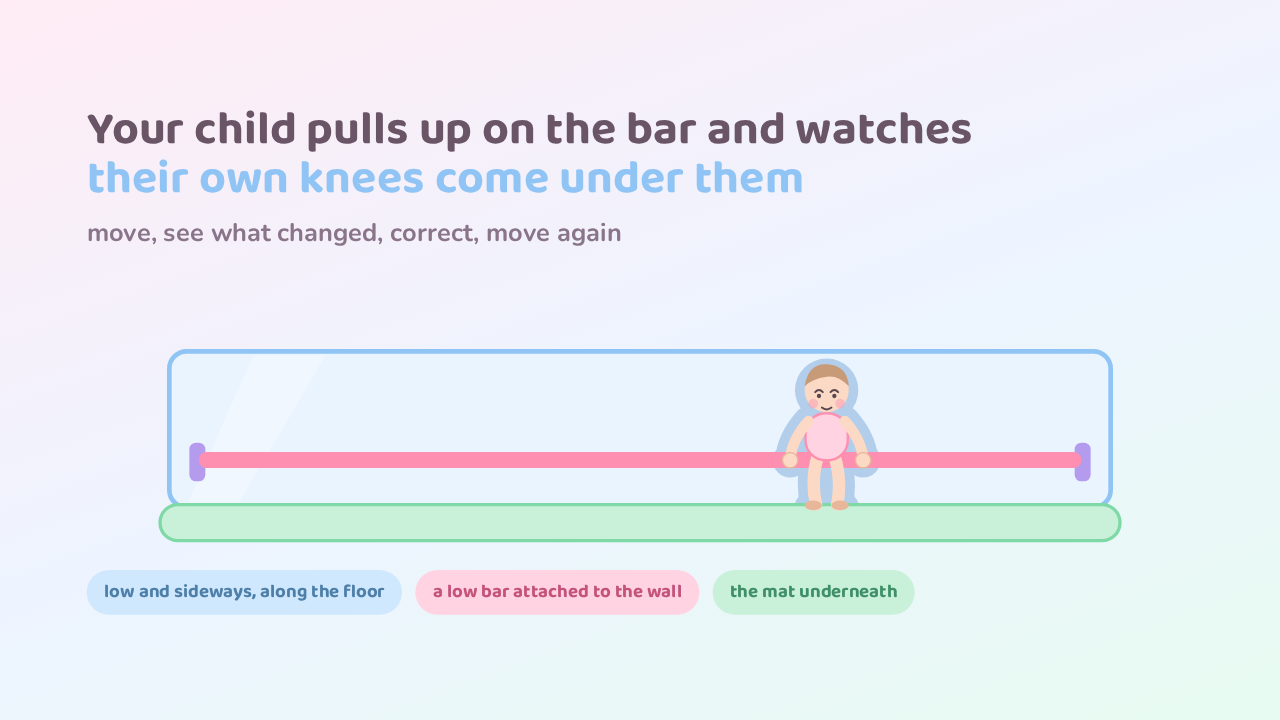
Your child pulls up on the bar and watches their own knees come under them
move, see what changed, correct, move again
Here is what the glass is for right now. Your child grips the bar, pulls, and the mirror shows their own knees coming under them and their own hands finding the bar, as it happens. Move, see what changed, correct, move again. That is a loop your child runs alone. Researchers who study how children come to recognise themselves describe the same order: a baby works on the match between what they do and what the glass shows first, and the face comes later. Self-confidence is the feeling of being able to rely on your own resources, and it grows out of work actually done with a body that moves freely. So hang the mirror low and hang it sideways, along the floor where your child plays, with a low bar attached to the wall across it, and the mat underneath.
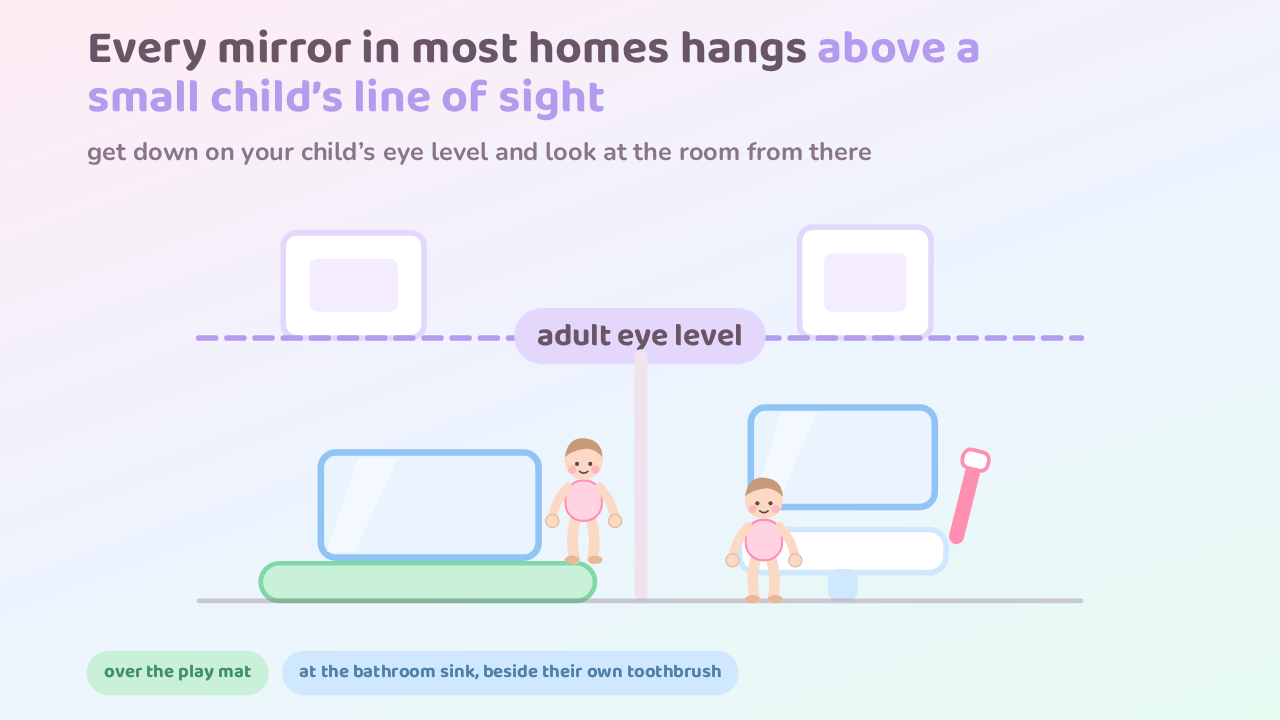
Every mirror in most homes hangs above a small child’s line of sight
get down on your child’s eye level and look at the room from there
Now widen this past the nursery. In most homes the mirrors and the pictures hang at our eye level, so every one of them sits above a small child’s line of sight. The fix costs nothing. Get down on your child’s eye level and look at the room from there. If they crawl, you crawl. Two places a mirror earns its keep at that height. Over the play mat. And at the bathroom sink, beside their own toothbrush, so they do not have to depend on you to tell them their face is clean.
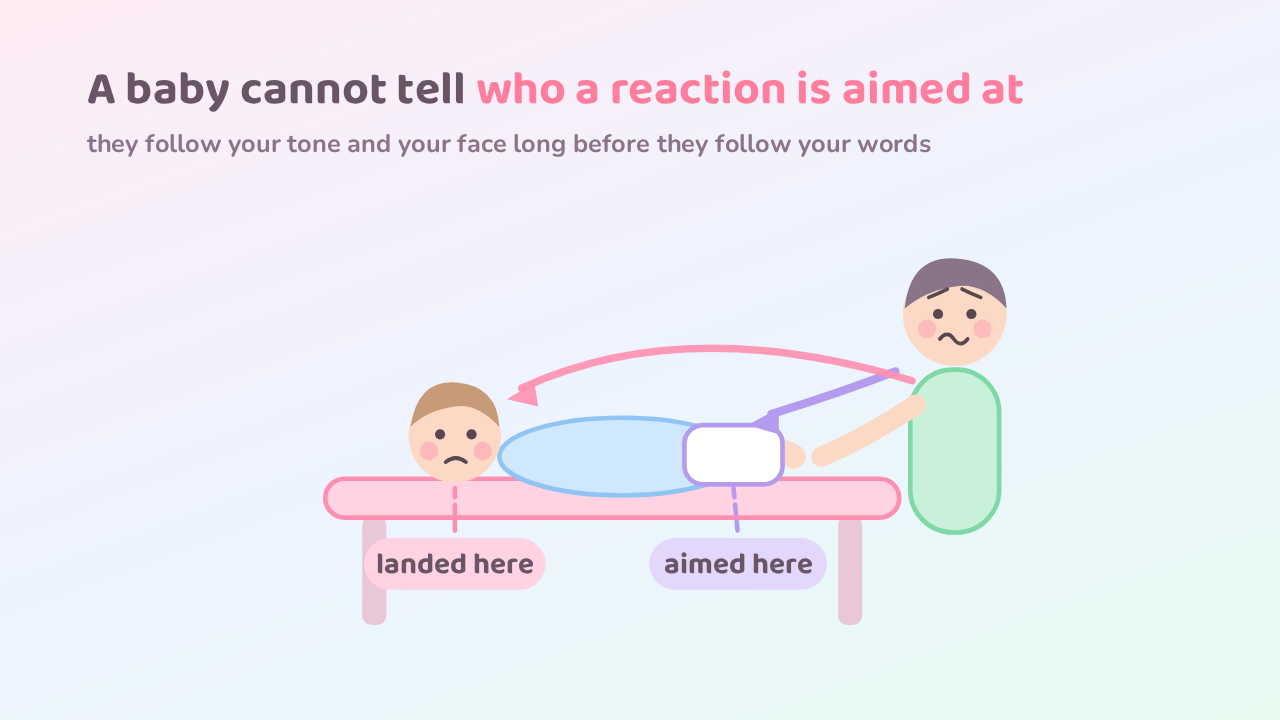
A baby cannot tell who a reaction is aimed at
they follow your tone and your face long before they follow your words
If the mirror is doing body work, what is doing the identity work? The way the people around your child talk about them while they are listening. A baby follows tone and face long before they follow words, and they have no way to tell who or what a reaction is aimed at. Someone training as a Montessori infant guide watched this happen in a hospital nursery. A warm, capable nurse was holding a baby a few months old, talking to him lovingly, and he was full of smiles. She laid him down, opened the diaper, pulled a face and said something like, what a mess you have made, and what a terrible smell. The baby’s face went to shock, then confusion, then sadness.
From the child’s perspective she was talking about him
from the child’s perspective there was no way to know that the nurse was reacting to feces; from the child’s perspective she was talking about him.
Susan Mayclin Stephenson wrote it down like this, in The Joyful Child. From the child’s perspective there was no way to know that the nurse was reacting to feces; from the child’s perspective she was talking about him. That is the mechanism, in one sentence. How the adults around your child answer their attempts to move and their attempts to speak is bound up with the self-image they build.
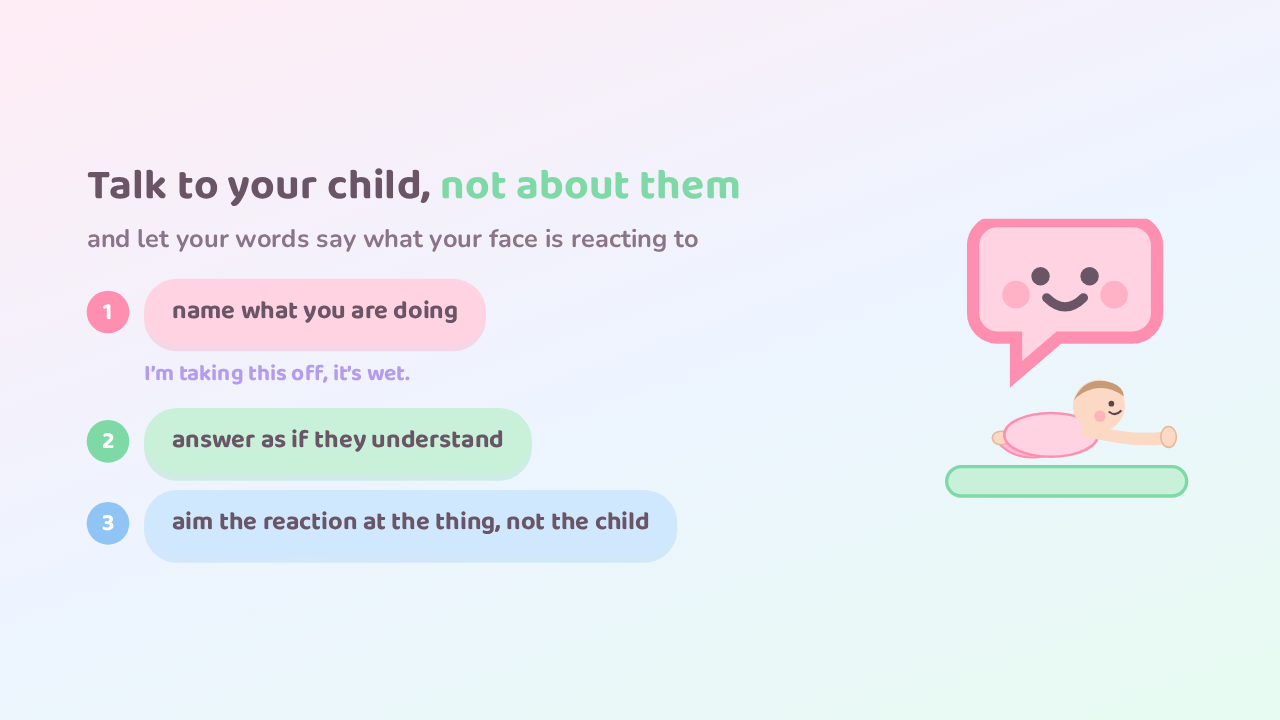
Talk to your child, not about them
and let your words say what your face is reacting to
In that same nursery, three doctors stood at a crib arguing over a baby’s case, glancing at him now and then. A nurse reminded them to include him. They turned and spoke to that baby, a few months old, as an equal. That is the whole practice. At the changing table, say what you are doing and who you are doing it to. I’m taking this off, it’s wet. When a visitor asks about your child in front of them, answer as though your child follows every word. And when you pull a face, let your words say what your face is about. The smell is the thing you are reacting to, so say so.
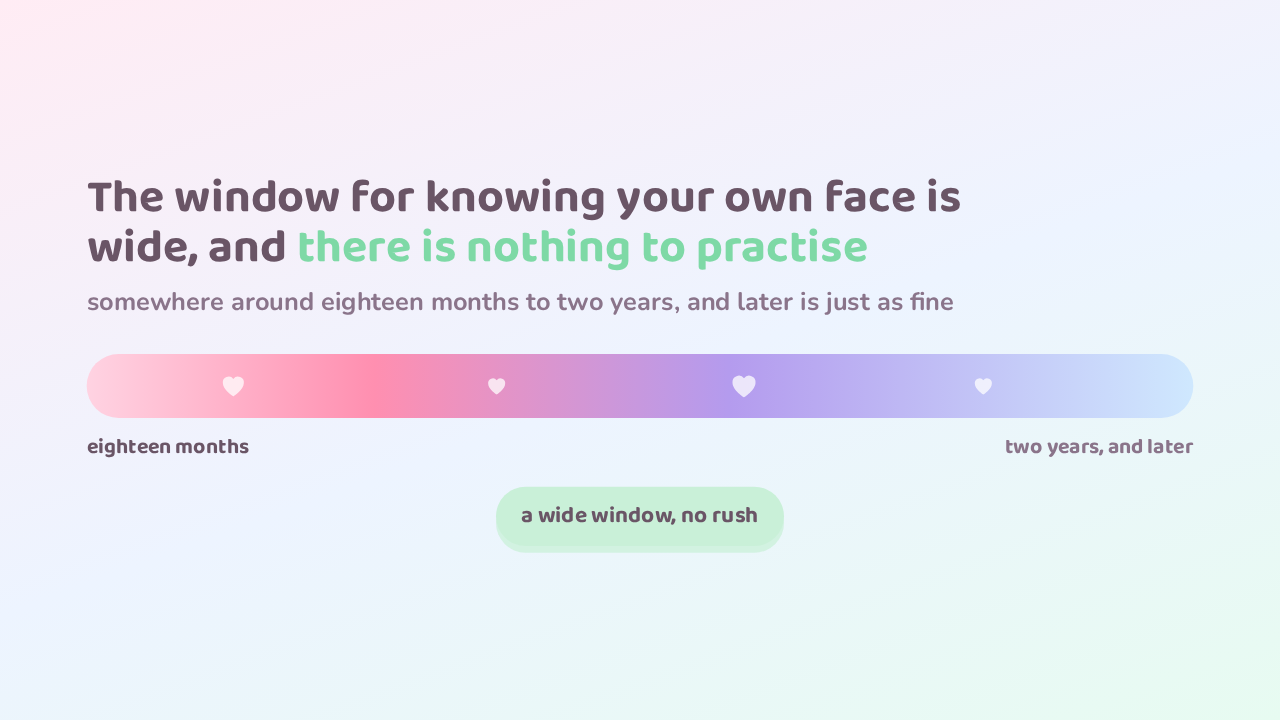
The window for knowing your own face is wide, and there is nothing to practise
somewhere around eighteen months to two years, and later is just as fine
Knowing their own face in a mirror arrives somewhere around eighteen months to two years, and the spread around that is genuinely wide. Remember the thirty-two percent of those children who reached for the glass. At their second birthday they had not got there yet, and they were fine. There is nothing to practise here and nothing to hurry. What your child is working on this week is the body, and the mirror is already serving that.
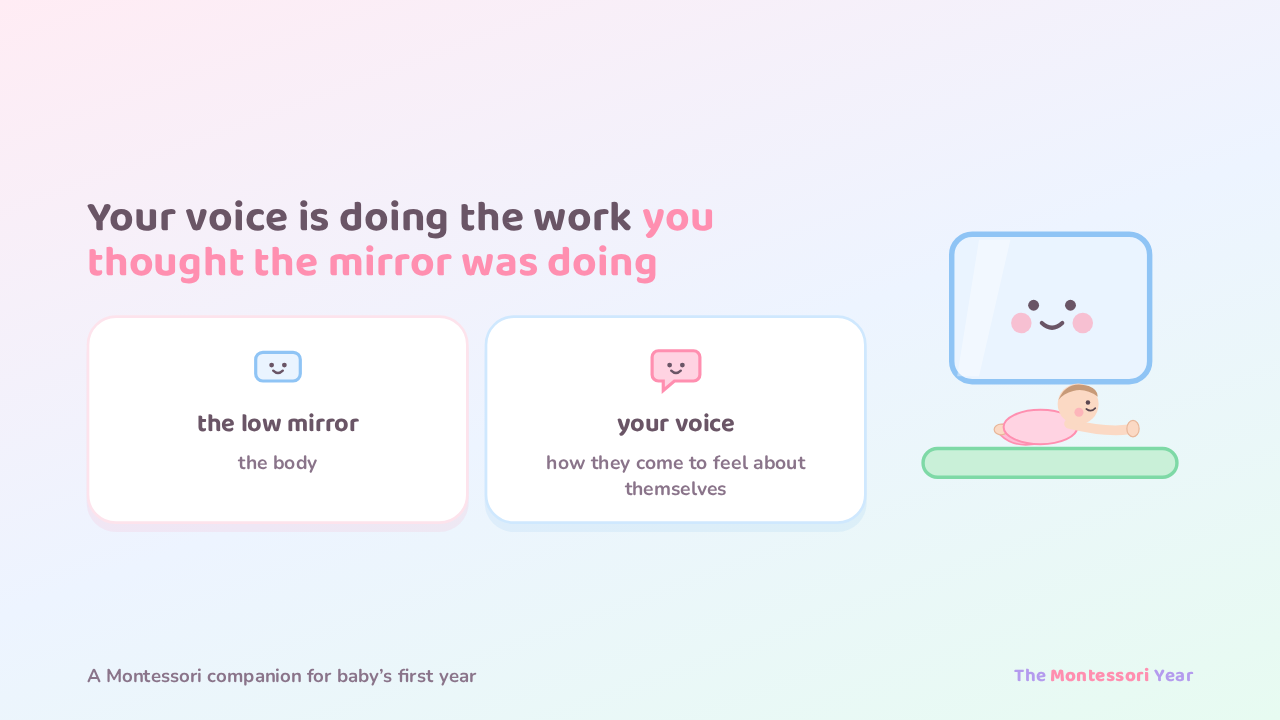
Your voice is doing the work you thought the mirror was doing
Back to the mat. Hang the mirror low, and let your child watch themselves work. The thing shaping how they feel about themselves sits in the room with you, in the way you talk about them while they are listening. They can hear you, so talk to them.