Your baby’s spoon arrives at their mouth upside down and empty
dinner is the hardest place in the day to learn this
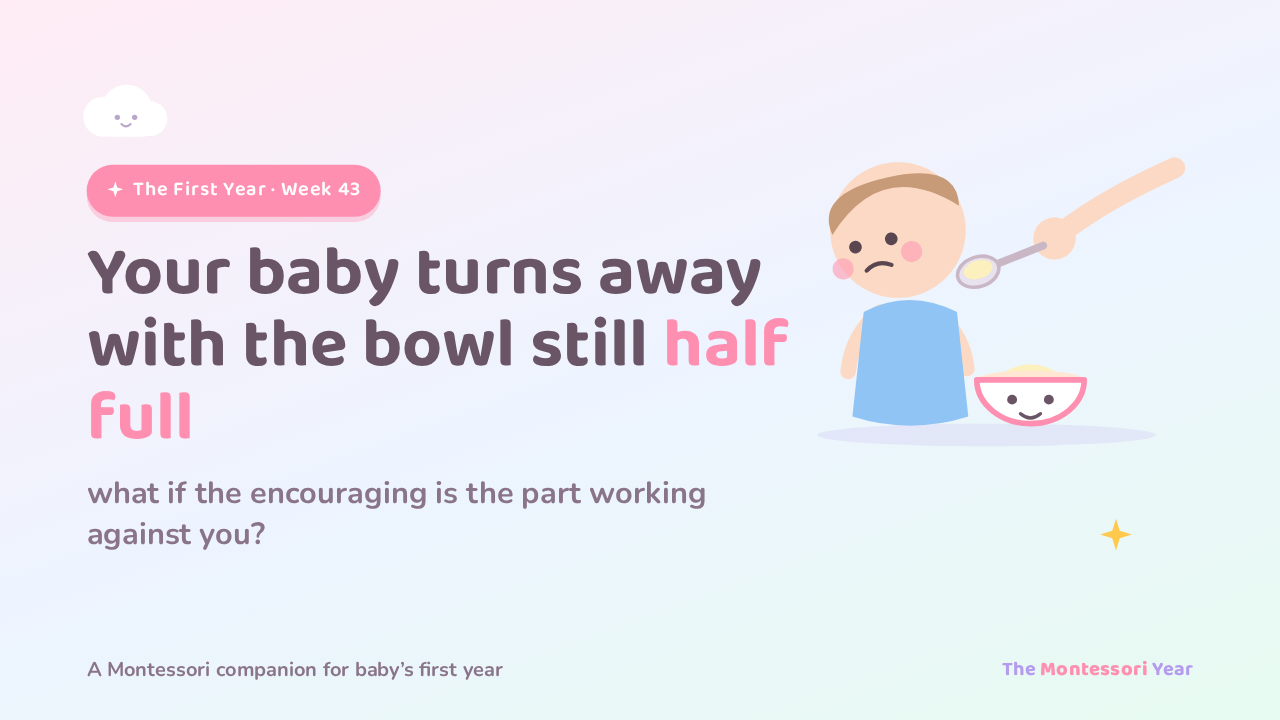
The First Year · Week 44It’s dinner, and your ten-month-old has the spoon in a fist. The fist finds the bowl. The spoon arrives at their mouth turned over and empty. So you reach across and turn the spoon the right way up. Again. The spoon is fine, and your child is fine. Dinner is simply the hardest possible place in the day to learn this.
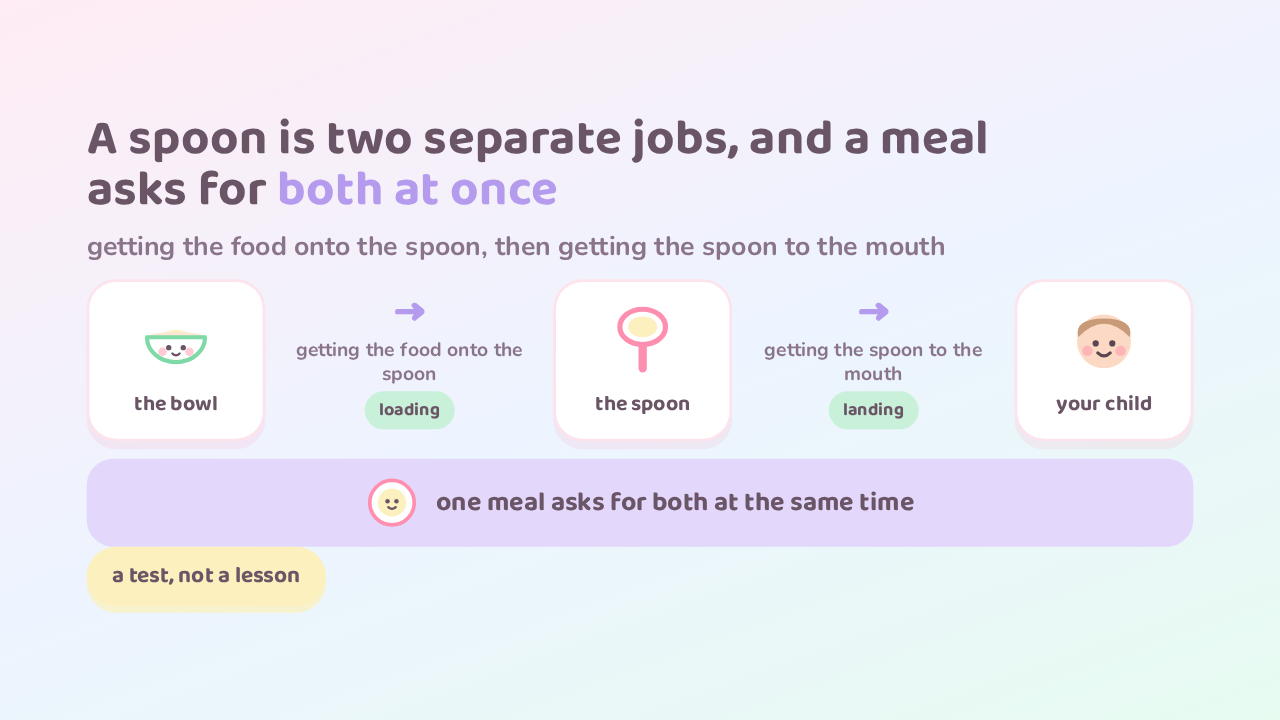
A spoon is two separate jobs, and a meal asks for both at once
getting the food onto the spoon, then getting the spoon to the mouth
A spoon asks your child for two separate jobs. Getting the food onto the spoon. And getting the spoon to their mouth. Loading it, and landing it. A meal asks for both jobs at the same time, from a child who is hungry, while you watch, and every miss costs a real bite off a real plate. That makes dinner a test. A lesson is somewhere you get it wrong for free. So you never have to teach the fork at dinner again. Here is where the teaching goes instead.
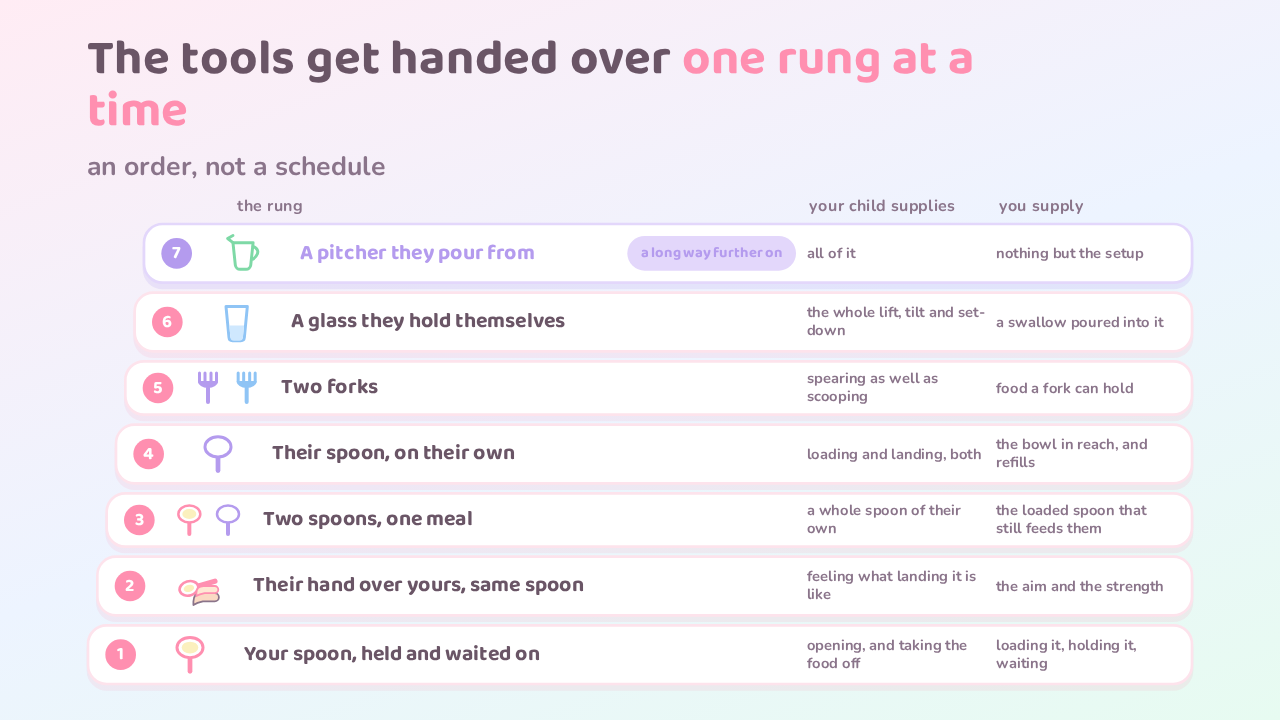
The tools get handed over one rung at a time
an order, not a schedule
Here is the order. And it is an order, not a schedule. Rung one: you hold the loaded spoon just in front of your child’s mouth, not touching, and you wait for your child to open it. The bowl stays back by you, out of reach, so the only job in the room is landing the spoon. Rung two: your child’s hand rides on top of yours, on the same spoon. Rung three: two spoons. You load one and offer it, and your child holds the other one. Rung four: their own spoon, on their own. Rung five: two small forks. Rung six: a glass they hold themselves. Rung seven, a long way further on: a small pitcher they pour from. Every rung hands over one more piece of the job. And there are no ages on the ladder, on purpose.
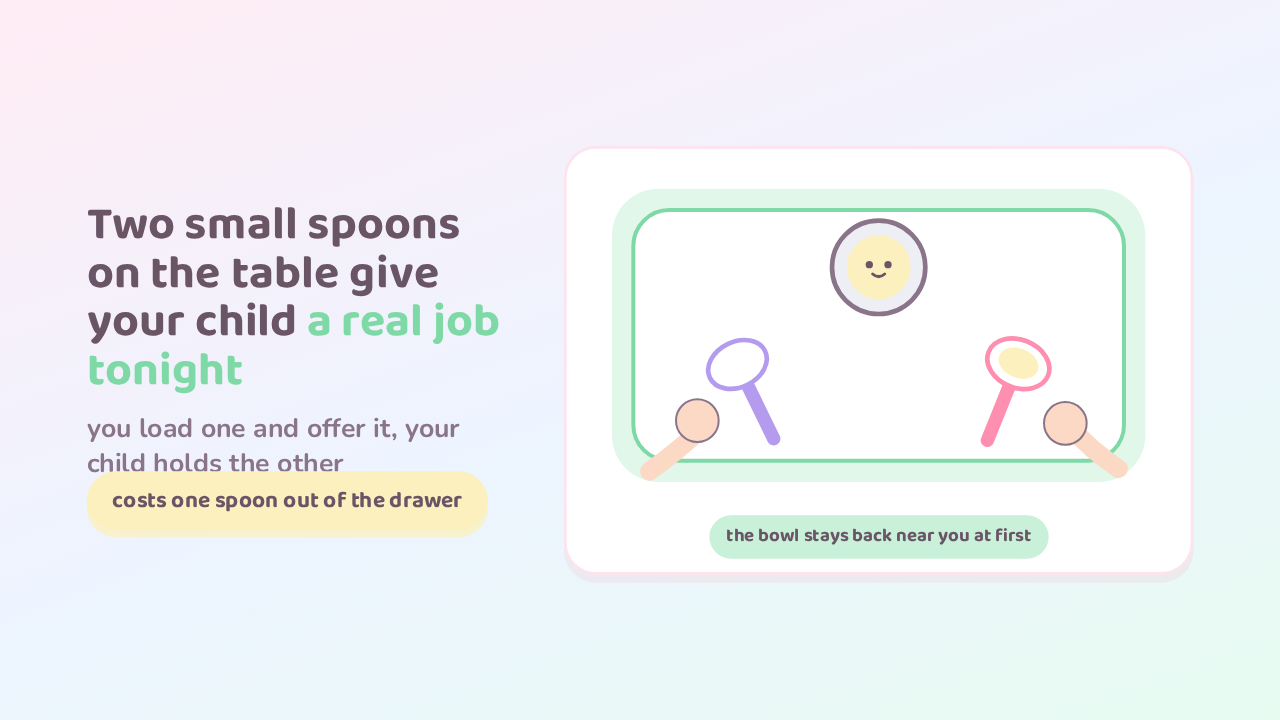
Two small spoons on the table give your child a real job tonight
you load one and offer it, your child holds the other
costs one spoon out of the drawerRung three is the one almost everyone skips, and it costs one extra spoon out of the drawer. Keep several small ones, so the meal carries on when one goes missing. Then put two spoons on the table. You load one and offer it, and your child holds the other one and does whatever they can with it. That is a real version of the job, happening beside you, tonight. Keep the bowl back near you at first.
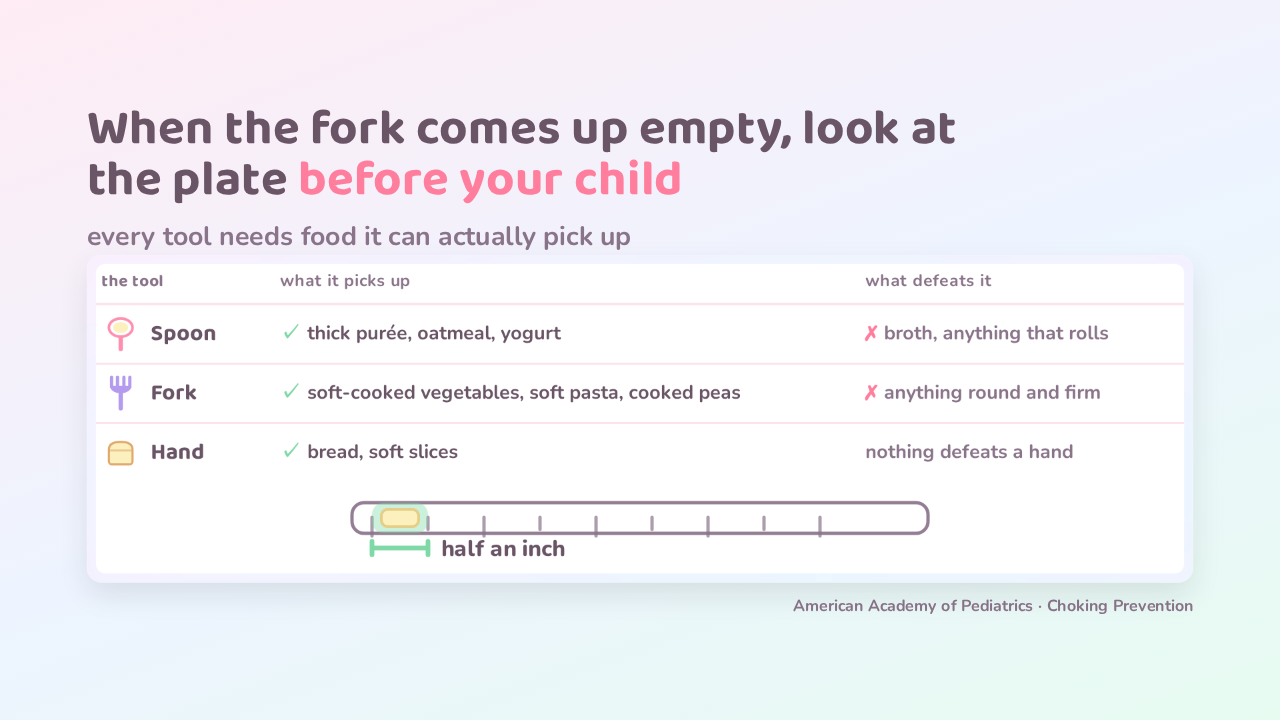
When the fork comes up empty, look at the plate before your child
every tool needs food it can actually pick up
When the fork keeps coming up empty, look at the plate before you look at your child. A spoon needs food that clings to it: thick purée, oatmeal, yogurt. Broth defeats a spoon, and anything that rolls defeats a fork. Food that goes onto a fork is soft-cooked, and cut smaller than half an inch. And some food was never a utensil job at all. Bread is for the hand, and saying that out loud ends a fight that was never winnable.
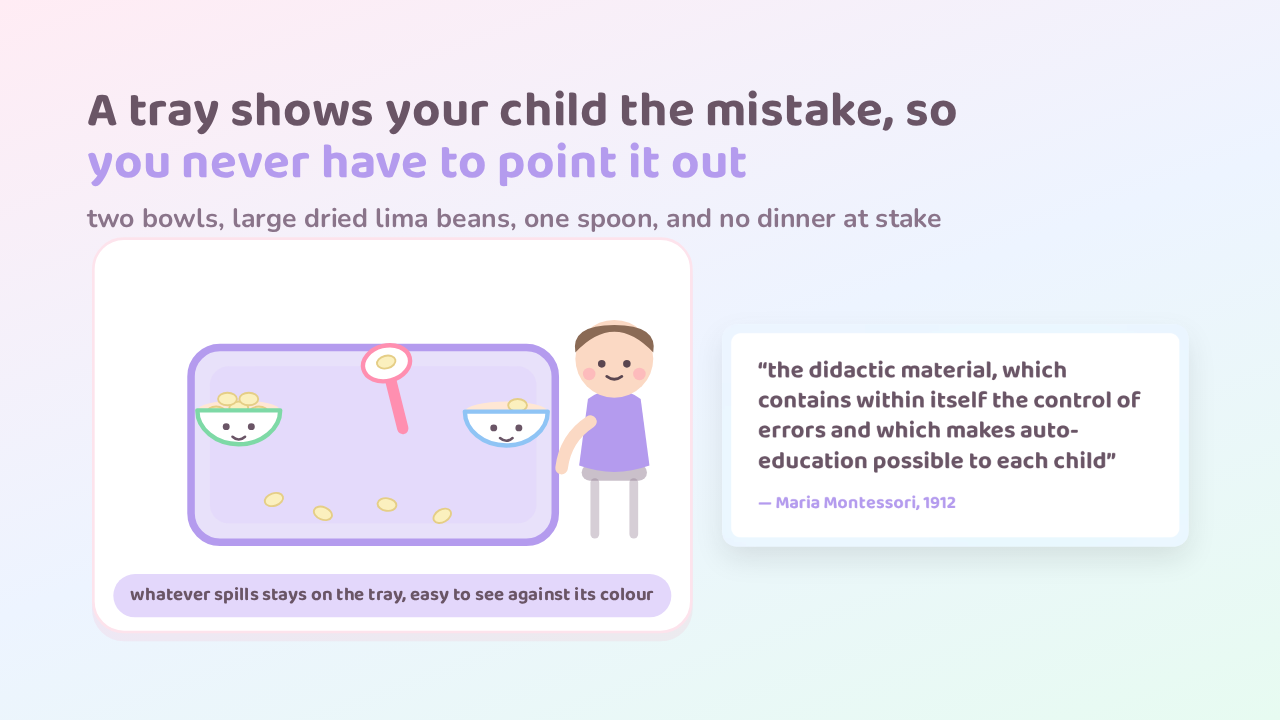
A tray shows your child the mistake, so you never have to point it out
two bowls, large dried lima beans, one spoon, and no dinner at stake
“the didactic material, which contains within itself the control of errors and which makes auto-education possible to each child”
If a meal is the test, where is the lesson? On a tray, away from the table. You sit down beside your child for this, and it pays off over the months ahead. Two bowls, one holding large dried lima beans, and a spoon. Your child moves the beans across, one at a time. Nothing on that tray is dinner, so a miss costs nothing. And your child can repeat it as many times as they want. A meal never offers that. And whatever spills stays on the tray, easy to see against its colour, where your child picks it up when they are done. More than a hundred years ago, Maria Montessori built her teaching materials this way on purpose. The material, she wrote, contains within itself the control of errors. The tray shows the mistake, so your child can find it and fix it, and you never have to point it out.
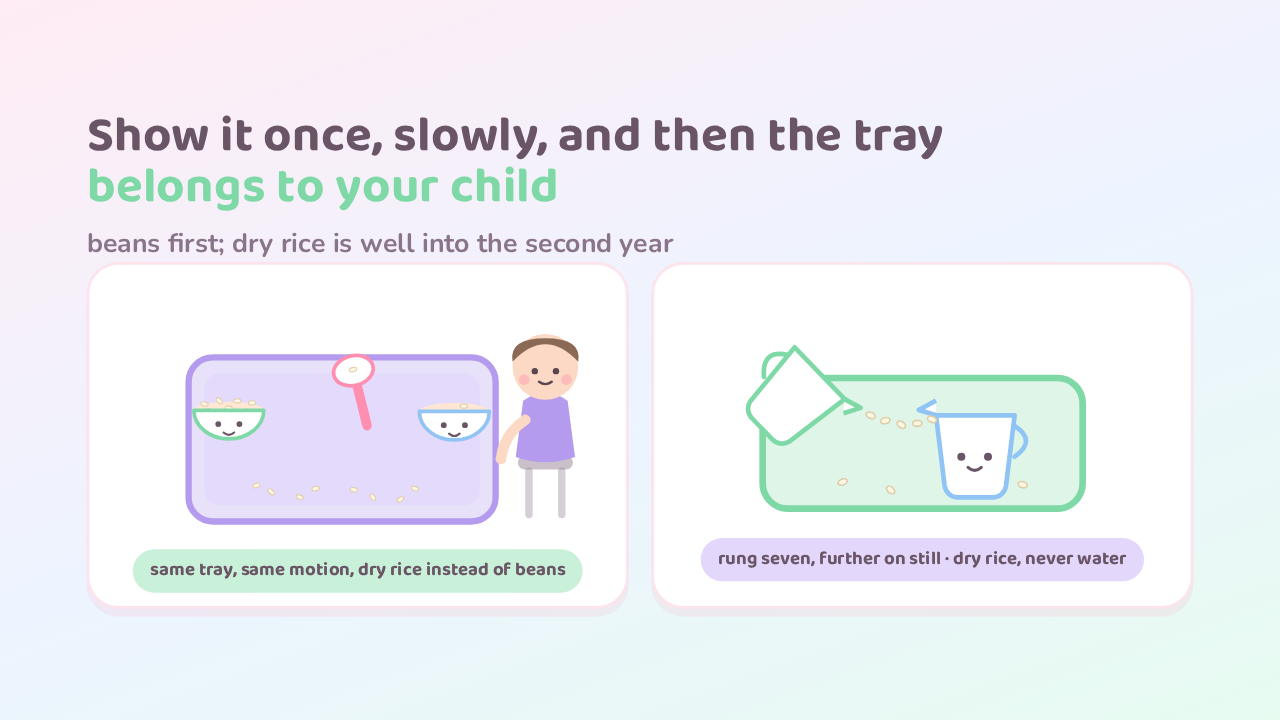
Show it once, slowly, and then the tray belongs to your child
beans first; dry rice is well into the second year
Put the tray on a low table, sit down next to your child, and show the whole thing once. Slowly, and with almost no words, so your child watches your hands instead of listening to your voice. Then the tray is theirs. When moving the lima beans one at a time is easy, swap the beans for dry rice. Same tray, same motion, finer control. That swap is well into the second year for most children, and that is the real pace of this.
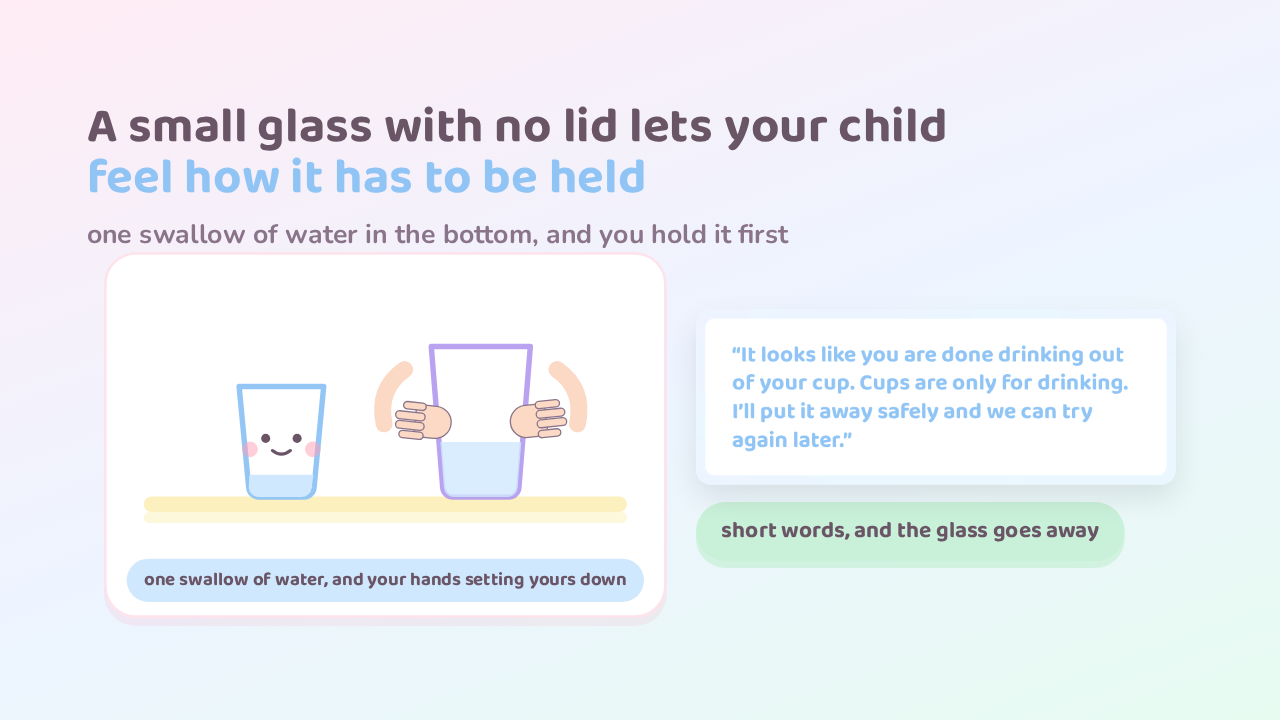
A small glass with no lid lets your child feel how it has to be held
one swallow of water in the bottom, and you hold it first
“It looks like you are done drinking out of your cup. Cups are only for drinking. I’ll put it away safely and we can try again later.”
The same ladder runs through the glass. A small glass with no lid, and one swallow of water in the bottom. You hold the glass at first, with your child’s hands on it too if they want. Then your child holds it alone. Real glass answers back, so your child works out how to be careful with it. When the glass turns into a toy, it goes away, and what you say is short: It looks like you are done drinking out of your cup. Cups are only for drinking. I’ll put it away safely and we can try again later. The strongest teaching here is silent. Your child copies how you pick your own glass up, and how you set it down.
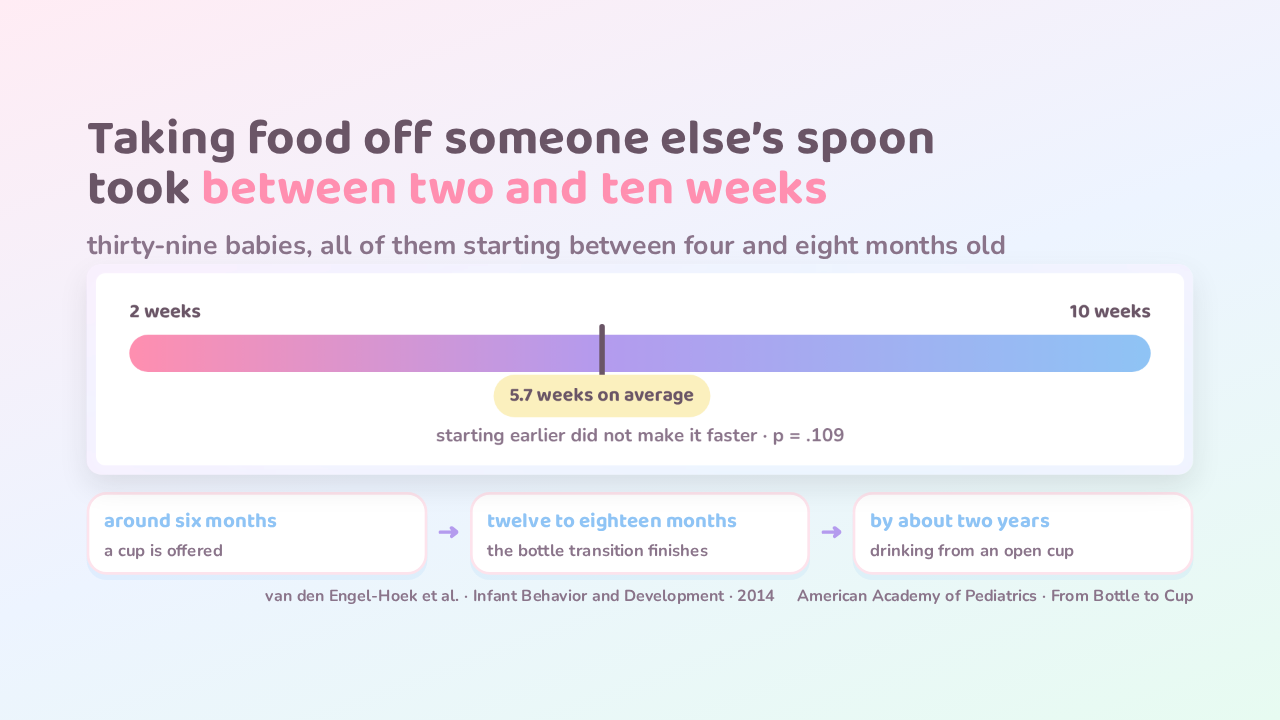
Taking food off someone else’s spoon took between two and ten weeks
thirty-nine babies, all of them starting between four and eight months old
Researchers followed thirty-nine babies from their very first spoon, all of them starting between four and eight months old. Rung one on its own, opening for a spoon someone else is holding and taking the food off it, took them between two and ten weeks. Five point seven weeks on average. And the researchers found no link between starting earliest and finishing soonest. That is the first rung alone. Those weeks measure one skill. The glass runs on a different clock, in months. Pediatricians suggest offering a cup at around six months, finishing the bottle between twelve and eighteen months, and drinking from an open glass by about two years. A glass on your table at around ten months is early practice inside a year of runway.
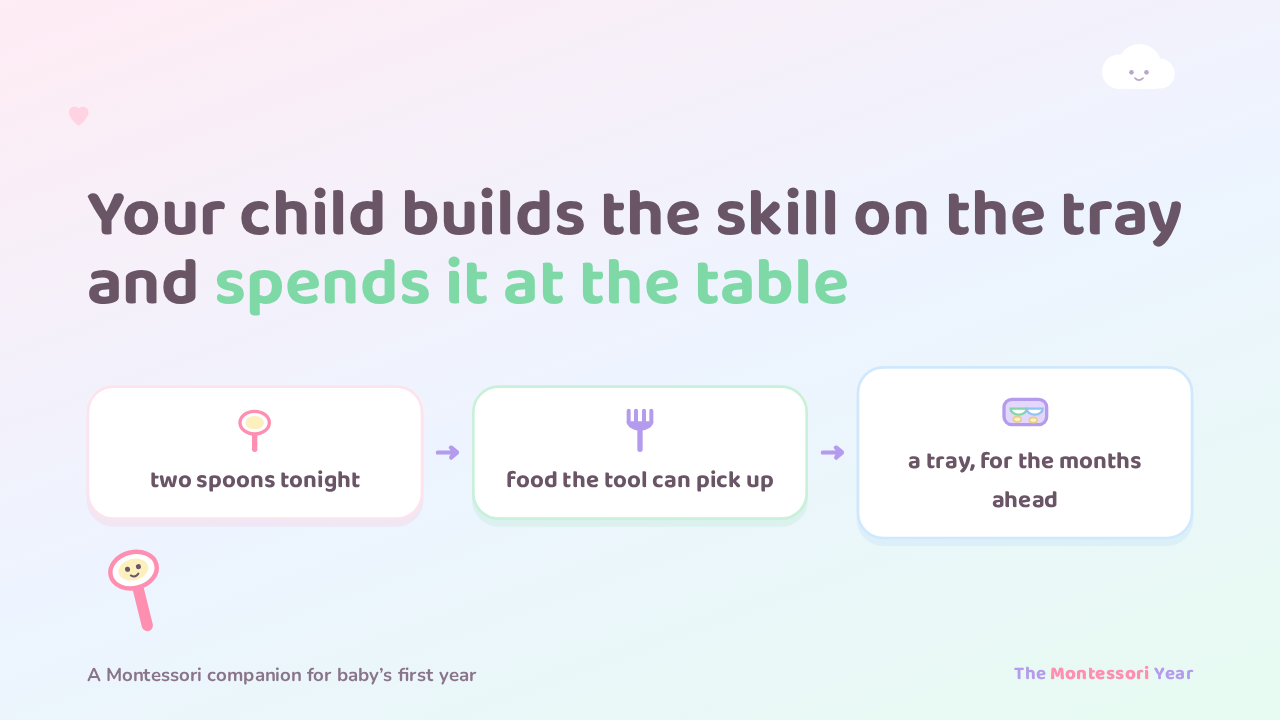
Your child builds the skill on the tray and spends it at the table
Back to that upside-down spoon. Two small spoons on the table tonight. Food that the tool in their hand can actually pick up. And a tray, with two bowls and a handful of beans, for the months ahead. Your child gets to be wrong for free. That is the whole thing.