Holding both hands is practice at holding on
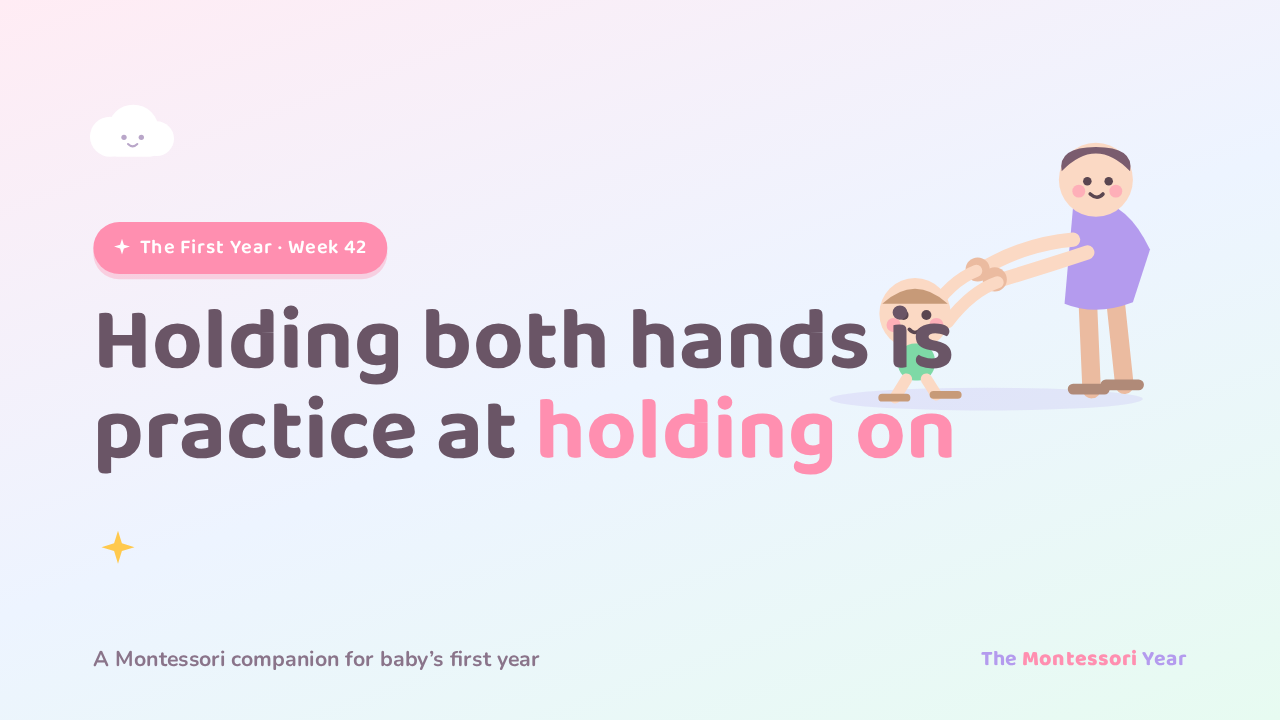
Holding both hands is
practice at holding on
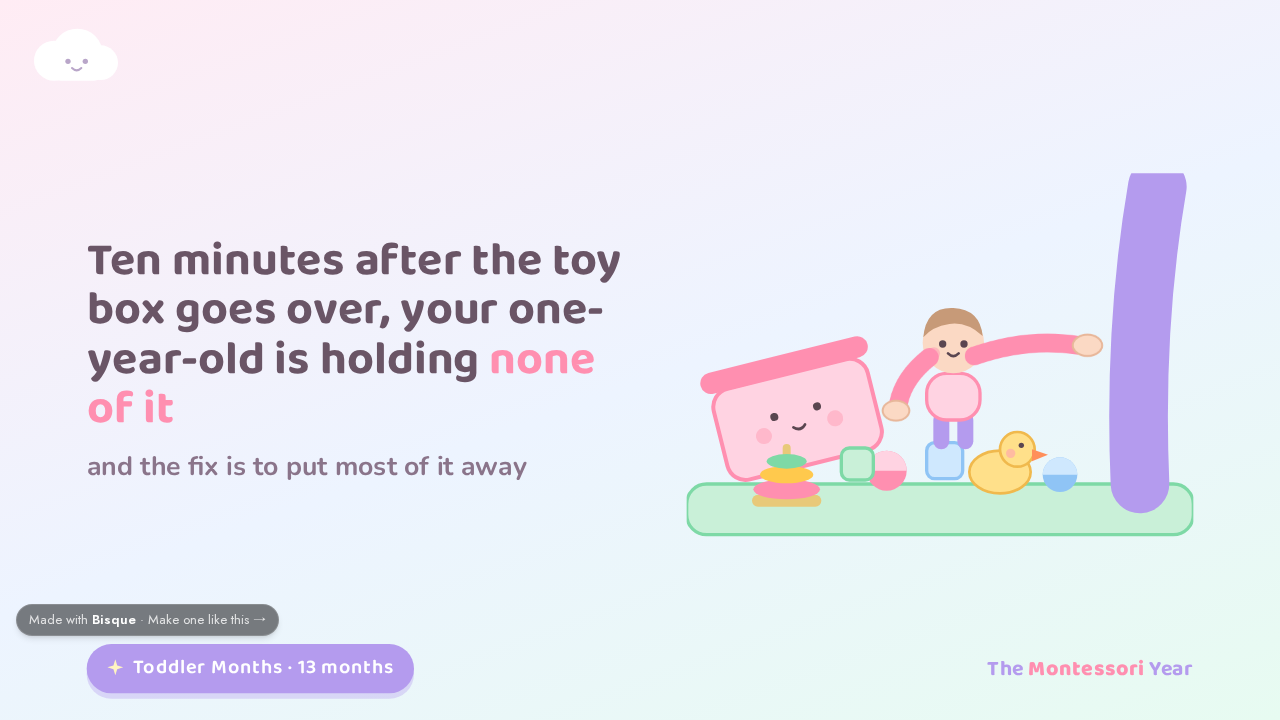
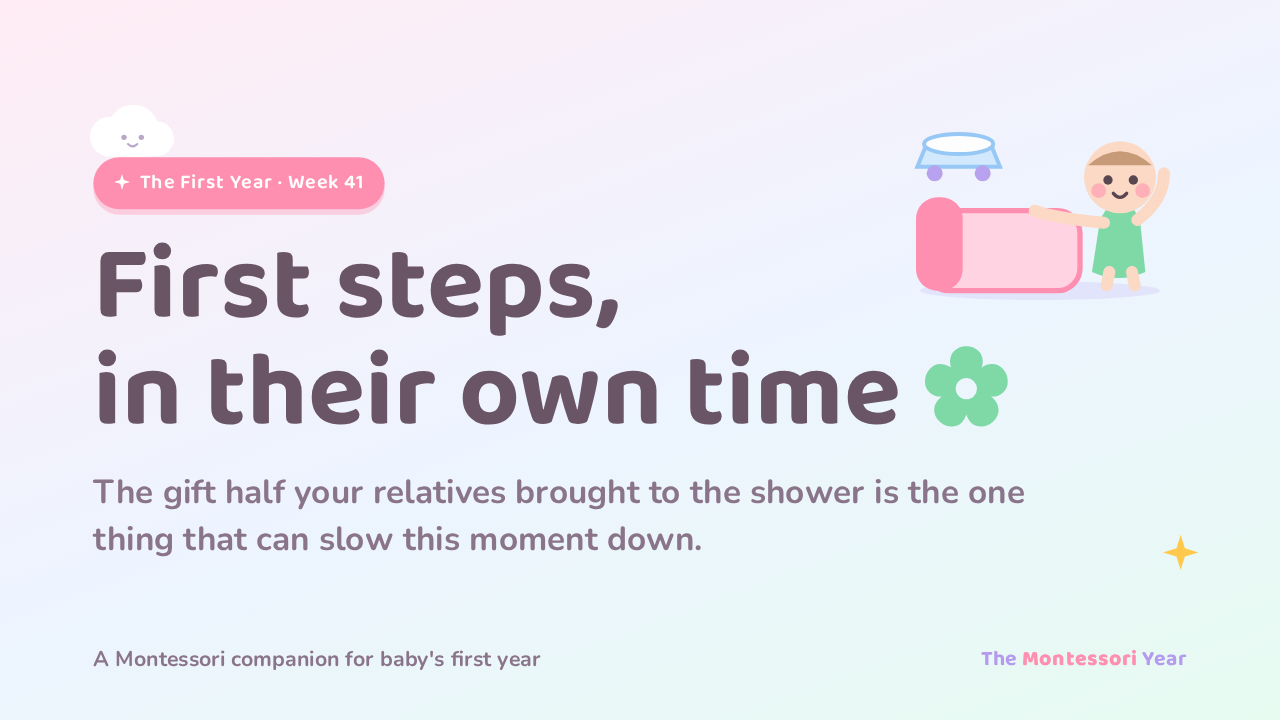
It’s the end of the day. Your baby reaches up for your hands. You bend down, take both of them, and shuffle your almost-walker up and down the living room. Nearly every parent does this. It feels like you’re helping them practice walking. Here’s the surprising part. Those two hands you’re holding are doing the one thing your baby has to learn to do all on their own.
Who is doing the balancing?
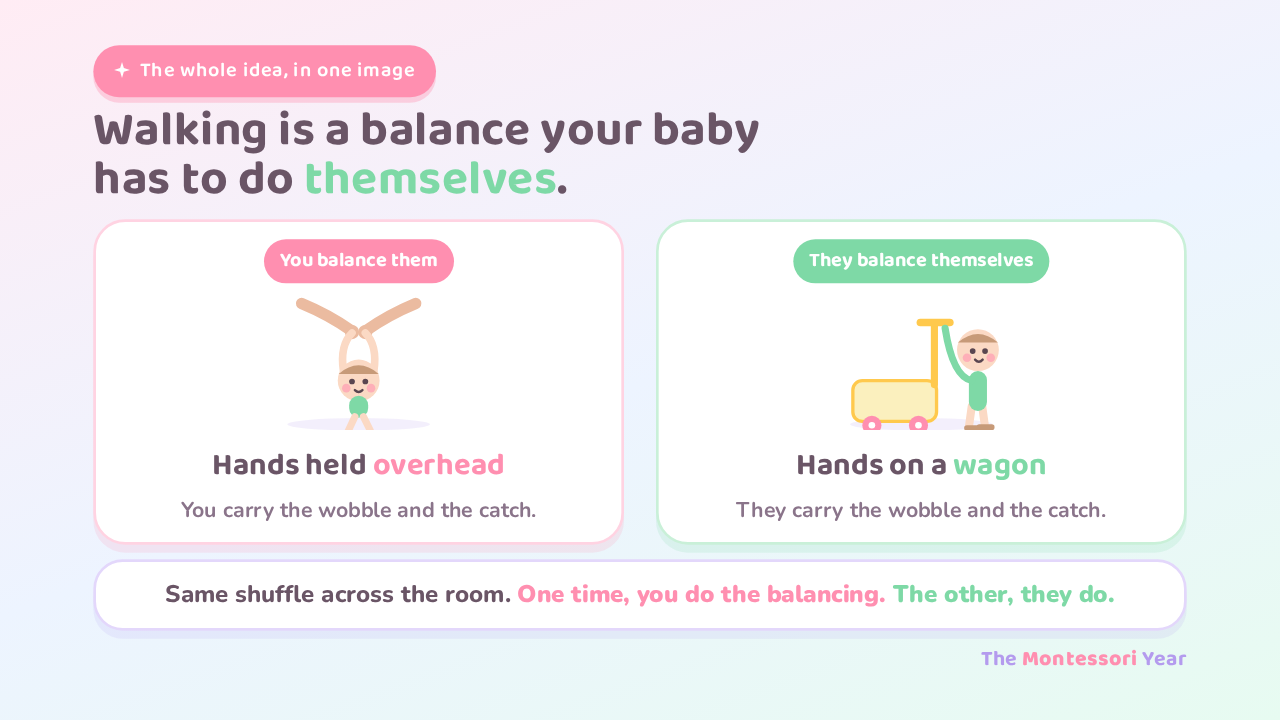
Walking is a balance your baby
has to do themselves.
Hands held overhead
You carry the wobble and the catch.
Hands on a wagon
They carry the wobble and the catch.
So let’s say it plainly. Walking is really about balance. It’s staying upright over your own two feet, tipping a little too far, and catching yourself, over and over. When you hold both of your baby’s hands, you are the one doing that catching for them. Give them something to hold and push instead, and they do it for themselves. That’s the whole swap.
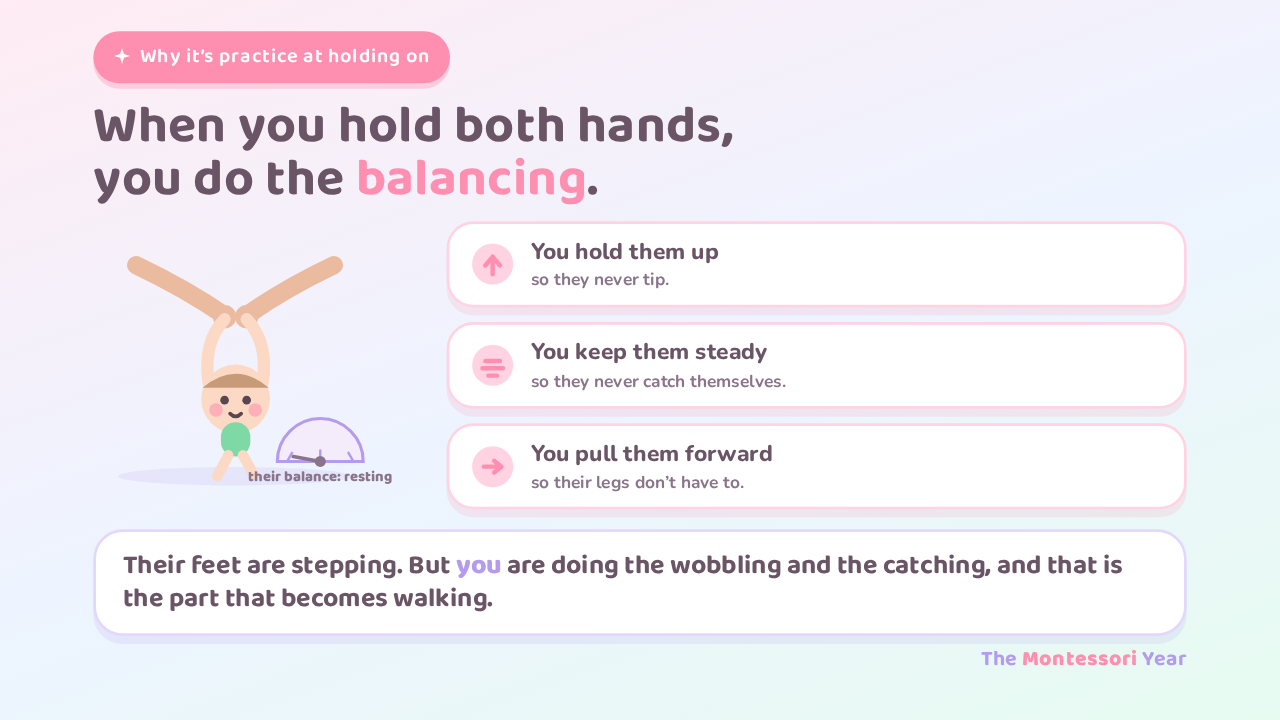
When you hold both hands, you do the balancing
When you hold both hands,
you do the balancing.
You hold them upso they never tip.
You keep them steadyso they never catch themselves.
You pull them forwardso their legs don’t have to.
To learn to walk, your baby has to solve balance for themselves. They carry their own weight over their feet, tip a bit too far, and catch it. Then they do it again, thousands of times. When you hold both hands up over their head, you quietly take that job away. You hold them up, so they can’t tip. You keep them steady, so they never catch themselves. You even pull them forward, so their legs don’t have to. Their feet are stepping. But you are doing the balancing, the wobbling and the catching, and that is the part that actually becomes walking.
Set the furniture a step apart and let them cruise
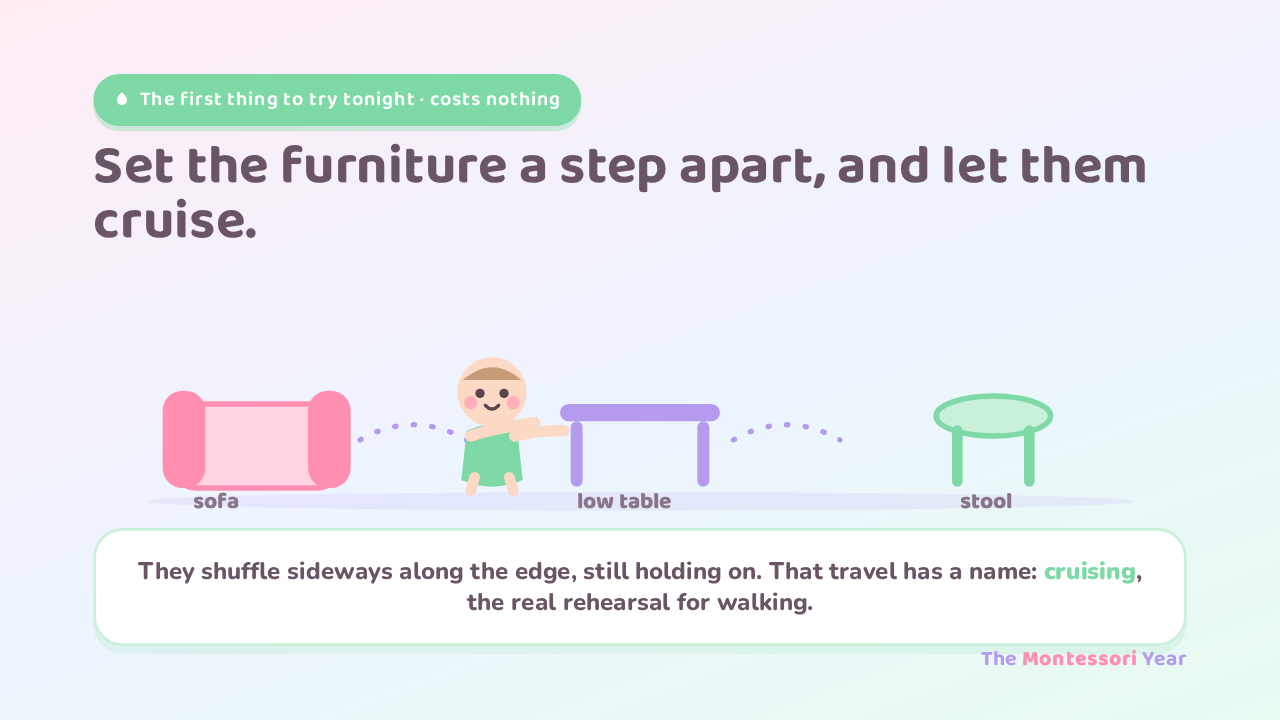
Set the furniture a step apart, and let them cruise.
sofa low table stoolSo here’s the first thing to try tonight, and it costs you nothing. Instead of taking both hands, set the sofa and a low table about a step apart. Let your baby travel between them, shuffling sideways along the edge while they hold on. That sideways shuffle has a name. It’s called cruising, and it’s the real rehearsal for walking. The furniture holds them up, and your baby does the balancing.
A wagon moves only as fast as their own balance
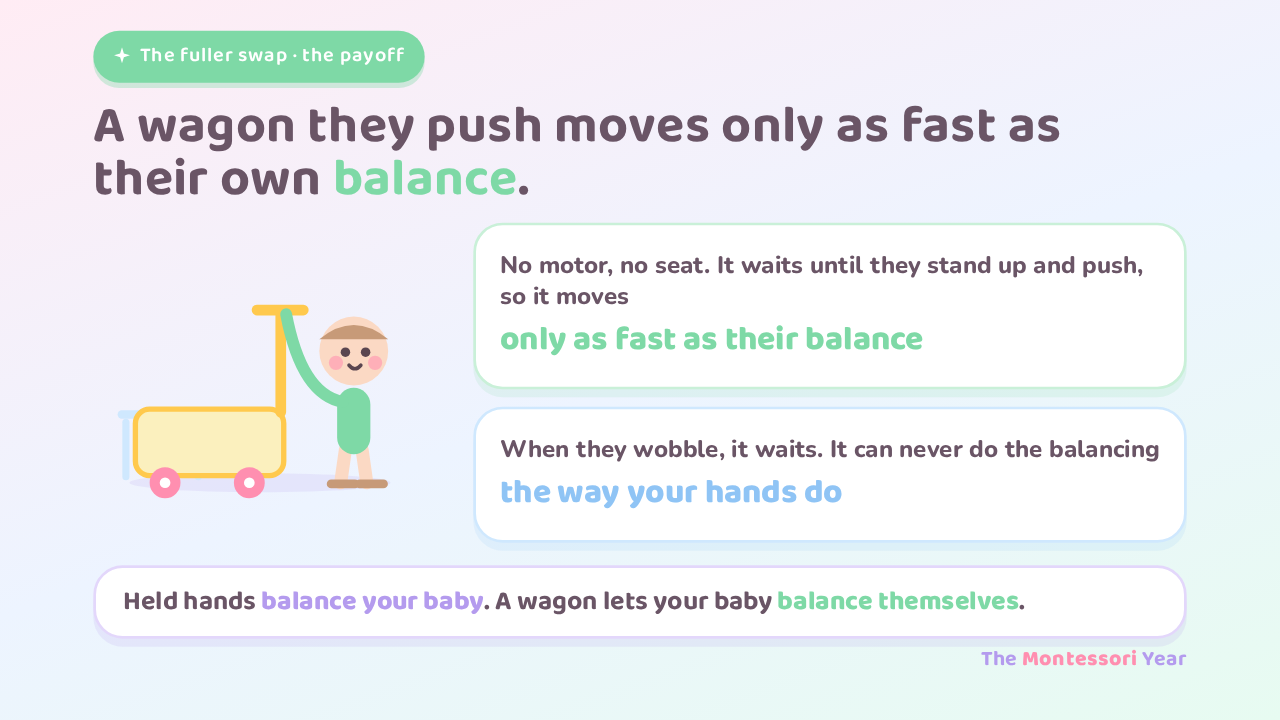
A wagon they push moves only as fast as their own balance.
Now for the fuller version of that swap. A push wagon. Picture a little wagon with a tall handle fixed upright, so it can’t tip or fold. Your baby stands behind it, takes the handle, and pushes it along on their own two feet. And here’s the lovely part. It has no motor and no seat. It just sits there until your baby stands up and pushes. So it can only ever move as fast as their own balance carries it. When they wobble, it waits. It can never do the balancing for them the way your hands do. That’s the one line to keep. Held hands balance your baby. A wagon lets your baby balance themselves.
One hour of learning to walk
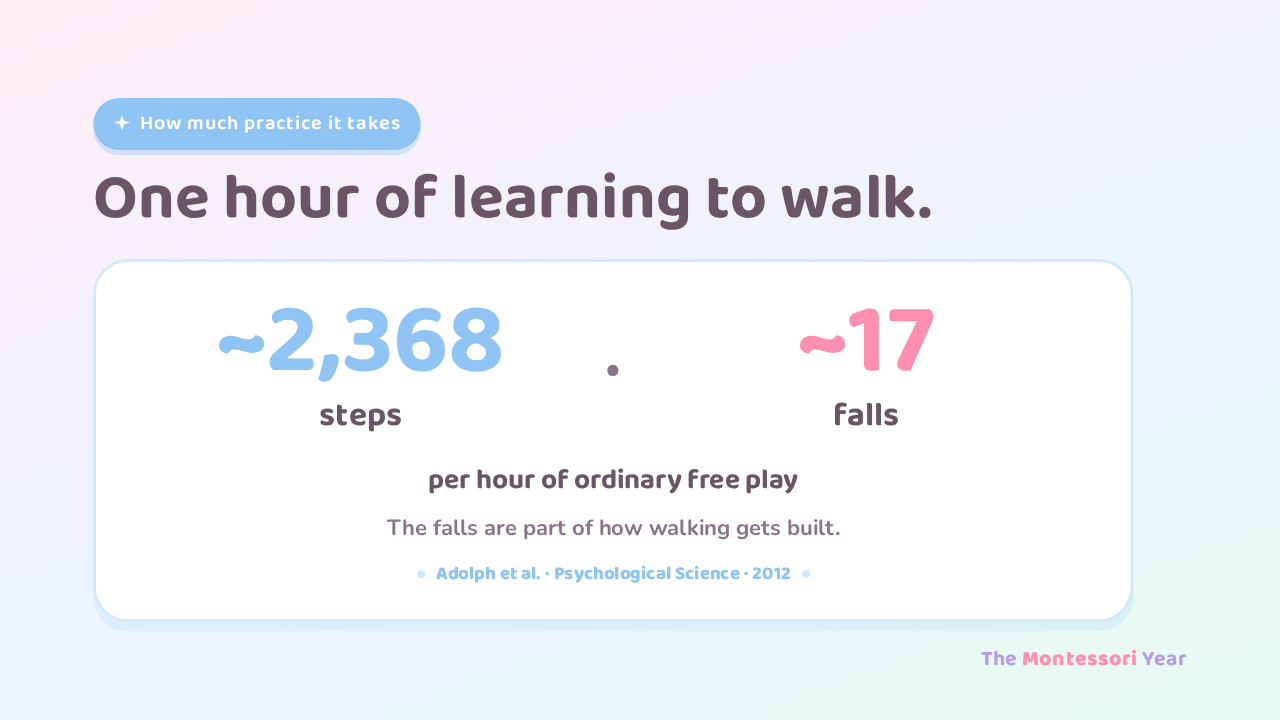
One hour of learning to walk.
per hour of ordinary free play
The falls are part of how walking gets built.
And here’s how much practice that actually takes. In one study, researchers followed babies who were just learning to walk, and they counted every step and every stumble. In a single hour of ordinary play, those babies took two thousand three hundred and sixty-eight steps. And they fell about seventeen times in that same hour. Your baby practices walking into being, thousands of steps an hour, and every one of those falls is part of how it gets built. That practice is exactly what a pair of held hands quietly stands in for.
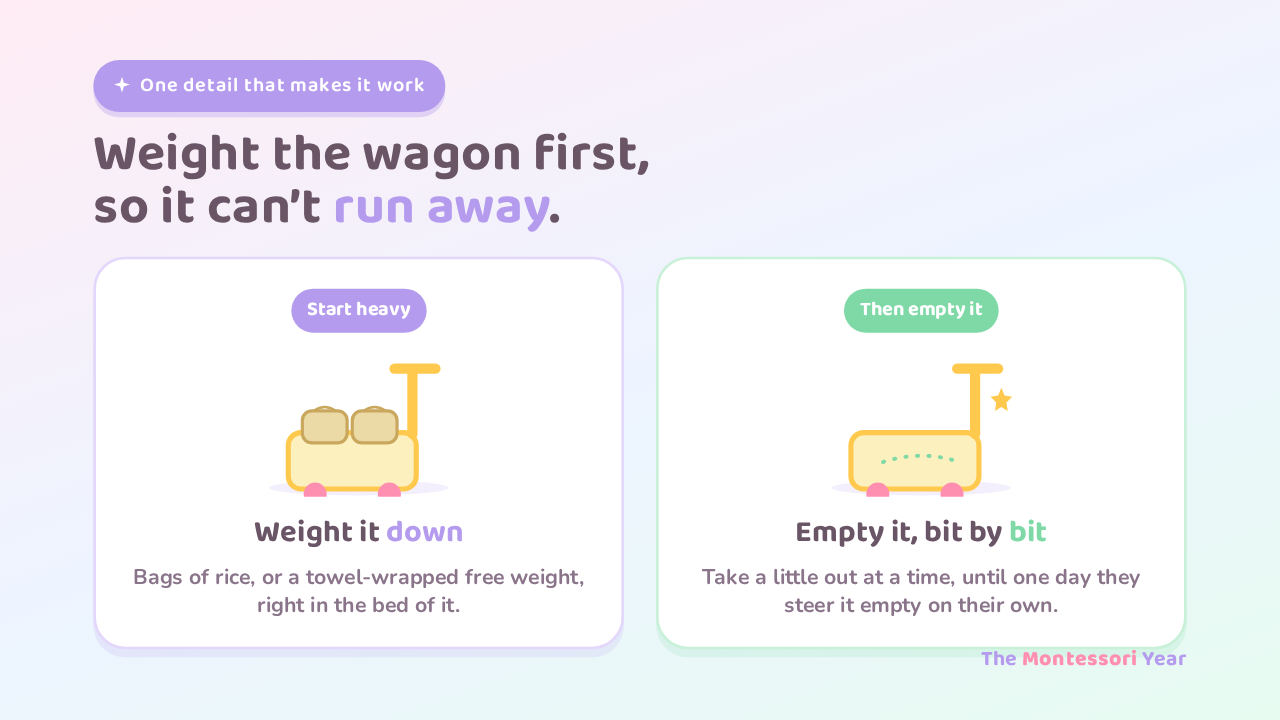
Weight the wagon first so it can’t run away
Weight the wagon first,
so it can’t run away.
Weight it down
Bags of rice, or a towel-wrapped free weight, right in the bed of it.
Empty it, bit by bit
Take a little out at a time, until one day they steer it empty on their own.
A quick but important detail on that wagon. At first, weight it down. A couple of bags of rice, or some free weights wrapped in a towel, sitting right in the bed of it. That stops the wagon from shooting forward the moment your baby leans on the handle. Then, as they get steadier, take a little weight out at a time, until one day it rolls empty and your baby is steering it all on their own.
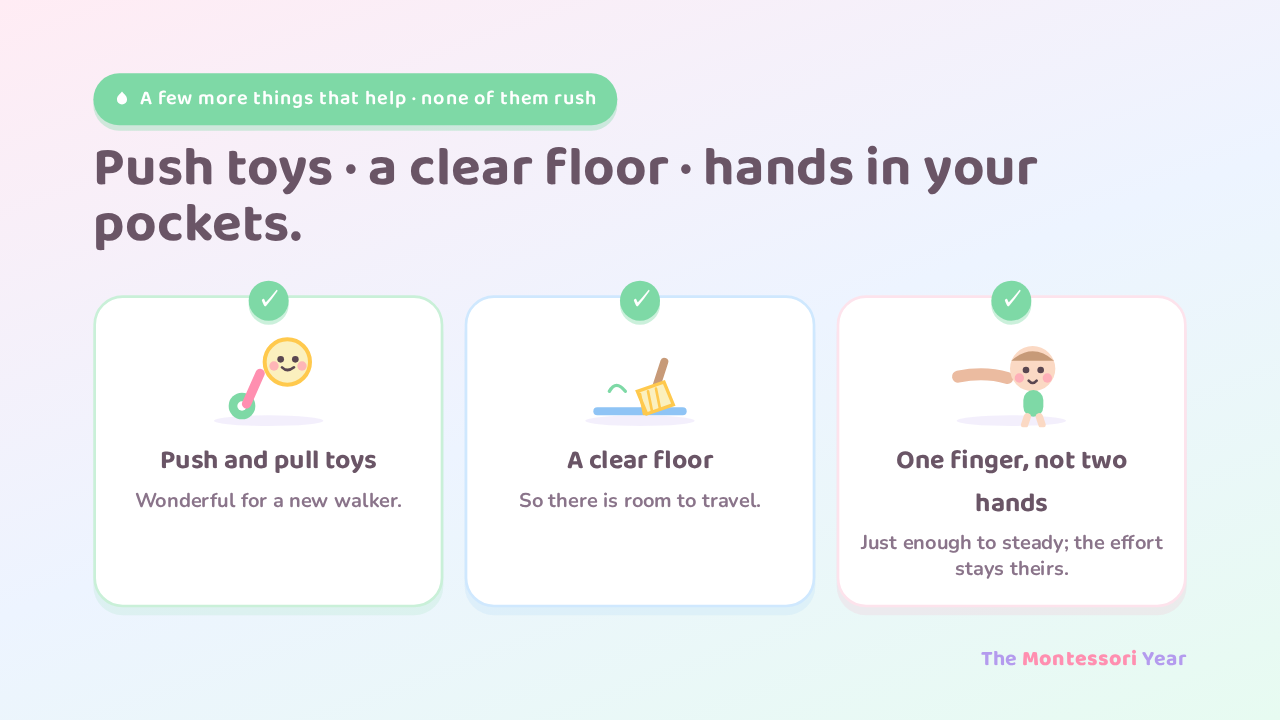
Push toys · a clear floor · hands in your pockets
Push toys · a clear floor · hands in your pockets.
Push and pull toys
Wonderful for a new walker.
A clear floor
So there is room to travel.
One finger, not two hands
Just enough to steady; the effort stays theirs.
A few more things that help, and none of them rush your child. Push and pull toys are wonderful for a new walker. Keep the floor clear, so there’s room to travel. And mostly, keep your own hands in your pockets. If your baby reaches for you, offer a single finger to steady them, and let the furniture and the wagon do the rest.
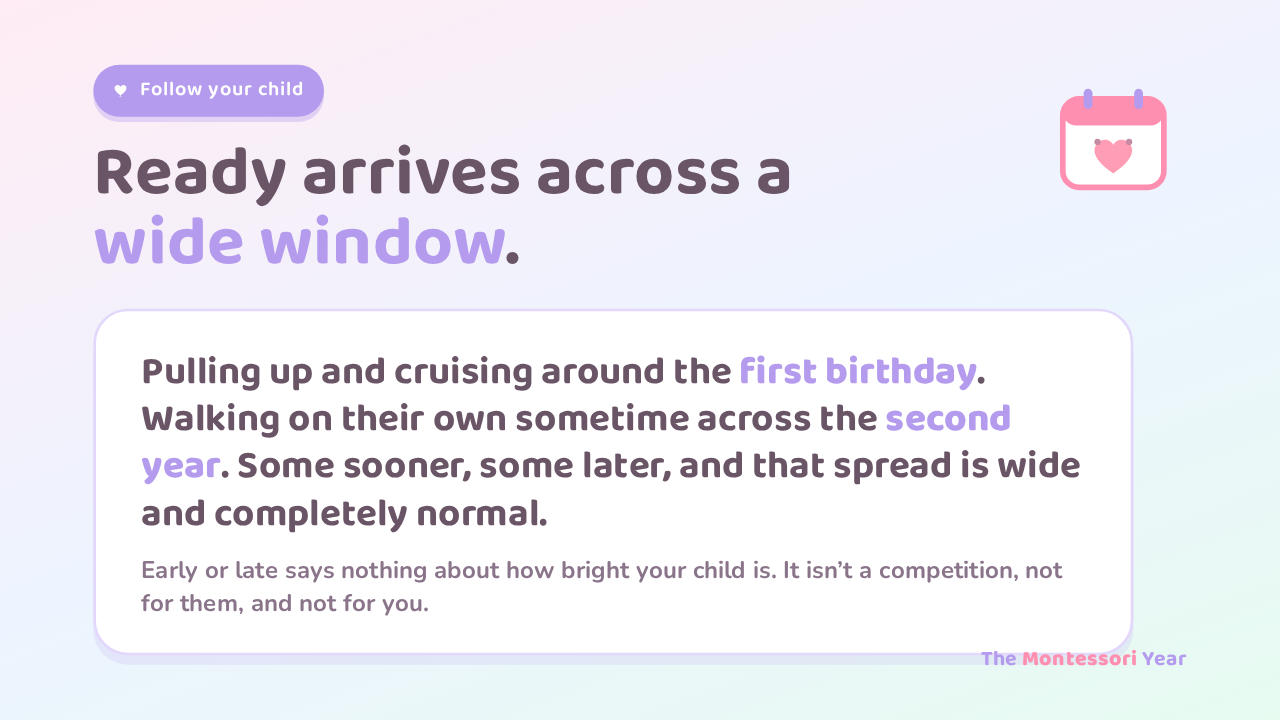
Ready arrives across a wide window
Ready arrives across a
wide window.
Pulling up and cruising around the first birthday. Walking on their own sometime across the second year. Some sooner, some later, and that spread is wide and completely normal.
Early or late says nothing about how bright your child is. It isn’t a competition, not for them, and not for you.
So what does ready look like? Usually your baby is pulling up to stand and cruising the furniture around their first birthday, and walking on their own sometime across the second year. Some do it sooner, some later, and that spread is wide and completely normal. Walking early or walking late says nothing about how bright your child is. It isn’t a competition, not for them, and not for you. Give your baby a floor to practice on and their own good time, and it comes.
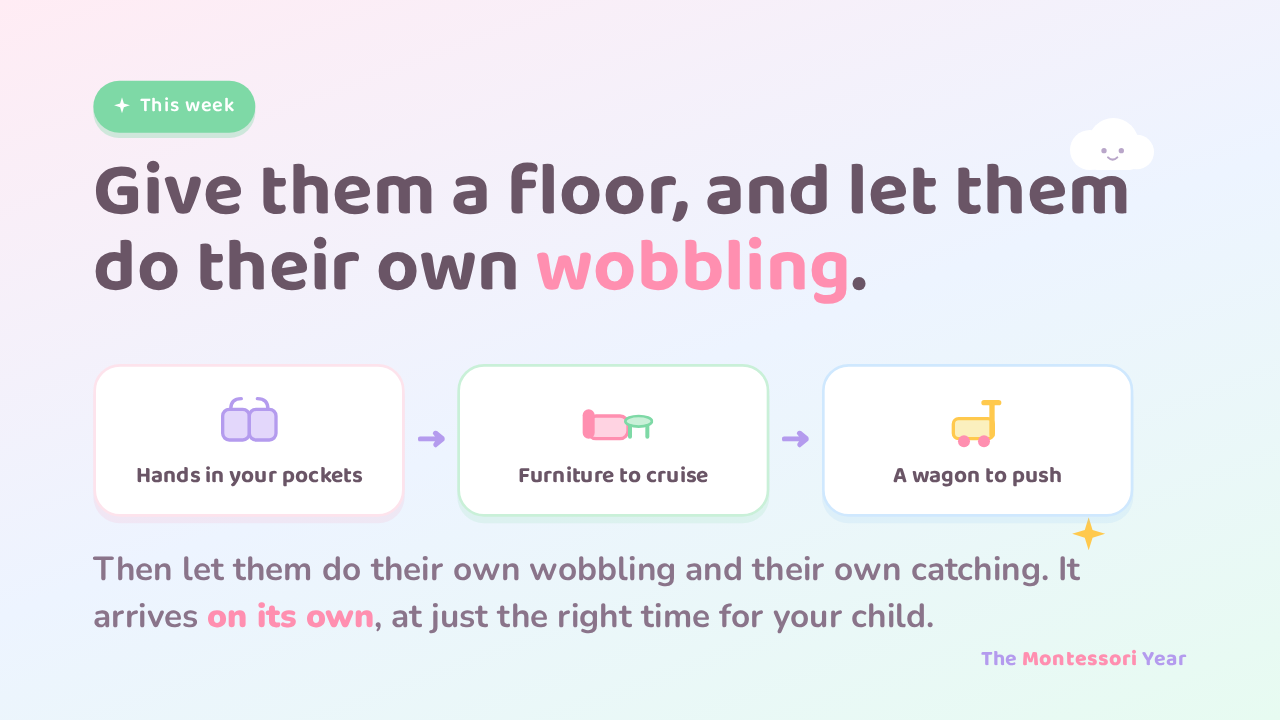
Give them a floor, and let them do their own wobbling
Give them a floor, and let them
do their own wobbling.
Then let them do their own wobbling and their own catching. It arrives on its own, at just the right time for your child.
So this week, back in that living room. Put your hands in your pockets. Give your baby a floor to cross, some furniture to hold, and a wagon to push. Then let them do their own wobbling and their own catching. It arrives on its own, joyfully, at just the right time for your child. I’ll see you next week.