Lovable apps leak passports, ggml hits 1.0, and Qwen3.8 27B fits a 24 GB Mac
1 day ago
Thousands of apps built with Lovable left passports, private chats and orders readable without a login, and the fix is row-level security on every table. Also from Saturday's Hacker News front page: ggml 1.0 speeds up the same hardware again, Unsloth's new Qwen3.8 27B quants fit a 24 GB Mac, and a proposal for terminal borders that don't cost a cell. Lovable: many apps built on the platform expose sensitive data, by Crissy Field https://www.crissyfield.de/research/lovable-en/ Discussion: https://news.ycombinator.com/item?id=50499017 igorandri, head of security at Lovable, on its pre-publish scanning: https://news.ycombinator.com/item?id=50502105 varenc's reply: https://news.ycombinator.com/item?id=50502127 ggml v1.0.0 release notes https://github.com/ggml-org/ggml/releases/tag/v1.0.0 Discussion: https://news.ycombinator.com/item?id=50493062 jacquesm's before-and-after timing: https://news.ycombinator.com/item?id=50494080 Qwen3.8: how to run locally, Unsloth documentation (Dynamic V3.1 update) https://unsloth.ai/docs/models/qwen3.8 Discussion: https://news.ycombinator.com/item?id=50491980 Terminal borders that don't cost a cell, by joshka https://www.joshka.net/cell-borders/ Discussion: https://news.ycombinator.com/item?id=50491423 The front page that day: https://news.ycombinator.com/front?day=2026-11-14
Ask about this presentation
Chapters
Show transcriptHide transcript
On Saturday's Hacker News front page, thousands of apps built with Lovable, the AI app builder, turned out to be serving private data to anyone who asked. Passport numbers, private chats and ticket sales were readable from the open web without logging in. If you ship anything with Lovable and Supabase, the fix is yours to make.
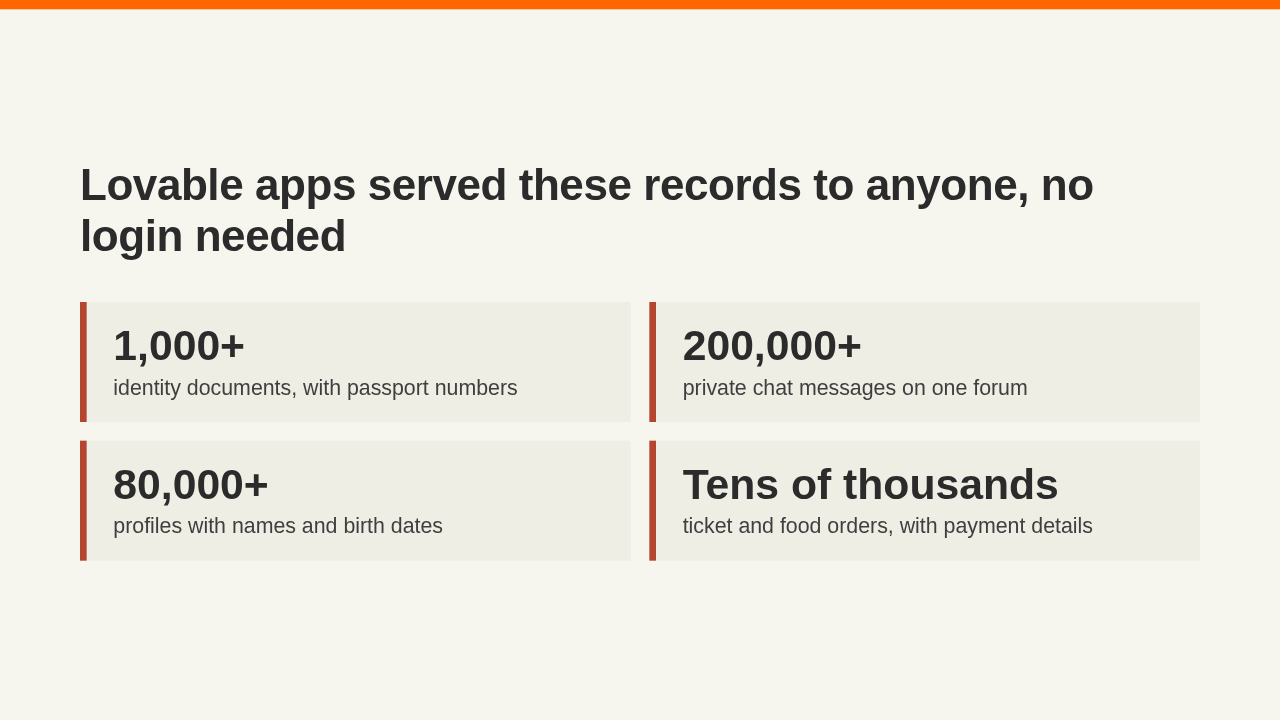
The worst cases are ordinary small businesses. One service provider exposed more than a thousand identity records, with passport numbers, expiry dates and nationalities. A German lifestyle forum left over 80,000 profiles and more than 200,000 private chat messages open. Event organizers and restaurants exposed their orders, with emails, phone numbers, addresses and payment details.
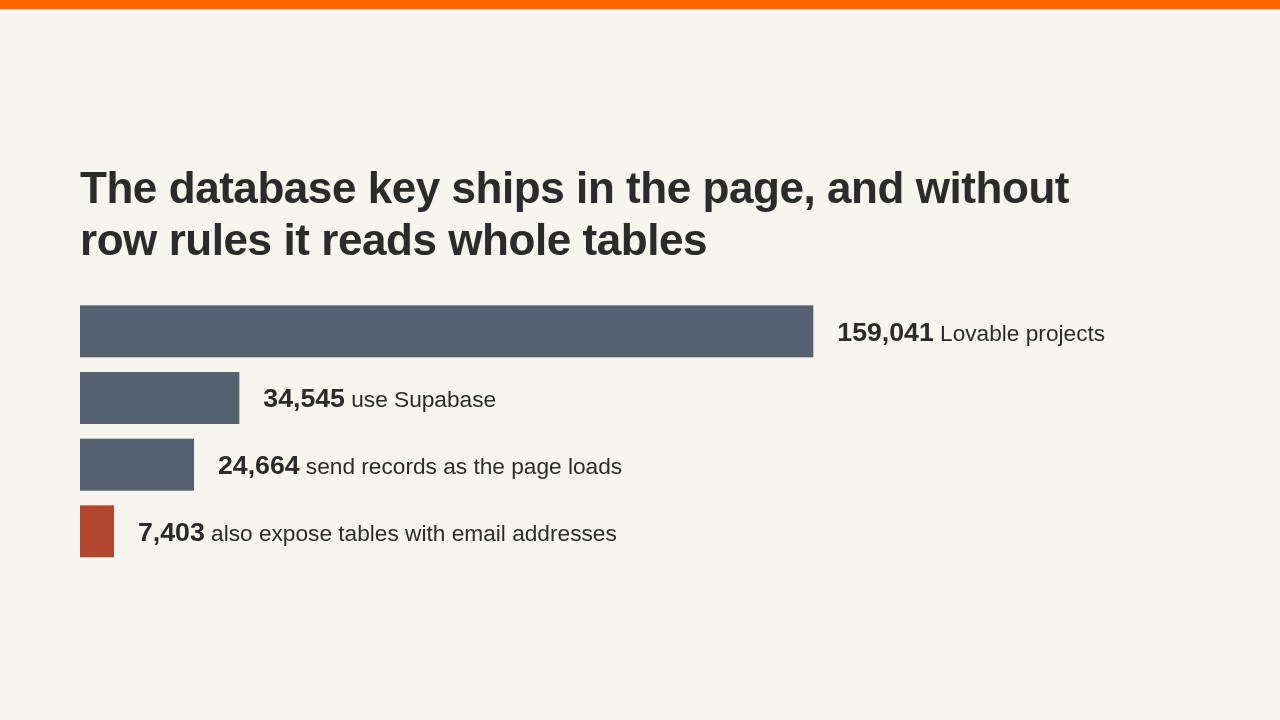
A Lovable app talks to Supabase straight from the browser, so the database key sits in the page for anyone to copy. That key is meant to be harmless, because row-level security rules decide which rows each visitor may read. Leave the rules out and the same key pulls whole tables. Out of about 160,000 Lovable projects in Common Crawl, the public web archive, roughly 7,400 sites had tables with email addresses that anyone could read. Some of those addresses are public contacts or test data, and records without an email address weren't counted.
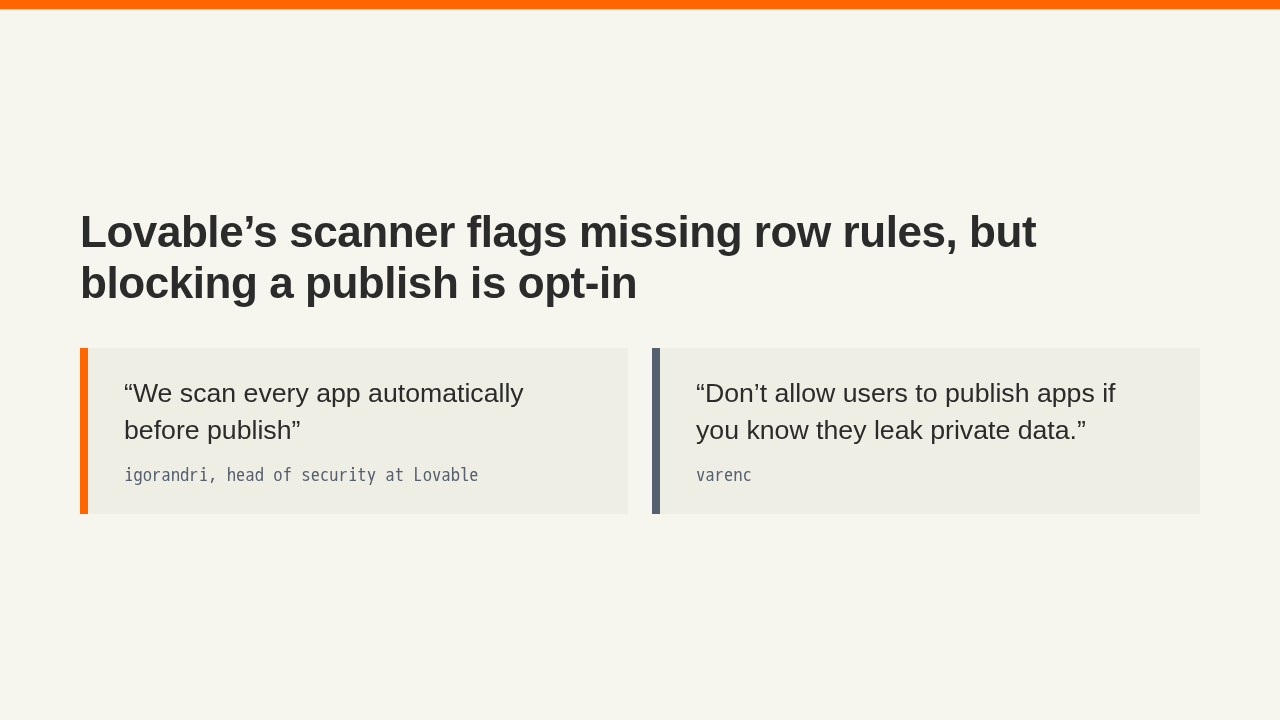
In the thread, Lovable's head of security, posting as igorandri, put the cause down to missing row-level security. Every app is scanned before it is published, a Fix button repairs what the scan finds, and owners can switch on blocking for critical findings. Blocking is something the owner opts into. A commenter posting as varenc says thousands of owners ignoring the warnings is Lovable's failure, and that an app known to leak data should never go live. Lovable's own terms put security on the customer. If you run one of these apps, turn on row-level security for every table, then try to read it with the public key.
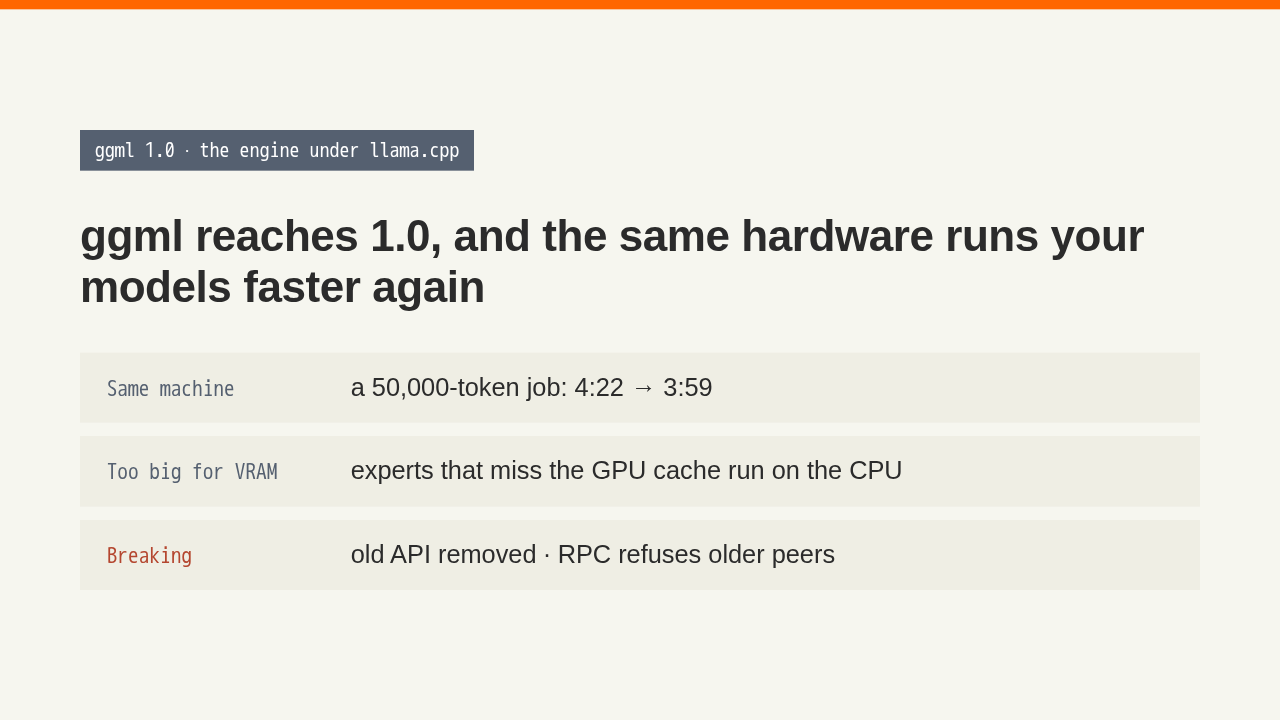
ggml, the tensor library underneath llama.cpp, reached version one. The release is mostly speed, across CUDA, Metal, Vulkan and the rest. A commenter posting as jacquesm timed the same 50,000-token prompt before and after upgrading, and it dropped from four minutes twenty-two seconds to just under four minutes on unchanged hardware. When a mixture-of-experts model doesn't fit on your GPU, the experts that miss the GPU cache can now run on the CPU instead. The deprecated API is gone, and if you split a model across machines over RPC, upgrade every machine together, because older peers get refused.
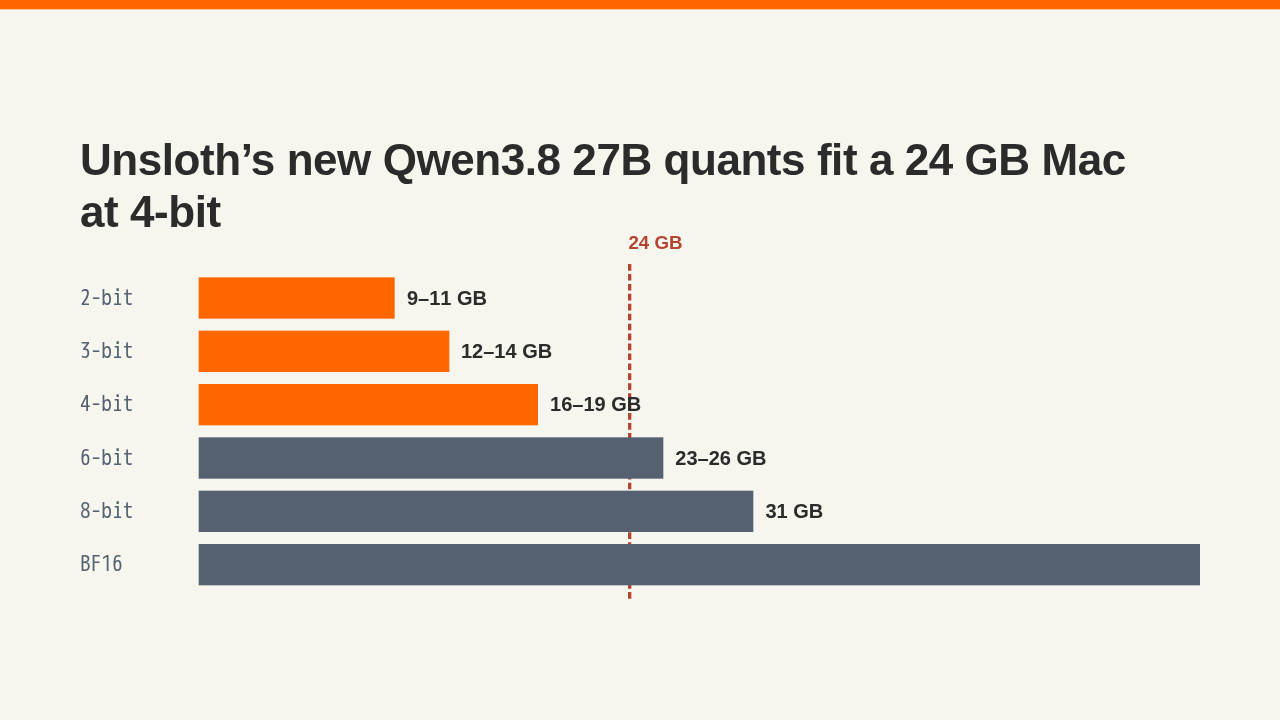
Qwen3.8 27B is a dense coding and vision model with a 256,000-token context, and Unsloth has rebuilt its compressed versions with a new method. At the same file size, the new files get more answers right on coding and agent tasks. The 4-bit version needs 16 to 19 gigabytes, so it runs on an RTX 4090, an RTX 5080 or a Mac with 24 gigabytes of memory. Most sizes from 2-bit to 6-bit were replaced. The 3-bit files stayed as they were, because the new method barely helped them.
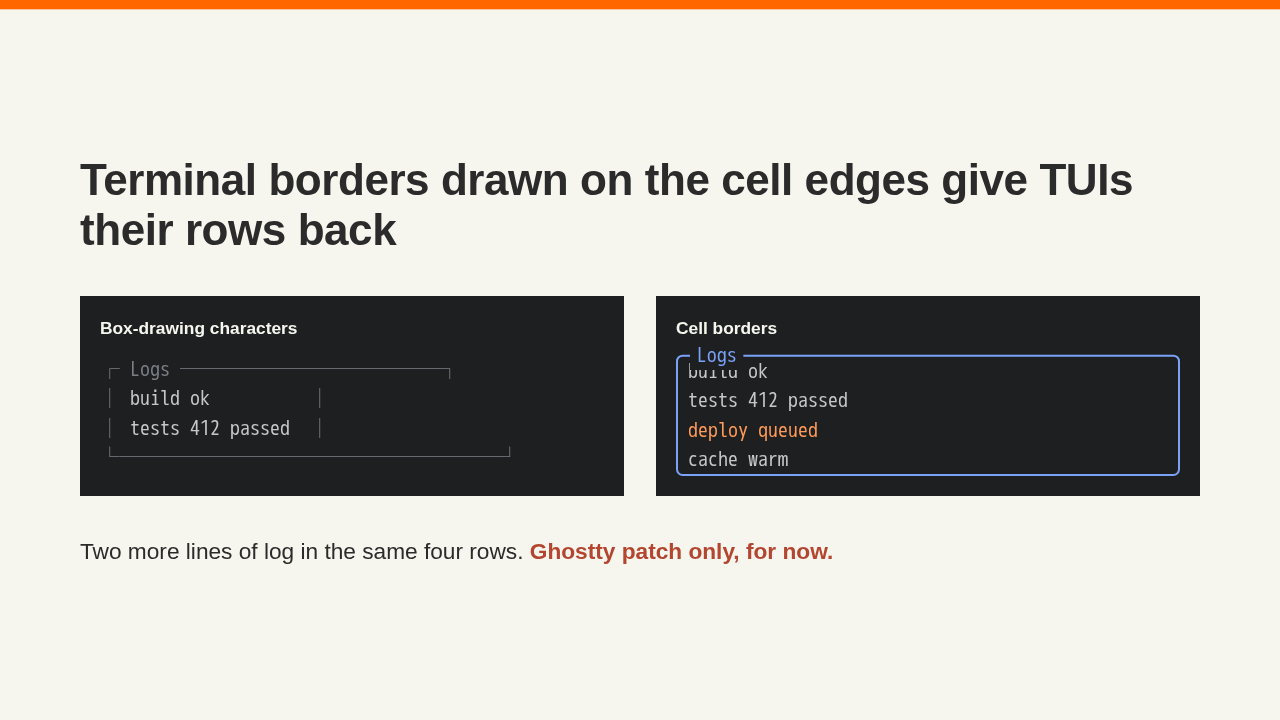
Ratatui's maintainer, who posts as joshka, wants terminal borders to stop eating rows. A box-drawing line is a character, so a couple of nested panels can spend six or eight rows of a fifty-row terminal on lines. The proposal makes a border a cell attribute, like a background color, drawn as a thin line on the cell's edge. Panes keep every row, a text field gets an underline right under its text, and copied text comes out without the box. For now it runs only in a patched build of Ghostty, and the author wants feedback from terminal and TUI authors before it goes further.
Up next
 3:43
Edge0-145B runs on one 16 GB NVIDIA card, and Brave sells search to AI agents
@hacker-news
2 days ago
 4:20
Apache’s HTTP/2 bug lets anyone run code, and Gemini 4 Hydrogen replaces Flash
@hacker-news
3 days ago
 4:01
AWS Emulator puts AWS on your laptop, and Apple's Harbor pools Macs for AI
@hacker-news
3 days ago
 3:40
Claude Fable 5.2 gets cheaper, and Amazon swaps Sonnet for Strands Decider
@hacker-news
5 days ago
 3:37
Claude Fable 5.2 runs faster for less, a number plate unlocks cars, and a $385 Raspberry Pi
@hacker-news
6 days ago
 4:15
Pi replaces Claude Code, Goldman cuts its traders off, and DeepSeek fits in 64 GB
@hacker-news
6 days ago
 4:12
Libghostty 1.0 is stable, your Mac maps your family, and Discord drops Electron
@hacker-news
1 week ago
 3:49
BUI puts Blender’s UI in your app, Firenook speeds up Firebase emulators, and ASN blocks GrapheneOS
@hacker-news
1 week ago
 4:24
Alpine’s OpenSSH lets a 300-character password in, GPT-6 Astra slacks on safety research, and Discord drops Electron
@hacker-news
1 week ago
 3:59
Nvidia RTX Spark runs local AI five times slower on Linux, and a fake interview cost Binance $6.3B
@hacker-news
1 week ago
 3:15
GPT-6 Astra reads raw weights only on tiny networks, and Postman installs itself into Codex
@hacker-news
1 week ago
 3:13
Postgres 19 slips because AI finds its bugs, Astra fixes Qwen by editing its weights, and Ubuntu waits on a 9.8
@hacker-news
1 week ago