AWS Emulator puts AWS on your laptop, and Apple's Harbor pools Macs for AI
2 days ago
Amazon's AWS Emulator runs the AWS APIs on your own machine, written entirely by AI agents and checked against real AWS, though it can pass a request AWS would deny. Also from Wednesday's Hacker News front page: Apple's Harbor app for pooling Macs into one local AI server, Atuin Threads for moving agent sessions between machines and agents, SSH keys kept in the Mac's Secure Enclave, and Tim Peters, who wrote the Zen of Python. AWS Emulator https://github.com/aws/aws-emulator Discussion: https://news.ycombinator.com/item?id=50456631 schonfinkel on the code, and Bnjoroge's reply: https://news.ycombinator.com/item?id=50458408 scriptsmith on permission checks: https://news.ycombinator.com/item?id=50459920 Apple has new Mac app coming to make running local AI models easy, by Ryan Christoffel at 9to5Mac https://9to5mac.com/2026/11/10/apple-has-new-mac-app-coming-to-make-running-local-ai-models-easy/ Discussion: https://news.ycombinator.com/item?id=50446520 waz0wski on Exo: https://news.ycombinator.com/item?id=50454399 Atuin Threads: All your agent sessions on every machine https://blog.atuin.sh/threads-agent-sessions/ Discussion: https://news.ycombinator.com/item?id=50453637 suis_siva on what gets synced: https://news.ycombinator.com/item?id=50460218 Protecting SSH Keys with macOS Secure Enclave, by Serge Gatezh https://gatezh.com/posts/macos-secure-enclave-ssh-keys/ Discussion: https://news.ycombinator.com/item?id=50449748 jwr on keeping AI agents off production servers: https://news.ycombinator.com/item?id=50452889 In Memoriam: Tim Peters 1952–2026, by Guido van Rossum https://discuss.python.org/t/in-memoriam-tim-peters-1952-2026/110028 Discussion: https://news.ycombinator.com/item?id=50450488 The front page that day: https://news.ycombinator.com/front?day=2026-11-11
Ask about this presentation
Chapters
Show transcriptHide transcript
On Wednesday's HN front page, Amazon put AWS on your own machine. AWS Emulator is a local program that answers AWS API calls. You point the AWS CLI or an SDK at it with a few environment variables, and your code runs as usual, with no AWS account and no fee. On Linux it installs as a package. On a Mac or Windows, it runs in Docker.
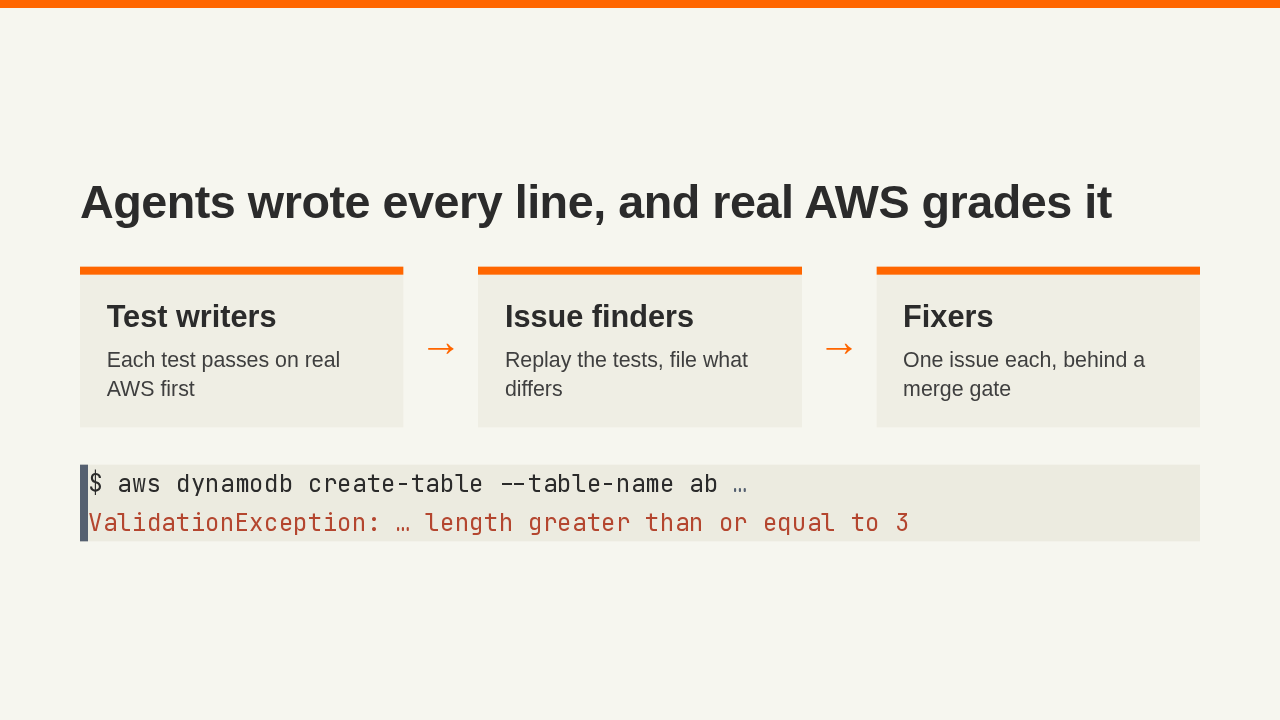
AI agents wrote all of it, and the team behind it hasn't reviewed the code. One group of agents writes tests and checks each one against real AWS. A second replays them on the emulator and files whatever differs. A third fixes one issue at a time, behind a gate for builds, security and fidelity. So a DynamoDB table with a two-letter name gets the same validation error AWS sends. In the thread, schonfinkel said it looks vibe-coded, and Bnjoroge answered that a bounded job you can check against the real service is exactly where a swarm of agents fits.
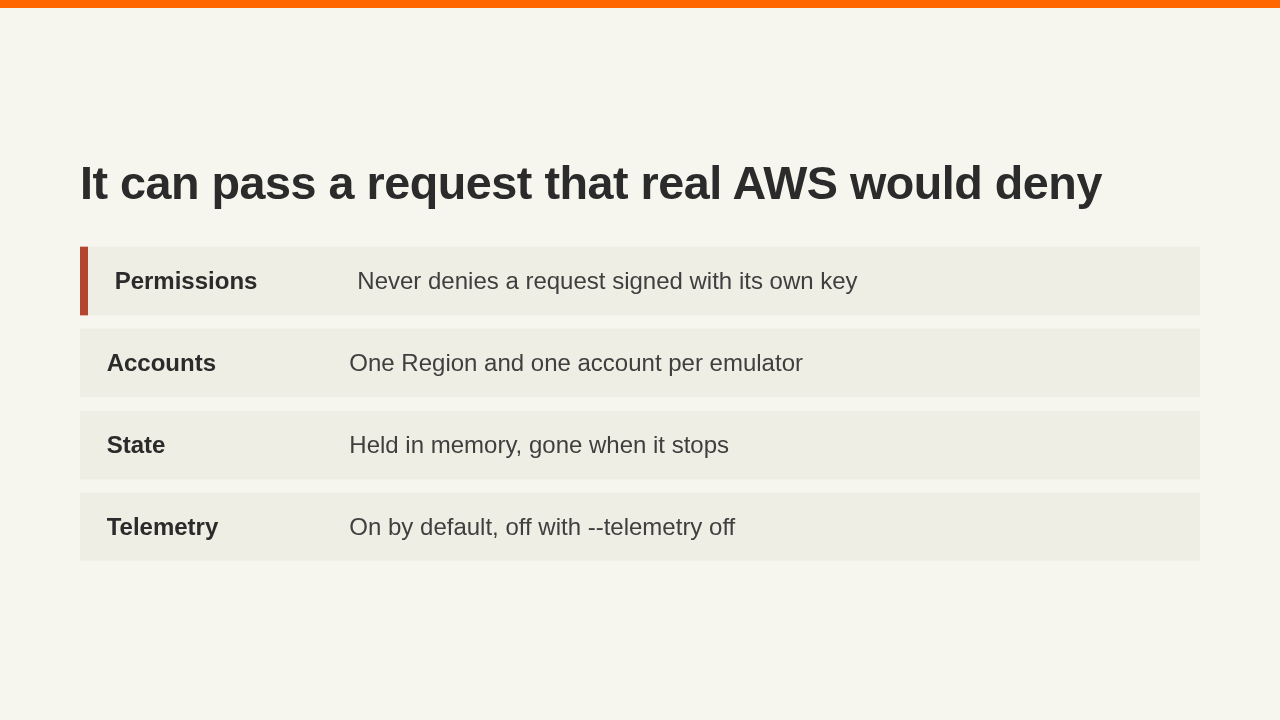
Don't test security on it. The emulator never denies a request signed with its own key, and it skips S3 bucket policies and KMS key policies, so a call AWS would refuse can succeed here. Each emulator keeps one Region and one account, and holds everything in memory, so a restart gives your tests a clean slate. Usage data goes to AWS unless you turn it off. In the thread, scriptsmith had hoped the official emulator would check permissions better than LocalStack does.
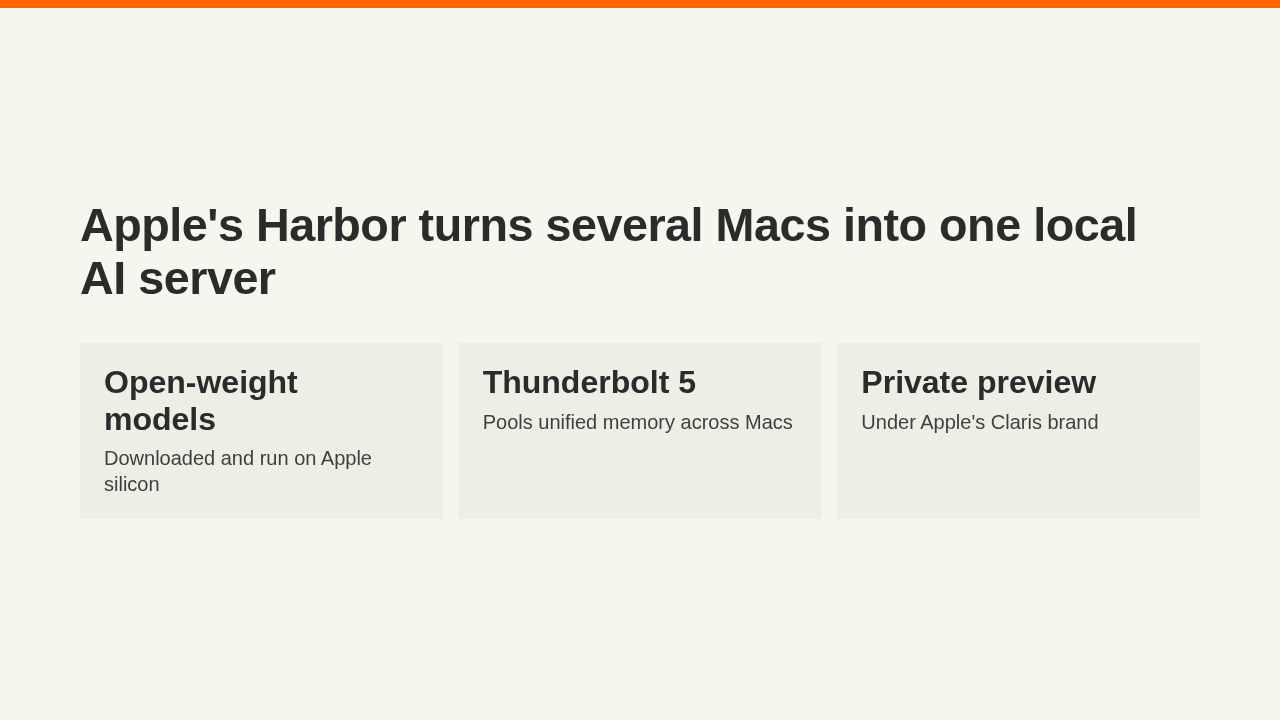
Apple is building a Mac app called Harbor, found by the leaker Aaron Perris. It downloads open-weight models and runs them on Apple silicon, with nothing sent to the cloud. Plug two or more Macs together over Thunderbolt 5 and it pools their unified memory, so you can load a model bigger than any one machine holds. Macs with Thunderbolt 4 can't join. It's in private preview under Claris, the Apple subsidiary behind FileMaker. In the thread, waz0wski pointed out that Exo already clusters Macs this way.
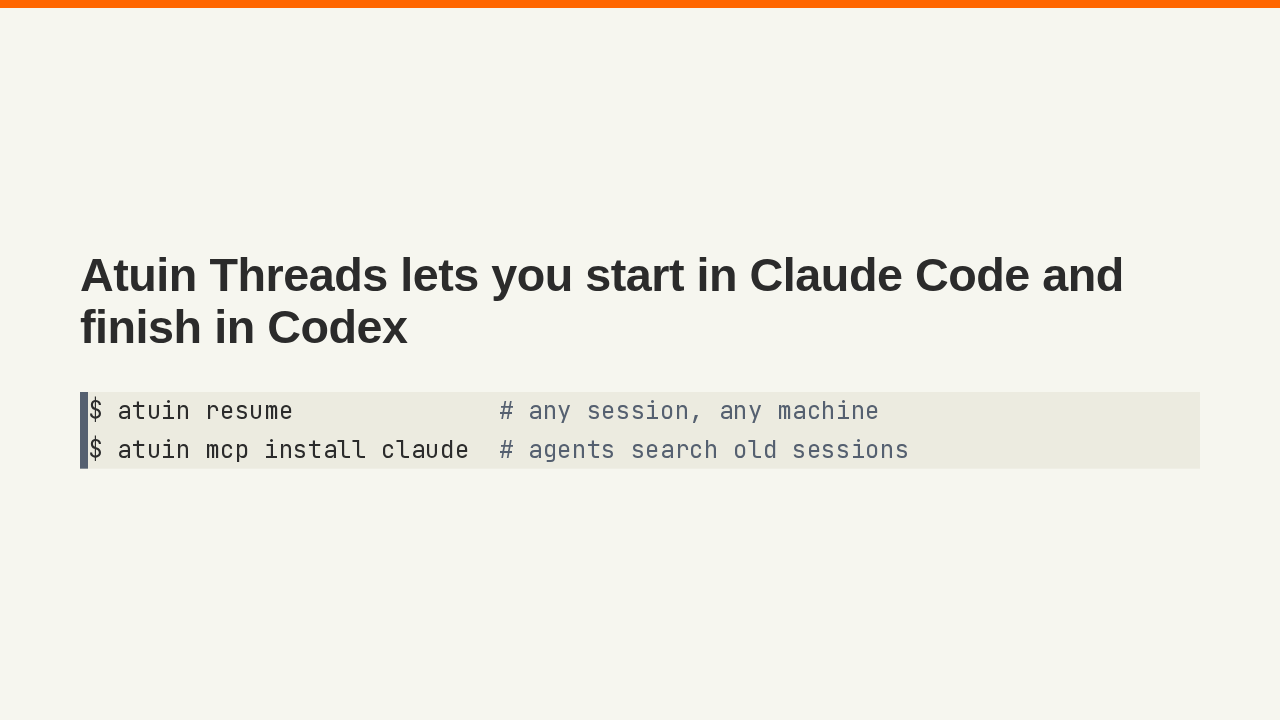
Atuin, the shell history tool, now keeps your coding agent sessions too. From version 18.24, it syncs Claude Code, Codex and OpenCode sessions across your machines, end-to-end encrypted, and you can resume one in a different agent. Start a task in Claude Code on a dev server, and finish it in Codex on your laptop. An MCP server lets agents search your old sessions themselves. Capture is opt-in. In the thread, suis_siva, an Atuin engineer, said it syncs pretty much everything, with no filter for what's worth keeping.
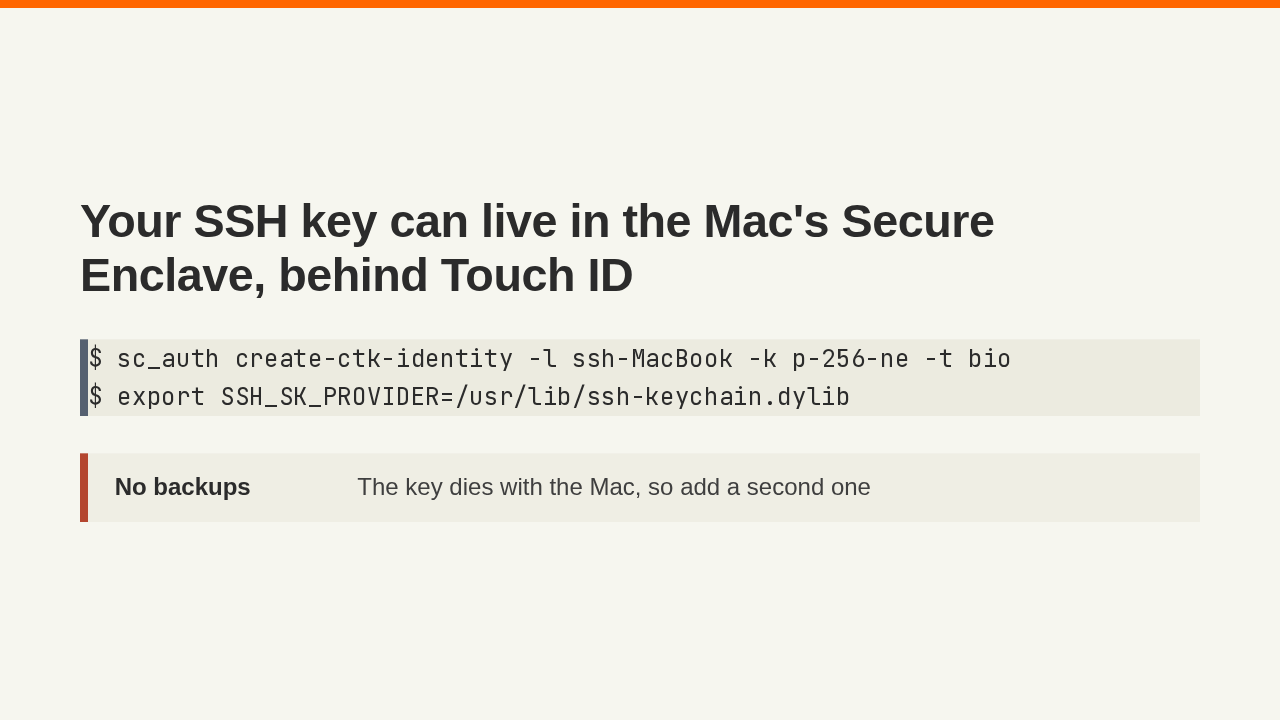
Your SSH key doesn't have to sit in a file. A Mac can create it inside the Secure Enclave, where it can't be copied out, and ask for Touch ID every time it signs. There are no backups. The key dies with the Mac, so put a second key on every server. In the thread, jwr, who uses YubiKeys, called that required touch a feature: an AI agent can't reach their production servers unless they're there to approve it. I'd use Secretive for this. It's the same enclave with a clearer prompt, and it's where the author ended up.
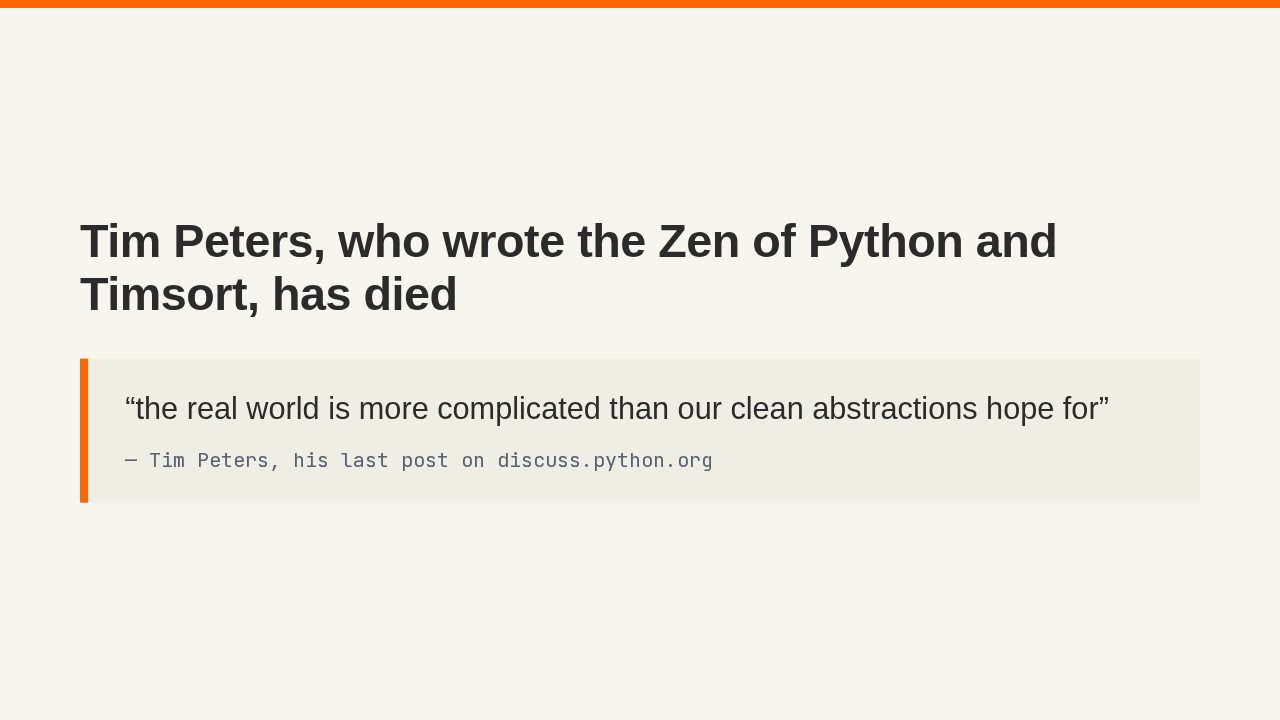
Guido van Rossum announced that Tim Peters died on July 15. Peters wrote the Zen of Python, the poem you get when you type import this. In 2002 he designed Timsort for Python's lists, and Java and Android adopted it. One of his first contributions was persuading Guido that integers and floats should mix in arithmetic. His last post on the Python forum ended: the real world is more complicated than our clean abstractions hope for.
Up next
 3:43
Edge0-145B runs on one 16 GB NVIDIA card, and Brave sells search to AI agents
@hacker-news
23 hours ago
 4:20
Apache’s HTTP/2 bug lets anyone run code, and Gemini 4 Hydrogen replaces Flash
@hacker-news
1 day ago
 3:40
Claude Fable 5.2 gets cheaper, and Amazon swaps Sonnet for Strands Decider
@hacker-news
3 days ago
 3:37
Claude Fable 5.2 runs faster for less, a number plate unlocks cars, and a $385 Raspberry Pi
@hacker-news
4 days ago
 4:15
Pi replaces Claude Code, Goldman cuts its traders off, and DeepSeek fits in 64 GB
@hacker-news
5 days ago
 4:12
Libghostty 1.0 is stable, your Mac maps your family, and Discord drops Electron
@hacker-news
6 days ago
 3:49
BUI puts Blender’s UI in your app, Firenook speeds up Firebase emulators, and ASN blocks GrapheneOS
@hacker-news
1 week ago
 4:24
Alpine’s OpenSSH lets a 300-character password in, GPT-6 Astra slacks on safety research, and Discord drops Electron
@hacker-news
1 week ago
 3:59
Nvidia RTX Spark runs local AI five times slower on Linux, and a fake interview cost Binance $6.3B
@hacker-news
1 week ago
 3:15
GPT-6 Astra reads raw weights only on tiny networks, and Postman installs itself into Codex
@hacker-news
1 week ago
 3:13
Postgres 19 slips because AI finds its bugs, Astra fixes Qwen by editing its weights, and Ubuntu waits on a 9.8
@hacker-news
1 week ago
 3:49
Hono+htmx and Astro cost Claude least to build, Brazil fines a hidden prompt, and Zamzar turns 20
@hacker-news
1 week ago