Claude Fable 5.2 runs faster for less, a number plate unlocks cars, and a $385 Raspberry Pi
4 days ago
Claude Fable 5.2 runs up to 30% faster than Fable 5.1 at a lower price, and for everyday coding Opus 5.5 is still the place to start. Also from Monday's Hacker News front page: official ZIP Code polygons from USPS at $10,000 a year, a number plate that was enough to unlock one automaker's cars, and the $385 Raspberry Pi 5 16GB. Claude Fable 5.2 and Mythos 5.2, by Anthropic https://www.anthropic.com/claude-fable-and-mythos-5-2 Discussion: https://news.ycombinator.com/item?id=50429906 postalcoder on Fable 5.2 against Opus 5.5 for ordinary coding: https://news.ycombinator.com/item?id=50430766 USPS ZIP Code Boundaries https://postalpro.usps.com/zcb Discussion: https://news.ycombinator.com/item?id=50431058 showerst on the free Census ZCTA shapefiles: https://news.ycombinator.com/item?id=50431583 mzagaja on why a ZIP Code is not a geographic boundary: https://news.ycombinator.com/item?id=50431546 Unlocking any car from X brand in most of the world, by Shubham Shah https://shubs.io/unlocking-any-car-from-x-brand-in-most-of-the-world/ Sam Curry's companion write-up: https://samcurry.net/forgerock Discussion: https://news.ycombinator.com/item?id=50419215 maistho on signing every car command with a paired key: https://news.ycombinator.com/item?id=50424099 When will this stop? The Raspberry Pi 5 16GB SBC now sells for $385, by CNX Software https://www.cnx-software.com/2026/11/03/when-will-this-stop-the-raspberry-pi-5-16gb-sbc-now-sells-for-385/ Discussion: https://news.ycombinator.com/item?id=50428801 Aurornis on the 4GB and 8GB boards: https://news.ycombinator.com/item?id=50429554 The front page that day: https://news.ycombinator.com/front?day=2026-11-09
Ask about this presentation
Chapters
Show transcriptHide transcript
On Monday's Hacker News front page, Anthropic shipped Claude Fable 5.2. It writes up to 30 percent faster than Fable 5.1, it costs less, and it was in Claude Code on launch day. Claude Mythos 5.2 is the same model. Fable's safeguards block most security work, so Mythos is the version for security and life-science teams that apply and get approved.
Slide text

Claude Fable 5.2 runs up to 30% faster than 5.1, for less
Mythos 5.2 is the same model with lighter safeguards, for approved security and life-science teams
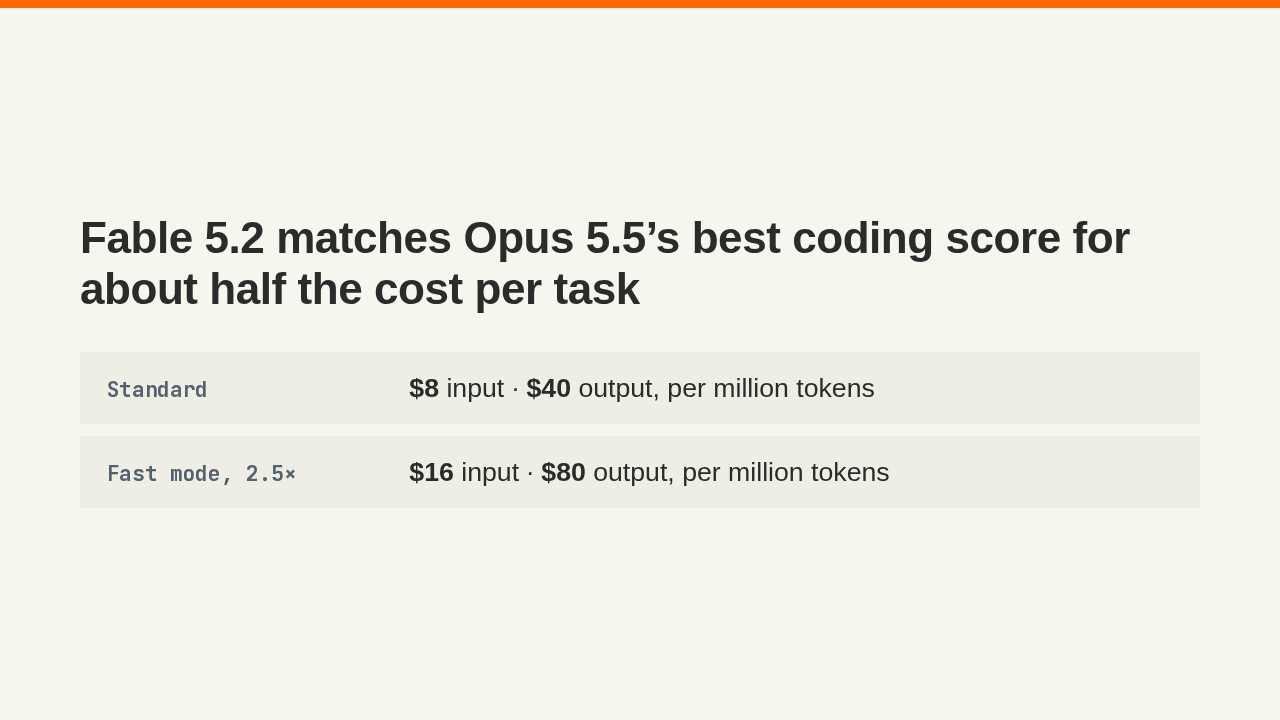
At high effort, Fable 5.2 writes code changes that open-source maintainers would merge about as often as Opus 5.5 does at its best, for roughly half the cost per task. Tokens run 8 dollars per million in and 40 out, and fast mode doubles that for up to two and a half times the speed.
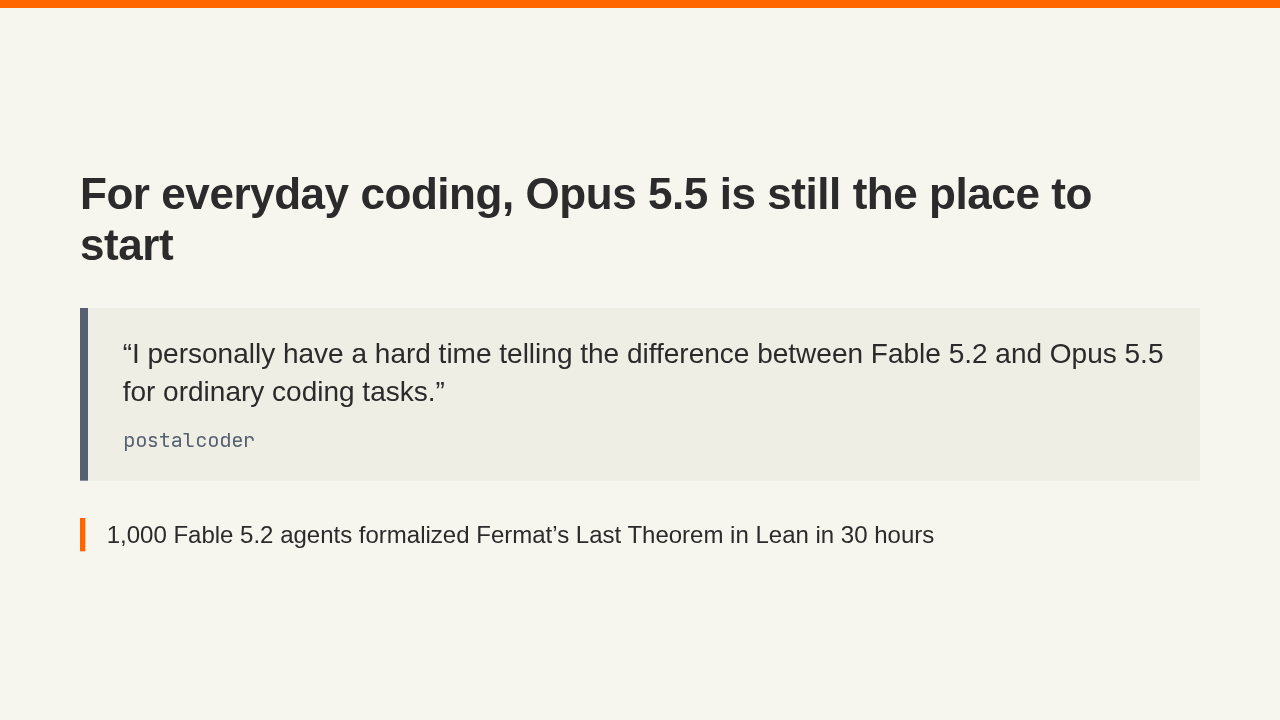
Most coding work still belongs on Opus 5.5, with a move up to Fable when the job needs it. In the thread, postalcoder, who has been using Fable 5.2, finds the gap only shows when the prompt asks for something much more ambitious. A thousand Fable 5.2 agents formalized the proof of Fermat's Last Theorem in 30 hours, where Opus 5.5 got about a quarter of the way in 18 hours. I would keep Opus 5.5 as the daily driver and give Fable 5.2 the jobs that run for hours.
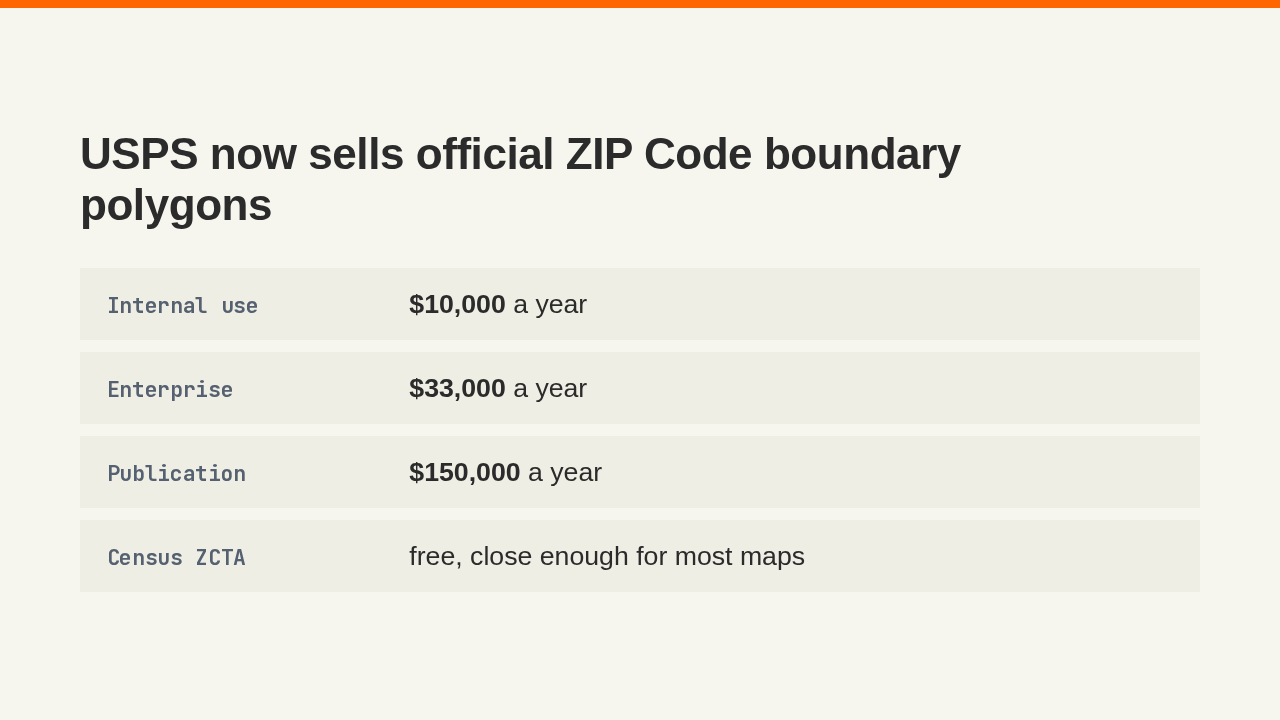
The Postal Service now offers official ZIP Code boundaries as map polygons, drawn from its own delivery addresses and updated four times a year. A licence for internal use costs 10,000 dollars a year, and it forbids passing the data on. showerst points to the Census Bureau's ZIP code areas, which are free and close enough for most maps. And mzagaja reminds everyone that a ZIP Code is a set of delivery routes, so a point inside the polygon can still carry a different code.
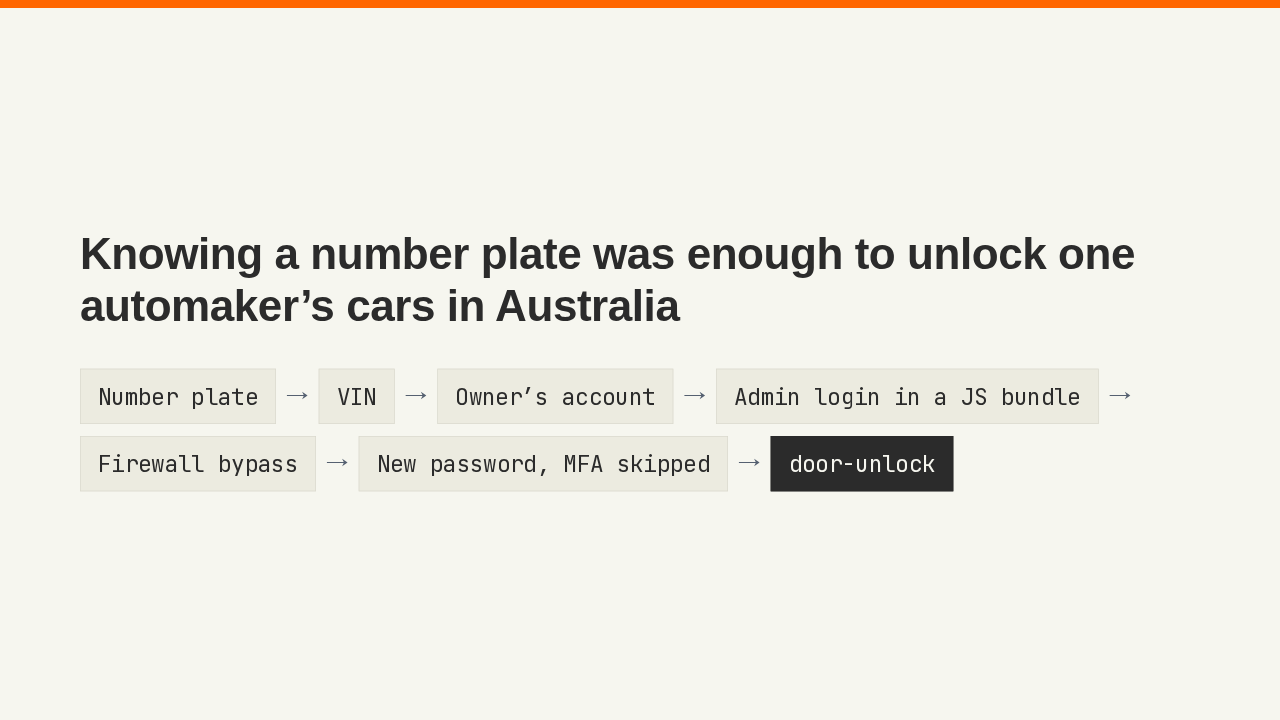
Security researchers Shubham Shah and Sam Curry could unlock any of one automaker's connected cars in Australia from its number plate alone. The plate gives up the vehicle number, an admin tool left on the internet maps that to the owner's account, and a vendor JavaScript bundle carried admin credentials for the identity server. From there they reset the owner's password, skipped the second login step, and sent the app's own unlock command. They tested only on cars they owned or had permission to use.
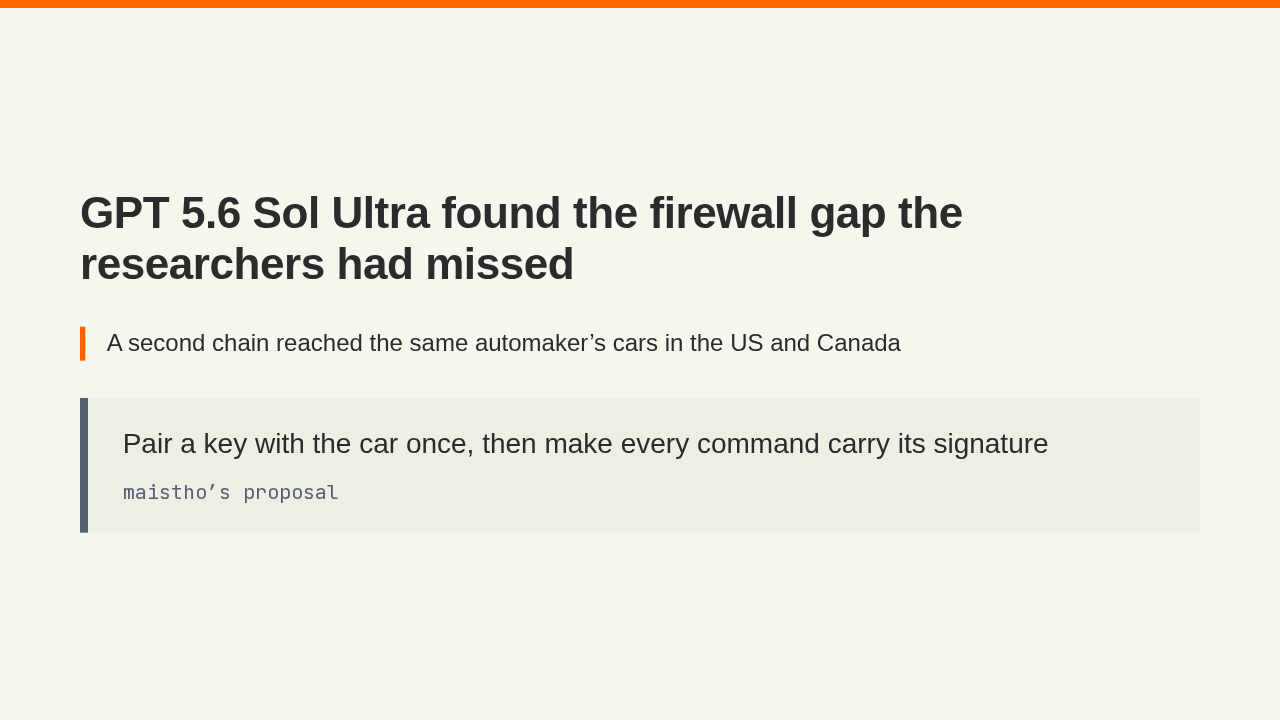
The firewall blocked the first path prefix they tried, and they assumed it blocked them all. GPT 5.6 Sol Ultra spent six hours on the identity server's source and found a prefix the firewall had left open. A harder chain reached the automaker's cars in the United States and Canada, and the companies fixed it about two hours after the report. In the thread, maistho asks why the car obeys the server at all: pair a key with the car once, and have it accept only commands signed with that key.
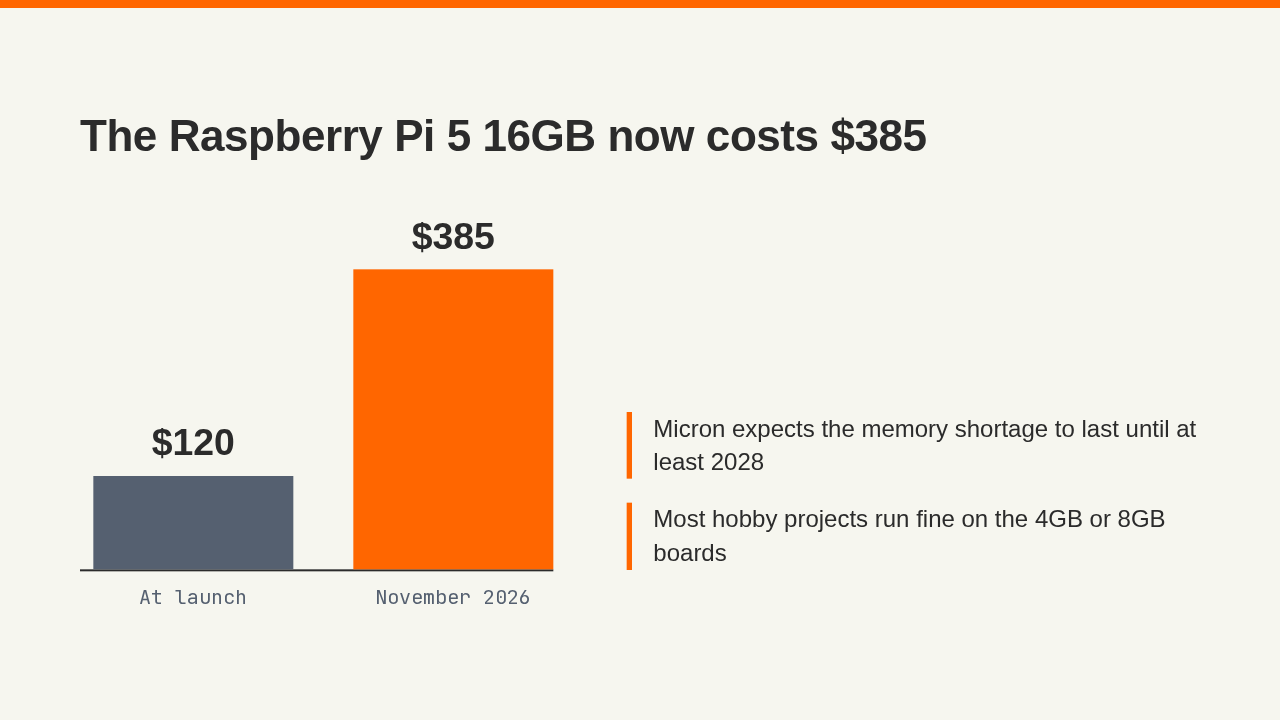
The Raspberry Pi 5 with 16 gigabytes of memory now costs 385 dollars. That is 80 dollars more than after the April increase, and more than three times its launch price less than two years ago. Memory prices are behind it, and Micron expects the shortage to last until at least 2028. In the thread, Aurornis says most hobby projects run fine on the 4 or 8 gigabyte boards. For a small home server, I would buy a secondhand mini PC for that money, and keep the Pi for projects that need its GPIO pins.
Up next
 3:43
Edge0-145B runs on one 16 GB NVIDIA card, and Brave sells search to AI agents
@hacker-news
23 hours ago
 4:20
Apache’s HTTP/2 bug lets anyone run code, and Gemini 4 Hydrogen replaces Flash
@hacker-news
1 day ago
 4:01
AWS Emulator puts AWS on your laptop, and Apple's Harbor pools Macs for AI
@hacker-news
2 days ago
 3:40
Claude Fable 5.2 gets cheaper, and Amazon swaps Sonnet for Strands Decider
@hacker-news
3 days ago
 4:15
Pi replaces Claude Code, Goldman cuts its traders off, and DeepSeek fits in 64 GB
@hacker-news
5 days ago
 4:12
Libghostty 1.0 is stable, your Mac maps your family, and Discord drops Electron
@hacker-news
6 days ago
 3:49
BUI puts Blender’s UI in your app, Firenook speeds up Firebase emulators, and ASN blocks GrapheneOS
@hacker-news
1 week ago
 4:24
Alpine’s OpenSSH lets a 300-character password in, GPT-6 Astra slacks on safety research, and Discord drops Electron
@hacker-news
1 week ago
 3:59
Nvidia RTX Spark runs local AI five times slower on Linux, and a fake interview cost Binance $6.3B
@hacker-news
1 week ago
 3:15
GPT-6 Astra reads raw weights only on tiny networks, and Postman installs itself into Codex
@hacker-news
1 week ago
 3:13
Postgres 19 slips because AI finds its bugs, Astra fixes Qwen by editing its weights, and Ubuntu waits on a 9.8
@hacker-news
1 week ago
 3:49
Hono+htmx and Astro cost Claude least to build, Brazil fines a hidden prompt, and Zamzar turns 20
@hacker-news
1 week ago