Goose outruns safe Rust with no heap, and a 2015 CNN beats GPT-6 Astra at skin cancer
1 hour ago
Goose is a memory-safe systems language with no heap, no garbage collector and no lifetime annotations, and it benchmarks a little ahead of safe Rust. Also from Sunday's Hacker News front page: SpeedCrunch 1.1, how Cerebras fits a 3-trillion-parameter model on 59 wafers, and a 2015 image network that beats GPT-6 Astra and Claude Fable 5.1 at diagnosing skin cancer. The Goose Programming Language https://aardappel.github.io/goose/ Discussion: https://news.ycombinator.com/item?id=50224100 jcmoyer on the tutorial's C++ comparison and small string optimization: https://news.ycombinator.com/item?id=50230524 jeff_ciesielski on porting Rust code to Goose and back: https://news.ycombinator.com/item?id=50231301 SpeedCrunch 1.1 https://www.speedcrunch.org/ What's new in 1.1: https://www.speedcrunch.org/download.html Discussion: https://news.ycombinator.com/item?id=50224210 Gormo on the new input box: https://news.ycombinator.com/item?id=50227880 How we deploy trillion-parameter frontier models on Cerebras, by Sarah Chieng https://www.cerebras.ai/blog/how-we-deploy-trillion-parameter-frontier-models-on-cerebras Discussion: https://news.ycombinator.com/item?id=50227356 nexus2045 on the models Cerebras serves: https://news.ycombinator.com/item?id=50232905 A 10-year-old CNN outperforms frontier LLMs for skin cancer diagnosis, by Dr Magnus Lynch https://lynchlab.net/llm-skin-cancer Discussion: https://news.ycombinator.com/item?id=50233779 vikramkr on overfitting: https://news.ycombinator.com/item?id=50237333 The front page that day: https://news.ycombinator.com/front?day=2026-10-25
Ask about this presentation
Chapters
Show transcriptHide transcript
On Sunday's Hacker News front page, Goose is a new systems language from Aardappel, who also made the Lobster language. Goose is memory safe, and it has no heap allocator, no garbage collector and no lifetime annotations. Every dynamic value lives inline on a handful of stacks, and the compiler works out how many stacks a program needs.
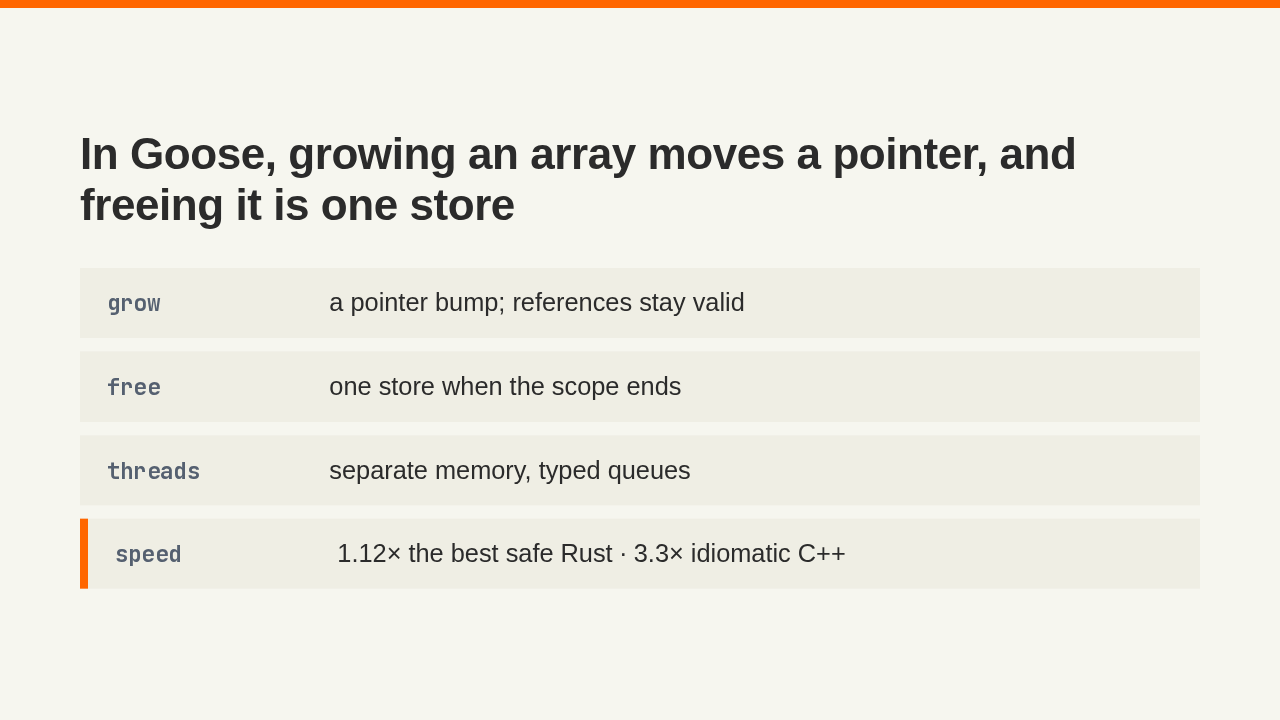
Growth only moves a pointer, so a reference into an array stays valid however large the array gets. A vector in C++ or Rust may reallocate, and can't promise that. When the scope ends, freeing a structure with a million elements takes a single store. Threads share no memory at all, so data races can't be written. Goose compiles to one C file and calls C directly. Across sixteen benchmarks it runs a little faster than the best safe Rust and more than three times faster than idiomatic C++, on less memory.
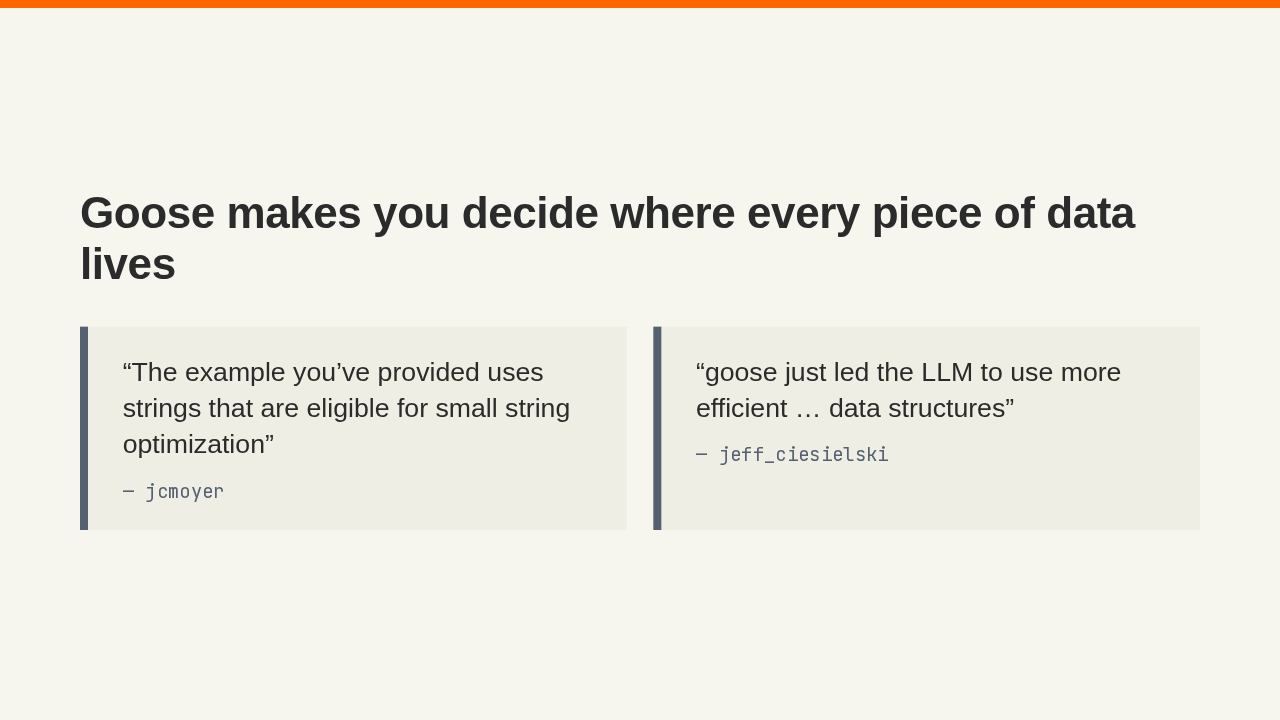
The price is planning. Data that ends with its scope costs nothing, data that churns without bound goes in a reusable pool, and recursive functions can't keep growable data across a call. In the thread, jcmoyer pointed out that the tutorial's first C++ comparison ignores the small string optimization, so those short strings would never allocate in C++. And jeff_ciesielski ported algorithms from a large commercial Rust codebase. They ran much faster in Goose, and porting the new data structures back to Rust kept nearly all of the gain.
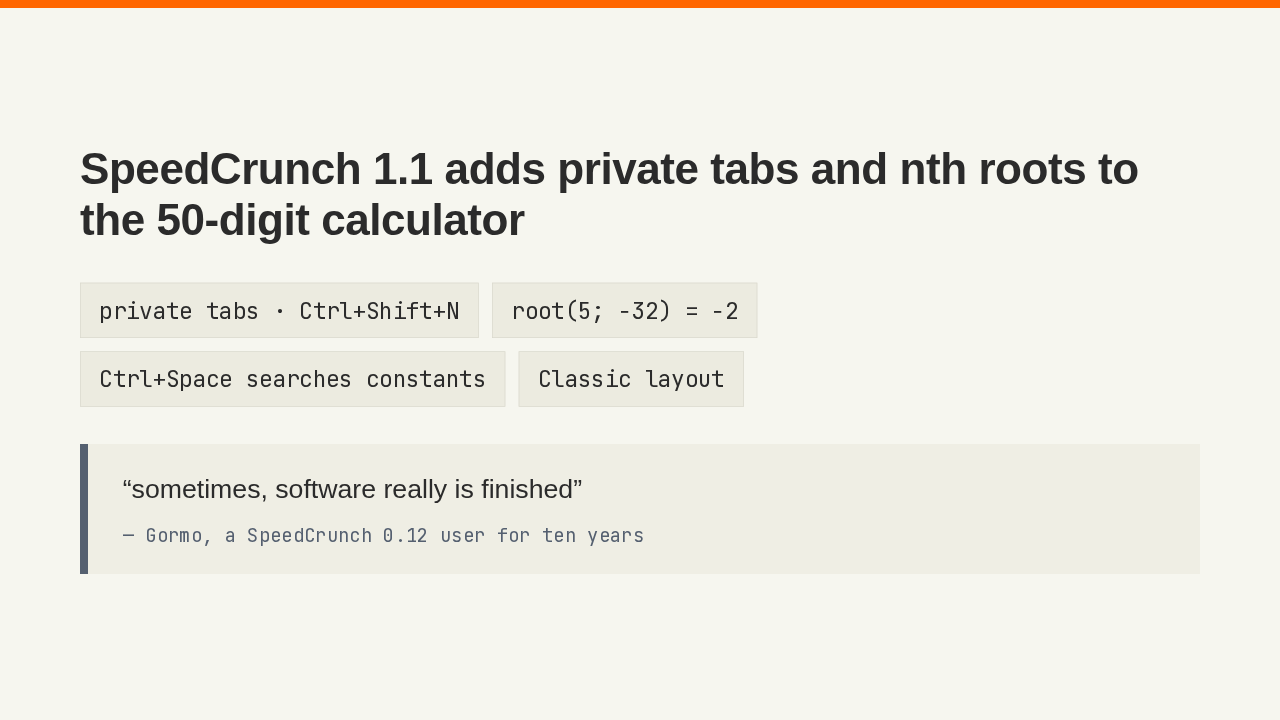
SpeedCrunch, the open source calculator for Windows, macOS and Linux, is out at version 1.1. Private tabs throw their contents away when you close them. A new root function takes nth roots, of negative numbers and of quantities with units, and Control Space searches constants by name or by unit. Gormo, who has used the old version nearly every day for ten years, found the new input box oversized and laggy. A compact Classic layout is in the settings, and Modern stays the default.
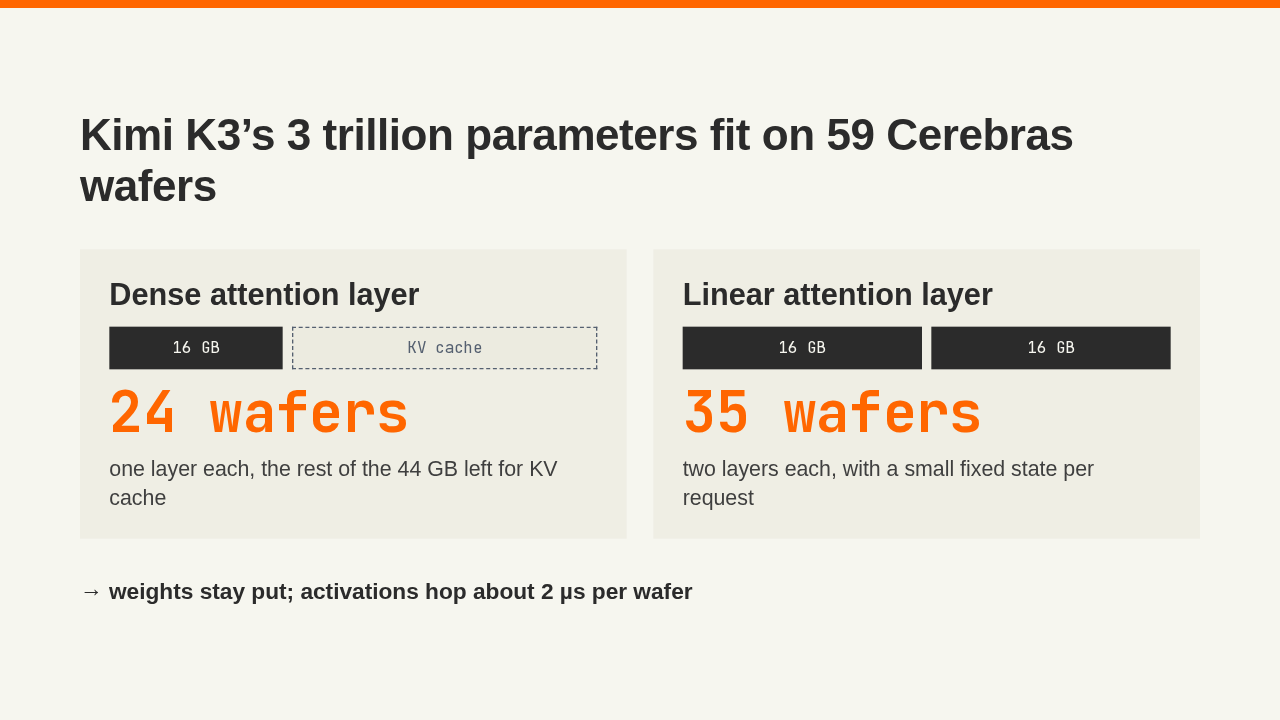
Cerebras laid out how a frontier-size open model fits in on-chip memory. Kimi K3 has about 3 trillion parameters. At 4-bit, each of its 93 layers is about 16 gigabytes, and each wafer holds 44 gigabytes. A dense attention layer gets a wafer to itself, and the spare memory holds its KV cache. Two linear attention layers share a wafer. The weights never move. Only activations hop from wafer to wafer, and the pipeline works on a different request at every stage, for one to two thousand tokens a second. In the thread, nexus2045 said the speed is amazing, but the models Cerebras serves are badly outdated.
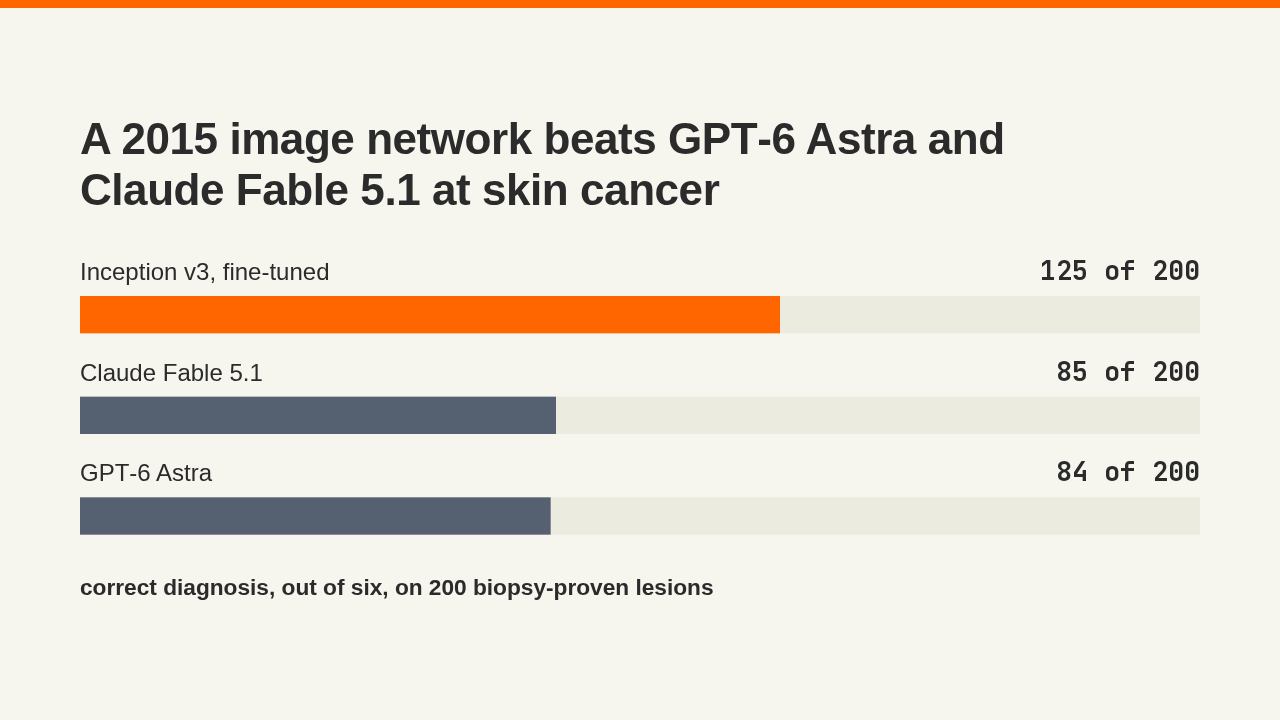
Magnus Lynch, a consultant dermatologist at Guy's Hospital in London, gave 200 biopsy-proven skin lesions to GPT-6 Astra, to Claude Fable 5.1, and to Inception v3, an image network from 2015, fine-tuned for about twenty minutes on one H100. The small network named the right diagnosis about three times in five, and both frontier models about two times in five. Both called one thin melanoma a harmless growth that could be discharged. In the thread, vikramkr suspected overfitting, because the training images come from the same archive. Before training, every photo of the 200 test lesions, and of those patients, came out of the training data. For a narrow image task like this one, I would fine-tune a small classifier before I would prompt a frontier model.
Up next
 4:10
Brotli needs patching in Node, Python and curl, Roc nears C, and uv check runs ty
@hacker-news · 1 day ago
 3:59
Claude proves 123 libraries' fuzz tests can't crash, Kimi K3.1 Pro, and Docker is weird
@hacker-news · 2 days ago
 4:04
eMudhra's CA key was 4, mitmproxy intercepts anything still trusting it, Quad9 leaves France
@hacker-news · 3 days ago
 4:04
PHP patches two RCE bugs, eMudhra’s CA key was the number 4, and LiteLLM shipped a stealer
@hacker-news · 4 days ago
 3:33
eMudhra’s one-byte CA keys, DeepSeek’s open DeepInfer engine, and WhatsApp’s hidden chatbot orders
@hacker-news · 5 days ago
 4:15
MiniMax M3.1 Flash cuts agent costs by 70%, Timestral forecasts on a CPU, and Wine reaches OpenBSD
@hacker-news · 6 days ago
 3:21
DeepSeek's $0.75 search API for agents, Lean's five-kernel proof check, and Pele
@hacker-news · 1 week ago
 3:32
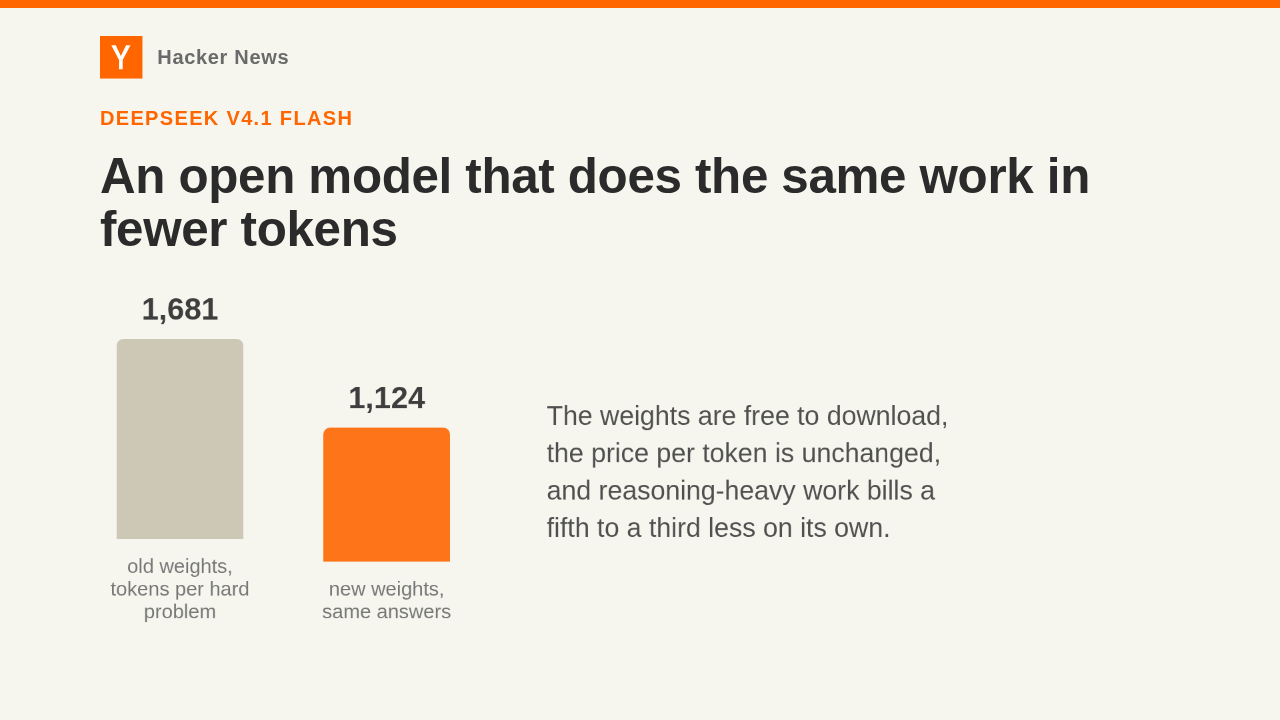
DeepSeek V4.1 Flash reasons less for the same answers, llmspeed, and a web app built in Lean 4
@hacker-news · 1 week ago
 4:11
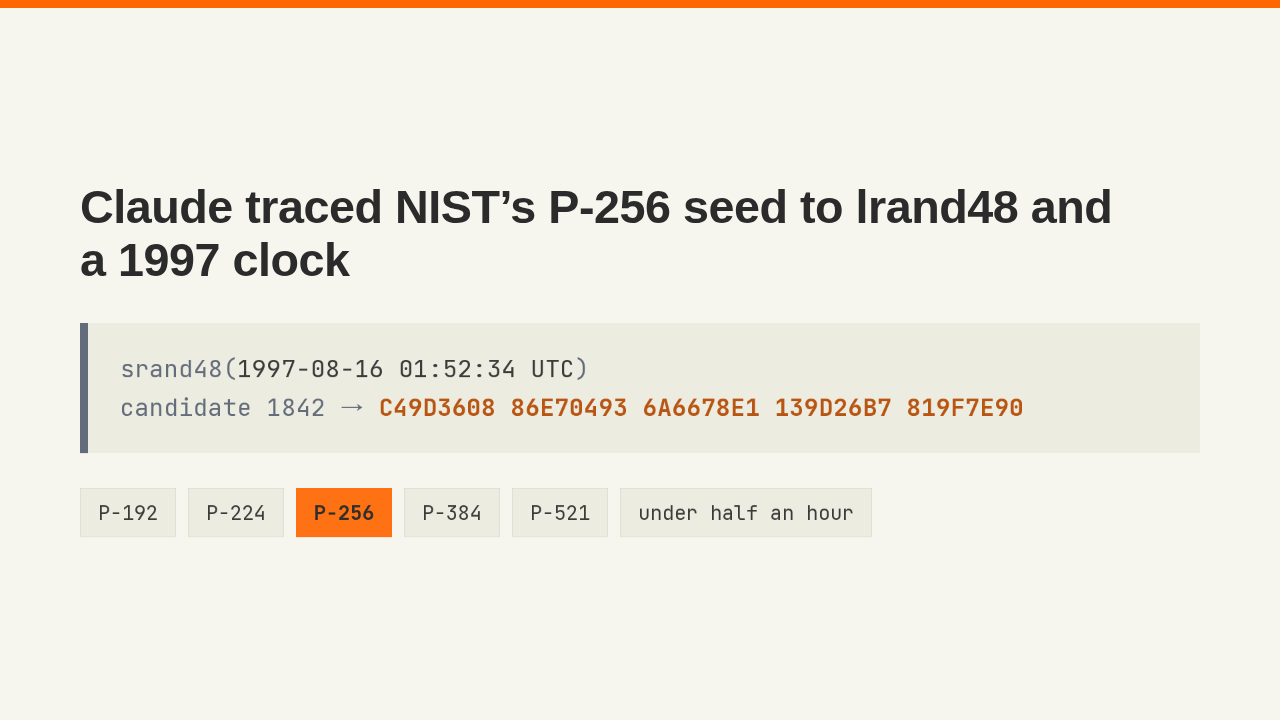
Claude traced NIST’s P-256 seed to a 1997 timestamp, Muse Spark Open runs on four Mac Studios, and UTC drops leap seconds
@hacker-news · 1 week ago
 3:37
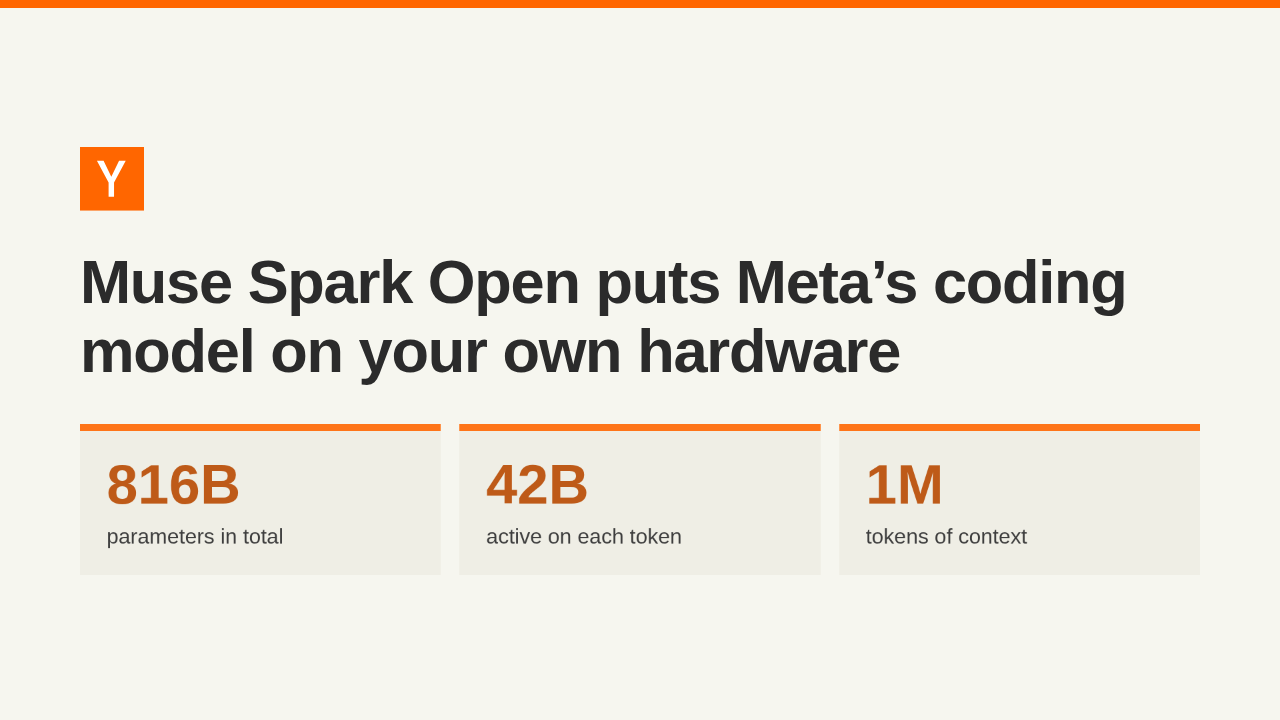
Muse Spark Open runs on two Mac Studios, ads that deliver spyware, and a Wi-Fi bug TCP can’t see
@hacker-news · 1 week ago
 3:38
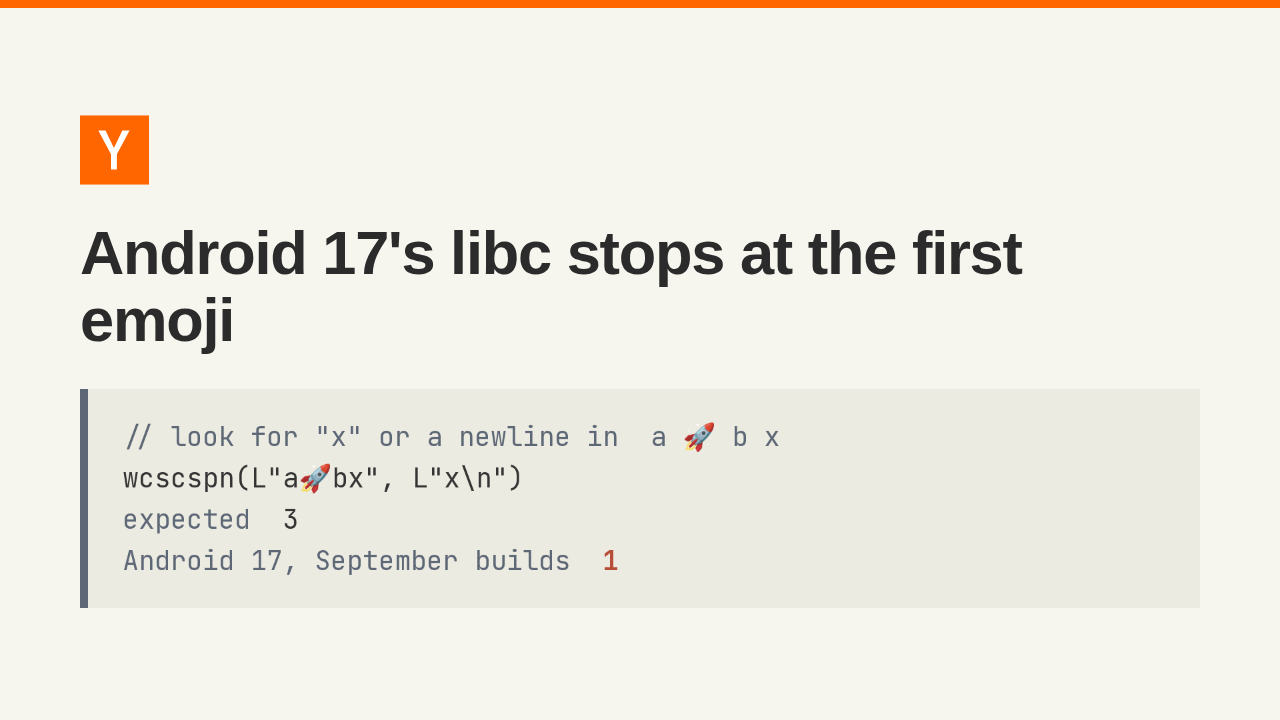
Android 17's libc stops at the first emoji, AI agents escape through a package mirror, and pg_vectorsearch
@hacker-news · 1 week ago
 4:25
Anthropic replaced git with Scion, Gemini 4 Argon, and an 11-year-old hole in Rust’s borrow checker
@hacker-news · 1 week ago