Deno has one year left

Deno has one year left, DeepSeek Flash codes all day for a dollar, and Oxide pays taxes
On Friday's Hacker News front page, the whole Deno team is joining Cloudflare, and Ryan Dahl says they will stop building Deno as a separate runtime. If you run Deno in production, you have a year of fixes to plan your next move around.
What happens to each part of Deno
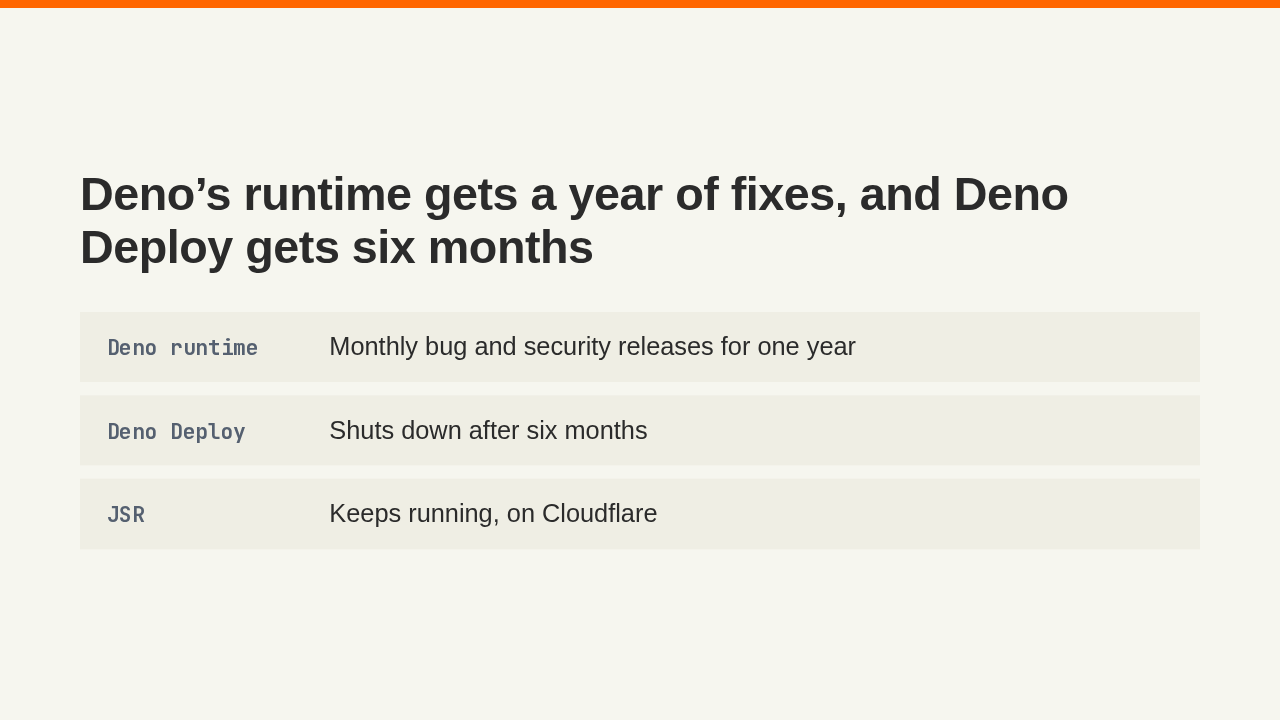
Deno’s runtime gets a year of fixes, and Deno Deploy gets six months
The runtime gets monthly bug fix and security releases for one more year. After that, Deno stays open source, and anyone who wants to carry on developing it is welcome to. Deno Deploy has less time. It runs for six months and then shuts down, and paying customers get help moving to Cloudflare Workers. The JSR package registry stays up, with its servers moving to Cloudflare.
Deno's work moves into Workers
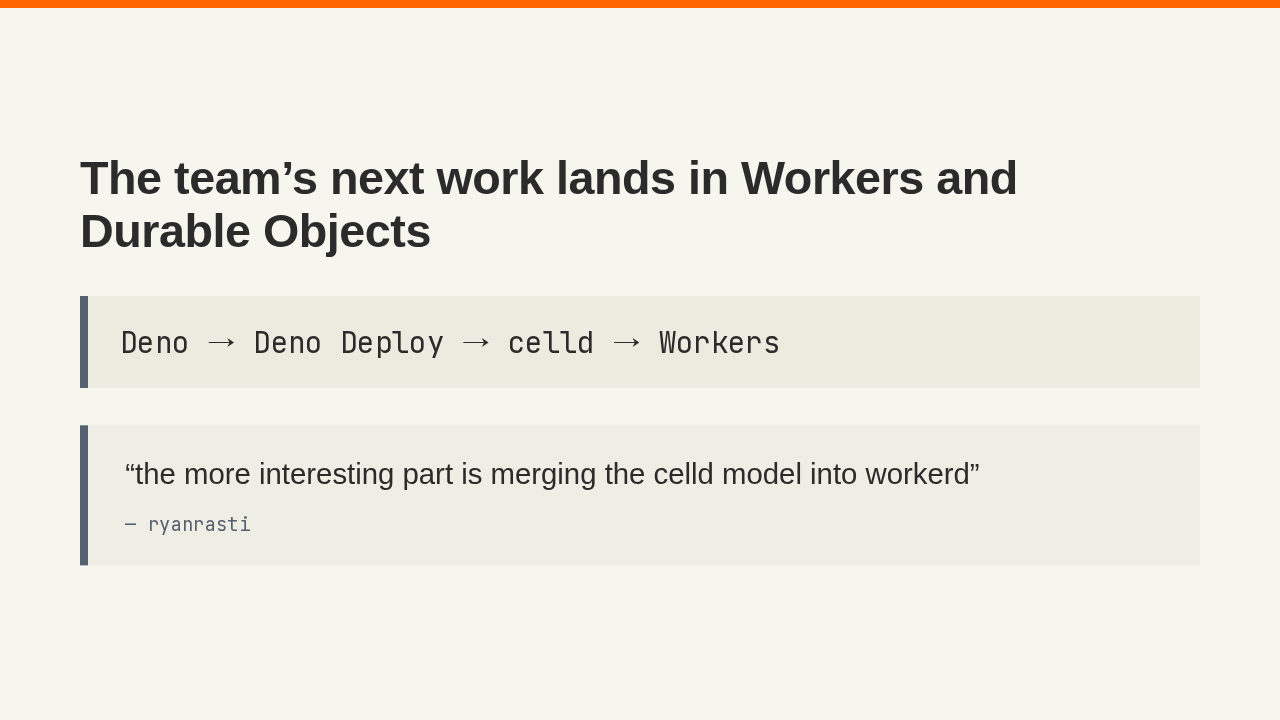
The team’s next work lands in Workers and Durable Objects
“the more interesting part is merging the celld model into workerd”
Dahl's newer project, celld, builds on the Workers programming model and puts scaling inside that model, so each app stops assembling its own infrastructure. At Cloudflare the team joins the Workers and Durable Objects groups, aiming first at agent harnesses that need cheap execution and persistent state. ryanrasti, who has followed celld since its launch, wants to see how its model makes it into workerd, Cloudflare's open source runtime that you can also host yourself.
DeepSeek 4.1 Flash for under a dollar
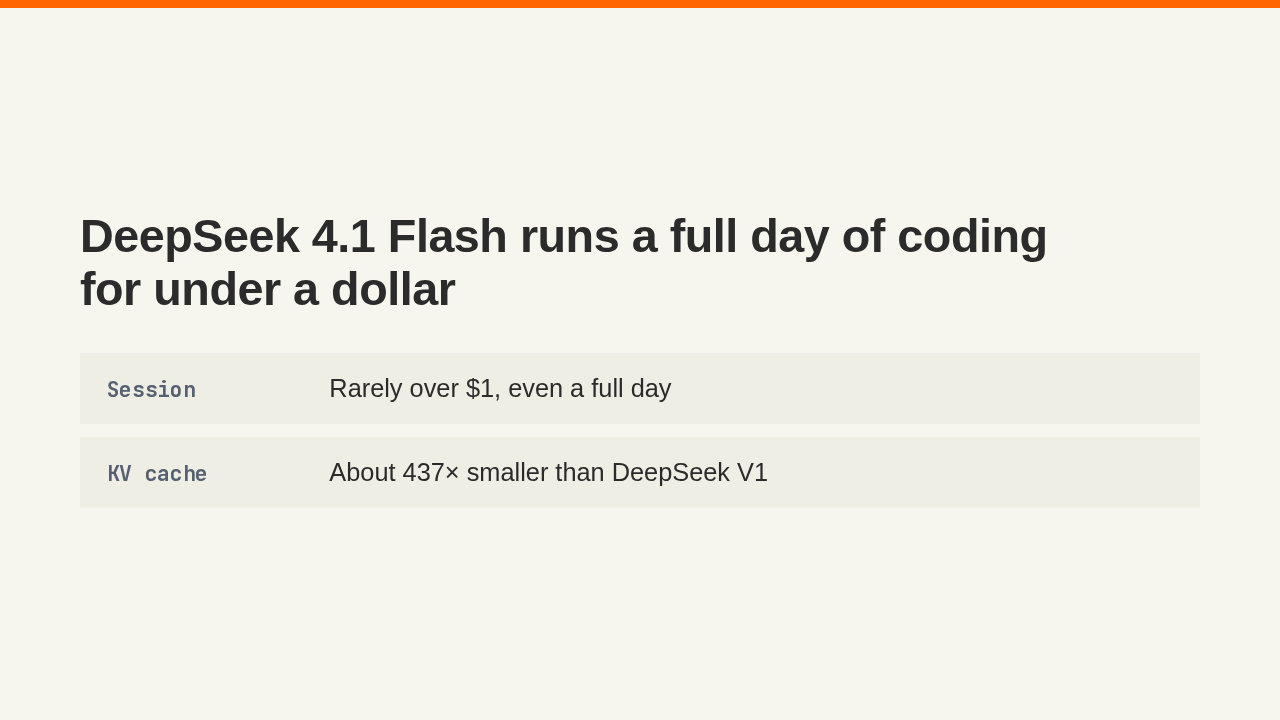
DeepSeek 4.1 Flash runs a full day of coding for under a dollar
A developer who has used DeepSeek 4.1 Flash heavily for a month, across a dozen projects, says that mid-session they can't tell it apart from Opus. Their sessions, some lasting most of a day, rarely cost more than a dollar, because the key value cache is more than 400 times smaller than in DeepSeek's first model. So they give Flash the busywork and the planning, and bring in Opus for a final review.
Subscriptions close the gap
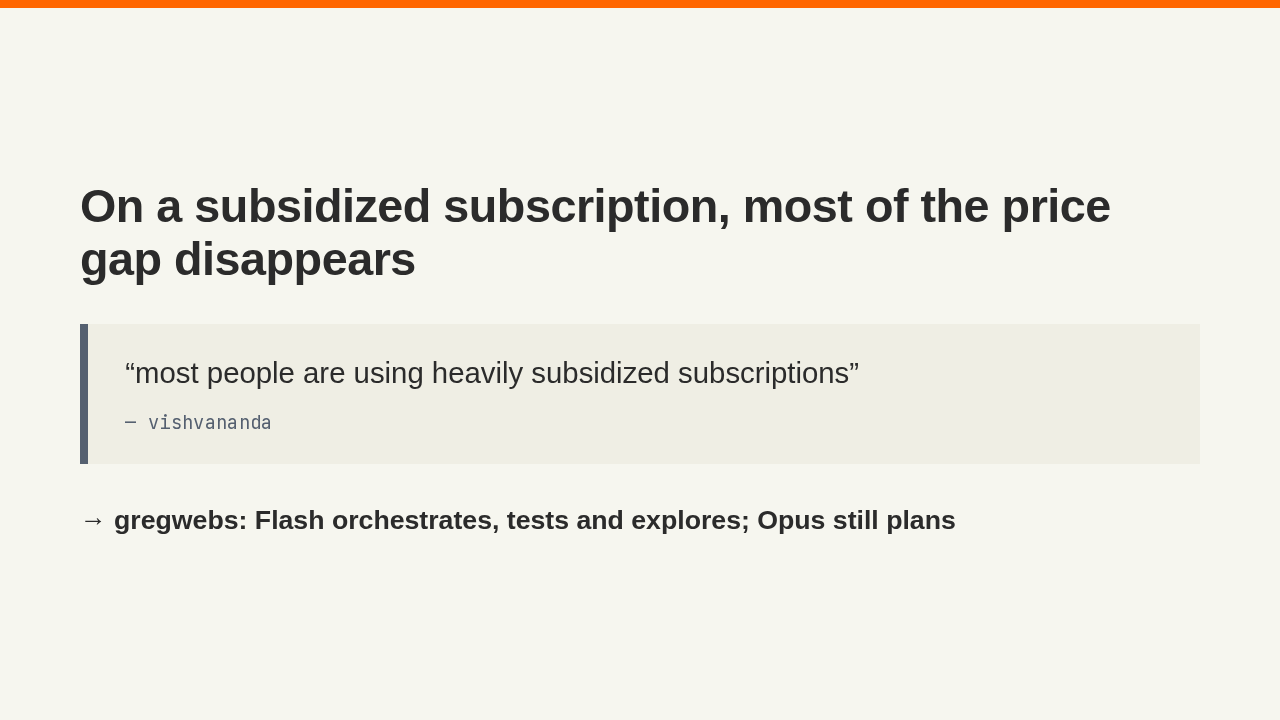
On a subsidized subscription, most of the price gap disappears
“most people are using heavily subsidized subscriptions”
The thread's top answer comes from vishvananda. They spent 50 dollars on Flash through the cheapest provider in a few days, a quarter of the Codex subscription that covers as much work or more. gregwebs runs Flash all day for one or two dollars, as the orchestrator, the tester and the sub-agent that explores code. For explaining a technical decision or finding the best fix, they still reach for Opus.
Microsoft's MXC sandbox
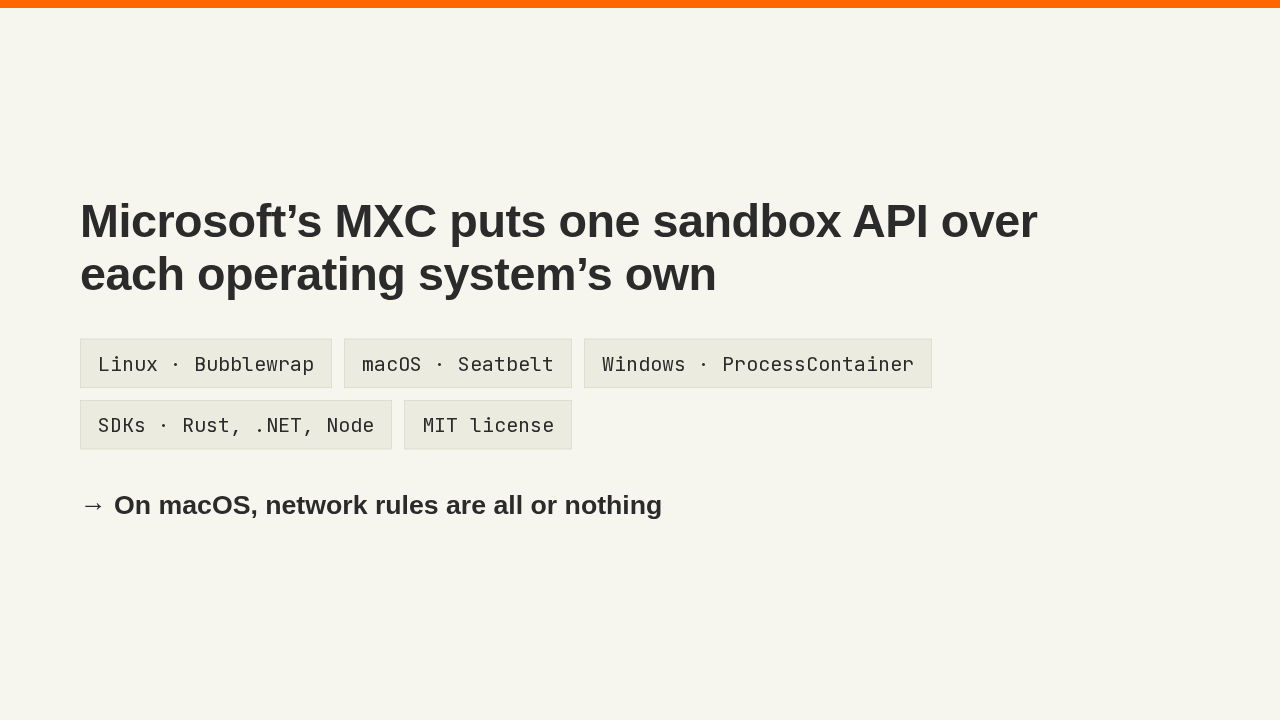
Microsoft’s MXC puts one sandbox API over each operating system’s own
Microsoft released MXC, a sandbox for running model output, plugins and tools you don't trust. You write the file, network and clipboard rules once, in JSON, and it starts the operating system's own sandbox: Bubblewrap on Linux, Seatbelt on macOS, a process container on Windows. An audit mode records what a trusted tool touches, to help you write its policy. simonw points out the gap on the Mac. Seatbelt can't allow or block traffic by hostname or IP address, so there you get all outbound traffic or none.
Oxide's Series D
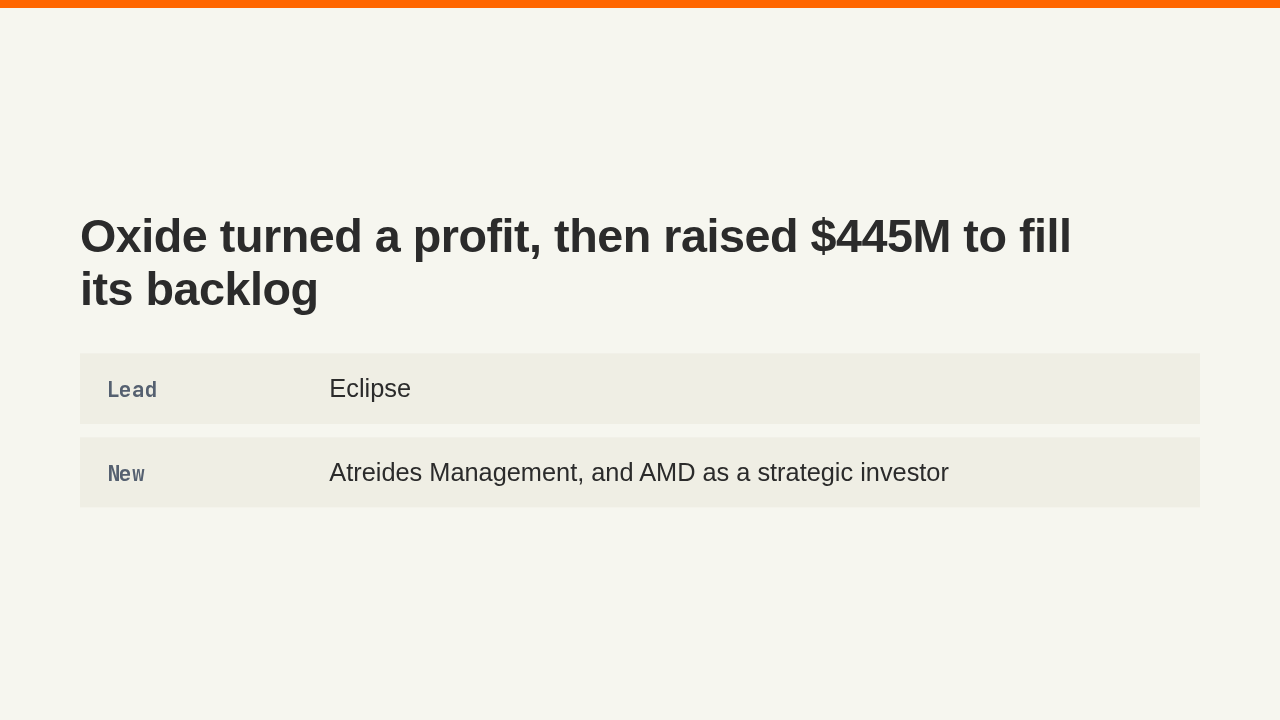
Oxide turned a profit, then raised $445M to fill its backlog
Oxide, which builds rack-scale cloud computers, paid income tax this spring on ordinary sales, which most startups never get to do. Orders now run well ahead of supply, and a hardware company pays for parts long before a rack reaches the customer. So Oxide raised a 445 million dollar Series D, led by Eclipse, with AMD joining as a strategic investor. The money fills the backlog, expands manufacturing, and lets Oxide keep taking new orders.