Hard budget caps by default

Hard budget caps by default, Rust's early metadata, and a 125B model on a gaming card
On Sunday's HN front page, Simon Willison argues that every pay-per-use service needs a hard budget cap, switched on by default. Coding agents make it easy to spin up code that calls paid APIs or rents compute, and a warning email at midnight does nothing for a bill that keeps climbing while you sleep. Willison expects most people would rather get errors than a surprise $10,000 bill. Removing the cap should be a checkbox you tick on purpose.
AWS and Google Cloud add caps
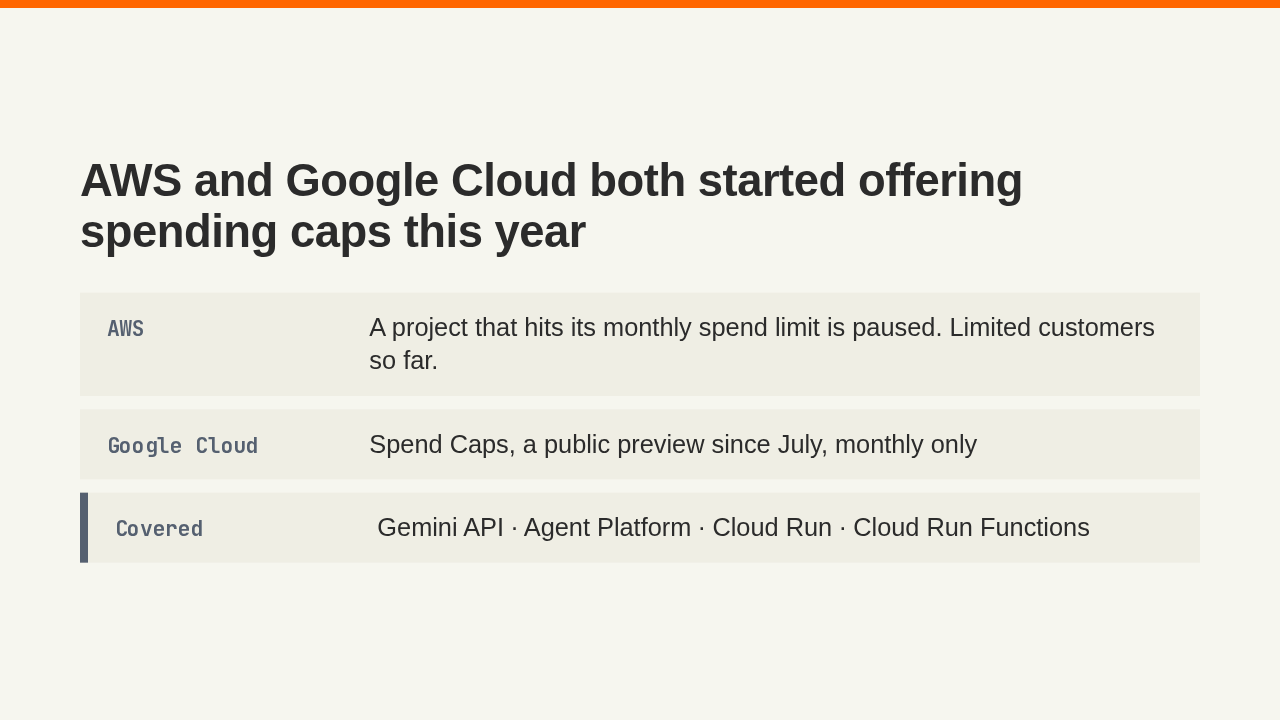
AWS and Google Cloud both started offering spending caps this year
The two biggest clouds have only just started. AWS announced spend limits on September 16th. A project that reaches its limit is paused for the rest of the month, though only a limited set of customers has the feature so far. Google Cloud launched Spend Caps in July. In the thread, modeless pointed out that the preview covers only four services, and Google's own post lists them: the Gemini API, Agent Platform, Cloud Run and Cloud Run Functions.
Caps cut you off at the worst moment
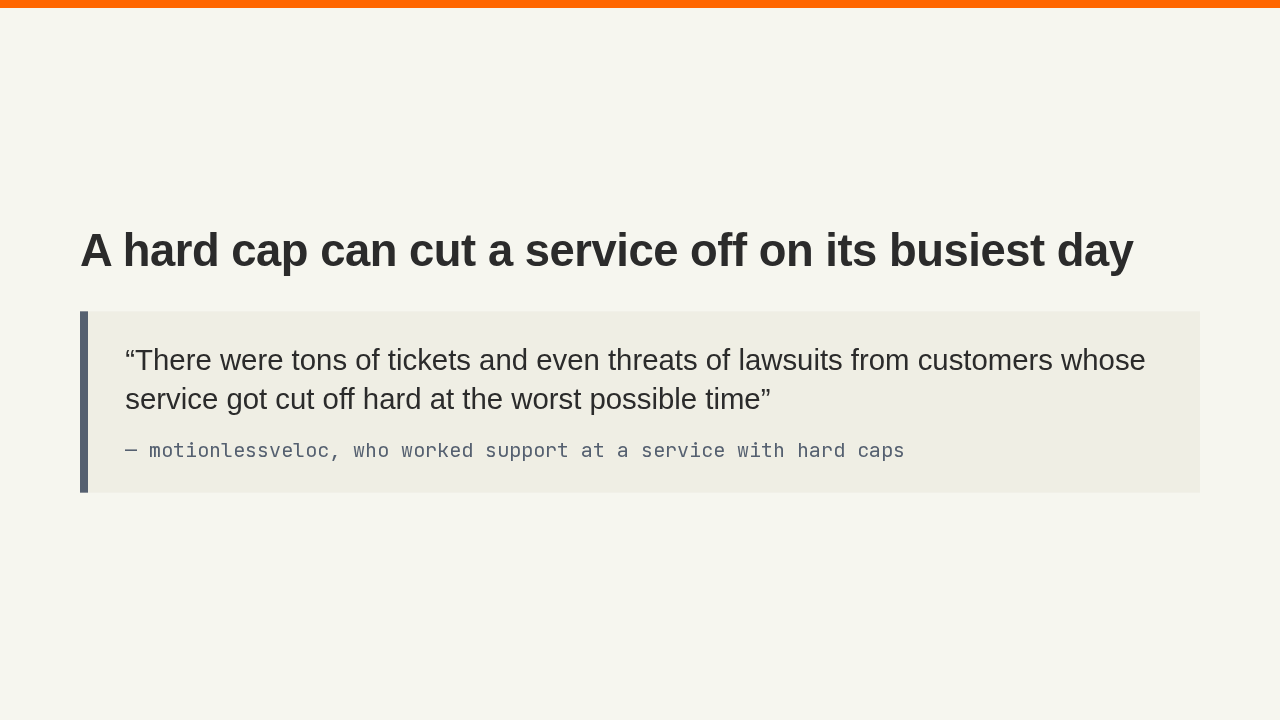
A hard cap can cut a service off on its busiest day
“There were tons of tickets and even threats of lawsuits from customers whose service got cut off hard at the worst possible time”
Not everyone wants that default. A commenter posting as motionlessveloc used to work support at a well-known backend service that had hard caps, and calls it a nightmare. Customers hit the cap through organic growth, a big event or going viral, and lost the new traffic along with their existing users. Their advice is alerts instead, with one exception they name: if AI agents run your infrastructure in production, you have a new set of problems.
Headstart for Rust builds
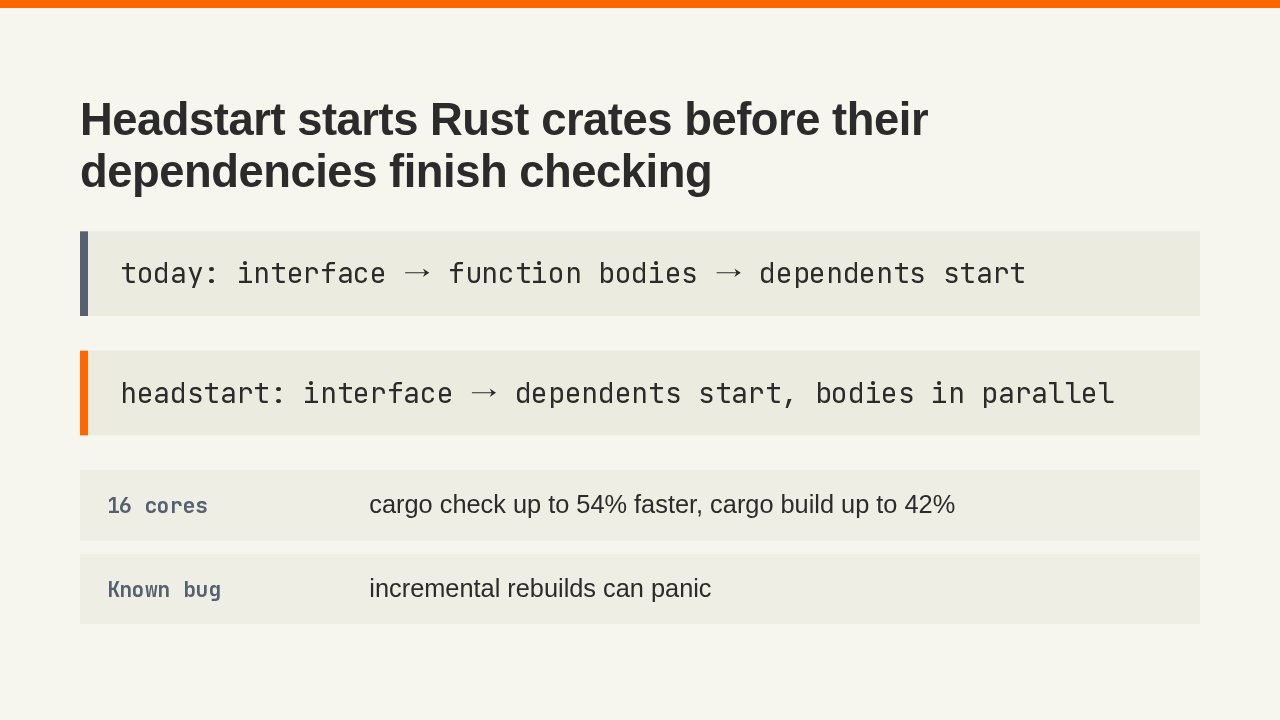
Headstart starts Rust crates before their dependencies finish checking
In Rust, a crate waits for each dependency to be fully type-checked, function bodies included, though it only compiles against the dependency's interface. Headstart, a set of patches to rustc and cargo, writes early metadata as soon as the interface checks, and starts the crates downstream on it. On 16 cores, clean builds of 13 real projects, including Zed, Bevy and rust-analyzer, checked up to 54 percent faster and built up to 42 percent faster. On four cores the gain shrinks. The patches are written to go upstream, and the repository lists one known bug: incremental rebuilds can panic.
Strata: a 125B model on a gaming PC
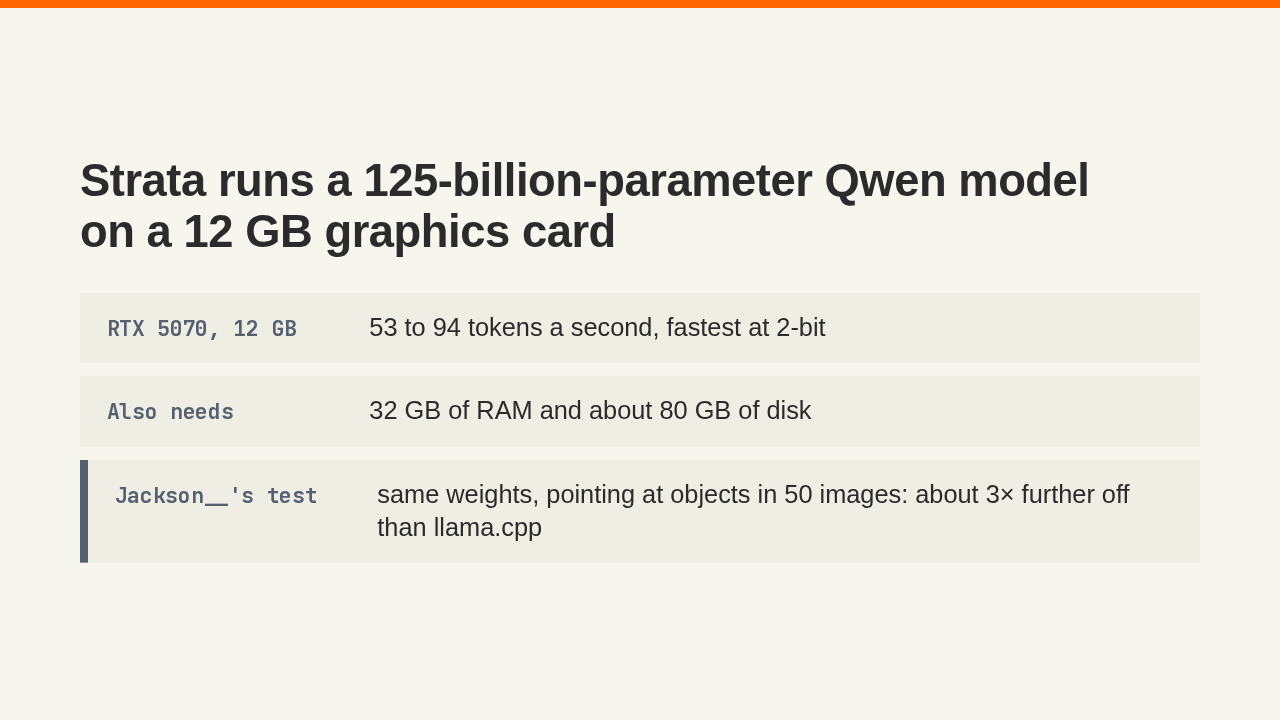
Strata runs a 125-billion-parameter Qwen model on a 12 GB graphics card
Strata packages Qwen 3.8 Flash Next, a 125-billion-parameter model that usually needs a server, for a gaming PC with a 12 gigabyte graphics card and at least 32 gigabytes of RAM. On an RTX 5070, the project measured between about 50 and 95 tokens a second, depending on how hard the model is compressed, and the fastest sizes are two-bit. Several commenters doubted the quality holds up at two bits. Jackson__ ran the same weights through Strata and through llama.cpp, asking the model to point at objects in 50 images, and Strata's answers landed about three times further from the target.
Agents need documentation
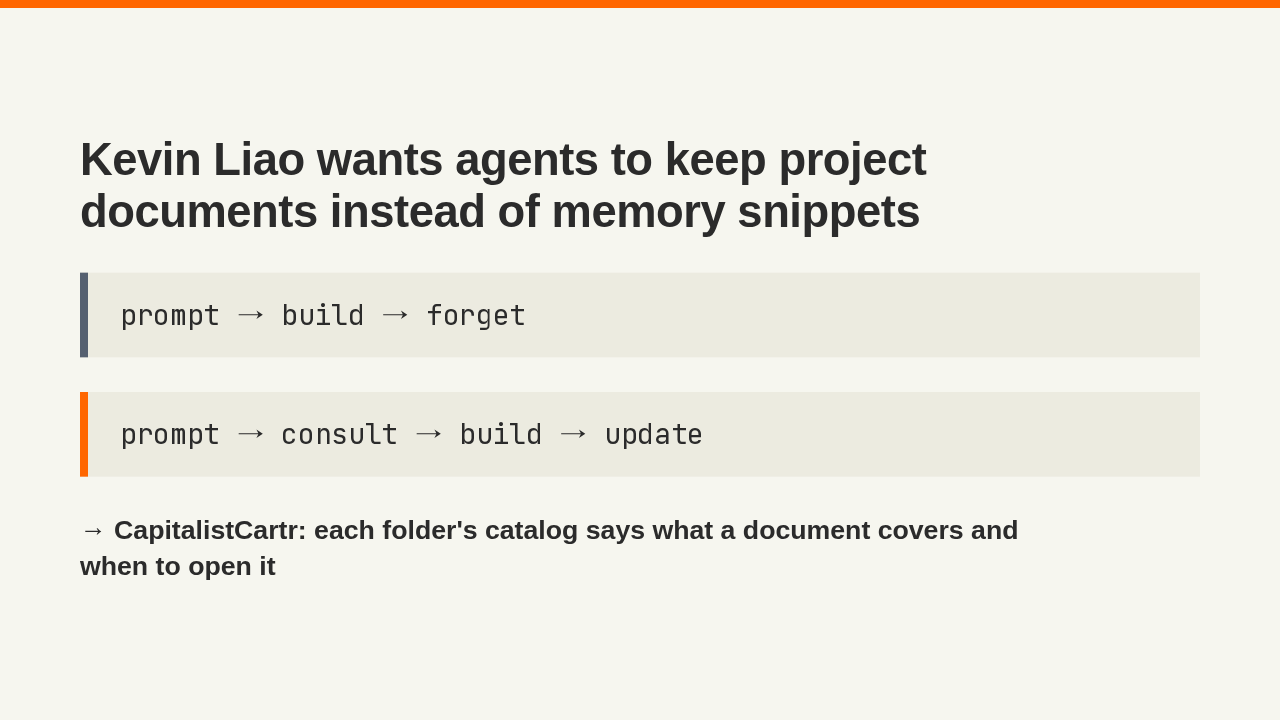
Kevin Liao wants agents to keep project documents instead of memory snippets
Kevin Liao says every agent memory plugin works the same way. It turns old sessions into snippets in a vector database and attaches the five most similar to each prompt. Liao's alternative, an open-source plugin called Operator Memory, gives the agent a folder of Markdown to consult before it works and update after. CapitalistCartr objected that an agent still can't look for a document it doesn't know exists, then found the answer in the repository: each folder carries a catalog saying what every document covers and when to open it.
Use the platform
Nolan Lawson asks why developers still rebuild what the browser ships
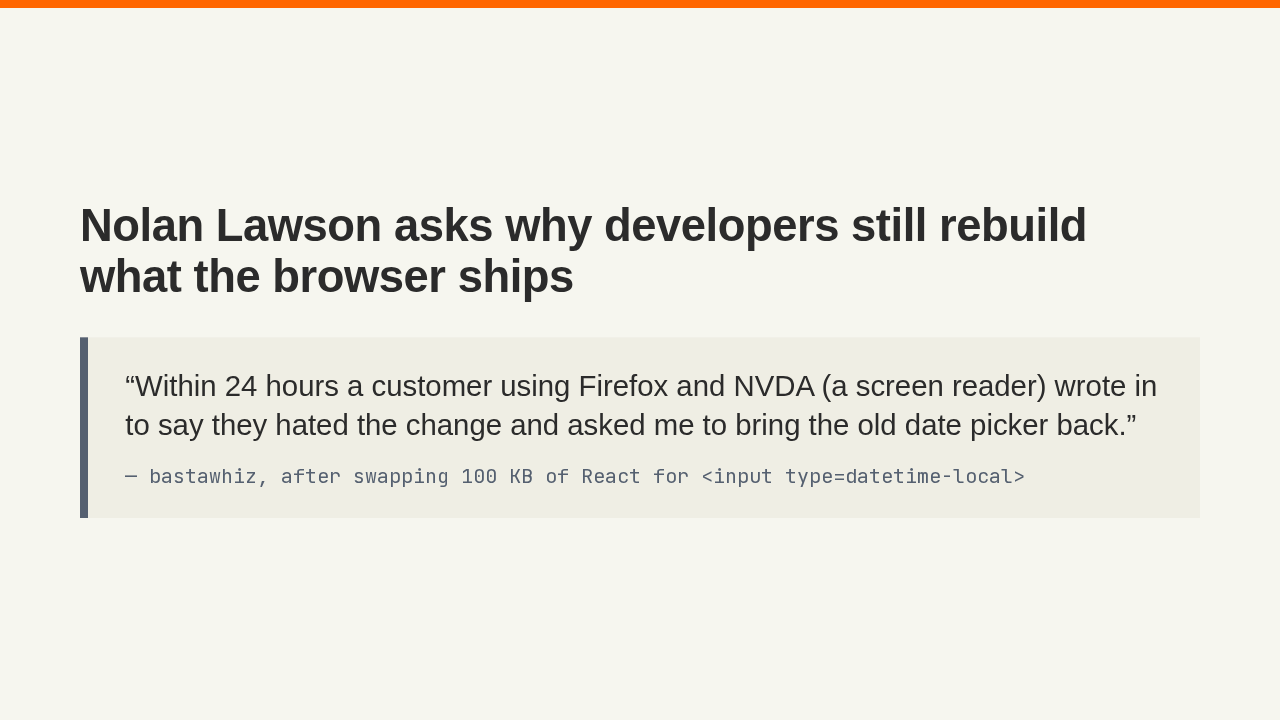
“Within 24 hours a customer using Firefox and NVDA (a screen reader) wrote in to say they hated the change and asked me to bring the old date picker back.”
Nolan Lawson has long told web developers to use the platform, and this time takes the other side. Browsers lagged for years, npm packages had better documentation, and building your own modal is more fun than using the dialog element. Lawson has watched coding agents do both, reach for the right browser API and rewrite helpers that already exist. In the thread, bastawhiz replaced a hundred kilobytes of React date picker with the browser's own date and time input, for accessibility. Within a day, a customer using Firefox and the NVDA screen reader asked for the old one back.