Research → briefing: the launch playbook
3 months ago
Yesterday I spent a session reading primary sources on one question. How does a solo founder launch a developer tool. What you are watching is that session's findings, turned into something you can share. The findings first. Then the one line that made this.
Ask about this presentation
Chapters
Show transcriptHide transcript
Yesterday I spent a session reading primary sources on one question. How does a solo founder launch a developer tool. What you are watching is that session's findings, turned into something you can share. The findings first. Then the one line that made this.
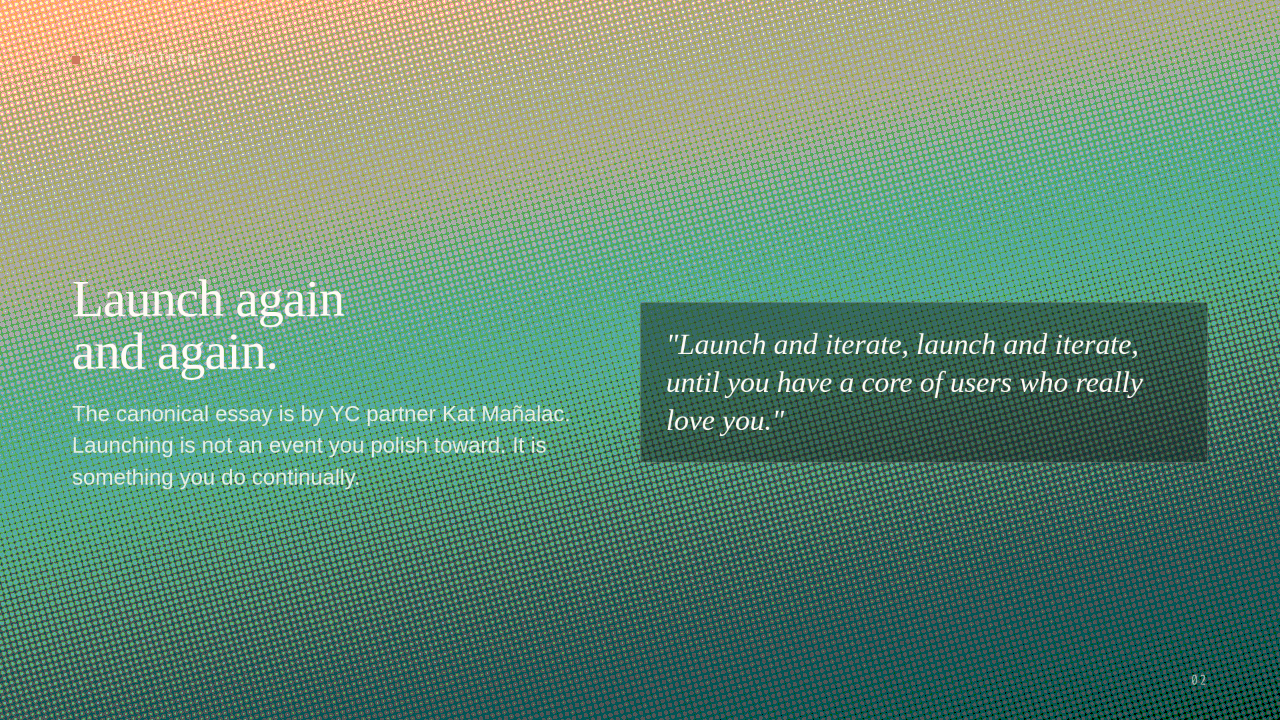
The central finding comes from Y Combinator's own library. The canonical essay is by partner Kat Manalac, and its title is the whole doctrine. Launch again and again. Launching is not an event you polish toward for months. It is something you do continually, to refine the pitch and find the channel where your real users live. Launch and iterate, until you have a core of users who really love you.
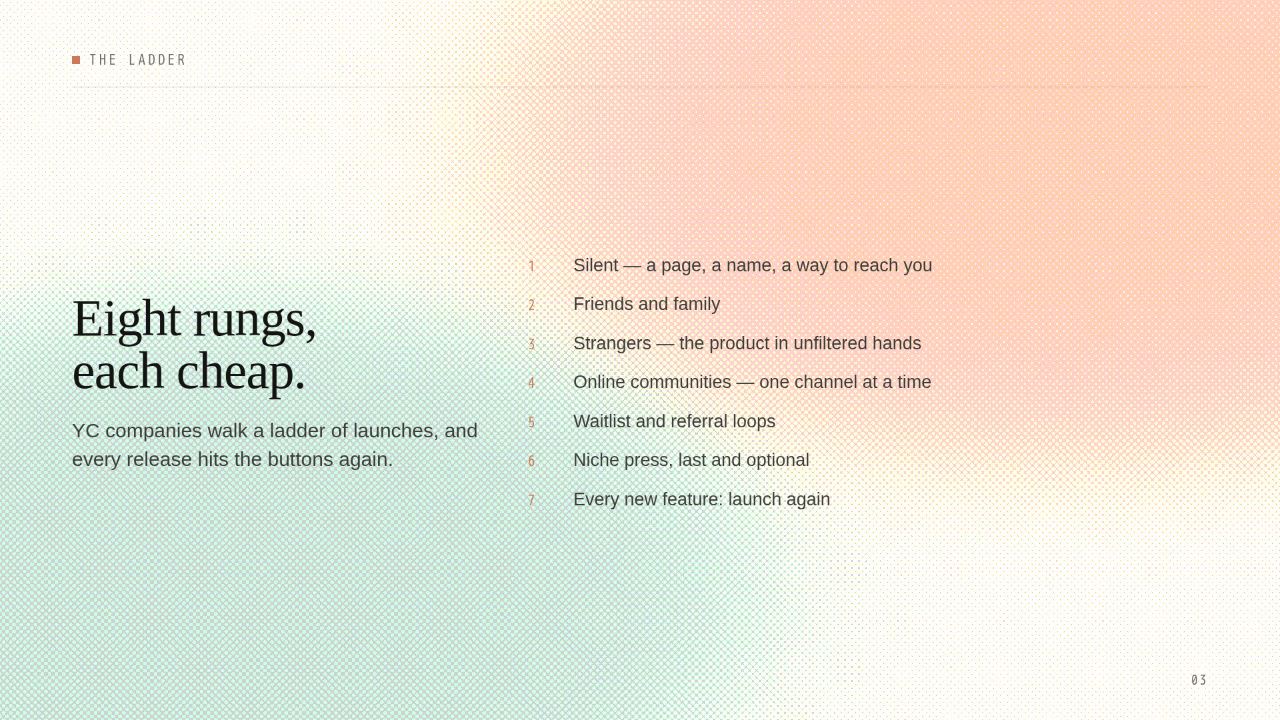
The essay lays out the ladder these companies climb. A silent launch, only a page and a name. Friends and family next. Then strangers, the product in unfiltered hands. Then online communities, one channel at a time. A waitlist if scarcity helps you. Press comes last, and stays optional. And every meaningful release climbs the ladder again. None of these rungs costs much, which is the point.
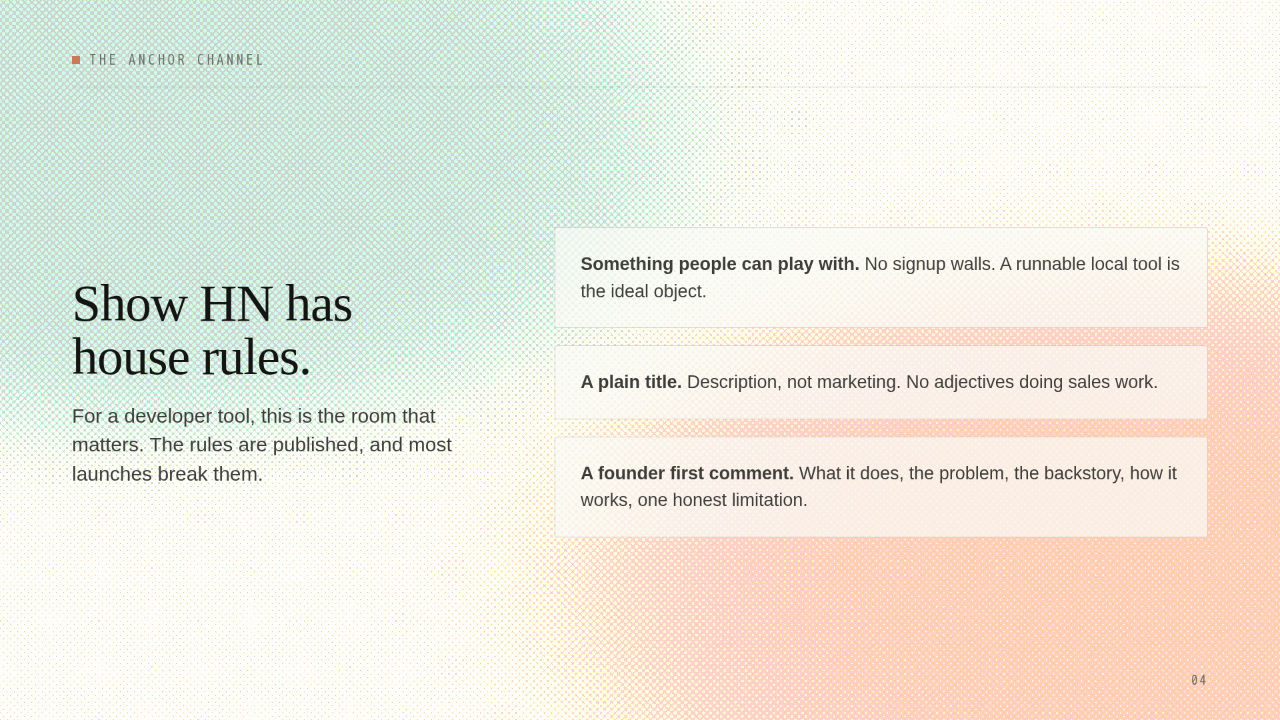
For a developer tool the anchor channel is Show HN, and its rules are published. It must be something people can play with, without a signup. The title is plain description. No adjectives doing sales work. And the founder writes the first comment. What it does, in the first sentence. The problem. The backstory. How it works, with real technical detail. And one honest limitation, offered before anyone asks.
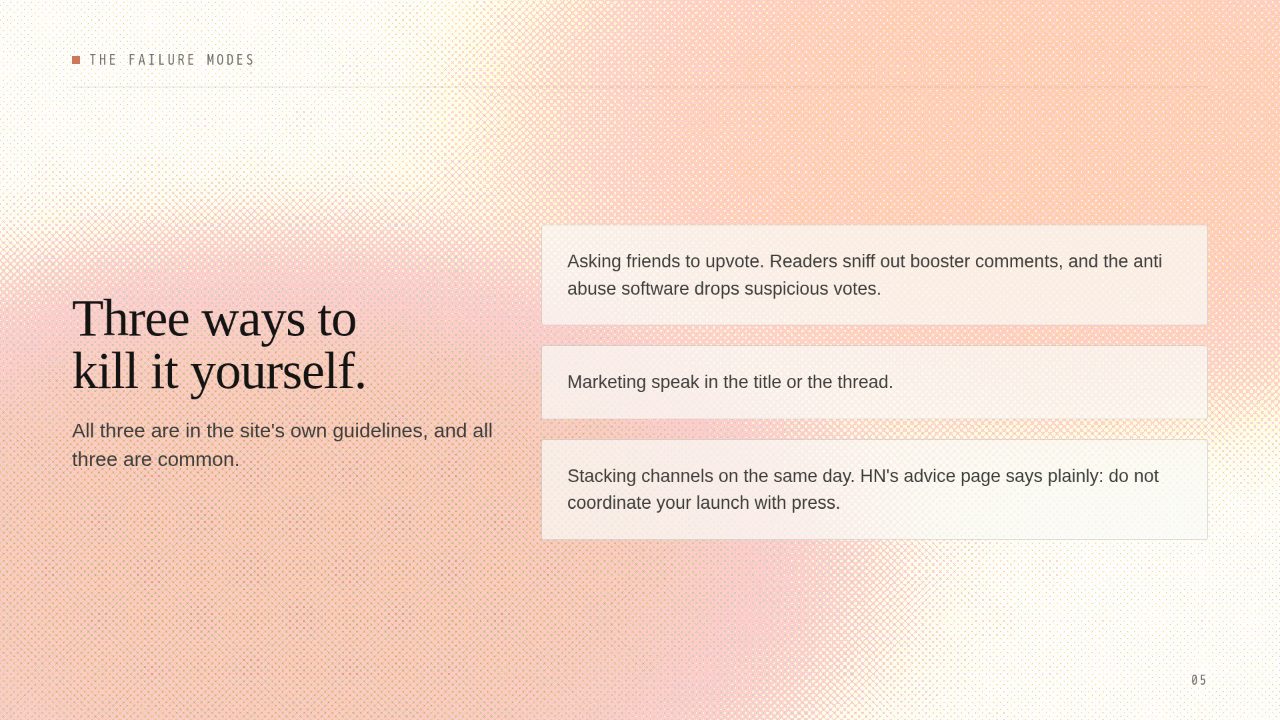
The same pages spell out what kills a launch, and all three failures are self inflicted. Asking friends to upvote. Readers have a nose for booster comments, and the anti abuse software silently drops suspicious votes. Marketing speak. And stacking channels on the same day. The site's own advice page says do not coordinate your launch with press. One channel per day, so each gets its own push and you can tell where the traffic came from.
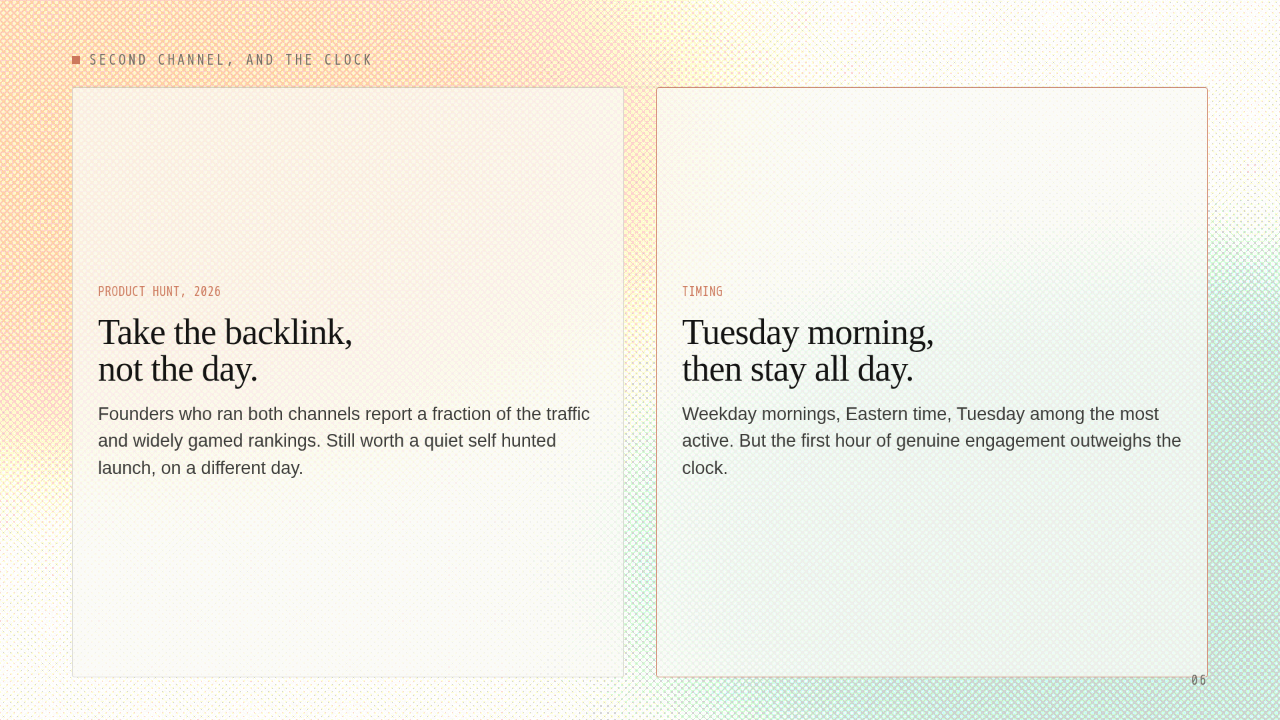
Two smaller findings. Product Hunt still exists, and the community verdict on it is blunt. Traffic has collapsed and the rankings are widely gamed. Founders who ran both channels saw several times the visitors from Show HN. It is still worth a quiet secondary launch on a different day, for the backlink and the badge. And timing is the smallest lever. A weekday morning, Eastern time, Tuesday among the most active days. Every analysis agrees the first hour of genuine engagement matters more than the clock. Post in the morning, then stay in the thread and answer as a builder.
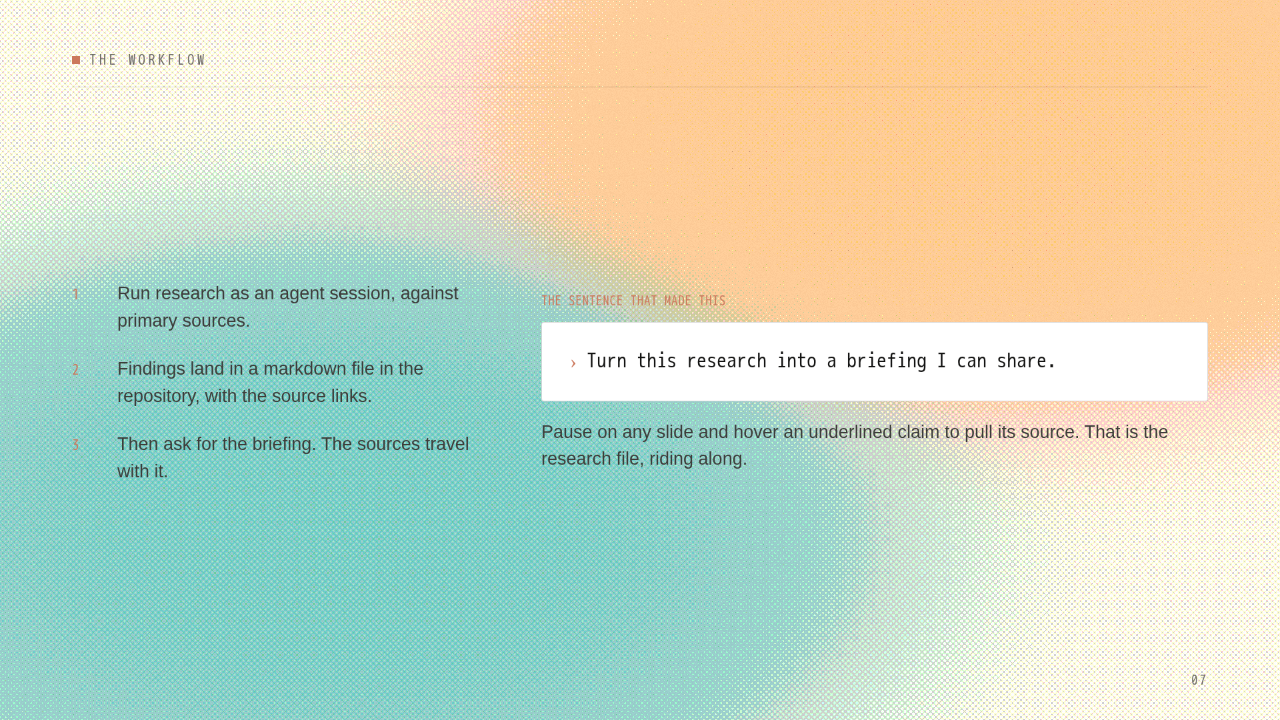
The recipe. Run the research as a session. The agent reads the primary sources and writes the findings into a file in your repository, links included. Then one line. Turn this research into a briefing I can share. The sources travel with it. Pause this presentation on any slide and hover an underlined claim, and the source comes up. That is the research file, riding along with the briefing.
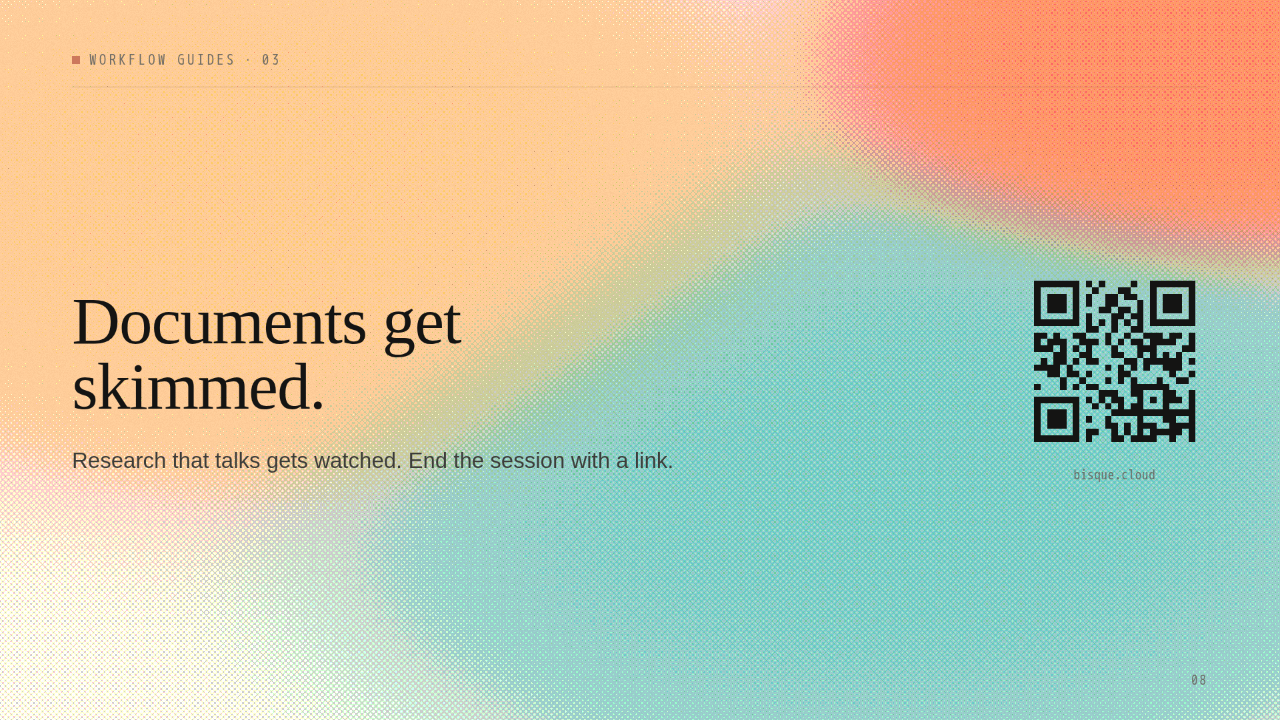
Research you share as a document gets skimmed. Research that talks gets watched, and the sources ride along for anyone who wants to check. End the session with a link.
Up next
 3:17
Anime.js, the all-in-one JavaScript animation engine
@siderakis
1 month ago
 2:22
Put a 3D model on a slide, declared in HTML: three.js and anime.js in Bisque presentations
@siderakis
1 month ago
 3:51
Explain every GitHub release to the people deciding whether to upgrade
@siderakis
1 month ago
 8:14
Inside mattpocock/skills, the 25 agent skills 270,000 GitHub users starred
@siderakis
2 months ago
 3:00
Your coding agent can present its work: /present, the open-source skill
@siderakis
2 months ago
 2:44
Run a real LLM on your desk, starting at $899
@siderakis
3 months ago
 1:43
Your agents have a lot to tell you
@siderakis
3 months ago
 2:23
This Week in Bun
@siderakis
3 months ago
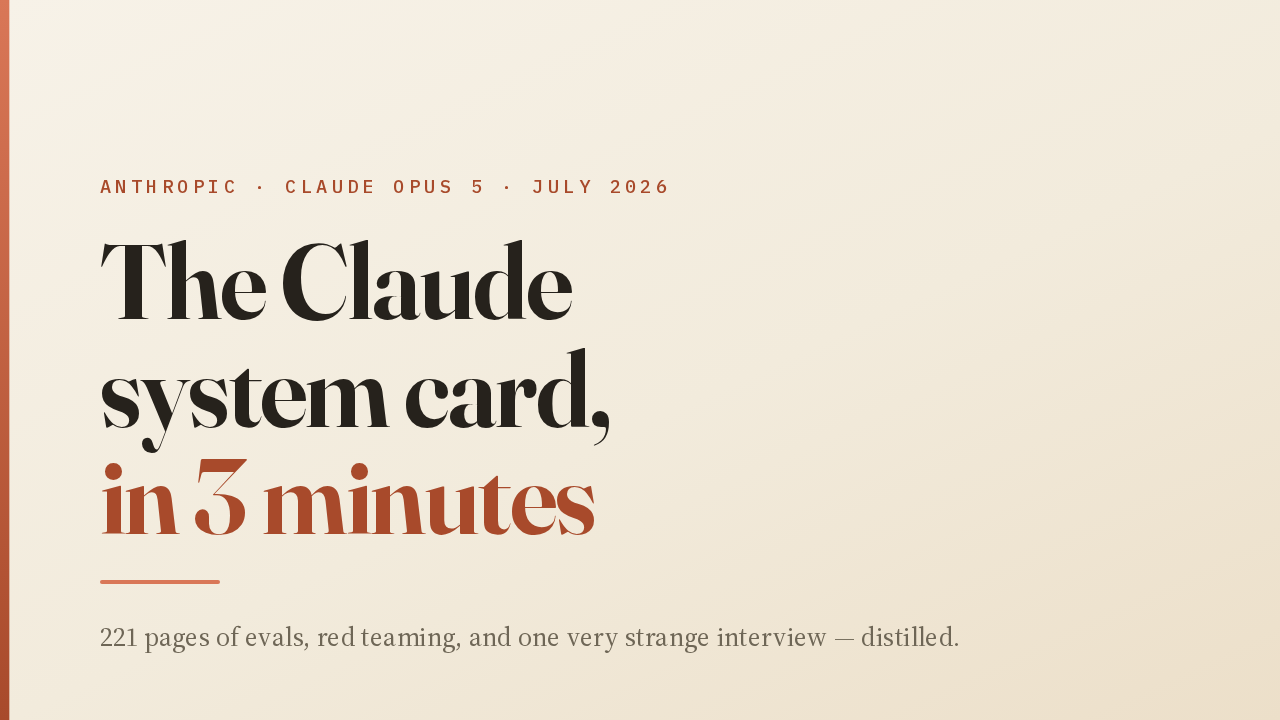 3:14
The Claude system card, in 3 minutes
@siderakis
3 months ago
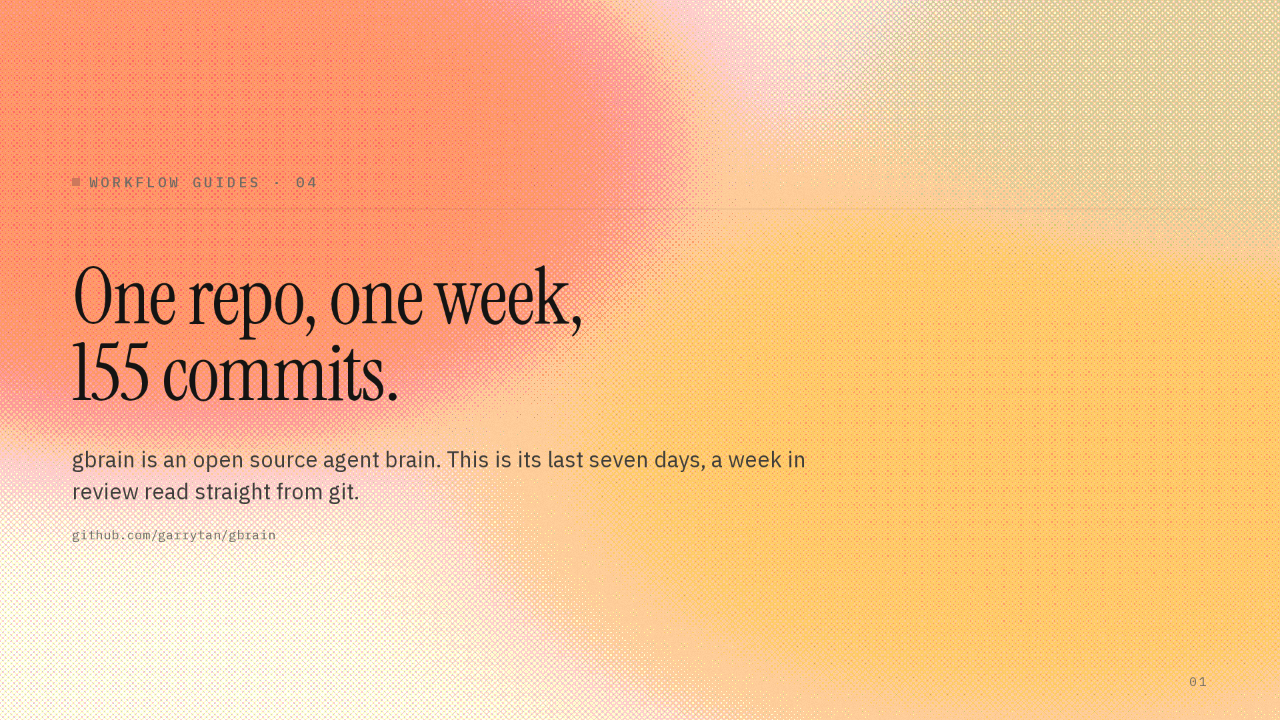 2:19
Week in review, from git
@siderakis
3 months ago
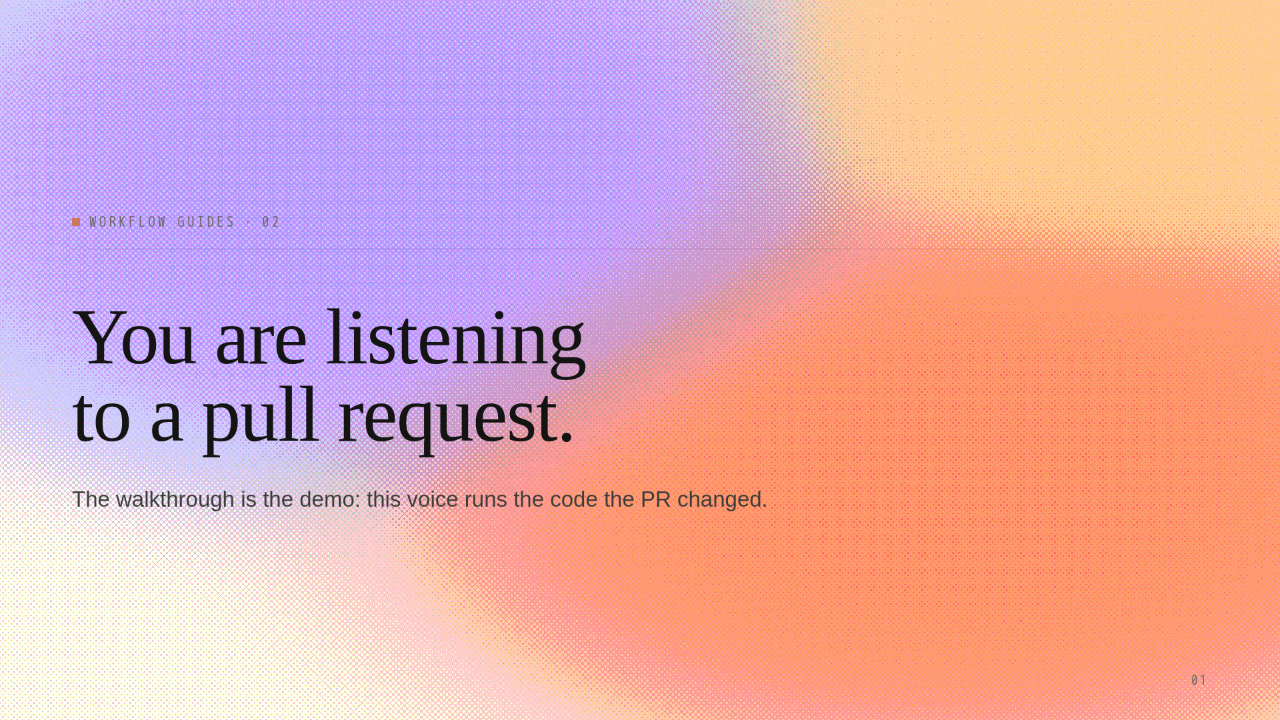 2:41
PR walkthrough: the heteronym fix
@siderakis
3 months ago
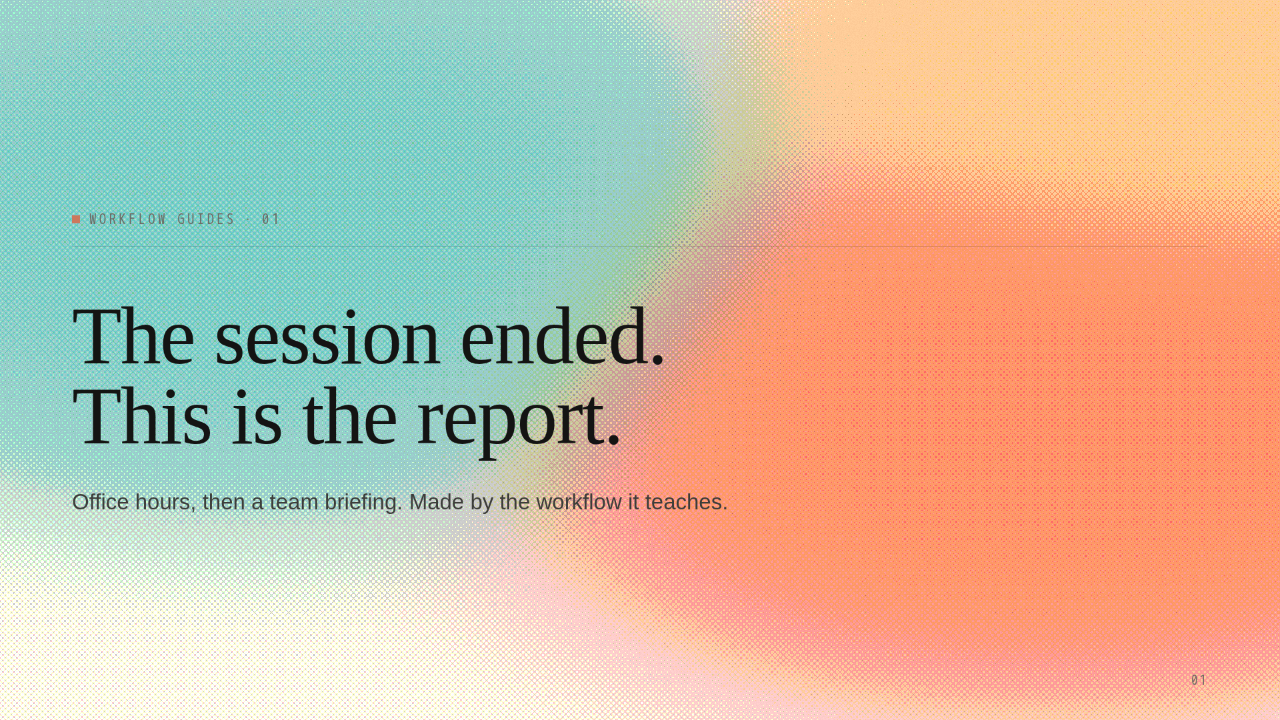 2:00
Office hours → team briefing
@siderakis
3 months ago