Slide 1
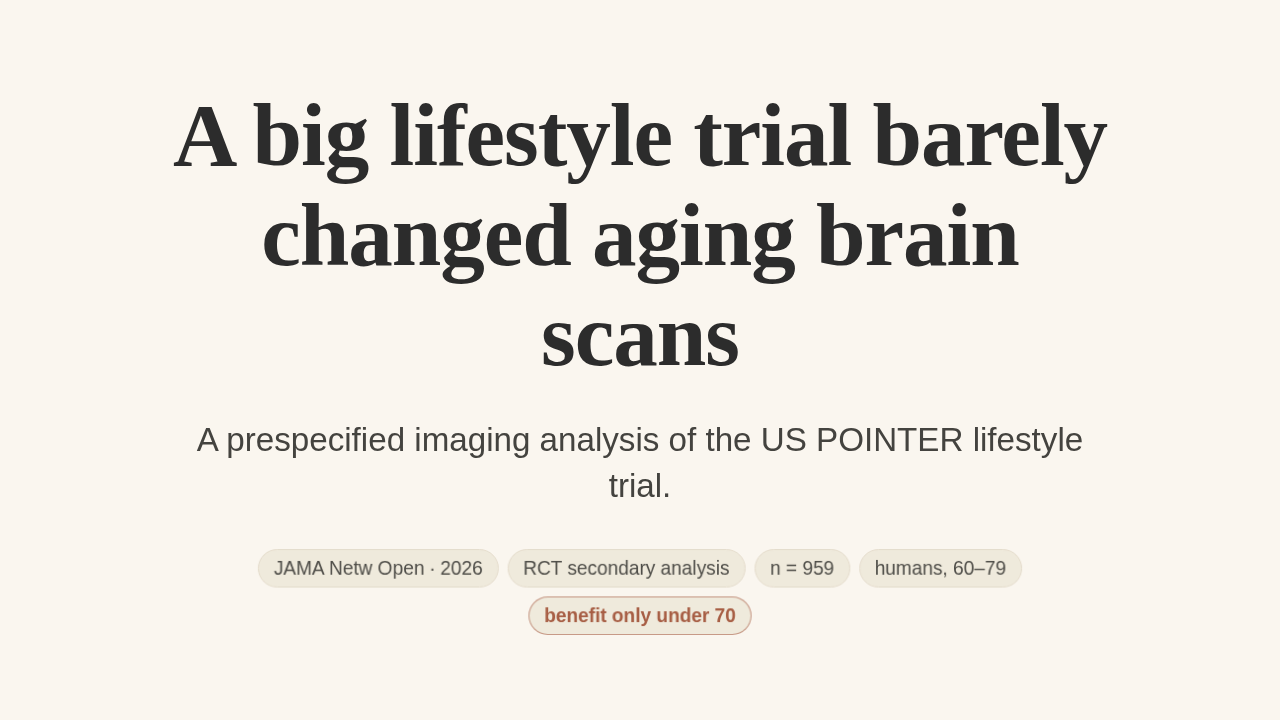
US POINTER is the landmark lifestyle trial that improved cognition in older adults last year. Now its brain scans are out, and the structured program slowed one marker of small-vessel injury. But only in people under seventy. One marker, one age group, in nine hundred and fifty-nine adults. Is that protecting the brain, or the catch?
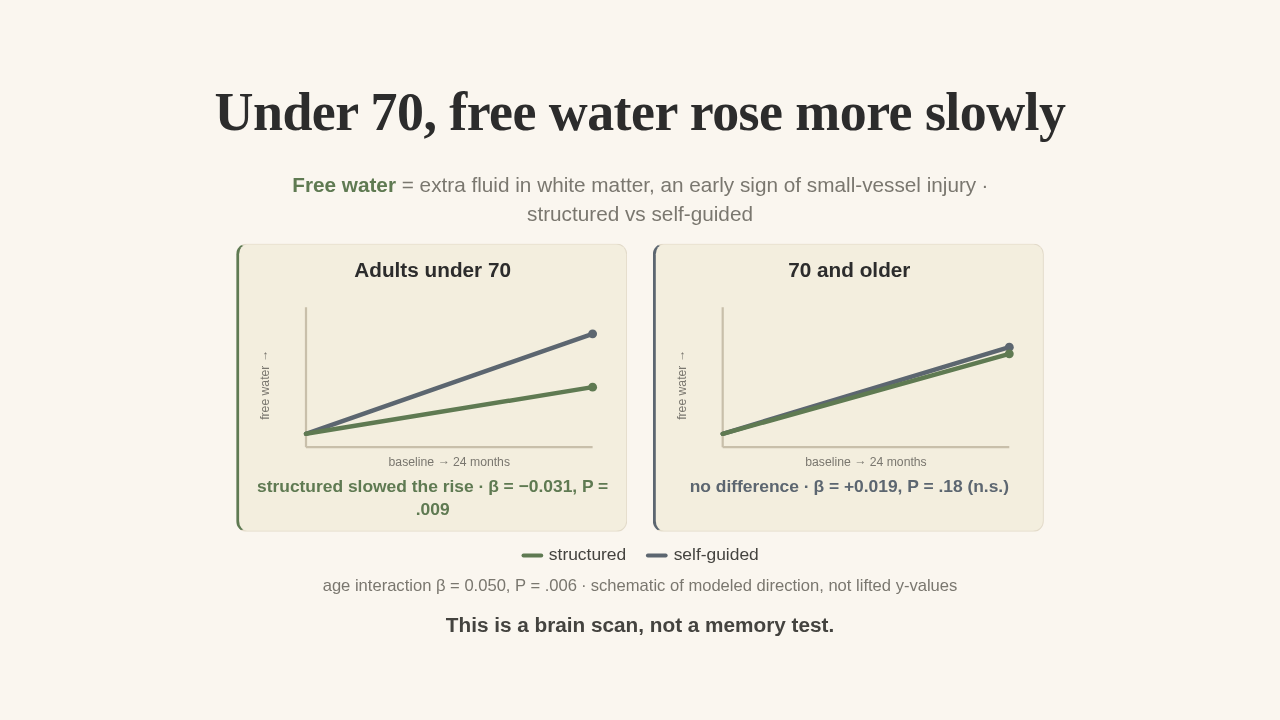
Under 70, free water rose more slowly
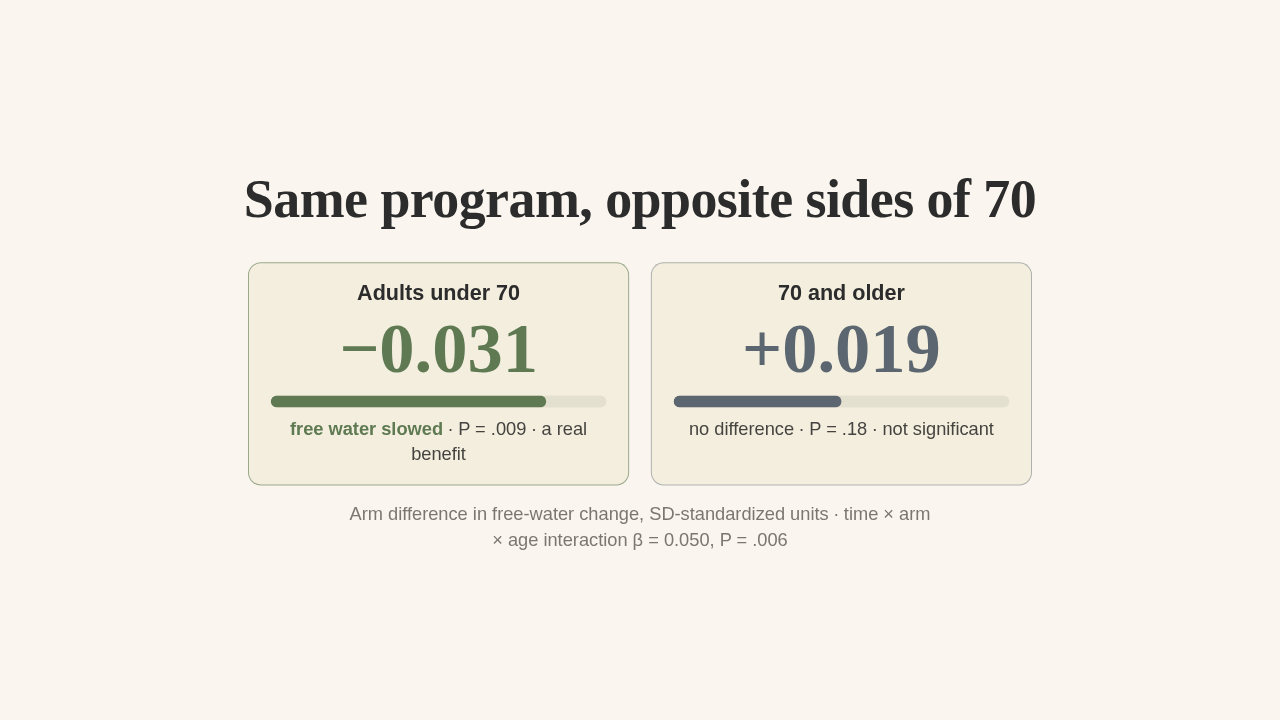
The marker is free water: extra fluid in the brain's white matter, an early sign of small-vessel injury. In adults under seventy, the structured program slowed its rise. In those seventy and older, no difference, and that age gap was significant, with a p-value of point zero zero six. This is a brain scan, not a memory test.
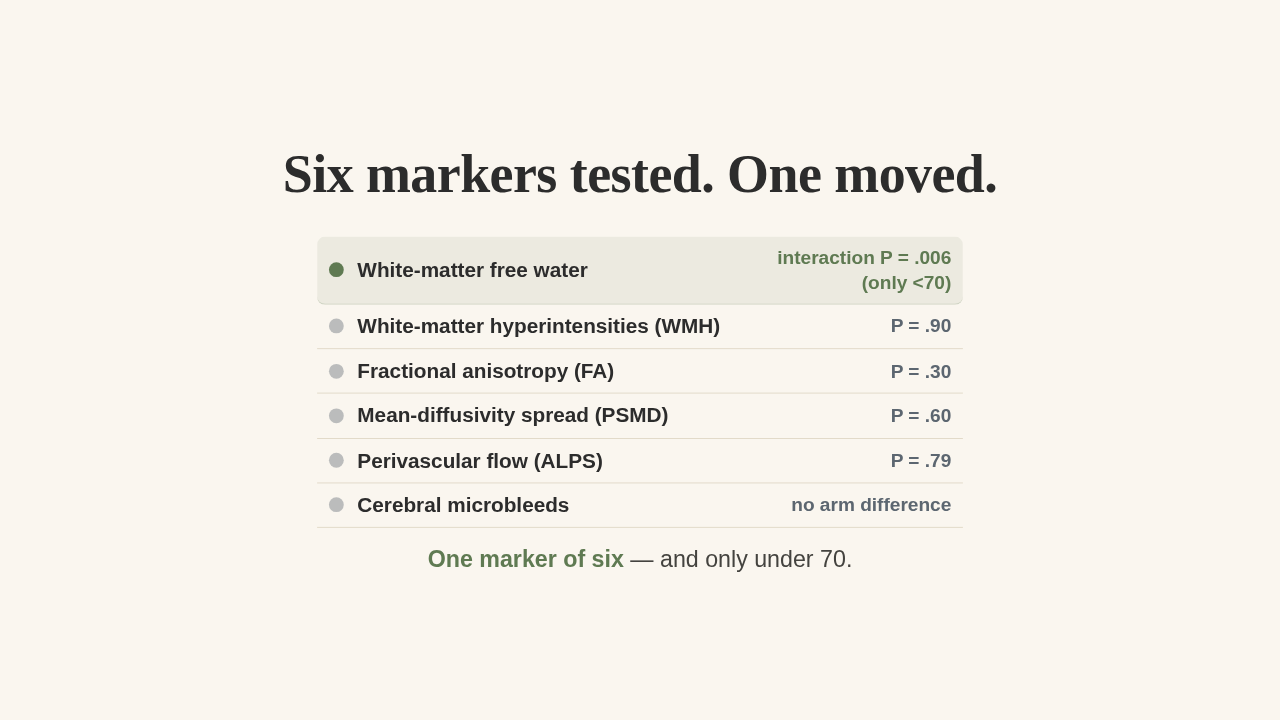
Six markers tested. One moved.
And free water was the only one of six markers that moved. Five of six showed no difference between the programs: white-matter hyperintensities, with a p-value of point nine; fractional anisotropy, point three; and two more small-vessel measures. Only free water responded, and only under seventy. One marker of six.
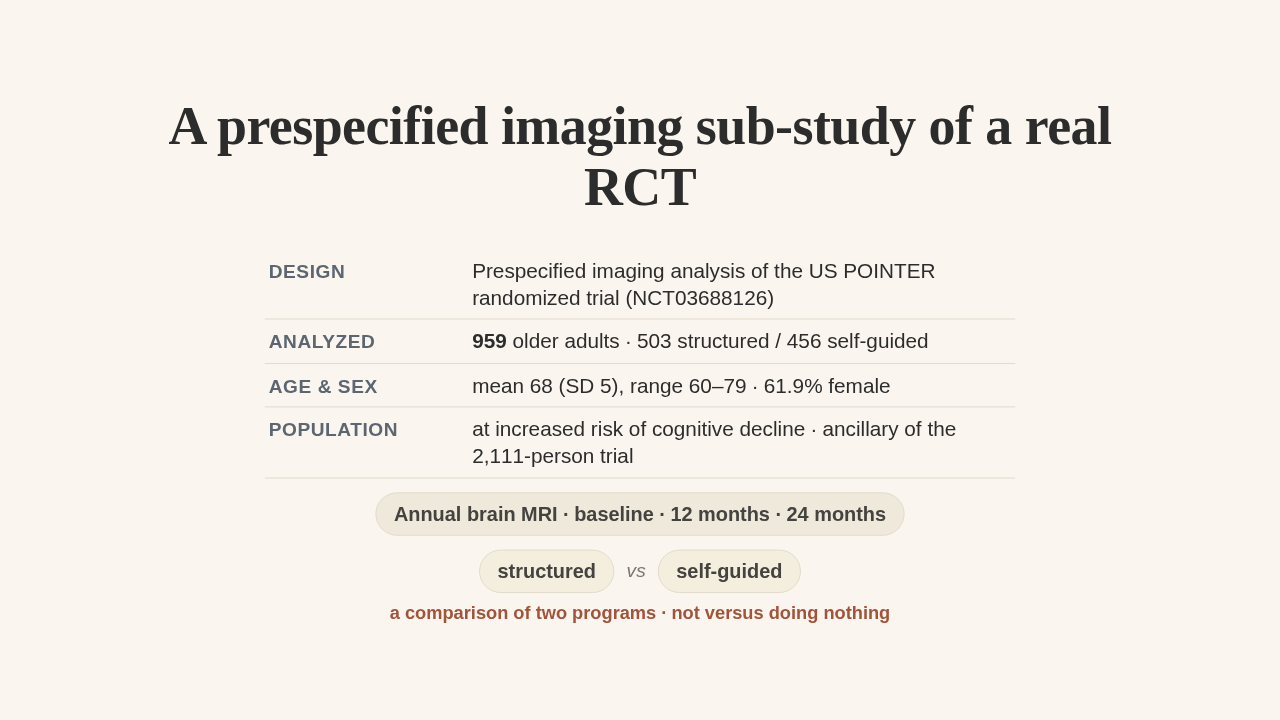
A prespecified imaging sub-study of a real RCT
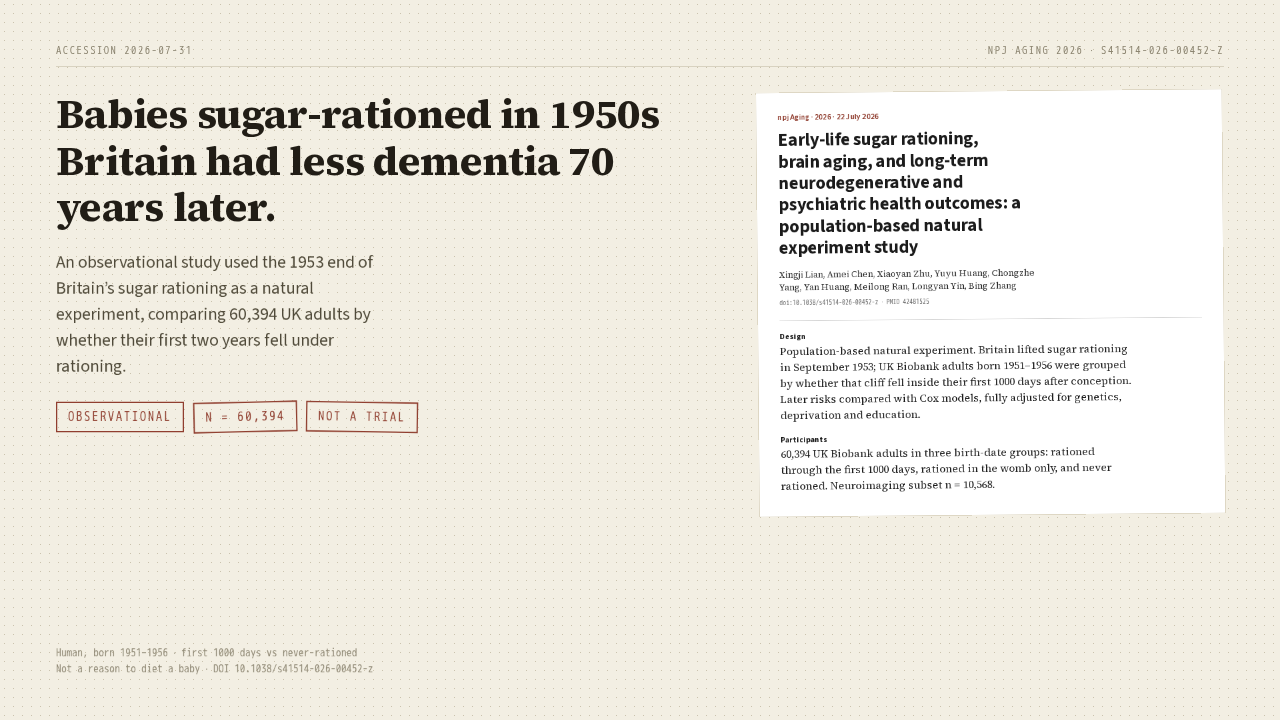
This was a prespecified imaging sub-study of nine hundred and fifty-nine older adults. Brain scans at the start, one year, and two years. And the comparison is structured versus self-guided, not versus doing nothing.
Same program, opposite sides of 70
The whole result sits on one side of seventy. In adults under seventy, the effect on free water was minus zero point zero three one, with a p-value of point zero zero nine. A real benefit. At seventy and older, plus zero point zero one nine, and not significant. Same program, opposite sides of seventy.
Free water predicts later small-vessel damage
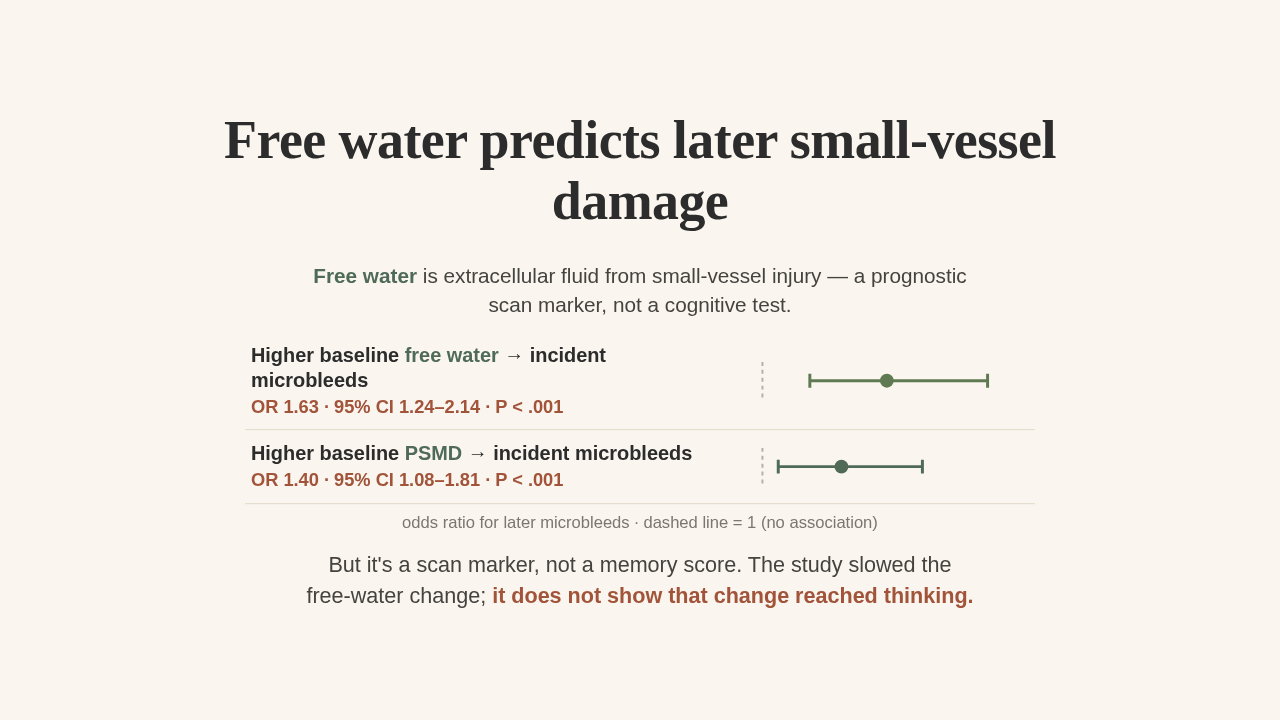
Free water matters because it's prognostic. Adults who started with more of it later had more small brain bleeds, an odds ratio of one point six three. But it's a scan marker, not a memory score. The study slowed the free-water change; it does not show that change reached thinking.
Read it carefully
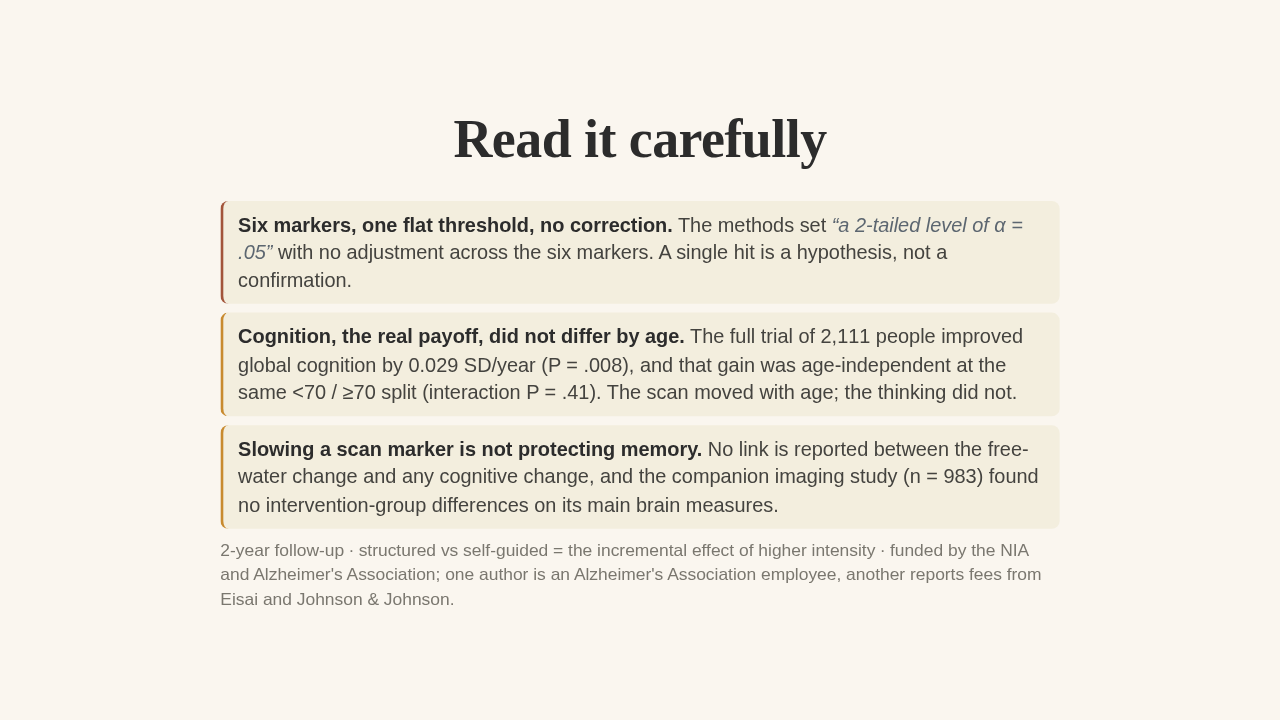
Three real limits. One: six markers were tested with no correction for multiple comparisons, so a single hit is a hypothesis, not a confirmation. Two: the trial's real payoff, cognition, did not differ by age. In the full trial of two thousand one hundred and eleven people, thinking improved under and over seventy alike. The scan moved with age. The thinking did not. Three: the companion imaging study found no difference between the programs on its main brain measures.
Slide 8
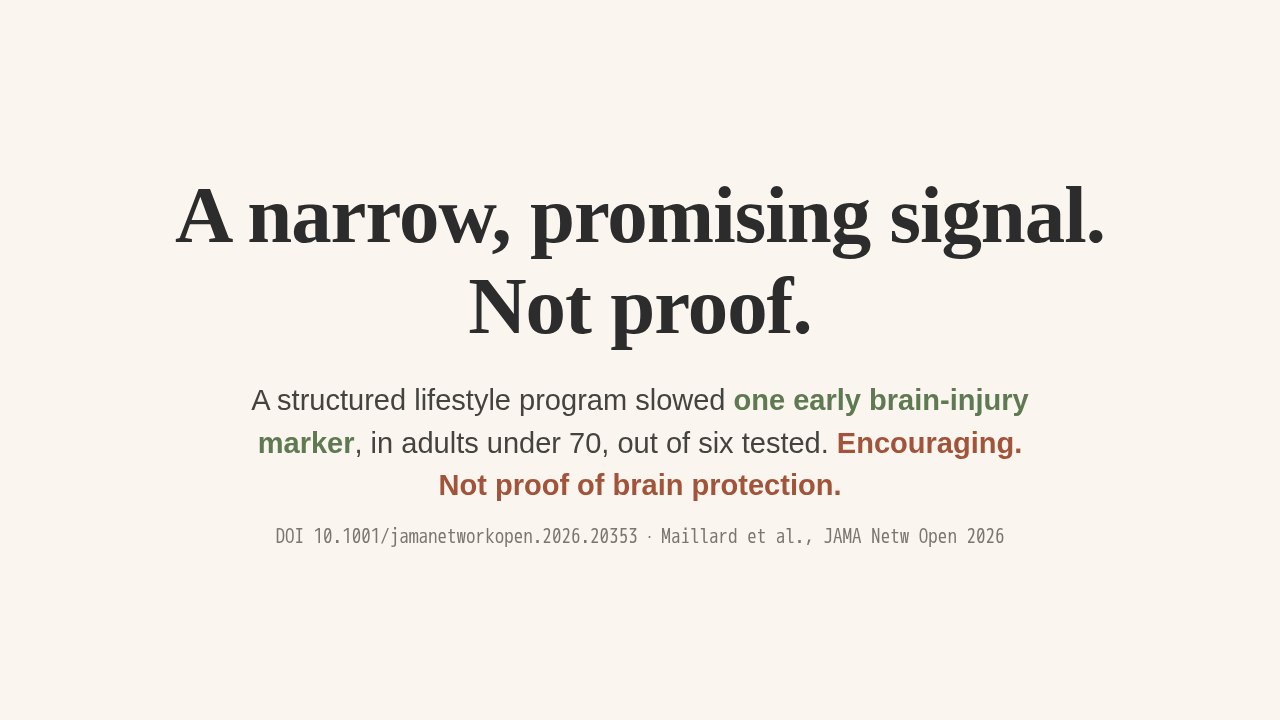
So, the takeaway. A structured lifestyle program slowed one early brain-injury marker, in adults under seventy, out of six tested. An encouraging, biologically plausible lead. Not proof that starting before seventy protects the brain, and not a reason to change anything today.