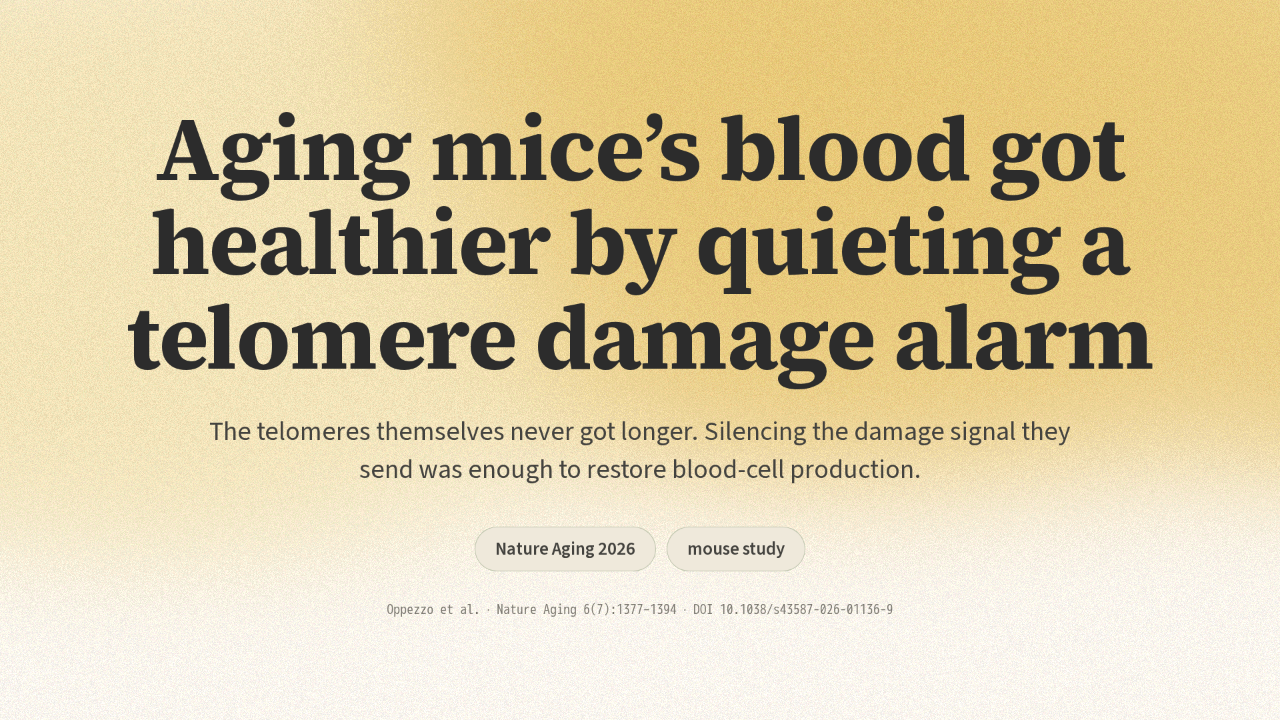
Aging mice’s blood got healthier by quieting a telomere damage alarm
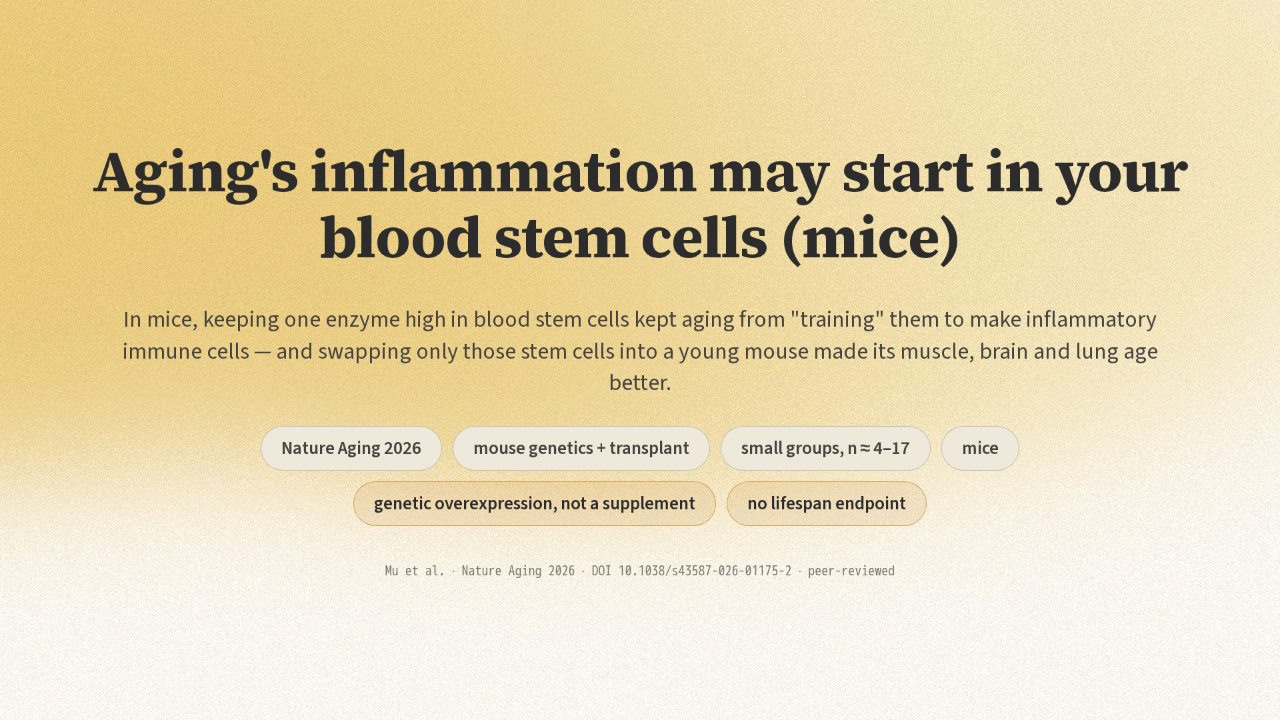
Every chromosome ends in a telomere. It is a cap of DNA that keeps the end from fraying, and it wears down as you age. Every telomere headline you have seen is about making that cap longer. This study never lengthened one. The team switched off the alarm that a worn-down telomere sets off, and the mice got better anyway. If that holds up, length was never the lever.
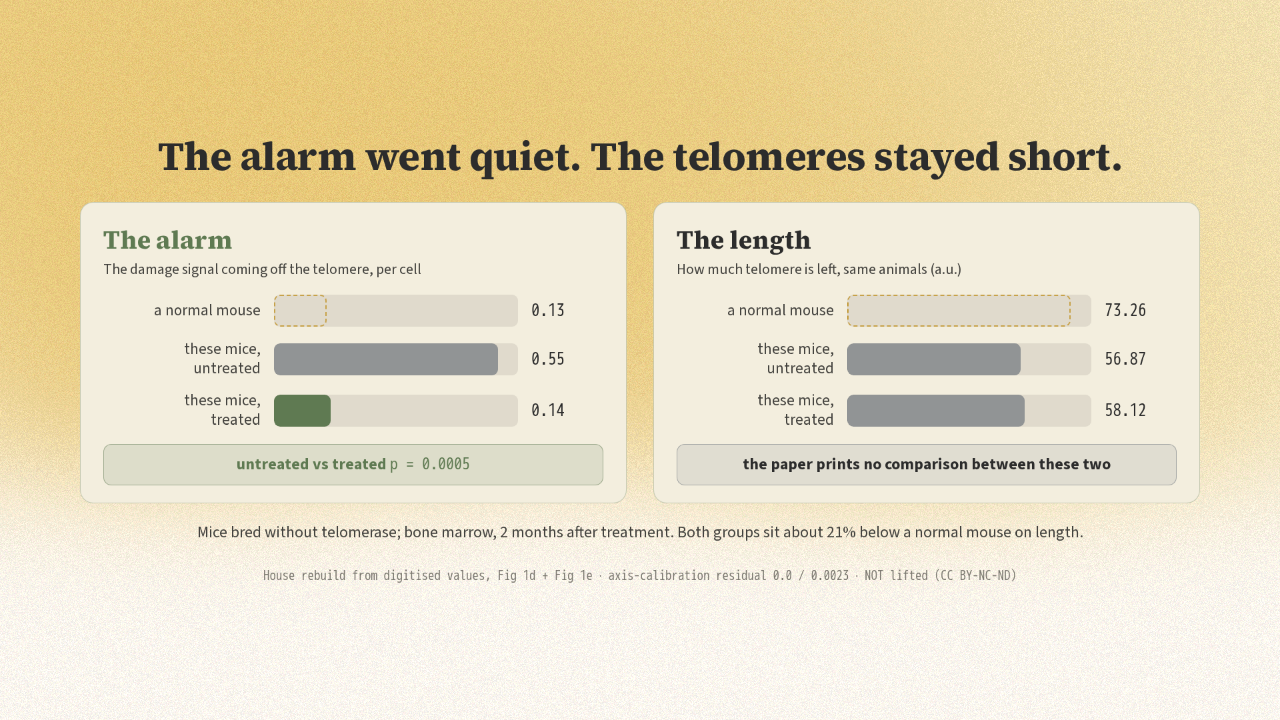
The alarm went quiet. The telomeres stayed short.
untreated 0.55
treated 0.14
untreated 56.87
treated 58.12
These mice were bred without telomerase, the enzyme that rebuilds those caps, so their telomeres are worn down to almost nothing. The team measured the damage signal coming off those telomeres. That signal dropped by about three quarters, landing right where a healthy mouse sits. Then the team measured the caps themselves. Under the microscope a telomere glows, and a longer one glows brighter. Fifty-seven units of brightness before treatment. Fifty-eight after. Nothing moved.
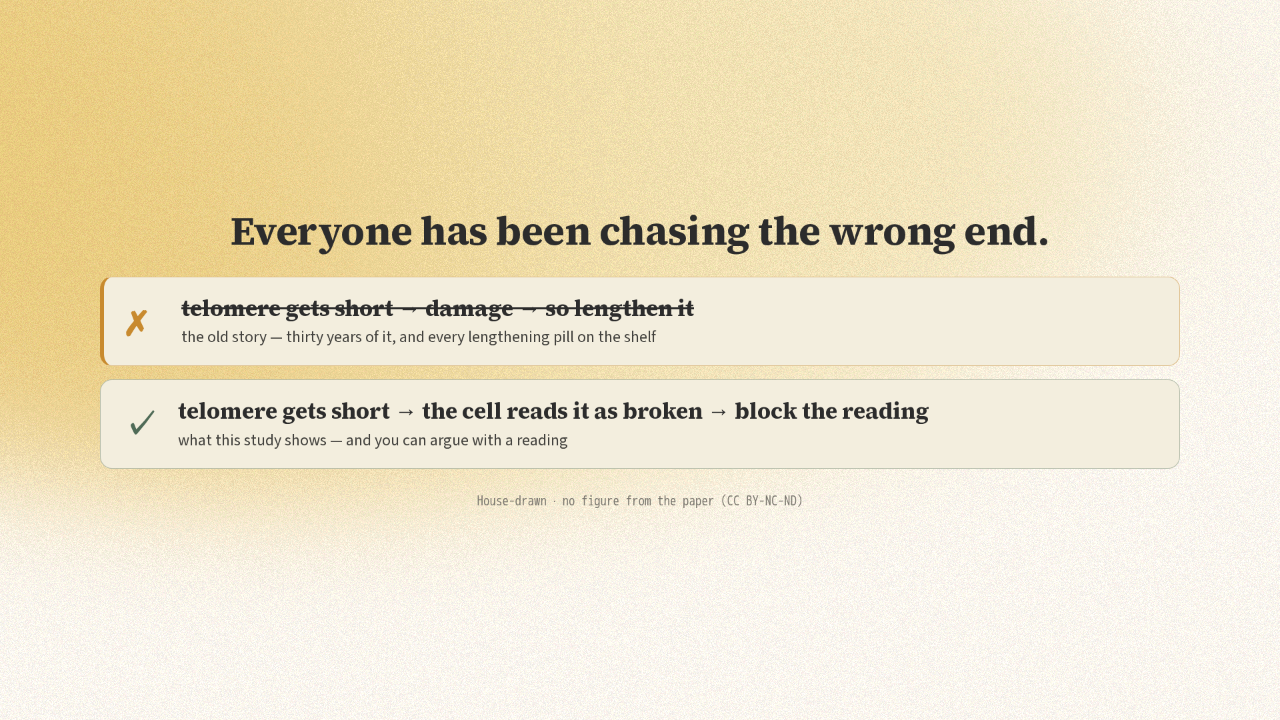
Everyone has been chasing the wrong end.
That should not work. For thirty years the story has been simple. Telomeres get short, short telomeres cause damage, so fix the telomeres. That is what every lengthening pill is chasing. But a short telomere does not hurt you by being short. It hurts you because the cell reads it as broken. And you can argue with a reading.
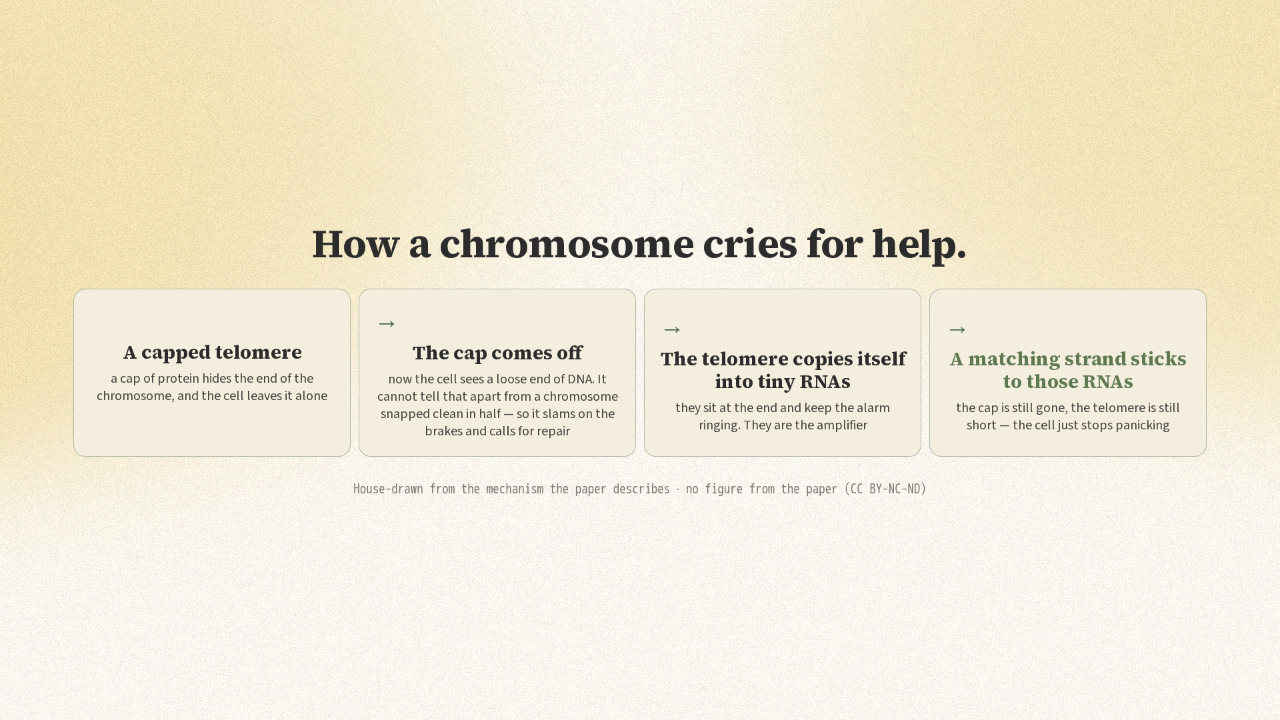
How a chromosome cries for help.
So how does a chromosome cry for help? A healthy telomere wears a cap of protein that hides the end of the chromosome. When the telomere wears down, that cap comes off. Now the cell sees a loose end of DNA. It cannot tell that apart from a chromosome snapped clean in half, which is about the worst thing that can happen to a cell. So it slams on the brakes and calls for repair. Then the telomere does something strange. It starts copying its own sequence into tiny RNAs. Those RNAs sit at the end and keep the alarm ringing. They are the amplifier. So the team built a matching strand that sticks to those RNAs and shuts them up. The cap is still gone. The telomere is still short. The cell just stops panicking.
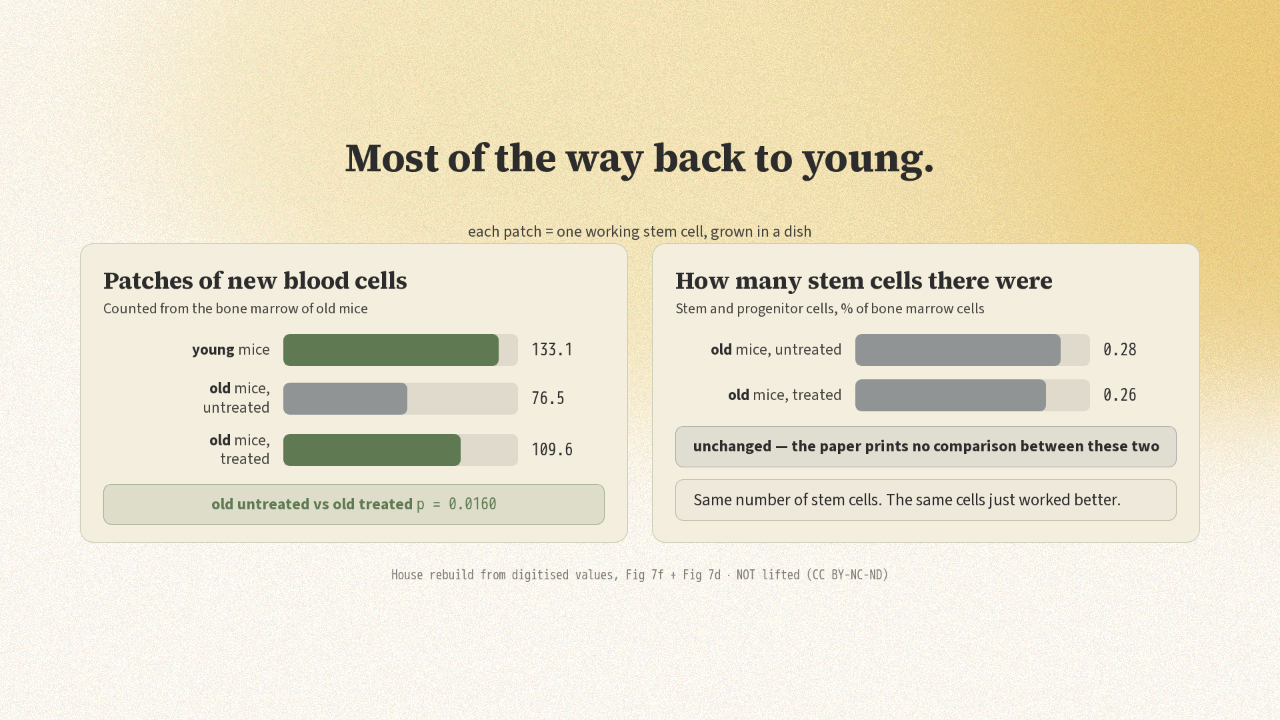
Most of the way back to young.
untreated 76.5
treated 109.6
Does a quiet alarm actually buy you anything? Here is the test. Take a little bone marrow, put it in a dish, and count the patches of new blood cells that grow out of it. Each patch started as one working stem cell. Old mice, untreated: seventy-six patches. Old mice, treated: a hundred and ten. Young mice: a hundred and thirty three. The treated old mice came most of the way back to young. And they did it without making a single extra stem cell. The same cells just worked better.
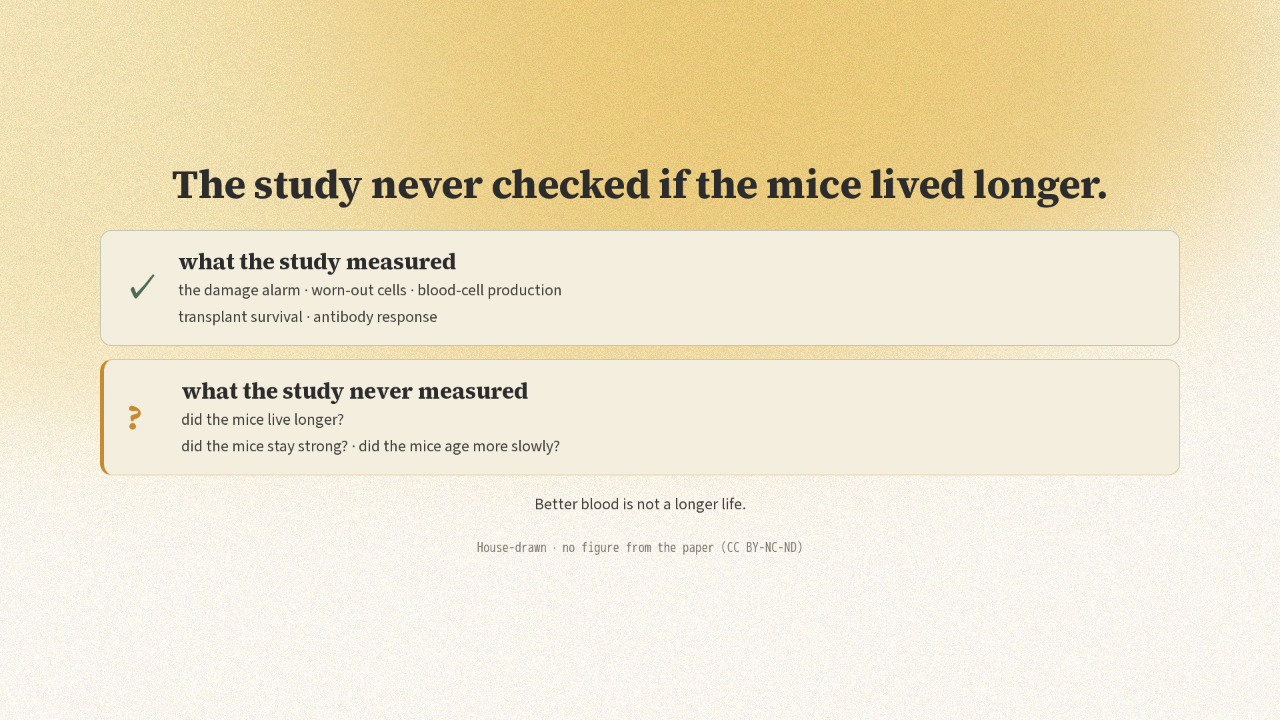
The study never checked if the mice lived longer.
There is one thing this study never measured, and it is the thing you actually care about. The team measured the alarm, the worn-out cells that stop dividing, the blood cell counts, the transplants. The team never checked whether these mice lived longer. Or stayed strong. Or aged more slowly. There is no lifespan test anywhere in this paper. Better blood is not a longer life. That is the experiment that would settle whether any of this matters.
Length was never the lever.
In mice, shutting off the telomere alarm improved blood function, and never touched a telomere. Length and damage came apart. If that holds up in people, everyone chasing longer telomeres has been chasing the wrong end of the problem.