Five lifespan treatments in mice all raised one molecule: ergothioneine
Five completely different treatments that extend lifespan in mice. This study found they all raised the same molecule. It is called ergothioneine, and right now it is sold to people as the longevity vitamin. So is it the reason those treatments work? This preprint takes the first careful look.
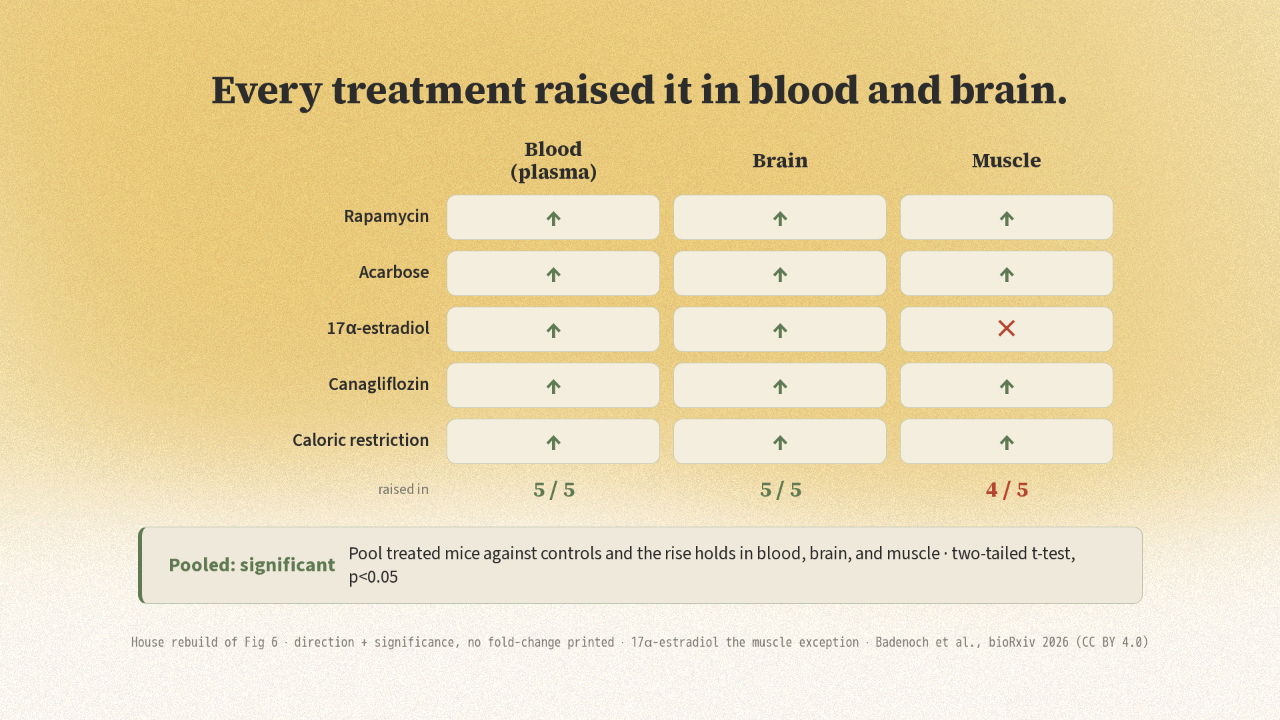
Every treatment raised it in blood and brain.
(plasma)
In these male mice, all five treatments raised ergothioneine in the blood and in the brain. Four of the five raised it in muscle too. Only 17-alpha-estradiol did not. Pool the treated mice against controls, and the rise is significant in blood, brain, and muscle alike.
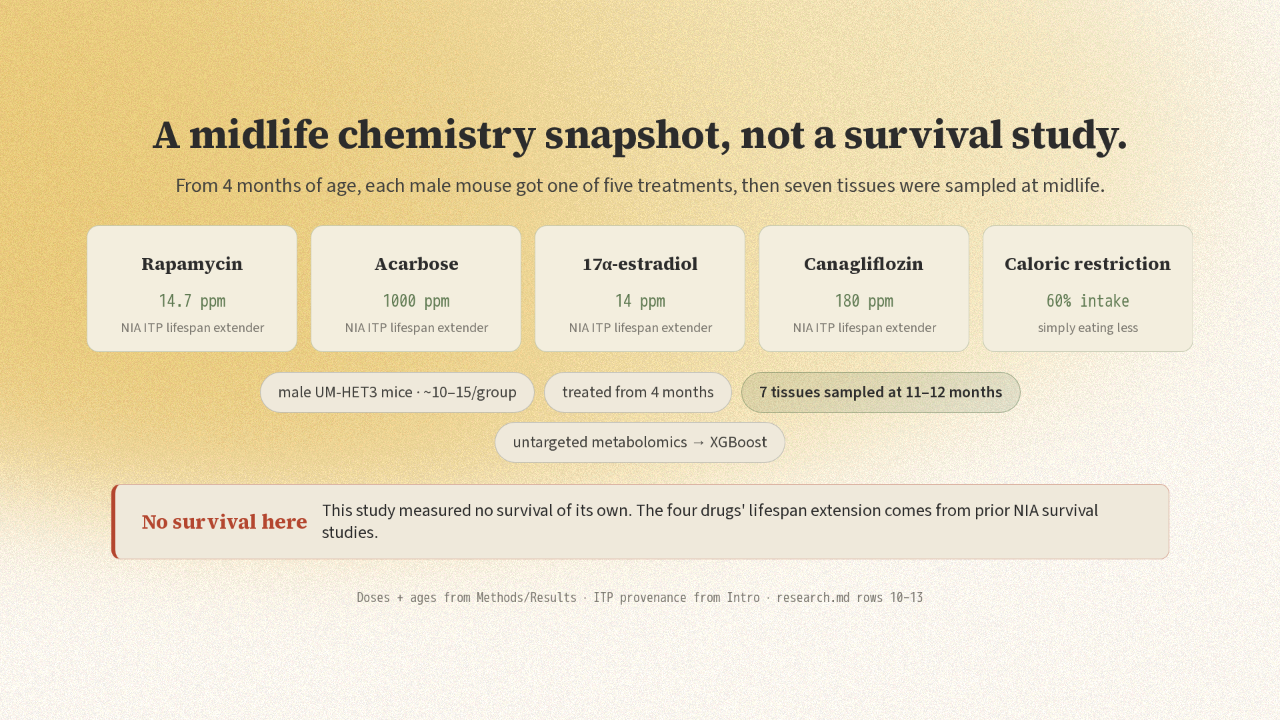
A midlife chemistry snapshot, not a survival study.
From four months of age, each mouse got one of five treatments. Four are drugs the National Institute on Aging has already shown extend lifespan in these mice. The fifth is simply eating less. At eleven to twelve months, still midlife, they measured the chemistry of seven tissues. This study measured no survival of its own. It is a chemistry snapshot, not a lifespan experiment.
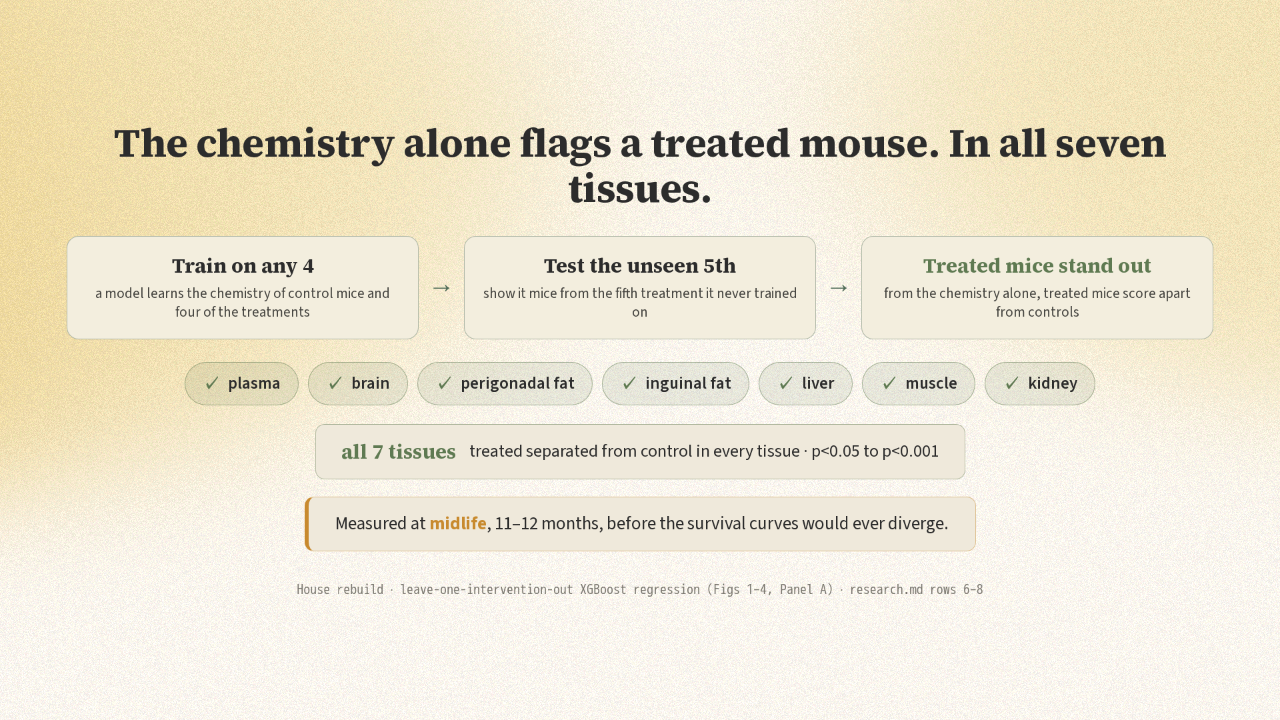
The chemistry alone flags a treated mouse. In all seven tissues.
Now the strongest result. They trained a machine-learning model on any four of the treatments, then showed it mice from a fifth it had never seen. From the chemistry alone, it could separate treated mice from untreated ones, in all seven tissues, every one significant. And this is still midlife. The treated state is readable in the chemistry months before the survival curves would ever diverge.
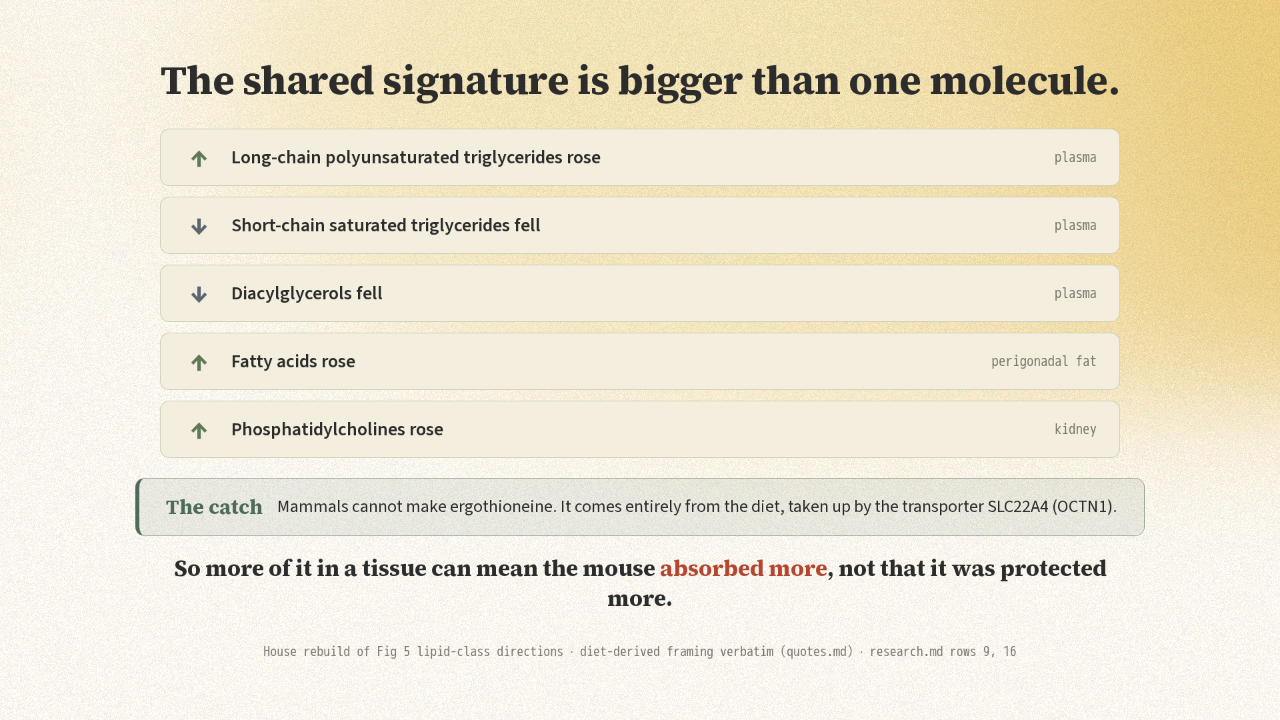
The shared signature is bigger than one molecule.
This signature is broader than one molecule. Across tissues, the same treatments reshaped the animals' fats. In the blood, long-chain polyunsaturated fats rose while short, saturated ones fell. And here is the catch. Mammals cannot make ergothioneine. It comes entirely from the diet, taken up by a dedicated transporter. So more of it in a tissue can simply mean the mouse absorbed more, not that it was protected more.
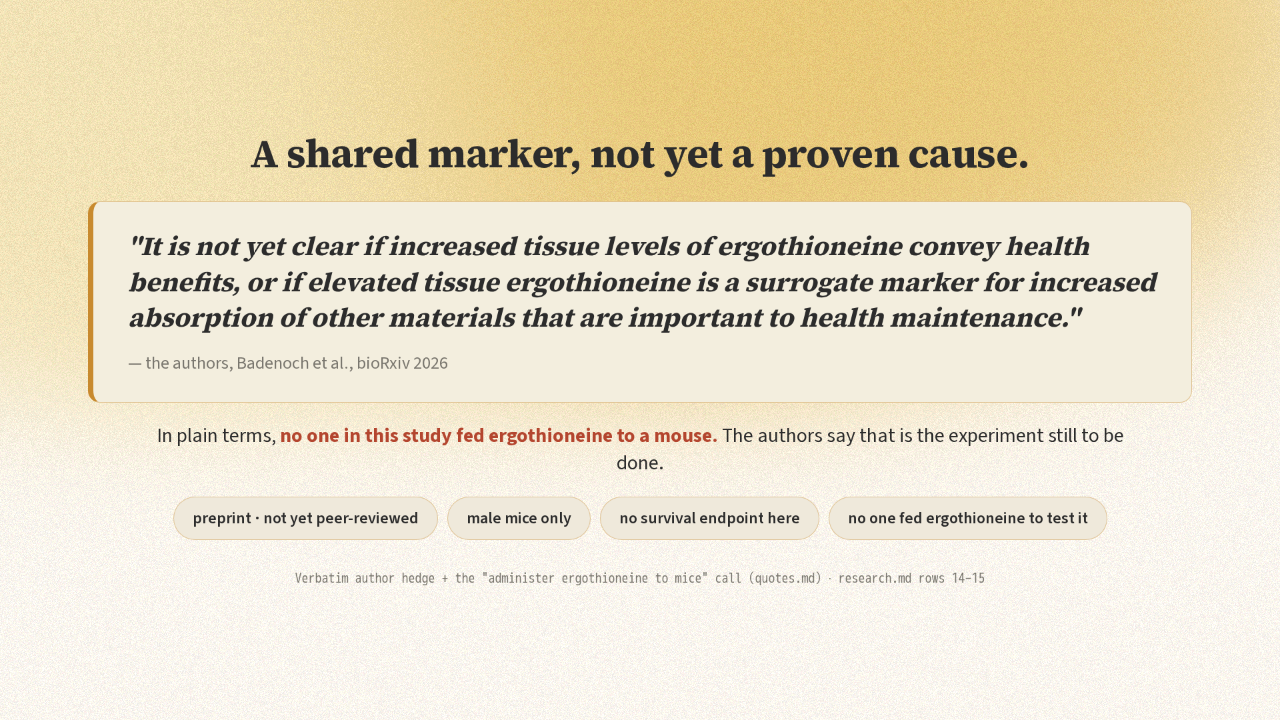
A shared marker, not yet a proven cause.
The authors are careful here, so let me quote them. It is not yet clear, they write, whether higher tissue ergothioneine conveys health benefits, or whether it is just a marker for absorbing other things that matter. In plain terms, no one in this study fed ergothioneine to a mouse. The authors say that is the experiment still to be done. And this is a preprint, not yet peer-reviewed. Male mice only. No survival measured. Ergothioneine is a shared fingerprint of the treated state, not a proven cause.
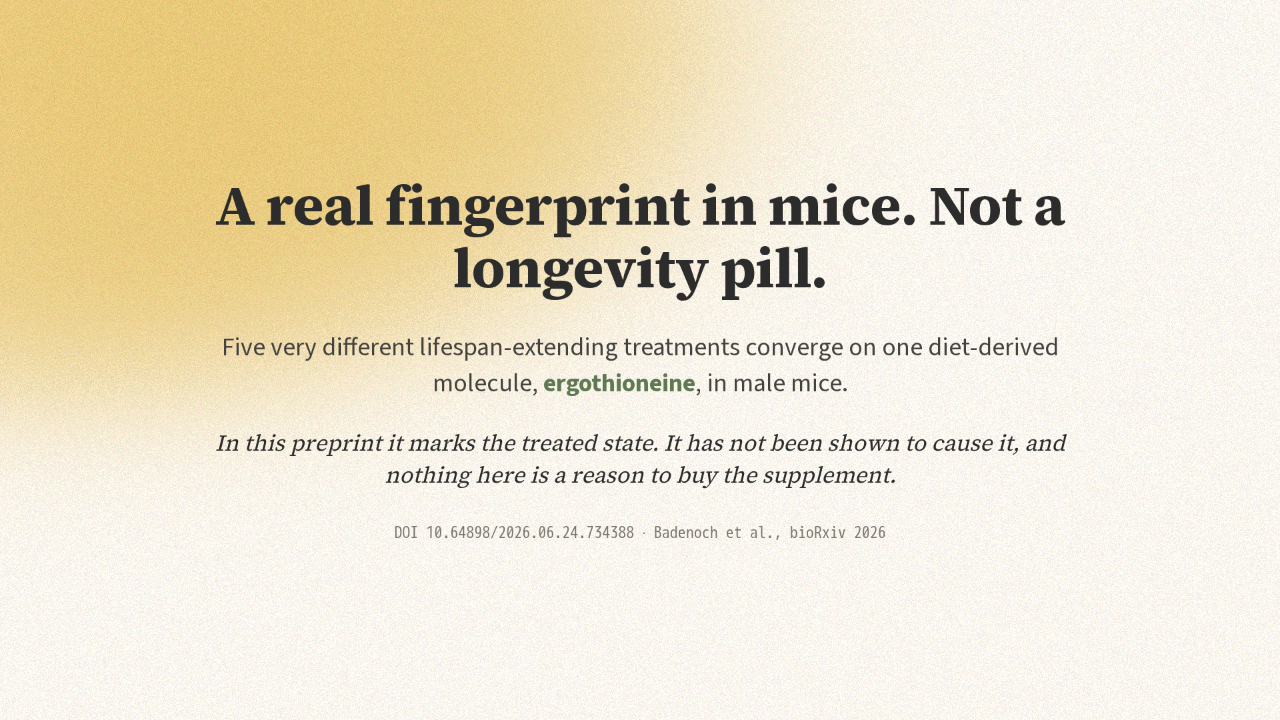
A real fingerprint in mice. Not a longevity pill.
So the takeaway. Five very different treatments that extend lifespan in mice really do converge on one diet-derived molecule. But in this preprint, ergothioneine marks the treated state. It has not been shown to cause it. And nothing here is a reason to go and buy the supplement.