Slide 1
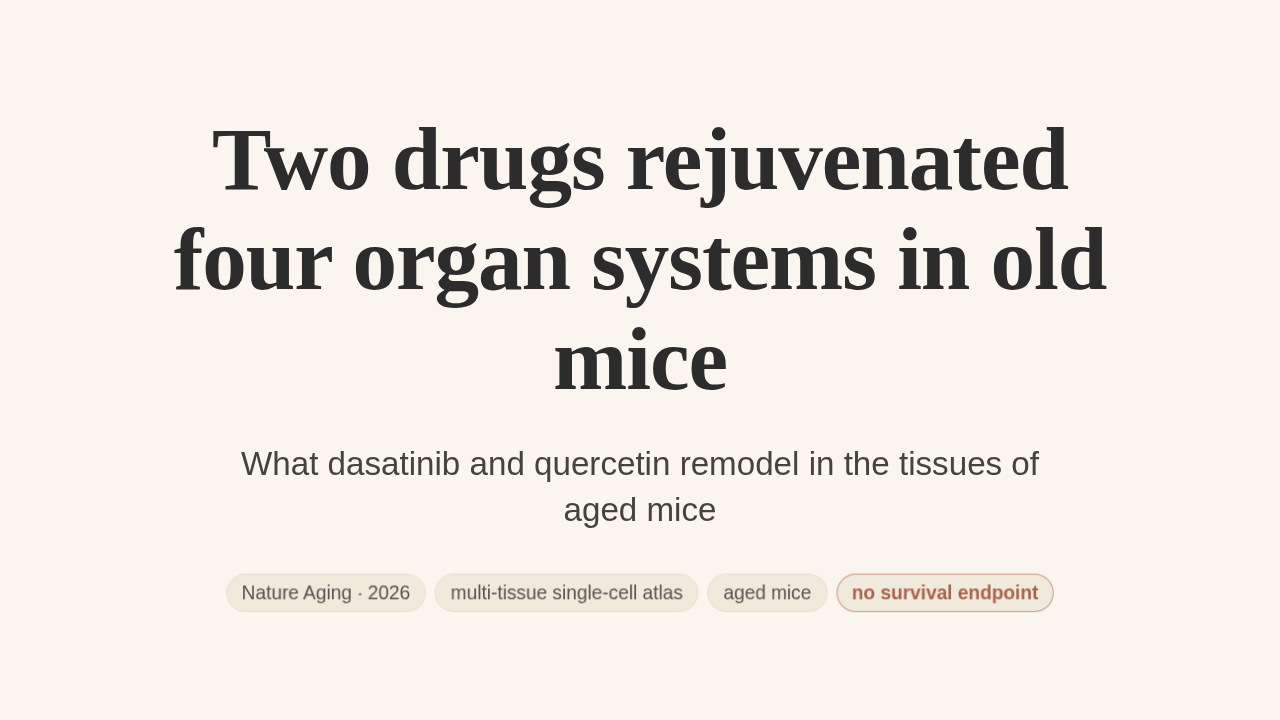
Dasatinib and quercetin are the senolytic stack many people already take to clear out the body's worn-out cells. This study mapped what the pair actually does across an aged mouse's tissues, cell by cell. It remodels a lot. But did the mice live any longer?
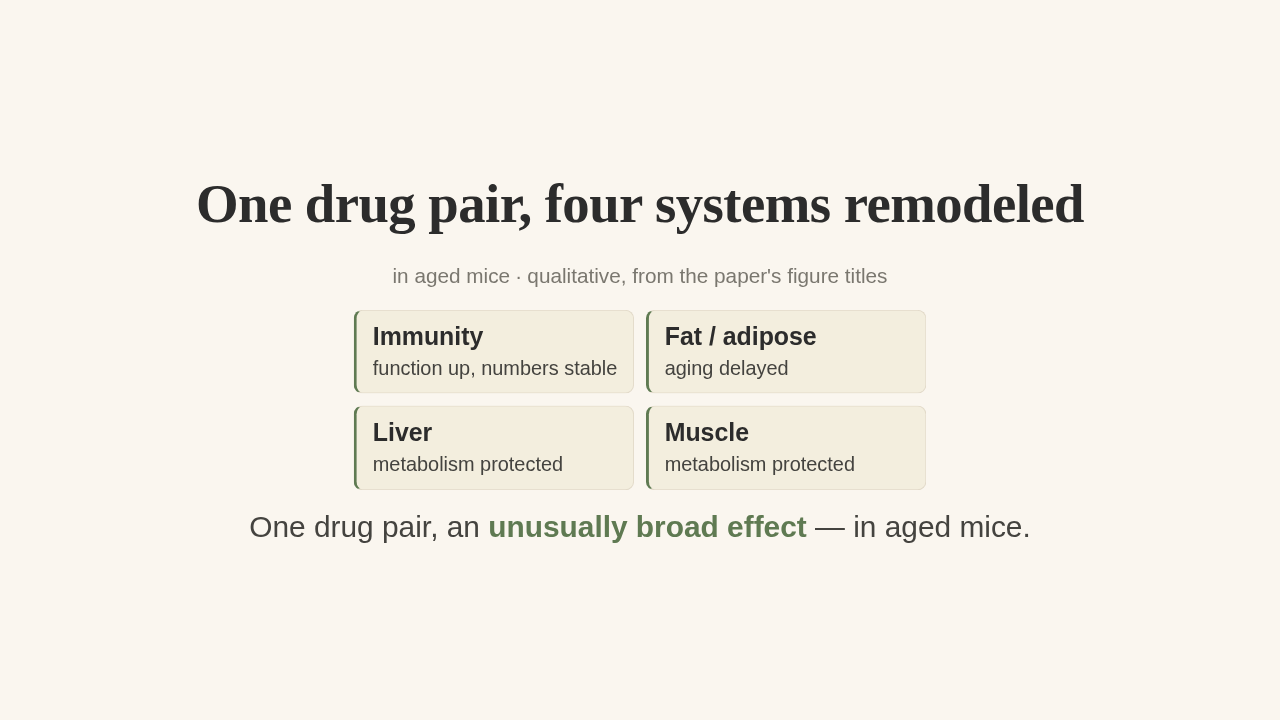
One drug pair, four systems remodeled
Across several tissues at once, the pair shifted aged mouse tissue back toward a younger profile. It remodeled the immune system, slowed aging in fat, and protected how the liver and muscle use energy. One drug pair, an unusually broad effect in mice.
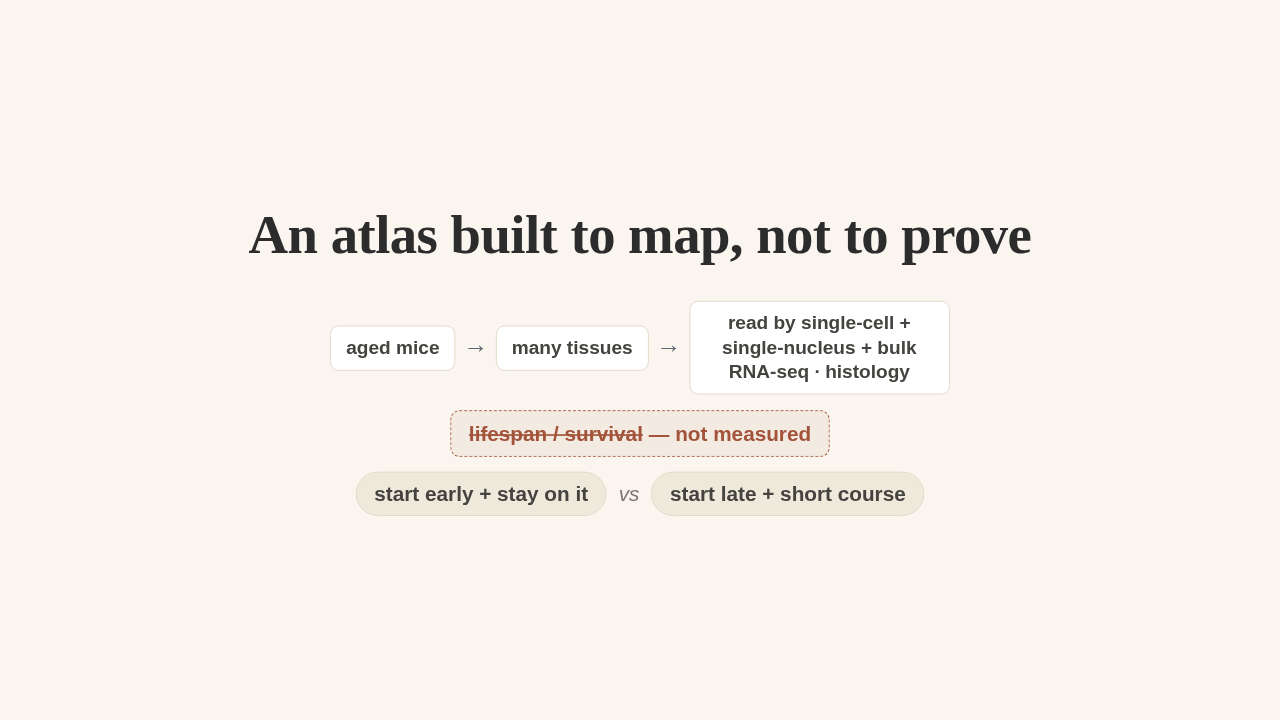
An atlas built to map, not to prove
This is an atlas, not a drug trial. They read many tissues from aged mice with single-cell sequencing, built to map what the drugs do, not to test survival. And they compared starting early and staying on it against starting late.
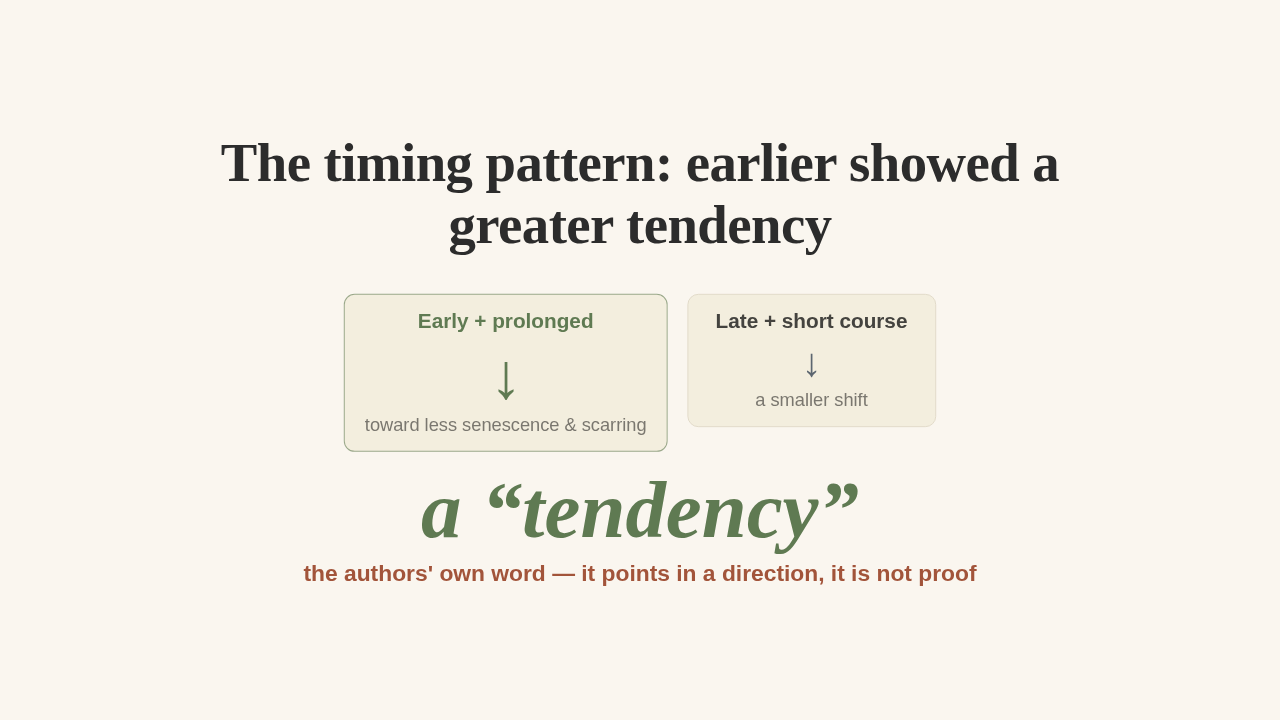
The timing pattern: earlier showed a greater tendency
Here's the pattern that stood out. In these aged mice, starting the pair early and staying on it showed a greater tendency to lower senescence and tissue scarring than starting late with a short course. Tendency is the authors' own word. It points in a direction. It is not proof.
Remodeled, not cleared
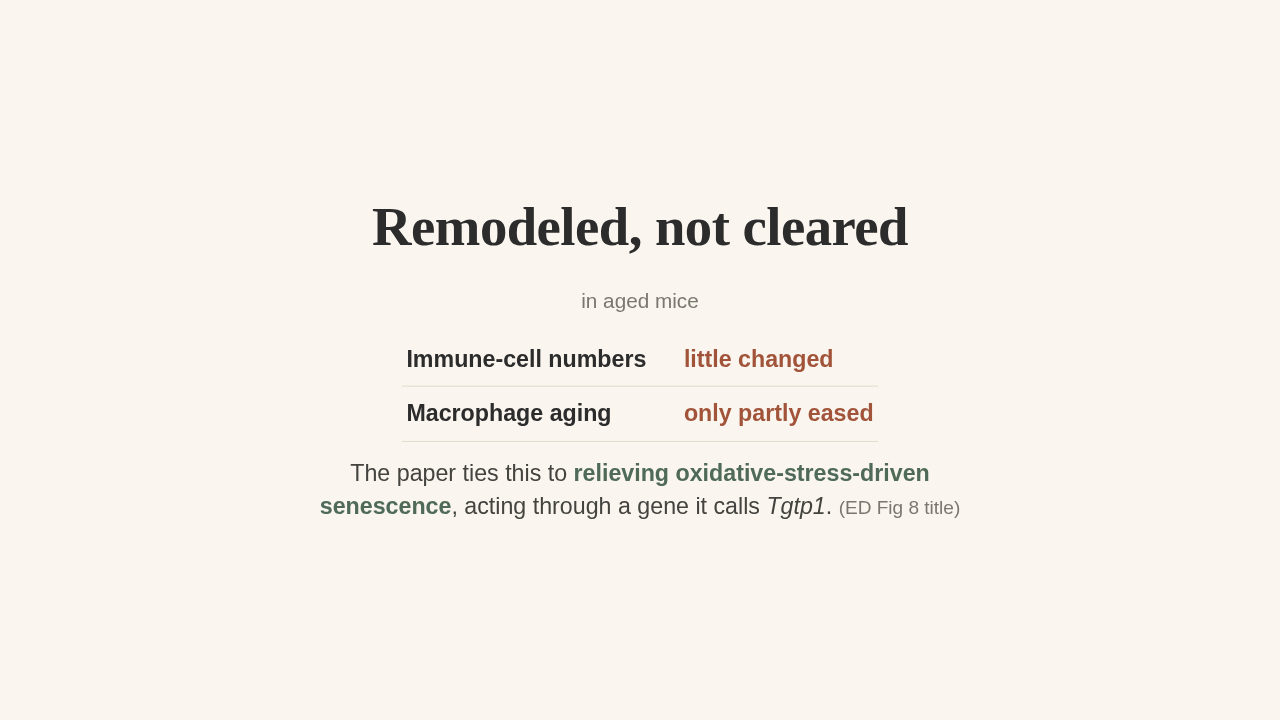
Remodeled is not the same as cleared. In these mice, the two drugs barely changed the number of immune cells, and only partly eased the aged state of macrophages. It shifted how those cells behave, not how many there are. The paper ties this to easing oxidative stress, acting through a gene it calls Tgtp1.
What it does not show
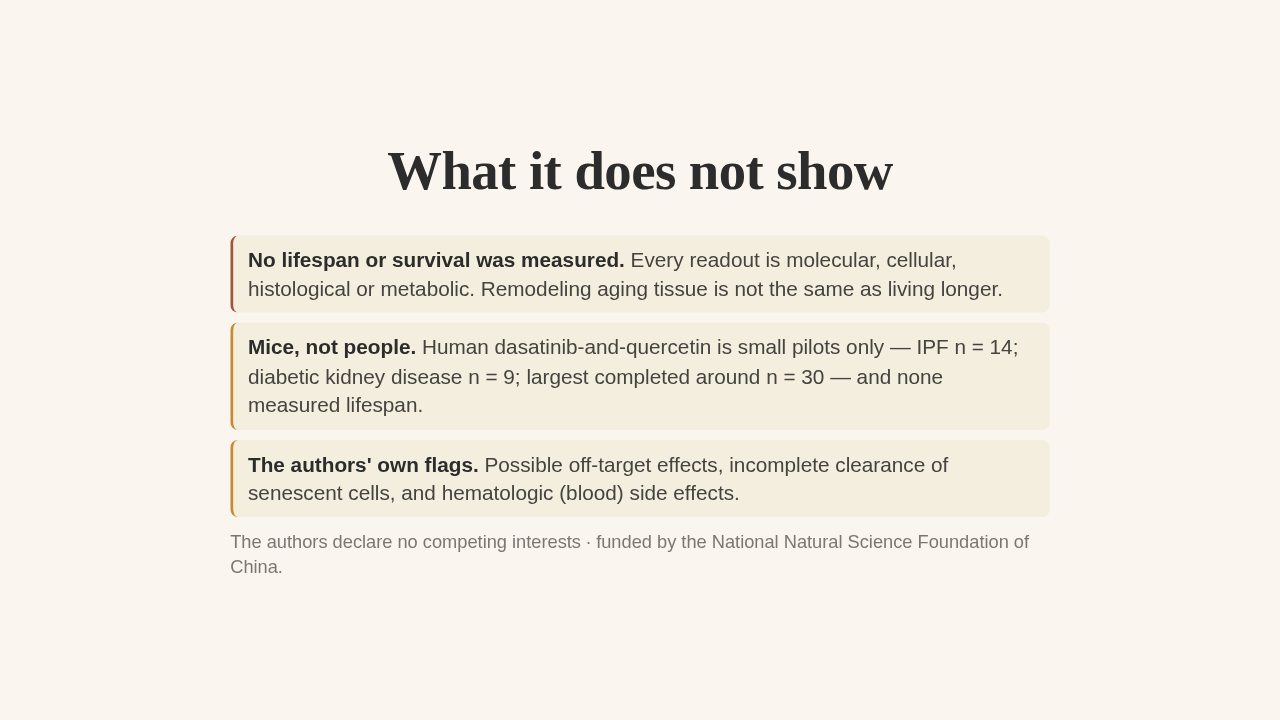
Now the limits, and they are the point. No lifespan or survival was measured at all. Remodeling aging tissue is not the same as living longer. And this is mice. In people, the combination has reached only small pilot trials, fourteen patients in one, nine in another, at most around thirty, and none measured lifespan. The authors also flag the drugs' own downsides, possible off-target effects, incomplete clearance of worn-out cells, and blood-related side effects.
Slide 7
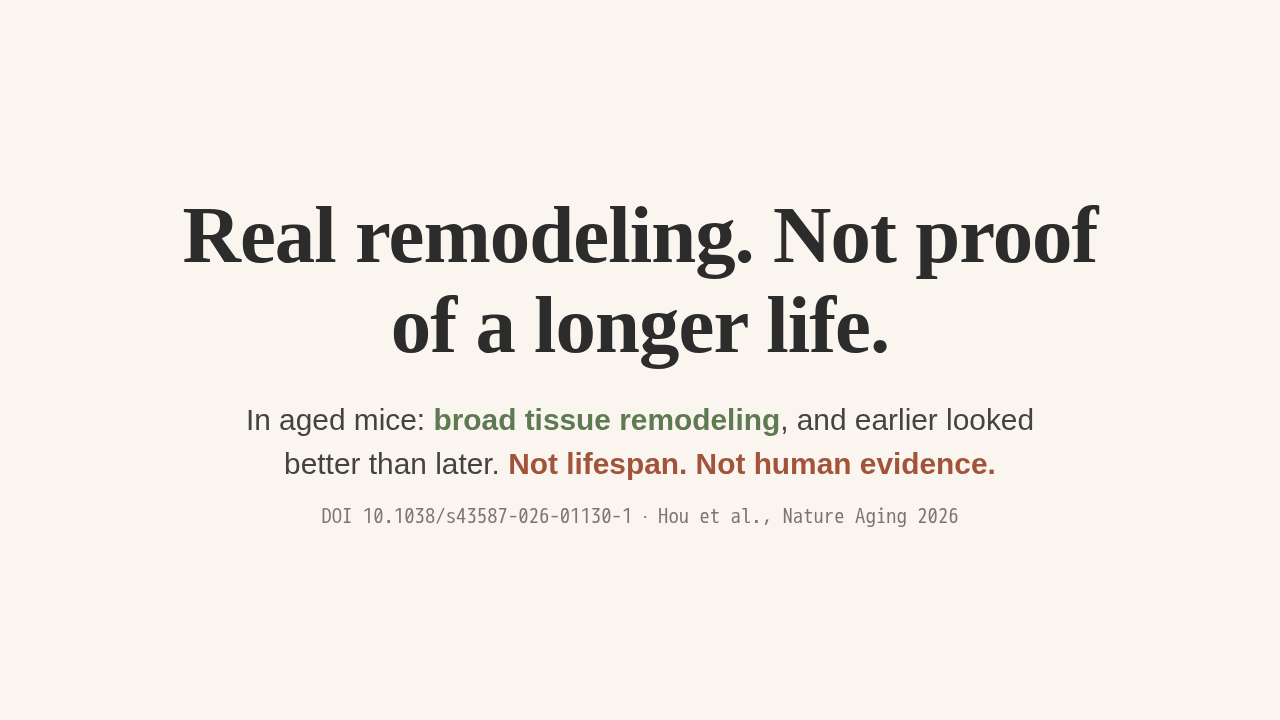
So in aged mice, the popular senolytic stack really does remodel aging tissue, and earlier looked better than later. But this is remodeling, not proof of a longer life, and not human evidence.