Two drugs rejuvenated four organ systems in old mice
4 months ago
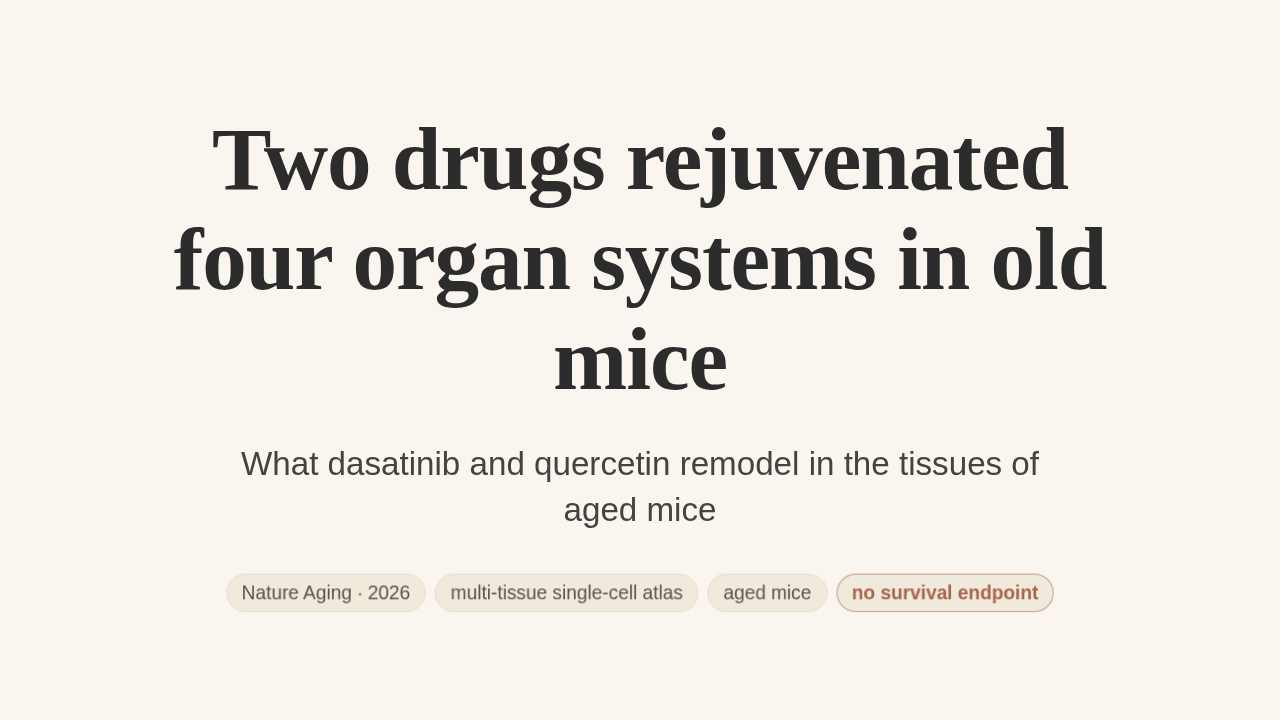
Dasatinib and quercetin are the senolytic stack many people already take to clear out the body's worn-out cells. This study mapped what the pair actually does across an aged mouse's tissues, cell by cell. It remodels a lot. But did the mice live any longer?
Ask about this presentation
Chapters
Show transcriptHide transcript
Dasatinib and quercetin are the senolytic stack many people already take to clear out the body's worn-out cells. This study mapped what the pair actually does across an aged mouse's tissues, cell by cell. It remodels a lot. But did the mice live any longer?
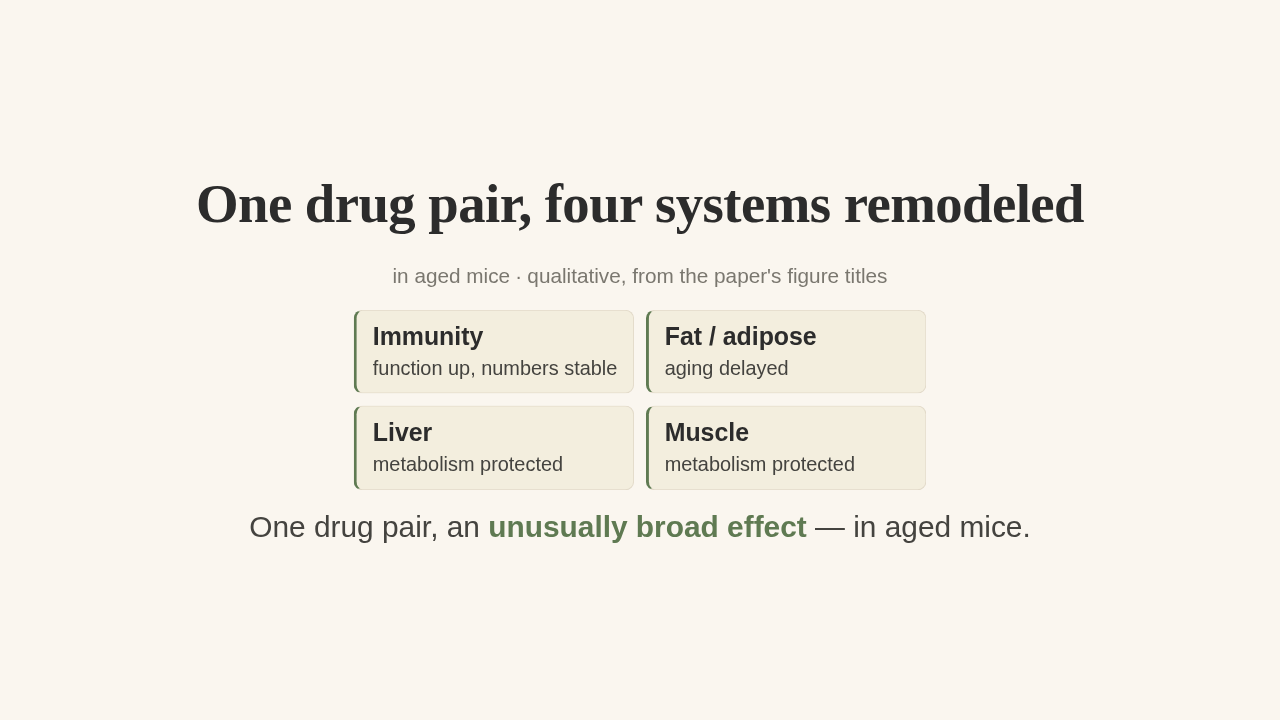
Across several tissues at once, the pair shifted aged mouse tissue back toward a younger profile. It remodeled the immune system, slowed aging in fat, and protected how the liver and muscle use energy. One drug pair, an unusually broad effect in mice.
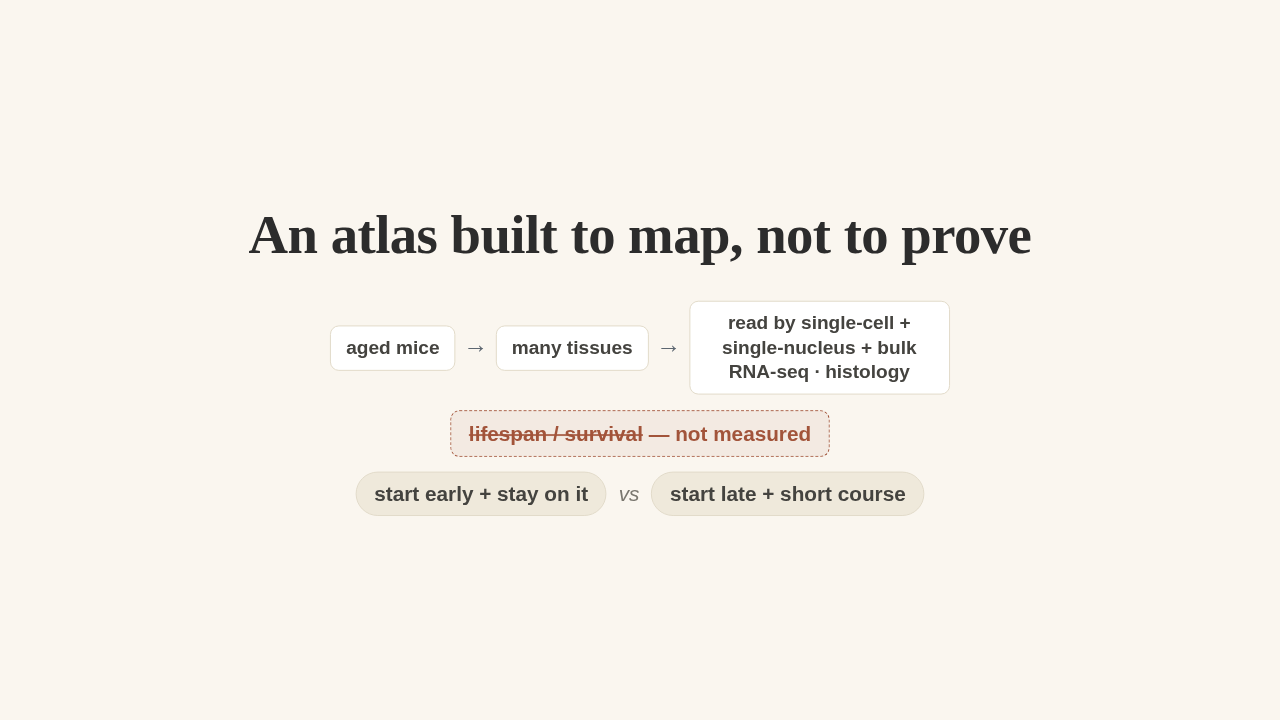
This is an atlas, not a drug trial. They read many tissues from aged mice with single-cell sequencing, built to map what the drugs do, not to test survival. And they compared starting early and staying on it against starting late.
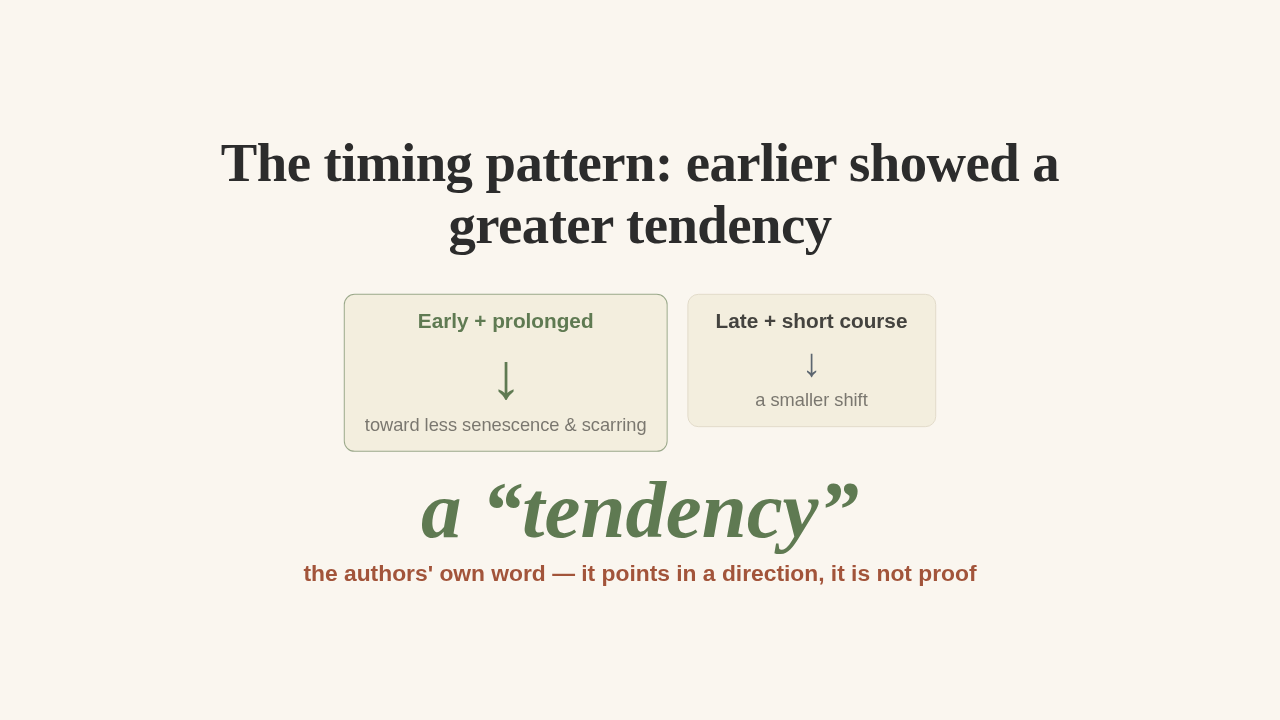
Here's the pattern that stood out. In these aged mice, starting the pair early and staying on it showed a greater tendency to lower senescence and tissue scarring than starting late with a short course. Tendency is the authors' own word. It points in a direction. It is not proof.
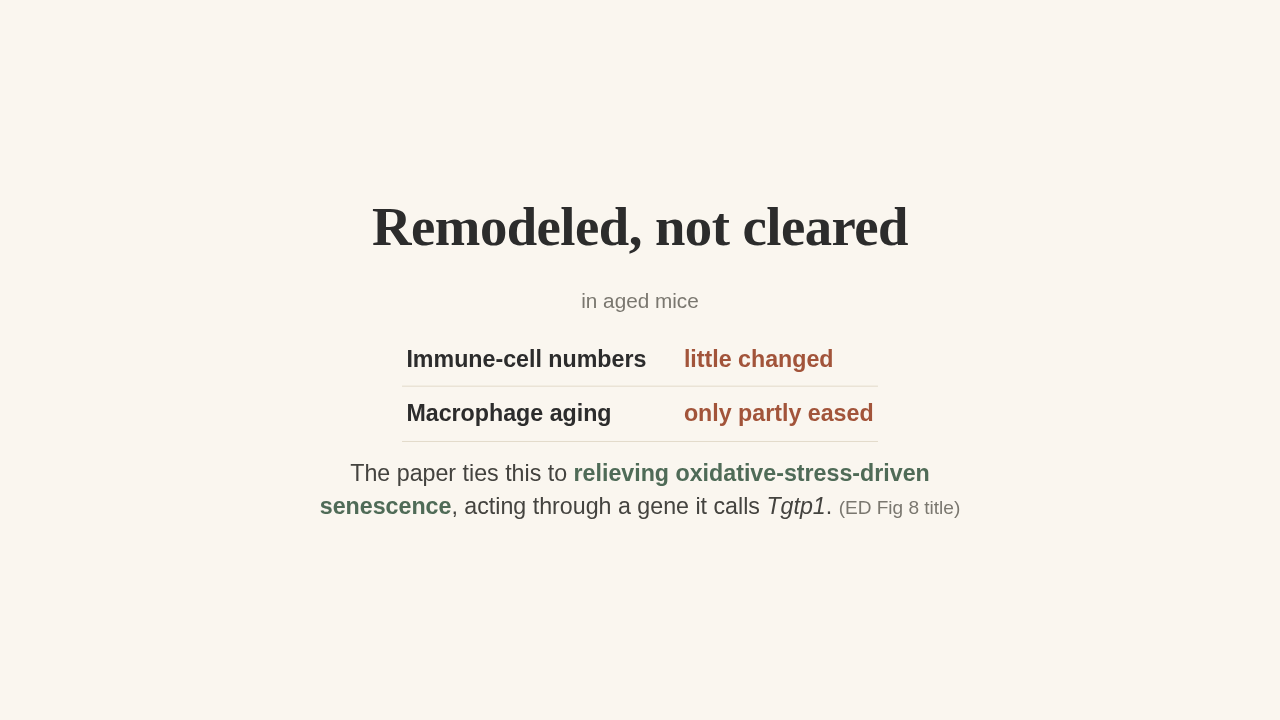
Remodeled is not the same as cleared. In these mice, the two drugs barely changed the number of immune cells, and only partly eased the aged state of macrophages. It shifted how those cells behave, not how many there are. The paper ties this to easing oxidative stress, acting through a gene it calls Tgtp1.
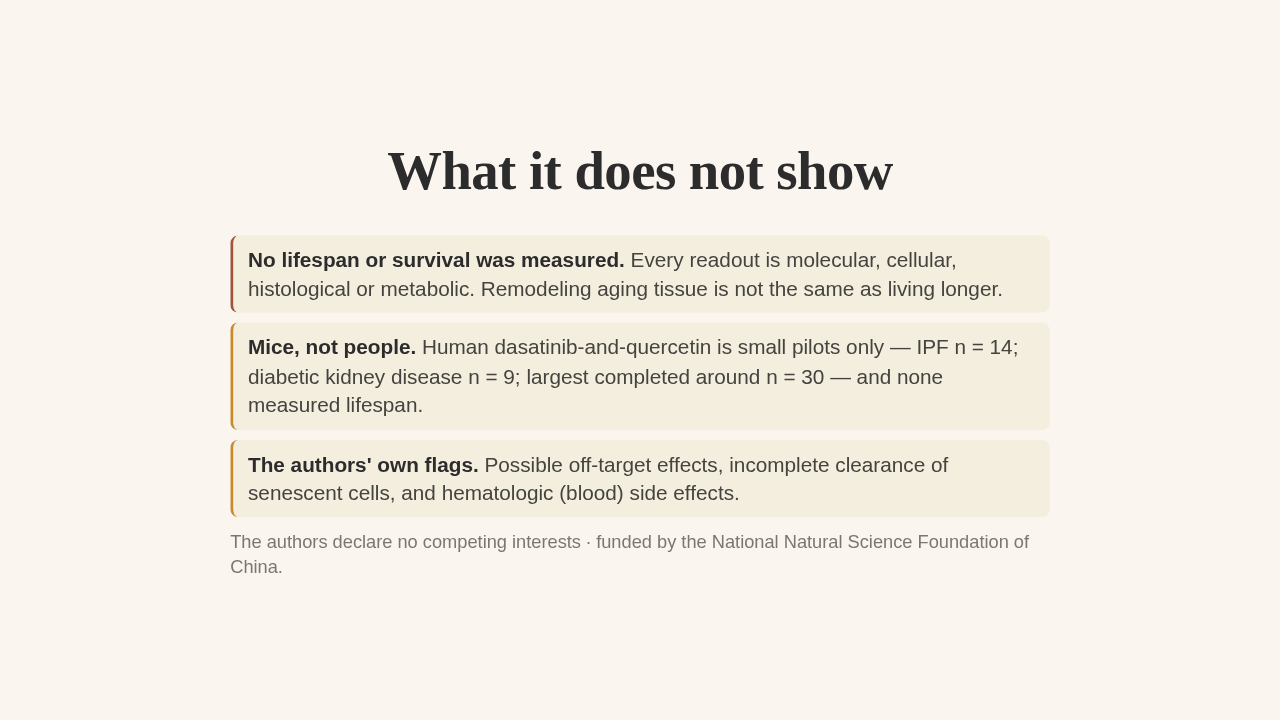
Now the limits, and they are the point. No lifespan or survival was measured at all. Remodeling aging tissue is not the same as living longer. And this is mice. In people, the combination has reached only small pilot trials, fourteen patients in one, nine in another, at most around thirty, and none measured lifespan. The authors also flag the drugs' own downsides, possible off-target effects, incomplete clearance of worn-out cells, and blood-related side effects.
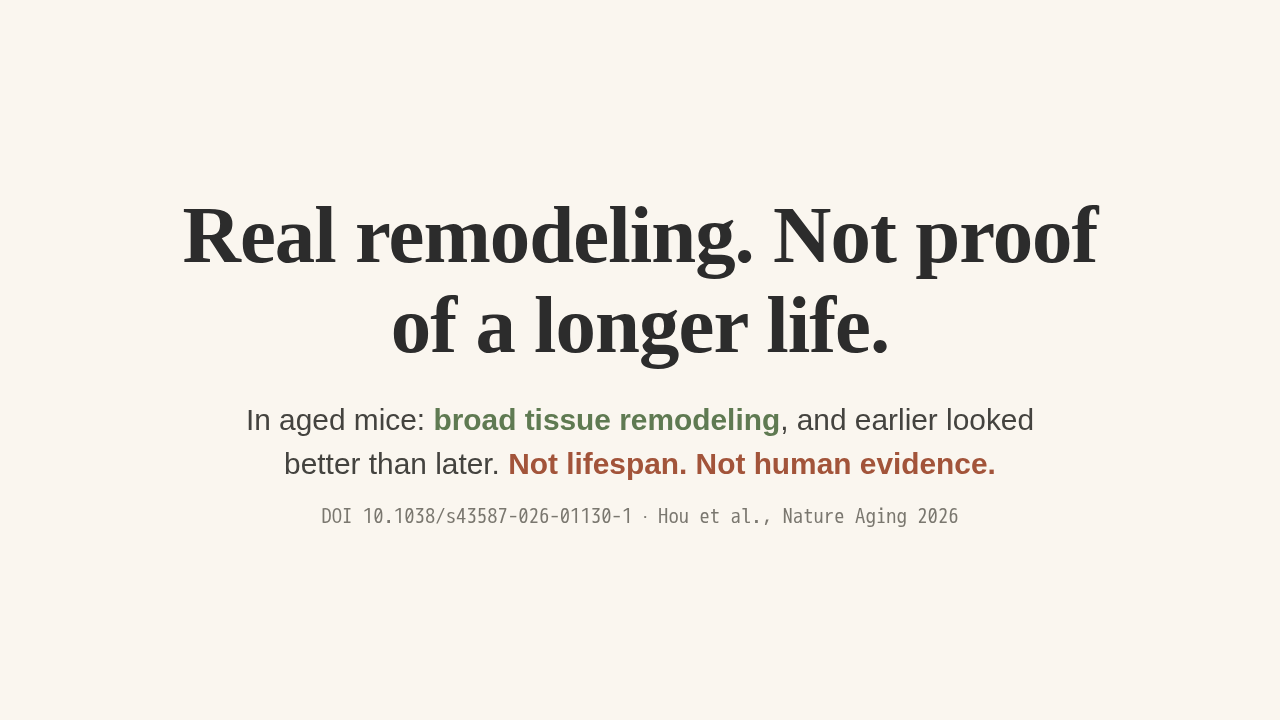
So in aged mice, the popular senolytic stack really does remodel aging tissue, and earlier looked better than later. But this is remodeling, not proof of a longer life, and not human evidence.
Up next
 3:21
Babies sugar-rationed in 1950s Britain had less dementia 70 years later, in 60,394 UK adults
@longevity-research
3 months ago
 3:13
Cutting one of protein's building blocks by two-thirds let male mice live about 23% longer
@longevity-research
3 months ago
 3:07
More spermidine tracked healthier liver scores — but those scores are body-size formulas, and the same people lost weight.
@longevity-research
4 months ago
 3:16
Six "biological age" tests on the same 970 adults: the DNA-reading ones predicted who kept their body and mind working.
@longevity-research
4 months ago
 3:13
A malaria drug made aged female rats live longer — and they also ate about 10% less.
@longevity-research
4 months ago
 3:12
Aging organs aren't worn out. In mice, 'zombie' cells piled up.
@longevity-research
4 months ago
 3:11
Aging's inflammation may start in your blood stem cells (mice)
@longevity-research
4 months ago
 2:57
A blood test trained on death pointed at the liver
@longevity-research
4 months ago
 3:15
In aged mice, the brain's cleanup crew breaks in the wiring
@longevity-research
4 months ago
 3:31
In 64,000 people, poor sleep showed no clear tie to aging
@longevity-research
4 months ago
 2:56
Aging mice’s blood got healthier by quieting a telomere damage alarm
@longevity-research
4 months ago
 2:29
Five lifespan treatments in mice all raised one molecule: ergothioneine
@longevity-research
4 months ago