A malaria drug made aged female rats live longer — and they also ate about 10% less.
A cheap, decades-old malaria drug made aged female rats live longer. But those same rats also ate about ten percent less food. And eating less, on its own, already lengthens a rodent's life. So this study can't yet tell the drug apart from the smaller meals.
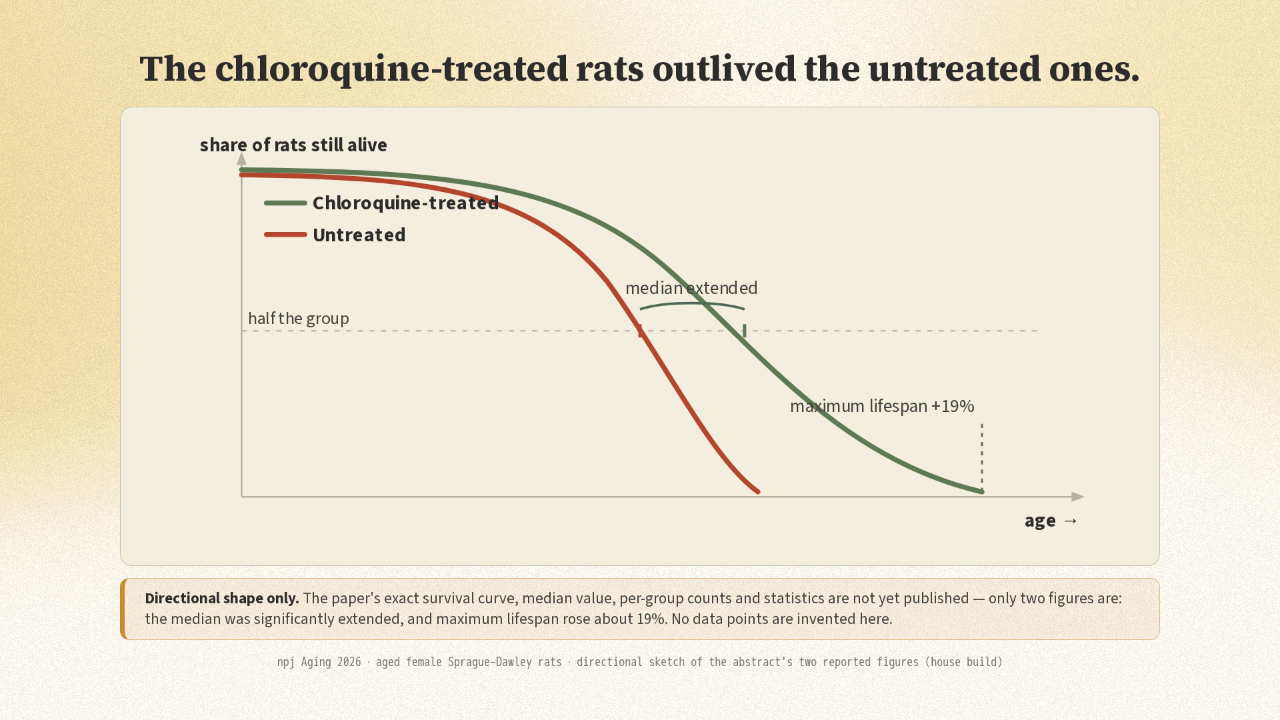
The chloroquine-treated rats outlived the untreated ones.
The researchers gave aged female rats a drug called chloroquine, a cheap malaria medicine that's been around for decades. They gave it on an on-again, off-again schedule for most of the rats' lives. The treated rats lived longer. The very longest-lived ones reached the end of life about nineteen percent later than the untreated rats. A real lifespan result, on a pill you can already buy, is a rare thing.
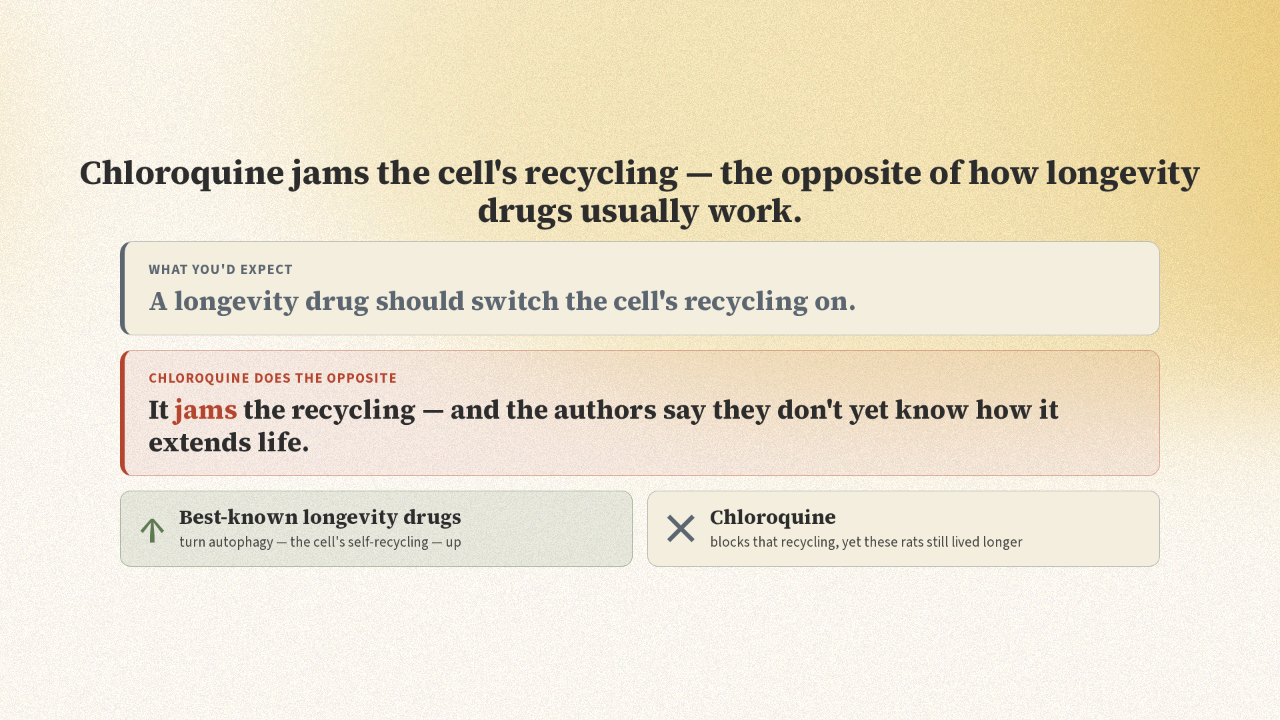
Chloroquine jams the cell's recycling — the opposite of how longevity drugs usually work.
A longevity drug, we assume, switches the cell's cleanup on. That cleanup is called autophagy: the way a cell breaks down and recycles its own worn-out parts. The best-known longevity drugs turn autophagy up. Chloroquine does the opposite and jams it. So a drug that jams a cell's recycling and still extends life runs backwards. And the authors say they don't yet know how it works.
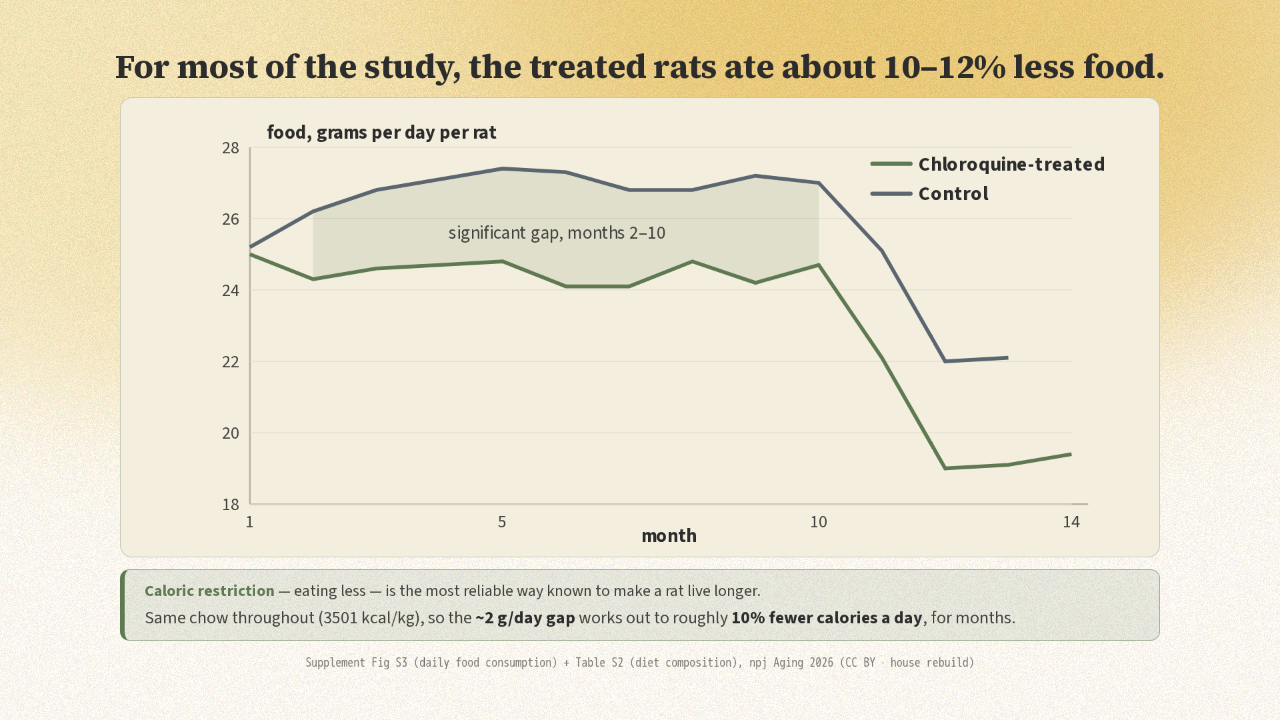
For most of the study, the treated rats ate about 10–12% less food.
Here's the fact that changes everything. Across decades of animal studies, the single most reliable way to make a rat live longer is to feed it less. Researchers call it caloric restriction, and it works so consistently it's the benchmark every longevity treatment is measured against. Now look at what the treated rats did. For most of the study, the treated rats ate about ten to twelve percent less food than the untreated rats. The paper records that gap directly. Same chow, just less of it. That works out to roughly ten percent fewer calories, every day, for months.
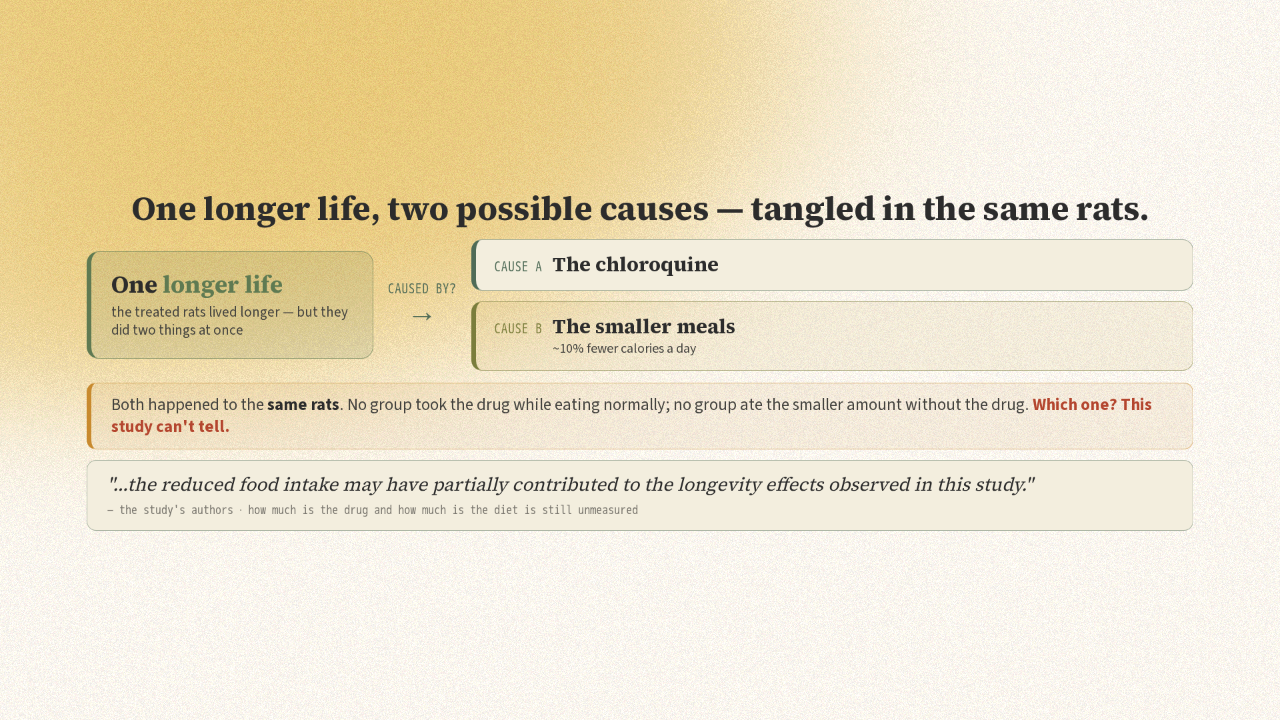
One longer life, two possible causes — the drug and the smaller meals, tangled in the same rats.
One longer life, two possible causes — tangled in the same rats.
So put the two facts together. The treated rats did two things at once. They took the drug, and they ate about ten percent less. So there are two possible reasons those rats lived longer: the chloroquine, or the smaller meals. And this study can't separate them, because both happened to the same rats. No group took the drug while eating normally. No group ate the smaller amount without the drug. The authors say it themselves: the reduced eating may have partially contributed to the longevity effects. How much is the drug and how much is the diet is still unmeasured.
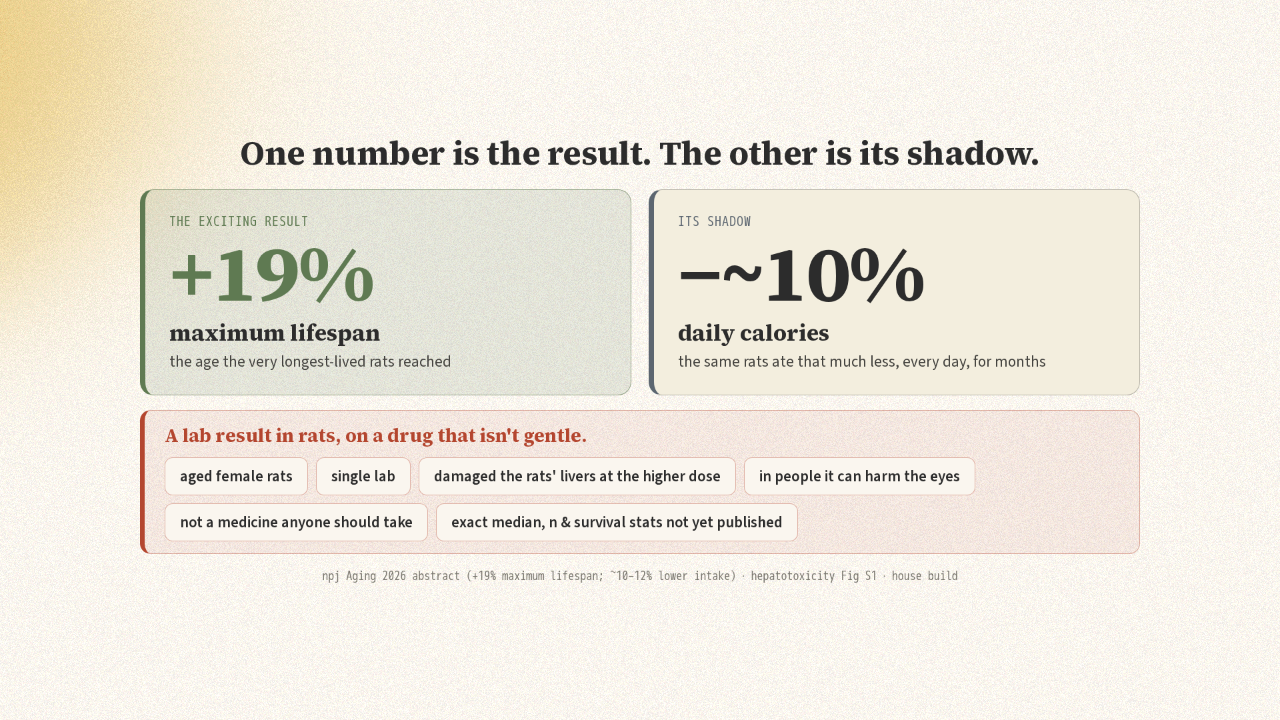
The two numbers, side by side: maximum lifespan +19%, and daily calories about −10%.
One number is the result. The other is its shadow.
Now the two numbers, side by side. The treated rats' maximum lifespan, meaning the age the very longest-lived ones reached, was about nineteen percent higher than the untreated rats'. And right beside it, those same rats ate about ten percent fewer calories a day. One number is the exciting result; the other is its shadow. This is a lab result in rats, on a drug that isn't gentle. Chloroquine damaged the rats' livers at the higher dose tested here, and in people it can harm the eyes. It is not a medicine anyone should take.
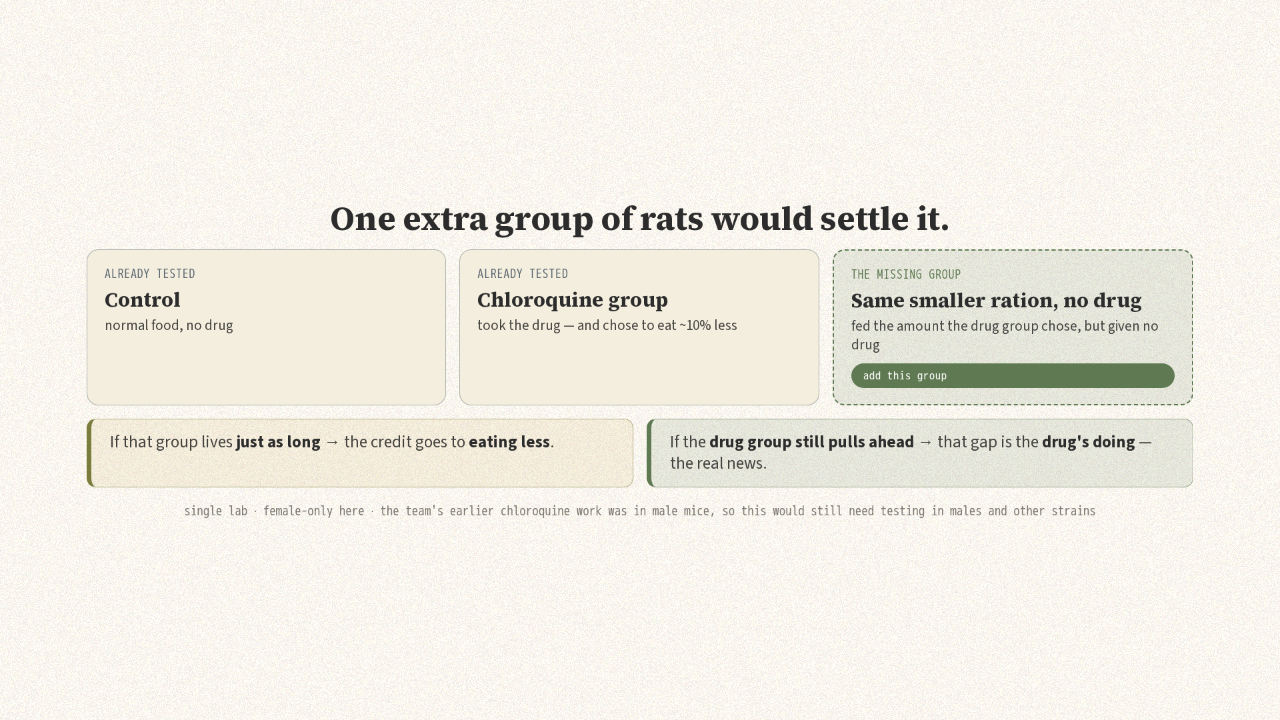
One extra group of rats — fed the same smaller ration, no drug — would settle it.
One extra group of rats would settle it.
So here's the experiment that would settle it: one extra group of rats. Feed that group the same smaller ration the drug group chose, but give it no drug. If those rats live just as long, the credit goes to eating less. If the drug group still pulls ahead, that gap is the drug's doing, and that would be the real news. The team could run exactly this next. It would still need testing in males and other strains, since this group's earlier chloroquine work was in male mice.
Was it the drug, or the smaller meals? Not yet answered.
A cheap old malaria drug made aged rats live longer — but the same rats also ate less.
A cheap old malaria drug made aged rats live longer, but the same rats also ate less. So the answer to "was it the drug?" is: not yet. And now you have the one question for every headline that says something helps you live longer. Did the treated animals also eat less?