Slide 1
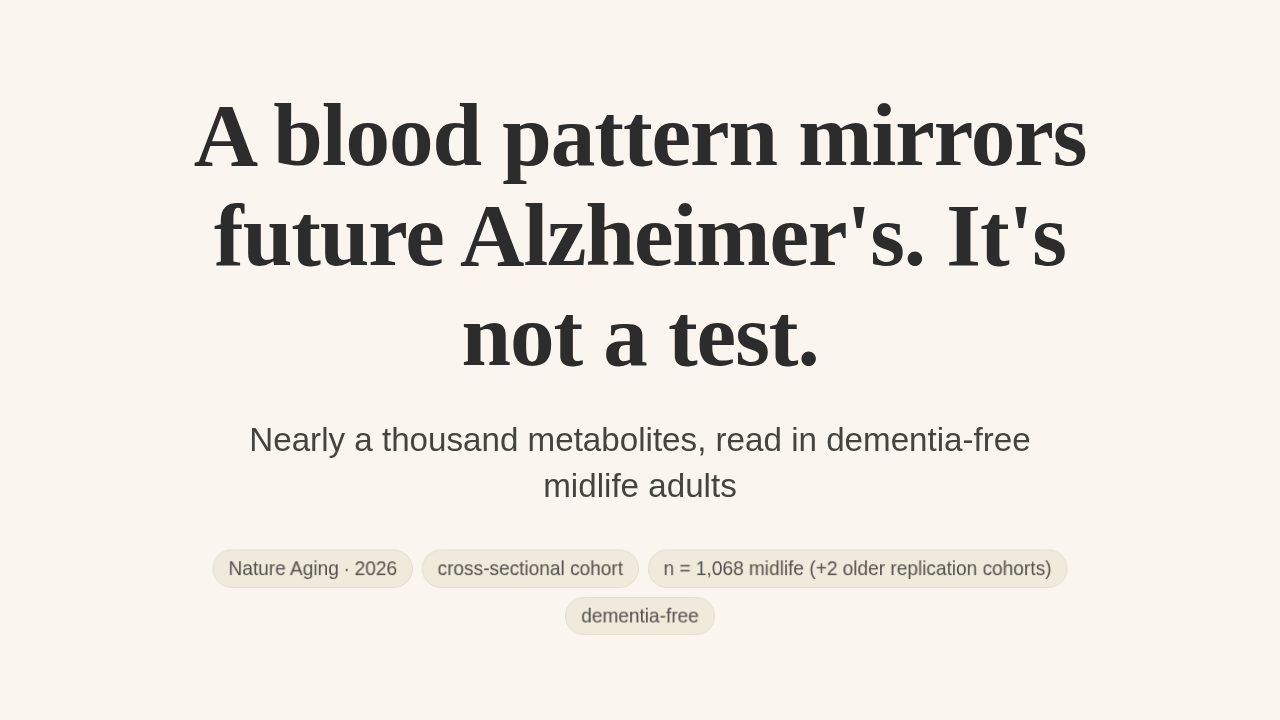
Scientists measured nearly a thousand chemicals in the blood of over a thousand dementia-free middle-aged adults, and found a pattern that tracks their brain health. The same pattern lines up with who later develops Alzheimer's. Is it a test you could take, or just a correlation?
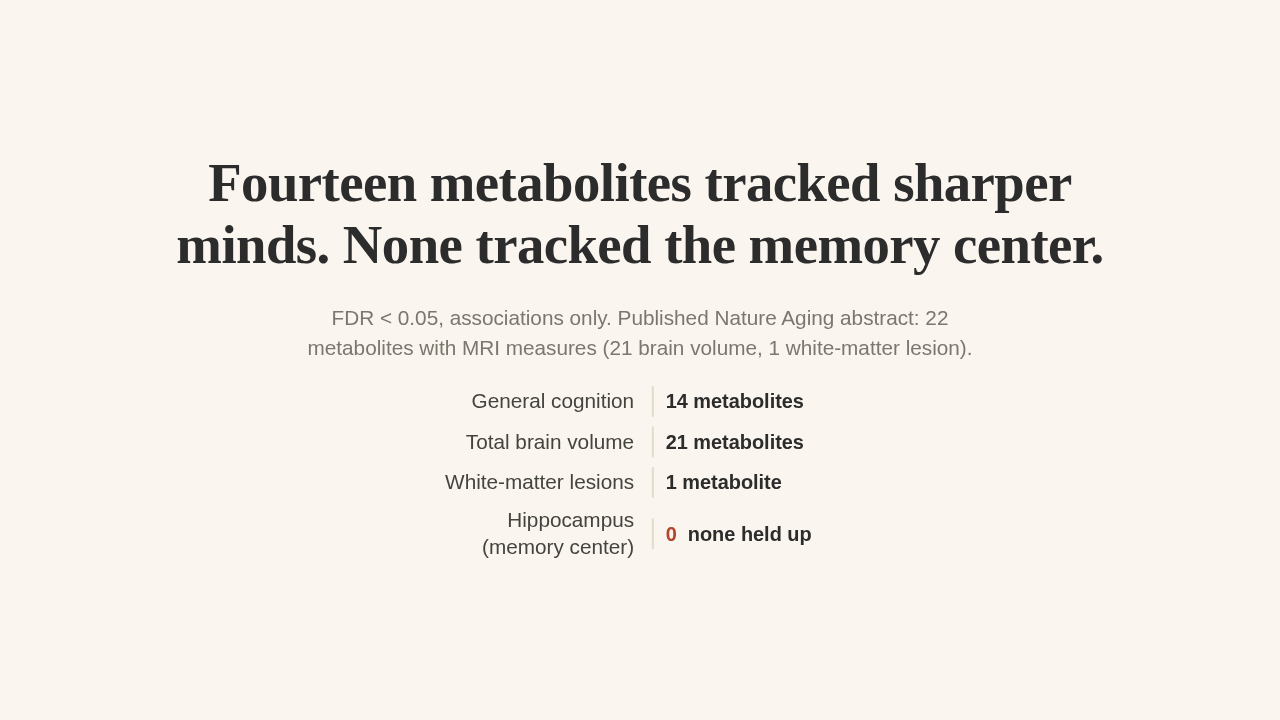
Fourteen metabolites tracked sharper minds. None tracked the memory center.
It's an observational study, so these are associations, not causes. Fourteen blood metabolites tracked better cognition. Twenty-one tracked larger brain volume. And for the hippocampus, the brain's memory center, none of them held up.
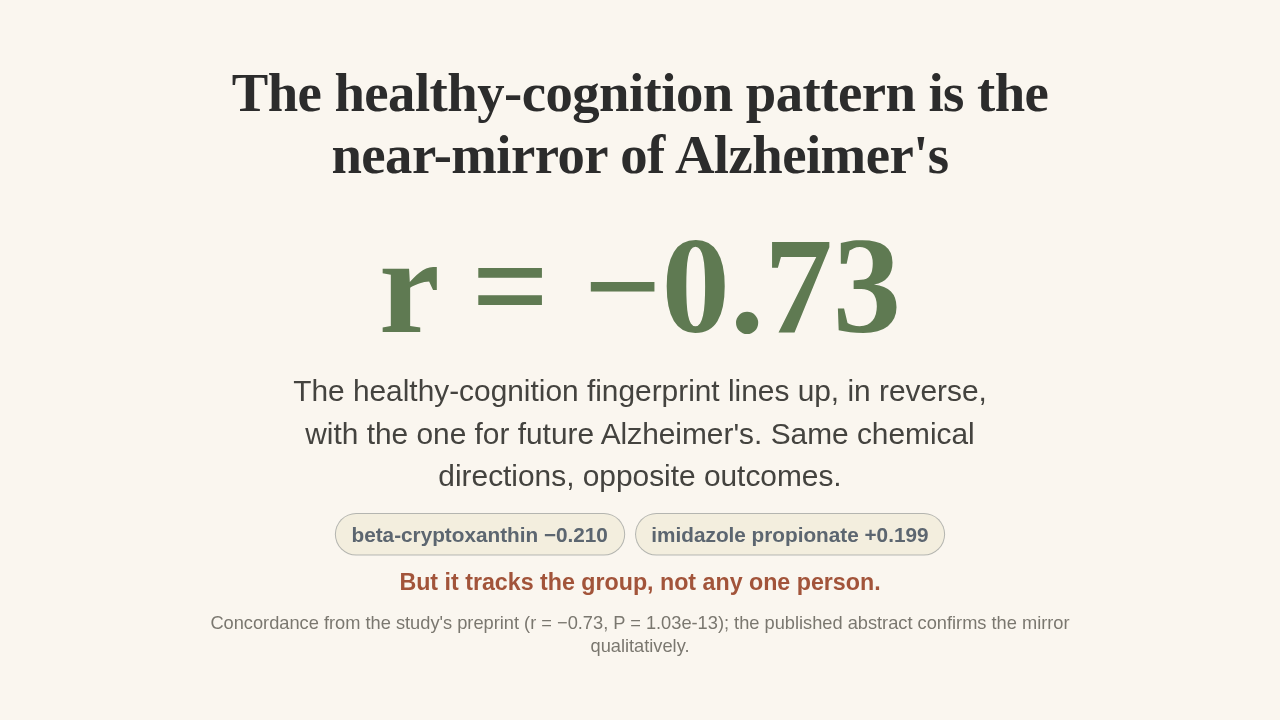
The healthy-cognition pattern is the near-mirror of Alzheimer's
Here's the arresting part. The healthy-cognition fingerprint is nearly the mirror image of the one for future Alzheimer's. In the study's preprint, the two lined up at minus zero point seven three. Same chemical directions, opposite outcomes. But it tracks the group, not any one person.
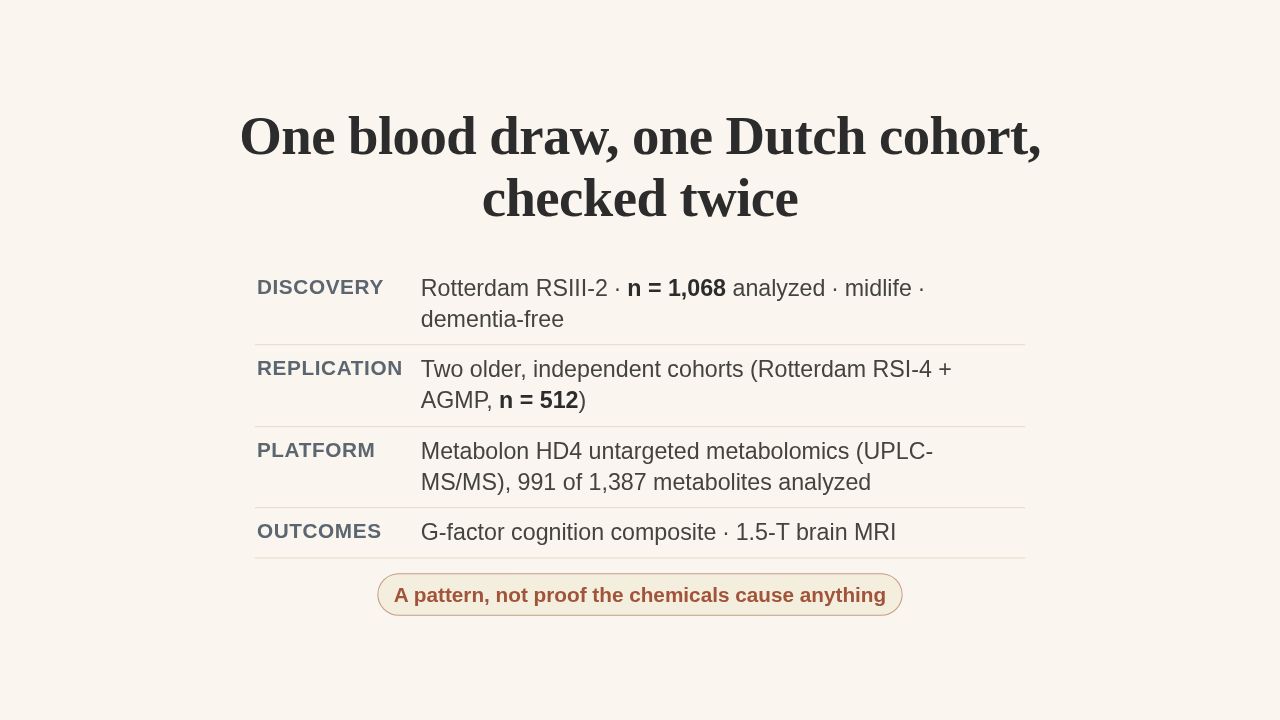
One blood draw, one Dutch cohort, checked twice
How solid is this? One blood draw, one Dutch cohort, replicated in two older, independent groups. A scan like this can show a pattern, but not that the chemicals cause anything.
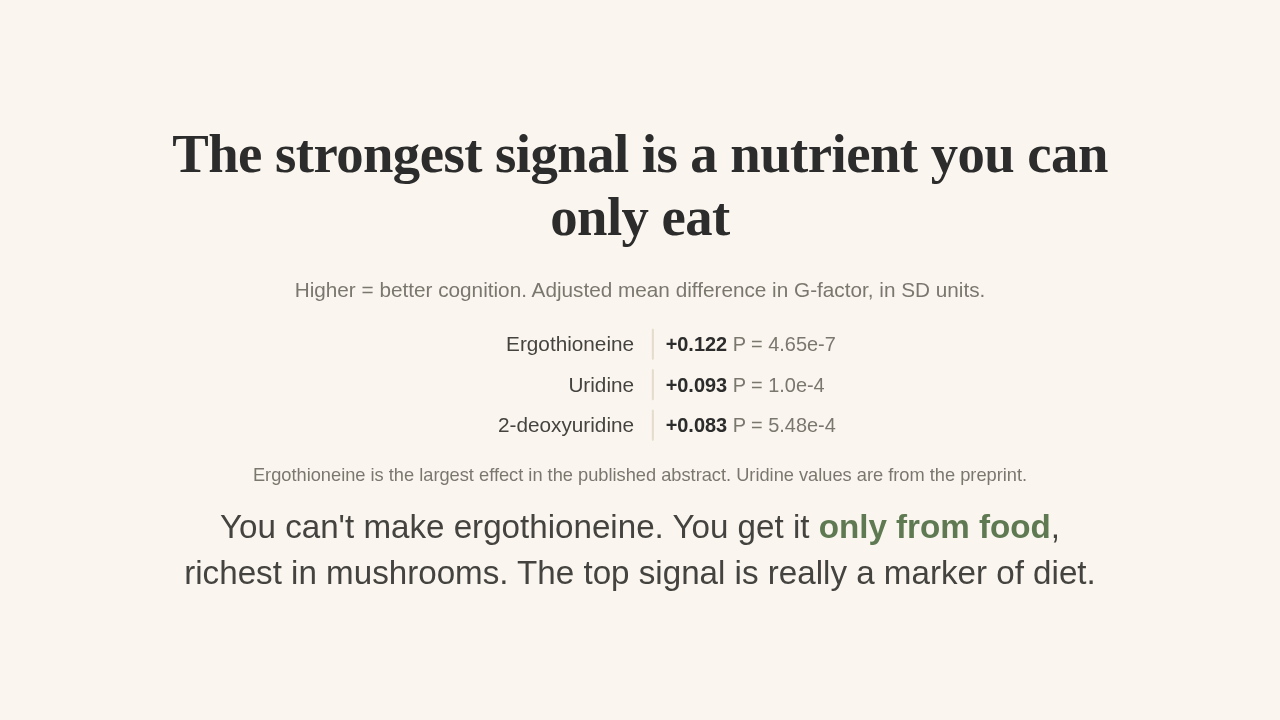
The strongest signal is a nutrient you can only eat
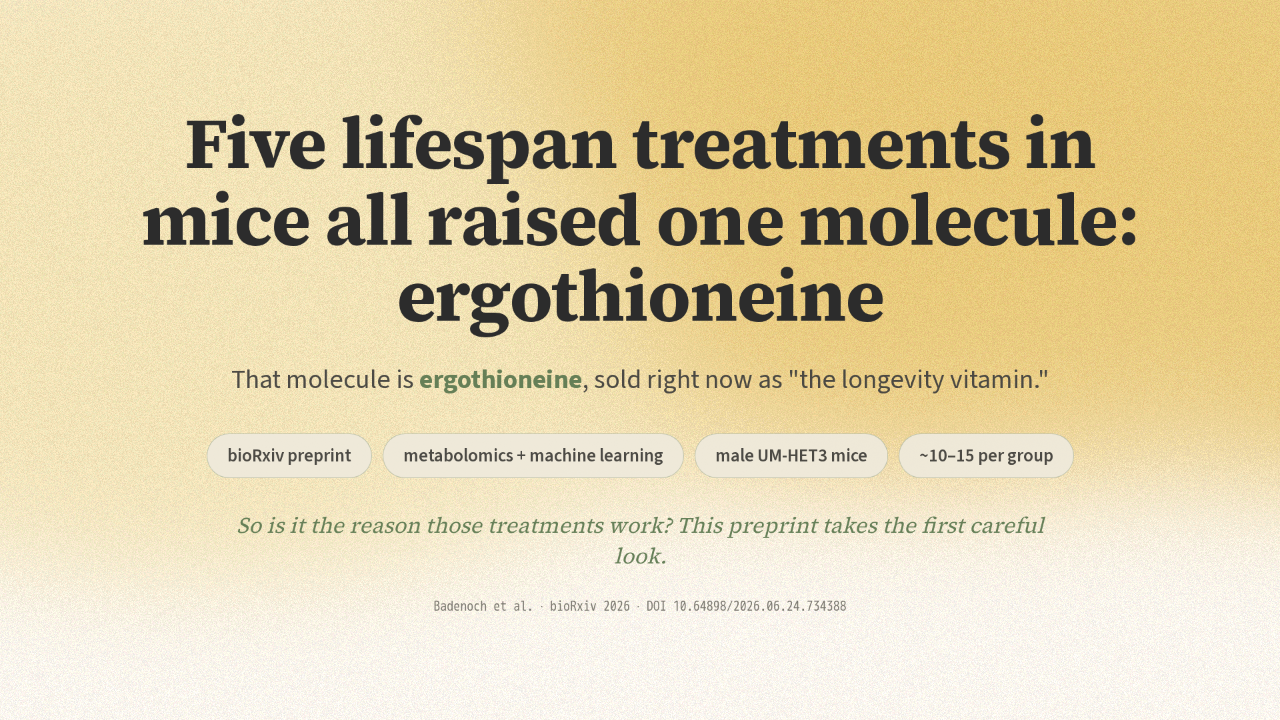
So what was the strongest single signal? A compound called ergothioneine. Higher levels tracked better cognition, the largest effect in the study. And here's the twist. Your body can't make ergothioneine. You get it only from food, richest in mushrooms. The top signal is really a marker of diet.
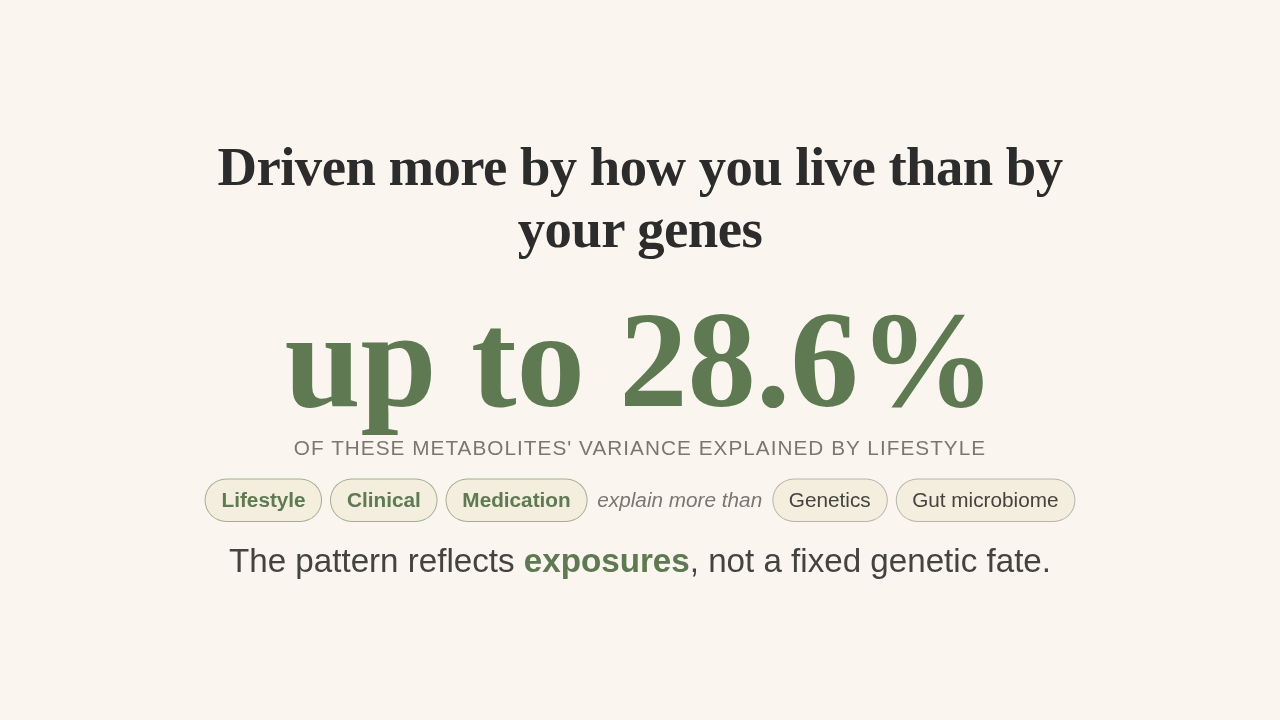
Driven more by how you live than by your genes
There's a hopeful read too. These metabolites look mostly modifiable. Lifestyle, clinical factors and medication explained more of their levels than genes or the gut microbiome, with lifestyle alone up to nearly twenty-nine percent. The pattern reflects exposures, not a fixed genetic fate.
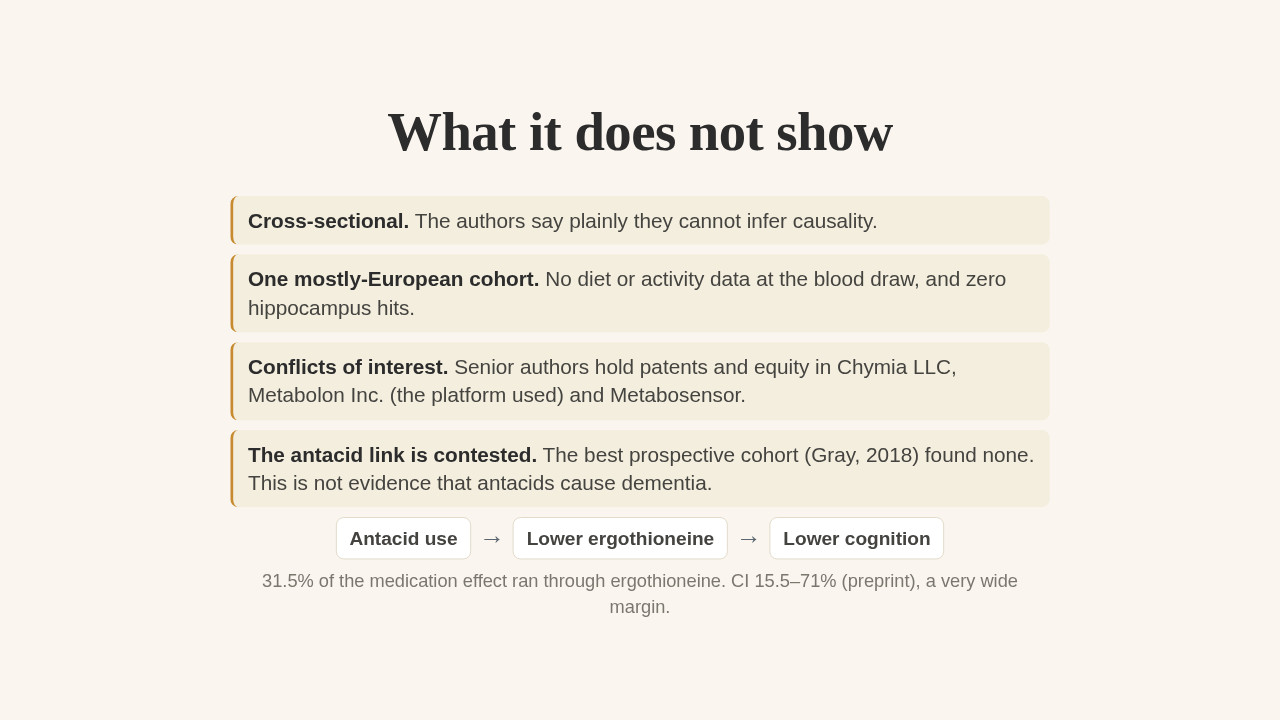
What it does not show
Now the limits, and they matter. It's cross-sectional, so it cannot show cause, and the authors say so plainly. It's one mostly-European cohort, with no diet or activity data at the blood draw, and nothing for the hippocampus. Senior authors also hold patents and equity in metabolomics companies, including the very platform used to run these tests. And that antacid link, lower cognition partly through ergothioneine, comes with a very wide margin and rests on contested evidence. The best long-term study found no antacid-dementia link at all. This is not evidence that antacids cause dementia.
Slide 8
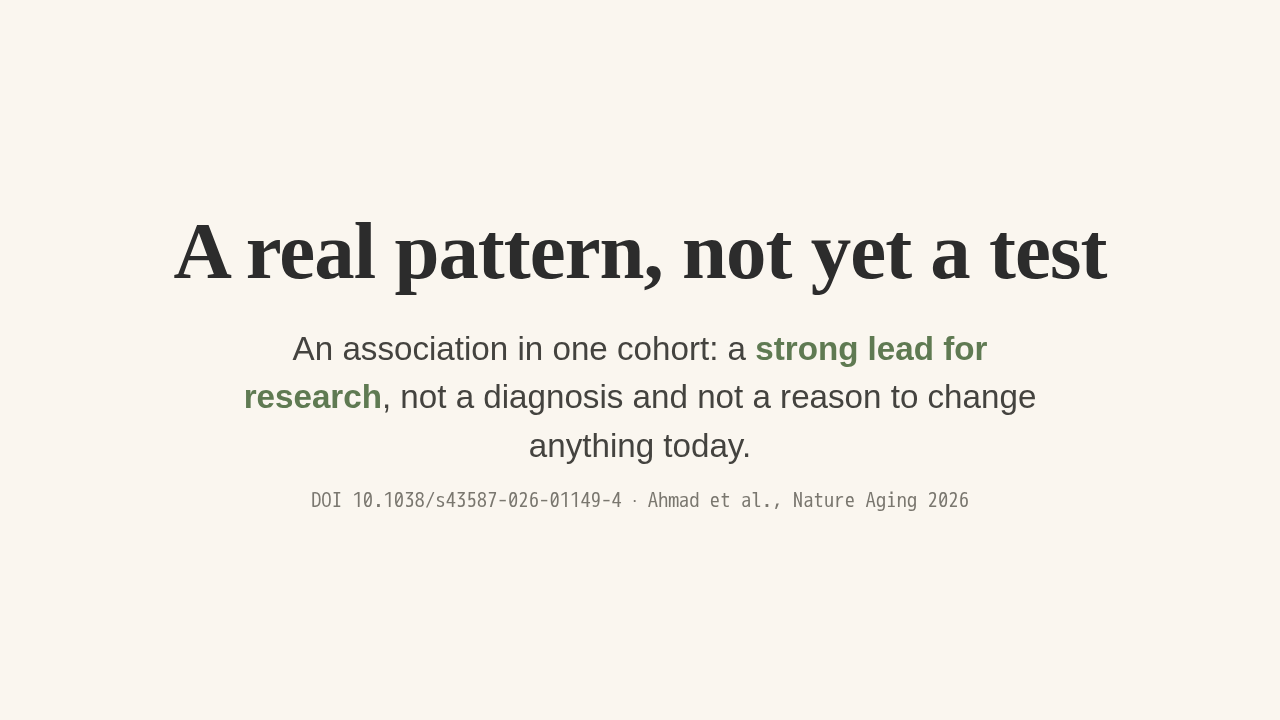
So an observational study found a real blood pattern that mirrors brain aging. It's a strong lead for research. What it isn't is a test you can take, or a reason to change your diet or your medication today.