cargo-nextest · a next-generation test runner for Rust
4 months ago
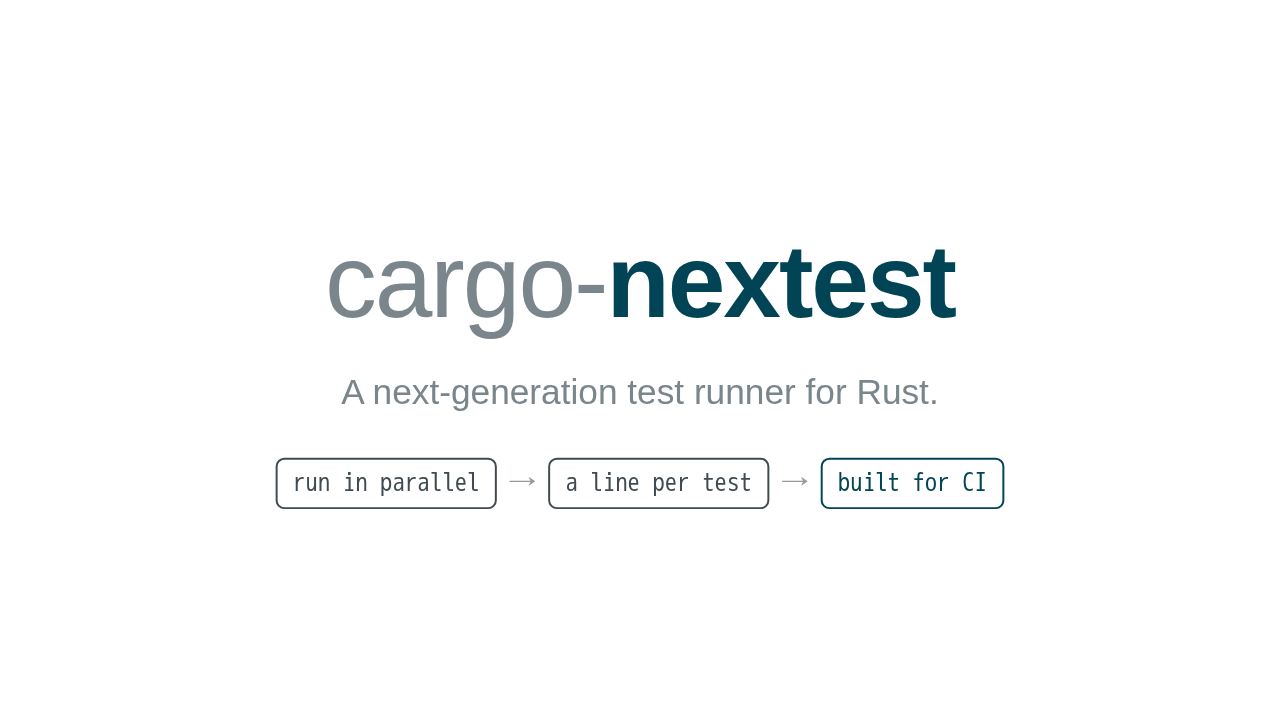
Your Rust test suite starts fast. Then it grows. cargo test runs the tests inside each binary together, and runs your binaries one after another, so a big workspace gets slow. And when something breaks, the output is a flat wall of text. Nextest is a next-generation test runner that fixes both.
Ask about this presentation
Chapters
Show transcriptHide transcript
Your Rust test suite starts fast. Then it grows. cargo test runs the tests inside each binary together, and runs your binaries one after another, so a big workspace gets slow. And when something breaks, the output is a flat wall of text. Nextest is a next-generation test runner that fixes both.
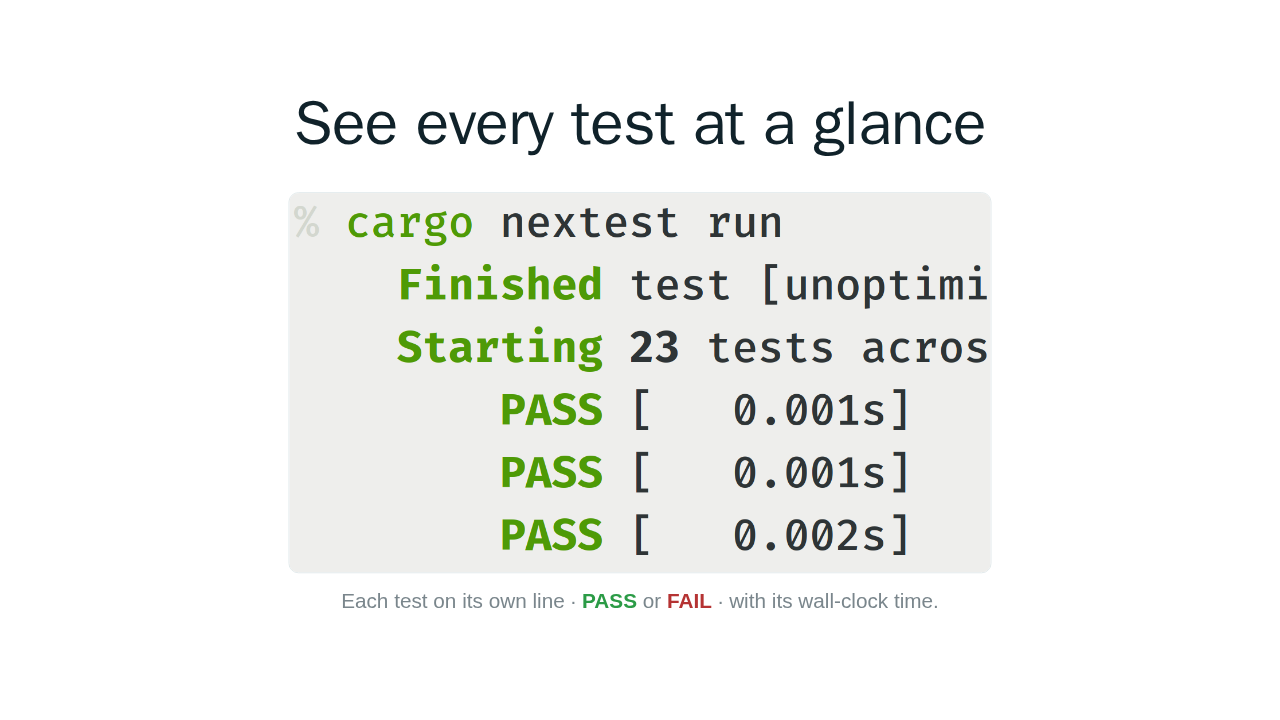
Here is what nextest looks like. It runs each test in its own process, in parallel, and reports every result on its own line. Pass or fail, with the wall-clock time each test took in brackets, so you can see what passed, what failed, and what is slow at a glance.
Slide text

Each test on its own line · PASS or FAIL · with its wall-clock time.
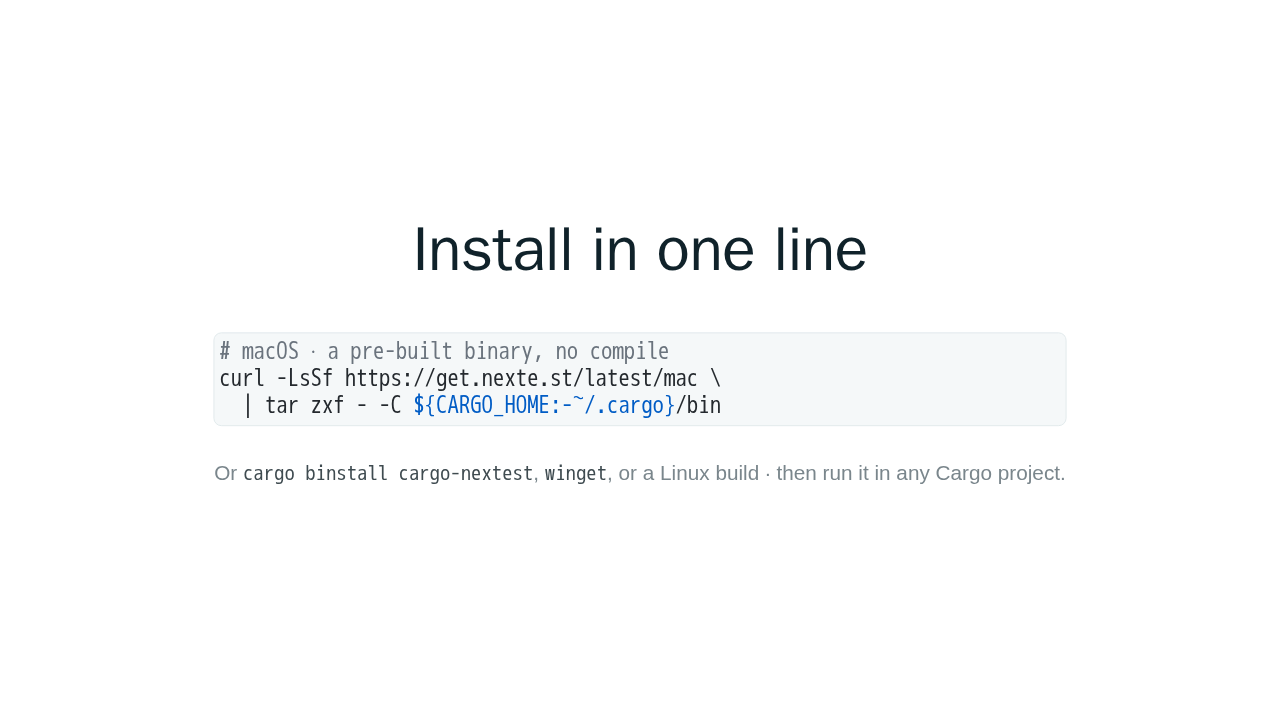
Getting it is one line. Grab the pre-built binary for your platform, no Rust compile needed. Or install it with cargo binstall, winget, or a Linux build. Once the binary is on your path, it works in any Cargo project.
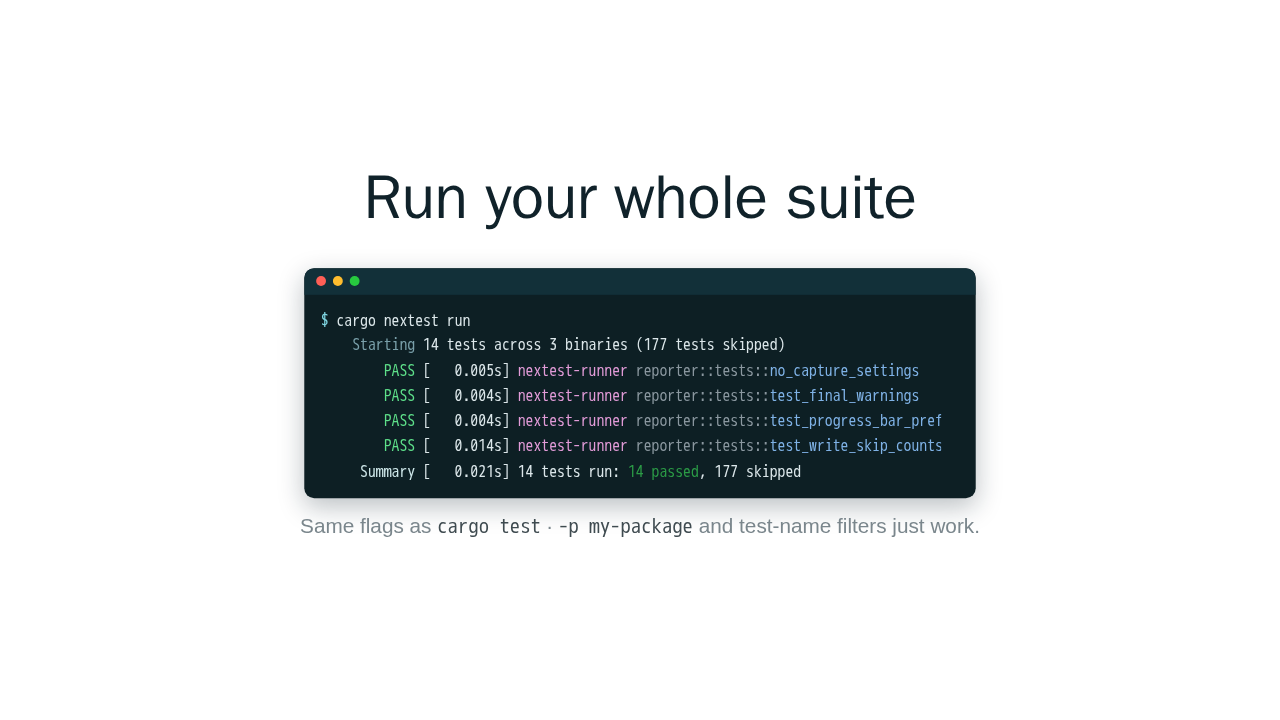
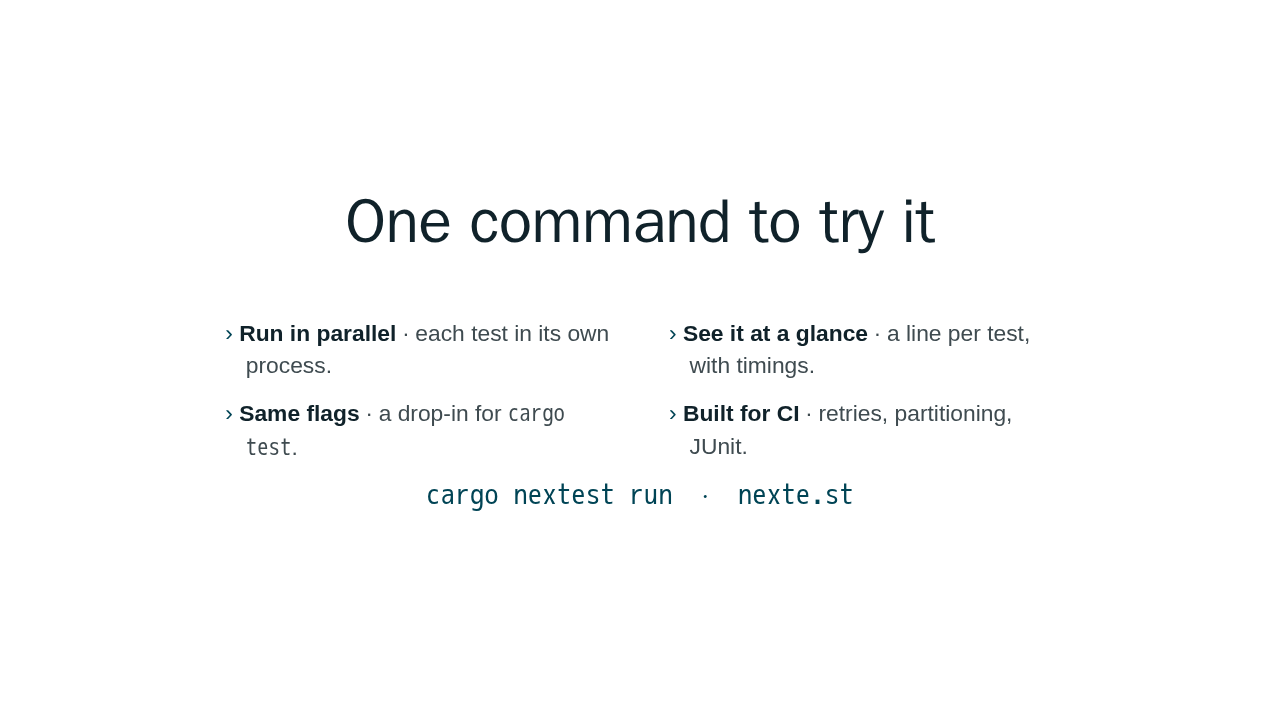
Cd into any Cargo workspace and run cargo nextest run. It builds your tests and runs each one in its own process, in parallel. Every test gets a line: pass or fail, its timing, the binary it came from, and the test name. At the end, a one-line summary. Here, fourteen tests passed in twenty-one milliseconds. And it takes all the same flags as cargo test, so dash p to pick a package, or test-name filters, just work.
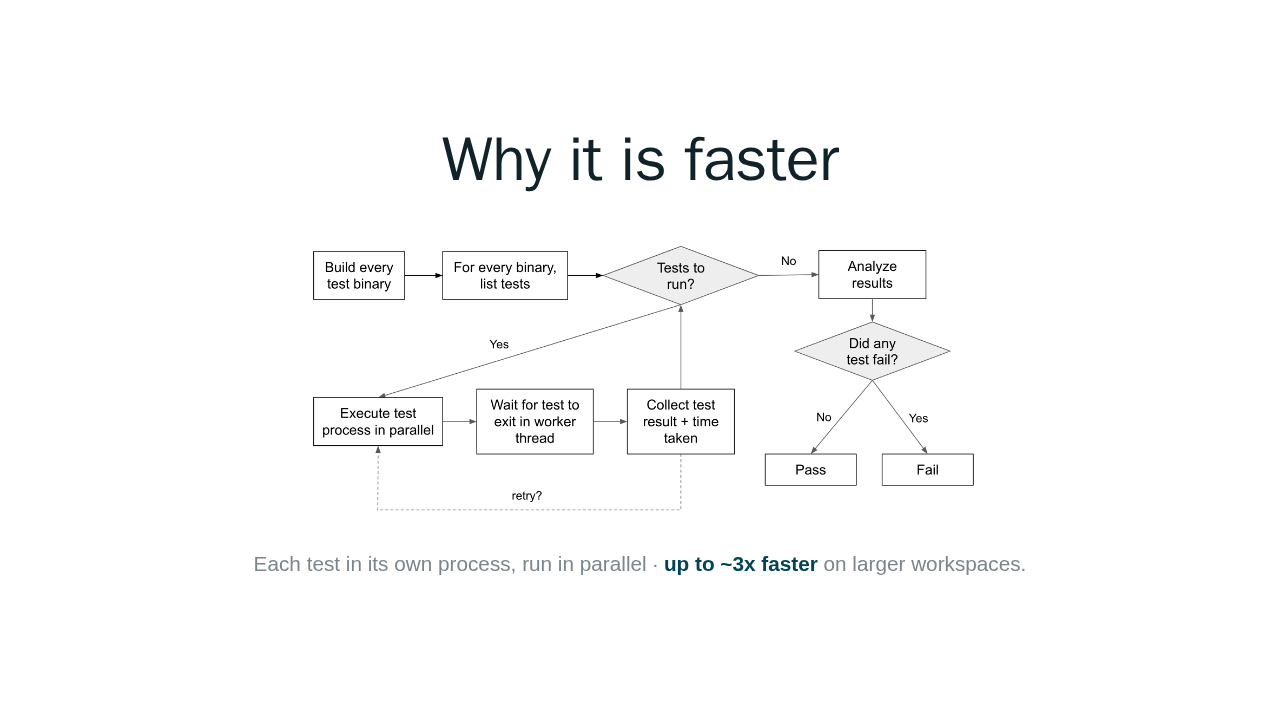
Here is the difference. cargo test runs the tests in each binary together, and runs your binaries one after another. Nextest builds all the binaries up front, lists every test, then runs each individual test in its own process, in parallel. On larger workspaces that is up to about three times faster. And even when it is not faster, you still get the cleaner output and per-test timings to find your slow tests.
Slide text

Each test in its own process, run in parallel · up to ~3x faster on larger workspaces.
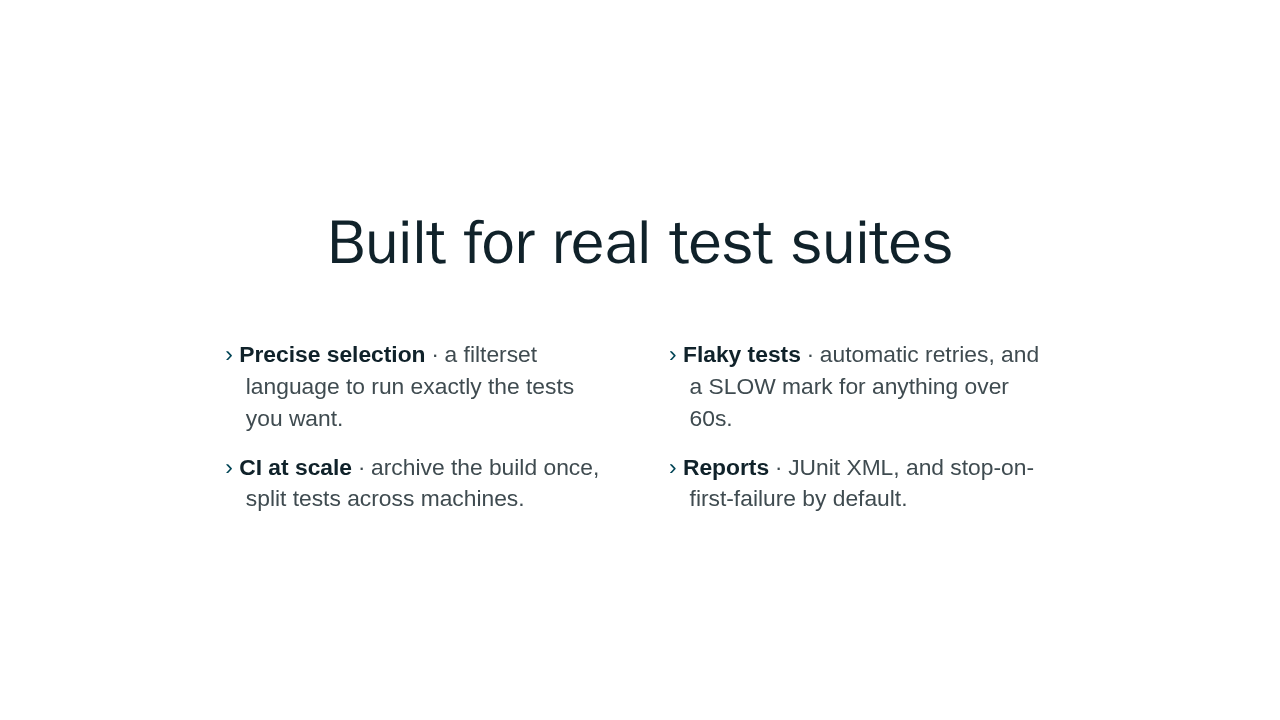
And it is built for real test suites. There is a filterset language to run exactly the tests you want. Automatic retries for flaky tests, and a SLOW marker for anything over sixty seconds. For CI, you can archive your build once and split the tests across several machines, with JUnit XML output. By default it stops on the first failure, or you can tell it to run everything.
That is nextest: run your whole suite in parallel, see every result at a glance, and wire it into CI. It takes the same flags as cargo test, so there is almost nothing to learn. Install it, then run cargo nextest run. The quickstart and every feature are in the docs.
Up next
 1:35
mq · jq, but for Markdown
@github
4 months ago
 1:24
Mimesis · realistic, locale-aware fake data in one line
@github
4 months ago
 1:38
pikepdf · open, edit and repair PDFs in Python, losslessly
@github
4 months ago
 1:22
tfswitch · the right Terraform version, automatically
@github
4 months ago
 1:21
PyPDFForm · fill a PDF form in Python in a few lines
@github
4 months ago
 1:35
MCP-UI - interactive apps for MCP tools
@github
4 months ago
 1:39
workmux - parallel coding agents in isolated worktrees
@github
4 months ago
 1:33
Pumpkin - start a Rust Minecraft server
@github
4 months ago
 1:39
Bifrost - your first reliable AI gateway
@github
4 months ago
 1:39
Honcho - memory that reasons across sessions
@github
4 months ago
 1:56
agentgateway · one governed proxy for your agent traffic
@github
4 months ago
 1:25
Compodoc · instant documentation for your Angular app
@github
4 months ago