Maple-Preview
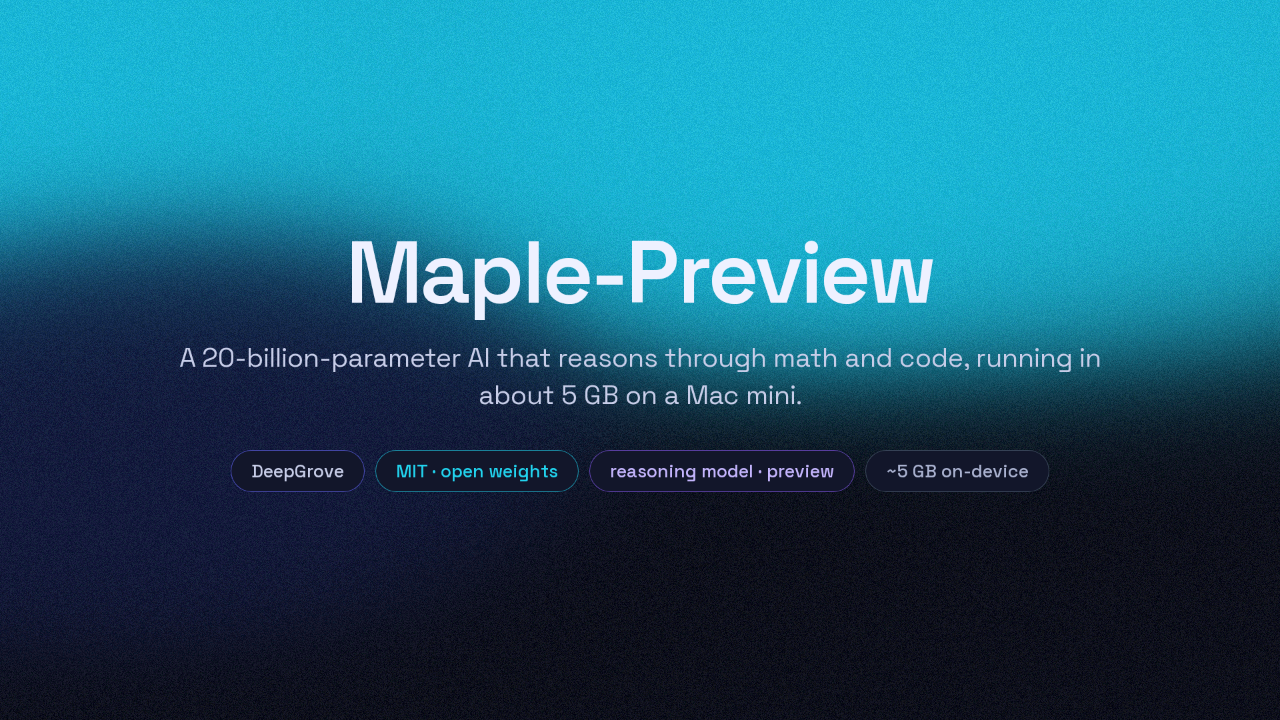
An AI that works through hard math and coding problems, step by step, just ran on a Mac mini. A San Francisco startup called DeepGrove built it, named it Maple-Preview, and this week put the whole model out in the open, free to download and run.
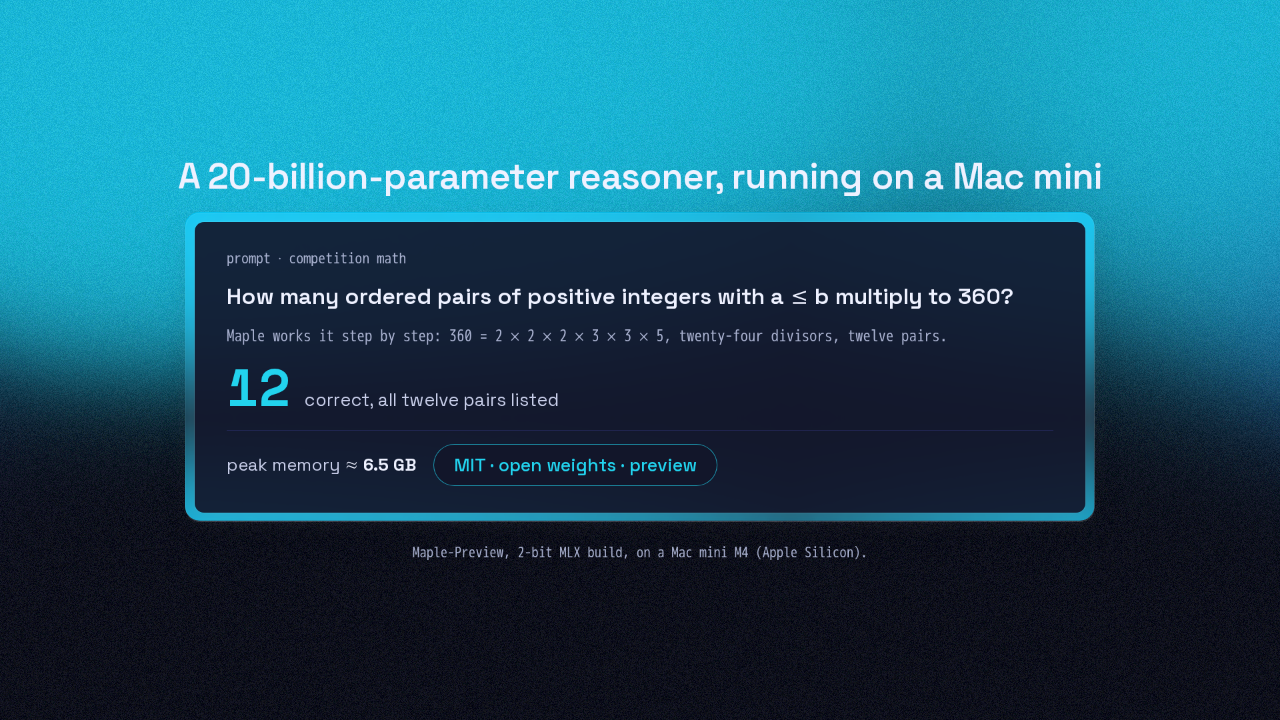
A 20-billion-parameter reasoner, running on a Mac mini
Powerful AI usually runs in a data center: a rented GPU and a monthly bill. Maple-Preview does that on your own machine. It is a reasoning model, the kind that works a math or coding problem through step by step, and it deploys in about five gigabytes, small enough for a Mac mini. The model is open, free to download and run. It is a preview, built to reason: DeepGrove says it is weak at using tools on its own, a math-and-code reasoner, not a general assistant.
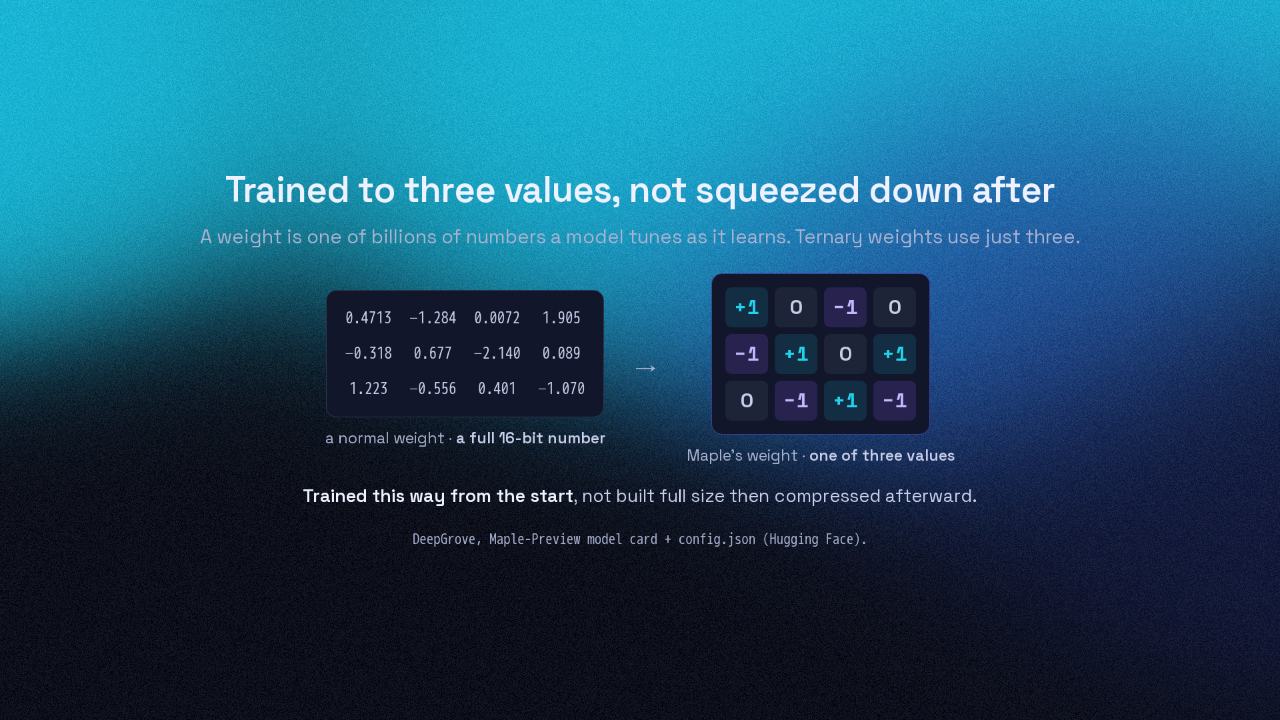
Trained to three values, not squeezed down after
A twenty-billion-parameter model should not fit on a laptop. A model stores what it knows in its weights, billions of numbers it tunes as it learns. DeepGrove trained Maple's weights to be one of just three values: minus one, zero, or plus one. That is ternary, and the key word is trained. Most small models are built full size, then squeezed down, and that costs accuracy. DeepGrove built Maple ternary from the start.
Three-value weights: a small file and cheap math
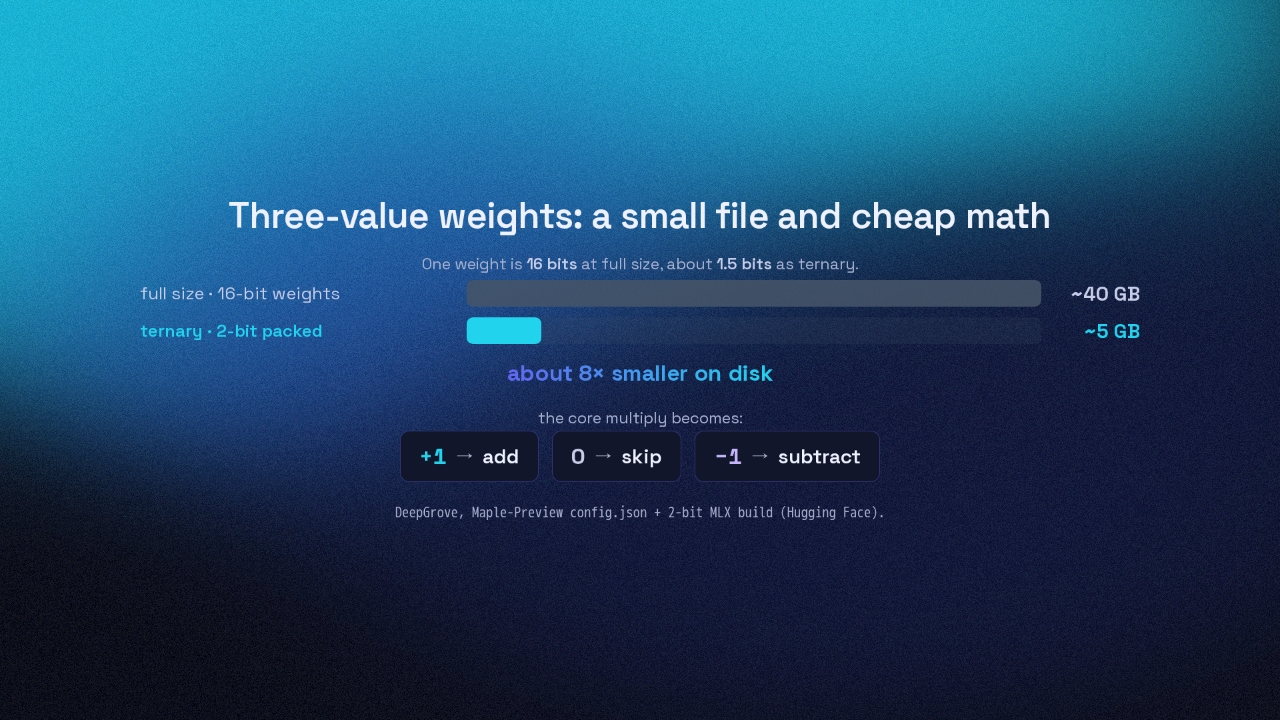
Normally one weight is a sixteen-bit number, sixteen ones and zeros of storage; a ternary weight needs about a bit and a half. So a twenty-billion-weight model that fills about forty gigabytes at full size packs into about five, eight times smaller. It also changes the math: the core operation is multiplying a weight by a number, billions of times per word. When the weight is just minus one, zero, or plus one, that multiply becomes subtract, skip, or add, exactly what small chips like a Mac mini or a phone are fastest at.
Most of the model stays asleep for each word
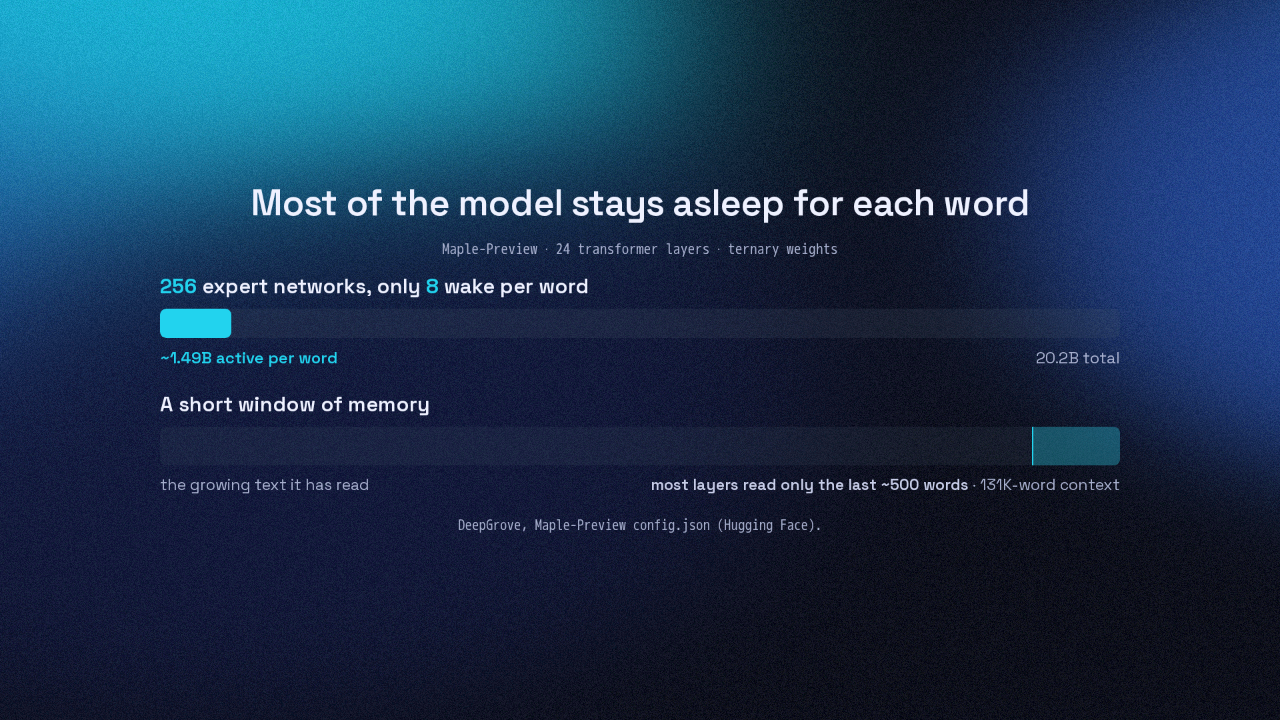
But twenty billion weights is still a lot to run per word, so two more tricks help. Maple splits into two hundred fifty-six small expert networks, each a specialist, and only eight wake up per word, so only about one and a half billion of the twenty billion run at any step. And it barely re-reads itself: a model keeps a growing pile of notes on what it has read, and re-checking all of it is slow. Most of Maple's layers look only at the last five hundred words, so that memory stays small even as the text grows.
One bigger model scores above it, nothing else does
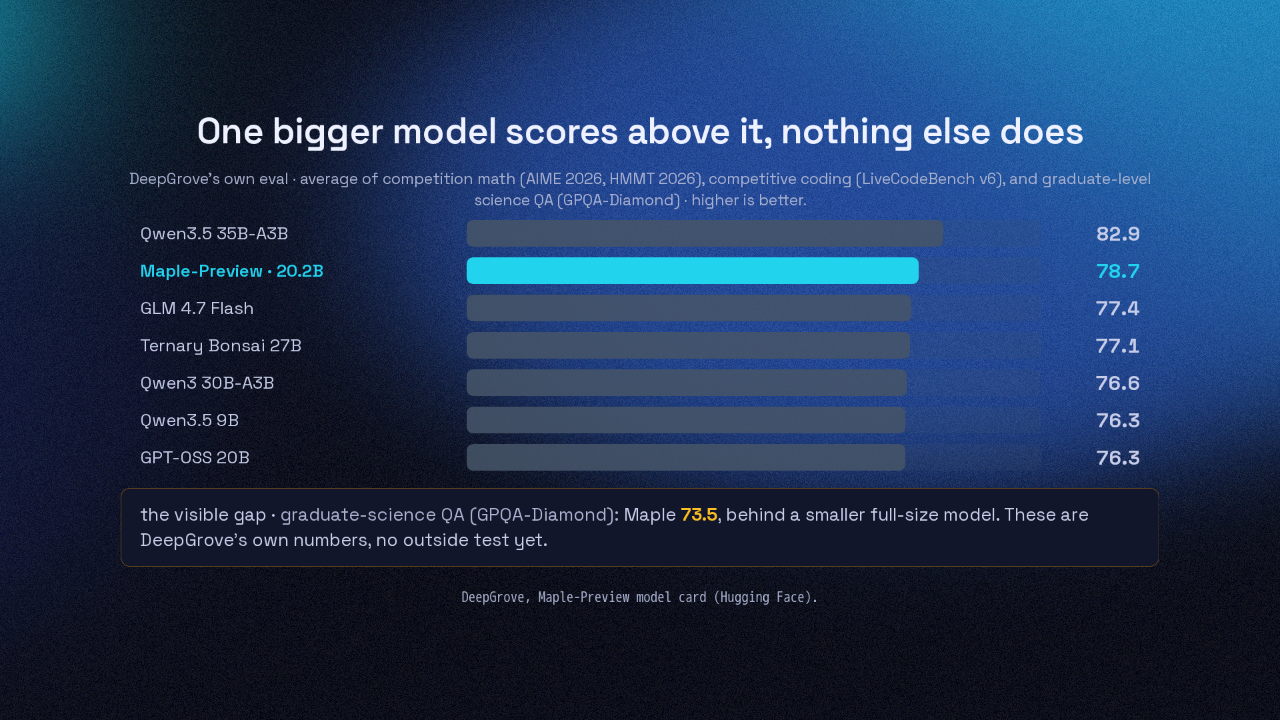
After all that shrinking, does it still reason? On DeepGrove's own tests of competition math, competitive coding, and graduate-level science, Maple averages seventy-eight point seven, topping every model in their comparison but one, a bigger Qwen model at eighty-two point nine. These are DeepGrove's own numbers, no outside test yet. The clear gap is graduate science, where it scores seventy-three point five, behind a smaller full-size model. Near the top for its weight class, not the top score.
Same reasoning, far faster on a Mac mini
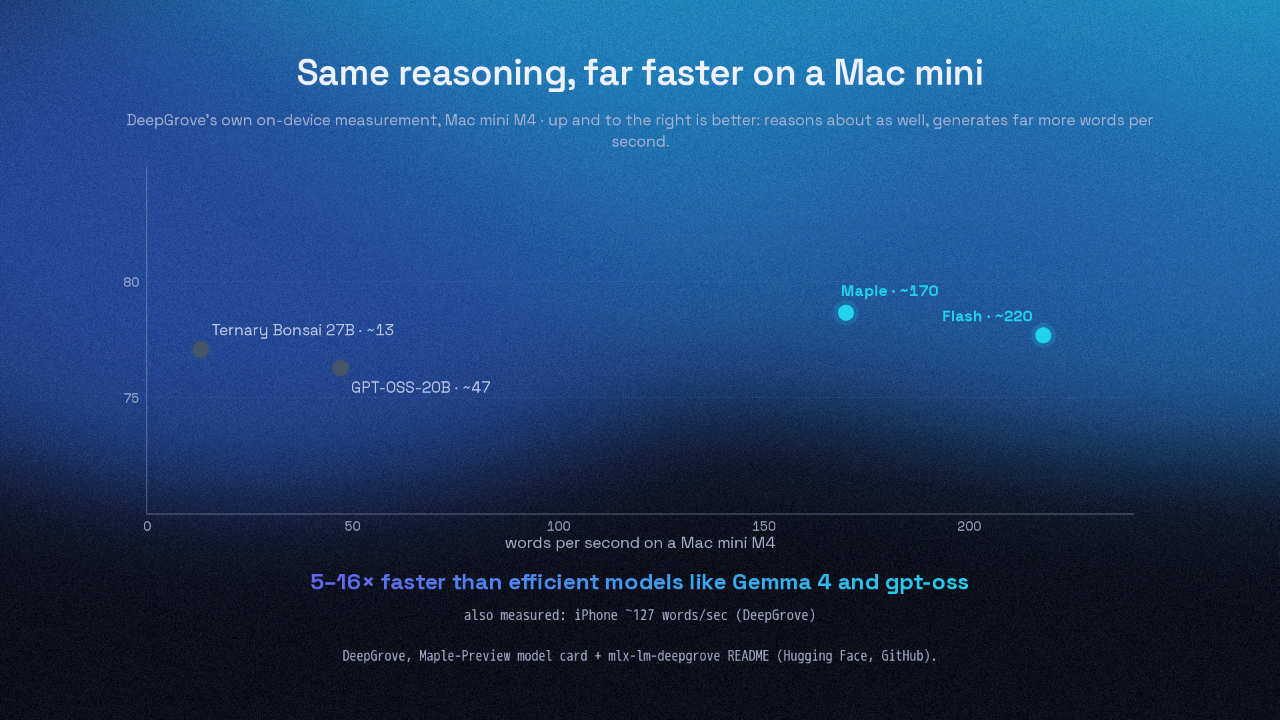
Here is the whole point in one chart: reasoning quality against speed on a Mac mini. The models that reason about as well as Maple sit slow, near thirteen words a second for Ternary Bonsai twenty-seven-B, and forty-seven words a second for GPT-OSS twenty-B. Maple sits far to the right, about a hundred and seventy words a second at that quality. DeepGrove calls that five to sixteen times faster than efficient models like Gemma four and gpt-oss, with a lighter, slightly less accurate setting they call Flash reaching about two hundred and twenty words a second. All DeepGrove's own on-device measurements.
Open weights, MIT, free to download and run
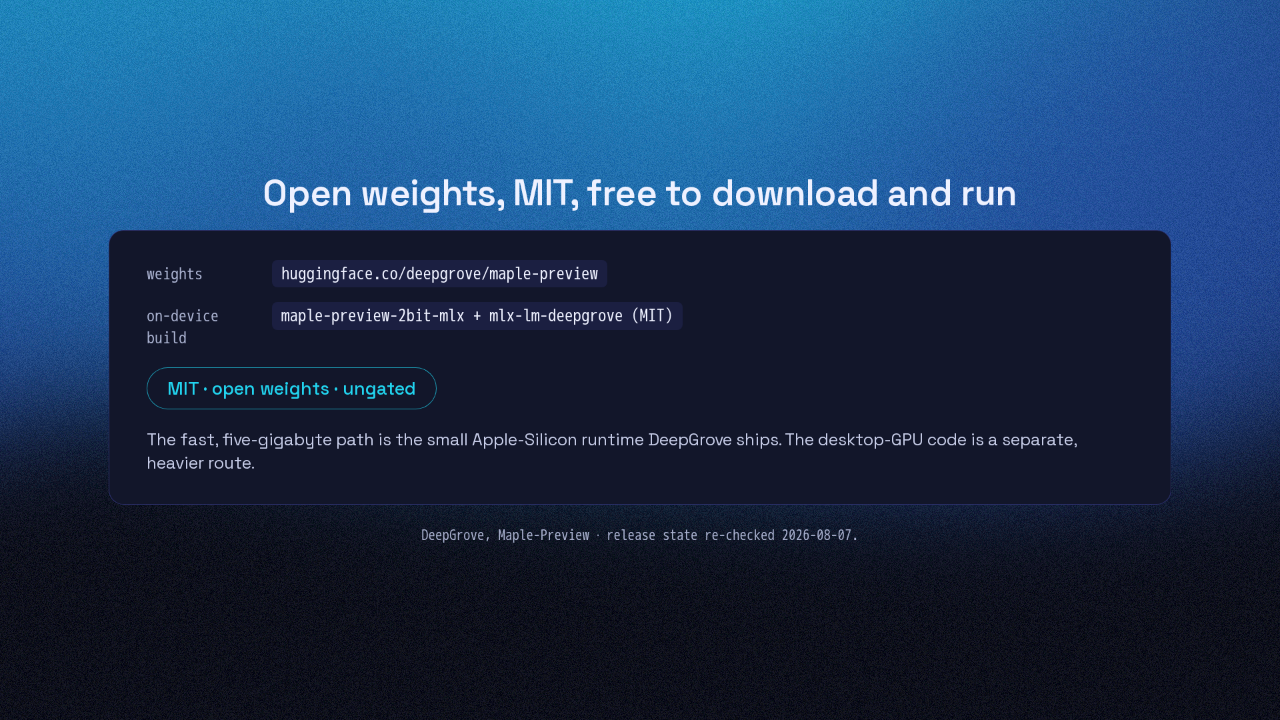
You can get it today. The weights are on Hugging Face, free and ungated, under a plain MIT license, so anyone can download, run, and build on it. The fast, five-gigabyte path uses the small Apple-Silicon runtime DeepGrove ships; the desktop-GPU code is a separate, heavier route. The link is on screen.
A data-center-class reasoner that fits on your desk
Reasoning models have always lived in data centers. Maple fits a twenty-billion-parameter one into about five gigabytes on a Mac mini, because its weights were trained to just minus one, zero, or plus one. The real story is not a leaderboard: a data-center-class reasoner can now sit on your desk.