Inkling-Small
Thinking Machines just released a new AI model that out-reasons another of its own models about three and a half times the size. The smaller, newer one is called Inkling-Small, and its weights are open, free to download and run.
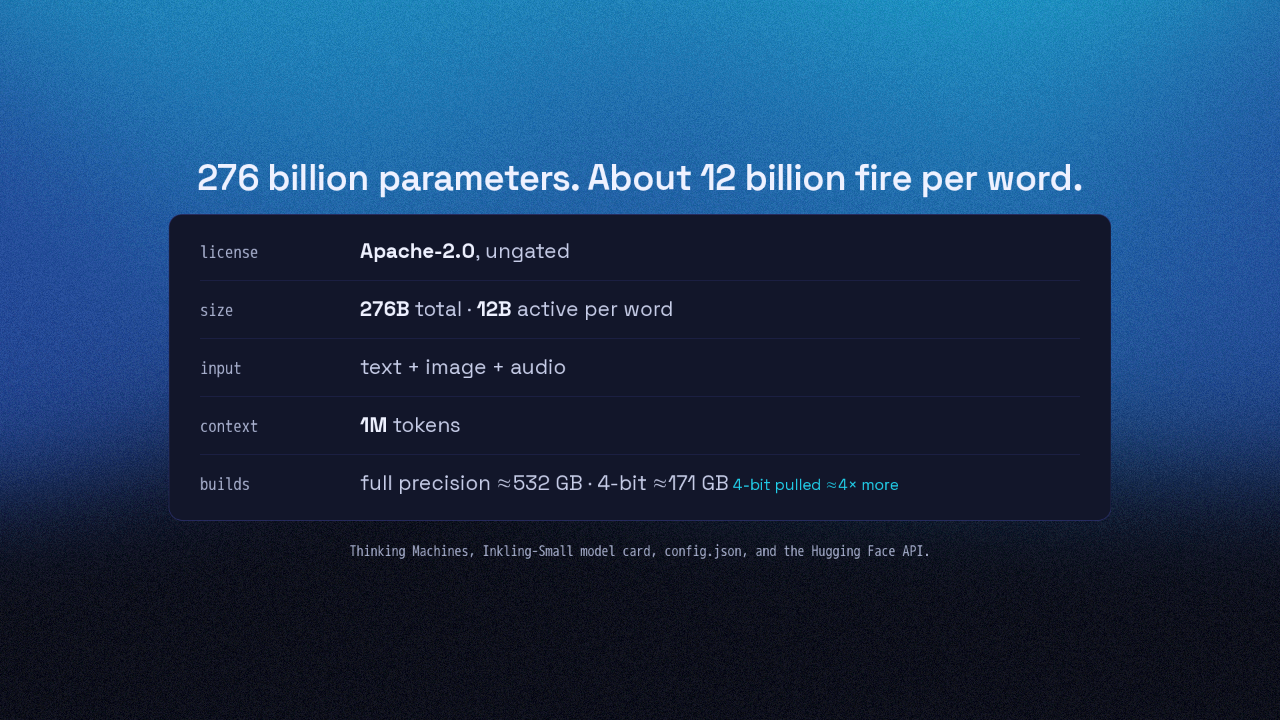
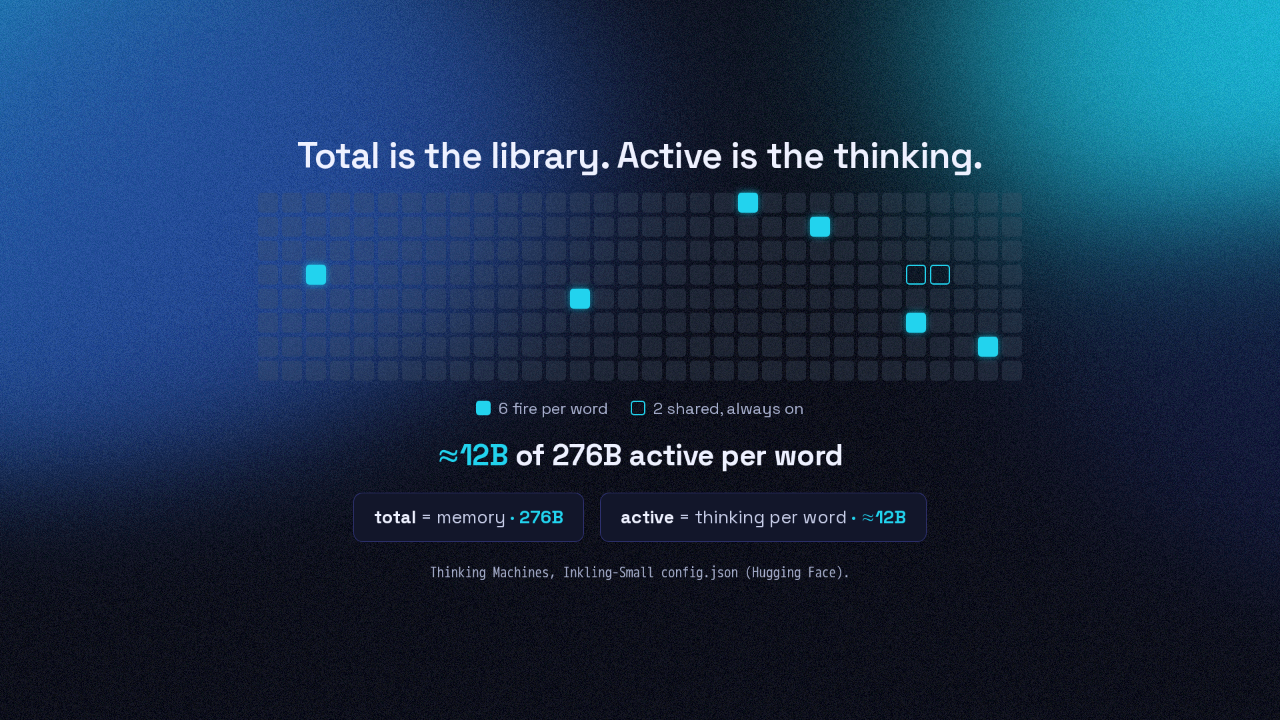
276 billion parameters. About 12 billion fire per word.
Inkling-Small is a mixture-of-experts model. That means it is built from hundreds of small specialist networks. For each word, it wakes only a few of them. So it holds two hundred and seventy-six billion parameters in total, but only about twelve billion do the work on any given word. It reads text, images, and audio, up to about a million words at once. And the four-bit version, the compressed build most people are downloading, is getting pulled about four times as often as the full one.
The smaller sibling wins the hard rows
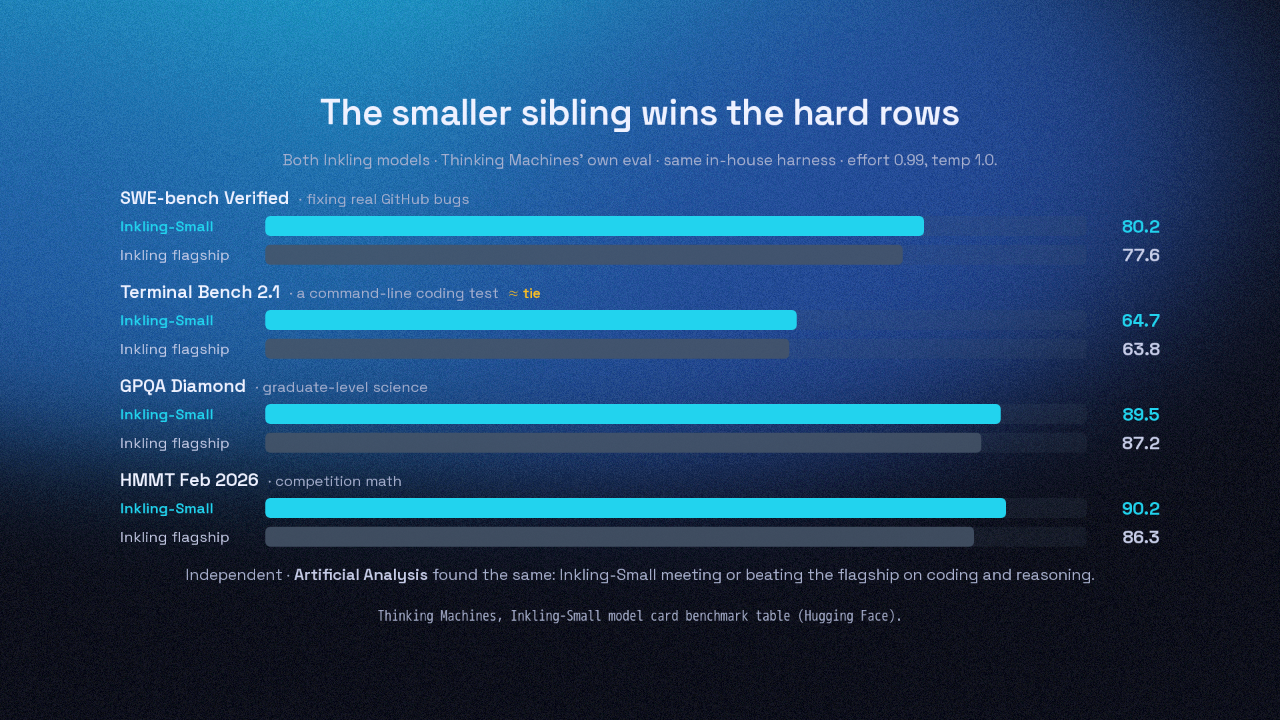
On Thinking Machines’ own benchmarks, run the same way for both models, the smaller Inkling-Small matches or beats the bigger flagship on nearly every reasoning, math, and coding test. On SWE-bench Verified, which scores a model on fixing real, filed GitHub bugs, Inkling-Small gets eighty point two against the flagship’s seventy-seven point six. A second coding test comes out about even. On graduate-level science questions, Inkling-Small scores eighty-nine point five against eighty-seven point two, and it leads on hard competition math as well. An independent evaluation from Artificial Analysis found the same: the small model meeting or beating the flagship on coding and reasoning.
Total is the library. Active is the thinking.
So why can the smaller model think just as well? Because in a model like this, size is really two numbers. Inkling-Small holds two hundred and fifty-six of those specialist networks, and for each word it switches on just six of them, plus two that are always running. So out of two hundred and seventy-six billion parameters, only about twelve billion fire on any word. The big number, the total, is the model’s library: how much it can store. The small number, the active one, is how much thinking it does per word. A bigger library lets a model remember more. By itself, it does not make the model think any harder.
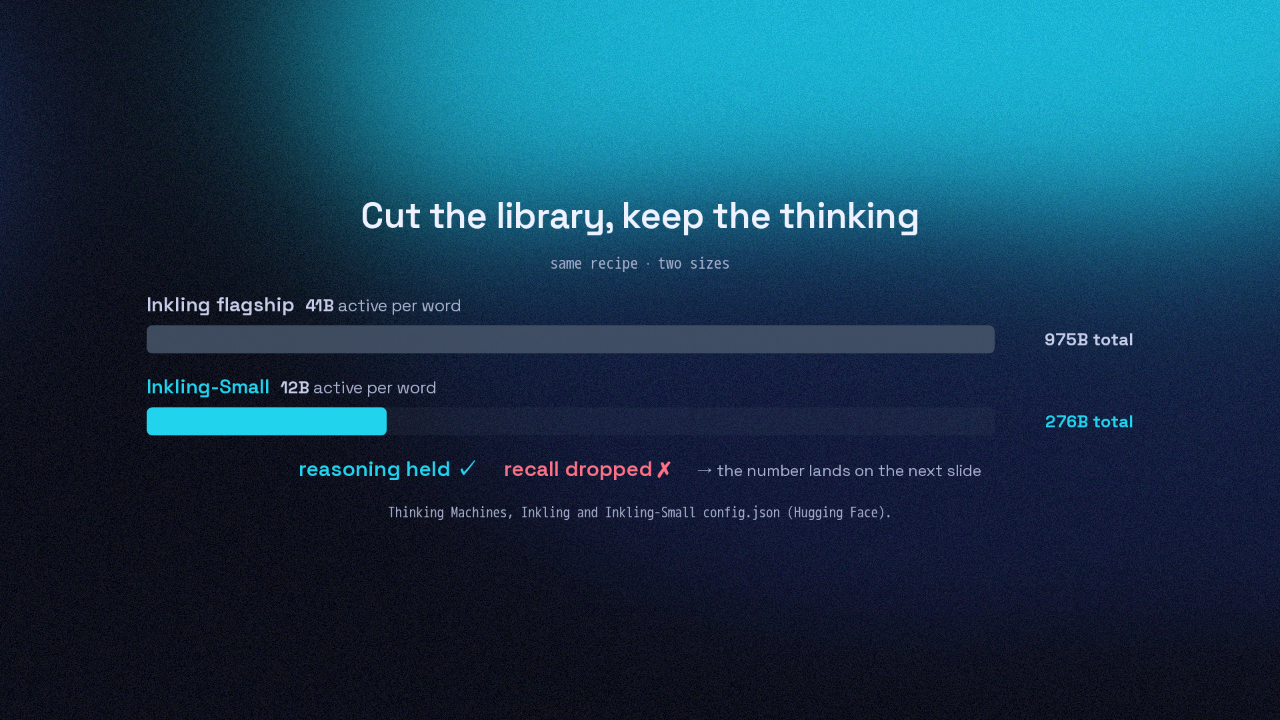
Cut the library, keep the thinking
Here is what makes this a clean test. The two Inkling models are the same design, just built at two sizes. Thinking Machines cut both numbers to about a third. The flagship runs forty-one billion active parameters; Inkling-Small runs twelve. And its reasoning held, or got better. One thing did get clearly worse. The smaller model remembers fewer plain facts, and you will see that number on the next slide. A smaller library stores less. So the flagship’s extra size bought mostly memory. The thinking barely changed.
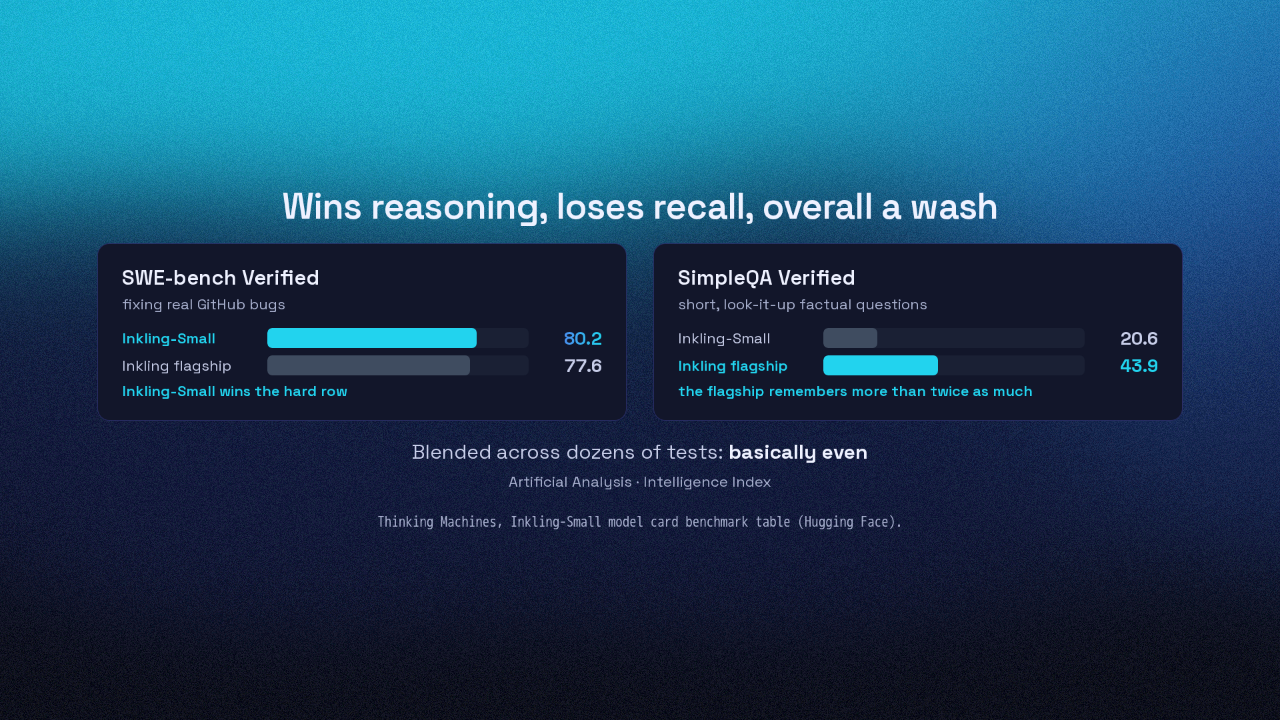
Wins reasoning, loses recall, overall a wash
Here is the whole picture on one panel. On SWE-bench Verified, fixing real GitHub bugs, Inkling-Small wins, eighty point two to seventy-seven point six. But on SimpleQA Verified, which asks short, look-it-up factual questions, the flagship wins big, forty-three point nine to Inkling-Small’s twenty point six. The flagship gets more than twice as many right. That is the tell: a smaller library remembers fewer facts. Then Artificial Analysis blends dozens of these tests into one score. On that blend, the two models come out basically even.
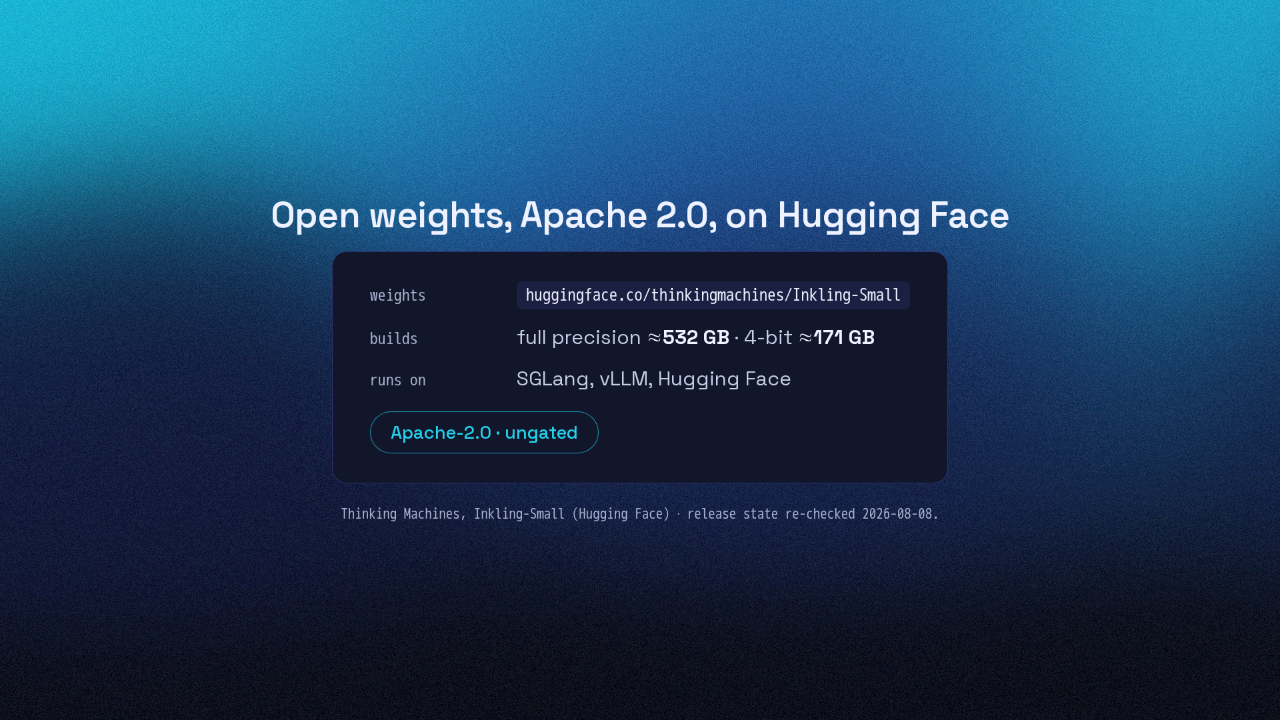
Open weights, Apache 2.0, on Hugging Face
You can download it today. The weights are on Hugging Face under Apache two point oh, a fully open license with no gate, so anyone can run it. The full-precision build is about five hundred and thirty gigabytes. The four-bit one is about a hundred and seventy.
Size is two numbers. The reasoning is in the small one.
So, is a bigger AI a smarter AI? Not by itself. Inkling-Small shows that a model’s size is really two numbers: a big one for how much it can remember, and a small one for how much it thinks per word. Thinking Machines shrank the memory and kept the thinking. The smaller model did the harder reasoning, and the extra size just bought more facts.