Huawei’s Boogu-Image reads images better at the same size
An open image model just beat a closed commercial system on blind human preference. And not with a bigger image generator. It got there by understanding the prompt better.
One model that reads and draws
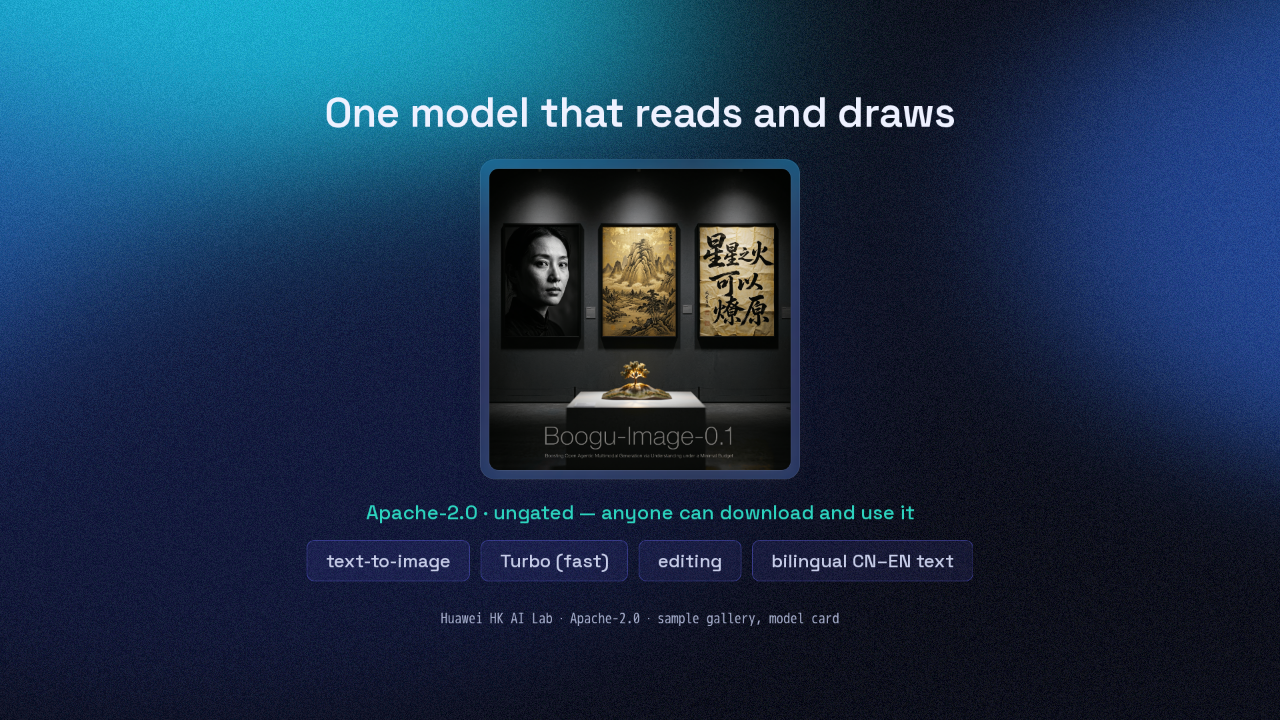
It's called Boogu-Image, and Huawei's Hong Kong AI lab built it with six universities. They open-sourced the whole thing, Apache-2.0 and ungated, so anyone can download and use it. One system does four jobs: it makes a picture from text, runs a fast version called Turbo, edits an image you hand it, and writes real Chinese and English words into the picture. Unified just means the same model reads an image and draws one.
A better reader, not a bigger painter
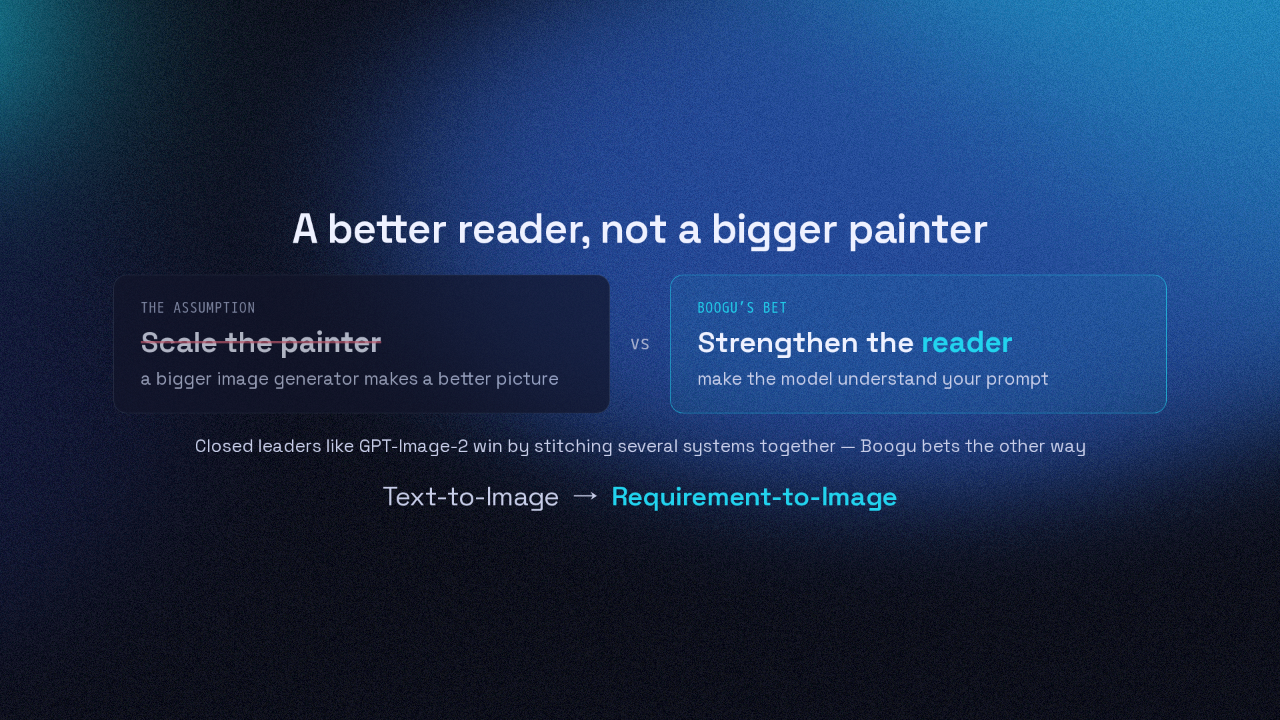
Here's what you'd assume: a better AI image needs a better image generator, the part that actually paints. The closed leaders, like GPT-Image-2, win by stitching several systems together. Boogu bets the other way. You catch up, open and cheap, by making the model understand your prompt better, not by scaling the painter. They call the shift Text-to-Image to Requirement-to-Image. So does a better reader make a better picture?
Freeze the painter, upgrade the reader
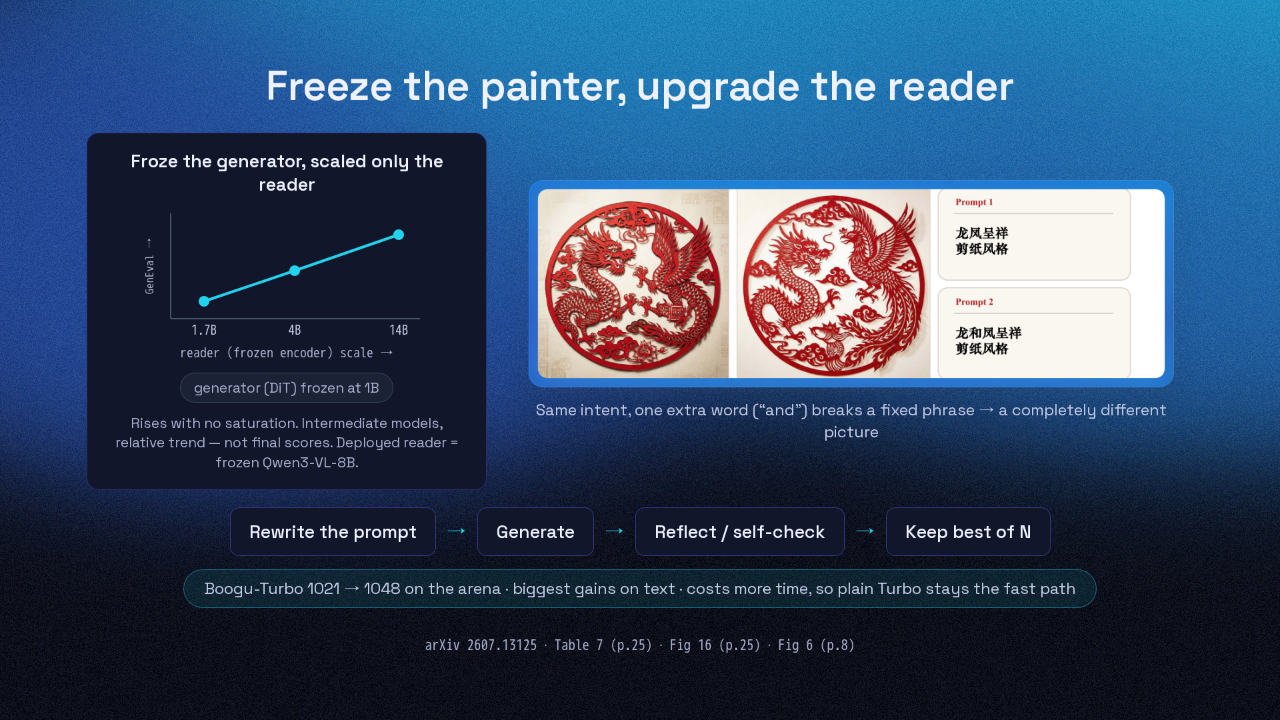
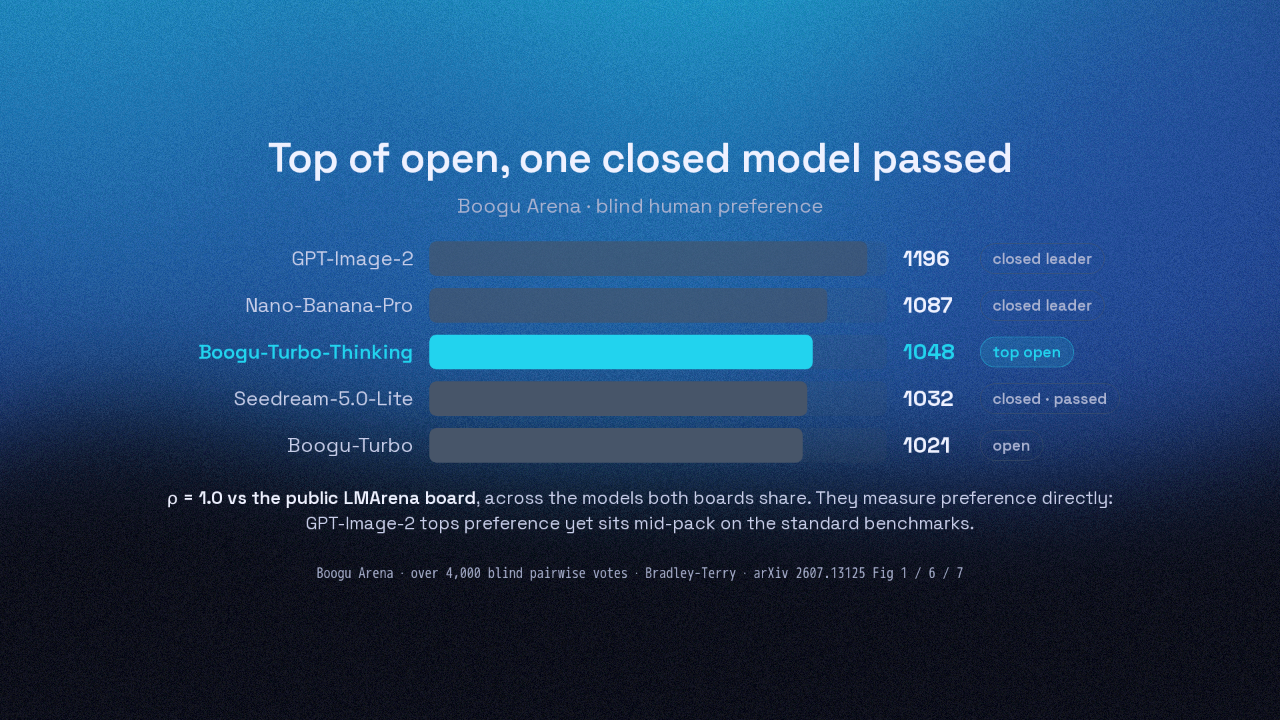
So they ran a clean test. They froze the generator, the part that draws: same one-billion image model, same data, same training. Then they changed one thing, the reader, the frozen part that takes in your prompt, and made it stronger and stronger. Each time the reader got better, so did the pictures, with no sign of leveling off. The generator never moved; only the understanding did. Same painter, a smarter reader beside it, telling it exactly what was asked for. Why does the reader matter so much? Two prompts that differ by a single word, one extra 'and,' break a fixed phrase, and the model draws a completely different picture for the same intent. Miss one word, misdraw the whole thing. At generation time, the Thinking versions add one more move. The model rewrites your prompt to spell out the exact text and layout, generates, checks its own result, and keeps the best of several tries. That alone lifts Turbo from 1021 to 1048 on the arena, with the biggest gains on prompts that have text to render. It costs more time, so plain Turbo stays the fast path.
Top of open, one closed model passed
On blind, head-to-head human preference, over four thousand votes, Boogu-Turbo-Thinking scores 1048: the top of every open model, past a closed one, Seedream-5.0-Lite, at 1032. In the same breath, it trails the two closed leaders, GPT-Image-2 at 1196 and Nano-Banana-Pro at 1087. Best open, one closed model passed, not beating the frontier. It's the authors' own arena, but they checked it against the public LMArena board, and across the models both share, the rankings line up almost exactly. They measure preference directly on purpose: GPT-Image-2 tops what people prefer yet sits mid-pack on the standard benchmarks.
Curated data, not brute scale
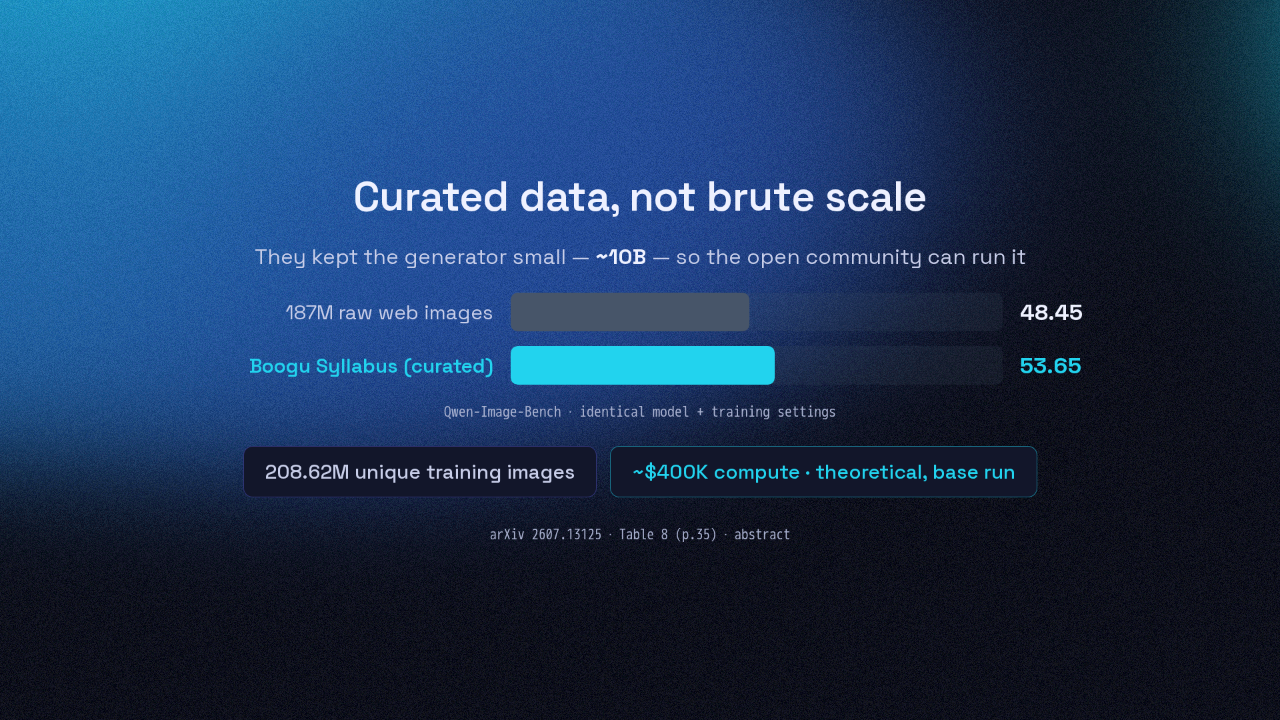
And it was built cheap on purpose. They kept the generator small, about ten billion, so the open community could run it. Then they curated the training data instead of just piling it up. A hand-designed curriculum, the Boogu Syllabus, beat 187 million raw web images under identical settings. That let the whole system train on about 209 million images, for roughly 400 thousand dollars in compute, a theoretical estimate of the base run by the team.
Weights, code, recipes, all open
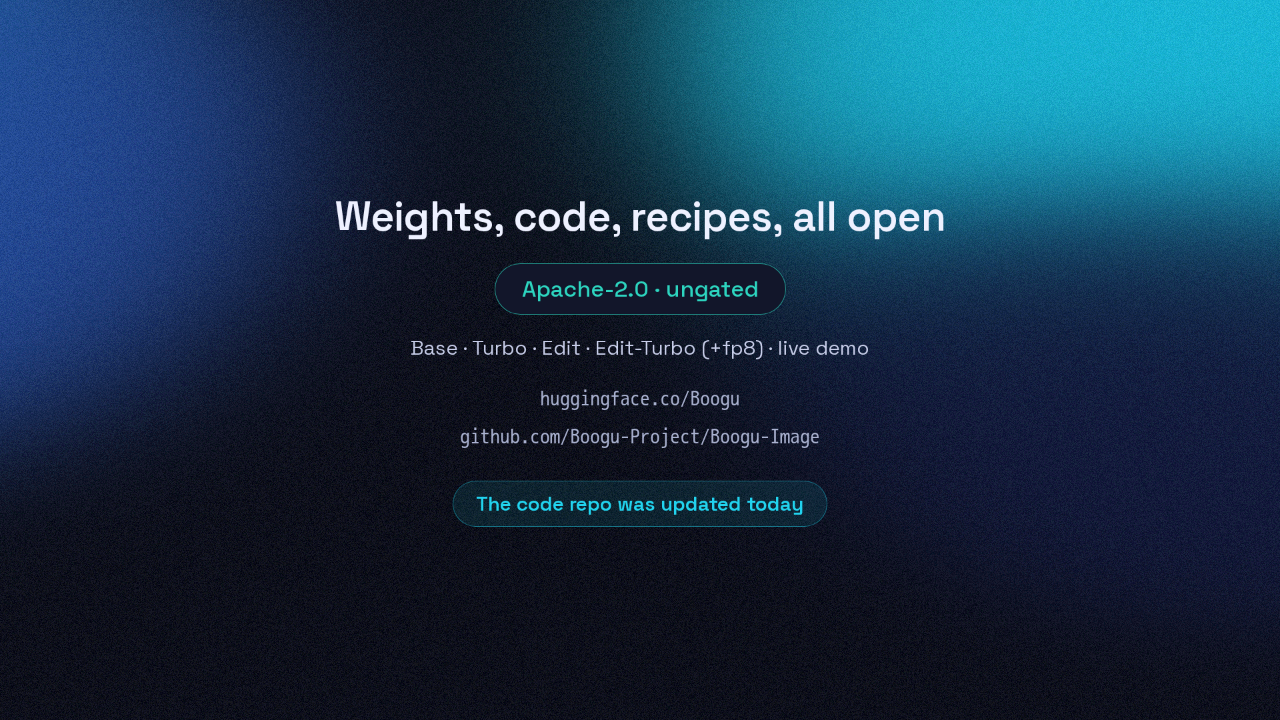
github.com/Boogu-Project/Boogu-Image
The weights, code, and training recipes are all on Hugging Face, Apache-2.0 and ungated, with a live demo you can try. The code repo was updated today.
The lever was a better reader, not a bigger painter
So the lever on image quality wasn't a bigger painter. It was a better reader, and they open-sourced all of it. The strongest evidence still sits on the team's own arena and their own tests. Whether understanding-first holds up on a fully independent leaderboard, run by outsiders with nothing to prove, is what would settle how far the reader-over-painter bet goes.











