Apodex 1.1 mini
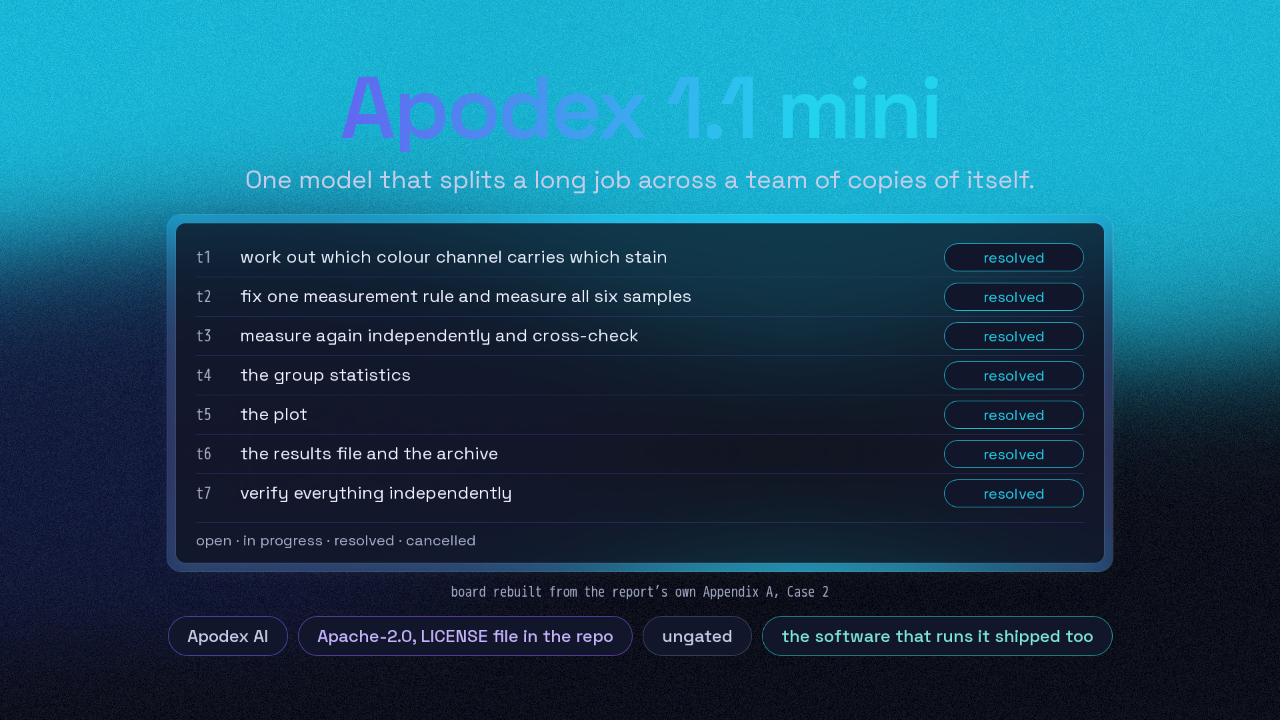
Hand an AI a job that takes hours, and the plan goes missing partway through. Apodex 1.1 mini is a file anyone can download. It searches, runs code, and writes files. Its plan sits on a board outside the conversation.
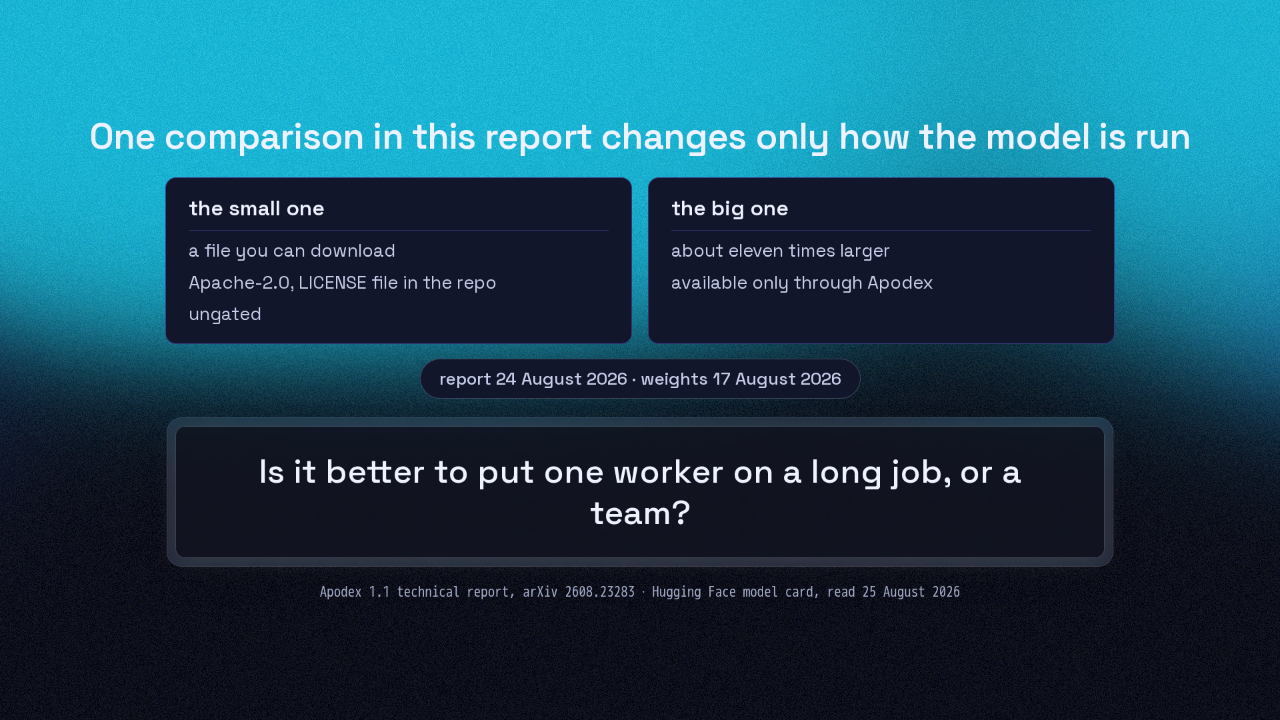
One comparison in this report changes only how the model is run
Apodex 1.1 comes in two sizes. The big one is about eleven times larger, and it produced most of the headline numbers. That big model stays on Apodex's own servers. The small one is the file anyone can download and use, including in a business. Apodex also published the software that runs the model, and says the tests ran inside that software. So Apodex can run the same weights two ways. Is it better to put one worker on a long job, or a team?
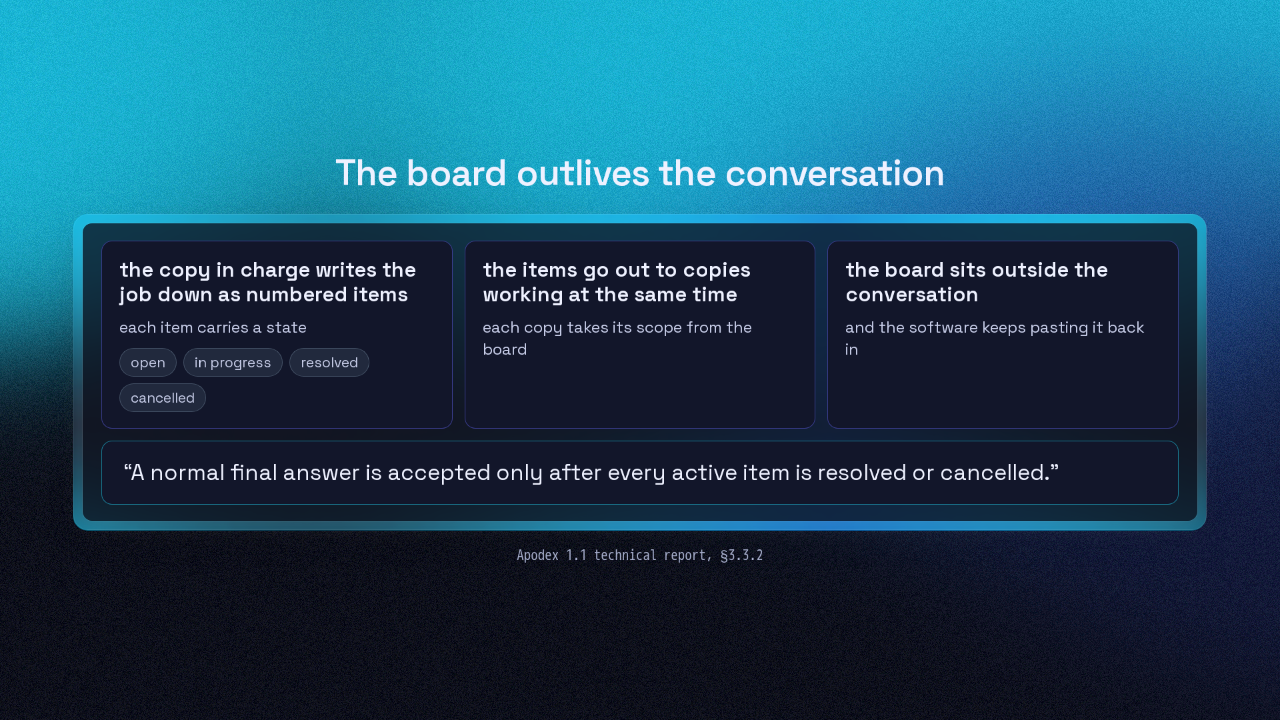
The board outlives the conversation
A long job normally lives in the model's own conversation. That conversation gets rewritten and squeezed as it fills up, and the plan goes with it. Apodex writes the plan somewhere else. One copy of the model takes charge and breaks the job into numbered items, each one open, in progress, resolved or cancelled. The items go out to other copies working at the same time. Each copy takes its scope from the board. The software keeps pasting the board back into the copy in charge. And the board is a gate. The answer only goes out once every open item is closed.
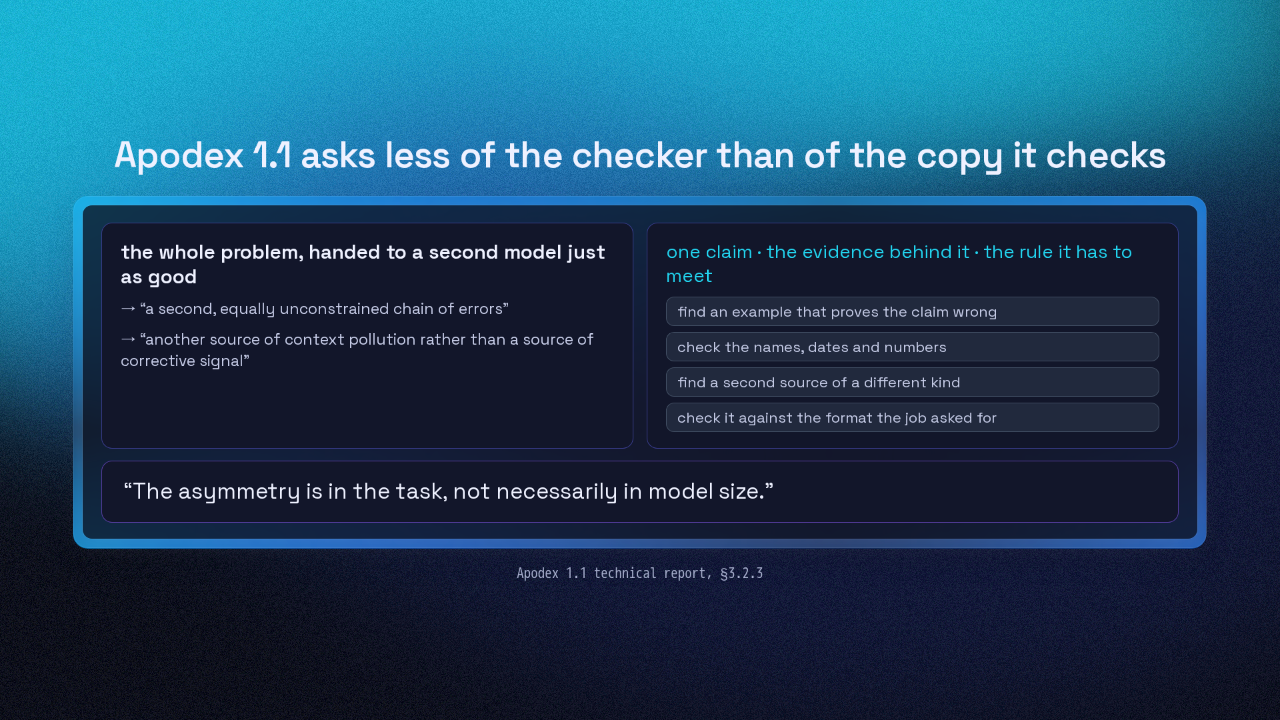
Apodex 1.1 asks less of the checker than of the copy it checks
How do you check someone's work without doing the work again? The obvious answer is to hand the whole problem to a second AI that is just as good. Apodex's team argue that this makes things worse. A second AI solving the whole thing invents a fresh set of mistakes. Now you have two stories instead of one answer. So Apodex narrows the job. The checker gets one claim, the evidence behind it, and the rule that claim has to meet. The checker's only task is to attack that claim. Hunt for an example that proves the claim wrong. Check the names, the dates and the numbers. What comes back names the claim, the evidence against it, and the repair.
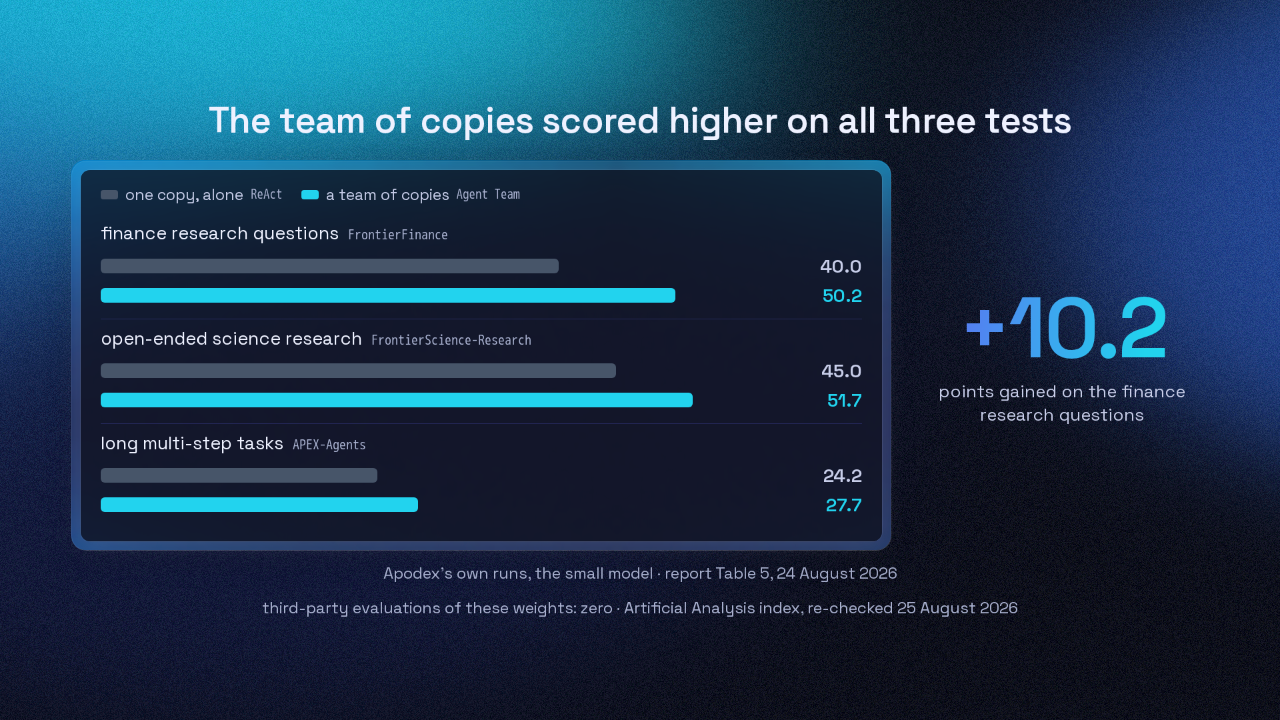
The team of copies scored higher on all three tests
ReAct
a team of copies Agent Team
Every number here is Apodex's own. On the finance research questions, the same file scores forty points when one copy works the job alone, and fifty point two when a team of copies works it together. The weights never changed, and the gap is ten points. On science research and long multi-step tasks, the team gains six point seven points and three and a half.
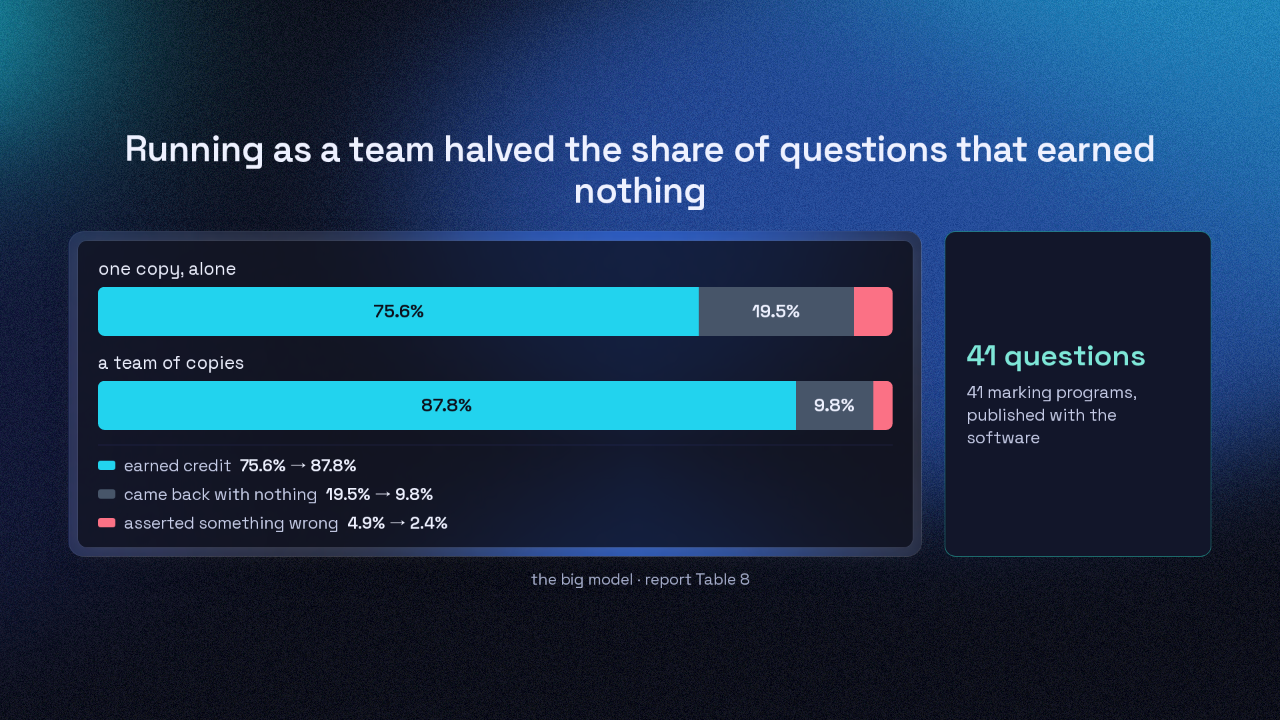
Running as a team halved the share of questions that earned nothing
These are the big model's numbers, on forty one search questions with a checkable answer. Working alone, about one question in five came back with nothing worth credit. Working as a team, about one question in ten came back empty. Wrong answers stayed rare both ways. Apodex published all forty one questions, and the programs that mark the answers, so anyone can run the test.
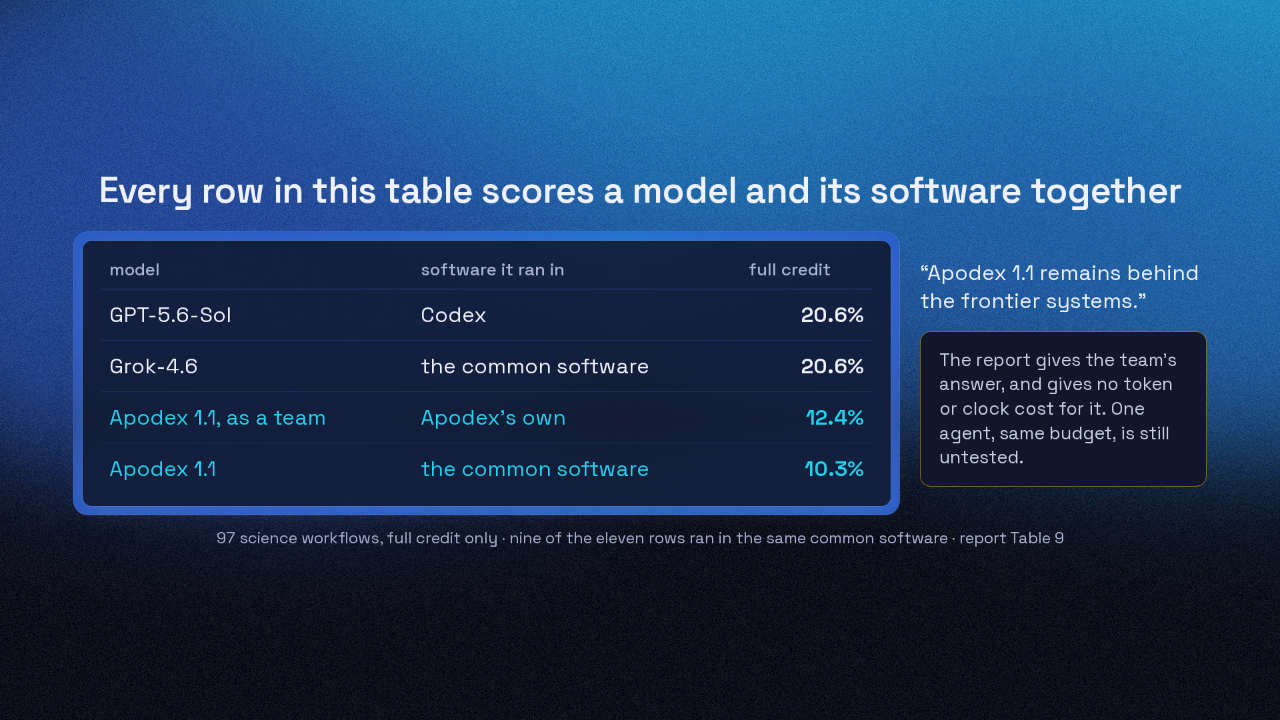
Every row in this table scores a model and its software together
| model | software it ran in | full credit |
|---|---|---|
| GPT-5.6-Sol | Codex | 20.6% |
| Grok-4.6 | the common software | 20.6% |
| Apodex 1.1, as a team | Apodex’s own | 12.4% |
| Apodex 1.1 | the common software | 10.3% |
Apodex ran the big model in its own team system, and again in the common software nine of the eleven rows used. In its own team system the big model earned full credit on twelve point four percent of ninety-seven science workflows. In the common software, ten point three. The report says Apodex sits behind the leading systems, and those leaders earned full credit on twenty point six percent of the workflows. The report gives no time or token cost for a team run, so one agent on the same budget is still untested.
Apodex changed how the model runs and left the weights alone
The plan sits on a board, and the answer waits until every item is closed. The checker gets one claim to attack. Ten points came from those two choices.