Turn a messy transcript into a decision memo
This is AI at Work. One workflow per episode, on the tools your company already pays for. Today, the meeting that just ended. Forty five minutes, six voices, and somewhere in there, two real decisions. We are going to turn that recording into a decision memo before the next meeting starts. And I will show you exactly where not to trust it.
The transcript
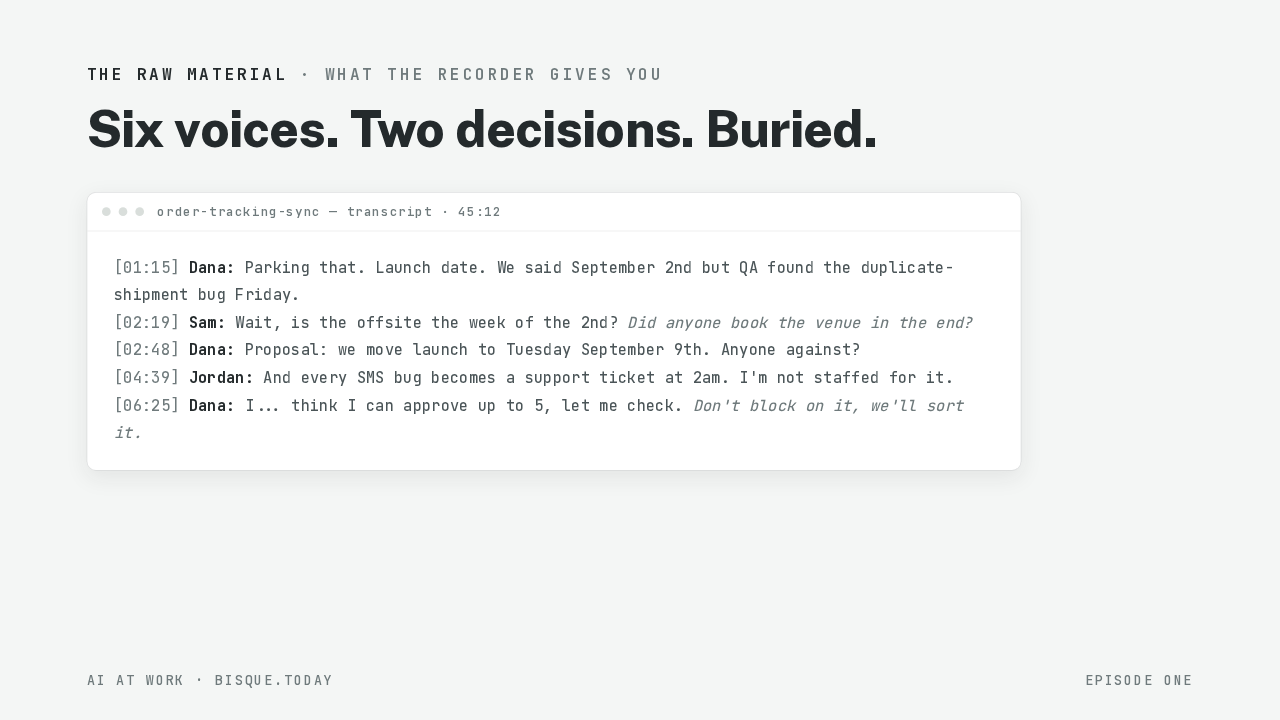
Here is what the recorder actually gives you. A wall of timestamps. The launch decision is in there. So is the offsite venue, someone's PTO, and a budget question nobody answered. Reading this back and writing the memo yourself is the part of your week that quietly eats an afternoon. That is the part we hand off.
The ask
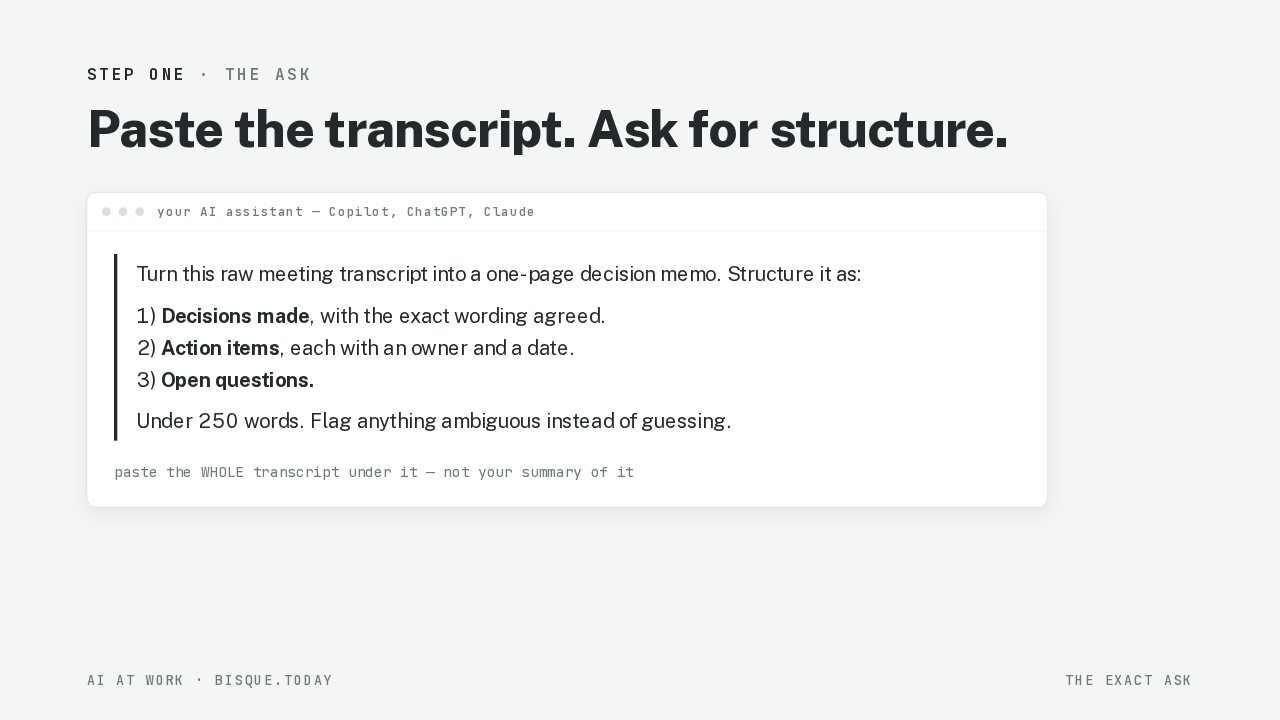
Turn this raw meeting transcript into a one-page decision memo. Structure it as:
1) Decisions made, with the exact wording agreed.
2) Action items, each with an owner and a date.
3) Open questions.
Under 250 words. Flag anything ambiguous instead of guessing.
Step one. Paste the whole transcript, and above it, this exact ask. Three sections. Decisions with the exact wording agreed. Action items with an owner and a date. Open questions. The line that does the real work is the last one. Flag anything ambiguous instead of guessing. That single sentence is the difference between a memo you can check and a memo you have to fear.
The memo comes back
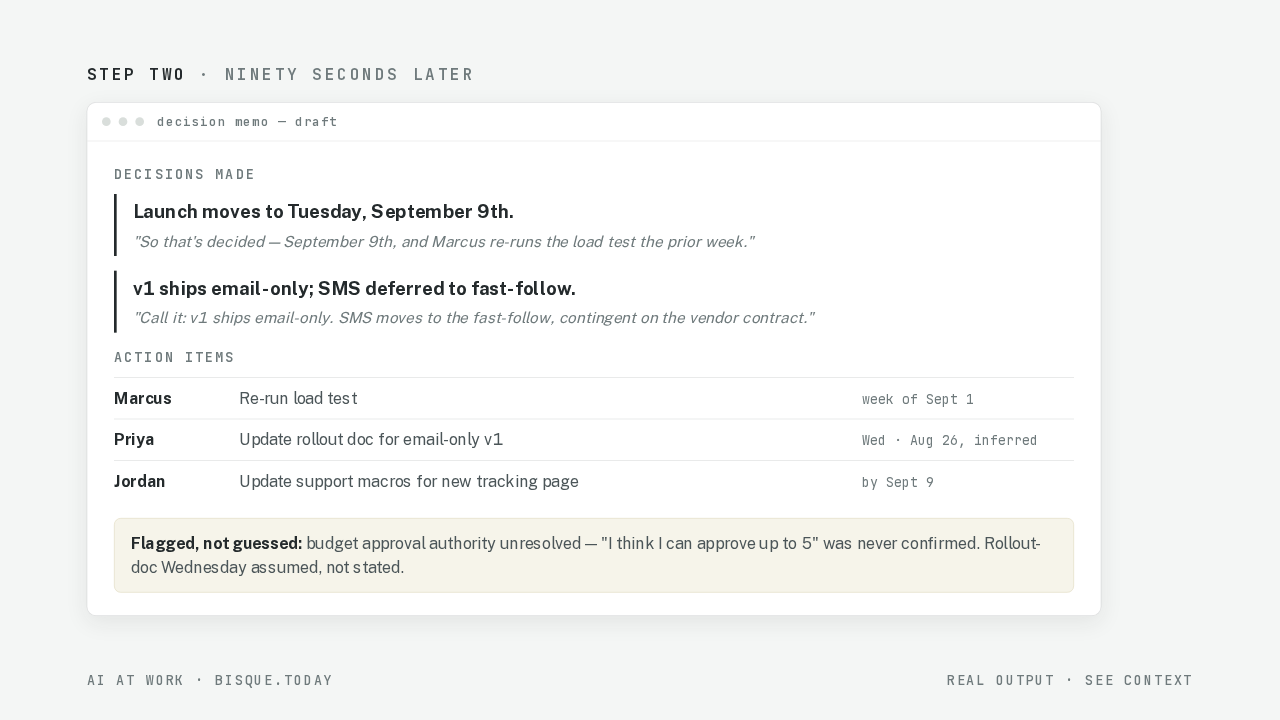
Decisions made
Action items
| Marcus | Re-run load test | week of Sept 1 |
| Priya | Update rollout doc for email-only v1 | Wed · Aug 26, inferred |
| Jordan | Update support macros for new tracking page | by Sept 9 |
Ninety seconds later, this comes back. Real output, by the way. We ran the exact ask you just saw. Both decisions, each with the exact sentence from the room under it, so you can verify the wording without replaying anything. Action items with owners and dates. Notice it marked Priya's Wednesday as inferred. Nobody said August 26th out loud. And here is the payoff of that last line in the ask. It flagged the budget question instead of inventing an answer. That flag is the memo telling you where to look.
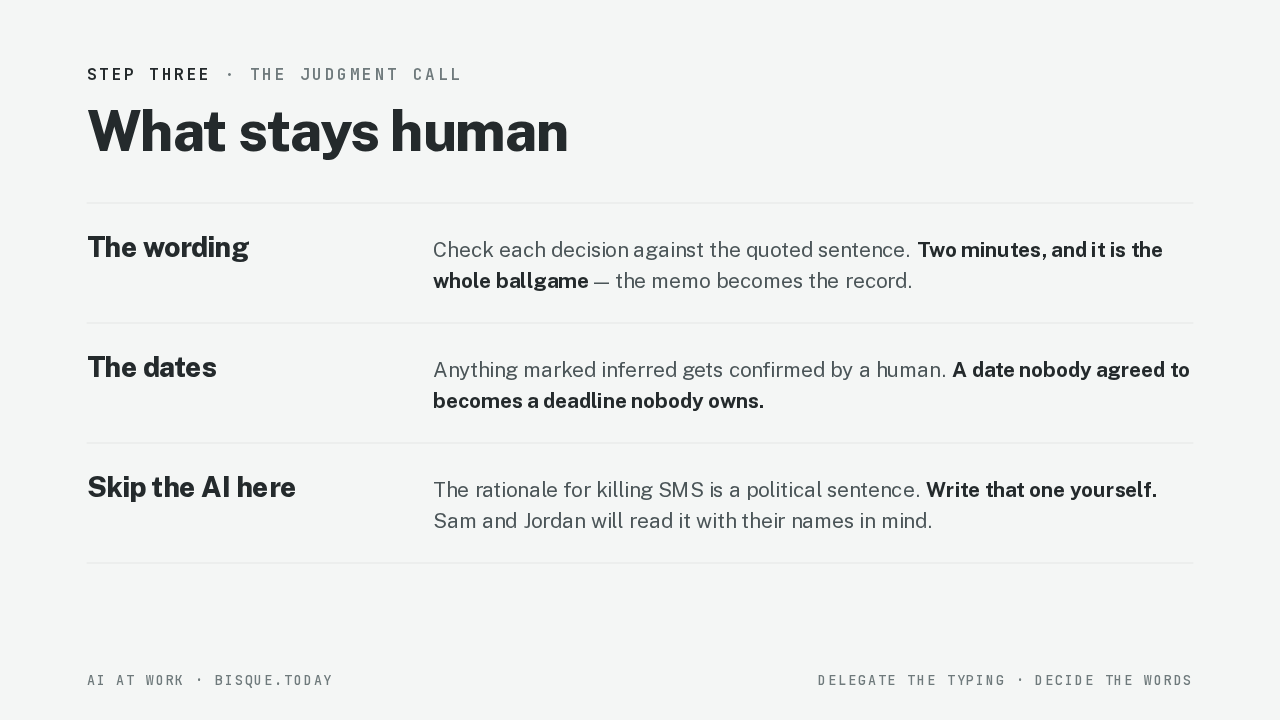
What stays human
Step three is the part that stays yours, and it is short. Check the wording. The memo quotes the room, so this takes two minutes, and it matters, because the memo becomes the record. Confirm anything marked inferred. A date nobody agreed to becomes a deadline nobody owns. And skip the AI on one thing. The sentence explaining why SMS got cut is political. Two people in that room care how it reads. Write that sentence yourself.
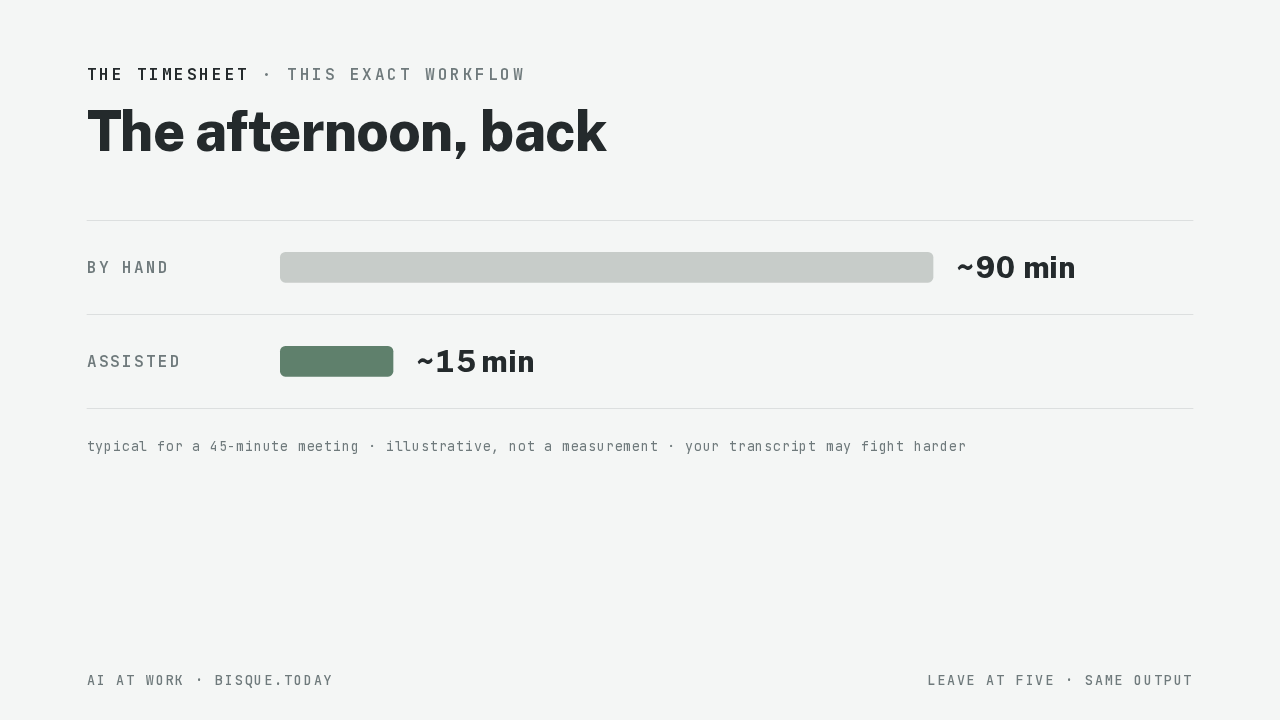
The timesheet
The timesheet. Same workflow, both ways. By hand, replaying the recording and drafting the memo runs around ninety minutes for a forty five minute meeting. Assisted, about fifteen. The ask, the read through, the wording check, and your one hand written sentence. Those are typical numbers, not a lab measurement. Your transcript may fight harder. The shape holds.
Try it on your last meeting
That is the whole workflow. Try it on the meeting you just left. The recording is already sitting in the calendar invite. Paste the transcript, use the three section ask, confirm what it flags, and write the one political sentence yourself. Next episode, the Friday numbers summary from four spreadsheets, without touching a formula. Back Thursday.