One memory for Claude, Cursor, and ChatGPT
Every AI you open remembers a different slice of you. Unabyss gives all of them one shared memory that you own. Claude, Cursor, ChatGPT, finally on the same page.
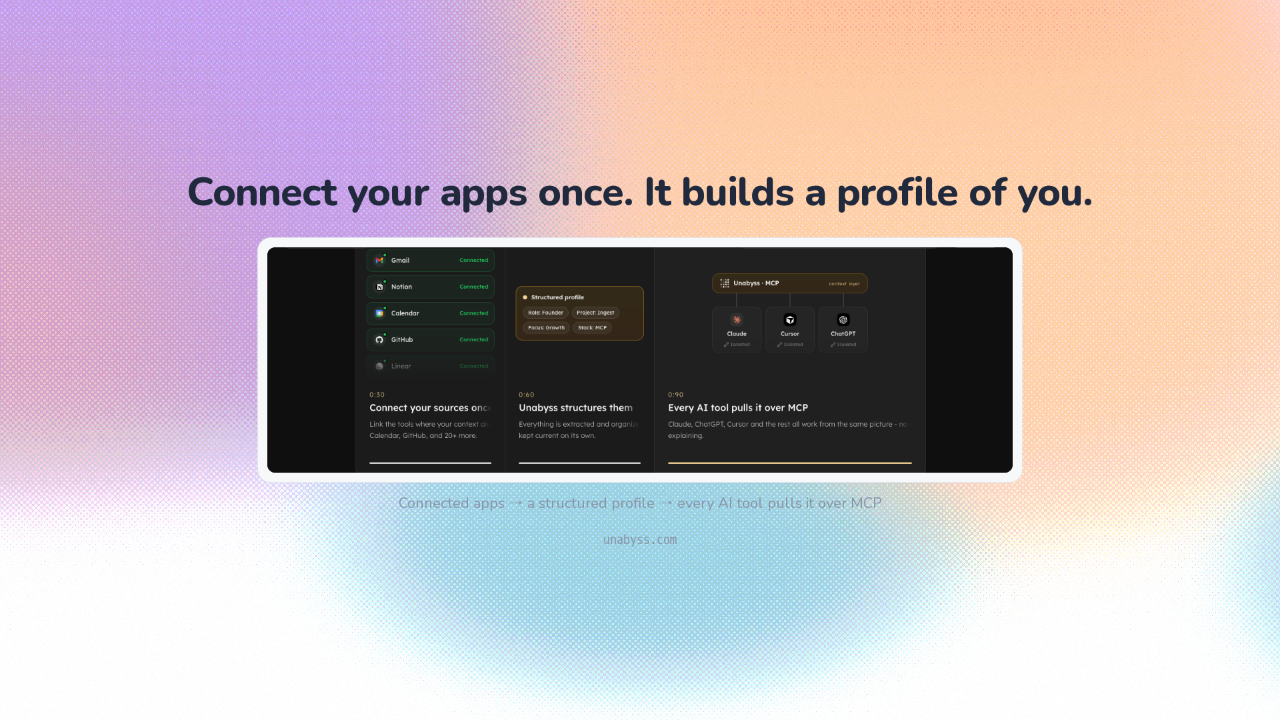
Connect your apps once. It builds a profile of you.
Connect your accounts once. Gmail, Drive, GitHub, your notes, your meeting recorder. Unabyss reads them and builds a living profile of you automatically, no forms to fill in. Then any AI you use can read it.
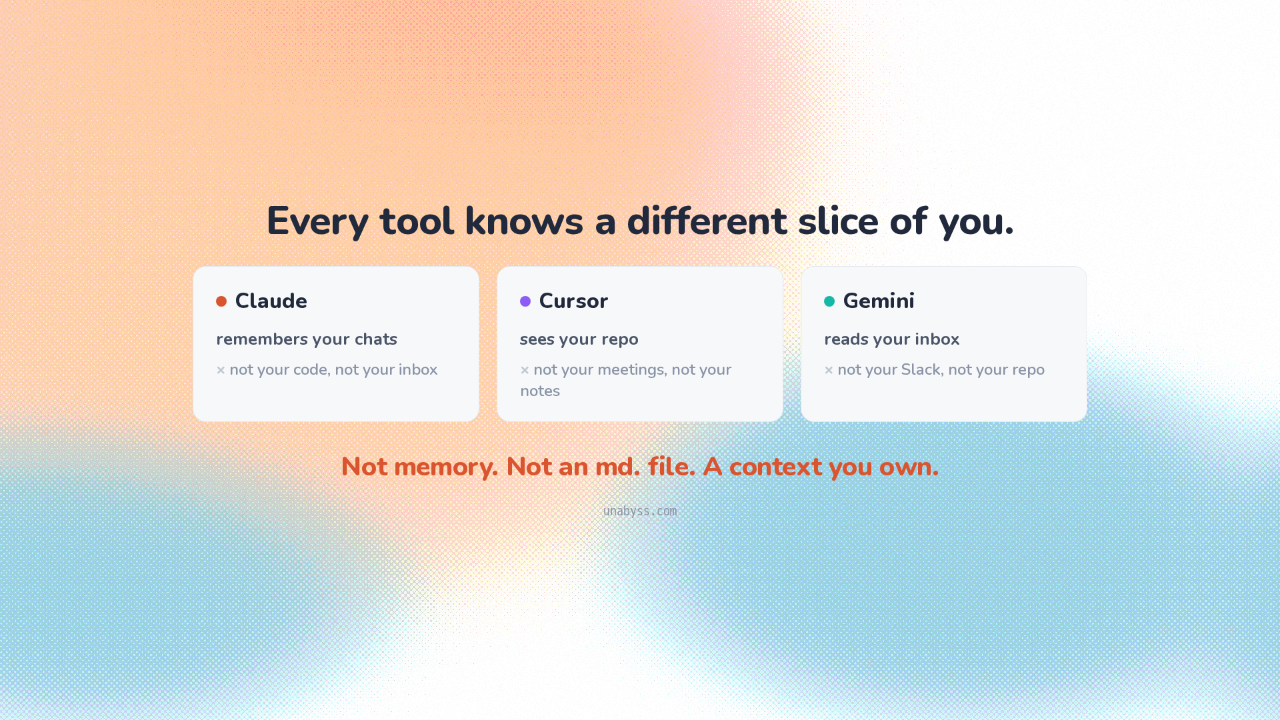
Every tool knows a different slice of you.
And it's getting worse. Now that Claude and ChatGPT each ship their own built-in memory, switching tools resets what your AI knows. Your Claude memory doesn't follow you to Cursor. Your Gemini never saw Slack.
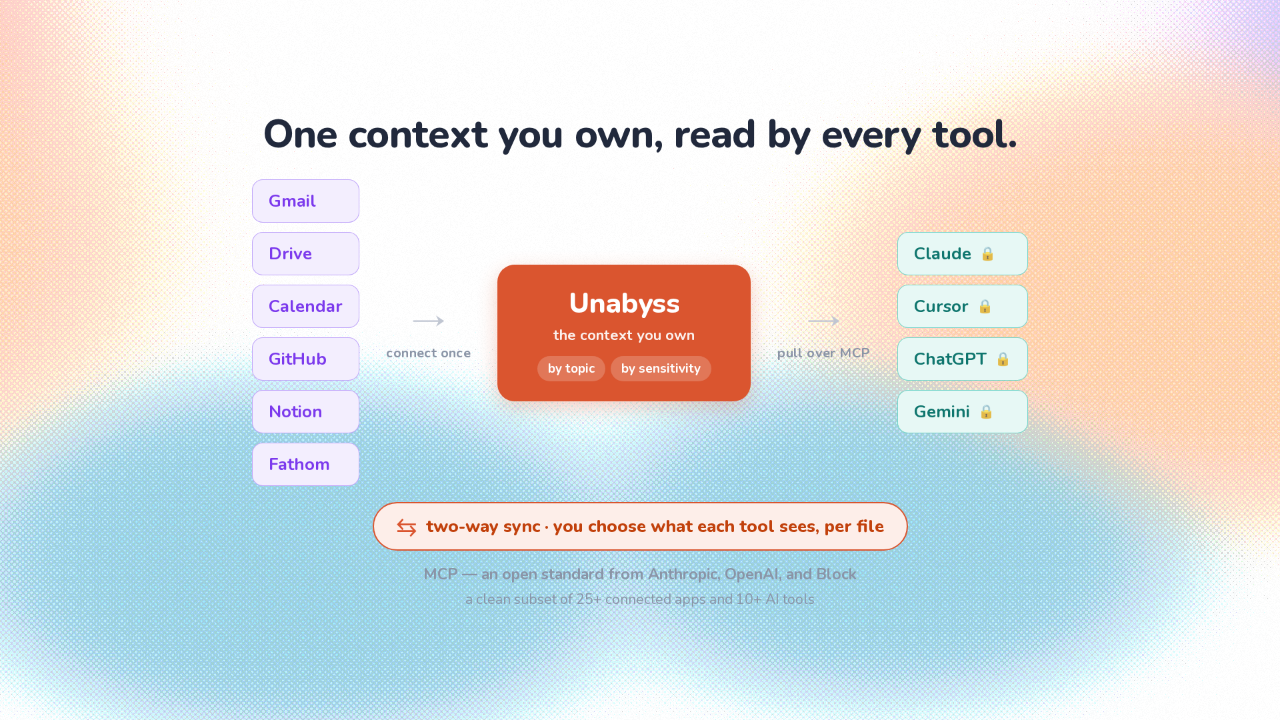
One context you own, read by every tool.
One context, every tool, in three steps. Connect two apps. Unabyss structures a profile of you, tagged by topic and sensitivity. Add it over MCP, and Claude or Cursor is caught up from the first prompt. And it runs both ways. What you do in each tool flows back, and you choose exactly what every tool sees.
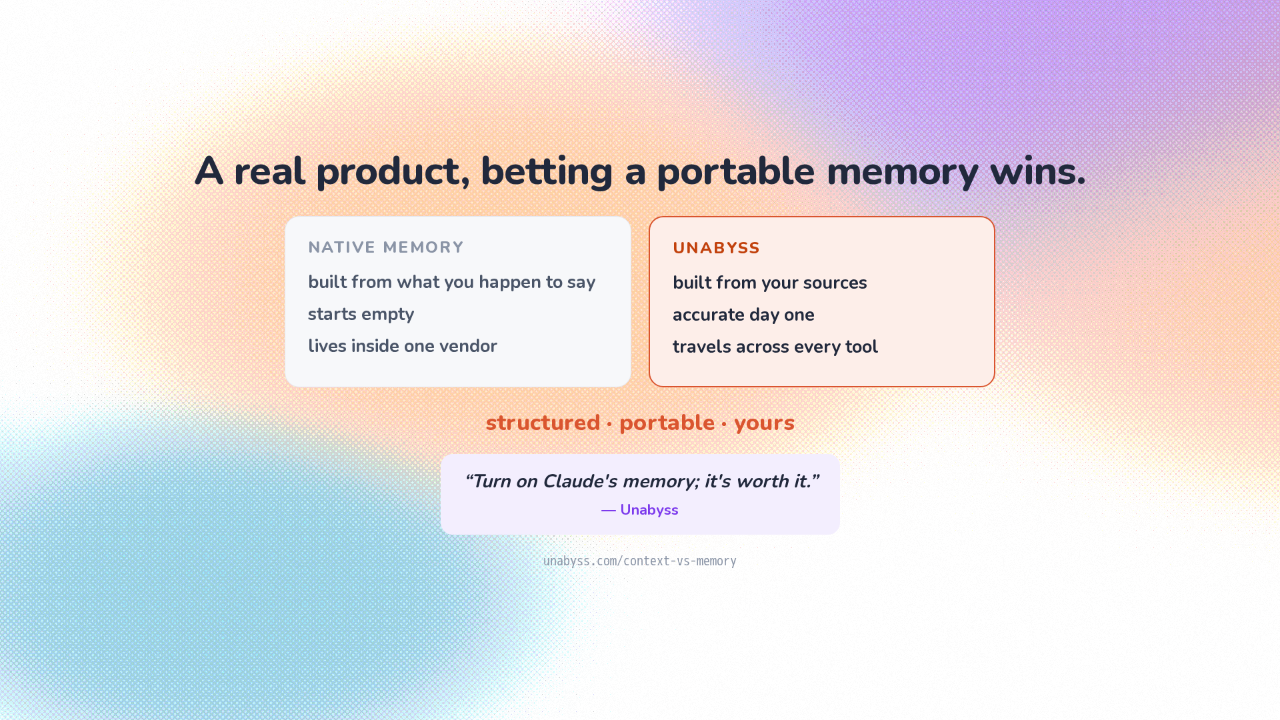
A real product, betting a portable memory wins.
“Turn on Claude's memory; it's worth it.”
So, product or feature? A real product. But memory is going native everywhere. Claude remembers you across chats now, and Unabyss itself says to turn that on. Its bet is a context that's structured, portable across every tool, and yours. Native memory can't be all three.
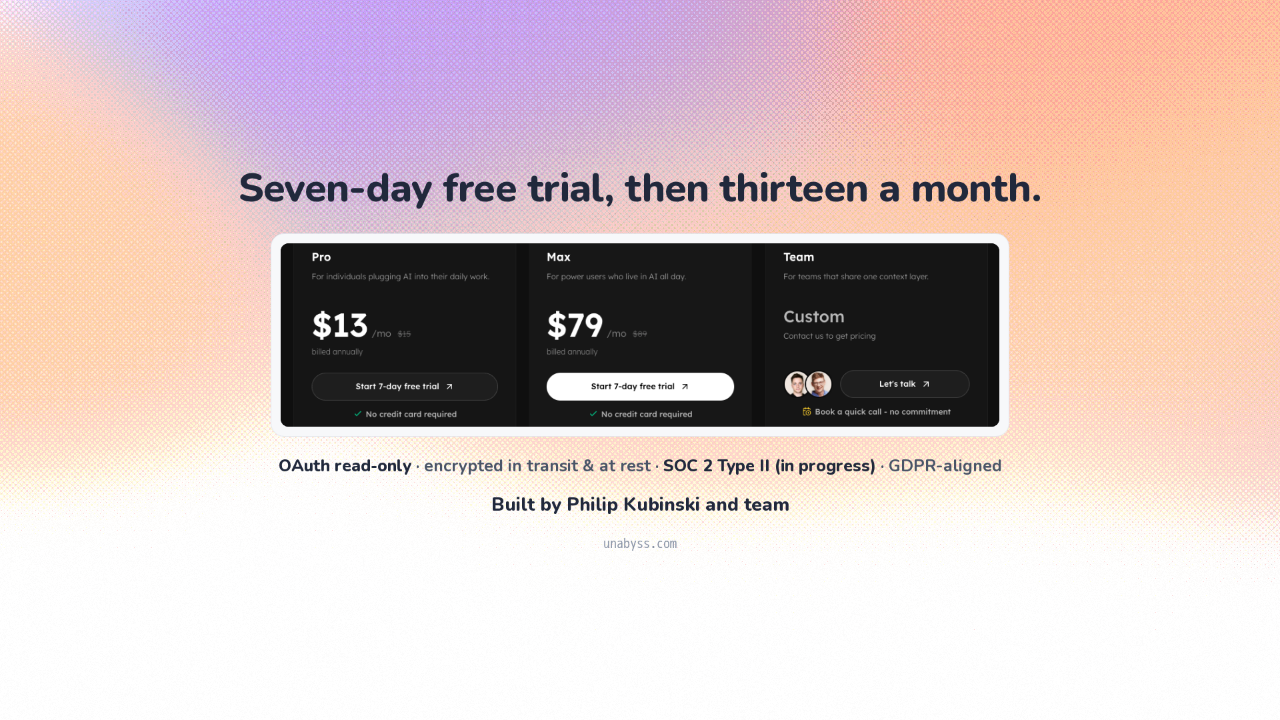
Seven-day free trial, then thirteen a month.
It's a seven-day free trial, no card, then thirteen a month. You're handing it real accounts, so access is read-only, it never trains on your data, and its SOC 2 audit is still in progress. Built by Philip Kubinski and team.
Unabyss
Instead of every AI knowing a different slice of you, one context does, and it travels with you. That's Unabyss.