Slide 1
Timbal wants to be the only tool you open to build an AI agent. The framework, the automation, the app, in one box.
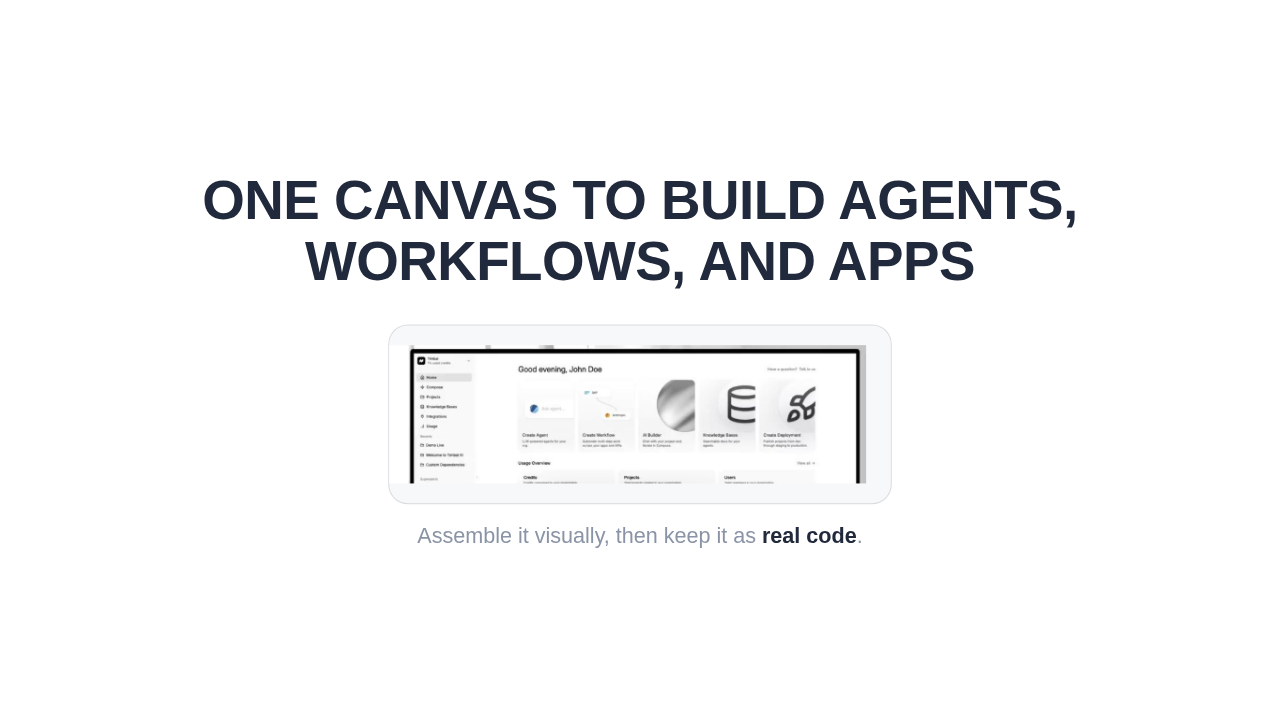
One canvas to build agents, workflows, and apps

This is Timbal Studio. You build agents and workflows on a visual canvas, wire in your data, and ship an interface. And it all exports as real code you keep.
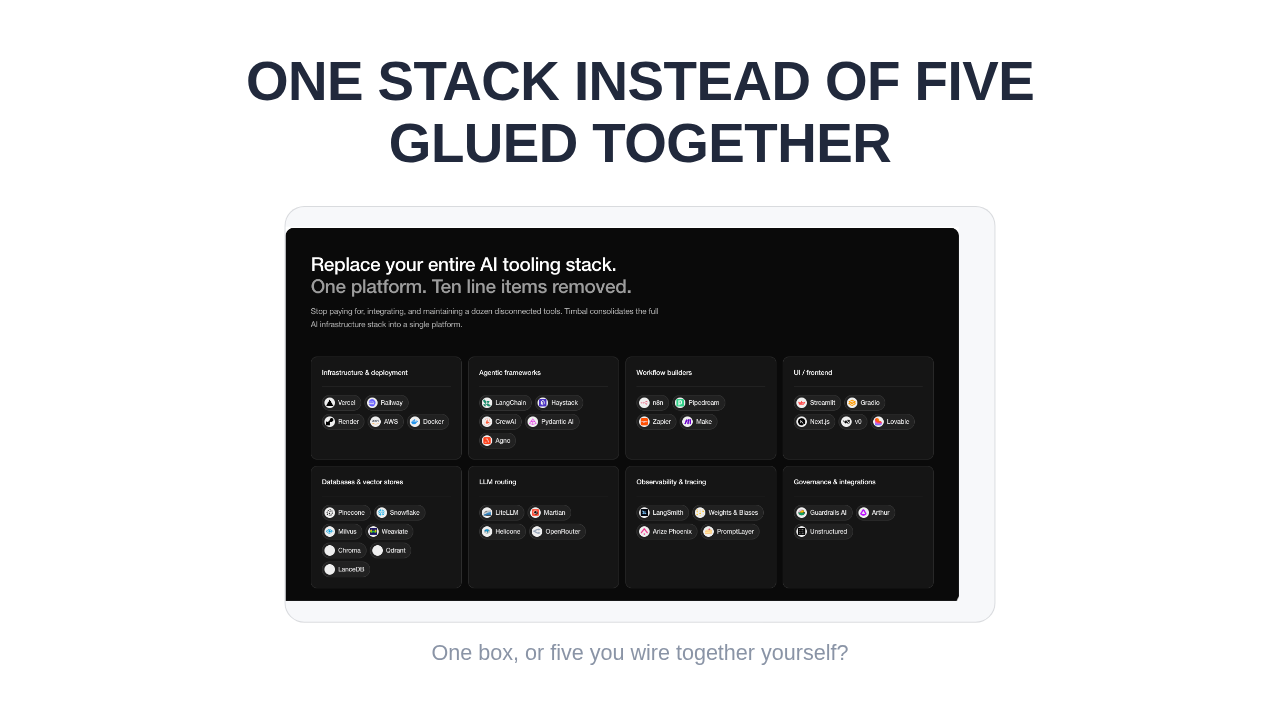
One stack instead of five glued together

If you've shipped an agent, you know the tax. A framework, an automation tool, a vector database, an eval harness, all duct-taped together. Timbal's bet is one stack instead of five. Whether that beats stitching it yourself is the real question.
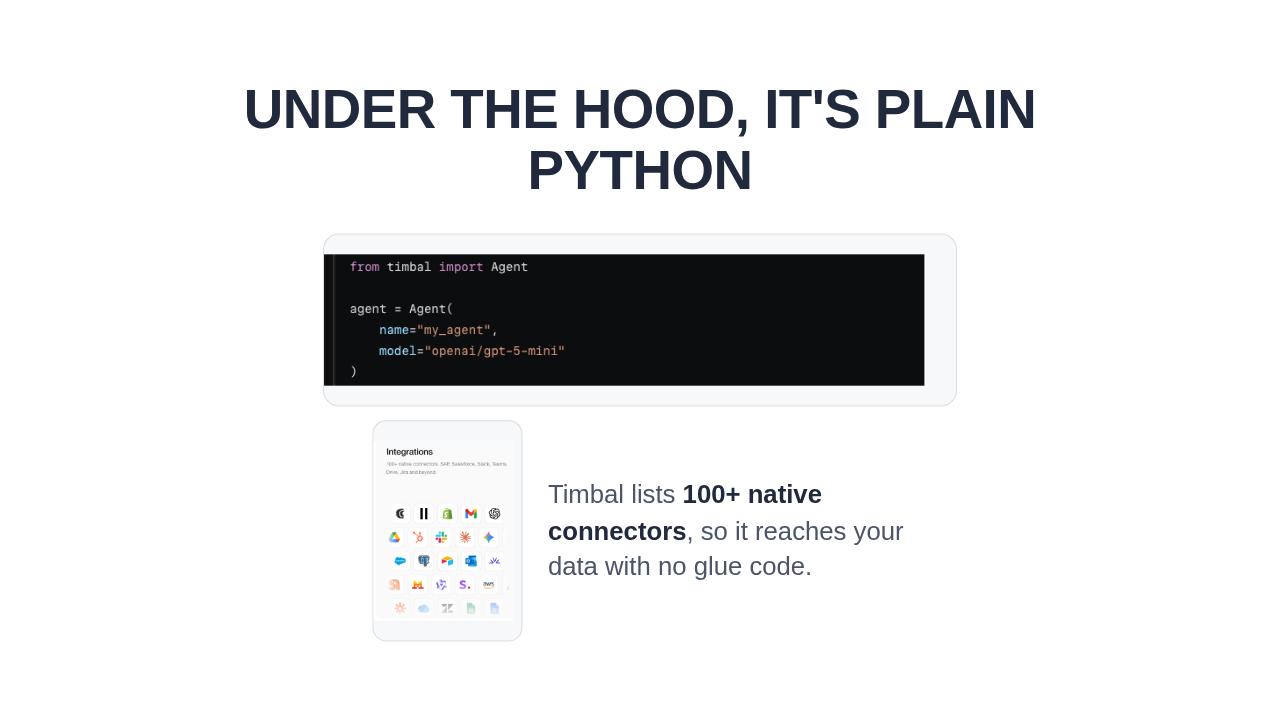
Under the hood, it's plain Python


Under the hood it's plain Python. A working agent is two lines. And Timbal lists over a hundred native connectors, so it reaches your Salesforce, your Drive, your knowledge base with no glue code.
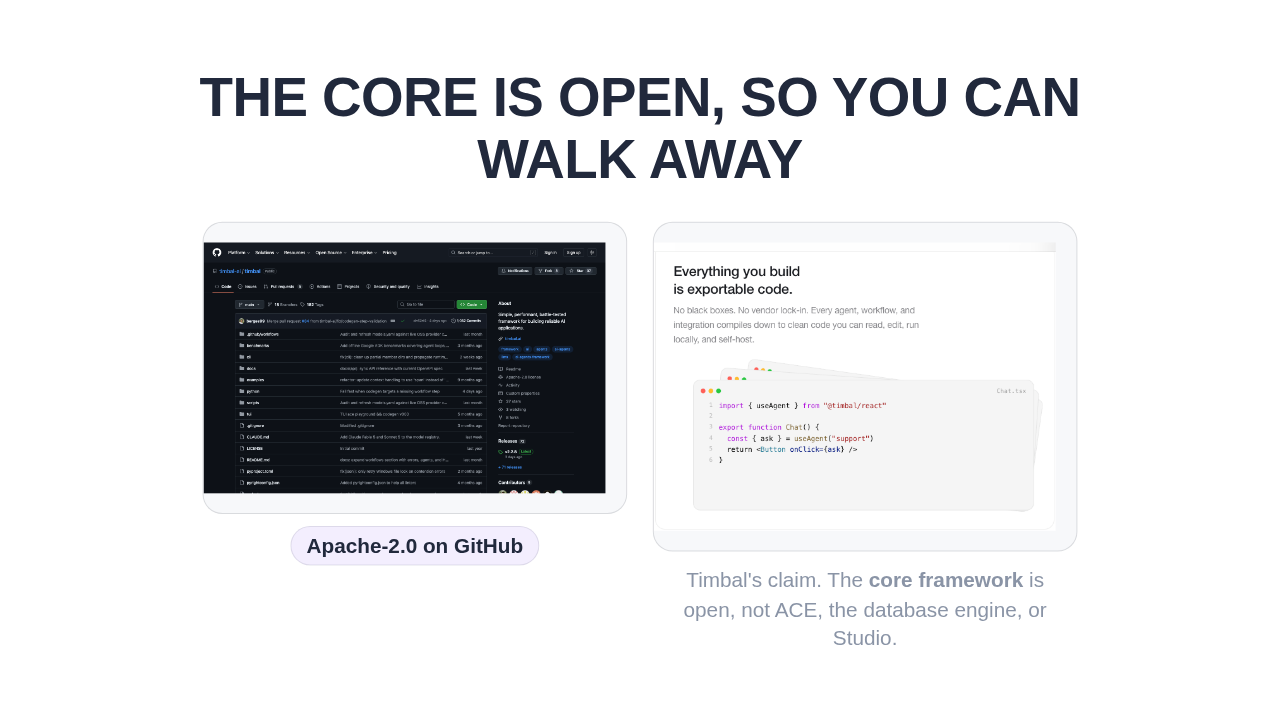
The core is open, so you can walk away


Here's the part that matters. The core framework is open. Apache two point zero, on GitHub, small enough to read. Timbal says everything you build exports as code you can run and self-host, so you're never stuck in a black box.
Cloud, your VPC, or fully on-prem

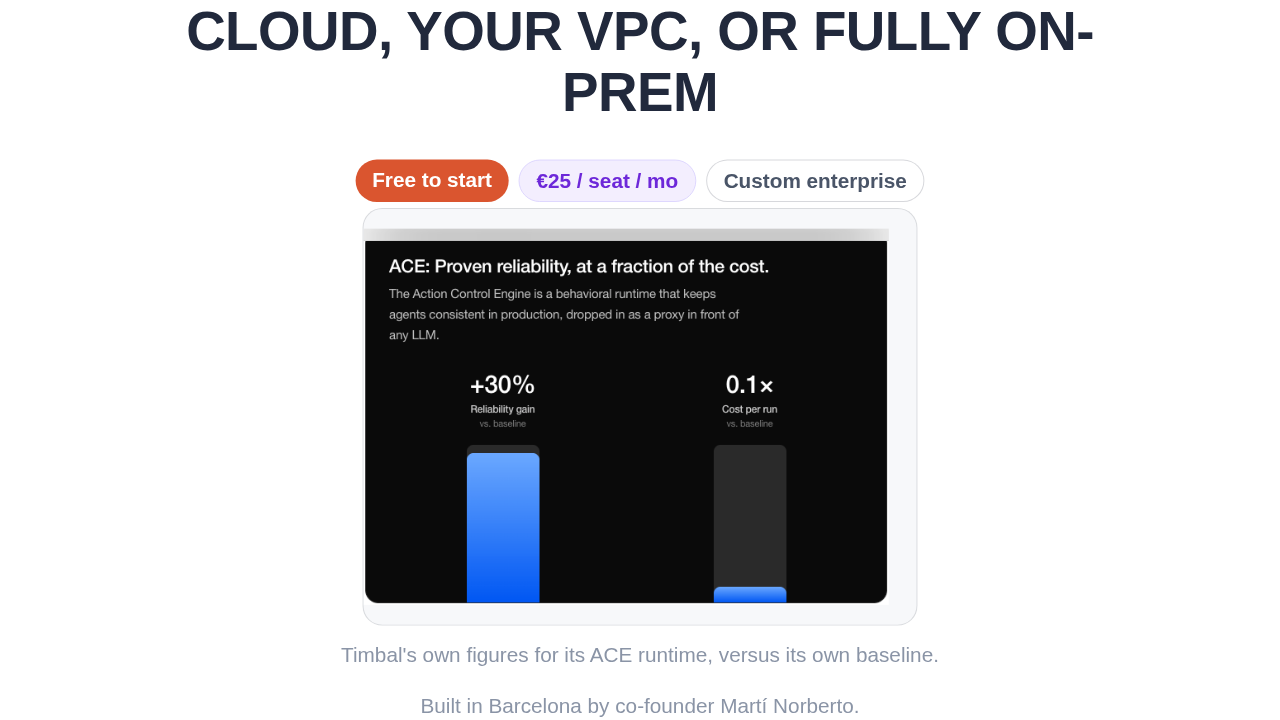
You can run it in Timbal's cloud, your own private cloud, or fully on-prem. It's free to start, then twenty-five euros a seat. Timbal says its ACE runtime adds around thirty percent reliability at a tenth the cost, versus its own baseline. Built in Barcelona by co-founder Marti Norberto.
One open box for the whole stack
So that's Timbal. One open box for the whole agent stack. Young and promising, the kind of young worth watching. The link's on screen.