Slide 1
You paste your app's web address. An AI red team breaks in, finds the security holes, and writes the fix.
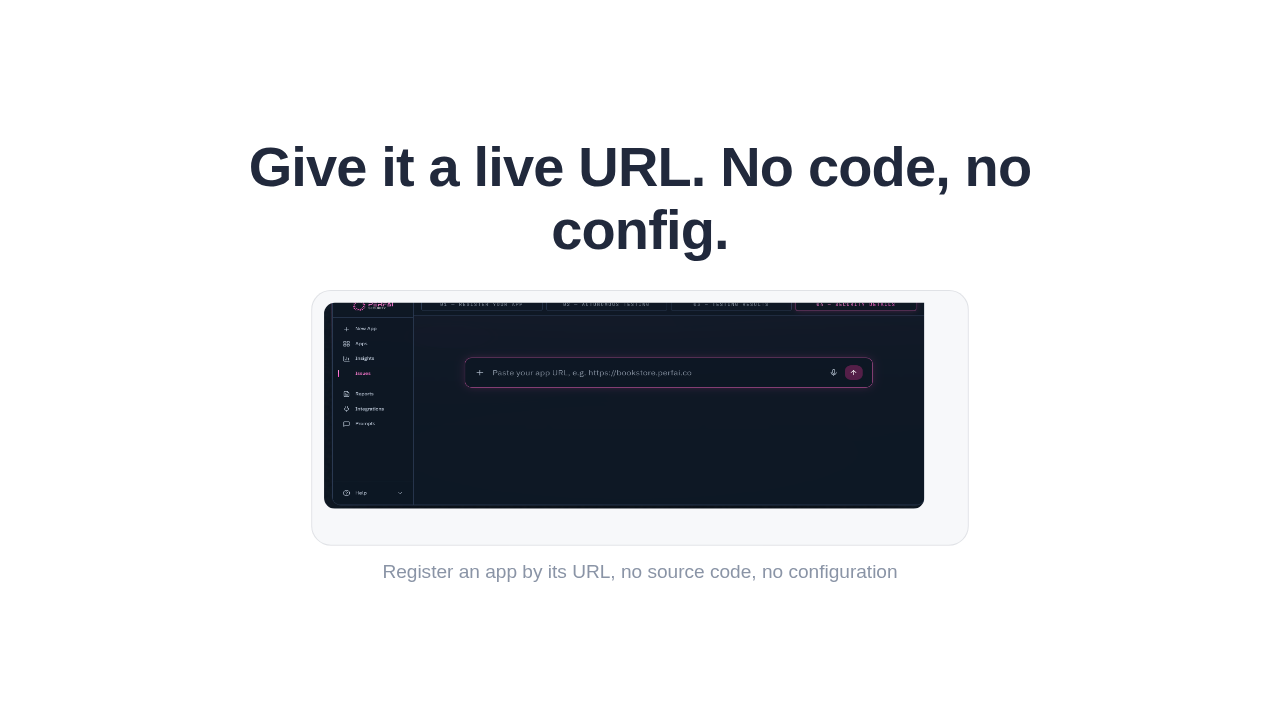
Give it a live URL. No code, no config.
You give it a live app's URL, no source code, no configuration. Its agents then act like a real attacker, probing what each user is allowed to touch. Perfai's Qutub Syed has been showing it off.
Built for apps shipped fast with AI
It's built for one moment. Teams now ship AI-built apps in an afternoon, and nobody can hand-check that every permission is right. That's where the holes hide.
First it maps every permission. Then it attacks.


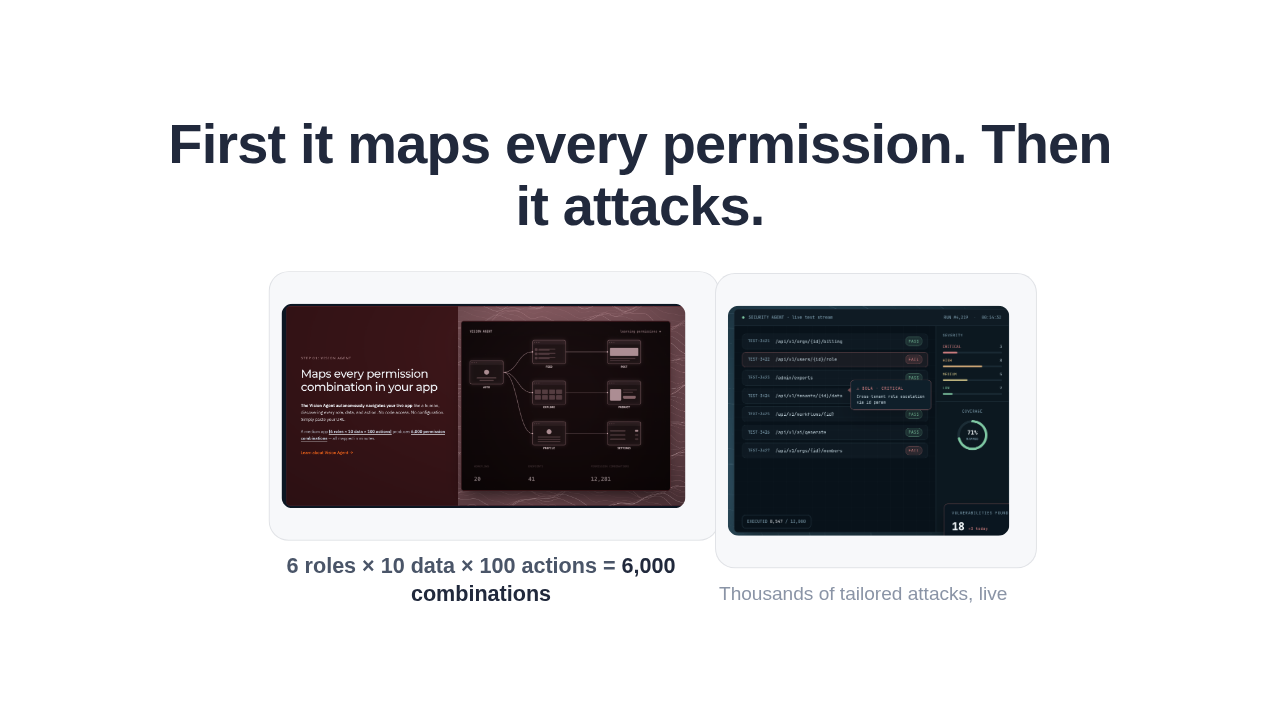
It works in two moves. A Vision Agent walks the app and maps every role against every action. Six roles, ten data types, a hundred actions is six thousand combinations no human checks by hand. Then a Security Agent fires thousands of tailored attacks at that map.
Then it writes the fix into your own IDE

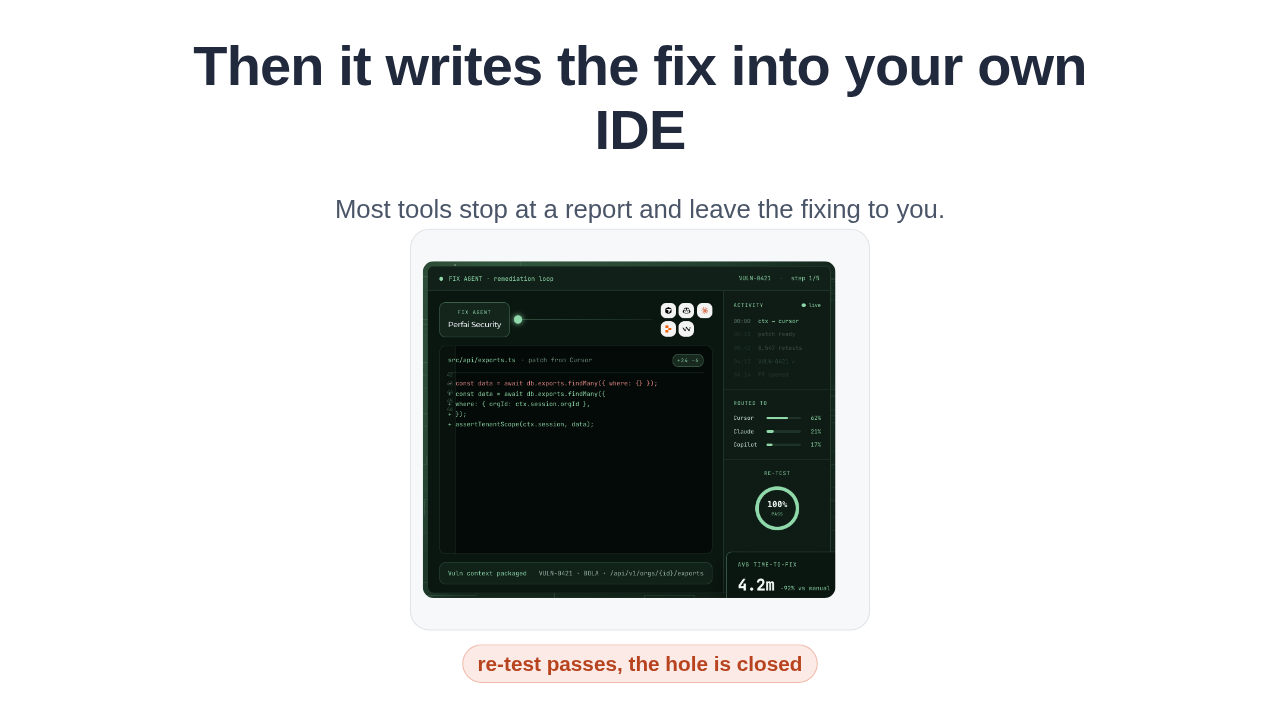
Here's the part most tools skip. They stop at a report and leave the fixing to you. This one hands the problem and a fix plan to the AI assistant you already code with, as a ready patch. Then it re-runs every test to prove the hole is closed.
The honest read: narrow, and day one

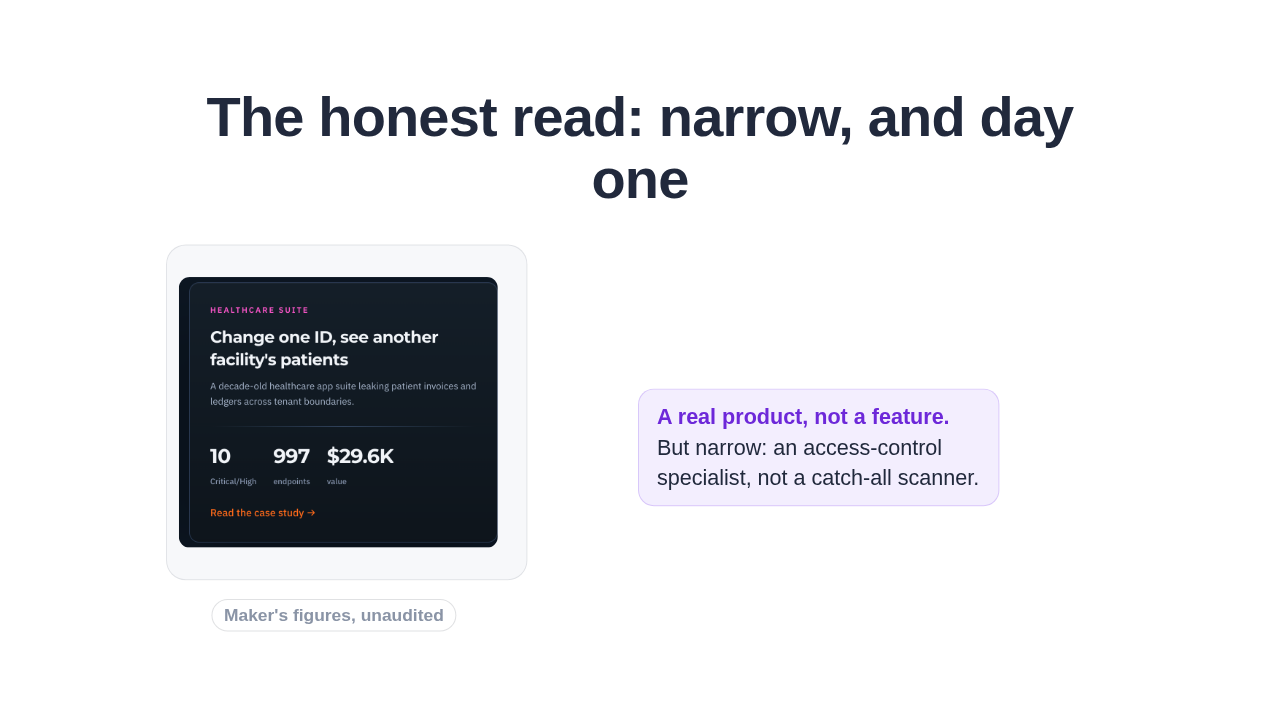
Now the honest read. It's a real product, not a feature, but it's narrow: an access-control specialist, not a catch-all scanner. The maker shows cases like changing one ID to see another facility's patient records. And the big savings numbers are the maker's own, day one, so take them as a claim.
Free to try. Ninety-nine a month for Pro.

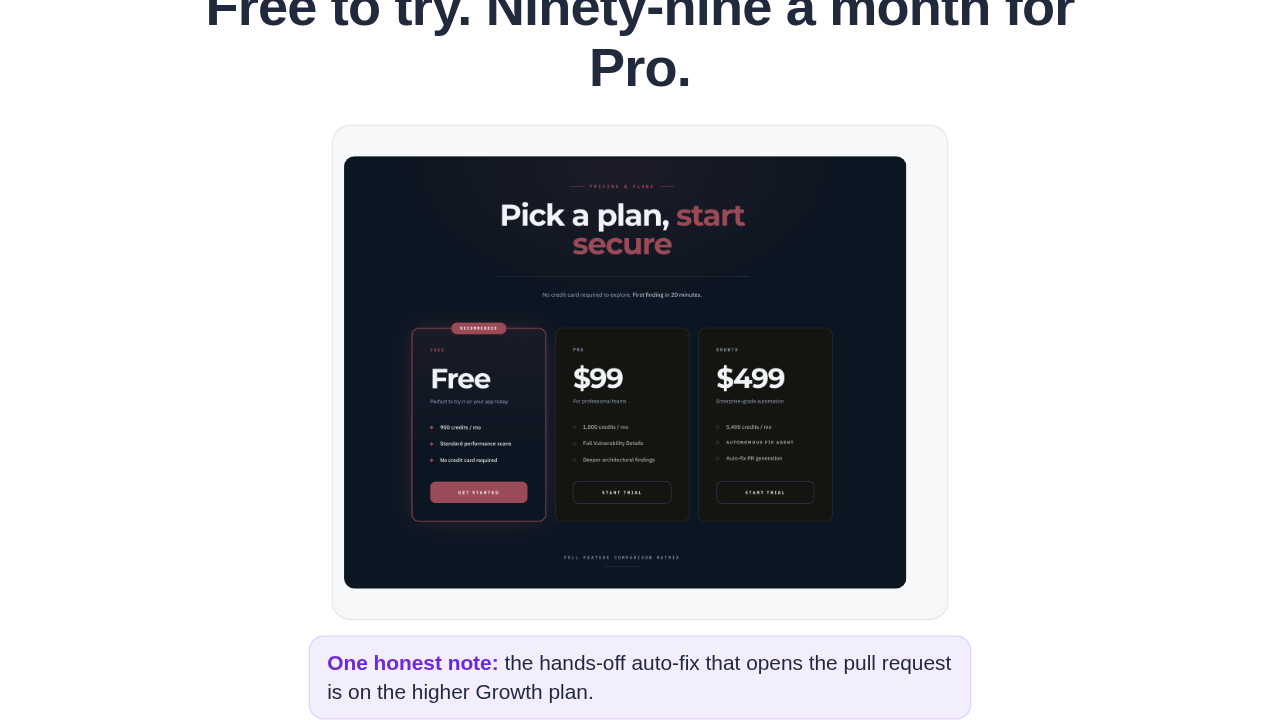
It's a web service. You register an app by its URL, no code needed. There's a free tier, with first findings in about twenty minutes, then ninety-nine dollars a month for Pro. One honest note: the hands-off auto-fix that opens the pull request lives on the higher Growth plan.
Slide 8
So if you're shipping apps built with AI, this is the tool that breaks in before someone else does.