Ditto turns any website into real, editable code
Give it any website's address. It hands you back the front end as real, editable code. This is ditto. Its trick is refusing to use AI.
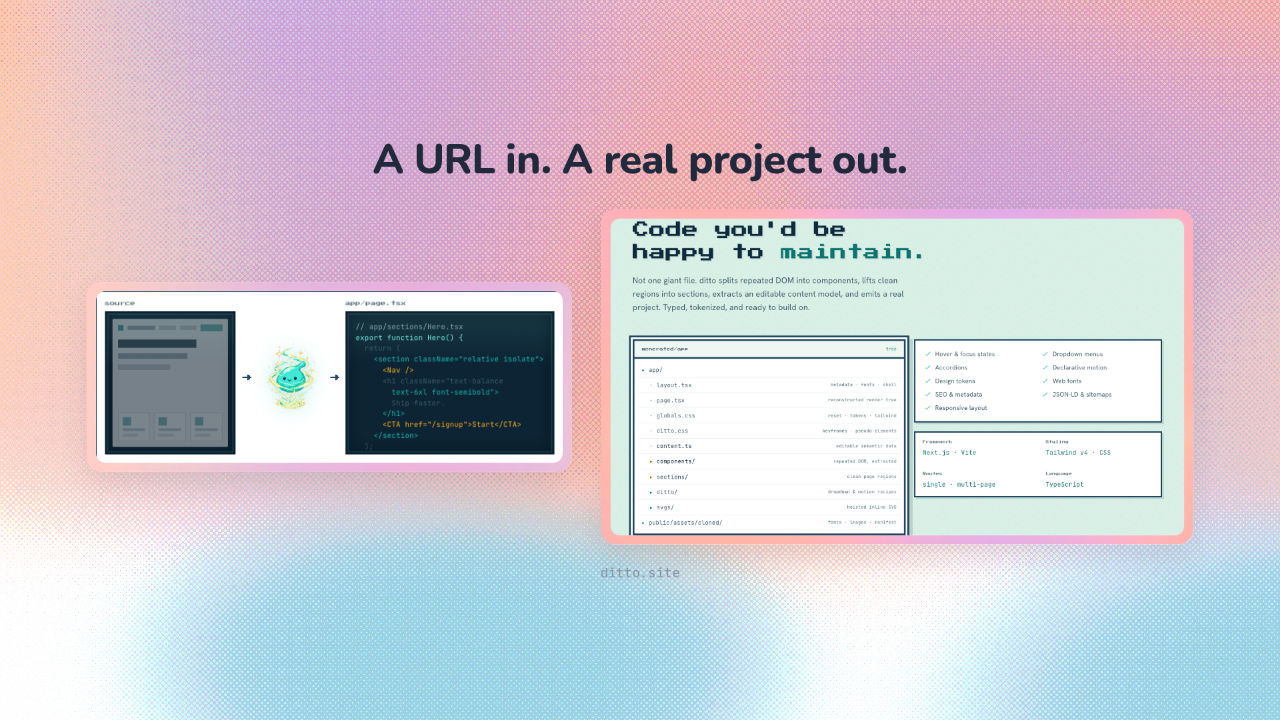
A URL in. A real project out.
Point it at a public URL and you get back a real project. Components, routes, and styles, as a Next.js or Vite app in TypeScript. Real files you can open and edit, not a flat page dump. Rebuild a site you own, or migrate your own app.
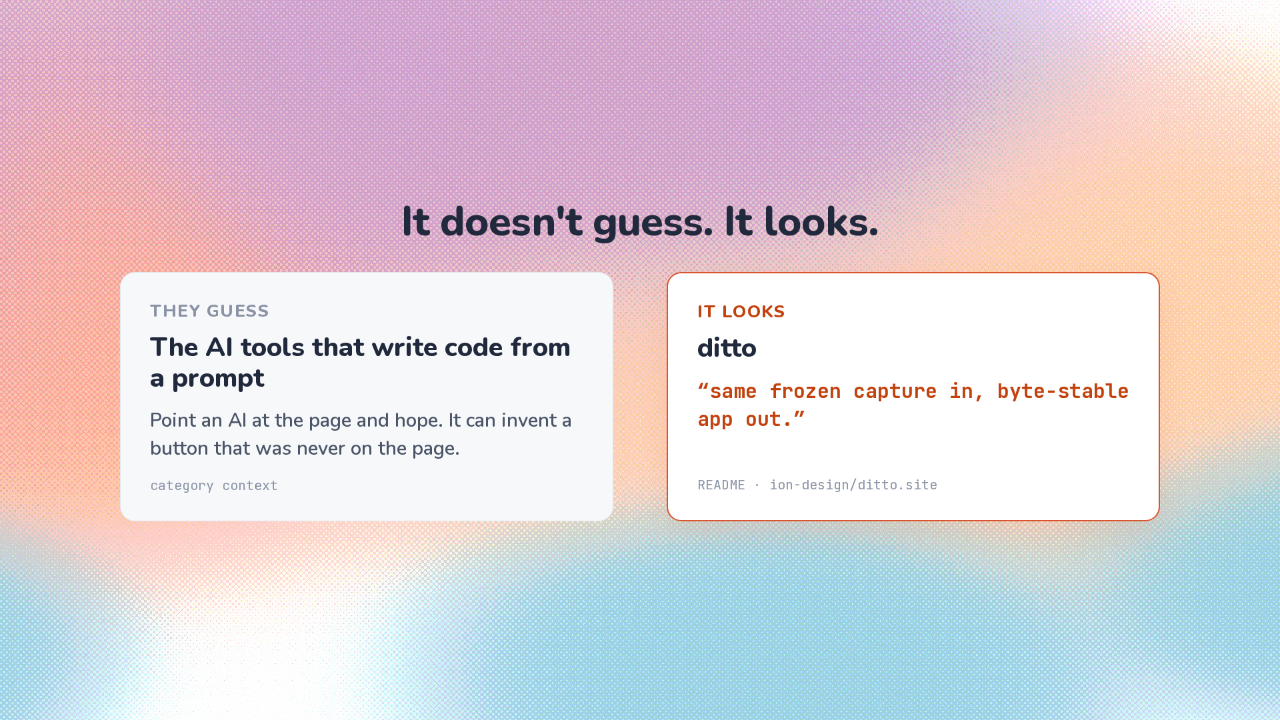
It doesn't guess. It looks.
Every tool that turns a page into code points an AI at it and hopes. It can invent a button that was never on the page. ditto does the opposite. It doesn't guess, it looks. Same page in, the same code out, down to the byte.
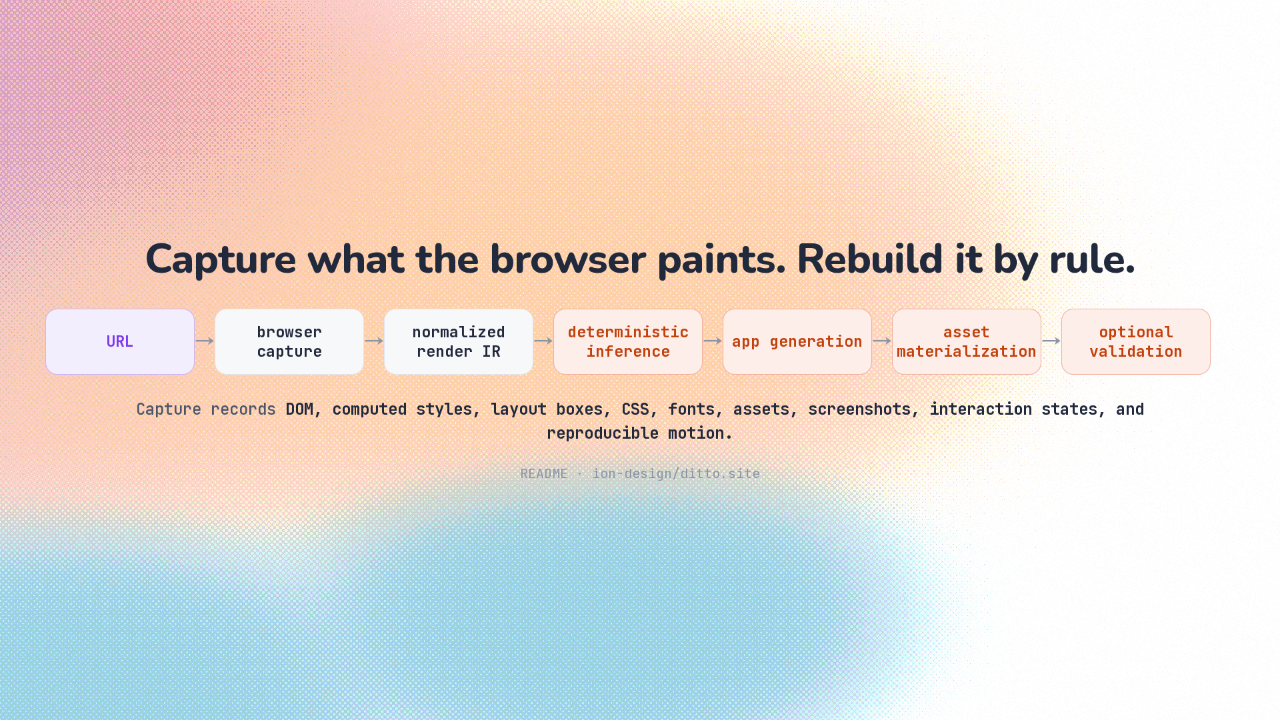
Capture what the browser paints. Rebuild it by rule.
Here's how. It opens the page in a real browser and records everything it renders. The markup, the styles, the layout, the fonts, even the motion. Think a 3D scan, not a description from memory. Then, with fixed rules and no AI, it turns the repeated pieces into components and writes out the routes. So what about everything you can't see?
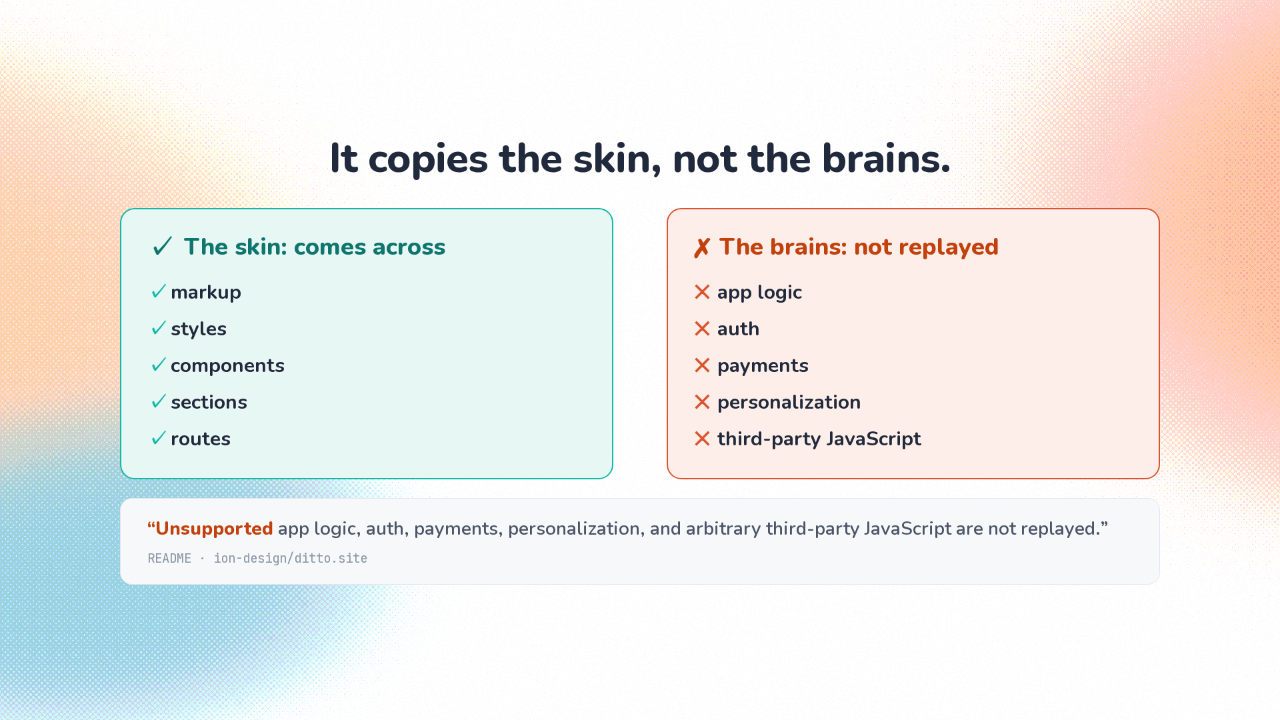
It copies the skin, not the brains.
- markup
- styles
- components
- sections
- routes
- app logic
- auth
- payments
- personalization
- third-party JavaScript
“Unsupported app logic, auth, payments, personalization, and arbitrary third-party JavaScript are not replayed.”
So, that word: clone. What does it really copy? Everything you can see. And nothing you can't. App logic, sign-in, payments, and other sites' scripts don't carry over. The maker says so first. You don't get a working app. You get a faithful, real-code starting point to build on.
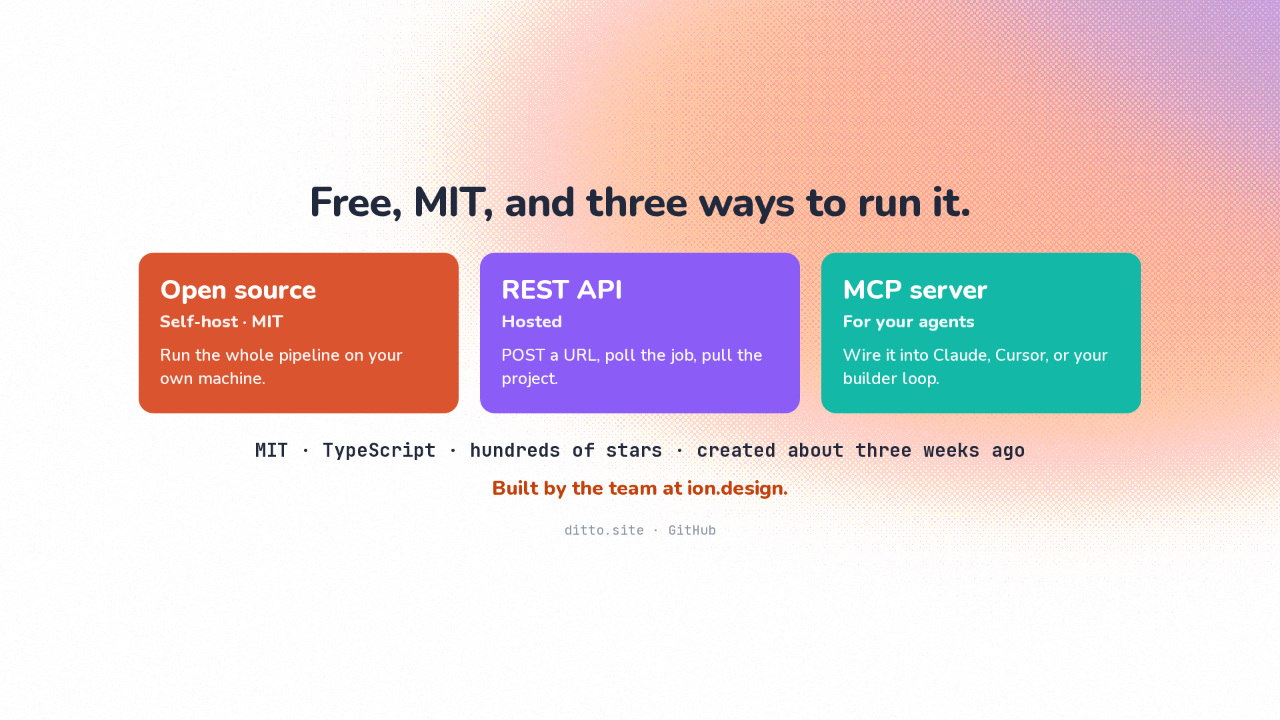
Free, MIT, and three ways to run it.
It's free, MIT licensed, and it's yours. Three ways to run it: self-host the command-line tool, call the hosted API, or wire it into your coding agent, like Claude or Cursor. Hundreds of stars already, and it's only three weeks old. Built by the team at ion.design.
ditto
in real code.
It won't copy the brains. But for the front end, it's the real thing, in real code, and it's free.