Pressure insoles teach a humanoid robot to land softly
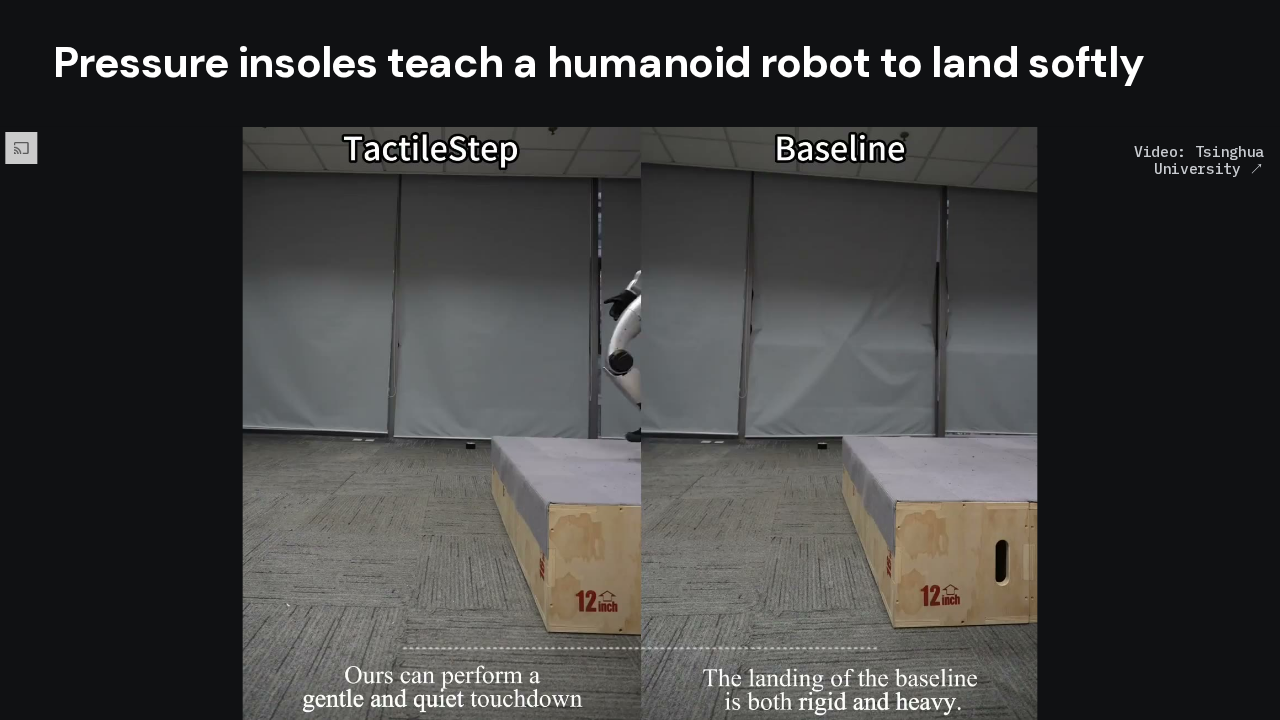
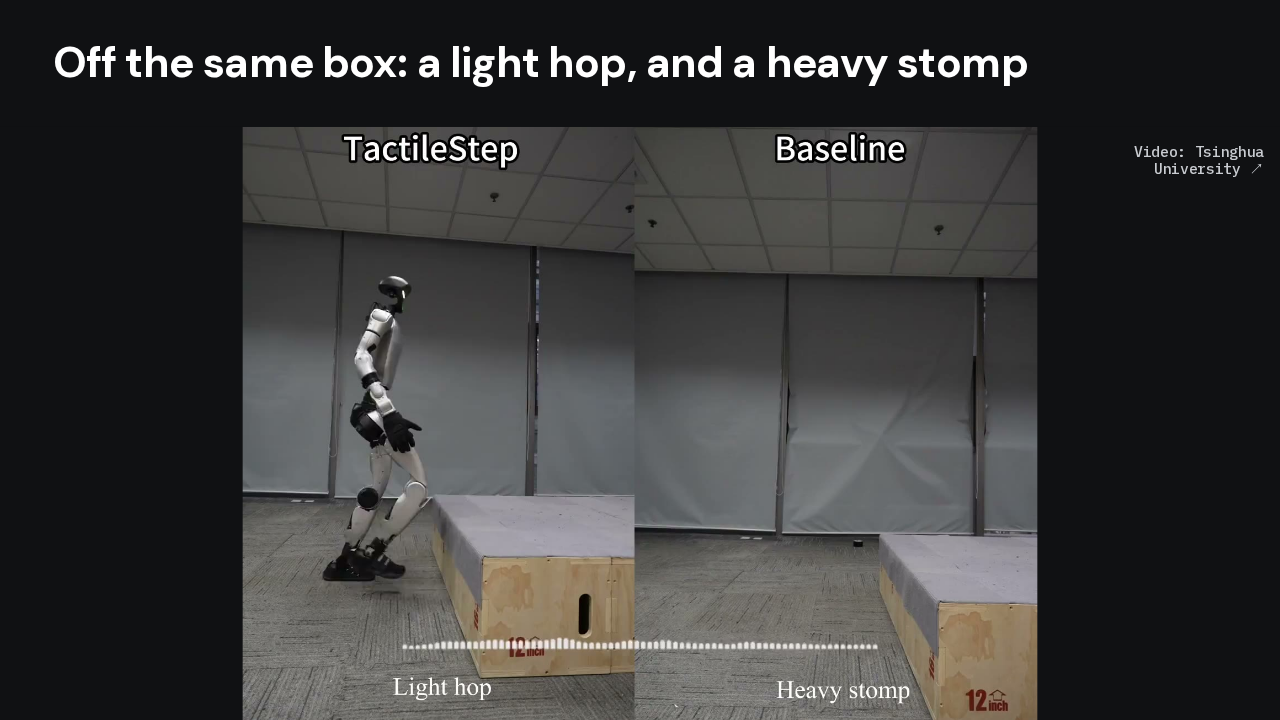
Researchers at Tsinghua University put thin pressure-sensing insoles in the feet of a Unitree G1 humanoid. On the left, their robot steps off a box. On the right, the same robot runs a strong existing walking controller. The bars under each robot are the sound of its footsteps.
Off the same box: a light hop, and a heavy stomp
Watch the bars as each one lands. The insole robot comes down in a light hop. The other one stomps, and its sound spikes. A hard landing like that is loud, it shakes the whole body, and over time it wears out the joints.
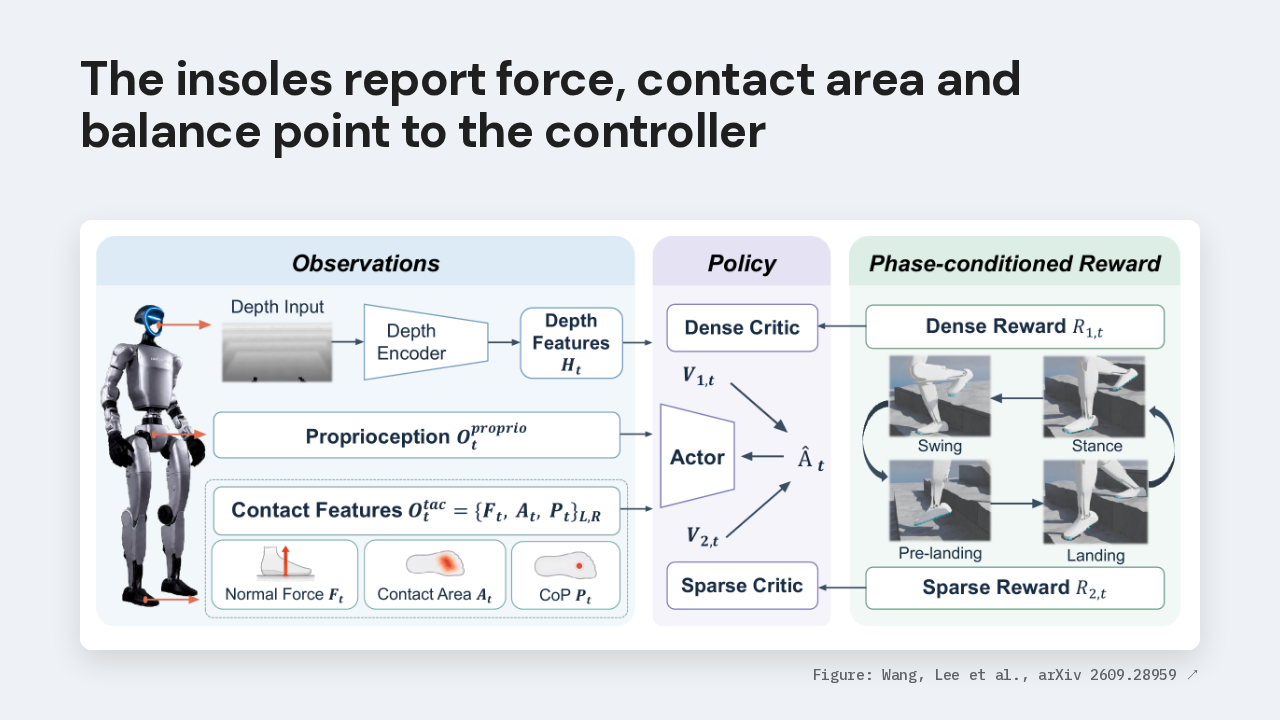
The insoles report force, contact area and balance point to the controller

Each insole is a grid of pressure sensors. The controller reads three things from it: how hard the foot is pressing, how much of the sole is touching the ground, and where the weight is centered. During training in simulation, a step is split into four phases, and the robot is rewarded for coming down gently at landing, and for keeping the whole sole planted while it stands.
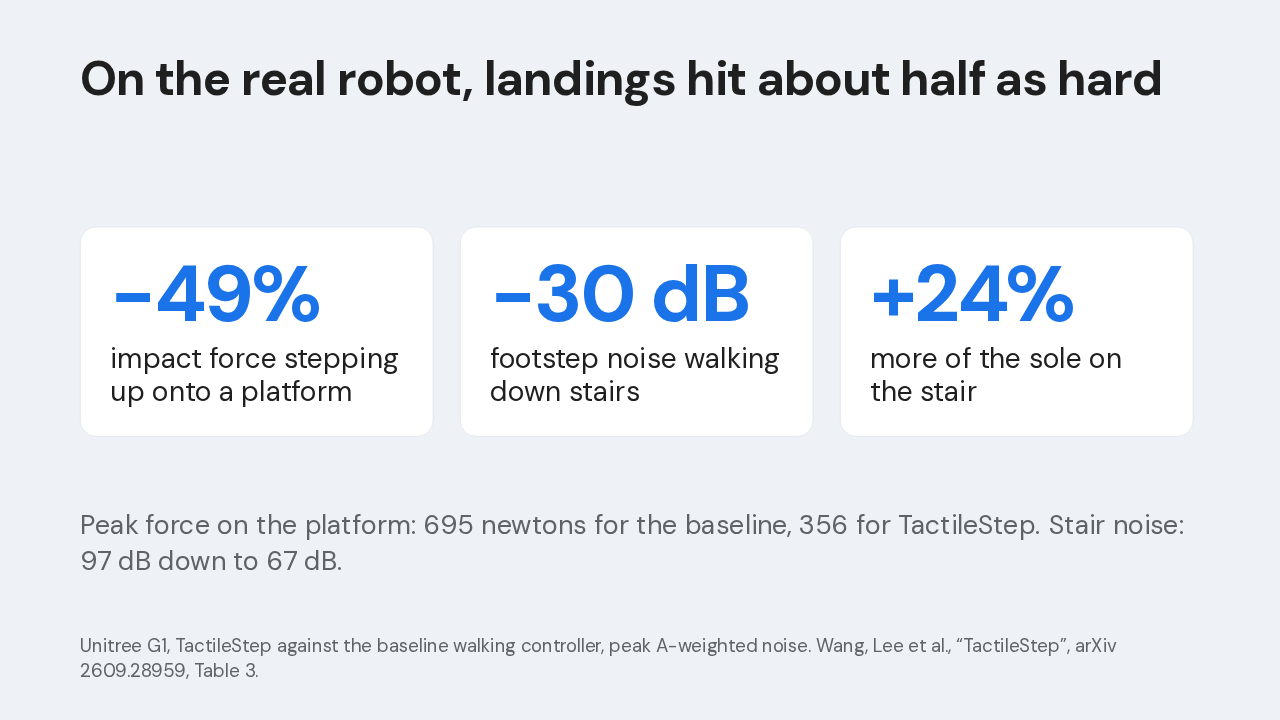
On the real robot, landings hit about half as hard
Peak force on the platform: 695 newtons for the baseline, 356 for TactileStep. Stair noise: 97 dB down to 67 dB.
Unitree G1, TactileStep against the baseline walking controller, peak A-weighted noise. Wang, Lee et al., “TactileStep”, arXiv 2609.28959, Table 3.
The team measured it on the real robot. Stepping up onto a platform, peak impact force dropped by about half, from roughly 700 newtons to 360. Walking down stairs, footstep noise fell by 30 decibels, from about 97 to 67. And on the stairs, about a quarter more of the sole stayed in contact, so it stood on firmer footing.
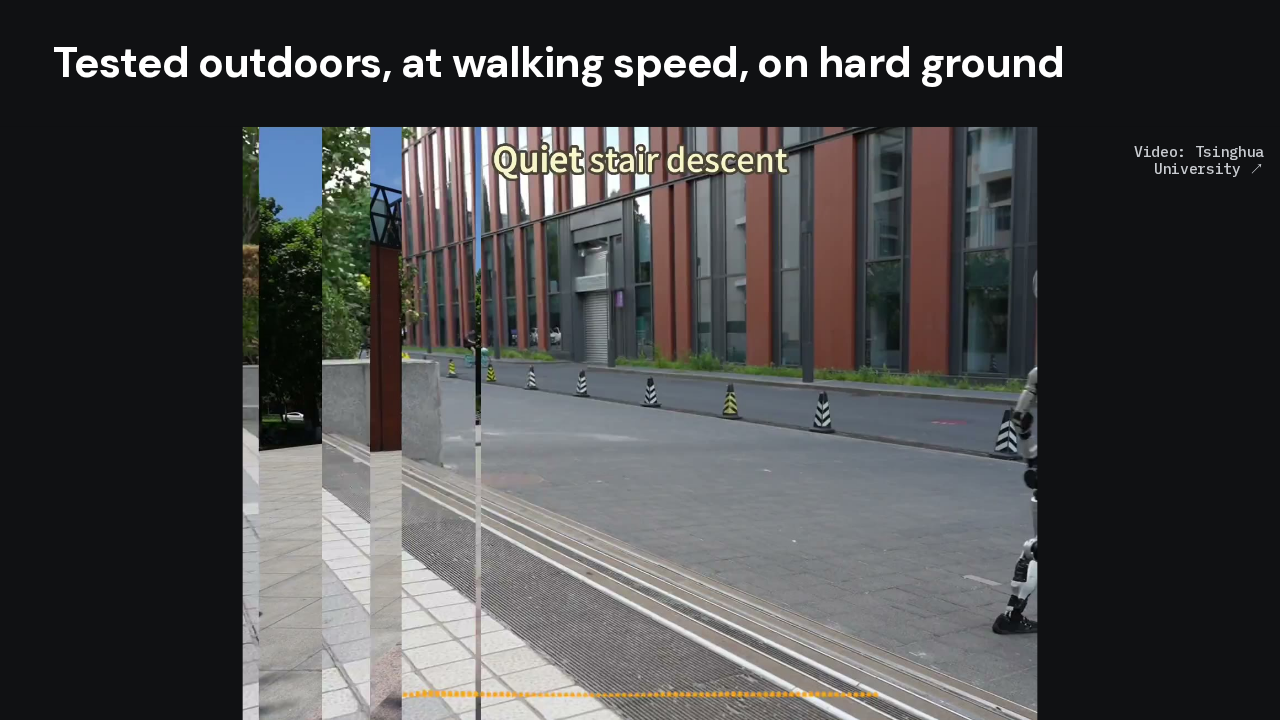
Tested outdoors, at walking speed, on hard ground
It also walks outdoors, down stone stairs like these. The authors are clear about the limits. They only tested it at walking speeds, not running. Their simulator assumes hard ground, so sand, grass and gravel are untested. And they haven't checked how the insoles hold up over months of use.
The paper is out, and the code is coming soon
Posted to arXiv on 24 September 2026. A Spotlight paper at CoRL 2026, the Conference on Robot Learning.
The paper went up on September 24th, and it's a Spotlight at CoRL 2026, the Conference on Robot Learning. The authors say the code is coming soon. The paper and the project page, with the full videos and sound, are linked below.