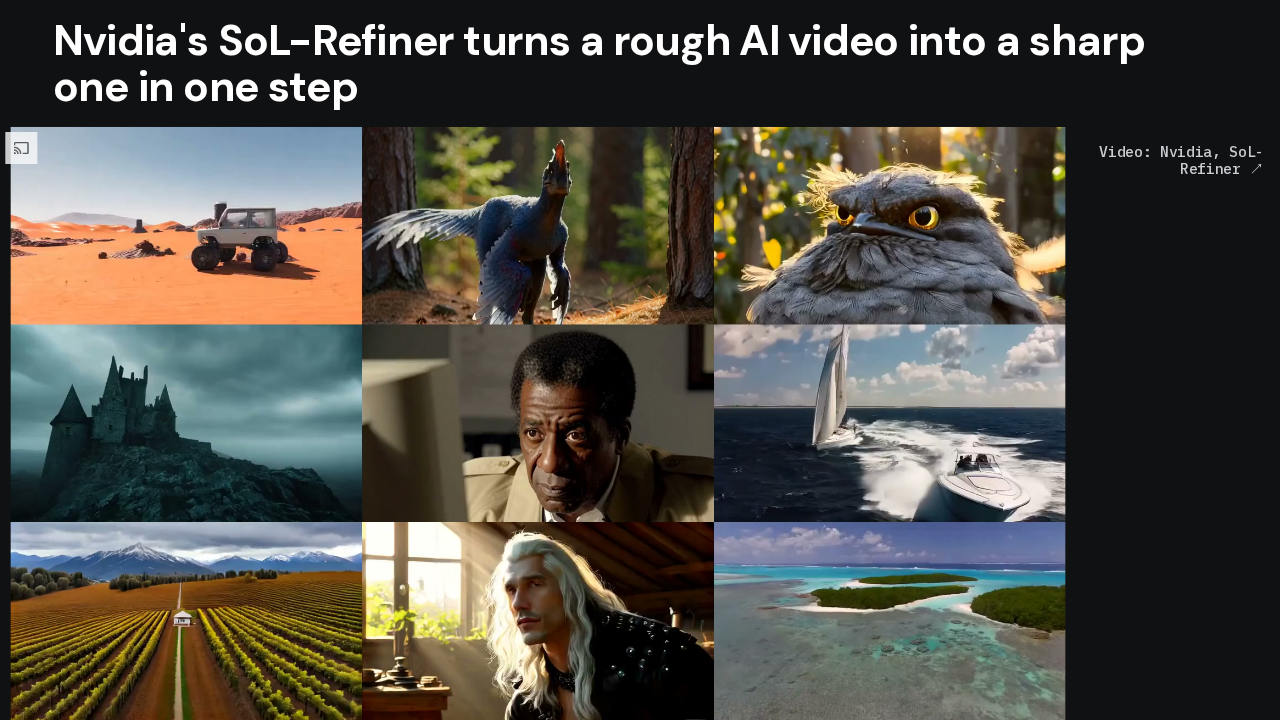
Nvidia's SoL-Refiner turns a rough AI video into a sharp one in one step
Nvidia's SoL Refiner takes a quick, low-resolution AI video and sharpens it in a single pass. In each of these scenes, the green line wipes from the rough draft to the refined version. The idea is to render small and fast, then let one model add the detail, instead of rendering every frame at full size.
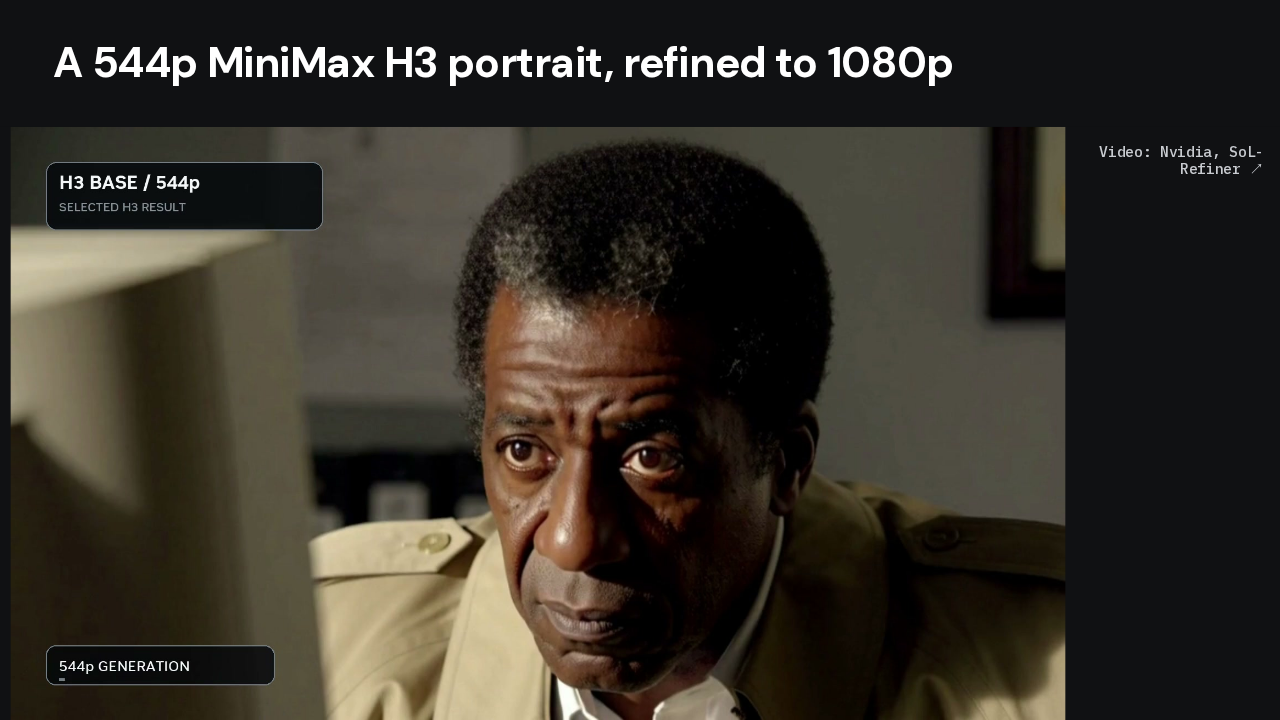
A 544p MiniMax H3 portrait, refined to 1080p
Here's a portrait from MiniMax's H3 video model, made at 544p. The refiner takes it to 1080p in one step. The boxes compare the same frame and the same crop. The hair gets its curls back, the brow gets its lines, and the skin gets its texture.
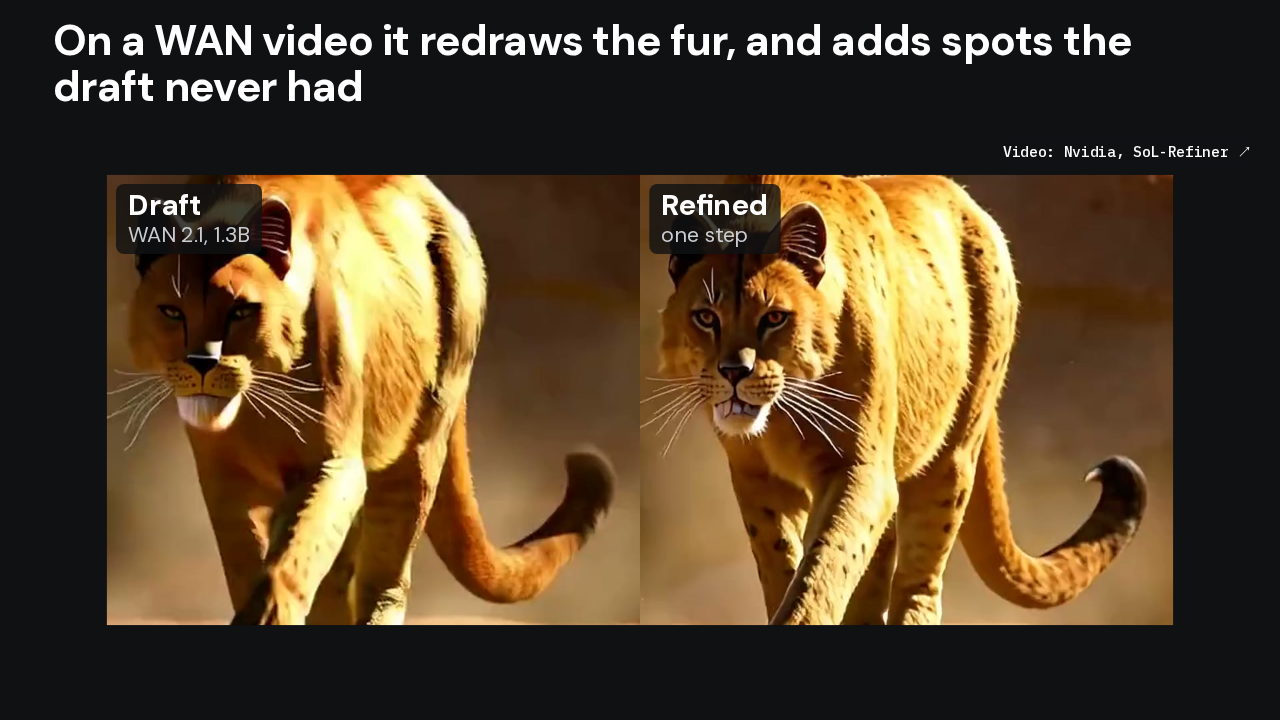
On a WAN video it redraws the fur, and adds spots the draft never had
It works on other video models too. This is a saber-toothed tiger from the smaller WAN model, the draft first, then the refined version. It doesn't just sharpen. It redraws the fur and the whiskers, and here it added spots the draft never had. That's the trade with any refiner: it invents detail, it can't recover it.
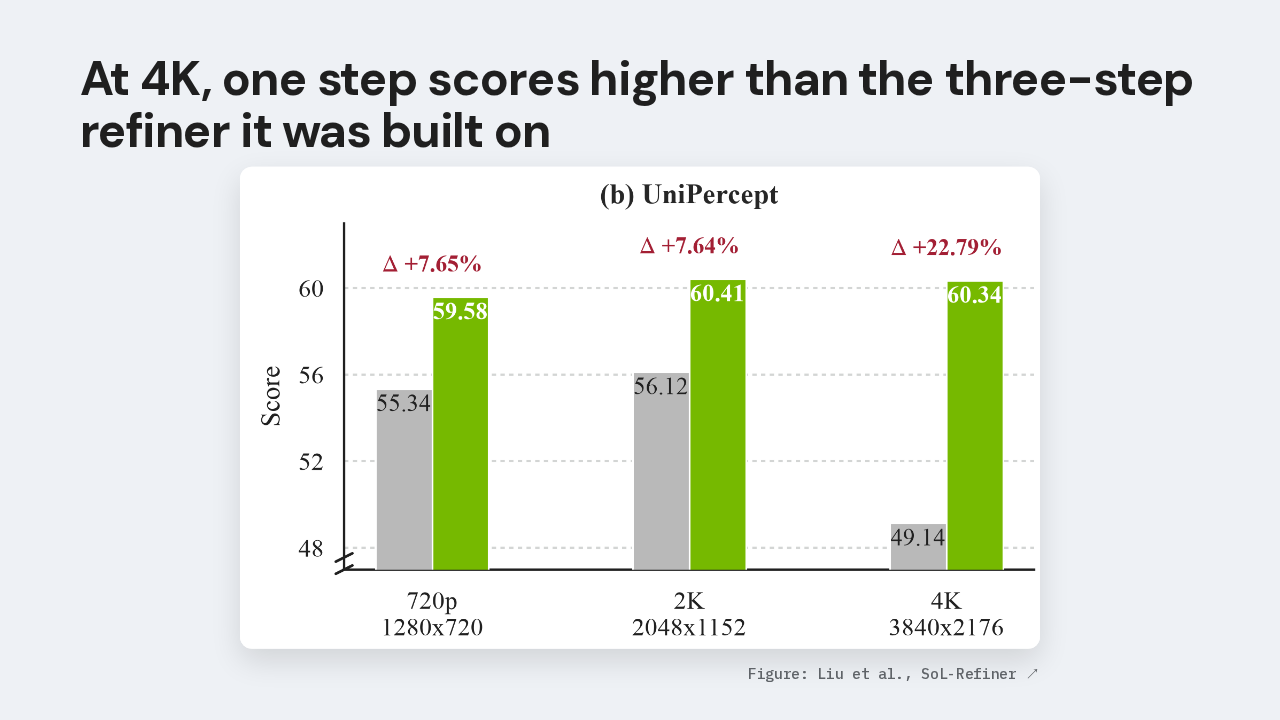
At 4K, one step scores higher than the three-step refiner it was built on

In the paper, SoL Refiner starts from LTX 2.3's refiner, which takes three steps. On UniPercept, a test of how good each frame looks, one step scores higher at every size. The gap is widest at 4K: about 60, against 49 for the three-step original.
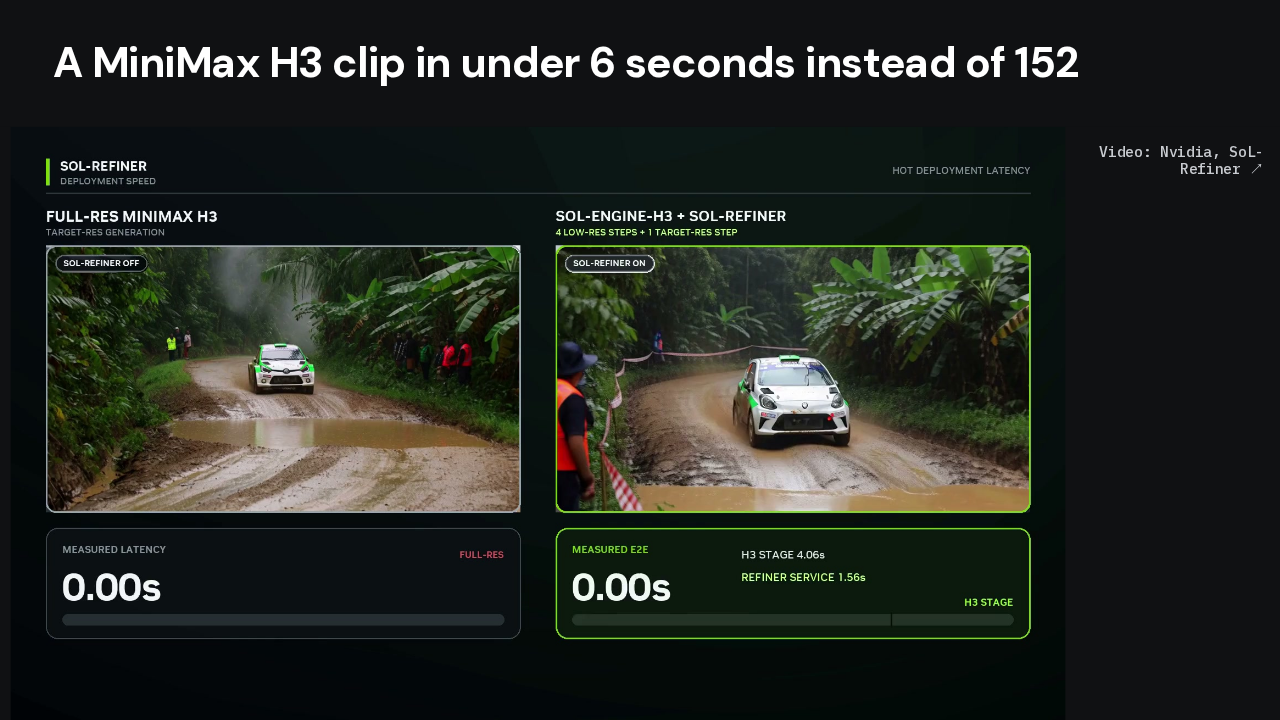
A MiniMax H3 clip in under 6 seconds instead of 152
The biggest number on the page comes from after the paper. Nvidia built a version for MiniMax H3. Rendering a five-second clip at full resolution takes about two and a half minutes on one of its GB200 chips. Drafting small and refining takes under six seconds, about twenty-seven times faster. The page notes that this animation is sped up.
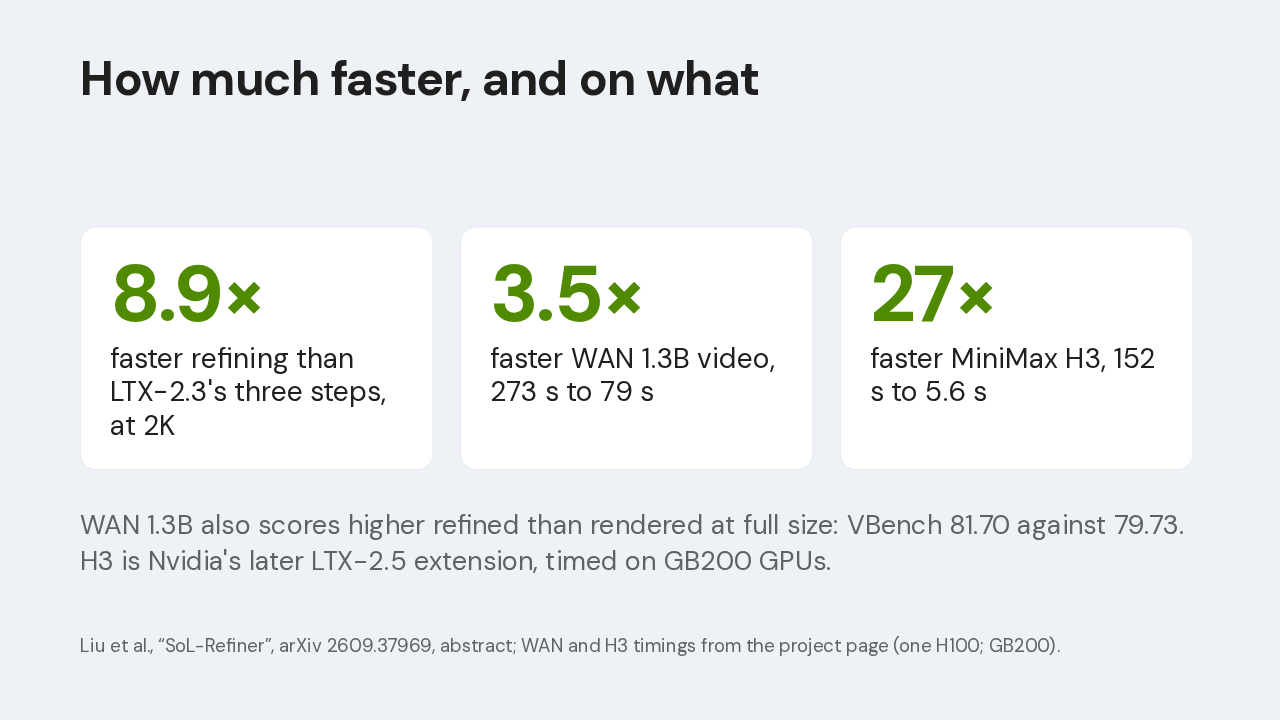
How much faster, and on what
WAN 1.3B also scores higher refined than rendered at full size: VBench 81.70 against 79.73. H3 is Nvidia's later LTX-2.5 extension, timed on GB200 GPUs.
Liu et al., “SoL-Refiner”, arXiv 2609.37969, abstract; WAN and H3 timings from the project page (one H100; GB200).
So, three speed-ups, each on something different. In the paper's own test, the one-step refiner runs almost nine times faster than the three-step one at 2K. On WAN's smaller model, drafting small and refining is three and a half times faster than rendering at full size, and it scores higher too. And on H3, with Nvidia's later version, twenty-seven times.
The code and weights are already out
Posted to arXiv on 29 September 2026. Code in Nvidia's Sana repository, weights on Hugging Face. The H3 speed-up comes from a later extension, not the paper.
Nvidia posted the paper on September 29th, and the code and weights are already out, in its Sana repository on GitHub and on Hugging Face. The H3 version has its own checkpoint. The paper and the project page are linked below.