InSpatio-World 1.5 turns one picture into a place you can move through
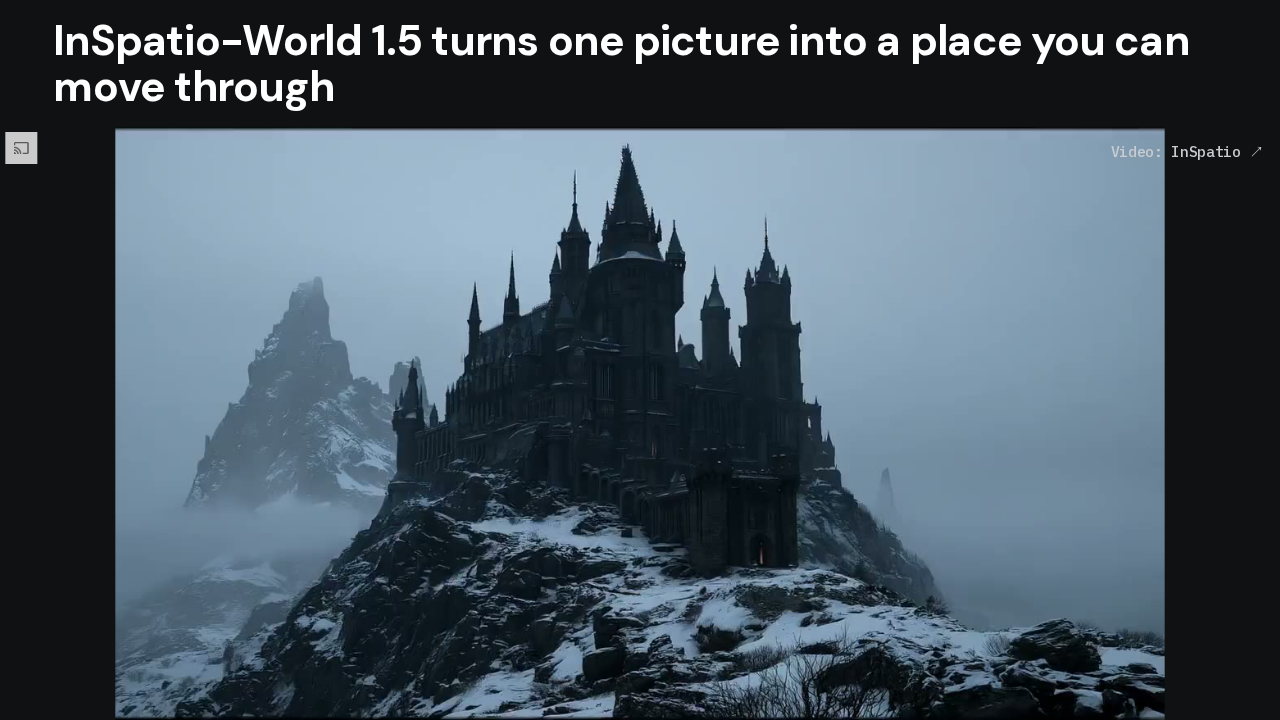
InSpatio-World 1.5 is a world model from the InSpatio team. Give it one picture, and it makes a video of a camera moving through that place. The small window in the corner is the only image it was given. The line under it is the camera path someone drew, and the big picture is what the model generated along that path.
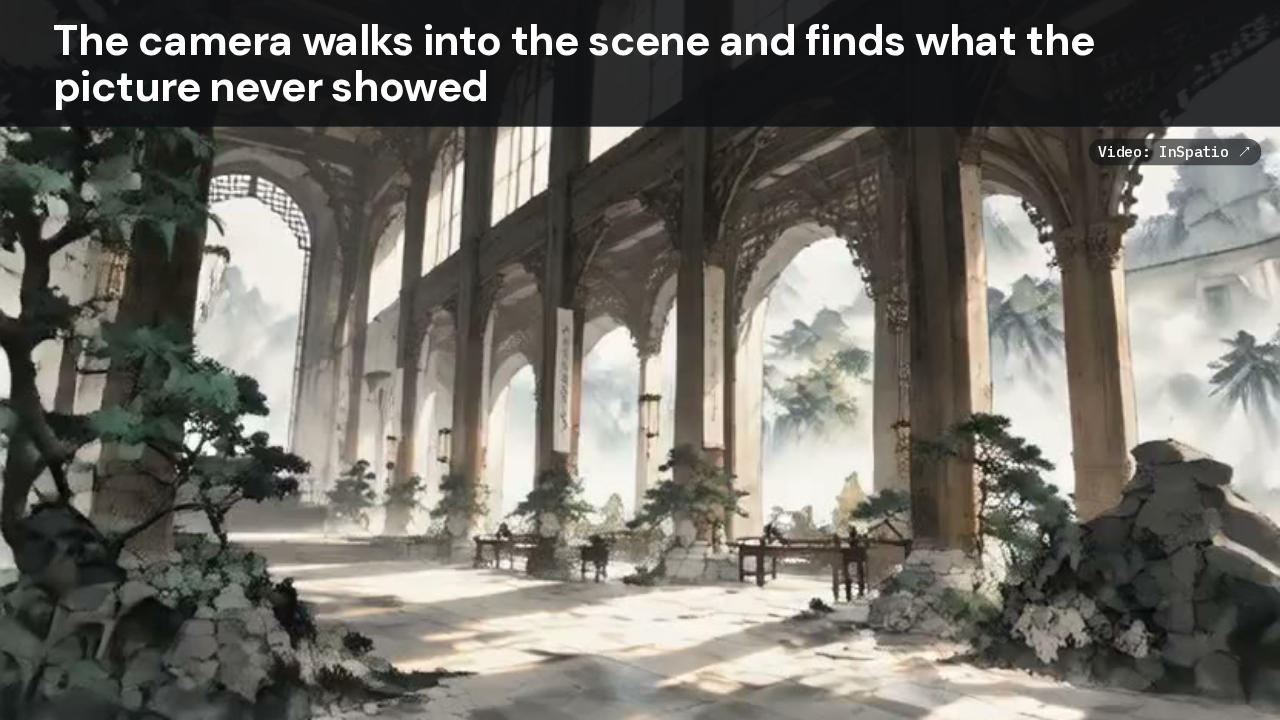
The camera walks into the scene and finds what the picture never showed
This one starts from a single painting-style image of a hall. The camera moves forward into it, and turns past the pillars. Everything around the corner is invented by the model, and the team says new areas stay consistent with the original picture as the camera moves.
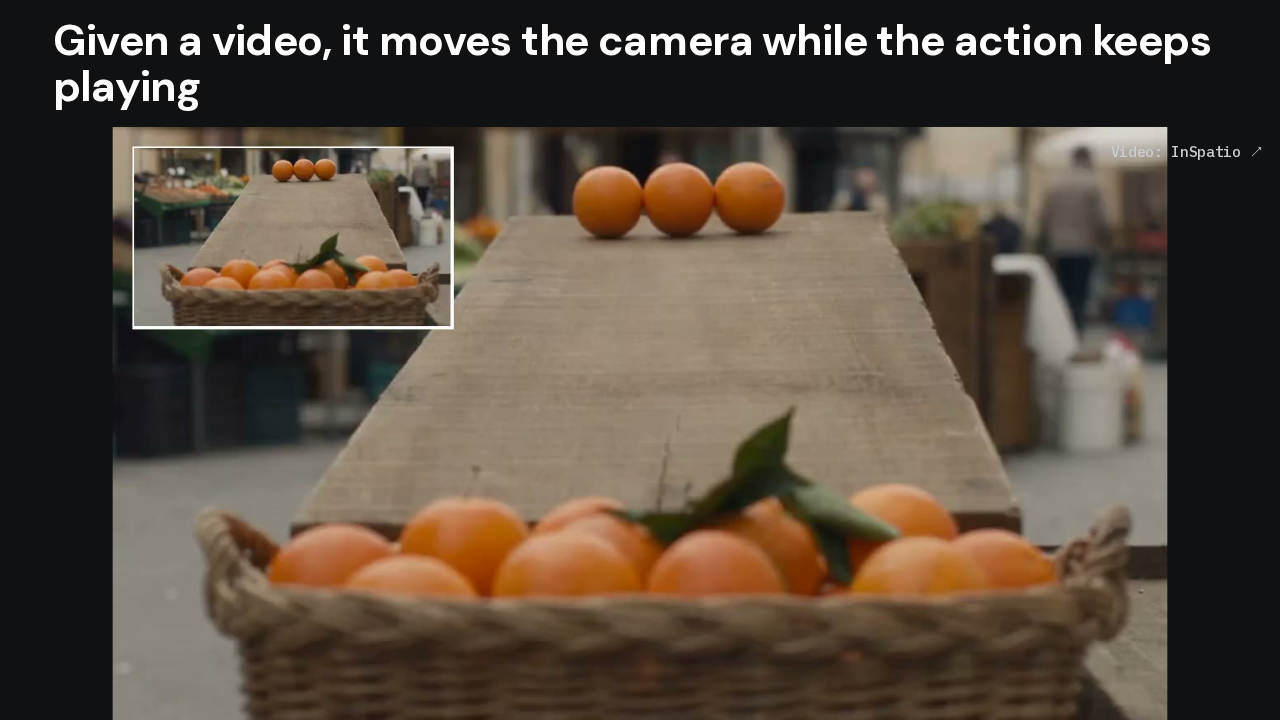
Given a video, it moves the camera while the action keeps playing
It also works on video. The inset is the original clip, shot from one fixed angle. The big frame is the same moment, seen from a camera that moves while the oranges keep rolling. The team calls this next-view prediction, and pitches it for film camera work, and for robots that need to reason about space.
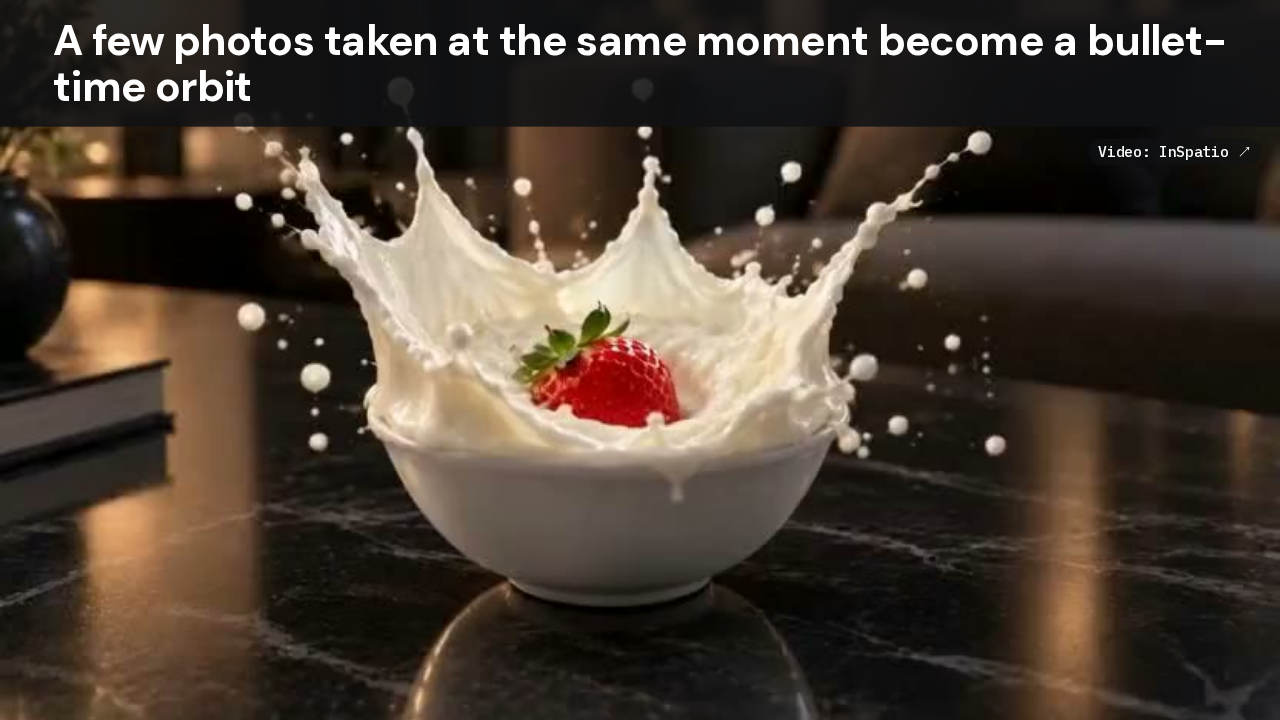
A few photos taken at the same moment become a bullet-time orbit
Version 1.5 also takes several photos at once. From a handful of shots of the same instant, it builds a smooth camera move around the subject, like the bullet-time effect in The Matrix. Here, a milk splash hangs in the air while the camera circles it.
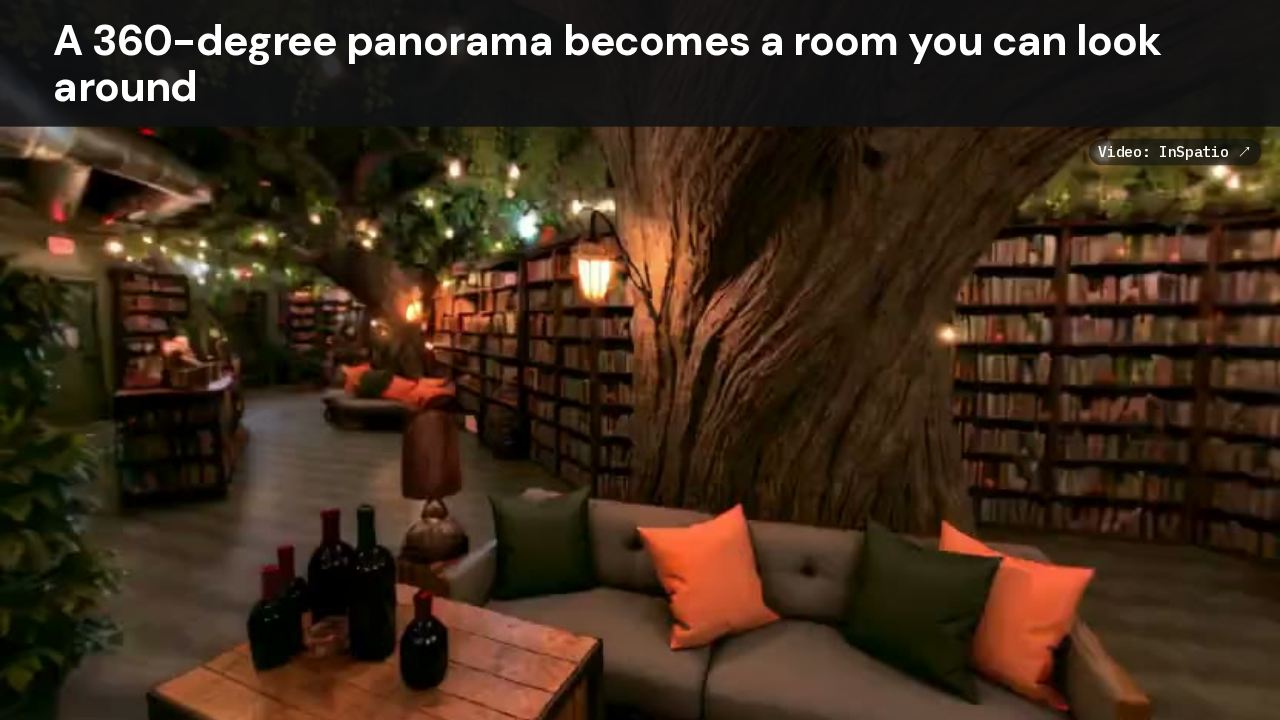
A 360-degree panorama becomes a room you can look around
And it accepts a 360-degree panorama. This bookstore started as one panoramic image, and the model turns it into a space the camera can move through.
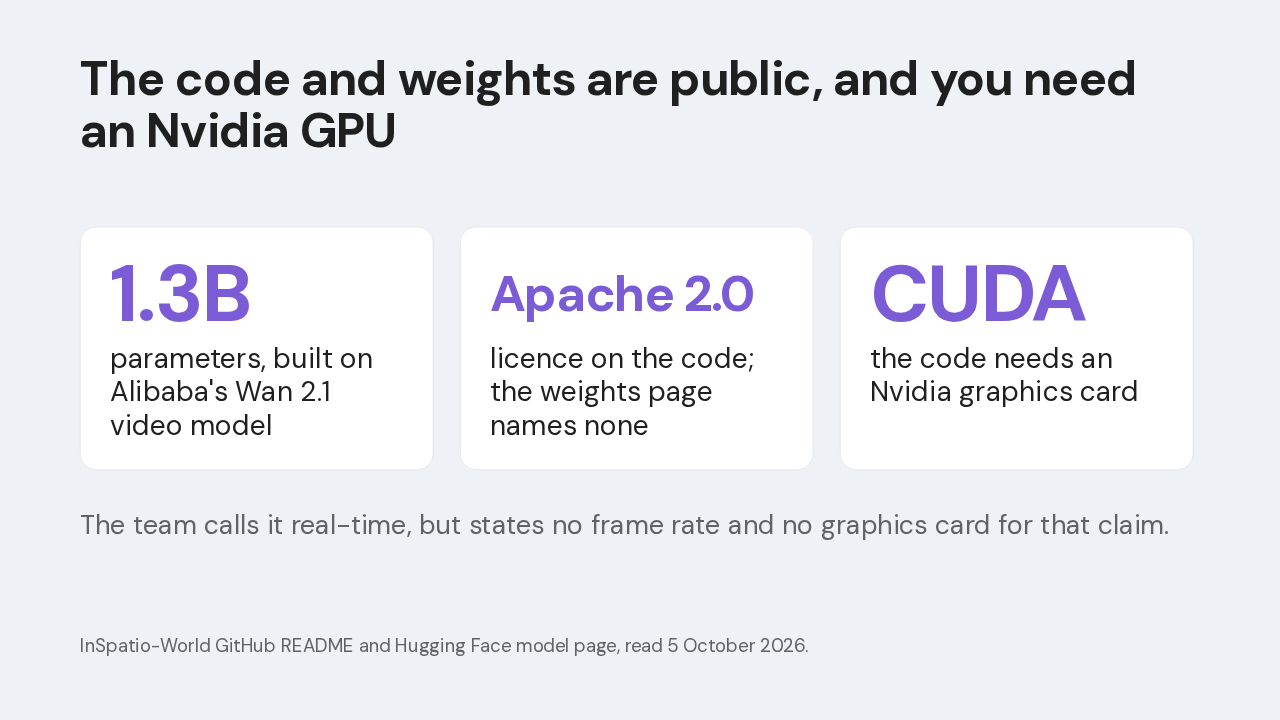
The code and weights are public, and you need an Nvidia GPU
The team calls it real-time, but states no frame rate and no graphics card for that claim.
InSpatio-World GitHub README and Hugging Face model page, read 5 October 2026.
What's out is real. The model has about 1.3 billion parameters, and it's built on Wan 2.1, Alibaba's open video model. The code is Apache 2.0, but the weights page doesn't state a licence. Running it needs an Nvidia card. The team describes the results as real-time, but doesn't say on which hardware or at what frame rate.
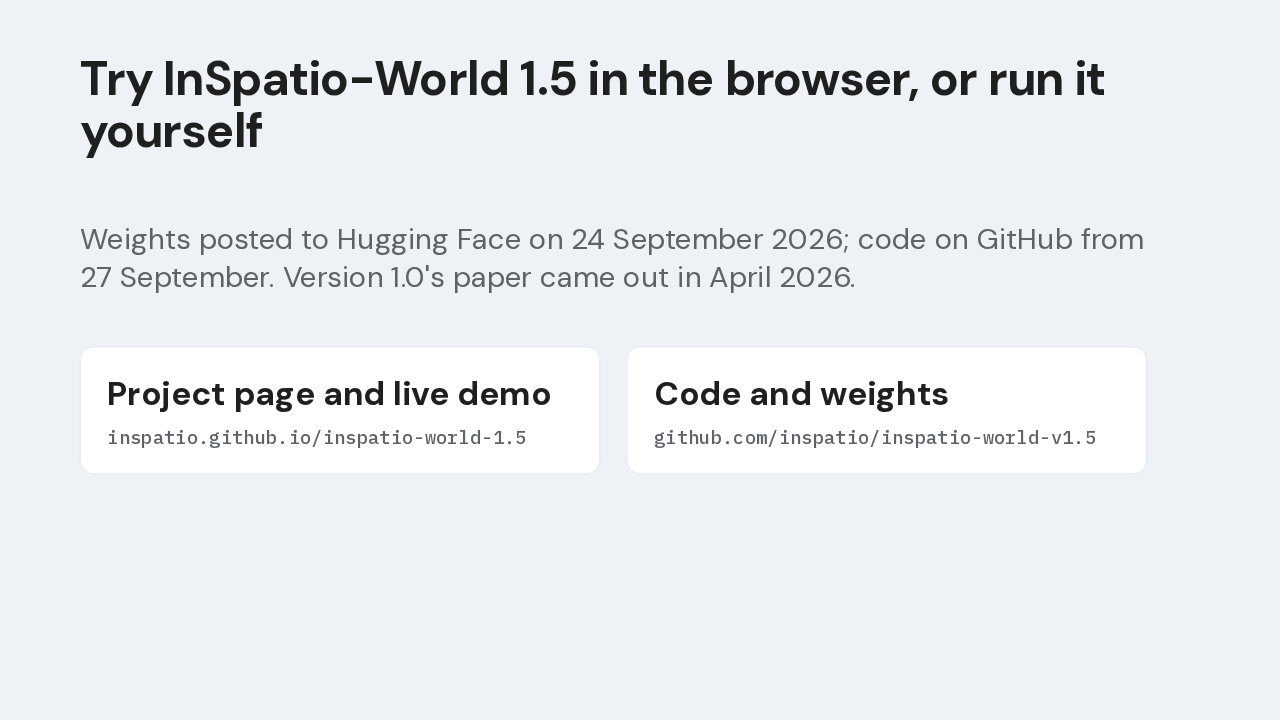
Try InSpatio-World 1.5 in the browser, or run it yourself
Weights posted to Hugging Face on 24 September 2026; code on GitHub from 27 September. Version 1.0's paper came out in April 2026.
The weights went up on September 24th, with the code following a few days later. The first version's paper came out in April. The project page has a live demo you can try in the browser, and the code and weights are linked below.