Ai2's open AstaBrief writes a cited research report in under a minute

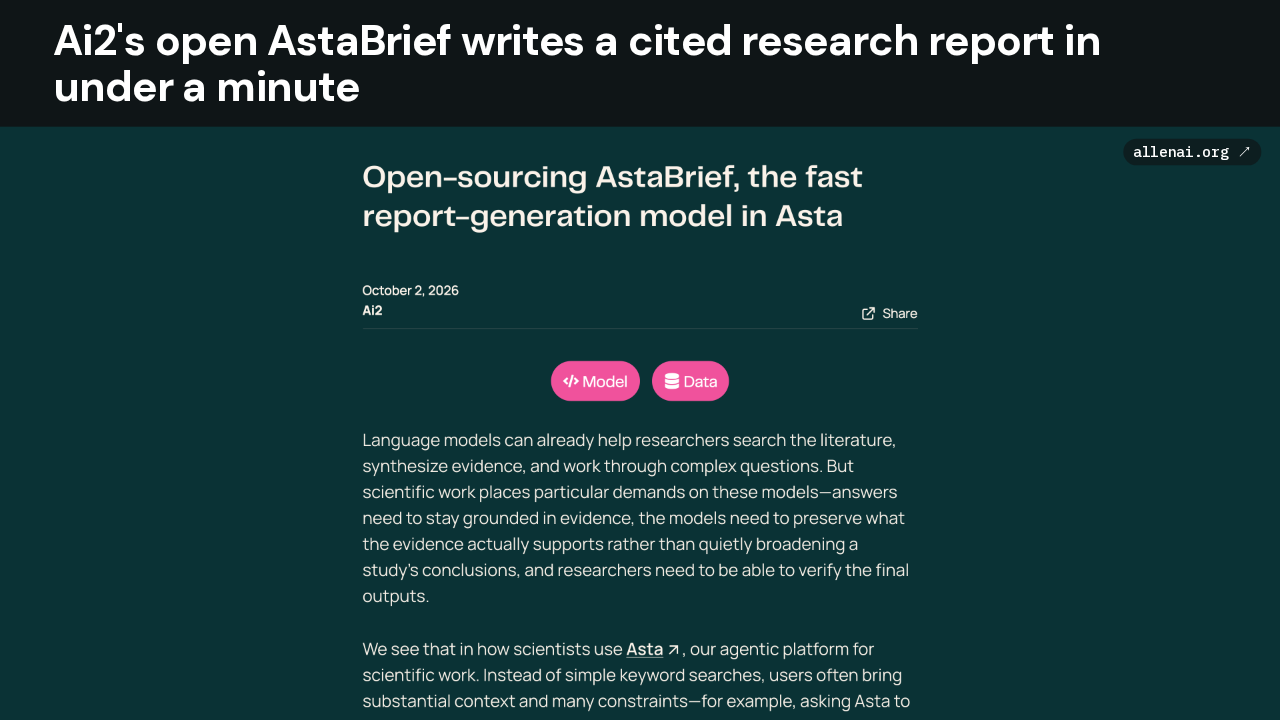
On October 2nd, Ai2, the Allen Institute for AI, released AstaBrief. It's a small model, 8 billion parameters, that takes a research question and a pile of excerpts from papers, and writes a report with citations. And anyone can download it.
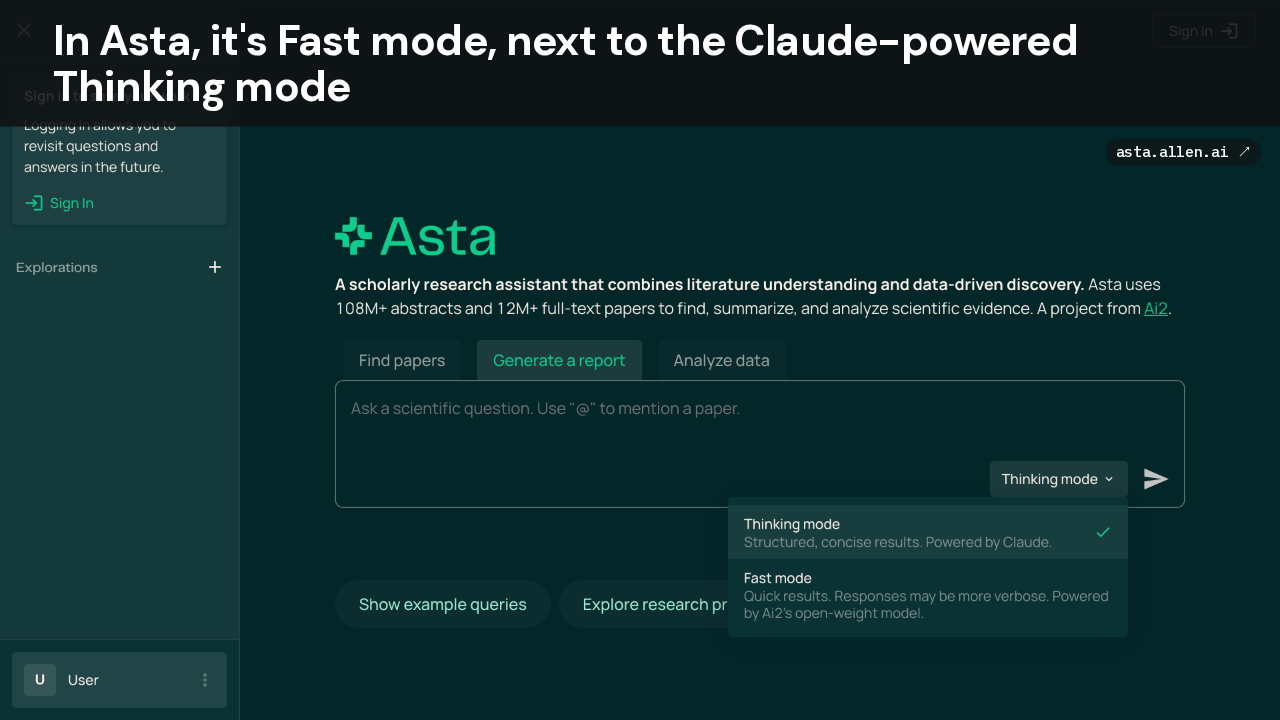
In Asta, it's Fast mode, next to the Claude-powered Thinking mode

It's already working inside Asta, Ai2's research assistant. Ask it for a report, and there are two modes. Thinking mode runs on Claude. Fast mode runs on AstaBrief, Ai2's own open-weight model. Asta's menu even warns that its answers may be wordier.
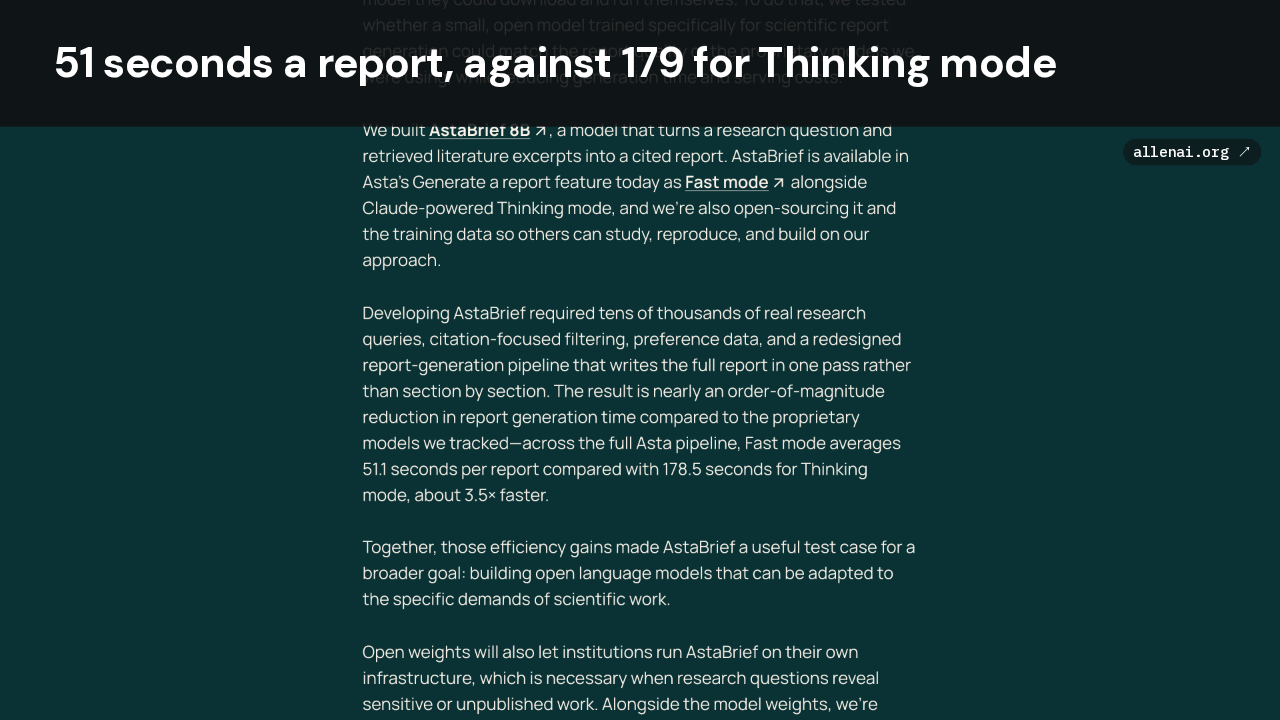
51 seconds a report, against 179 for Thinking mode

The point is speed. Across the whole Asta pipeline, a Fast mode report takes 51 seconds on average. Thinking mode takes about three minutes. That's three and a half times faster. And because the weights are open, a lab can run it on its own servers, which matters when the question itself is unpublished work.
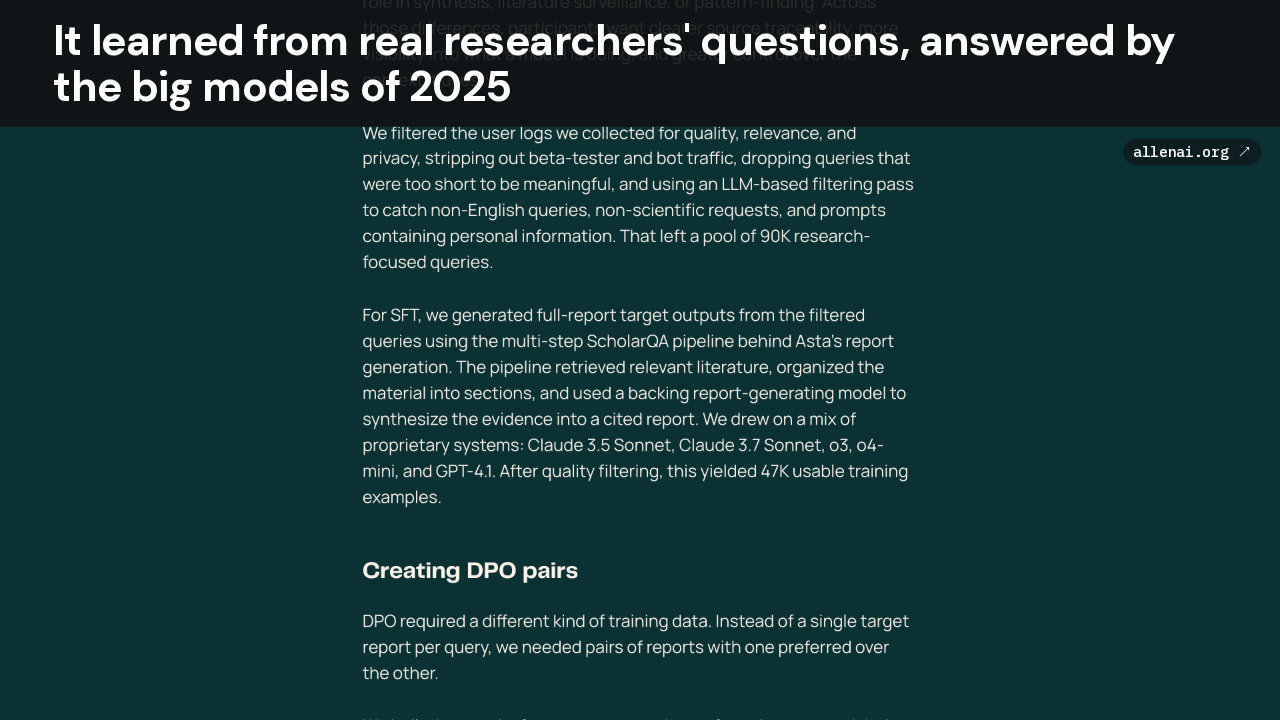
It learned from real researchers' questions, answered by the big models of 2025

How do you get a small model to write like a big one? Start with real questions. Ai2 filtered Asta's logs down to 90,000 research questions people had actually asked. Then Claude, o3 and GPT-4.1 wrote reports for them, and after filtering, 47,000 became training examples. A second round taught it which of two reports a pair of judge models both preferred.
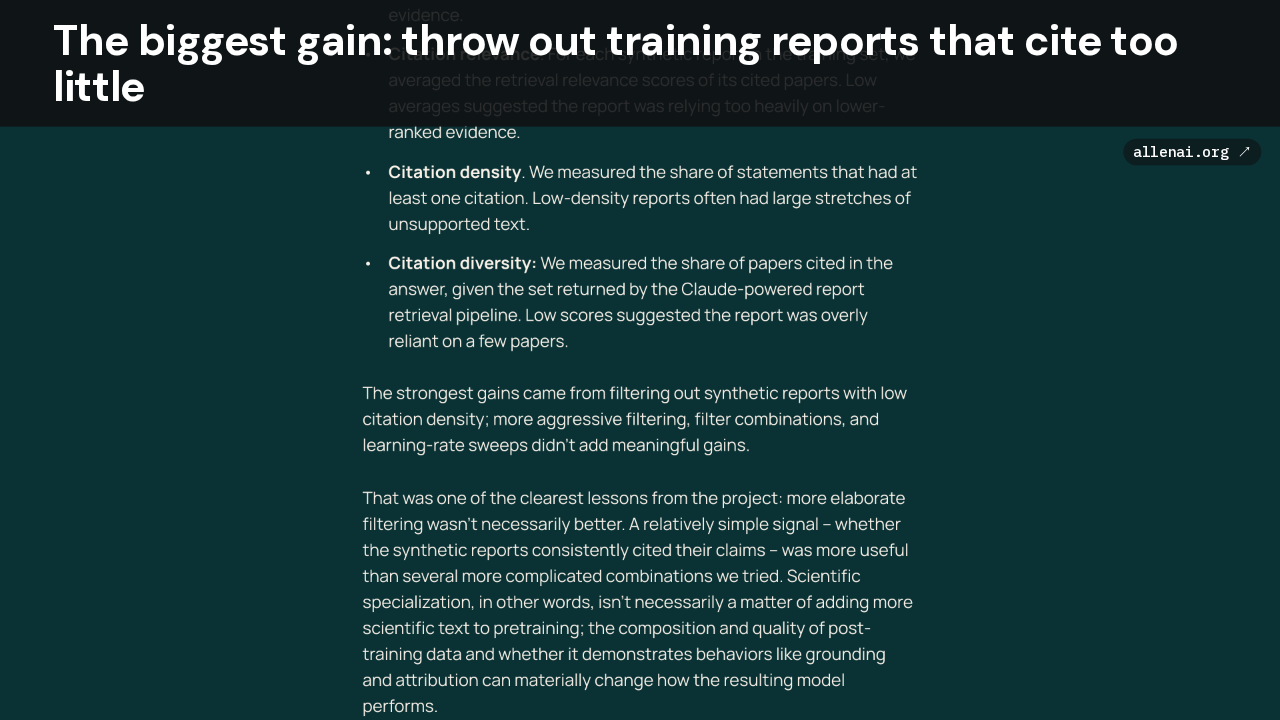
The biggest gain: throw out training reports that cite too little

The first versions wrote well but cited badly. So Ai2 tried four ways to weed out weak training reports. One measured how many sentences carry at least one citation. That simple one won. Dropping reports with too few citations helped most, and fancier combinations added nothing.
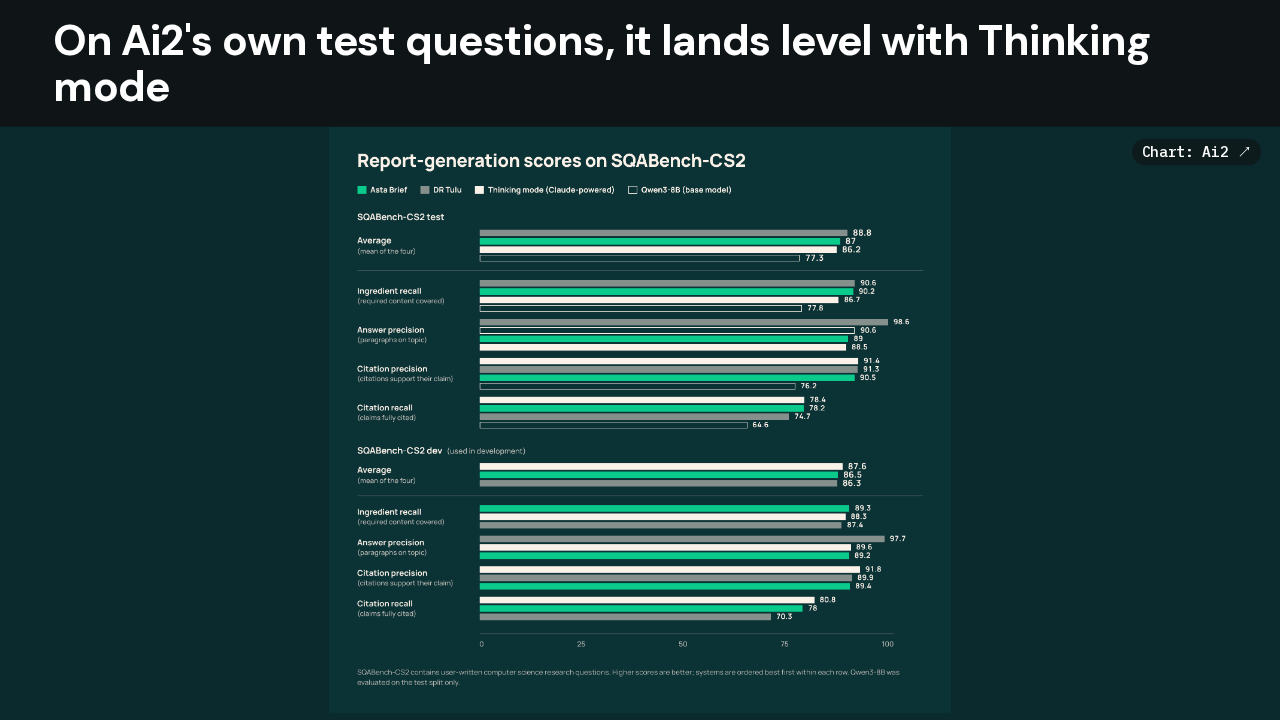
On Ai2's own test questions, it lands level with Thinking mode

So how good is it? On Ai2's own test, 200 computer science questions written by users, AstaBrief averages 87 out of 100. Thinking mode scores 86, Ai2's bigger research model DR Tulu 89, and the base model it started from, 77. On whether its citations back up its claims, all three sit within a point of each other.
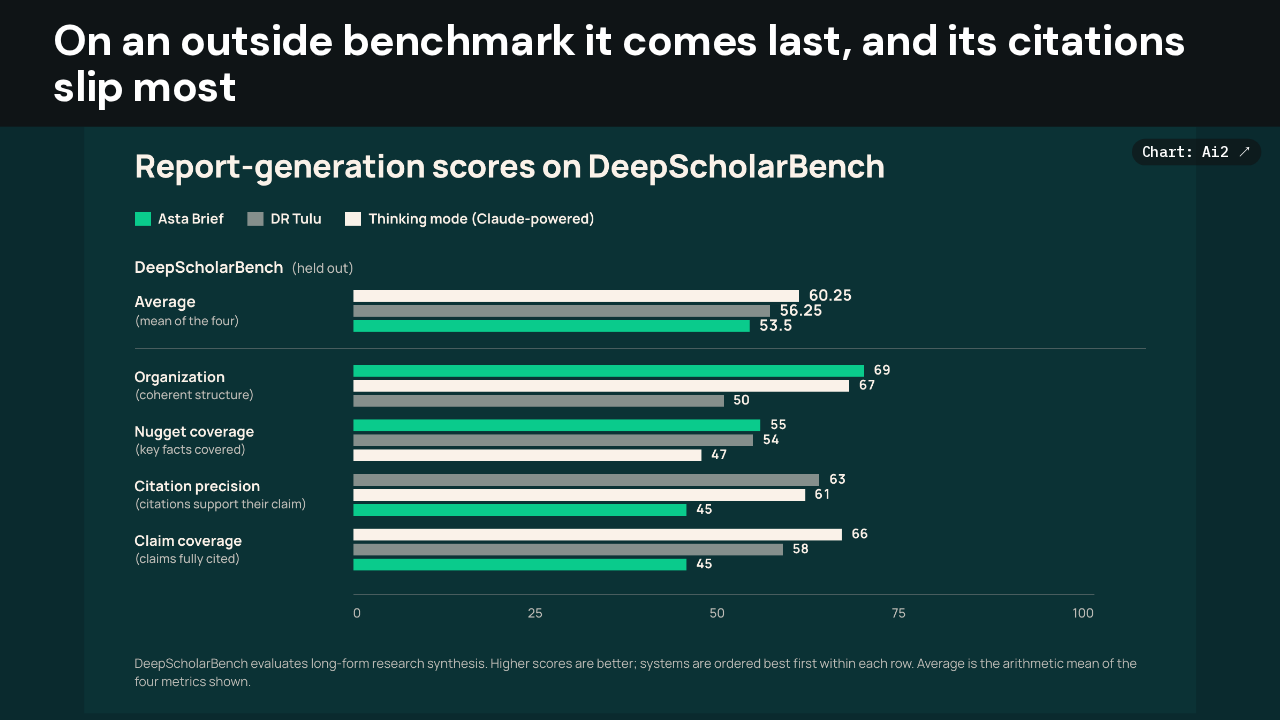
On an outside benchmark it comes last, and its citations slip most

On questions it had never seen, an outside benchmark built from recent arXiv papers, the picture changes. AstaBrief averages about 54, behind DR Tulu at 56 and Thinking mode at 60. Its reports are the best organized, but its citations slip most: 45 on citation precision, against more than 60 for the other two.
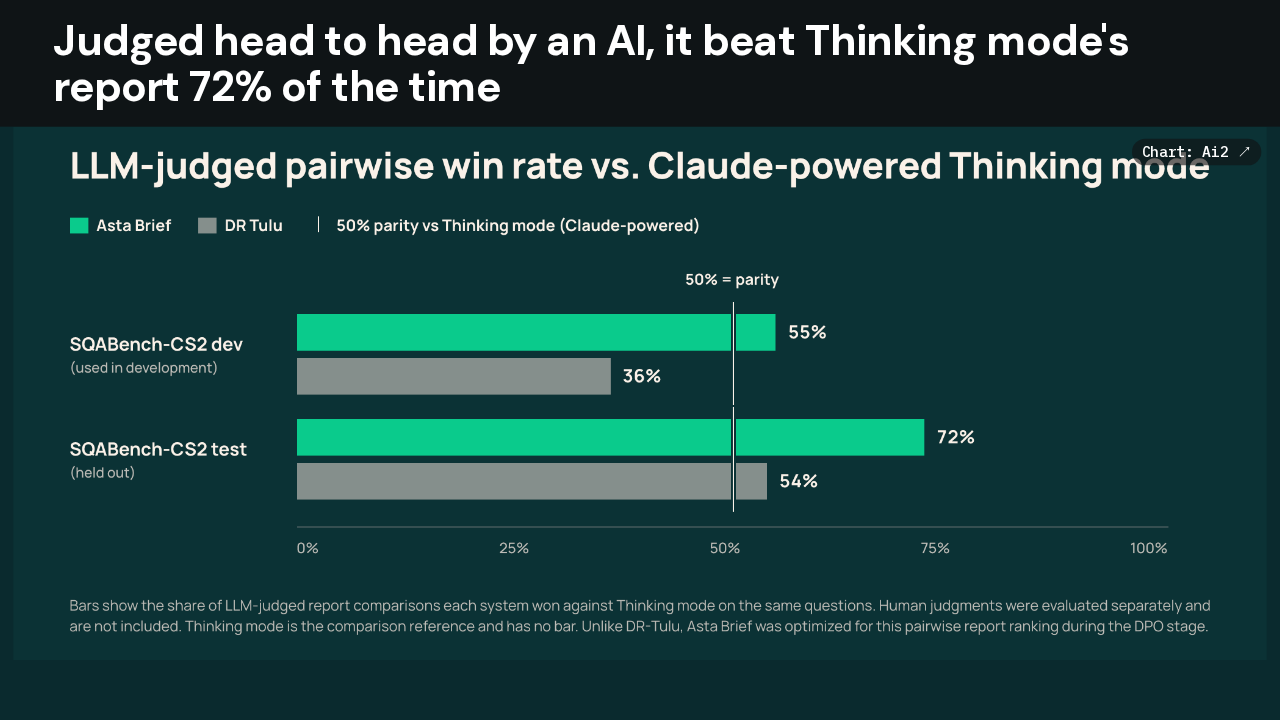
Judged head to head by an AI, it beat Thinking mode's report 72% of the time

Put two reports side by side and ask a judge model which is better, and on the held-out questions AstaBrief's report wins 72 percent of the time against Thinking mode. With a catch, printed under the chart: it was trained on exactly this kind of comparison. In a small study with three human researchers, DR Tulu was the one they preferred overall.
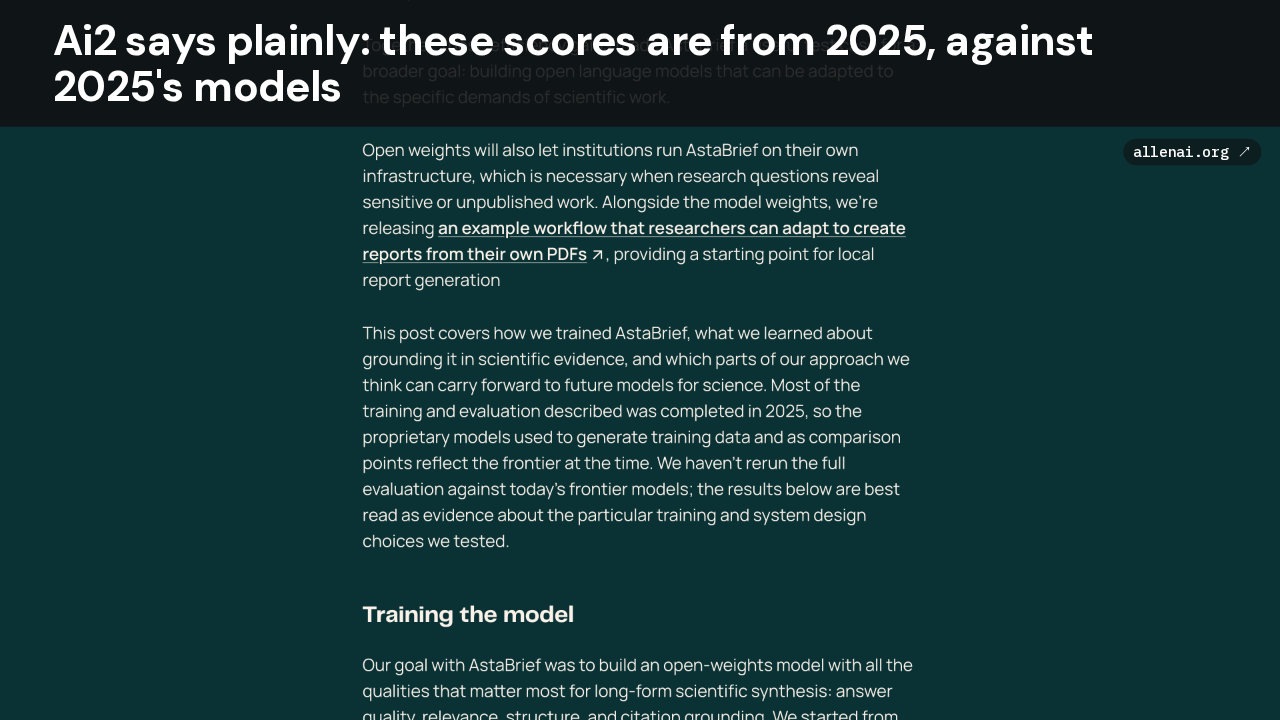
Ai2 says plainly: these scores are from 2025, against 2025's models

Ai2 adds its own warning. Most of this training and testing was finished in 2025. The models it learned from and was compared against were the best of that year, and the tests haven't been rerun against today's.
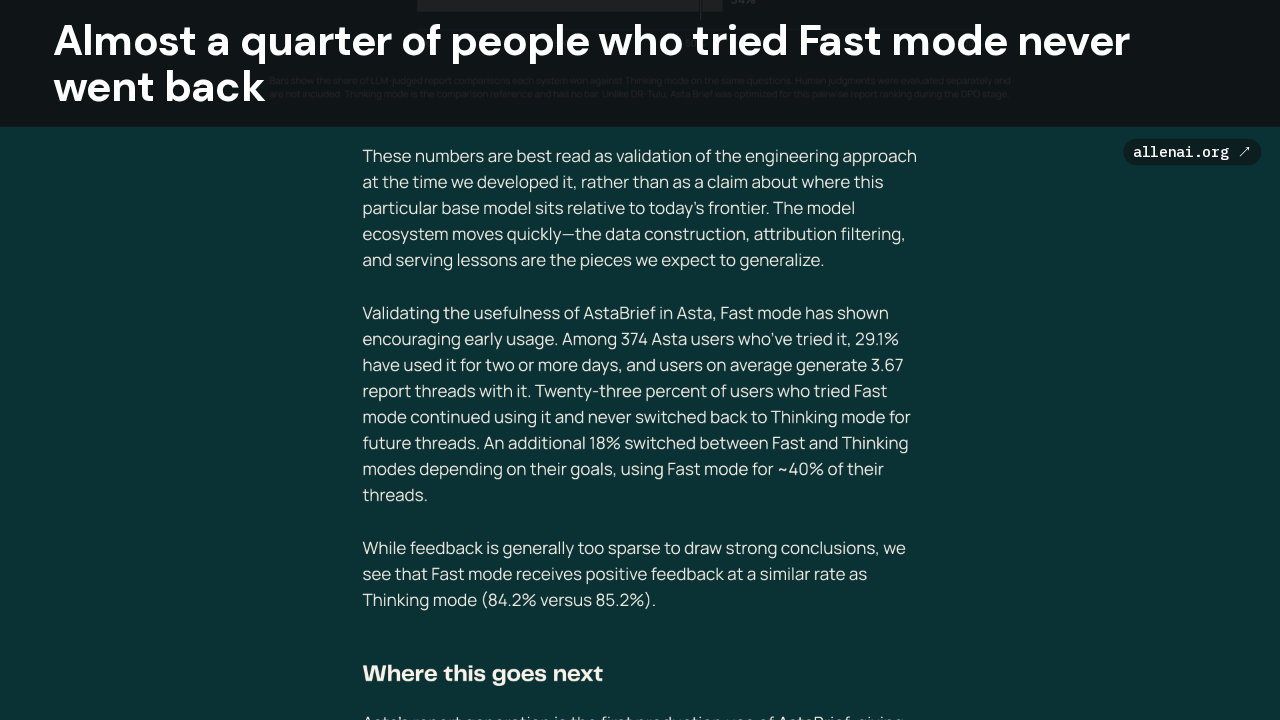
Almost a quarter of people who tried Fast mode never went back

Early use in Asta is small but telling. Of about 370 people who've tried Fast mode, nearly a third came back on another day. And 23 percent kept using it and never switched back to Thinking mode.
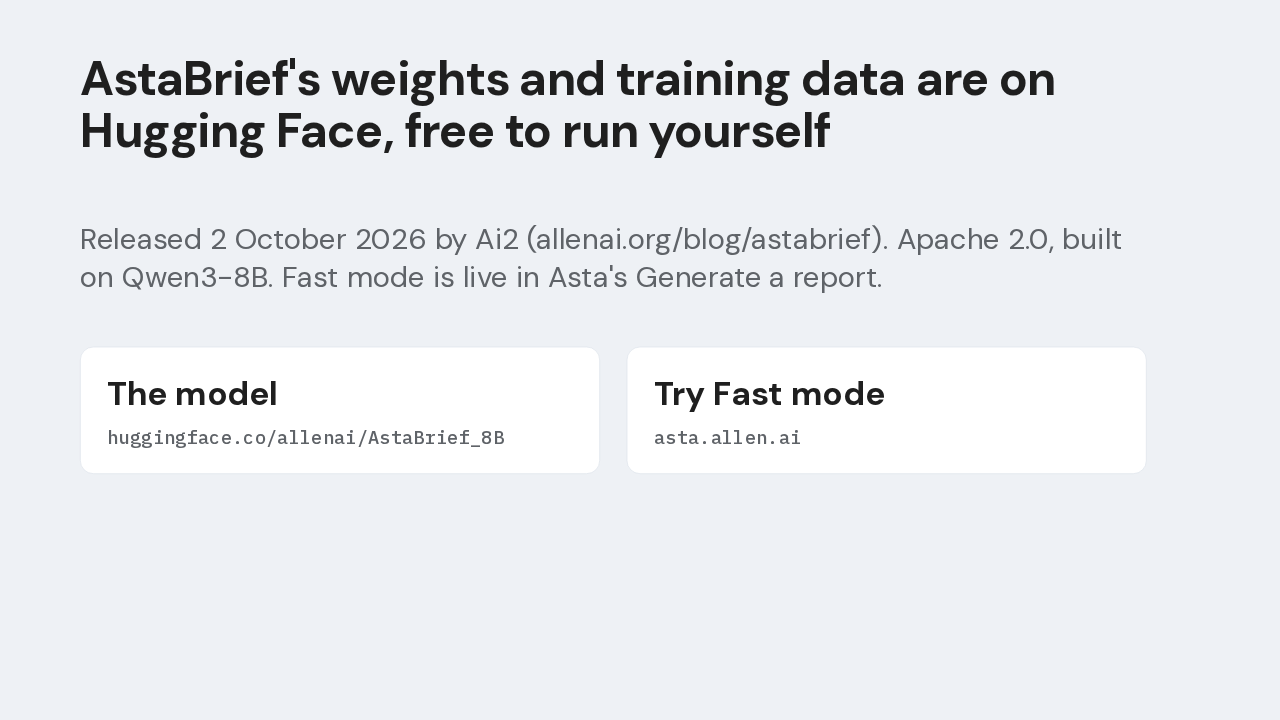
AstaBrief's weights and training data are on Hugging Face, free to run yourself
Released 2 October 2026 by Ai2 (allenai.org/blog/astabrief). Apache 2.0, built on Qwen3-8B. Fast mode is live in Asta's Generate a report.
AstaBrief came out on October 2nd, 2026. The weights and the training data are on Hugging Face under the Apache license, along with an example that writes reports from your own PDFs. The model, and Asta's Fast mode, are linked below.