A Unitree G1 humanoid now keeps up badminton rallies with a person
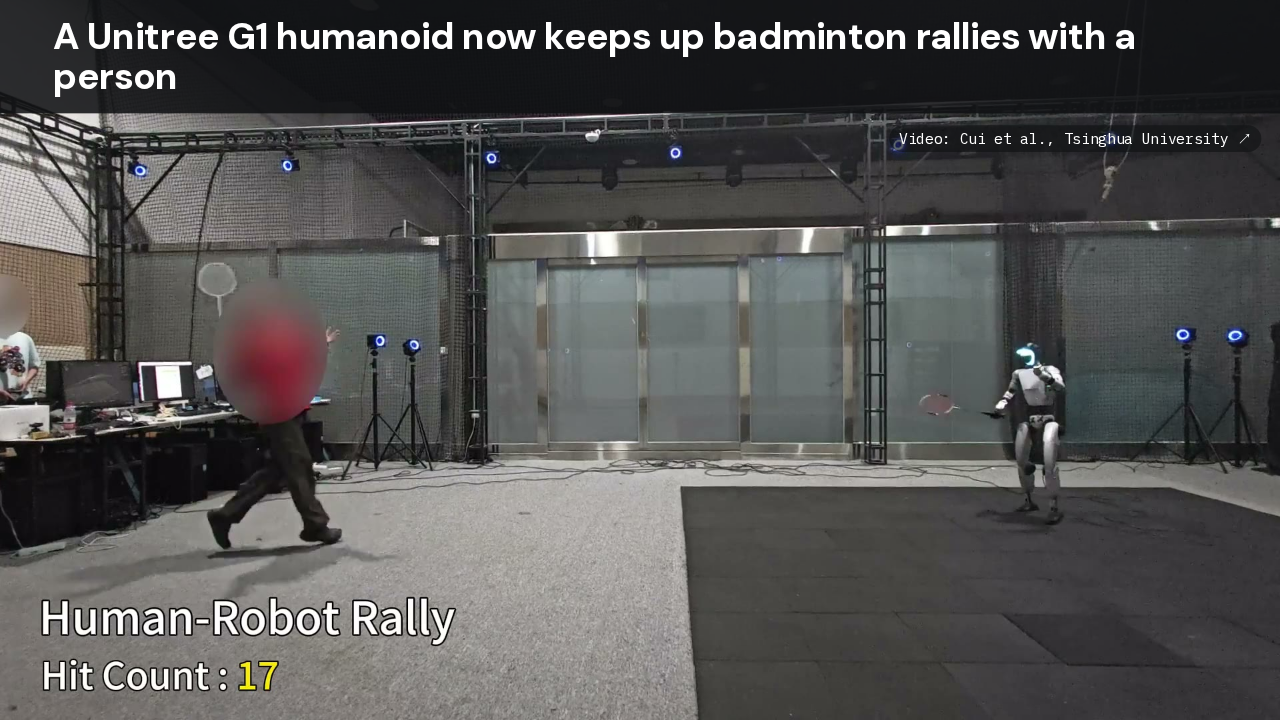
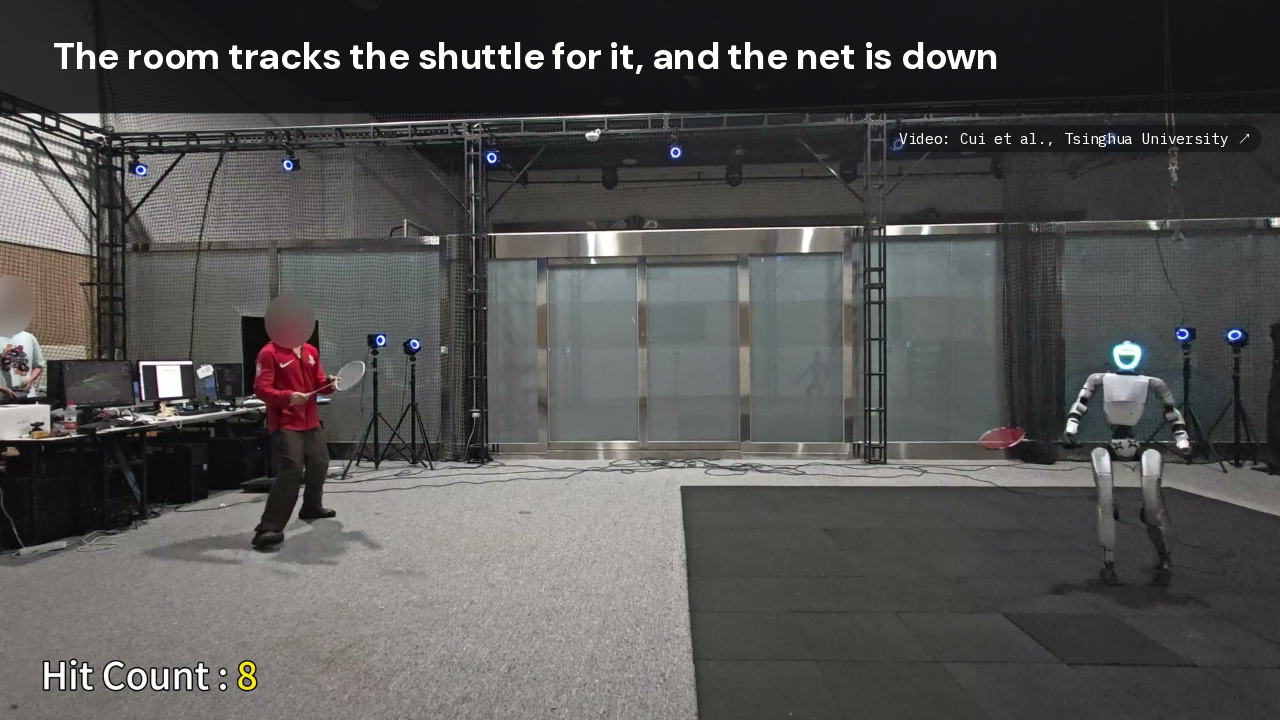
Researchers from Tsinghua University and the Hong Kong Embodied AI Lab have a Unitree G1 humanoid playing badminton with a person. Watch the hit counter in the corner. This rally reaches 23, and every return is the robot deciding where to stand and when to swing.
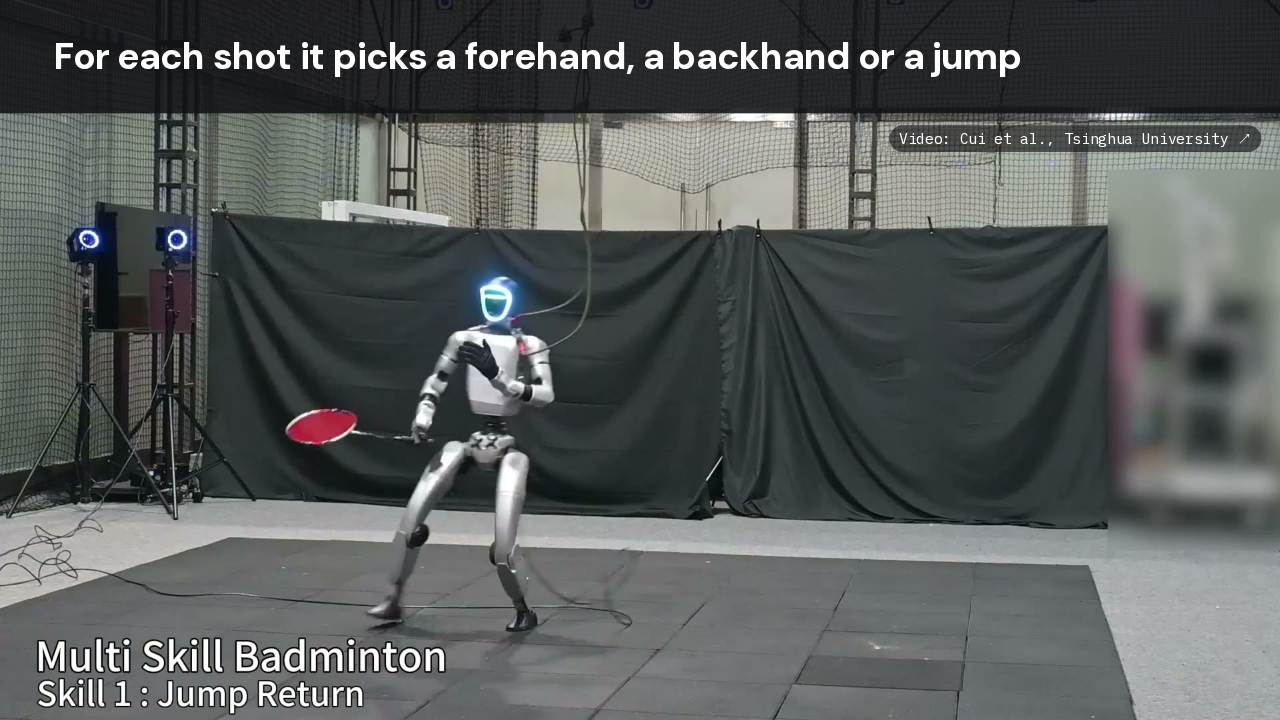
For each shot it picks a forehand, a backhand or a jump
For each incoming shot, the robot picks a stroke. A forehand, a backhand, or a jump return like this one, slowed to a quarter of real speed. It has a fraction of a second to choose, get there and swing.
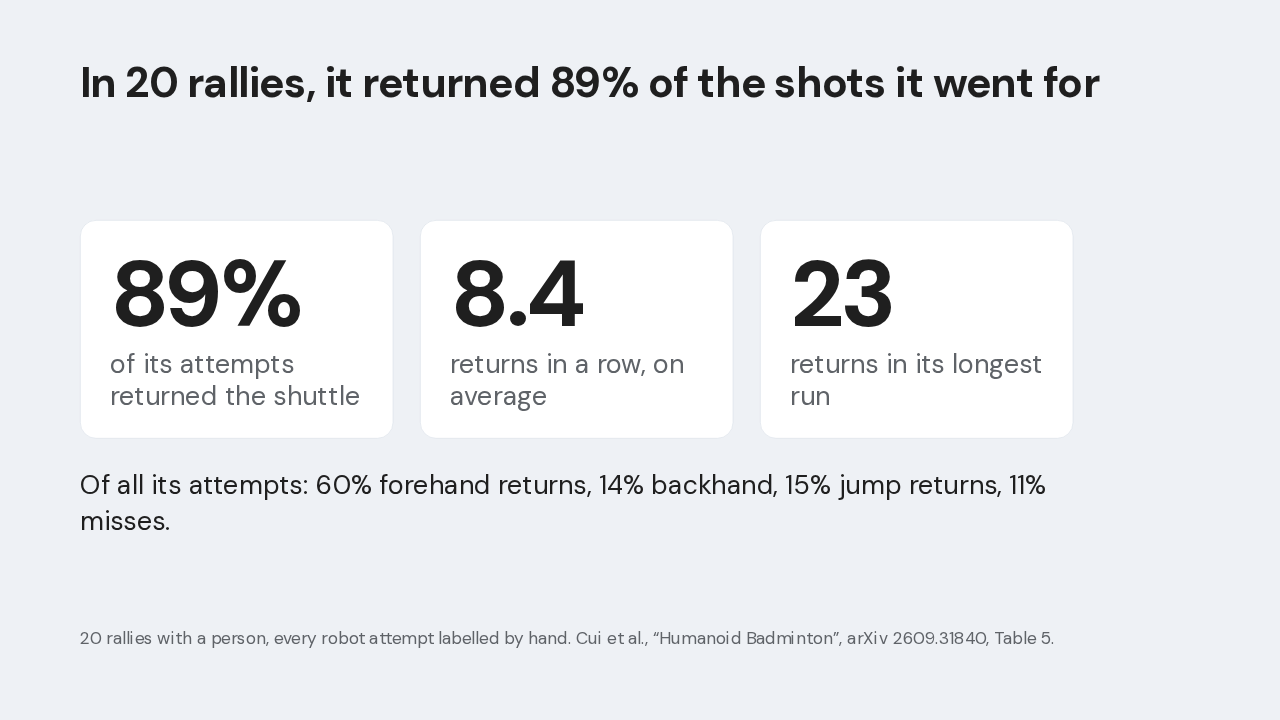
In 20 rallies, it returned 89% of the shots it went for
Of all its attempts: 60% forehand returns, 14% backhand, 15% jump returns, 11% misses.
20 rallies with a person, every robot attempt labelled by hand. Cui et al., “Humanoid Badminton”, arXiv 2609.31840, Table 5.
The paper tested it in 20 rallies with a person. The robot returned about 9 in 10 of the shots it went for. Most were forehands, and backhands and jump returns made up the rest. Its rallies averaged about 8 returns in a row, and the longest ran to 23.
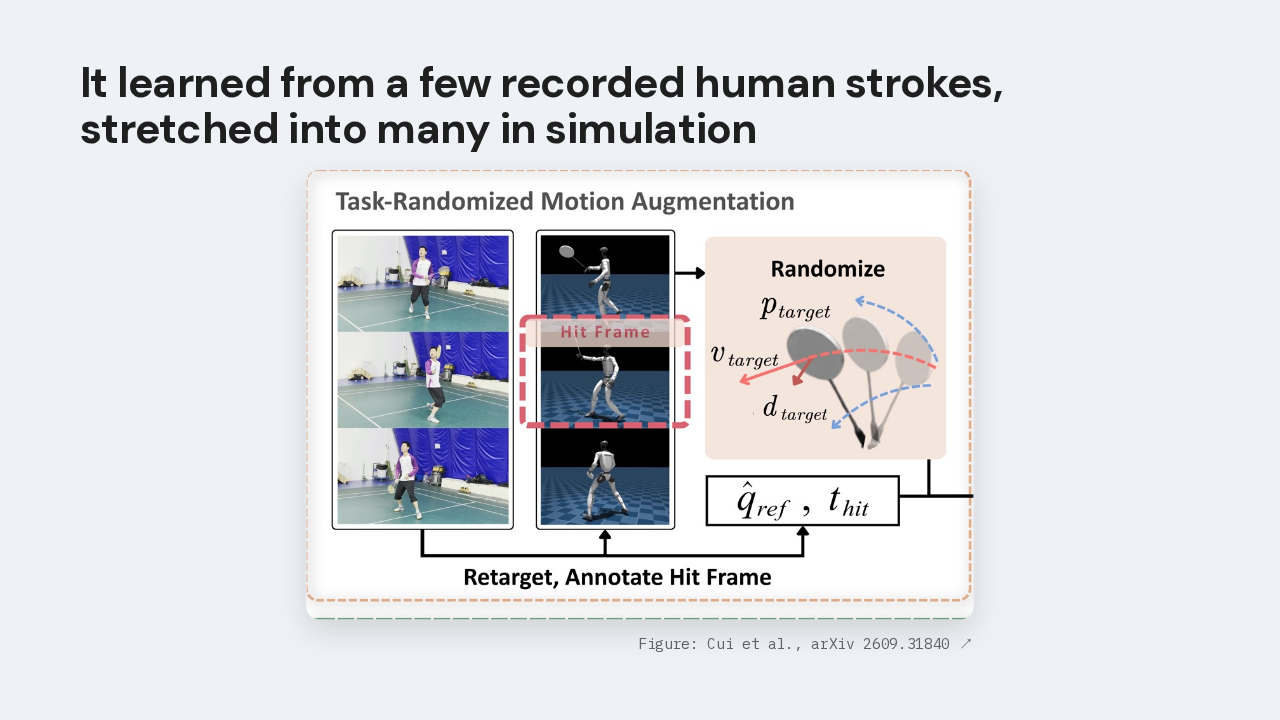
It learned from a few recorded human strokes, stretched into many in simulation

Recordings of people playing badminton are scarce. So the team took a few recorded strokes, marked the moment each one meets the shuttle, and generated many variations of each in simulation, aimed at different heights and speeds. A planner then learns to pick and blend those strokes for each incoming shot.
The room tracks the shuttle for it, and the net is down
There are limits. The robot doesn't find the shuttle with its own eyes. Motion-capture cameras around the room track the shuttle and the robot, so it only plays in a lab like this one. The net was left out for safety. And it returns the shuttle without aiming where it lands.
Next: sensing the shuttle on board, and shots it can aim
Accepted at CoRL 2026, the Conference on Robot Learning.
The paper is accepted at CoRL 2026, the Conference on Robot Learning. Next, the team wants the robot to track the shuttle with its own sensors, and to aim its shots. The paper and the project page, with the full videos, are linked below.