Alibaba set a 20 gigawatt target for its cloud by 2032 and unveiled its own AI chips
It's Thursday, September twenty-fourth. Alibaba says the data centers its cloud runs will pass twenty gigawatts by twenty thirty-two. At the same event, Alibaba showed its own AI chip, its own processors, and its own parts for moving data between chips. Plus, new funding for TEKEVER and for Basecamp Research.
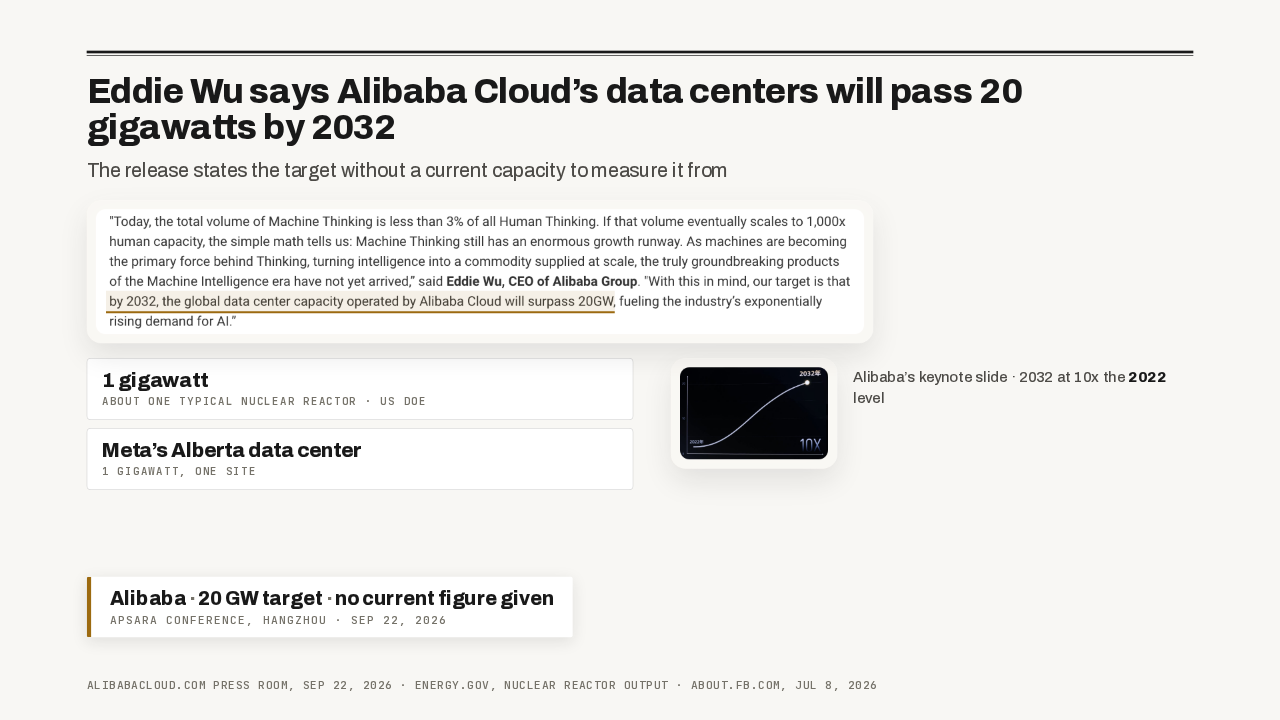
Eddie Wu says Alibaba Cloud’s data centers will pass 20 gigawatts by 2032
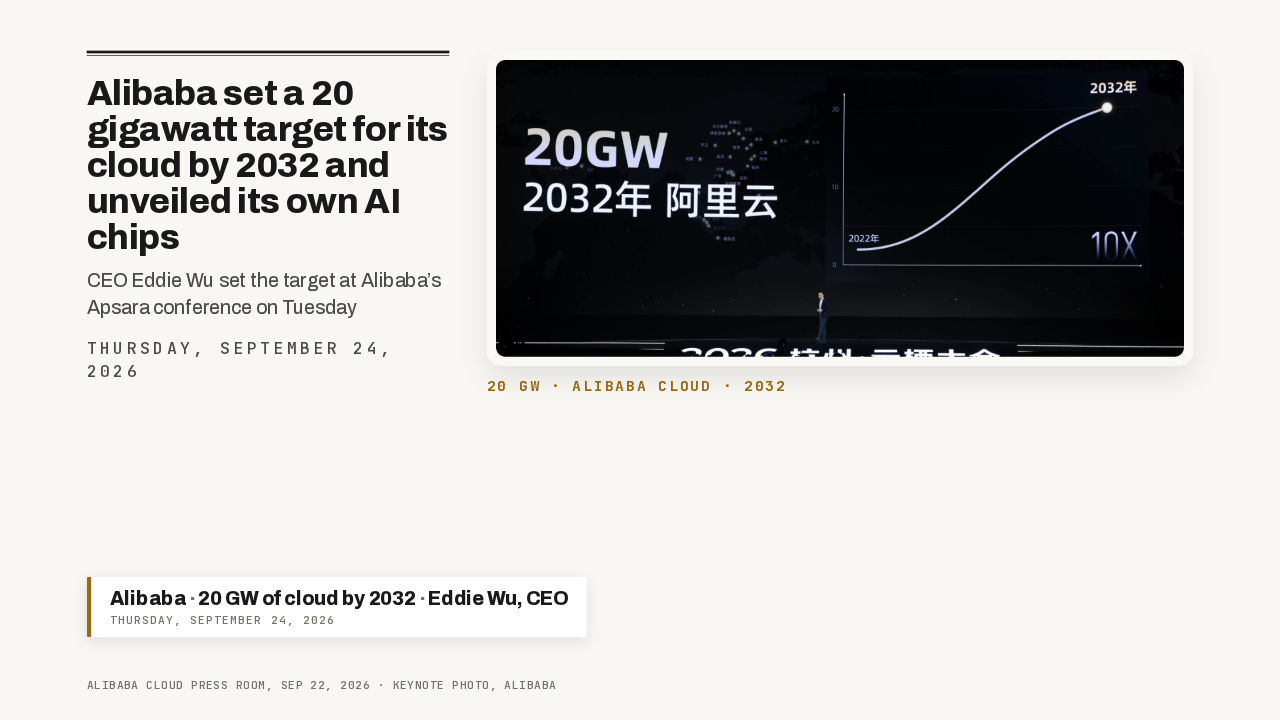
Alibaba's chief executive, Eddie Wu, set the target on Tuesday, at Alibaba's Apsara conference in Hangzhou. Alibaba counts data center capacity in gigawatts, a measure of electric power. One gigawatt is about what a typical nuclear reactor puts out. The one multiple Alibaba showed sits on its own keynote slide. That slide drew twenty thirty-two at ten times the company's twenty twenty-two level.
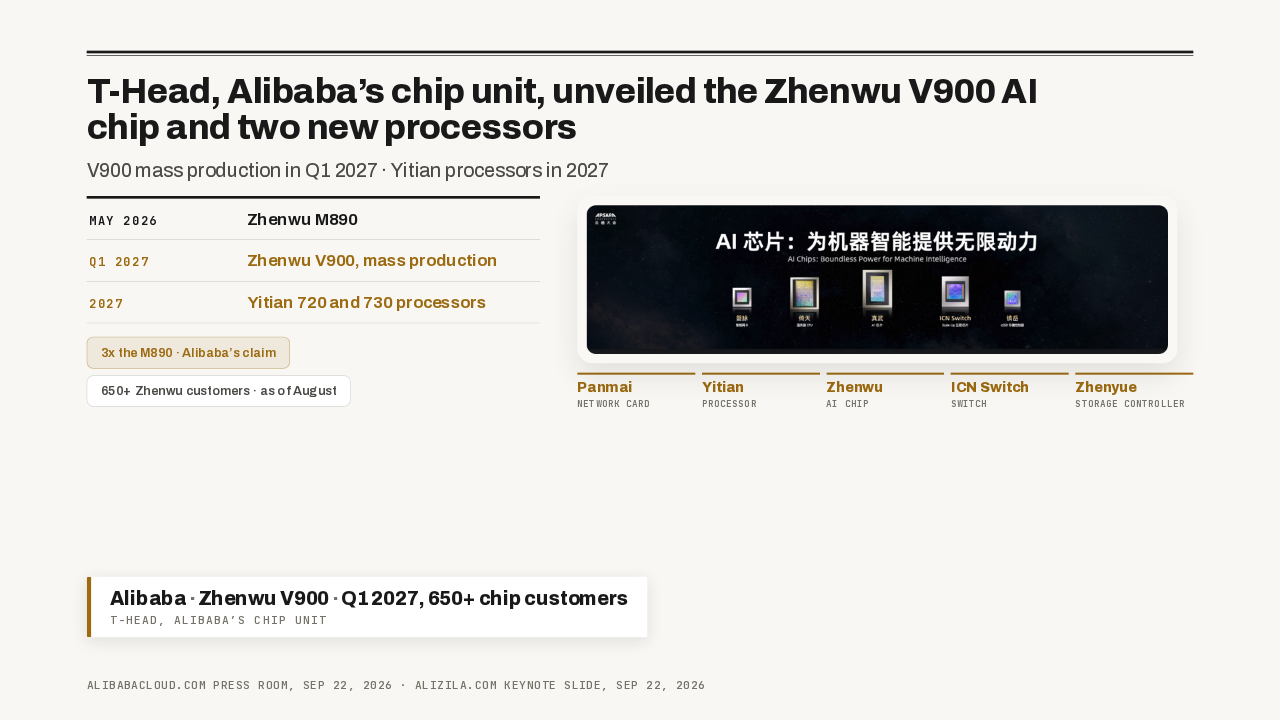
T-Head, Alibaba’s chip unit, unveiled the Zhenwu V900 AI chip and two new processors
The Zhenwu V900 is an AI chip. An AI chip does the maths when an AI model learns or answers a question. Alibaba says the V900 has three times the performance of the M890. T-Head, Alibaba's chip unit, released the M890 in May. Alibaba plans mass production in the first quarter of twenty twenty-seven. Zhenwu chips already serve more than six hundred and fifty customers, a figure Alibaba first gave in August. Alibaba also plans two general-purpose processors for twenty twenty-seven, the Yitian 720 and 730. And Alibaba showed a server that joins V900 chips to Alibaba's own switch, network card and storage controller. The switch and the network card pass data between chips. The storage controller feeds the chips data from storage.
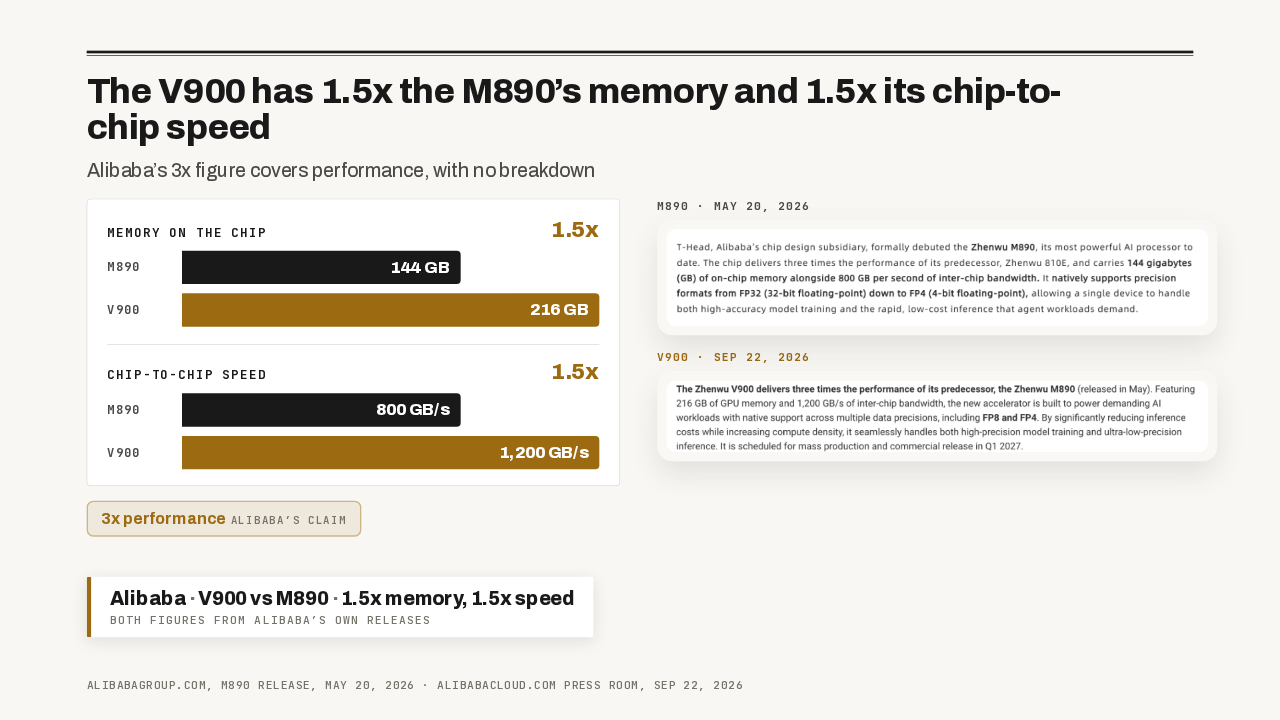
The V900 has 1.5x the M890’s memory and 1.5x its chip-to-chip speed
Alibaba listed two more numbers for the V900. The first number is the memory on the chip, where the AI model's data sits while the chip works. The V900 carries two hundred and sixteen gigabytes of memory. The second number is how fast one chip can hand data to the next chip. The V900 moves twelve hundred gigabytes a second. In May, Alibaba listed the M890 at a hundred and forty-four gigabytes and eight hundred gigabytes a second. So on both numbers, the V900 is one and a half times the M890. The M890 launch in May also claimed three times the performance of the chip before it.
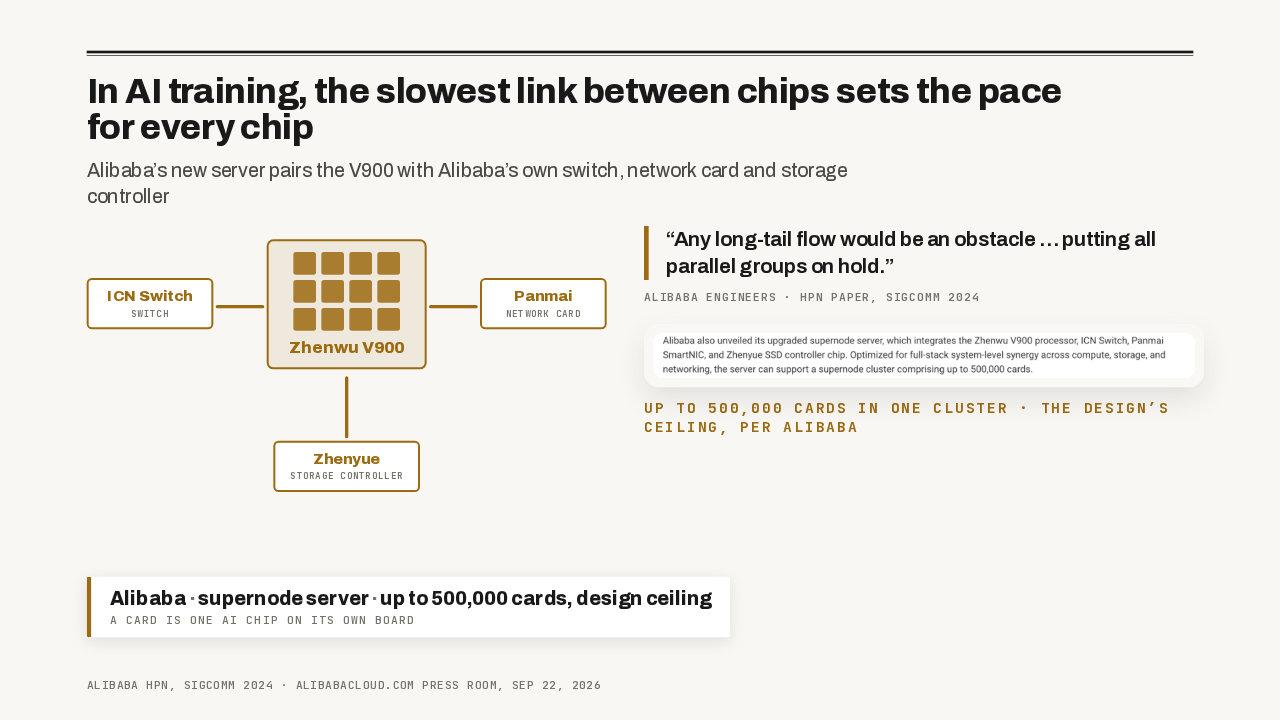
In AI training, the slowest link between chips sets the pace for every chip
A cluster is thousands of these chips wired together to work as one computer. When a cluster trains an AI model, every step ends the same way. All the chips sync up their results before the next step can start. Alibaba's own engineers described this in a twenty twenty-four paper on Alibaba's network. The engineers wrote that one slow flow of data puts every group of chips on hold. So the slowest link sets the pace for every chip. The switch and the network card carry that data between chips. Alibaba says its new server is built for computing, storage and networking to work as one system. A card is one of these chips on its own board. Alibaba says the design can support up to five hundred thousand cards in one cluster, the top of the design's range.
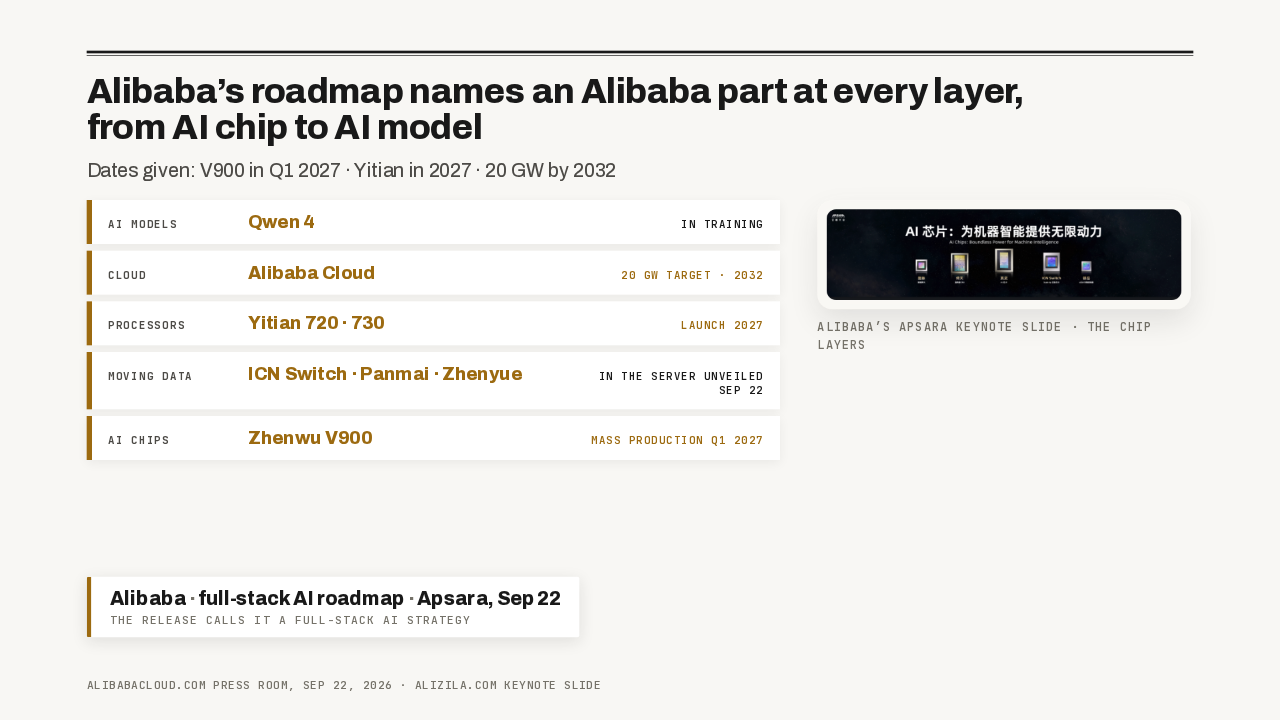
Alibaba’s roadmap names an Alibaba part at every layer, from AI chip to AI model
Alibaba's release calls its plan a full-stack AI strategy. The stack is the layers of an AI system, with chips at the bottom and AI models at the top. At the bottom sit the Zhenwu chips. Above them sit the Yitian processors and the parts that move data. Next comes Alibaba Cloud, the business that rents out computing power, and its twenty gigawatt target. At the top sits Qwen, Alibaba's own family of AI models. Alibaba says Qwen 4 is in training now.
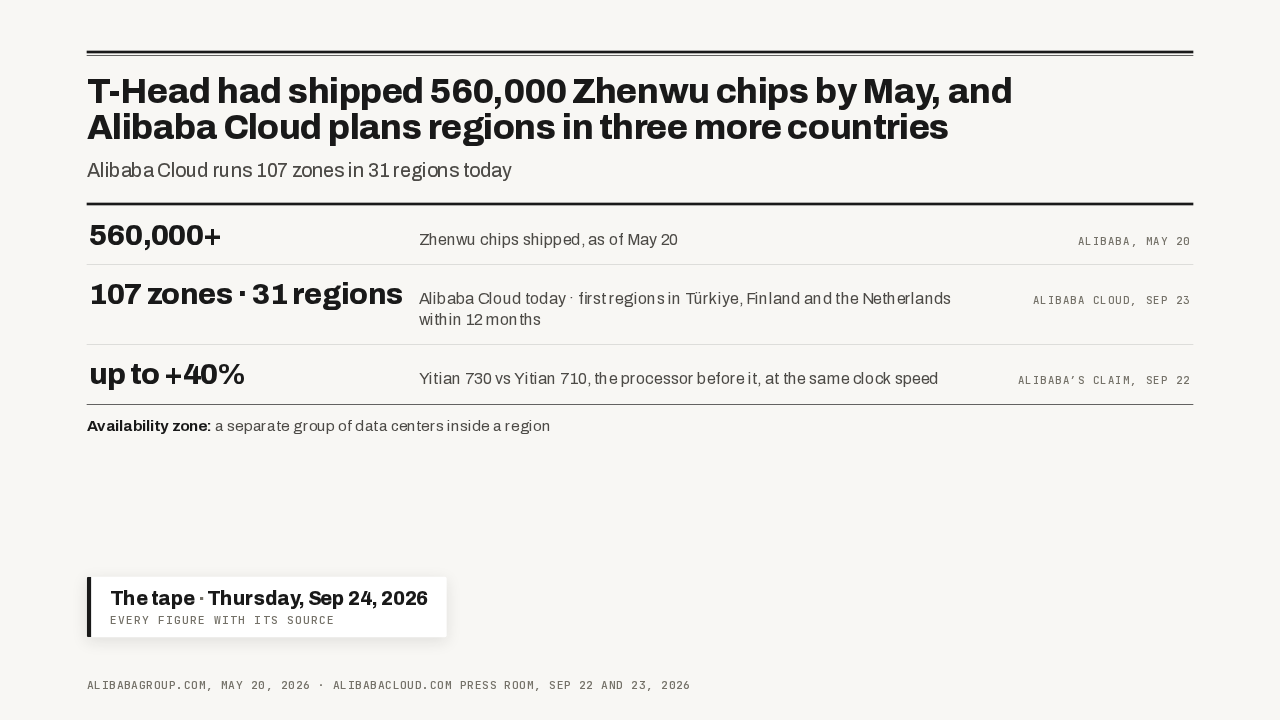
T-Head had shipped 560,000 Zhenwu chips by May, and Alibaba Cloud plans regions in three more countries
By May, T-Head had shipped more than five hundred and sixty thousand Zhenwu chips. Alibaba Cloud runs a hundred and seven availability zones in thirty-one regions. An availability zone is a separate group of data centers inside a region. On Wednesday, Alibaba Cloud said it will open its first regions in Türkiye, Finland and the Netherlands within twelve months. And Alibaba says its Yitian 730 processor does up to forty percent more work than the Yitian 710, the processor before it, at the same clock speed. Clock speed is how many steps a processor takes each second.
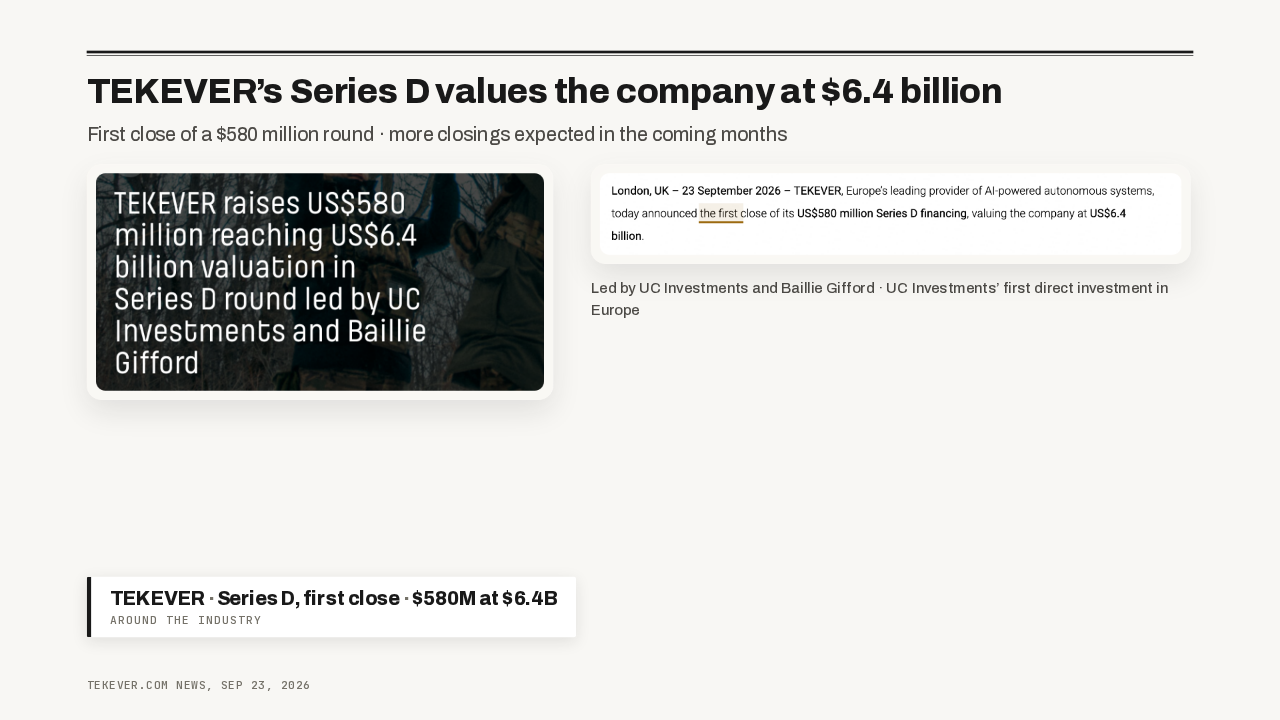
TEKEVER’s Series D values the company at $6.4 billion
TEKEVER calls itself Europe's leading provider of AI-powered autonomous systems, machines that operate without a person at the controls. TEKEVER announced the first close of a five hundred and eighty million dollar Series D, a round of money from outside investors. TEKEVER says this first close covers most of the money. UC Investments, the University of California's investment office, led the round with the investment firm Baillie Gifford.
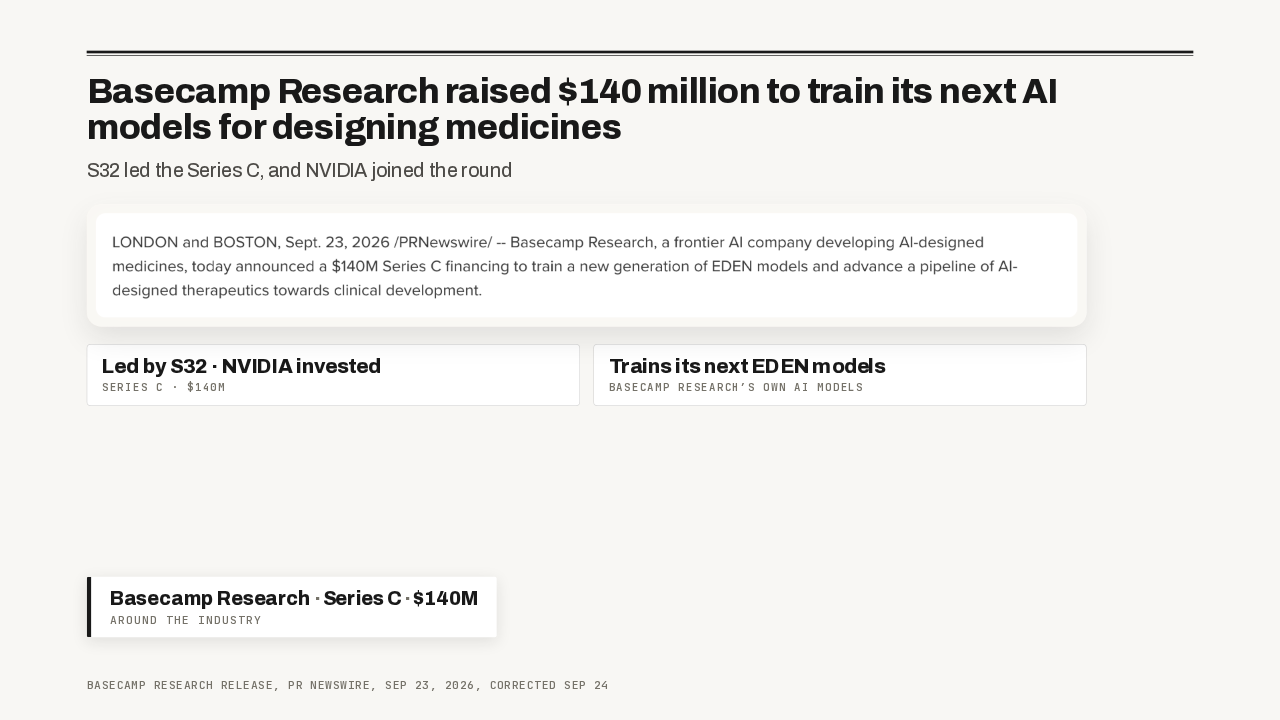
Basecamp Research raised $140 million to train its next AI models for designing medicines
Basecamp Research designs medicines with AI. Basecamp Research raised a hundred and forty million dollars in a Series C, another round of money from outside investors. The venture firm S32 led the round, and Nvidia invested too. The money pays to train a new generation of EDEN, the AI models Basecamp Research builds.
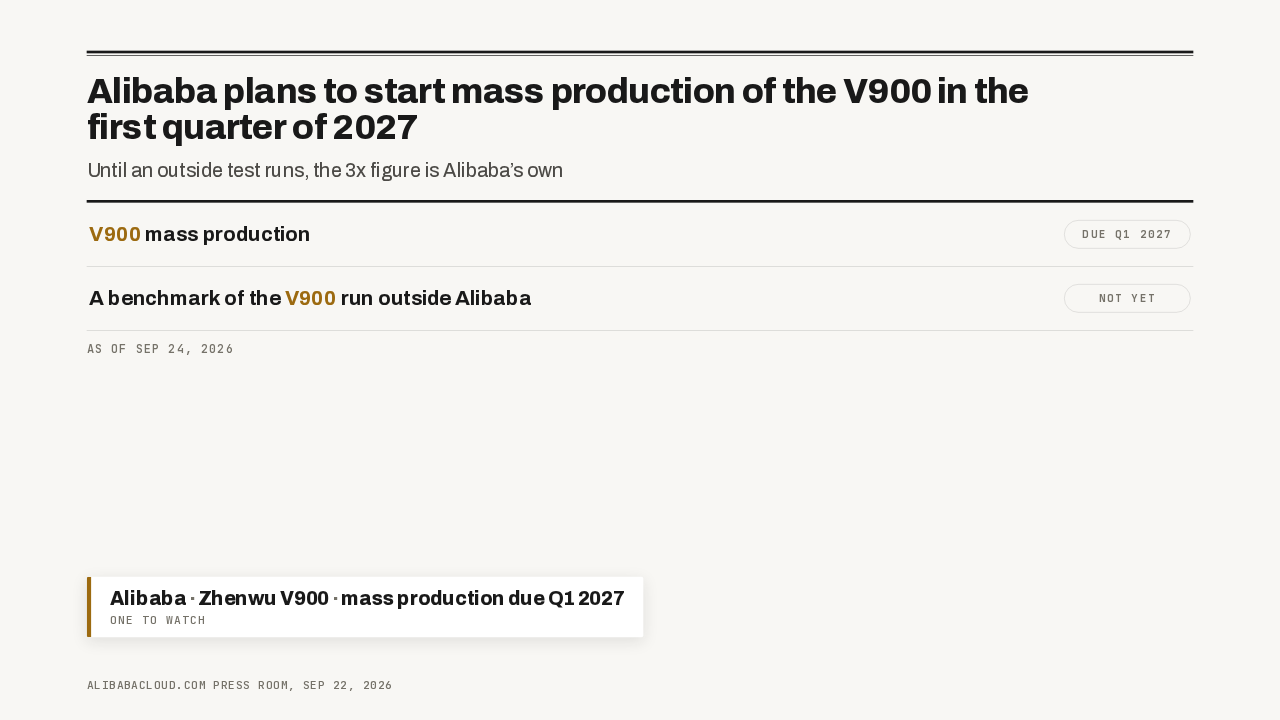
Alibaba plans to start mass production of the V900 in the first quarter of 2027
File away the first quarter of twenty twenty-seven, the date Alibaba gave for the V900. Then watch for a benchmark run by someone outside Alibaba. A benchmark is a standard speed test. A benchmark would put the V900 and the M890 side by side on the same job.
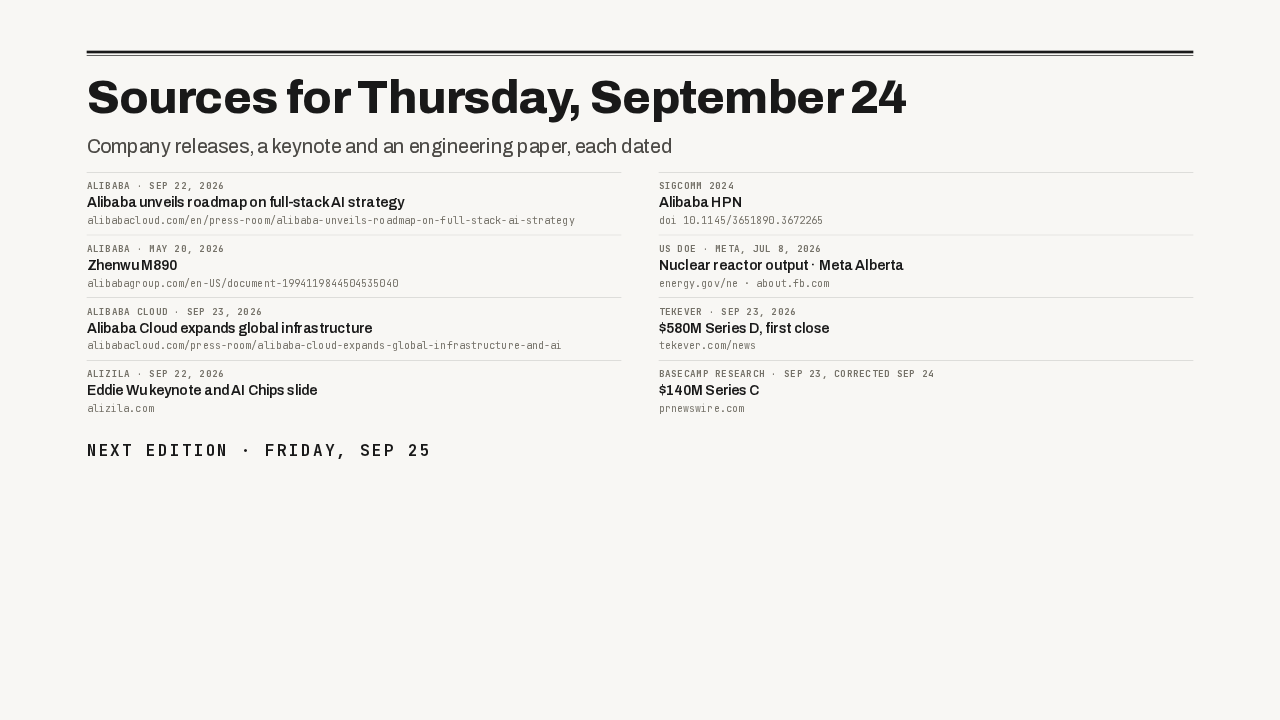
Sources for Thursday, September 24
The next edition of the Wire is Friday morning.