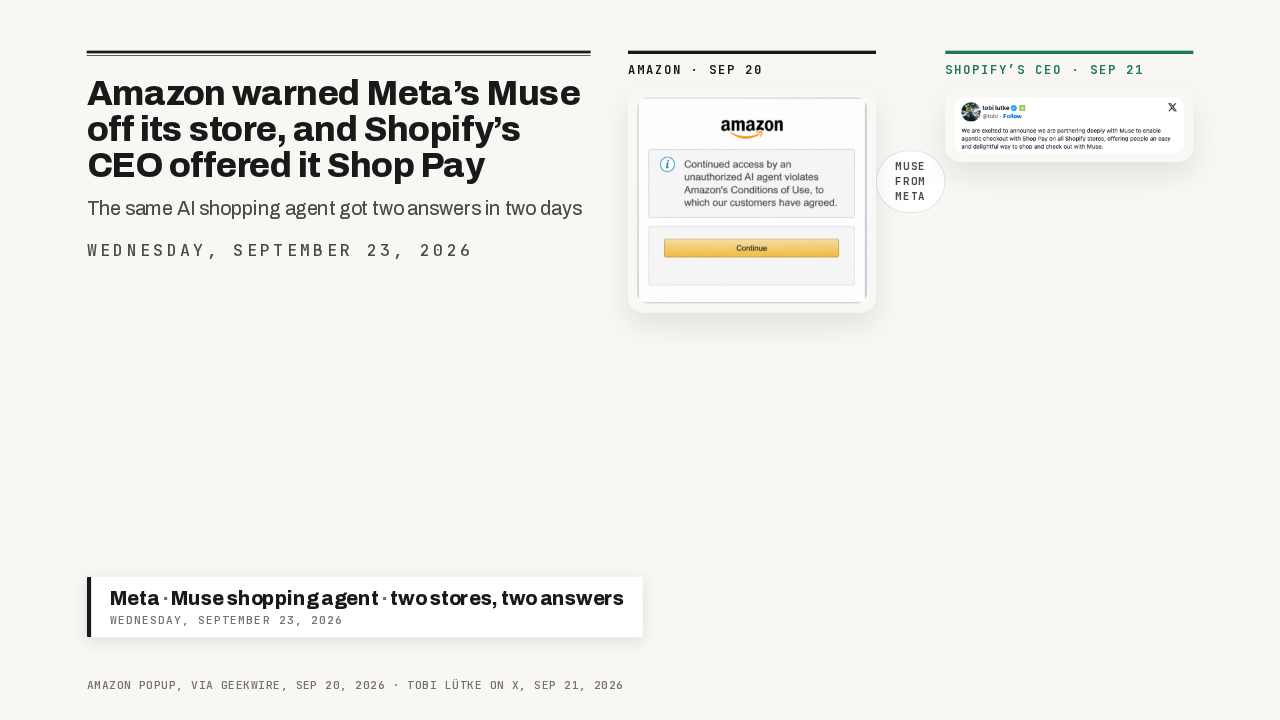
Amazon warned Meta’s Muse off its store, and Shopify’s CEO offered it Shop Pay
from Meta
It's Wednesday, September twenty-third. Amazon is telling Muse, Meta's AI agent that shops for you, to stay out of its store. Shopify's CEO says Muse will get a checkout on every Shopify store. And Alibaba unveils its Zhenwu V900 chip.
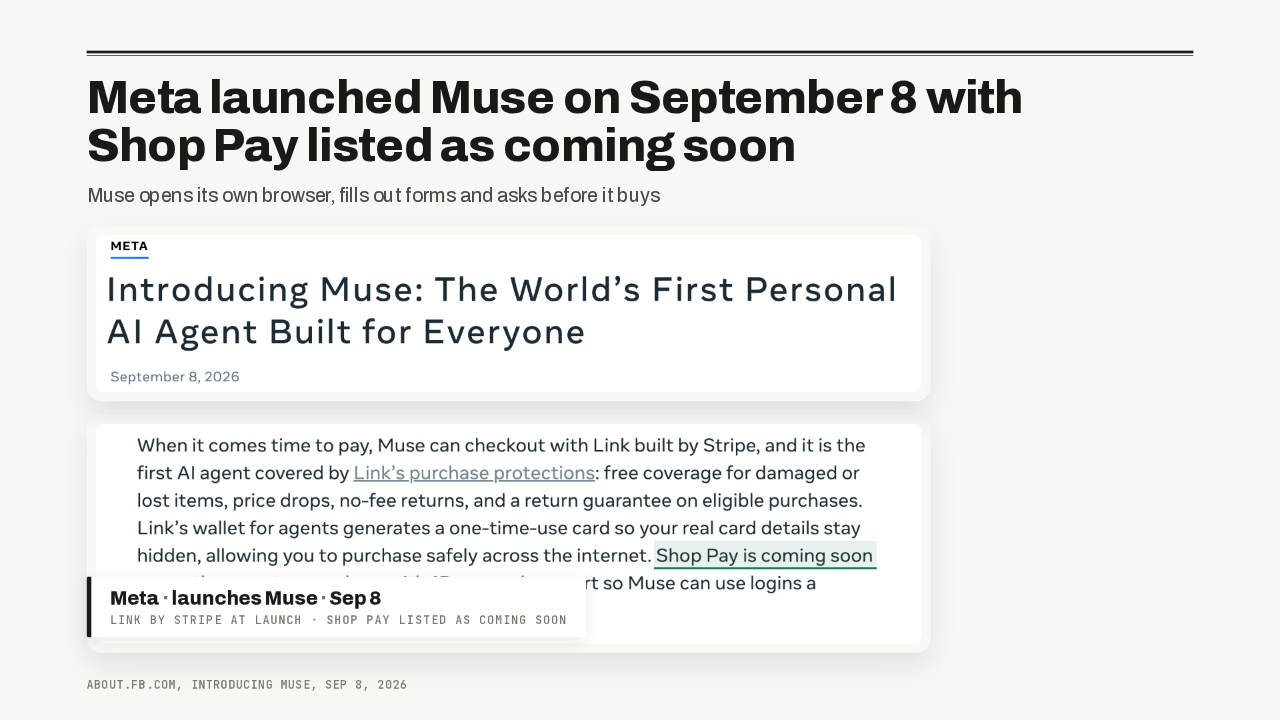
Meta launched Muse on September 8 with Shop Pay listed as coming soon
On September eighth, Meta launched Muse. Muse opens its own web browser, fills out forms and checks out. Muse asks you before it buys. At launch, Muse paid with Link, which is Stripe's saved-card checkout. Meta's launch post also listed Shop Pay as coming soon. Shop Pay is Shopify's own checkout, and it keeps a shopper's card and address saved.
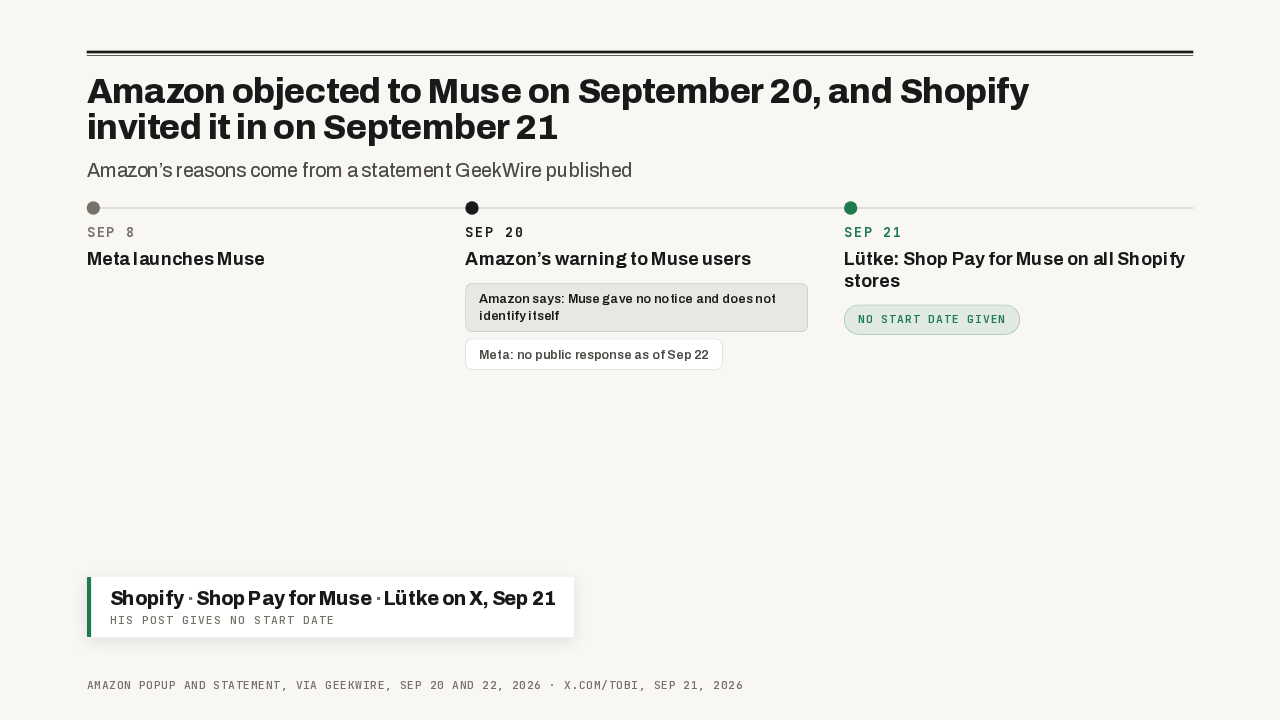
Amazon objected to Muse on September 20, and Shopify invited it in on September 21
By September twentieth, Amazon was showing Muse users a warning. The warning says an unauthorized AI agent breaks Amazon's Conditions of Use. In a statement GeekWire published, Amazon says Muse gave no notice and does not identify itself. As of Tuesday, GeekWire reports, Meta had not responded publicly. On September twenty-first, Shopify's CEO, Tobi Lütke, posted on X that Muse will pay with Shop Pay on all Shopify stores. His post gives no start date. The two answers come down to the way Muse buys.
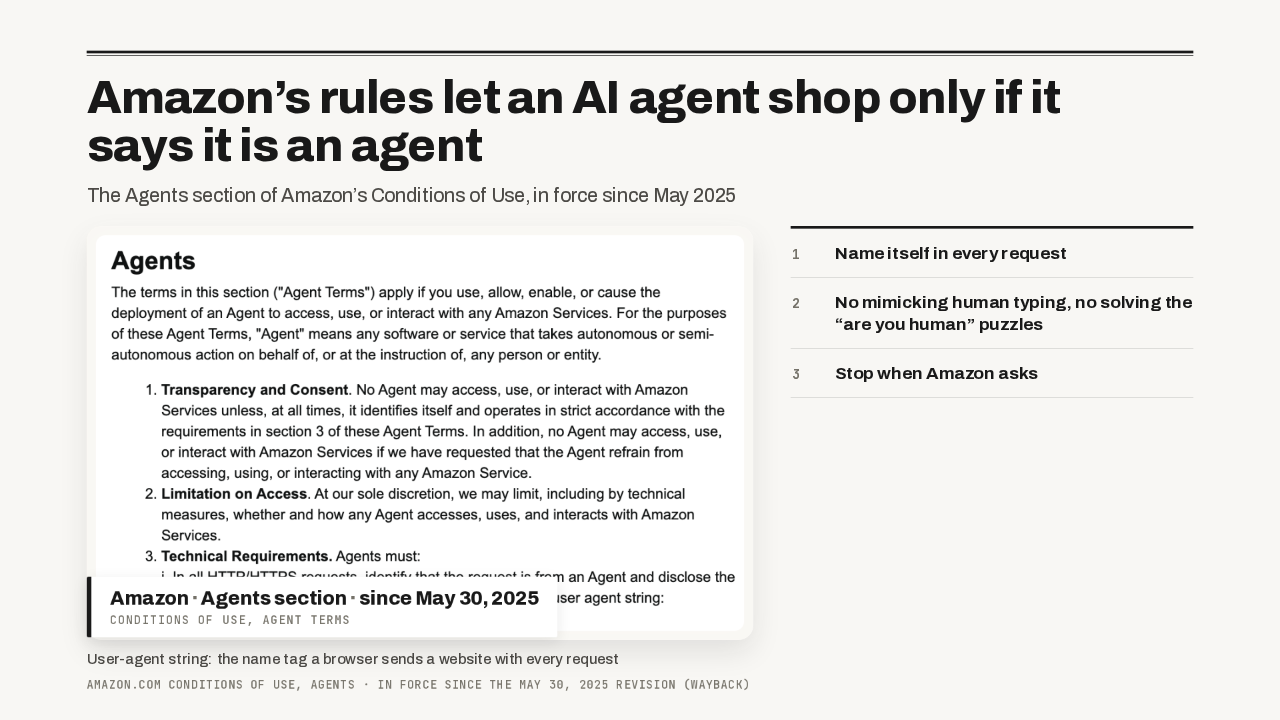
Amazon’s rules let an AI agent shop only if it says it is an agent
An AI agent can buy something for you in two ways. In the first way, the agent acts as the shopper. On Amazon, Muse opens the product page, clicks, types in your details and pays, like a person at a keyboard. To the store, Muse looks like you. Since May twenty twenty-five, Amazon's Conditions of Use have had a section called Agents. The Agents section says an agent must put the word Agent, a slash, and its own name in the user-agent string of every request. The user-agent string is the name tag a browser sends a website with each request. An agent may not mimic human typing or solve the puzzles that check you are human. And an agent must stop when Amazon asks.
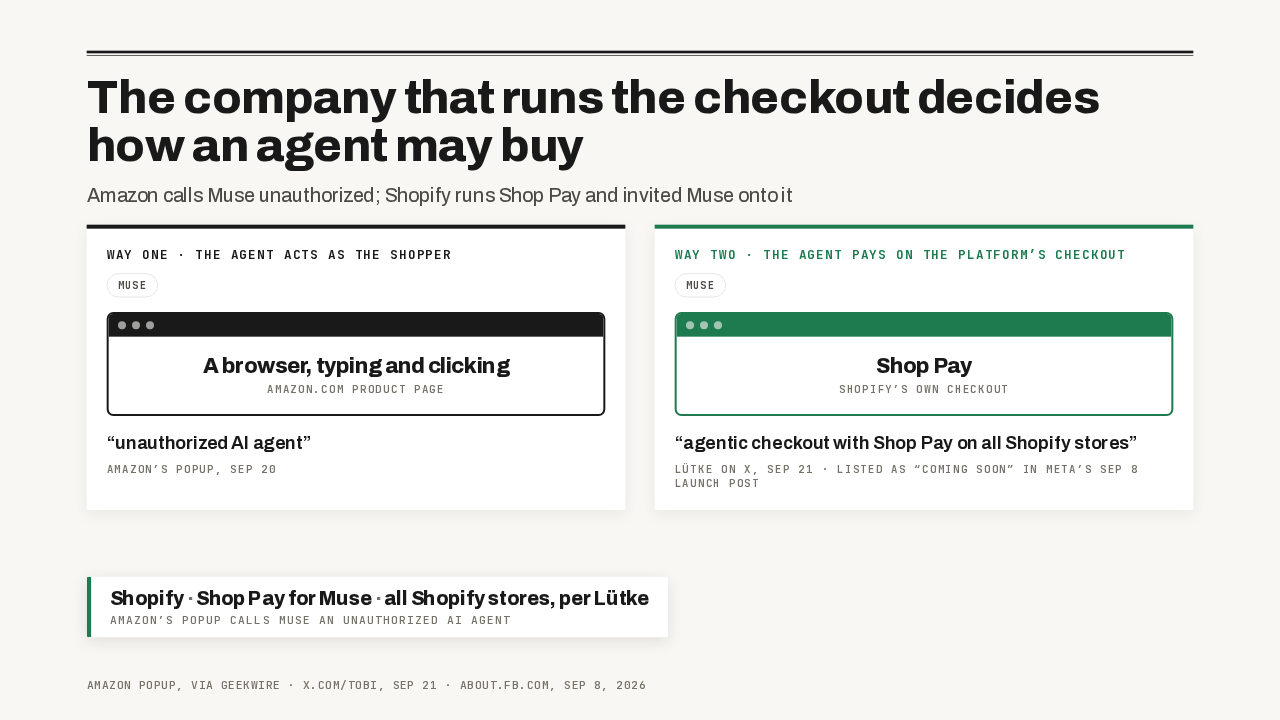
The company that runs the checkout decides how an agent may buy
In the second way, the agent pays through a checkout the platform runs. Shopify runs the checkout for every Shopify store, and Shop Pay is that checkout. When Muse pays with Shop Pay, Muse pays on Shopify's own payment path, with the shopper's saved card. Meta planned for this before the fight started. Meta listed Shop Pay as coming soon on September eighth. On Amazon, Muse is what Amazon's warning calls an unauthorized AI agent. On Shopify, Muse is a customer that Shopify invited in. The company that runs the checkout makes that call.
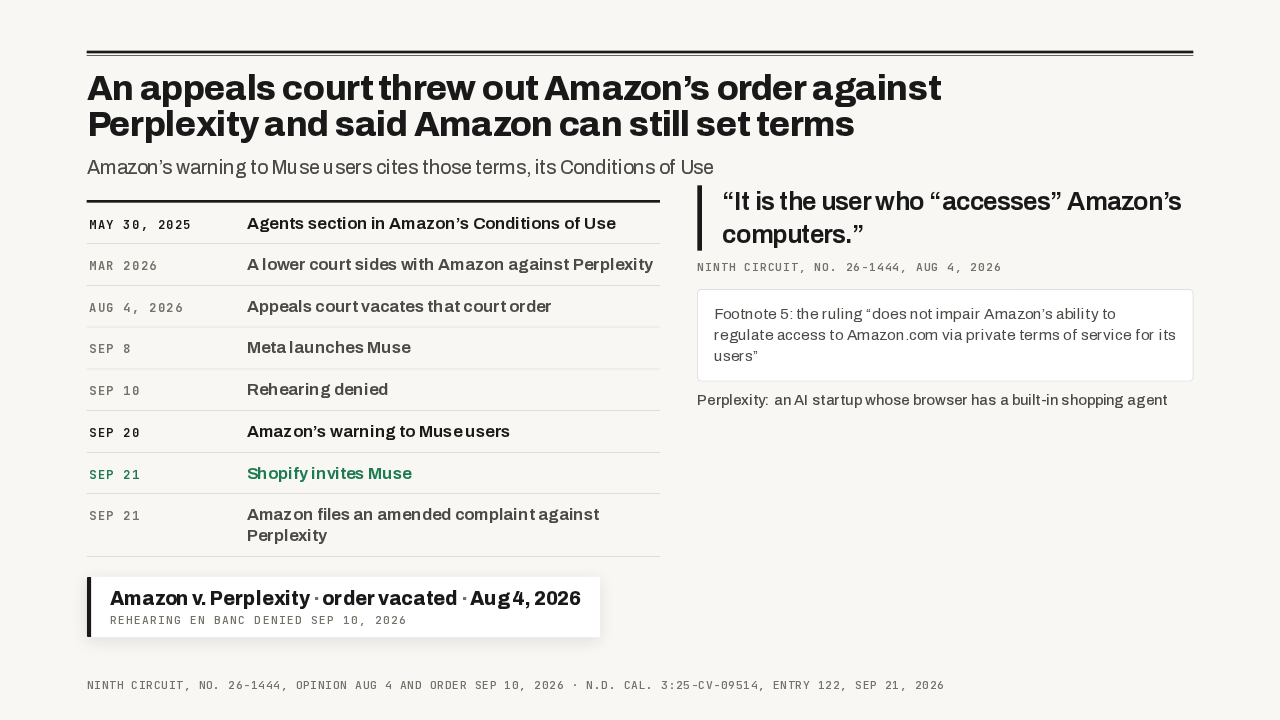
An appeals court threw out Amazon’s order against Perplexity and said Amazon can still set terms
Amazon's warning cites its Conditions of Use, the terms every Amazon customer clicks through. Those terms work as a contract between Amazon and each customer. Amazon has also tried a federal anti-hacking law, against Perplexity. Perplexity is an AI startup whose browser has a built-in agent that can shop. In March, a lower court sided with Amazon and issued a court order against Perplexity. On August fourth, a federal appeals court threw that order out. The appeals court wrote that it is the user who accesses Amazon's computers. The same opinion notes that Perplexity's agent sent no user-agent string. A footnote in the same opinion says the ruling leaves Amazon free to set access rules in its terms of service. Amazon already had those rules, in its Agents section.
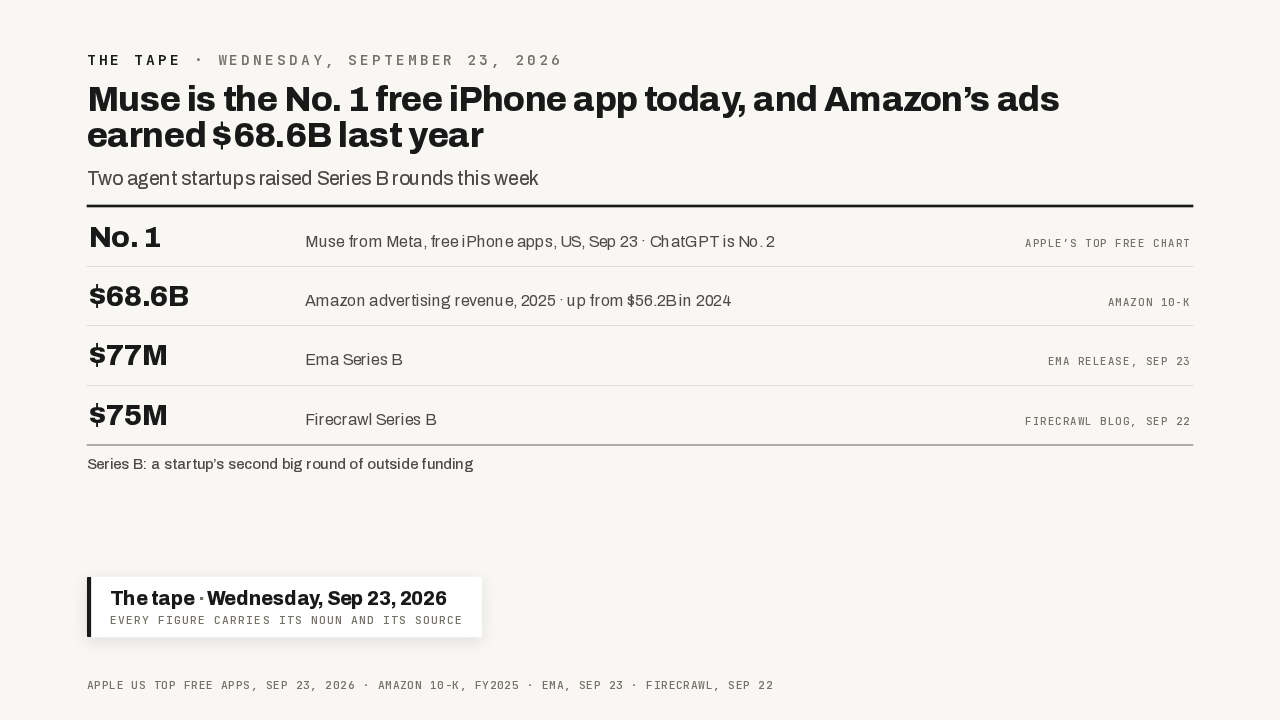
Muse is the No. 1 free iPhone app today, and Amazon’s ads earned $68.6B last year
On Apple's own chart today, Muse is the number one free iPhone app in the US, and ChatGPT is number two. Amazon sells advertising to the sellers and brands on its store, and Amazon's annual report says that advertising brought in sixty-eight point six billion dollars in twenty twenty-five. And two startups that build for AI agents raised their second big rounds of outside funding. Ema raised seventy-seven million dollars, and Firecrawl raised seventy-five million dollars.
Alibaba says its Zhenwu V900 AI chip is three times faster than the last one
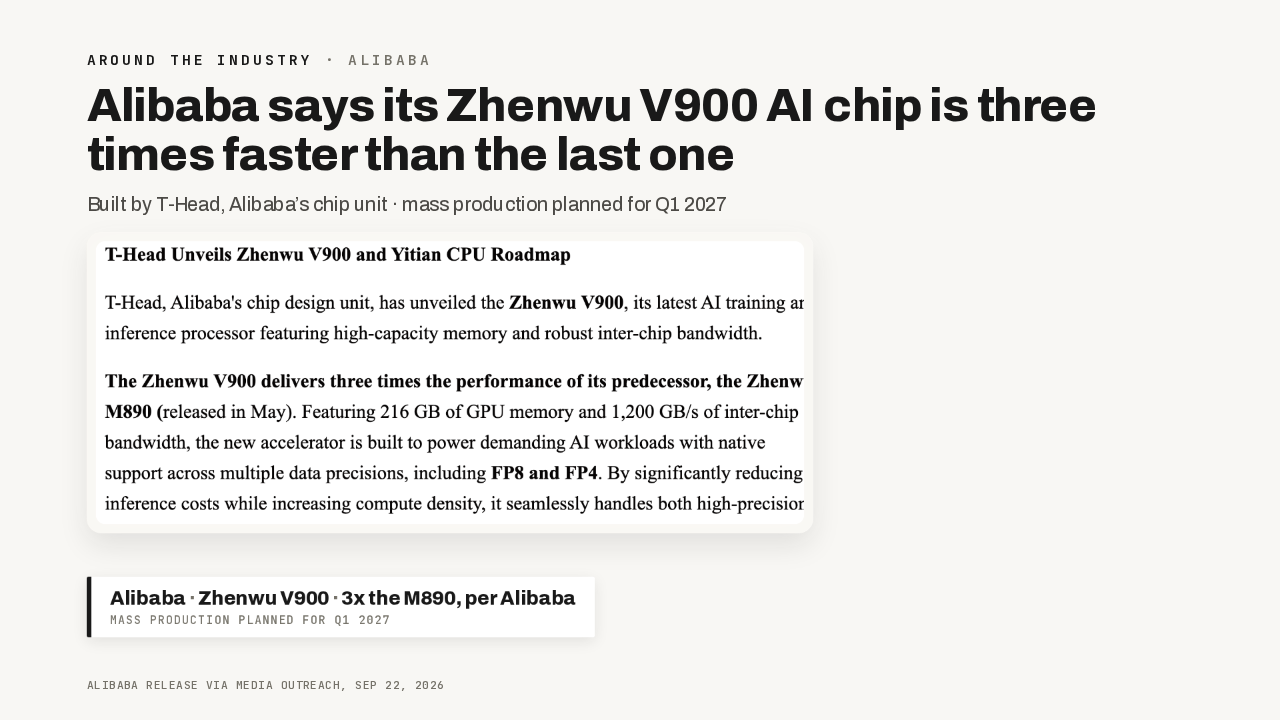
Alibaba unveiled a new AI chip on Tuesday. T-Head, Alibaba's chip design unit, makes the Zhenwu V900, a chip for training and running AI models. Alibaba says the V900 delivers three times the performance of the Zhenwu M890, which came out in May. Alibaba plans mass production in the first quarter of twenty twenty-seven.
Ema and Firecrawl raised money to build tools for AI agents
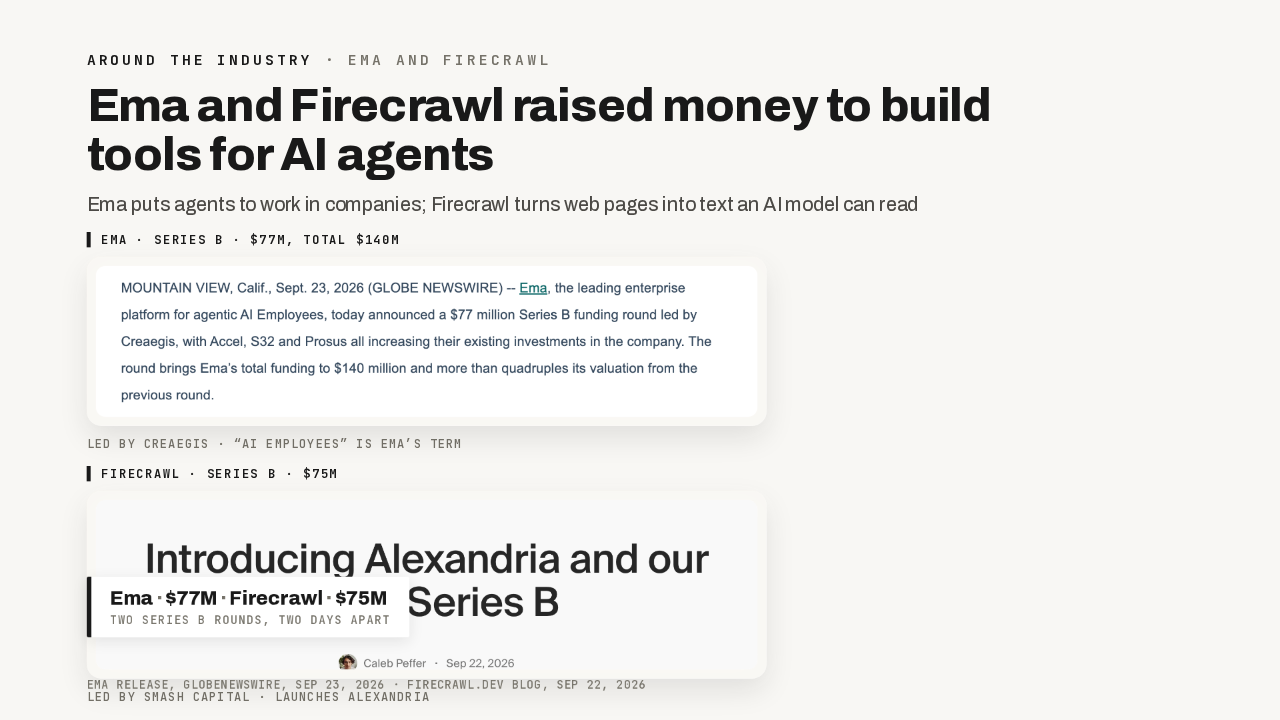
Ema sells what Ema calls AI employees, which are software agents that companies put to work. Firecrawl turns any web page into clean text that an AI model can read. Firecrawl also launched Alexandria, which gives an AI agent one place to find a source and pull from it. Firecrawl says it will pay the people who contribute knowledge when agents use it.
Meta has to choose whether Muse names itself on Amazon or shops elsewhere
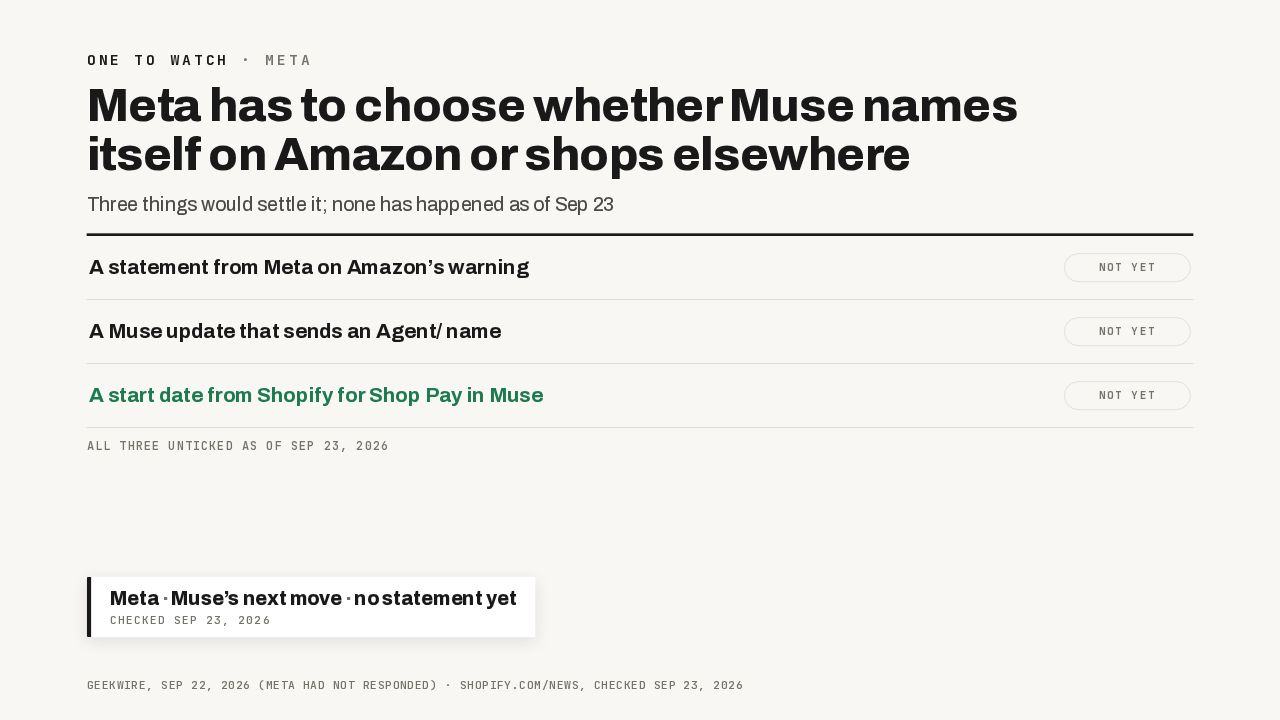
Watch what Meta does next with Muse. Muse can identify itself the way Amazon's rules require, with an Agent name tag and a promise to stop when Amazon asks. Or Muse can shop at stores that hand it a checkout. A statement from Meta would settle it. So would a Muse update that names its agent, or a start date from Shopify for Shop Pay in Muse.
Sources for Wednesday, September 23
The next edition of the Wire is Thursday morning.