The phone finishes the piece you started
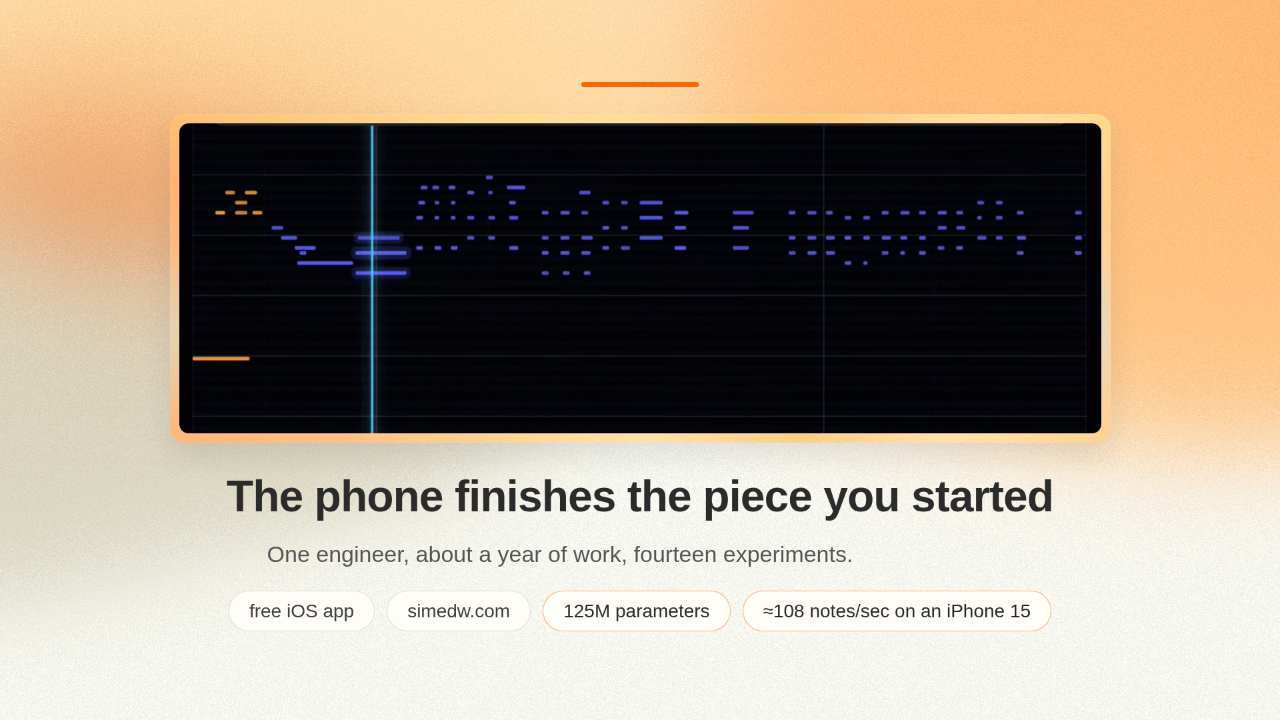
A person plays sixteen notes on a piano keyboard, stops, and the phone plays the rest. The model finishing the tune holds a hundred and twenty-five million adjustable numbers, small enough to run on the phone itself.
The model takes over where the orange notes stop
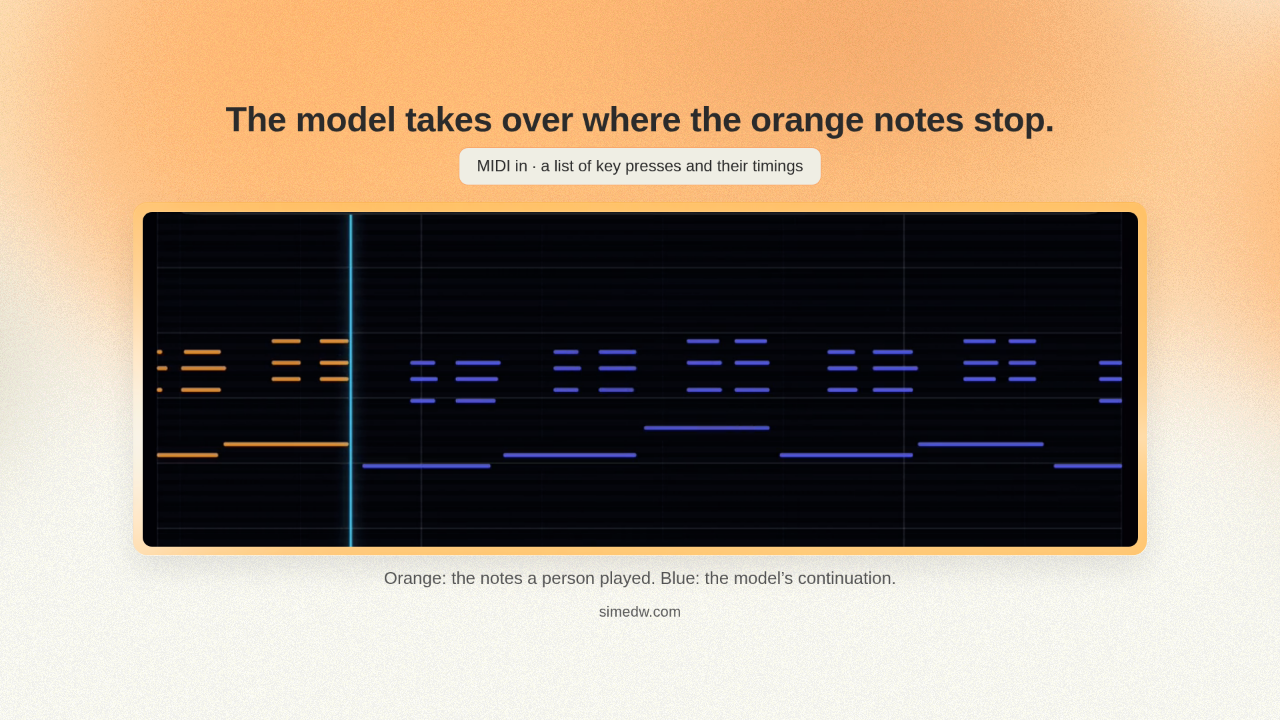
The model takes over where the orange notes stop.
The keyboard plugs into the phone and sends which keys you pressed and when, not sound. These are the first sixteen notes of Für Elise. Somewhere after them the music stops being Beethoven.
The hard part was keeping up with a pair of hands
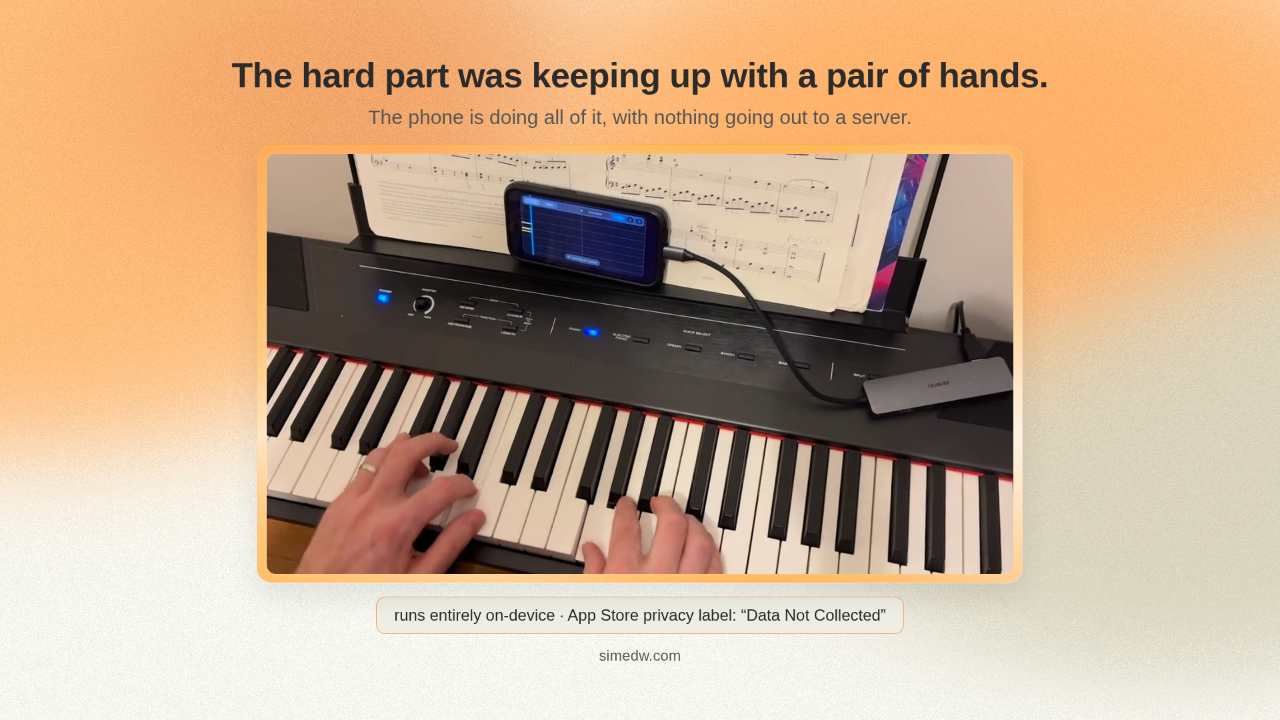
The hard part was keeping up with a pair of hands.
To play along with a person, the model has to answer before the next note lands. Simon Edwardsson spent about a year on that, and fourteen experiments.
Writing a note down as one thing is what made it fast
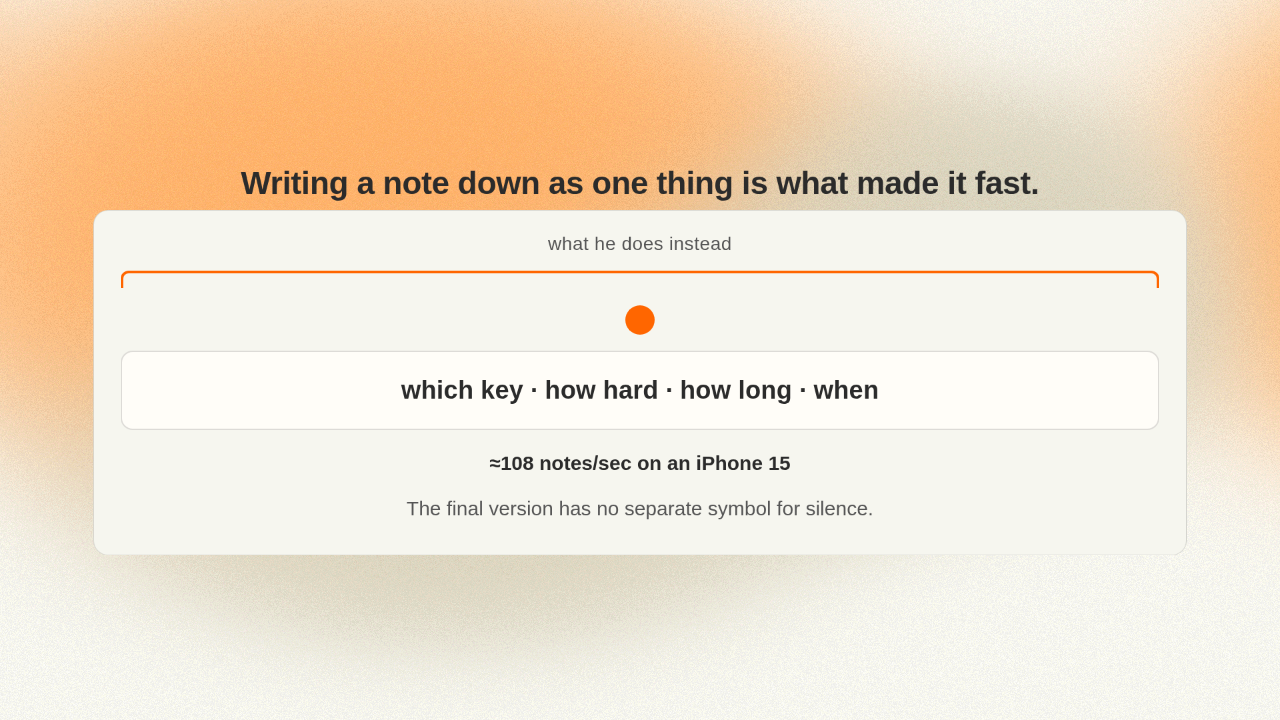
Writing a note down as one thing is what made it fast.
A note is four facts: which key, how hard, how long, and how long until the next one. Write that down the obvious way, and one note costs the model four steps of thinking. Edwardsson wrote a note as one item carrying all four facts. One note, one pass. That buys about a hundred and eight notes a second on an iPhone, by his own measurement, well past what a pair of hands needs. That fourth fact, the wait, does the rest of the work. Silence is just a longer wait, and notes played together have no wait between them.
Edwardsson kept the version his own numbers said was worse
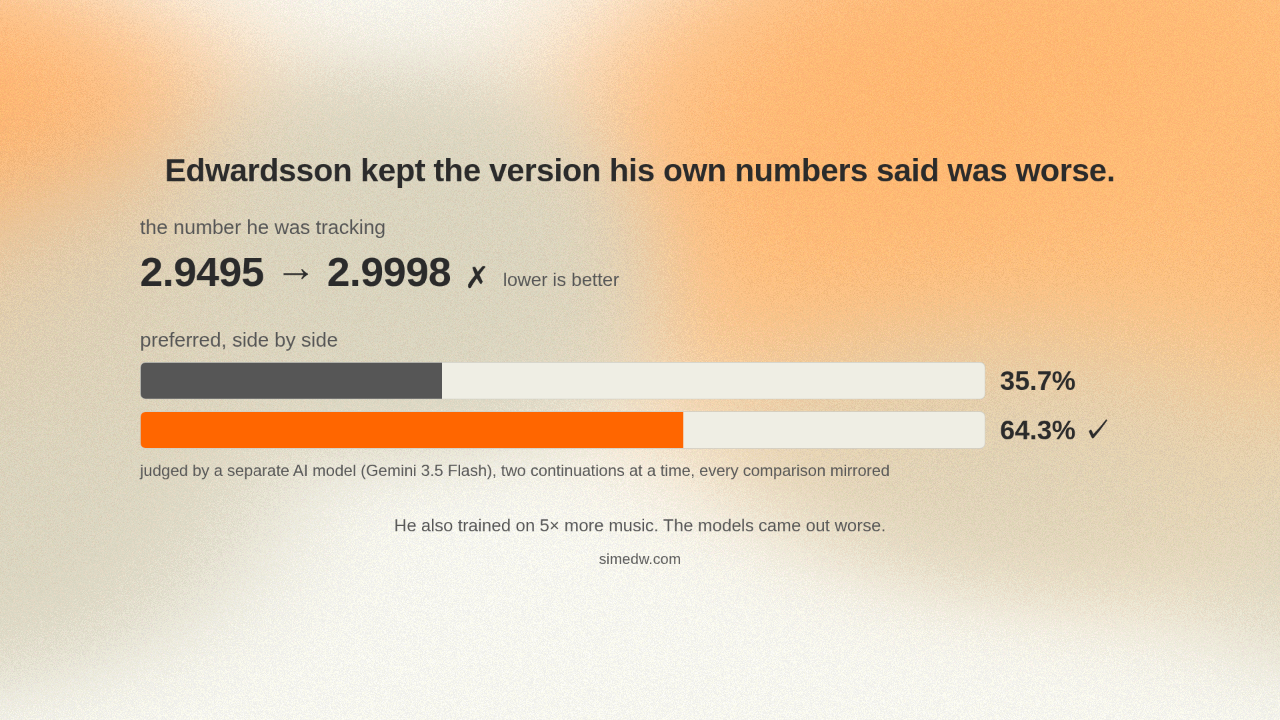
Edwardsson kept the version his own numbers said was worse.
In training, Edwardsson stopped handing the piano model the correct next note, and made the model practise on its own guesses. The number he tracked moved the wrong way. A separate AI model, shown two continuations at a time, picked the version that practised on its own guesses, about two times in three.
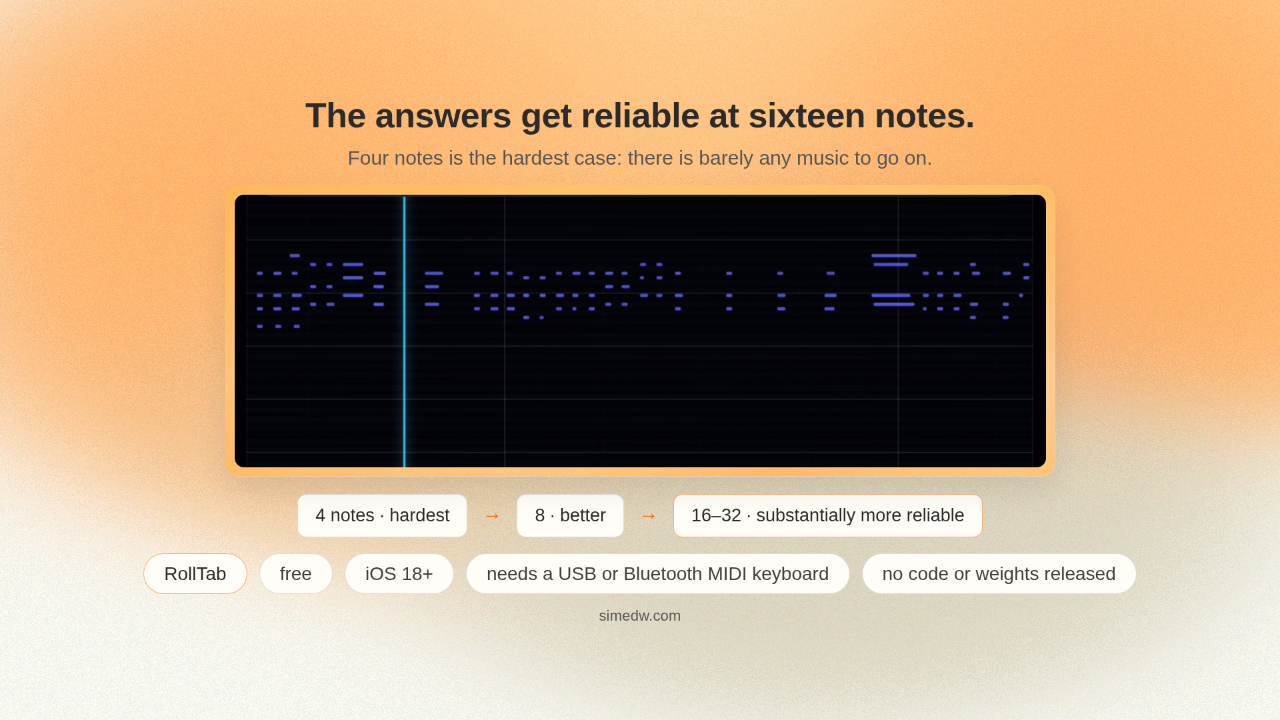
The answers get reliable at sixteen notes
The answers get reliable at sixteen notes.
The model answers what you play. Four notes leaves it almost nothing to work with. Sixteen notes or more, and it follows.
The model was not the hard part
The model was not the hard part.
Think GPT-2, but for piano
Edwardsson puts his piano model about where text autocomplete was a few years ago. The model still loops, and he plays along anyway. What made the model quick enough was how a note gets written down.